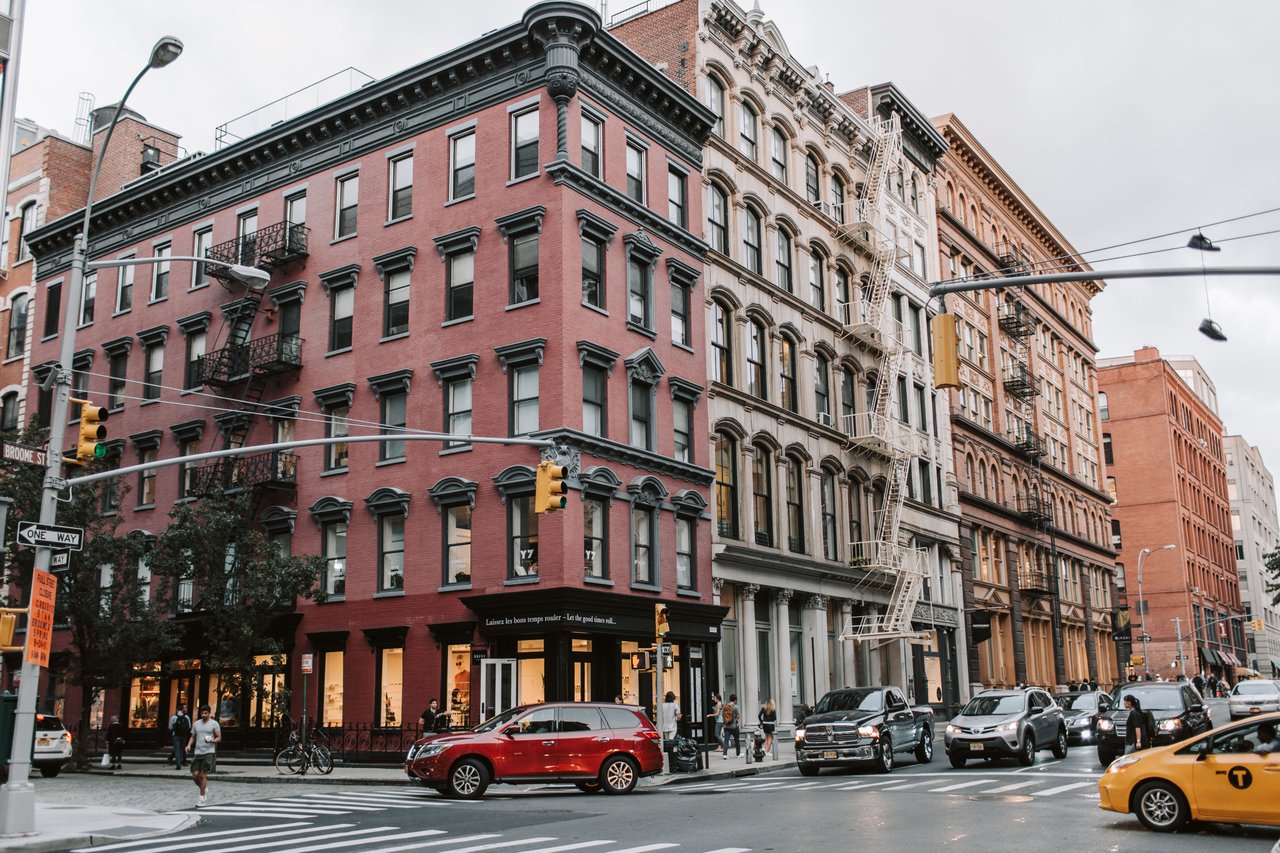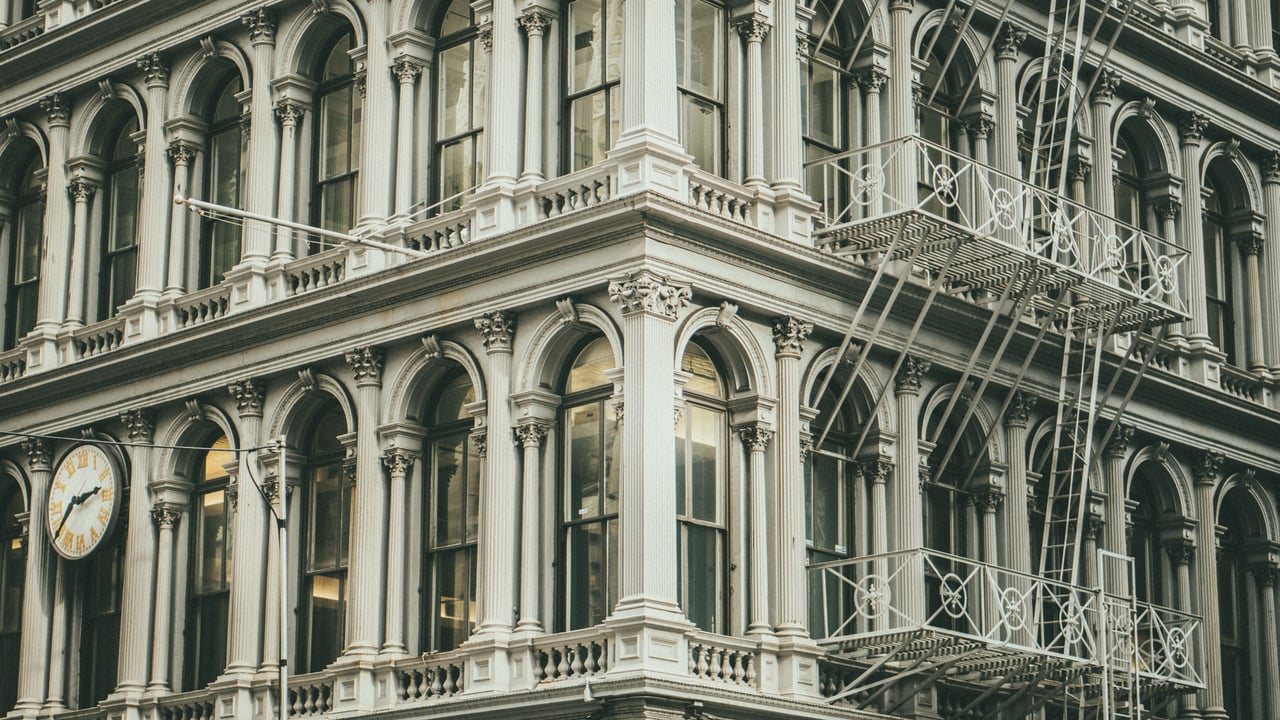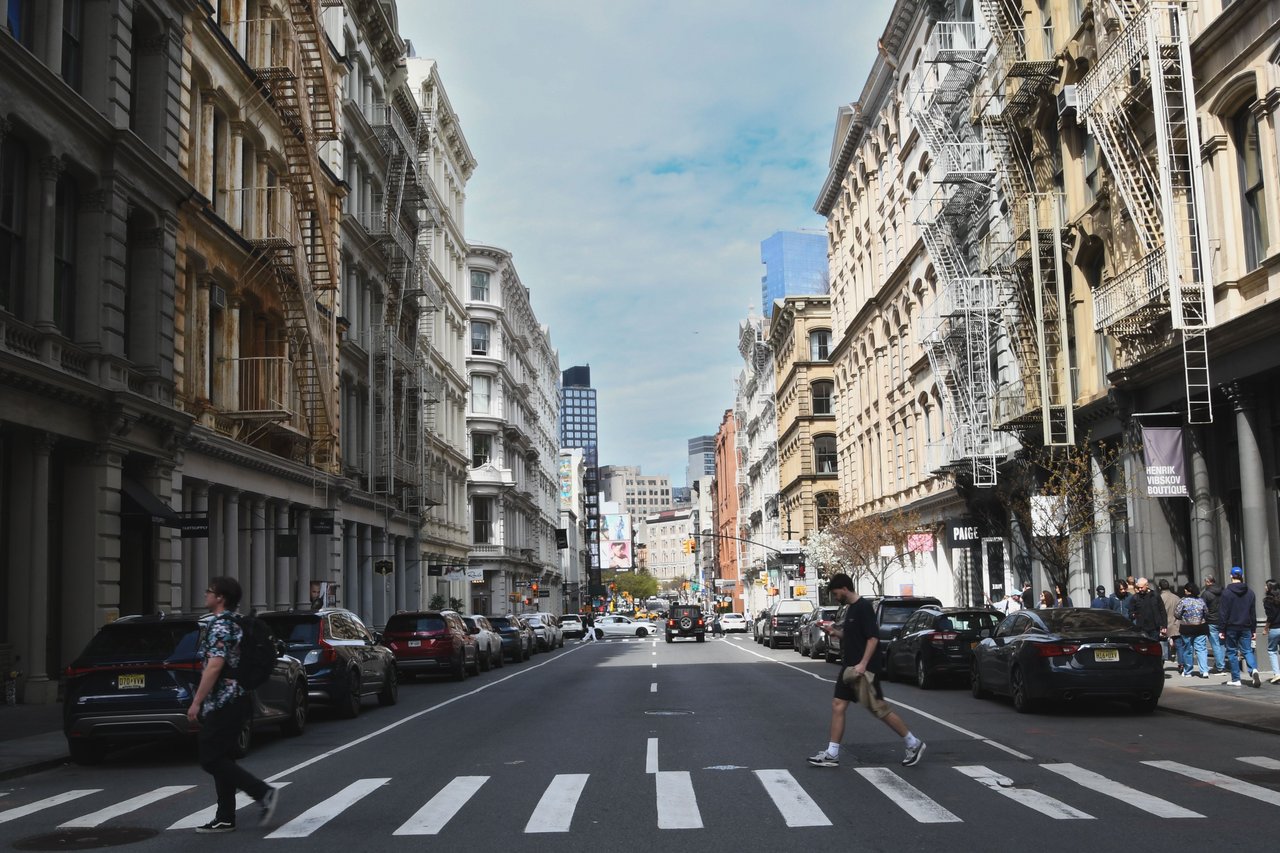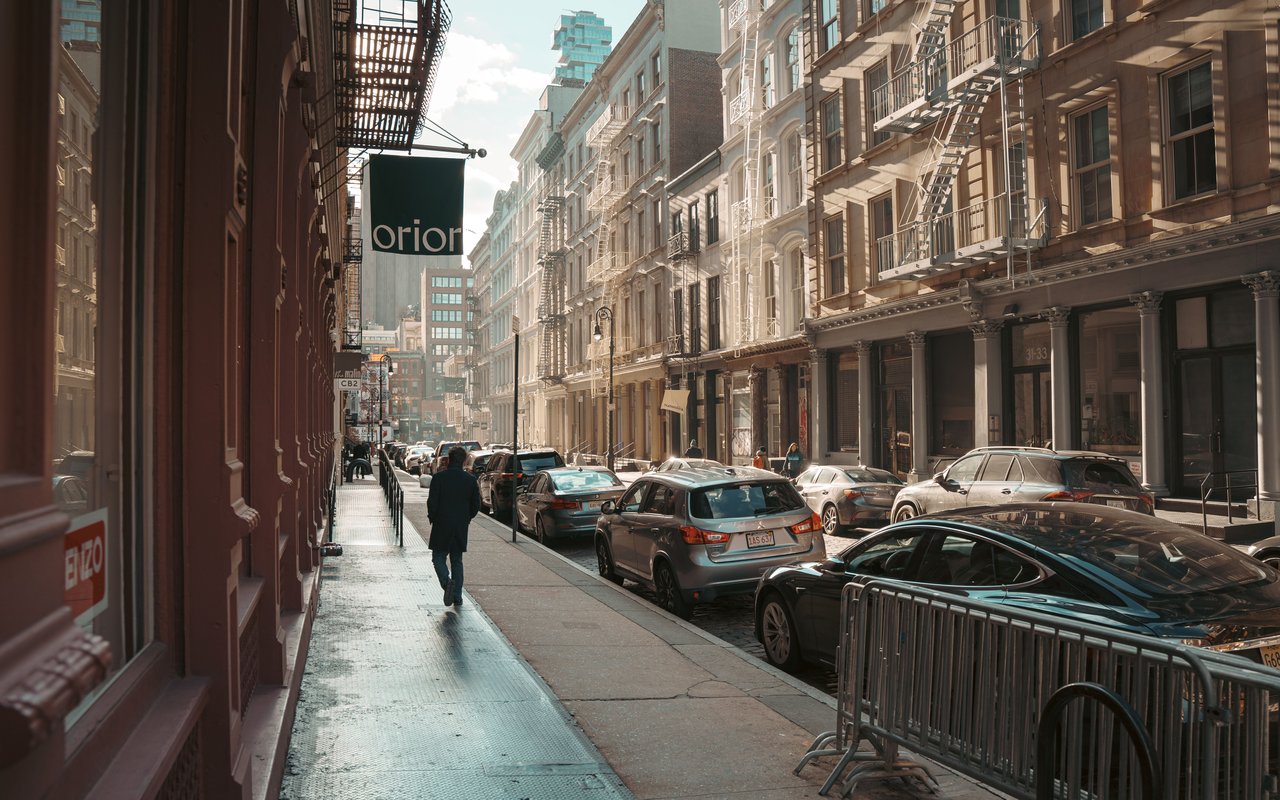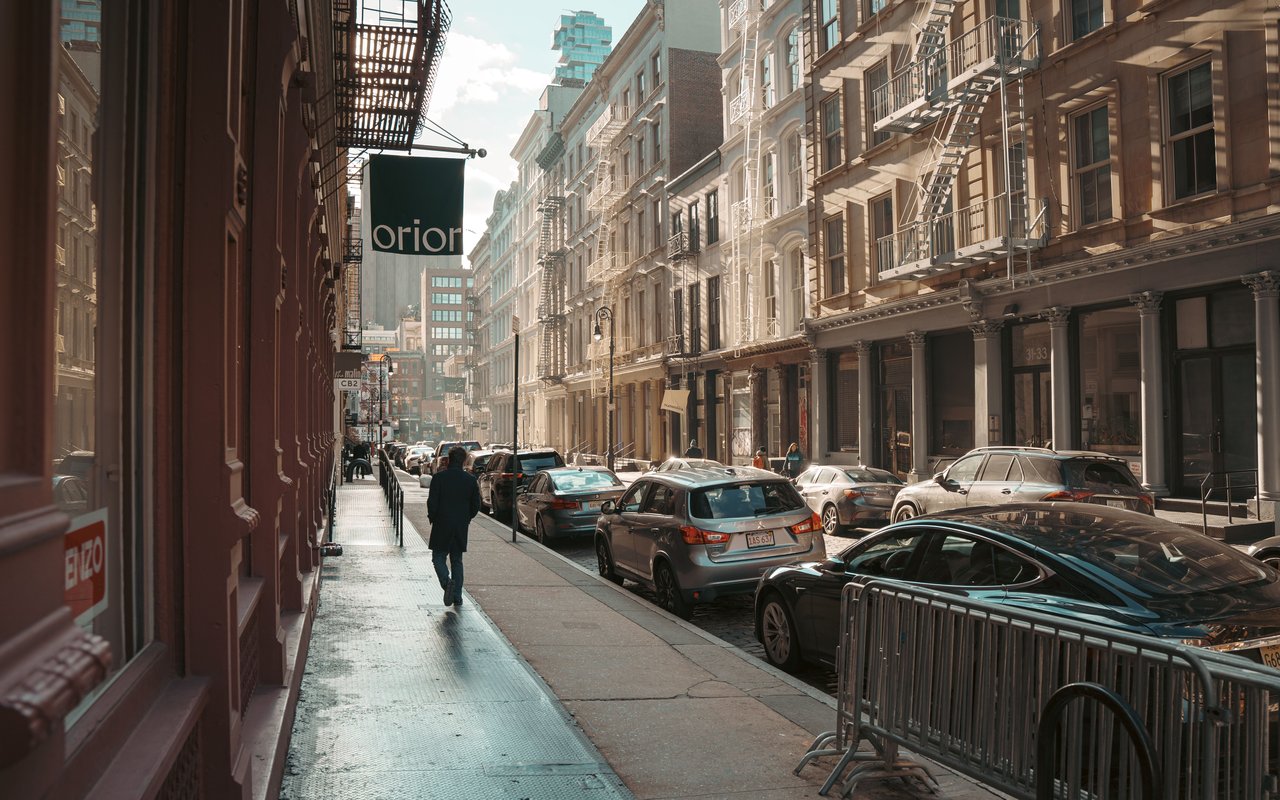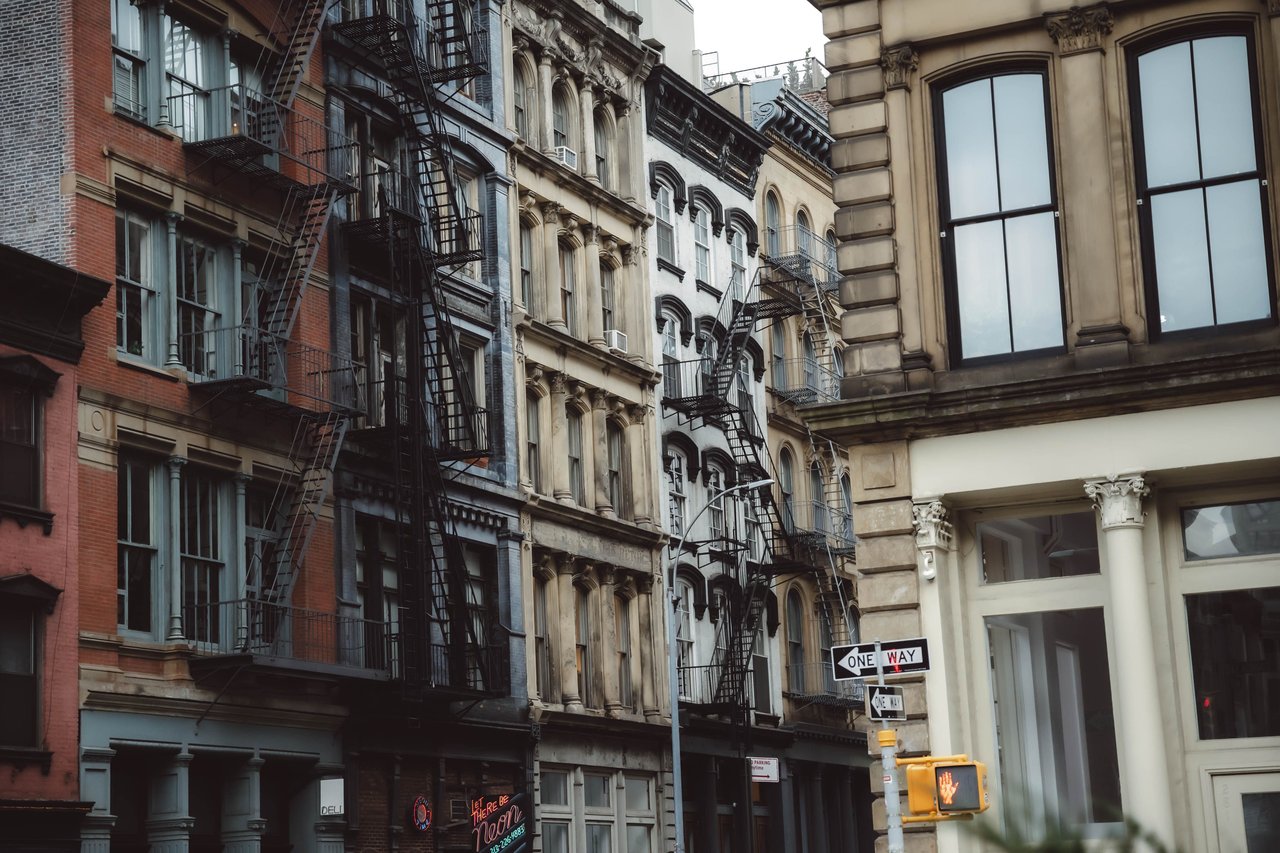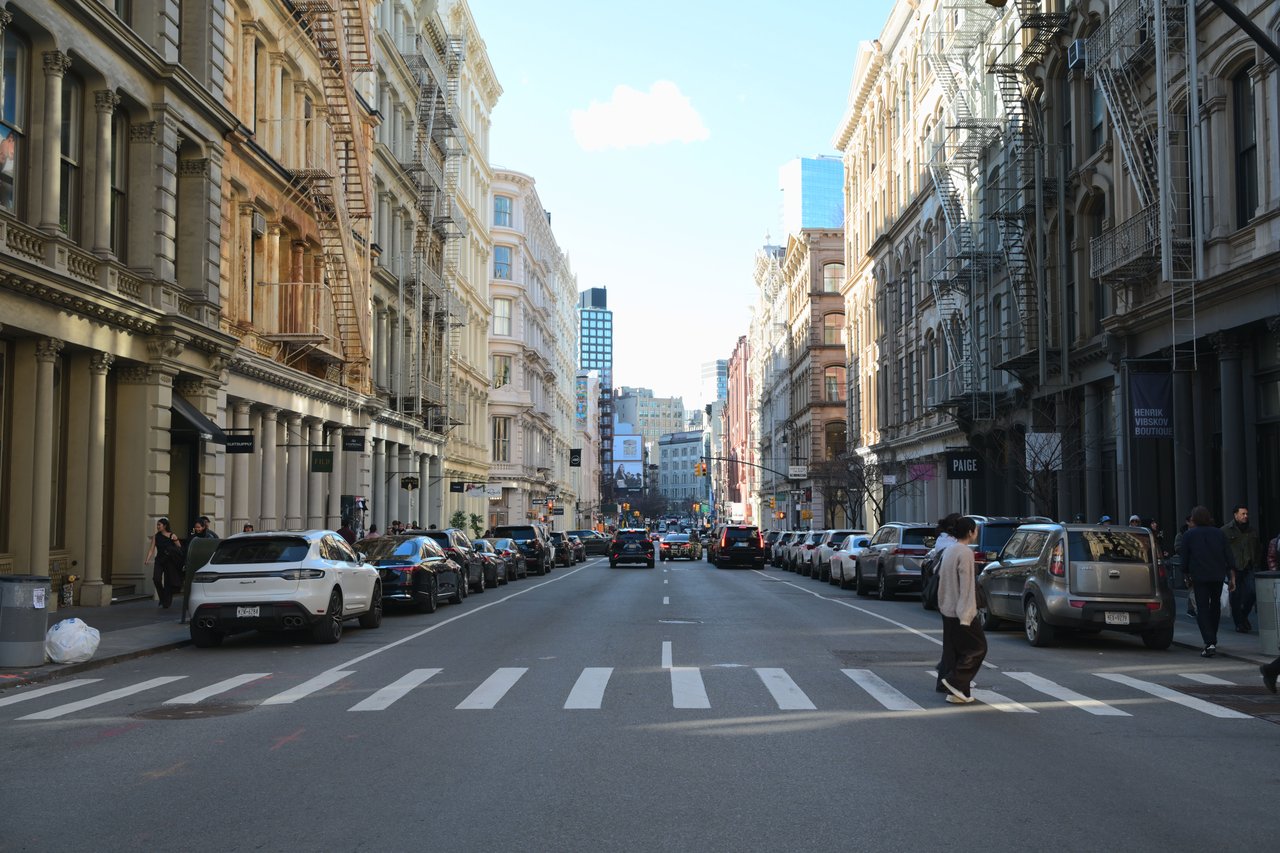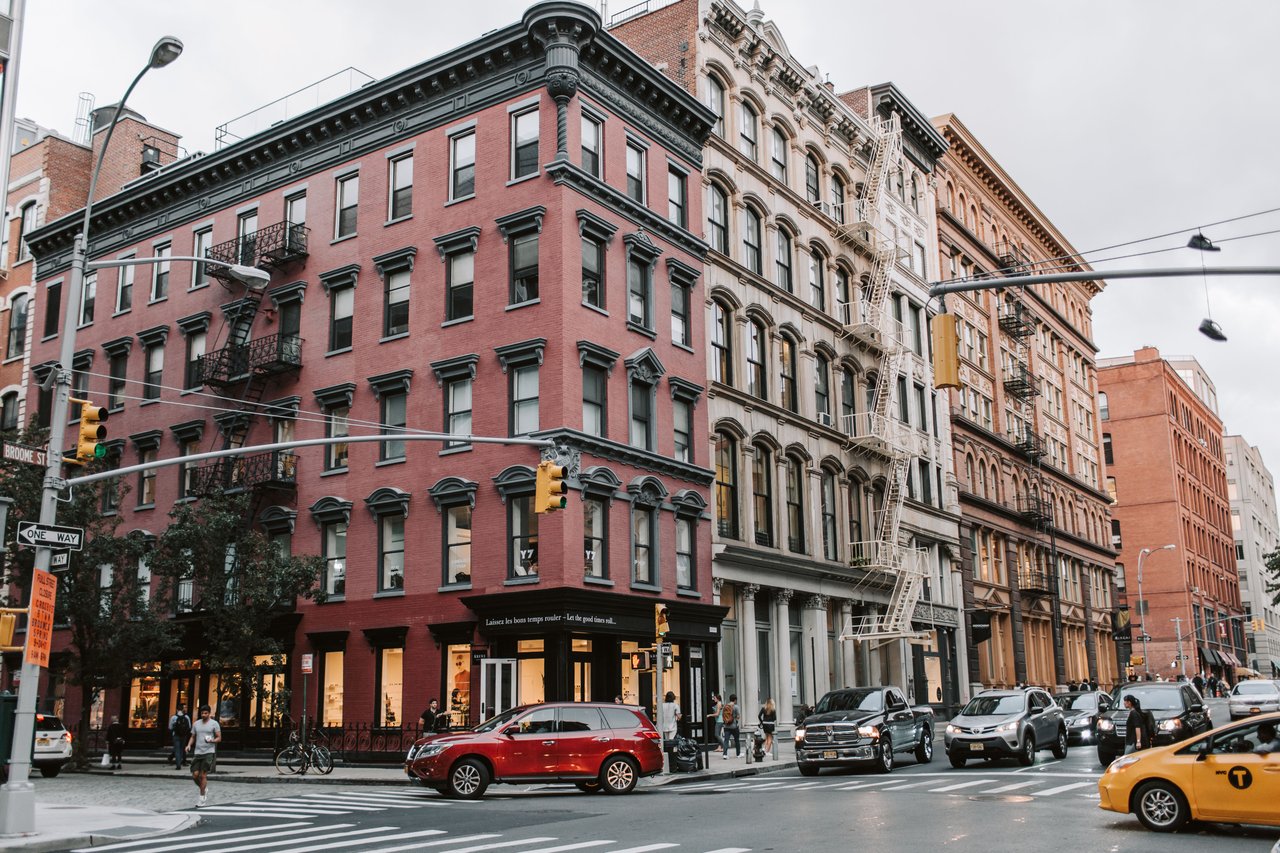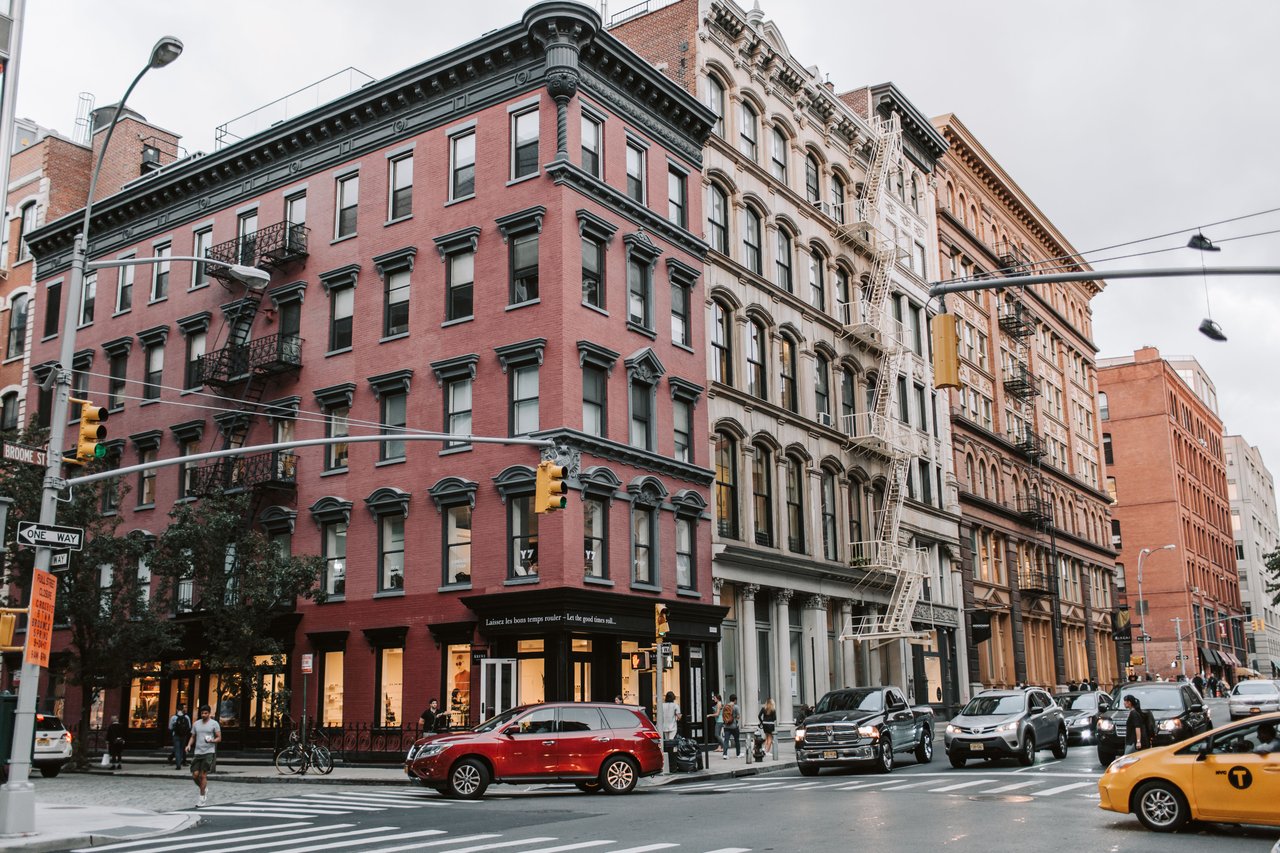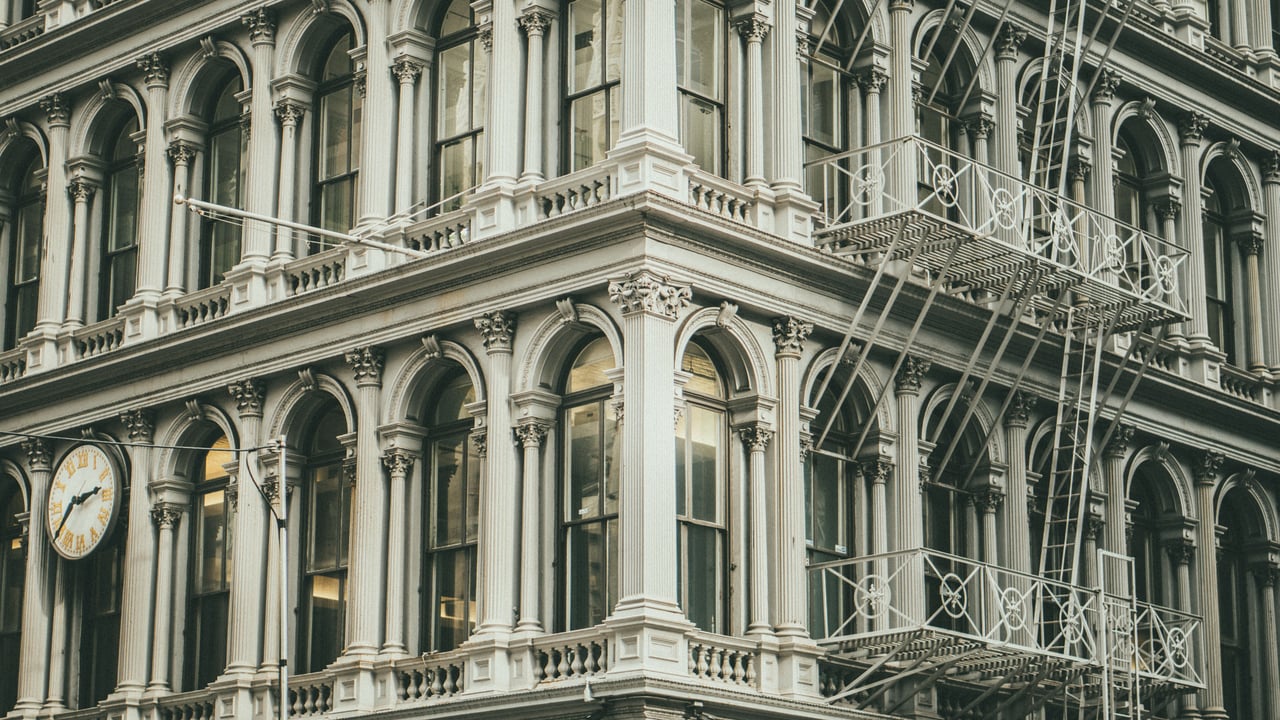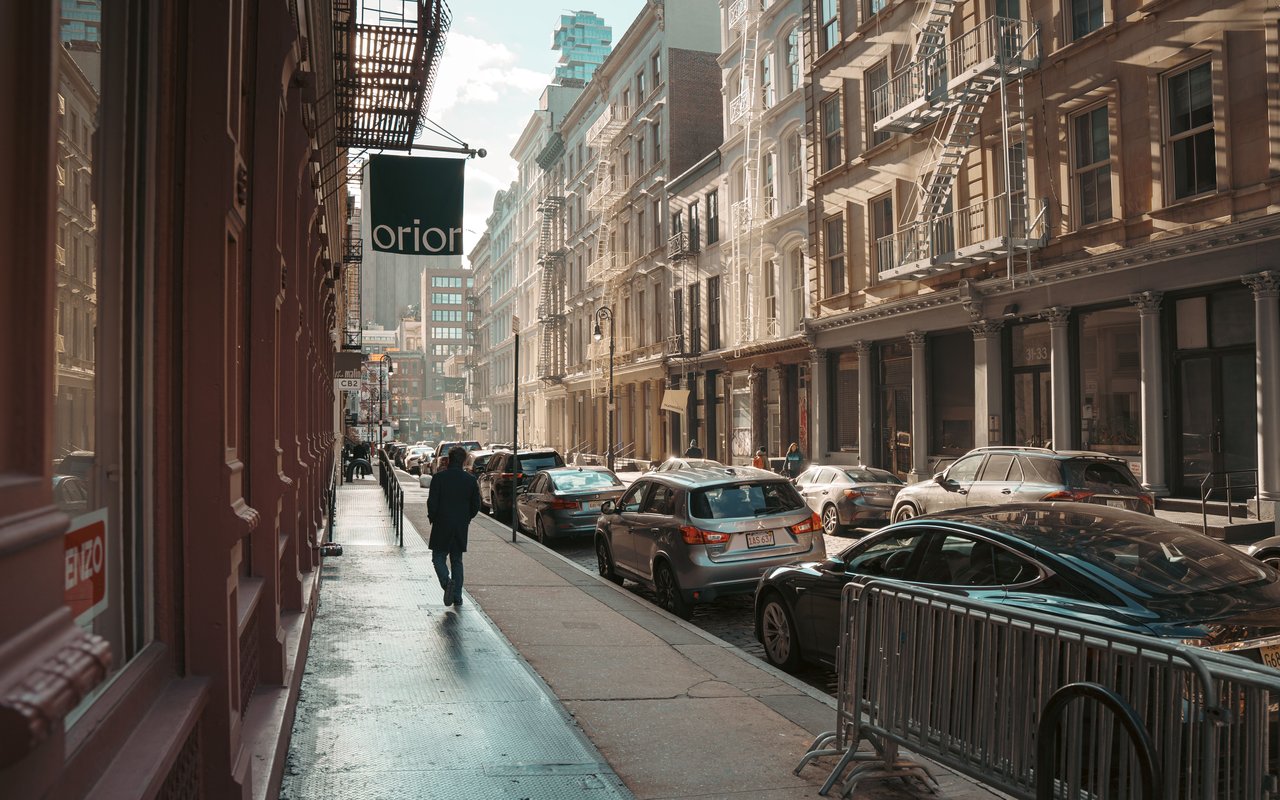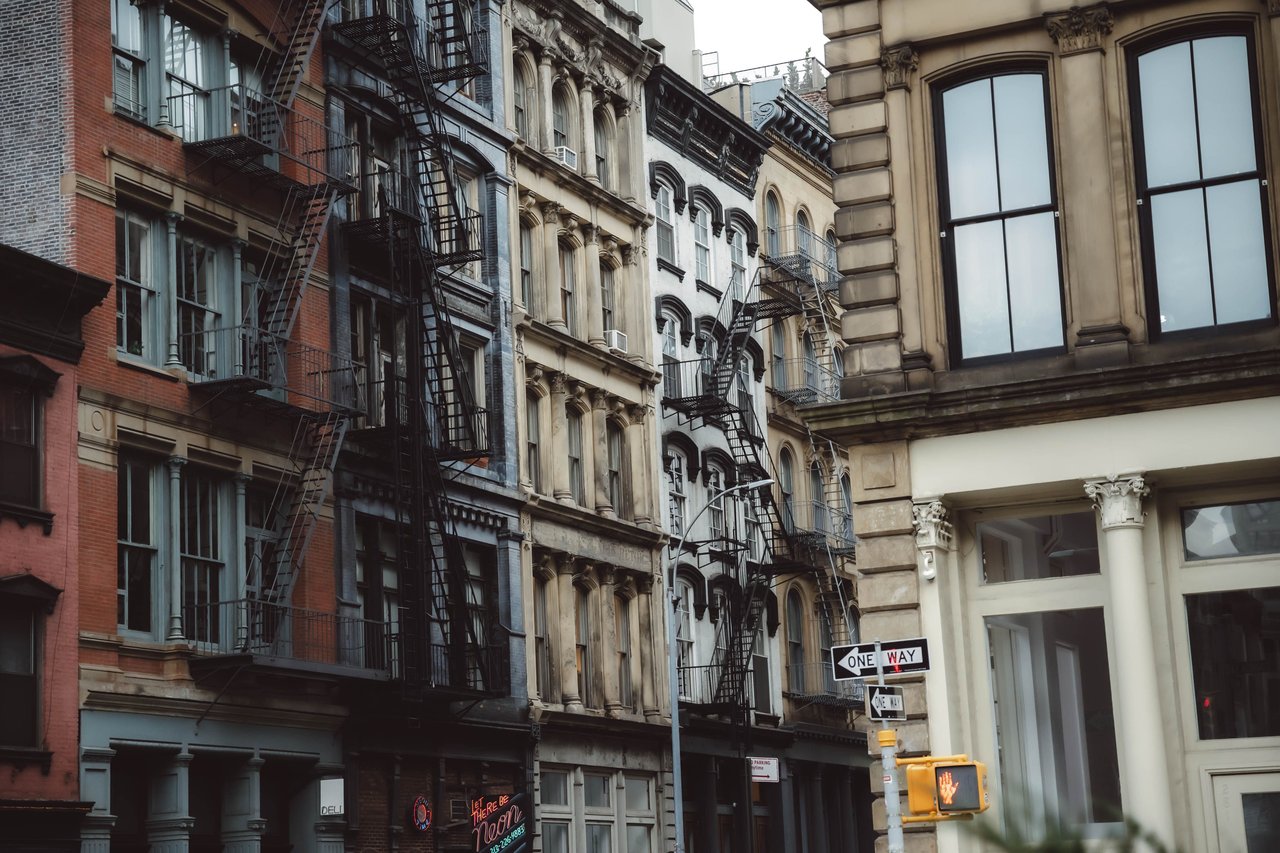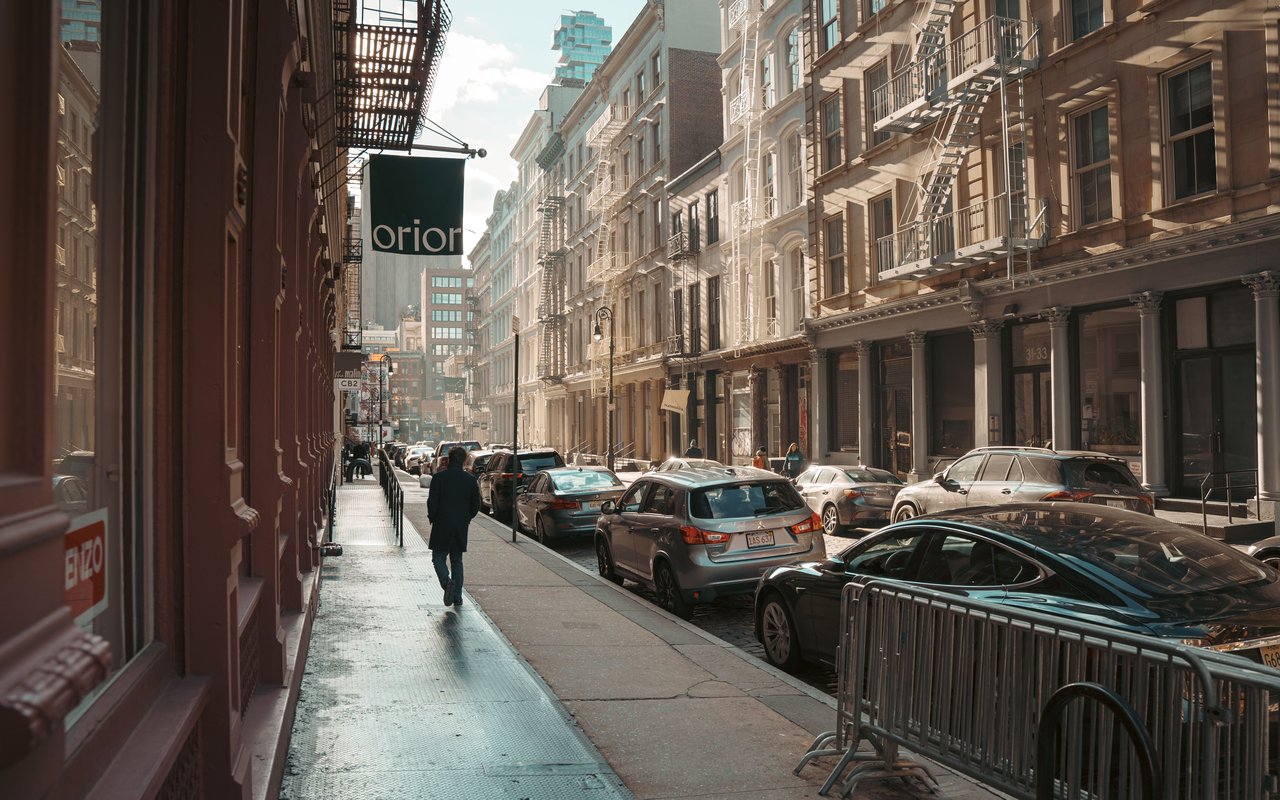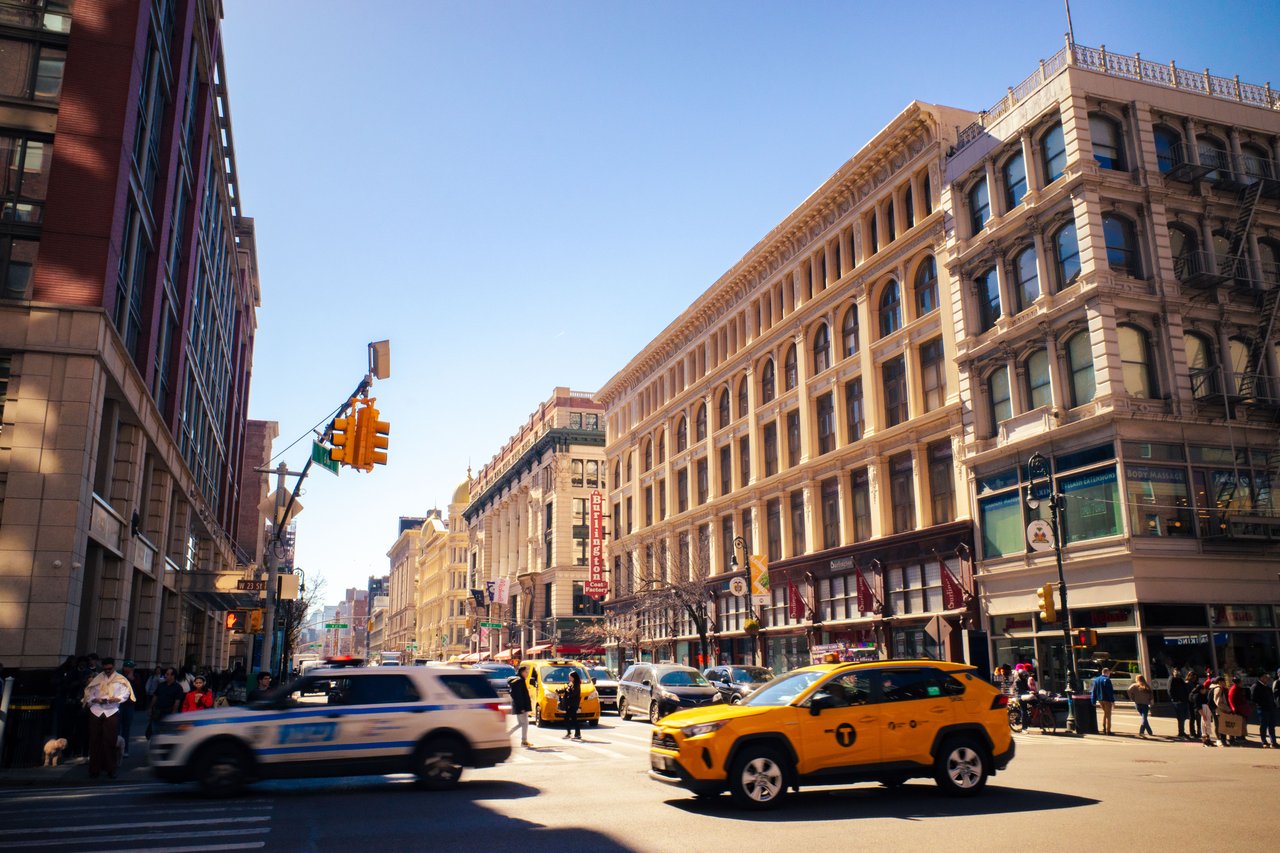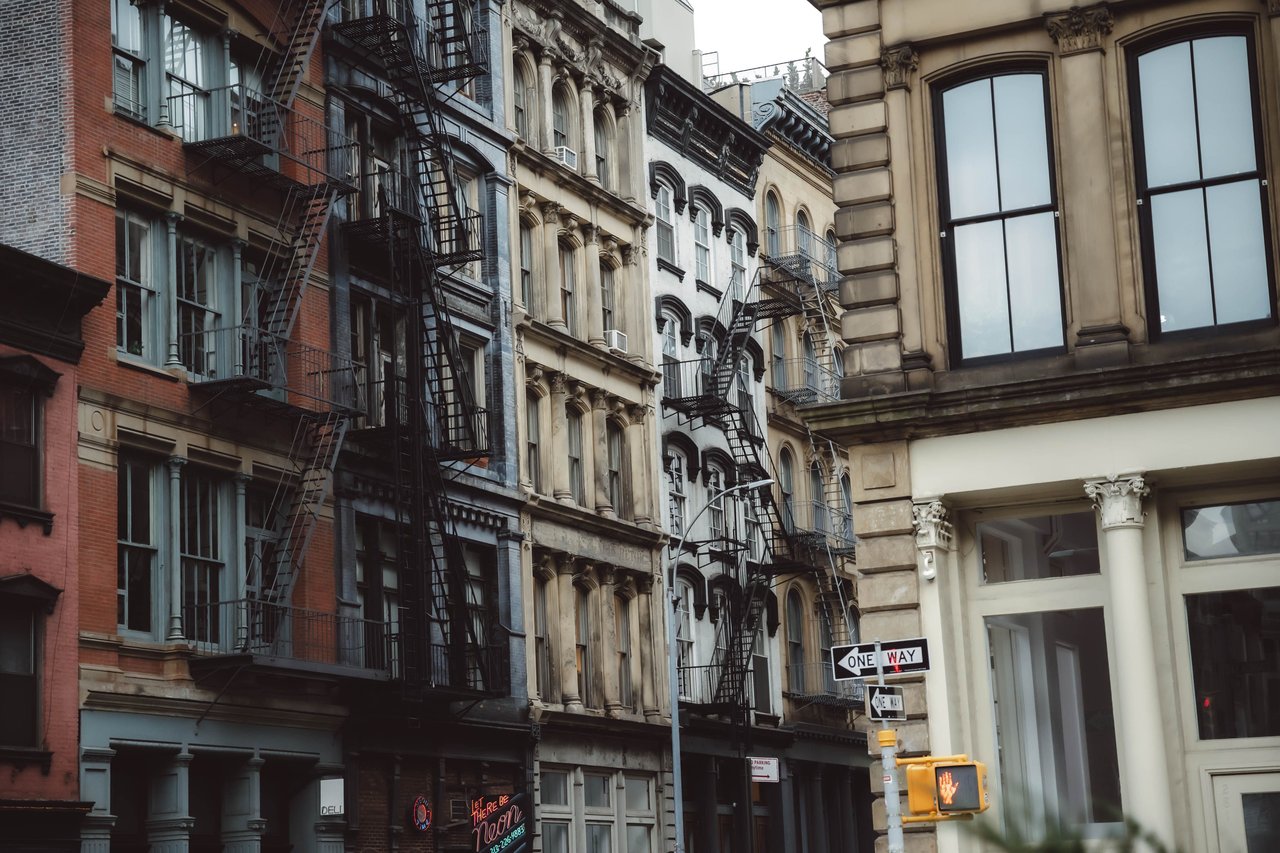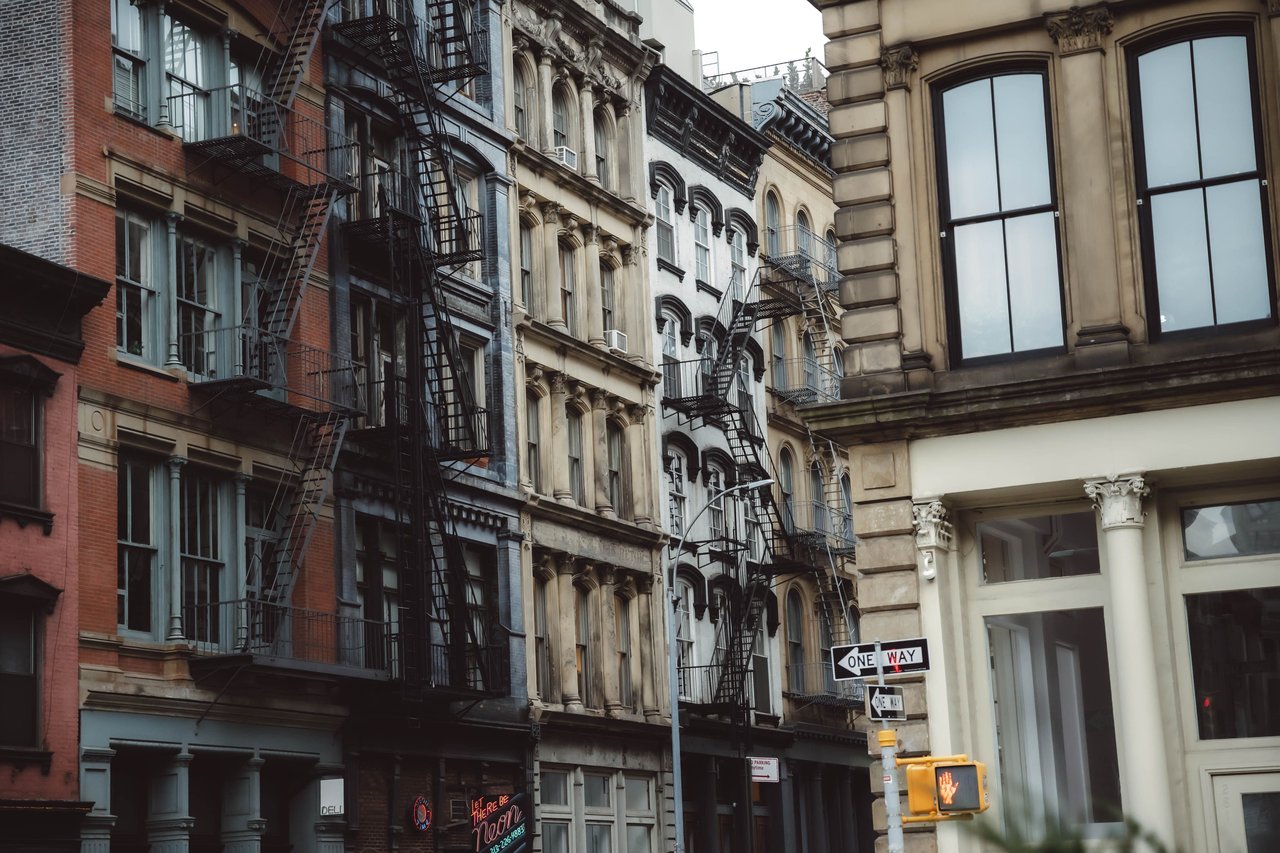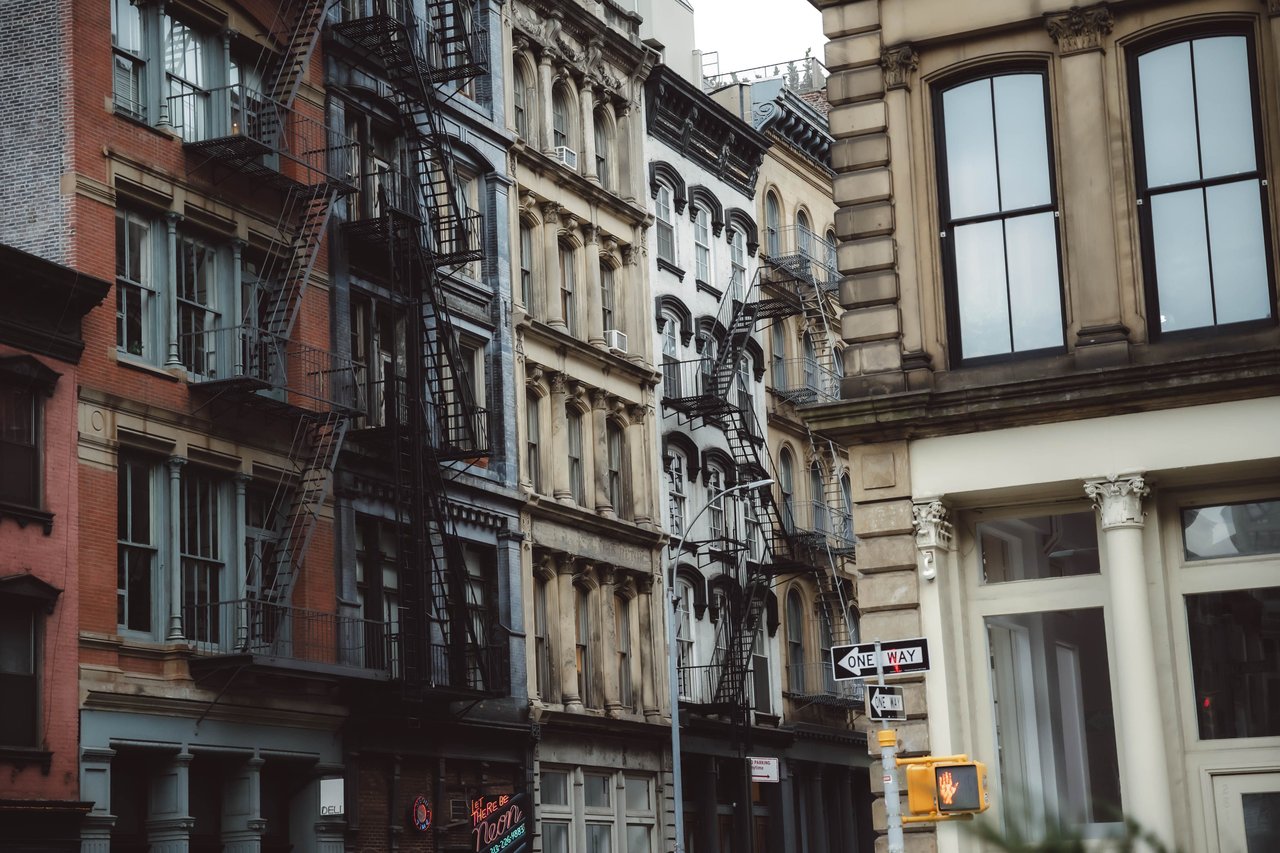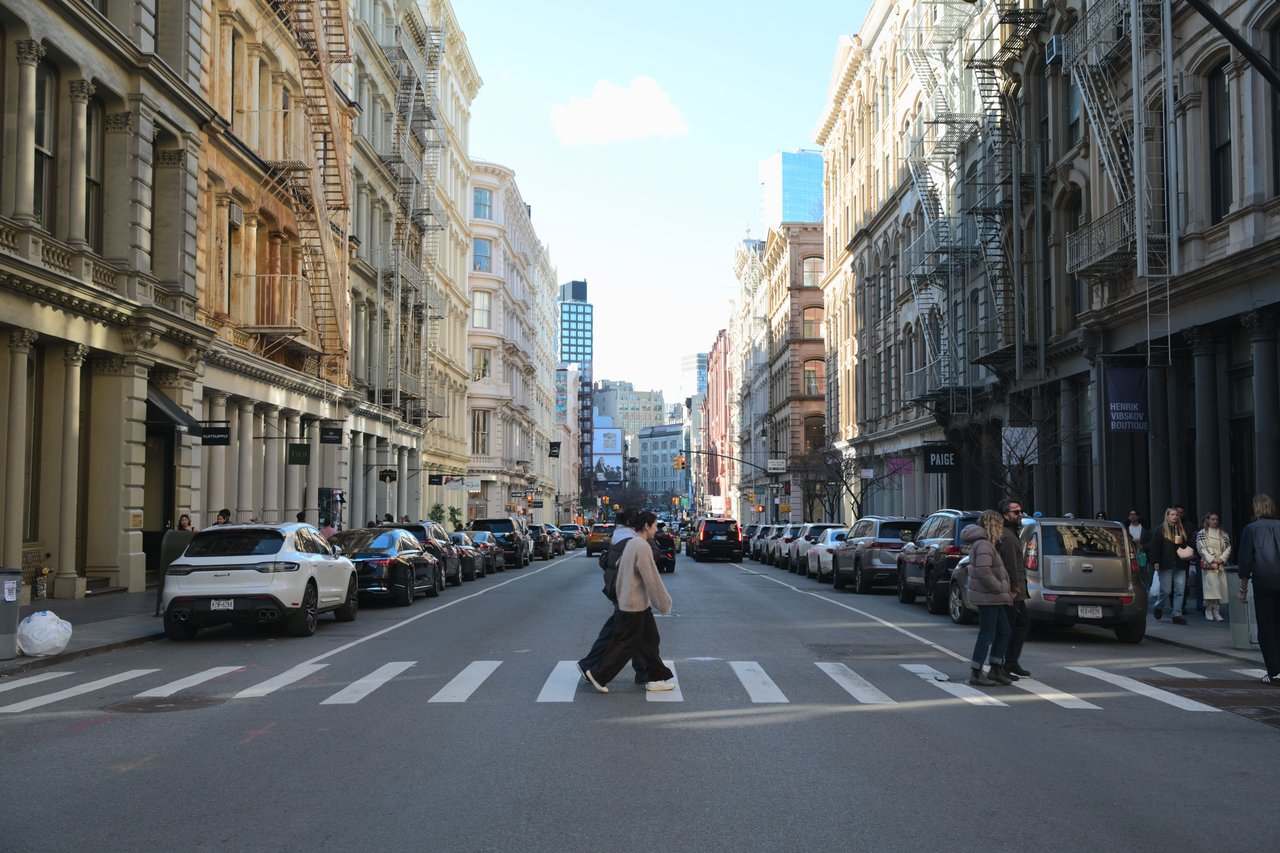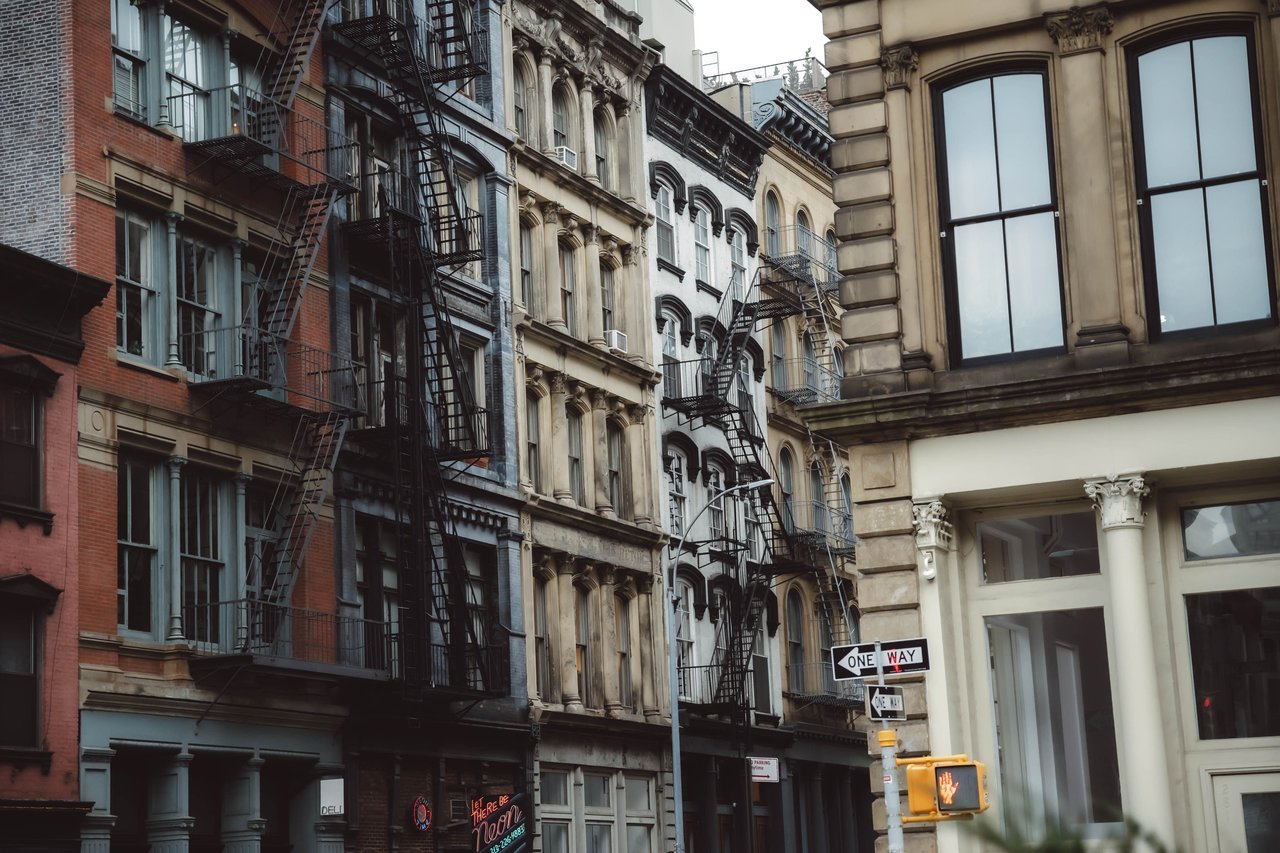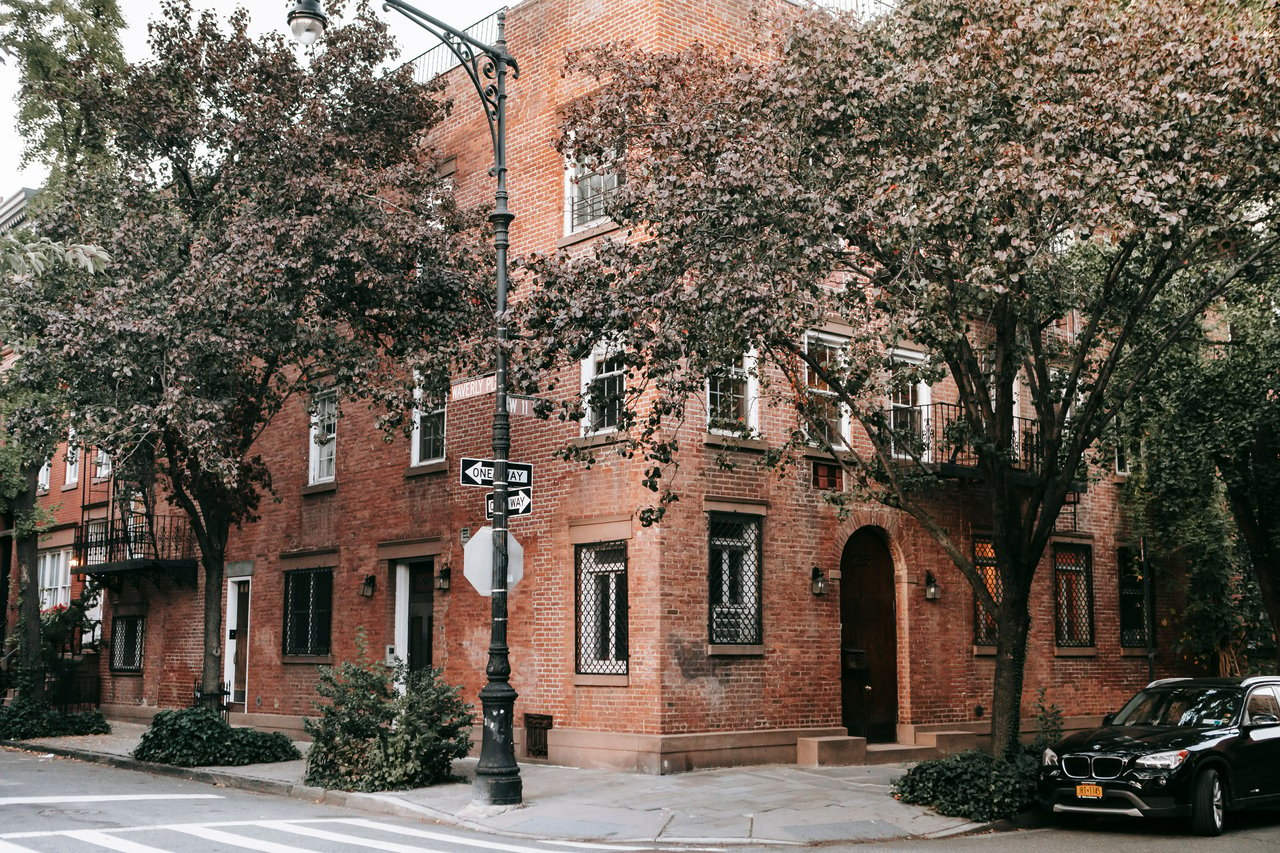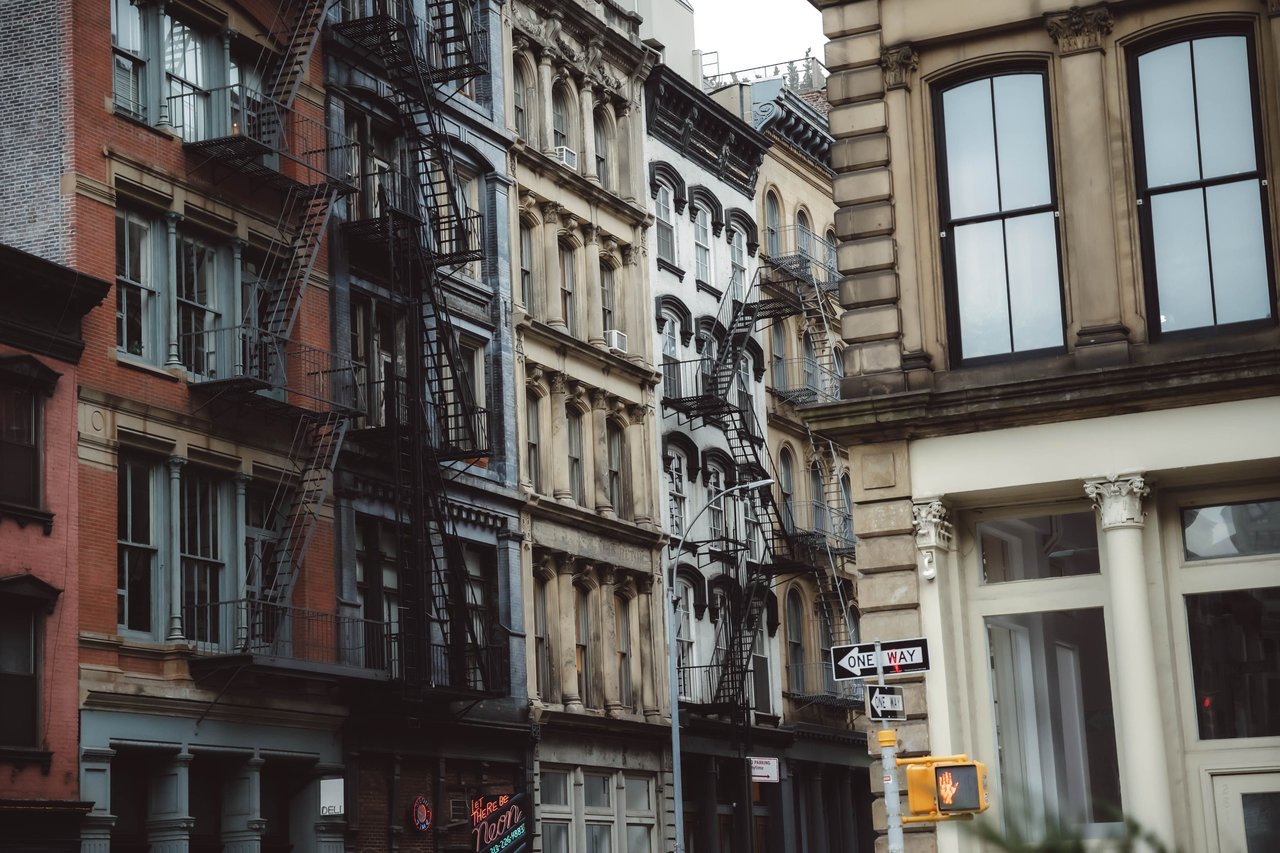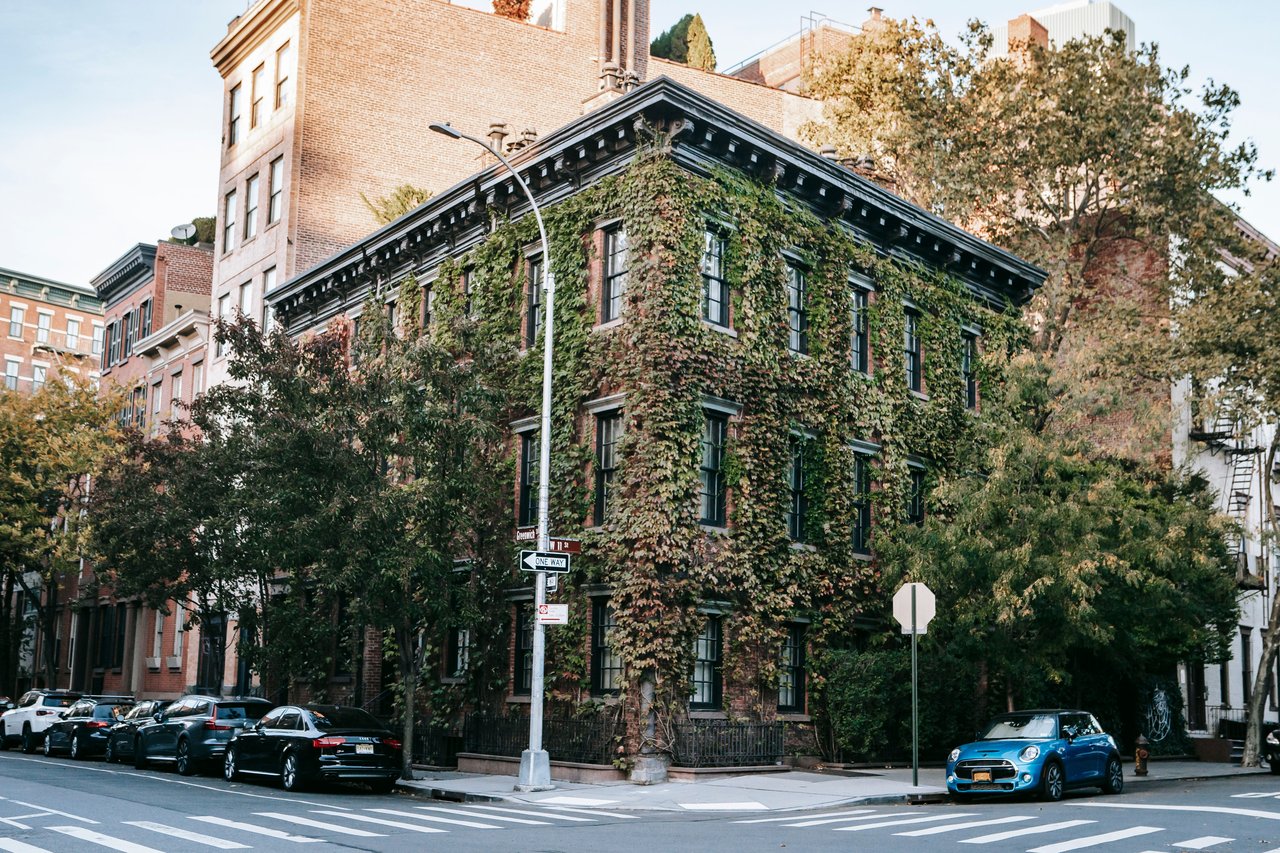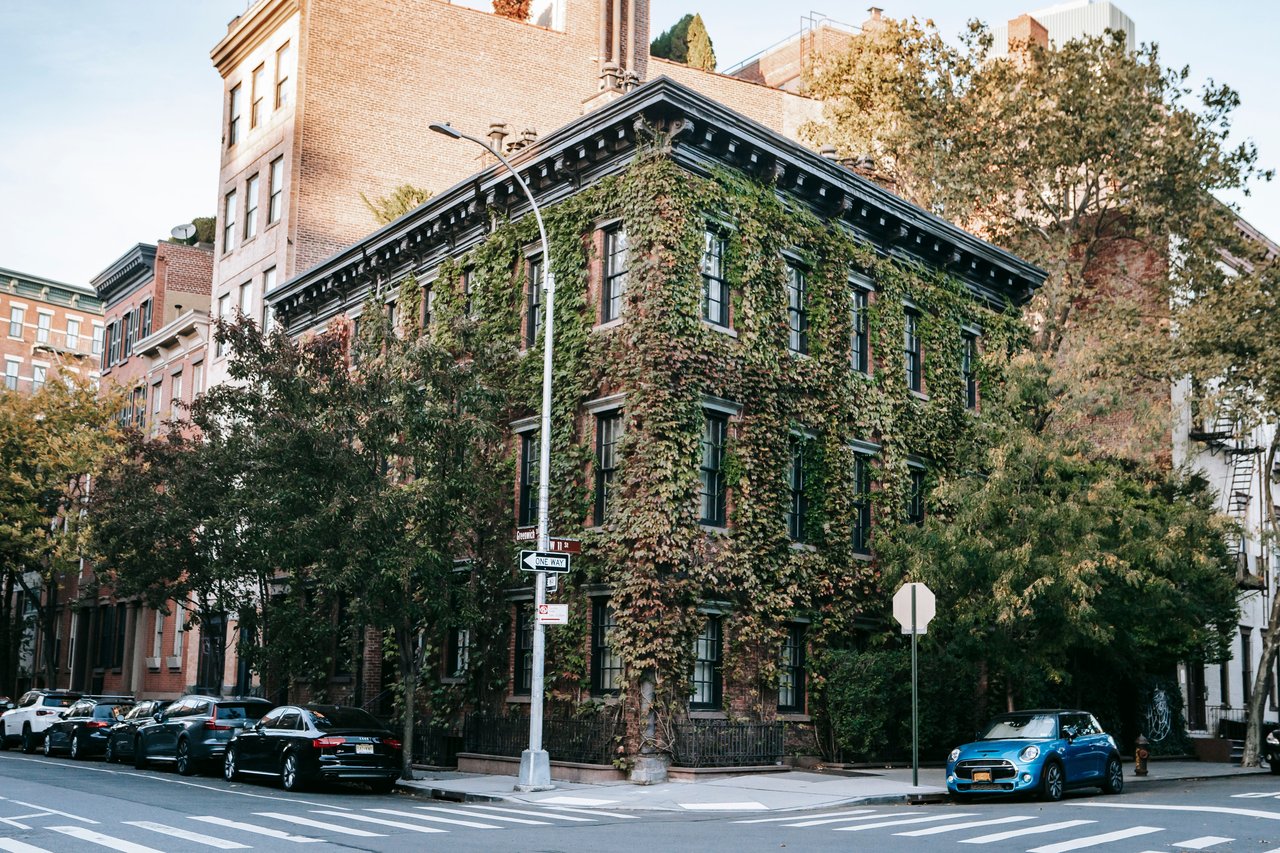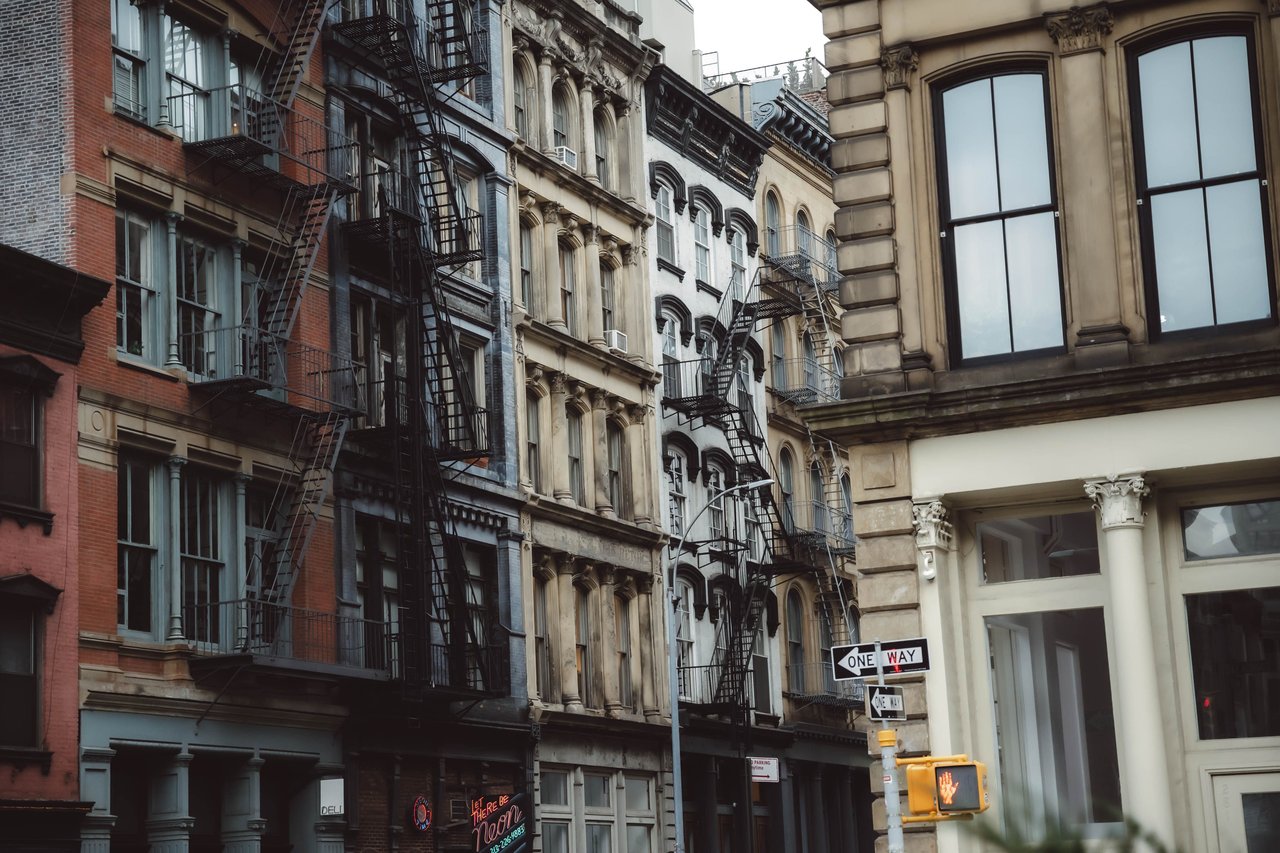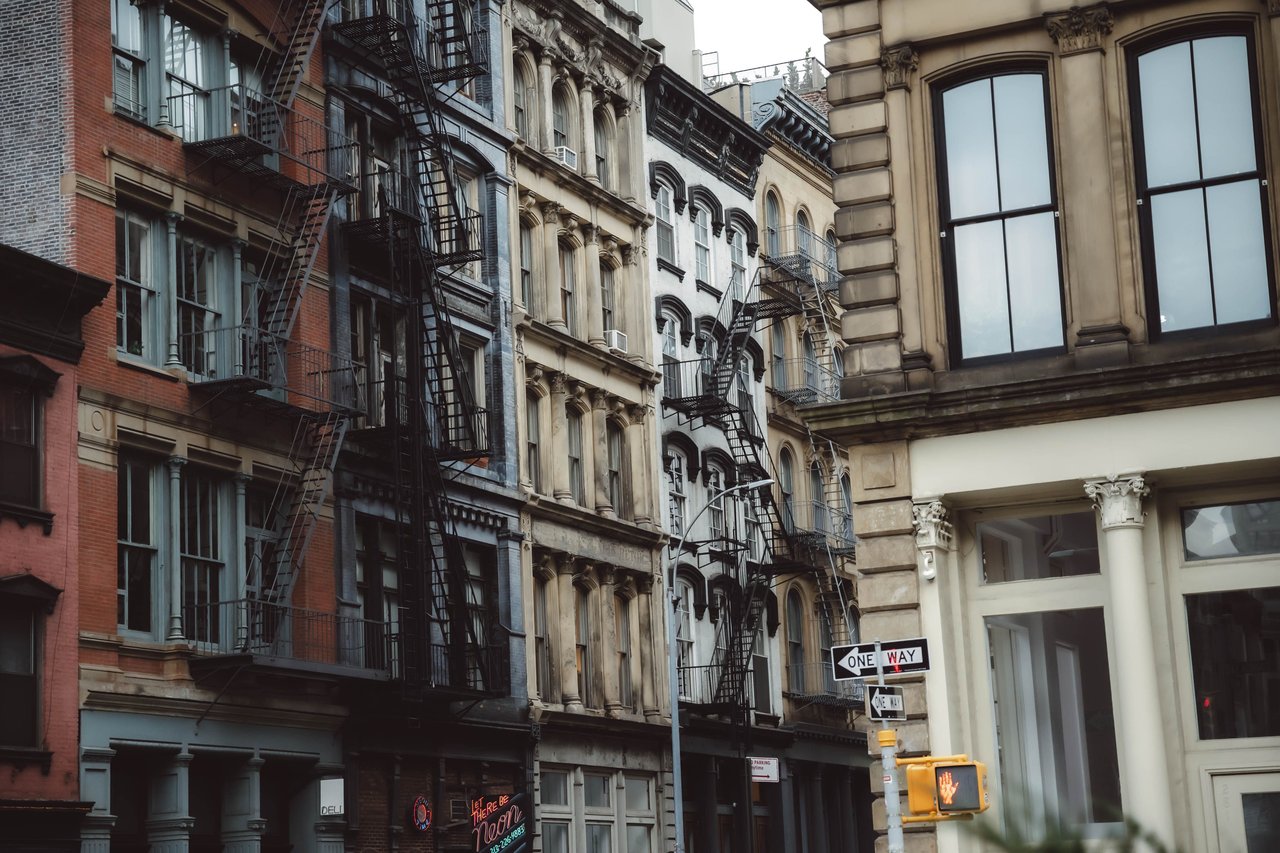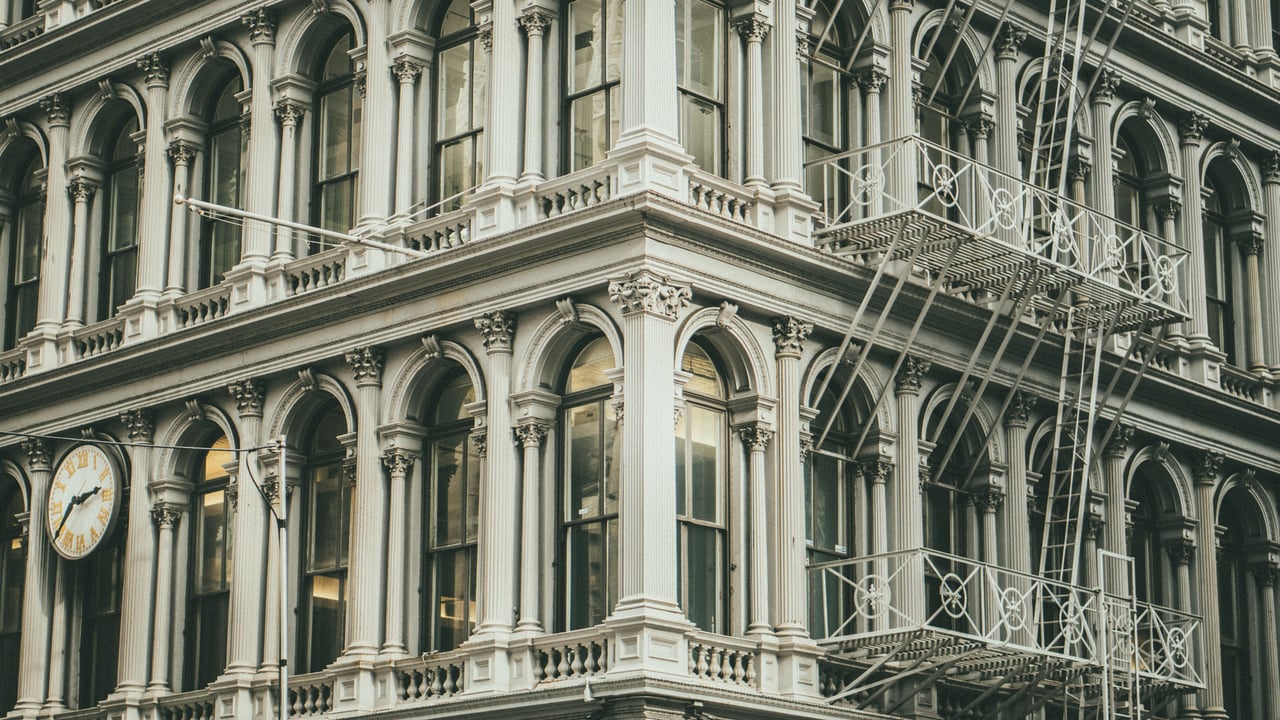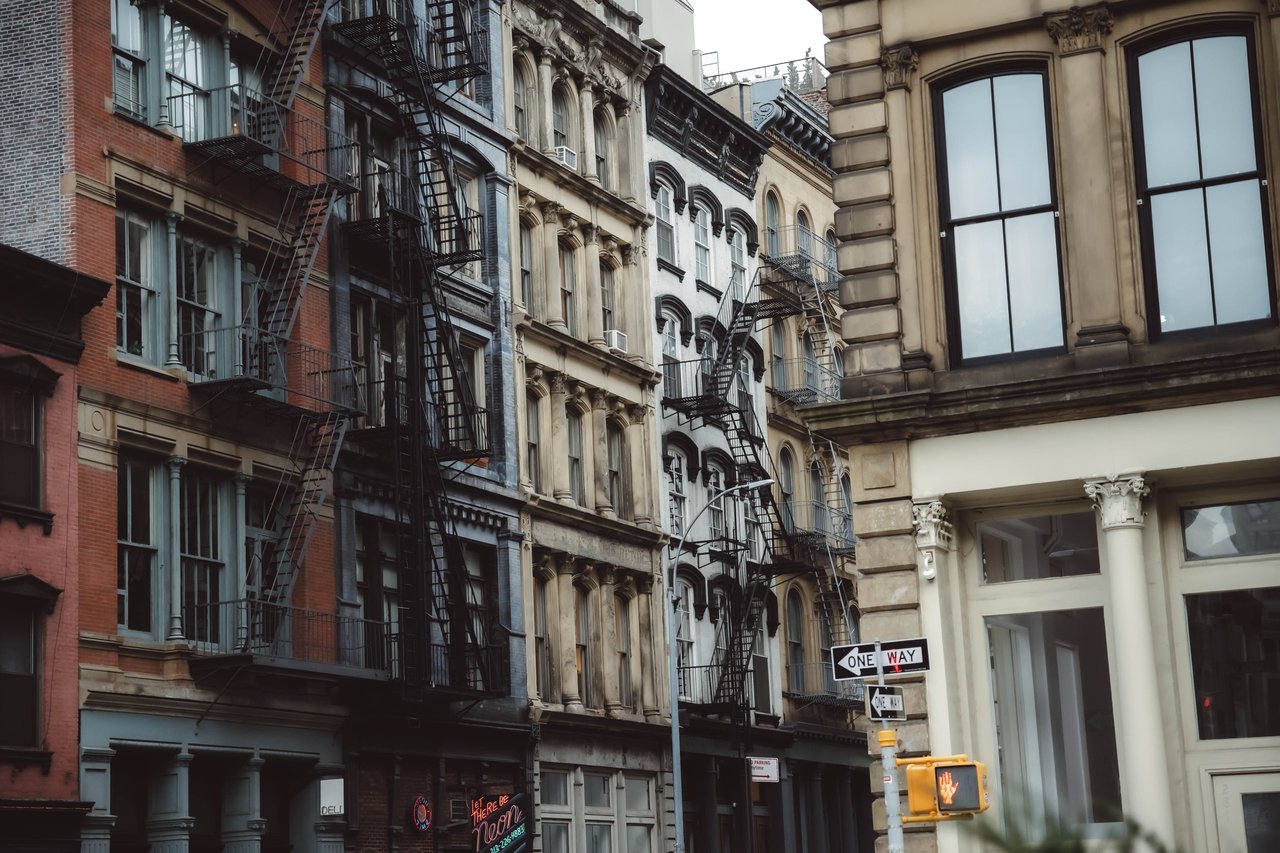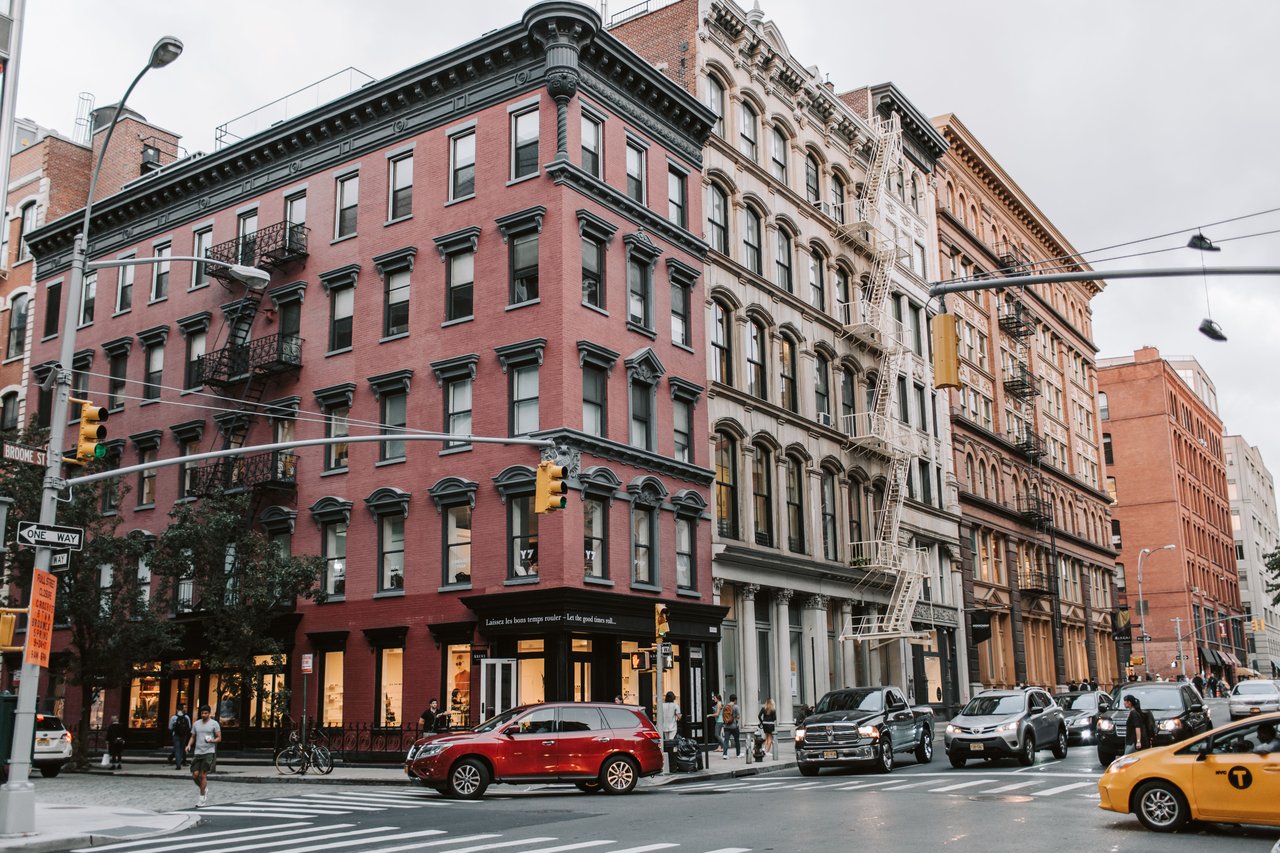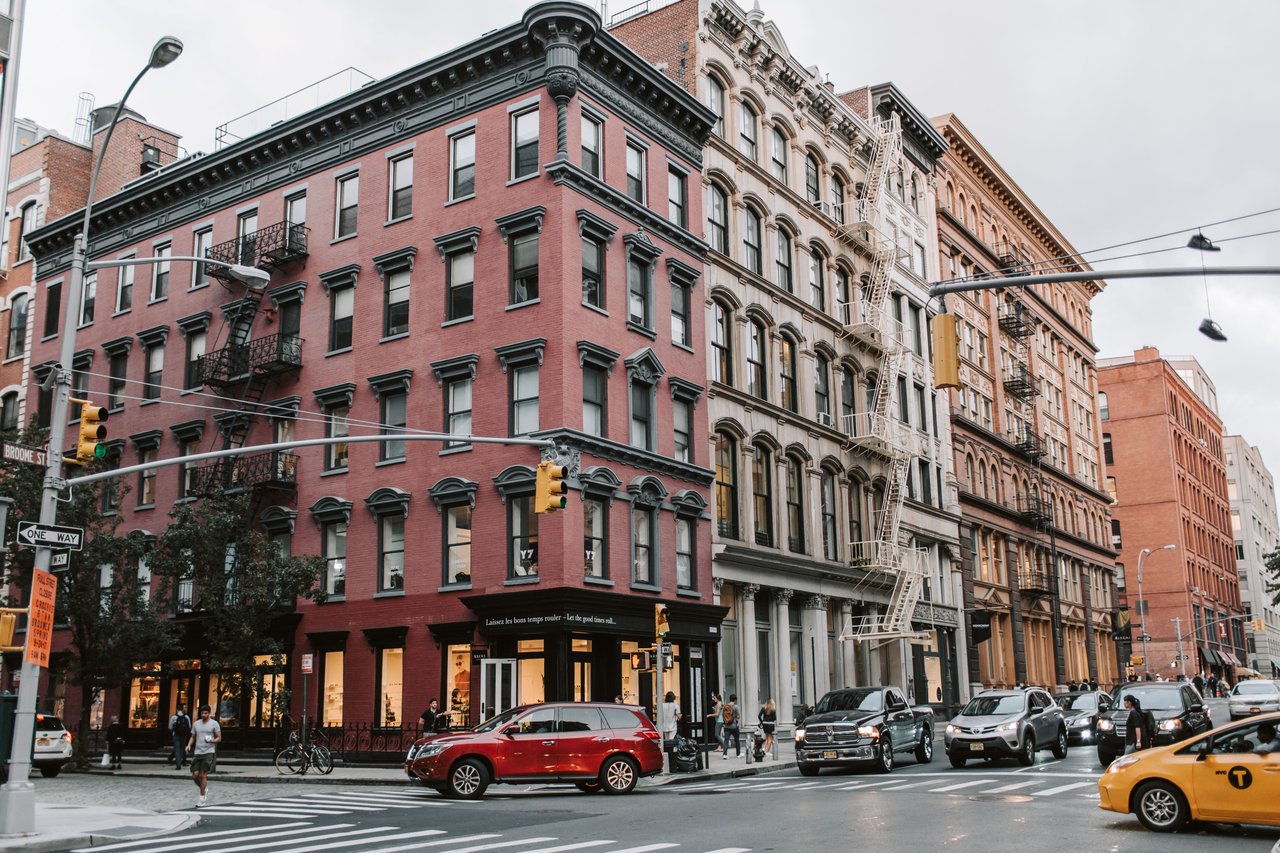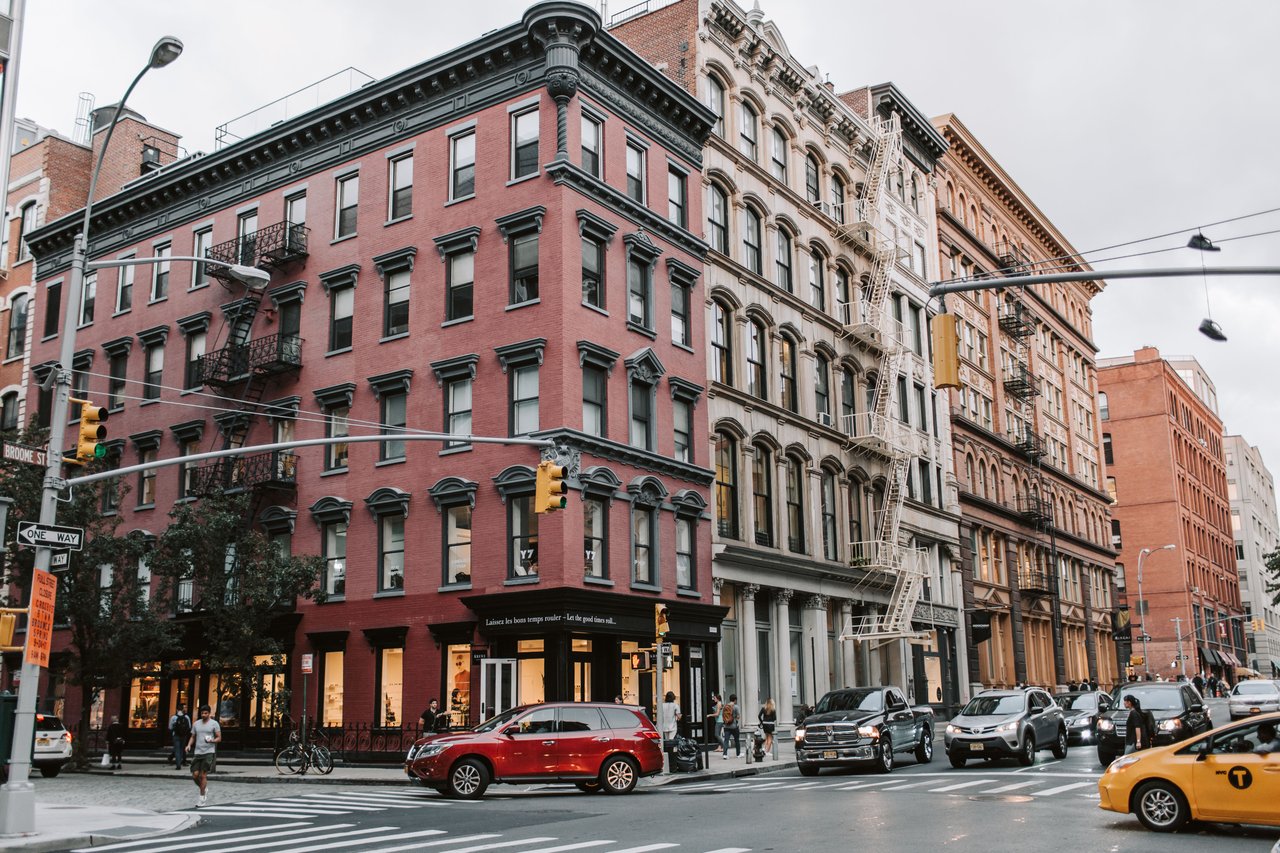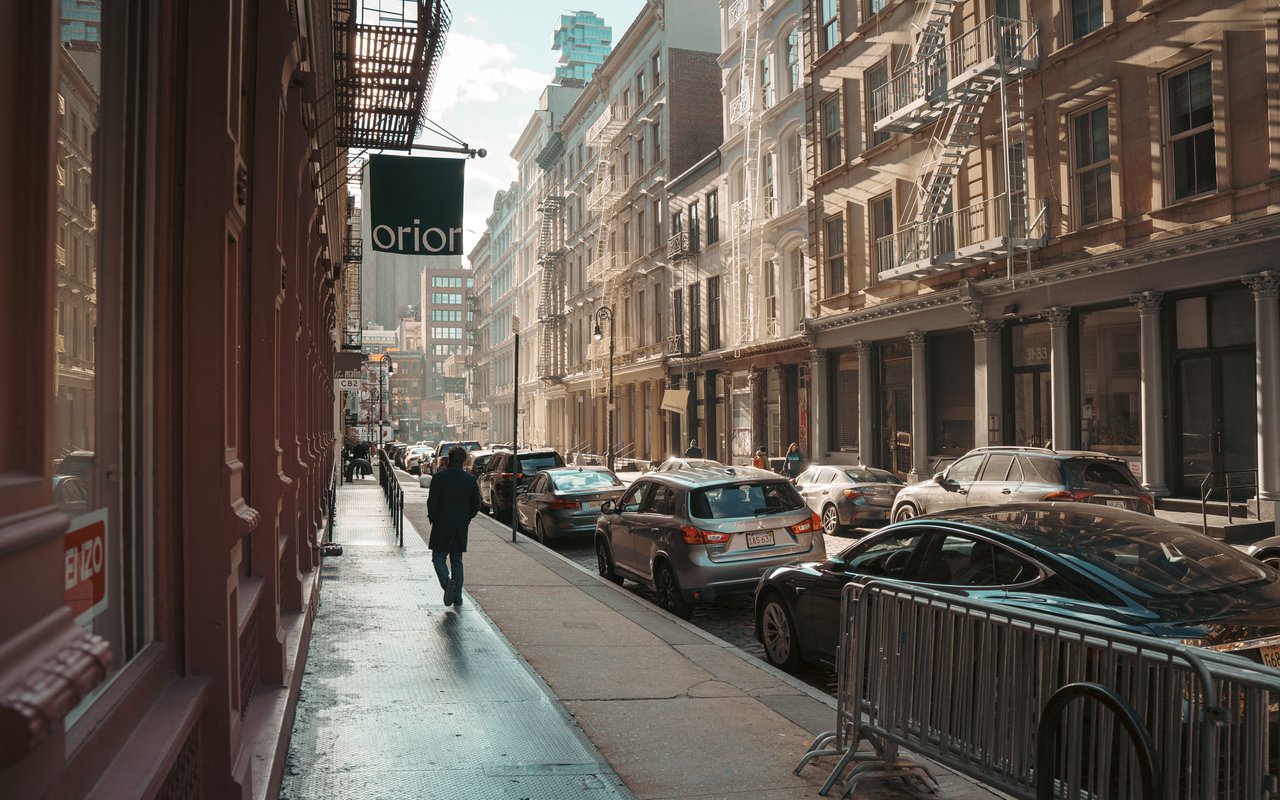
Broadway is one of the oldest and most recognizable streets in New York City, but its passage through SoHo reveals a particularly remarkable chapter of Manhattan's architectural history. Between Canal Street and Houston Street, Broadway is lined with nineteenth-century commercial buildings, elaborate cast-iron facades, former manufacturing lofts, and architectural landmarks that reflect the city's transformation into a major center of commerce and industry.
Long before SoHo became associated with art galleries, loft apartments, and international retail brands, Broadway was a fashionable shopping destination where wealthy New Yorkers visited elaborate stores selling fine household goods, clothing, jewelry, and imported merchandise. The commercial success of these establishments encouraged architects to experiment with new materials and construction methods, producing some of the most important examples of nineteenth-century commercial architecture in the United States.
Broadway is especially significant because its buildings document several generations of architectural innovation. The cast-iron facades of the 1850s and 1860s demonstrate the possibilities of prefabricated construction, while the larger commercial structures of the late nineteenth century reflect the growing scale of wholesale businesses. By the early twentieth century, steel-frame construction and new decorative materials introduced buildings that anticipated the modern skyscraper.
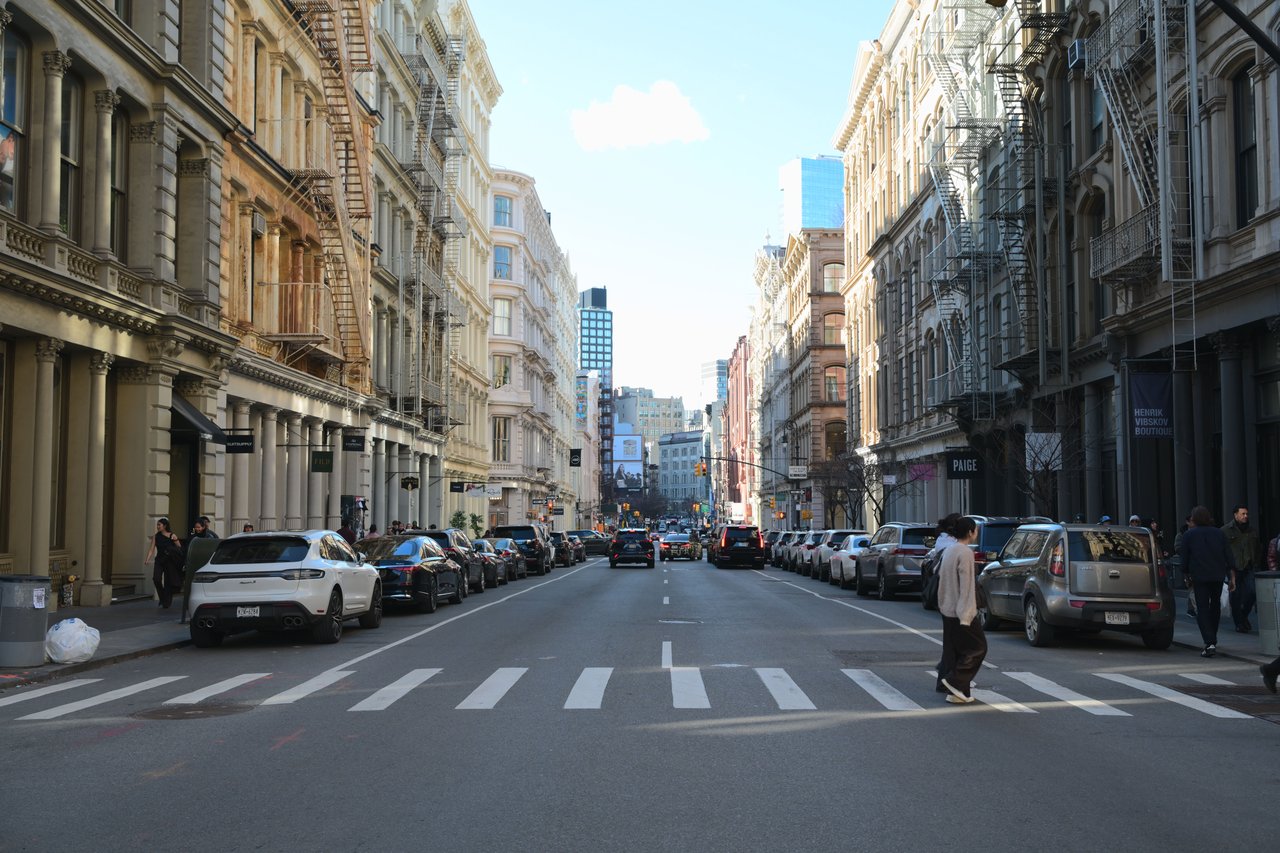
Today, the SoHo section of Broadway remains an extraordinary architectural corridor. Its historic buildings preserve the legacy of Manhattan's commercial expansion, while their continued use demonstrates how nineteenth-century architecture can accommodate the needs of a modern neighborhood.
The Early History of Broadway in Lower Manhattan
Broadway's history reaches back to the earliest periods of European settlement in Manhattan. Its southern sections developed along routes that connected the colonial settlement of New Amsterdam with the land farther north, including portions associated with older Indigenous pathways.
Unlike the regular street grid that later characterized much of Manhattan, Broadway follows a diagonal route through large sections of the island. Its irregular alignment reflects its development before the Commissioners' Plan of 1811 established the familiar grid of streets and avenues.
During the colonial period, Broadway was an important route for transportation and commerce. As New York expanded northward, the street became increasingly associated with residential development, shops, and public institutions.
By the early nineteenth century, the blocks between Canal Street and Houston Street were developing rapidly. Brick houses, small businesses, and workshops occupied the surrounding neighborhood, while Broadway increasingly attracted commercial establishments serving the expanding city.
The transformation of this area would accelerate during the middle of the century, when retail and wholesale businesses began replacing much of its earlier residential architecture.
What Does SoHo Stand For?
SoHo stands for South of Houston Street, the name used for the Manhattan neighborhood generally located between Houston Street and Canal Street.
The name became widely recognized during the 1960s and early 1970s, when artists, preservation advocates, and urban planners began identifying the former manufacturing district as a distinct neighborhood.
Before that transformation, the area was primarily associated with wholesale commerce, factories, warehouses, and commercial loft buildings. Many of the structures now used for residential and retail purposes were originally designed for merchandise storage, production, and business operations.
Broadway played an essential role in this development because it was one of the neighborhood's principal commercial corridors. Its stores attracted customers, while the surrounding side streets provided manufacturing and warehouse space.
The relationship between Broadway's commercial establishments and SoHo's industrial buildings helped shape the architectural identity of the entire neighborhood.
Broadway Before the Cast-Iron Era
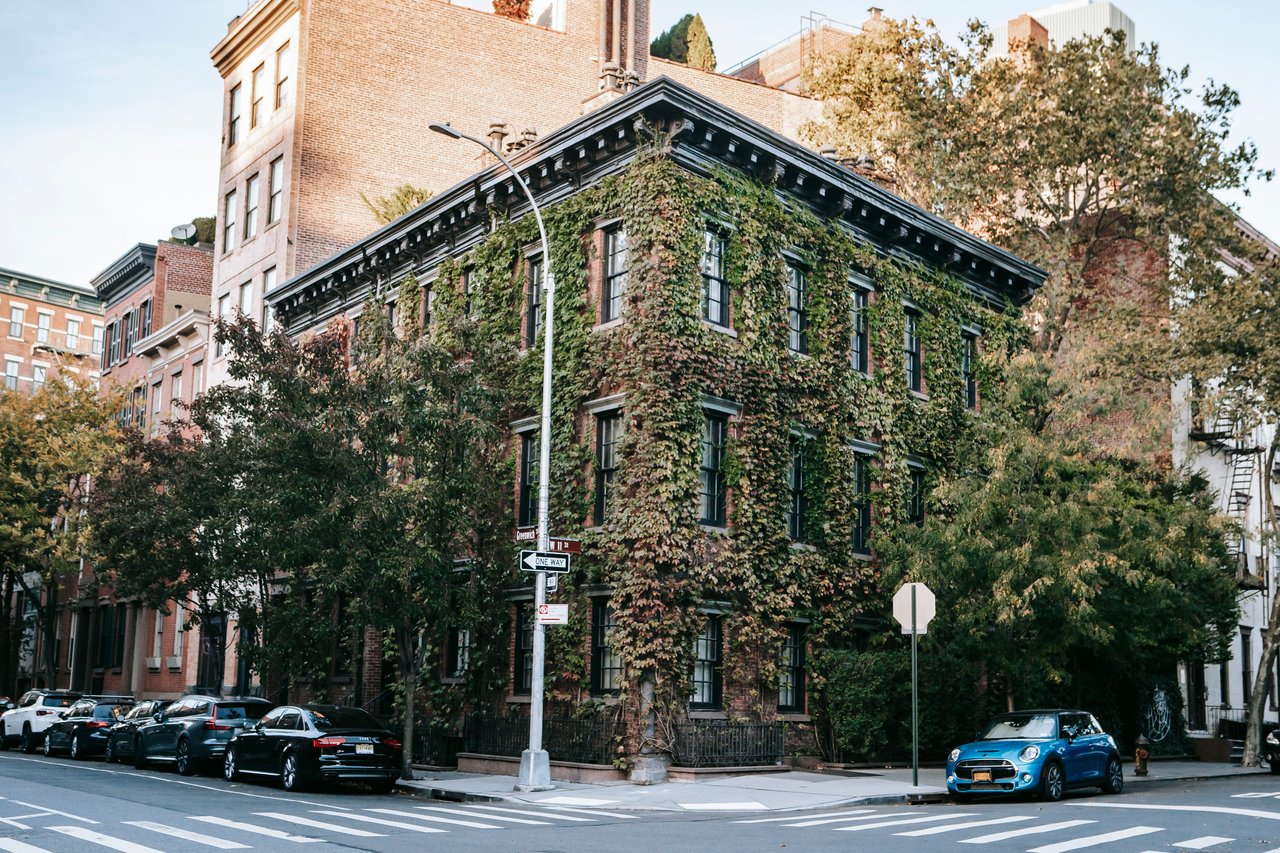
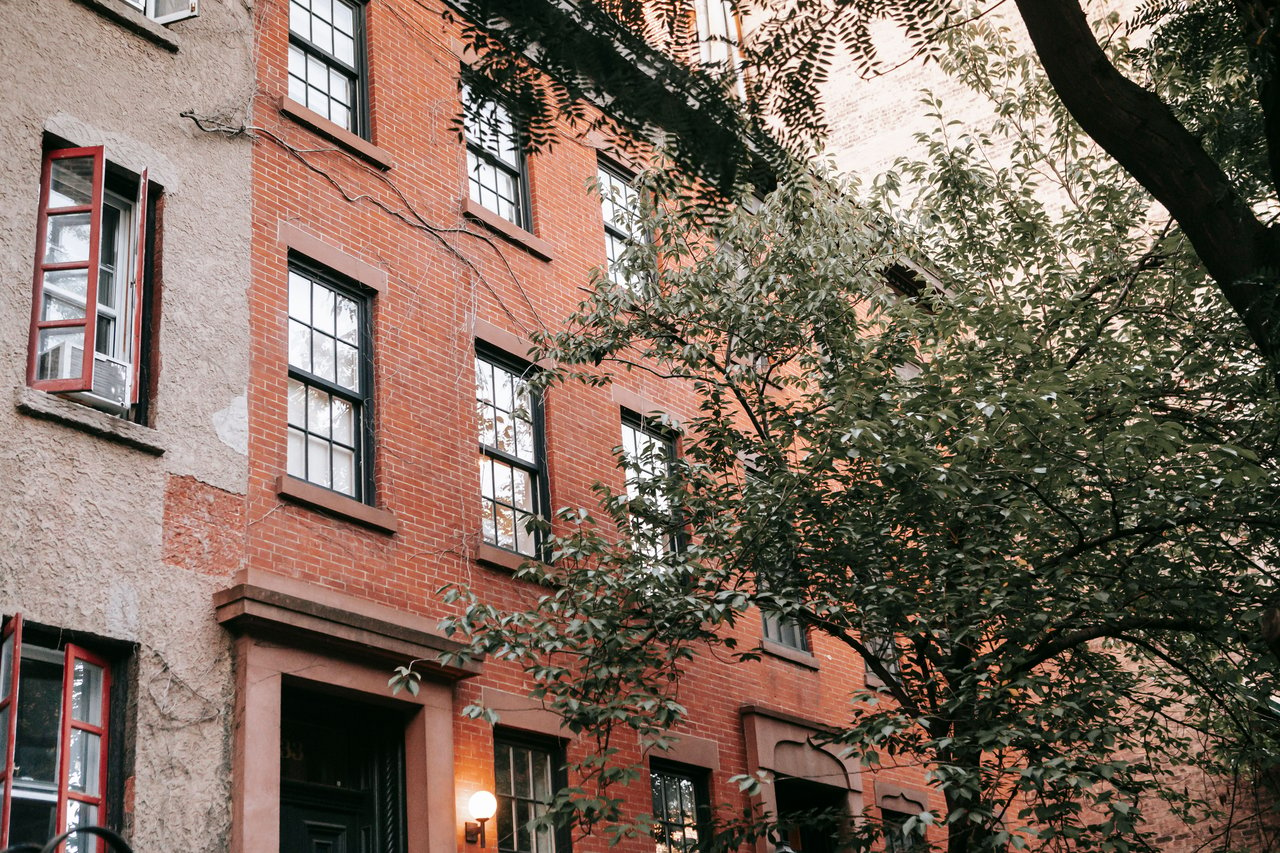
During the early nineteenth century, Broadway between Canal Street and Houston Street was a developing commercial and residential corridor. Federal-style brick houses and later Greek Revival buildings reflected the architectural preferences of the period.
Many early structures were relatively modest in scale, with symmetrical facades, regularly arranged windows, and restrained decorative details. Ground-floor shops gradually appeared as commercial activity increased.
As Manhattan's population grew, Broadway became increasingly attractive to merchants seeking prominent locations. The street's accessibility and reputation encouraged the development of larger retail establishments.
By the middle of the nineteenth century, substantial commercial buildings were replacing earlier houses. These new structures incorporated larger storefront windows, more elaborate facades, and spacious interiors designed for merchandise display.
The architectural transformation reflected the growing importance of retail presentation. Merchants wanted buildings that would attract customers while conveying the quality and prestige of their businesses.
This demand helped encourage the adoption of cast iron, a material that would fundamentally change the appearance of Broadway and the surrounding SoHo neighborhood.
Broadway and the Rise of Fashionable Shopping
During the middle of the nineteenth century, the SoHo section of Broadway became part of New York City's fashionable shopping district.
Retail establishments selling luxury goods, textiles, jewelry, household furnishings, and imported merchandise occupied increasingly elaborate buildings. Stores competed for attention through impressive storefronts and decorative architectural designs.
Large display windows became particularly important because they allowed merchants to present merchandise directly to pedestrians. Elaborate columns, arches, and cornices gave commercial buildings a sense of architectural distinction.
As the retail district expanded, Broadway became known for its substantial stores and fashionable shopping environment. The surrounding neighborhood also benefited from the growth of wholesale trade, with manufacturers and distributors occupying nearby commercial lofts.
The concentration of businesses encouraged developers to construct larger buildings with increasingly sophisticated architectural features.
The surviving facades along Broadway preserve this period when commercial architecture became an important expression of New York's growing economic influence.
Why Is Broadway Famous for Cast-Iron Architecture?
Broadway is one of the most important streets in the history of American cast-iron commercial architecture.
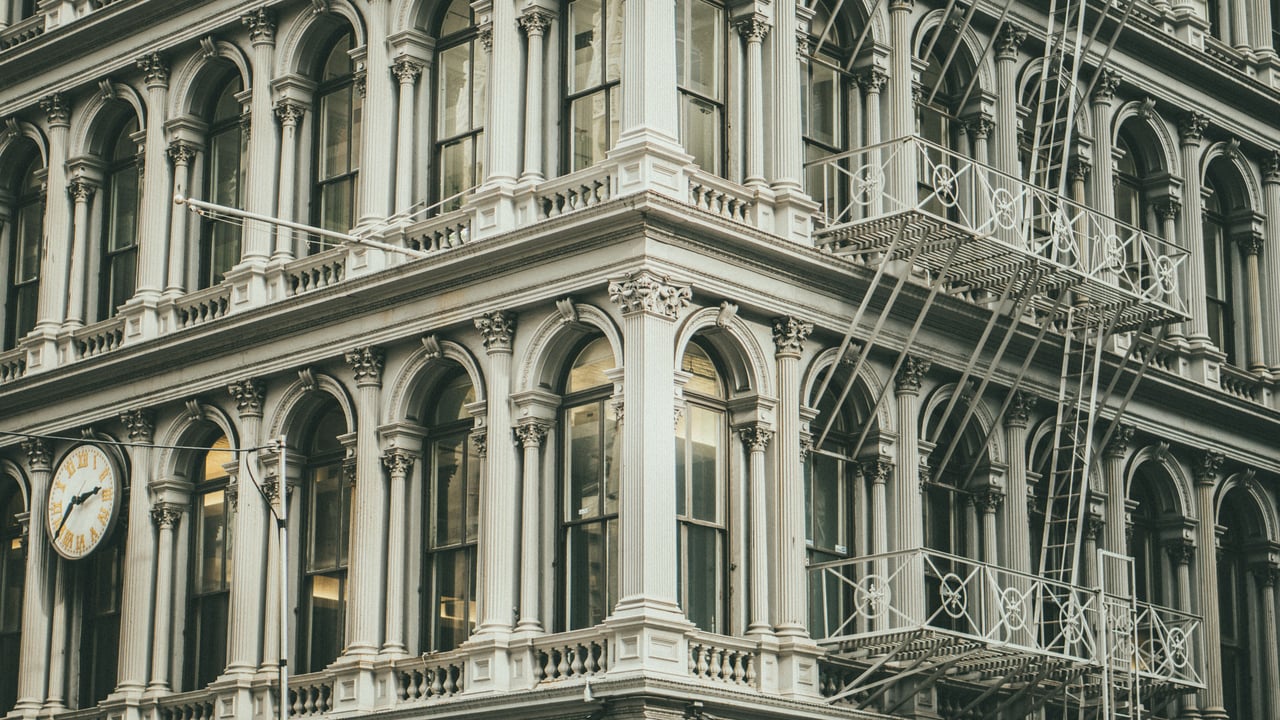
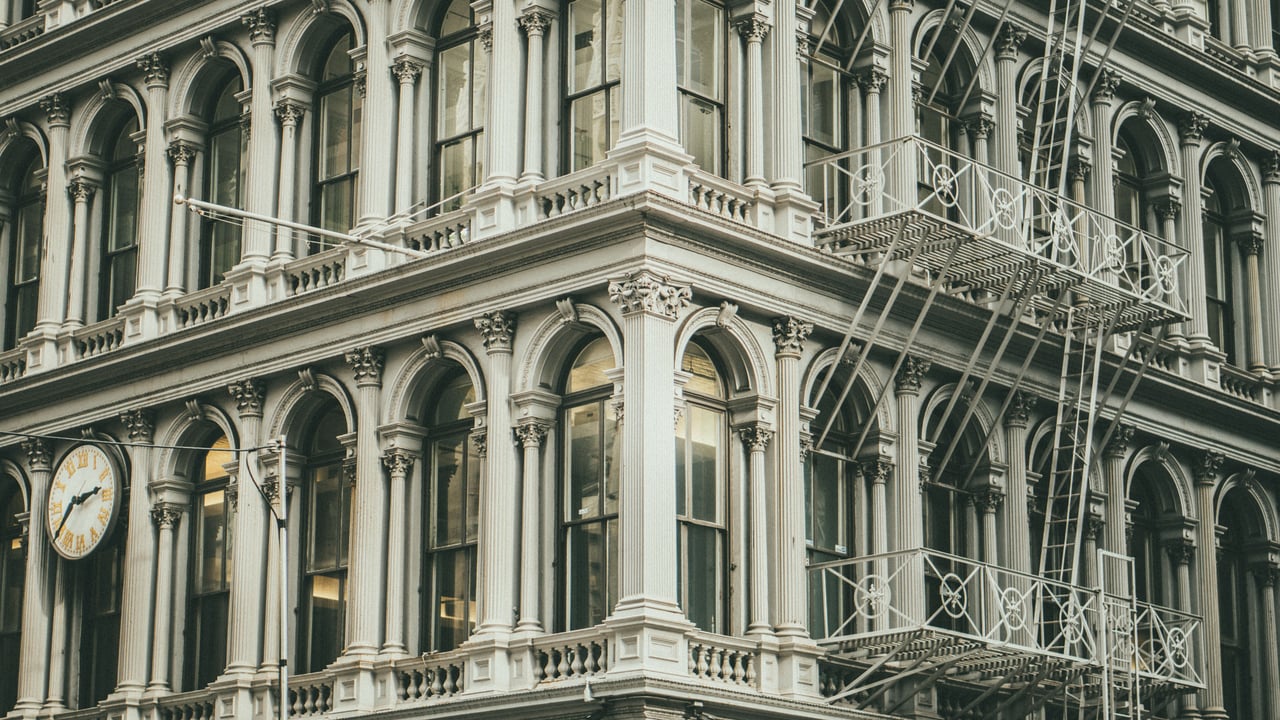
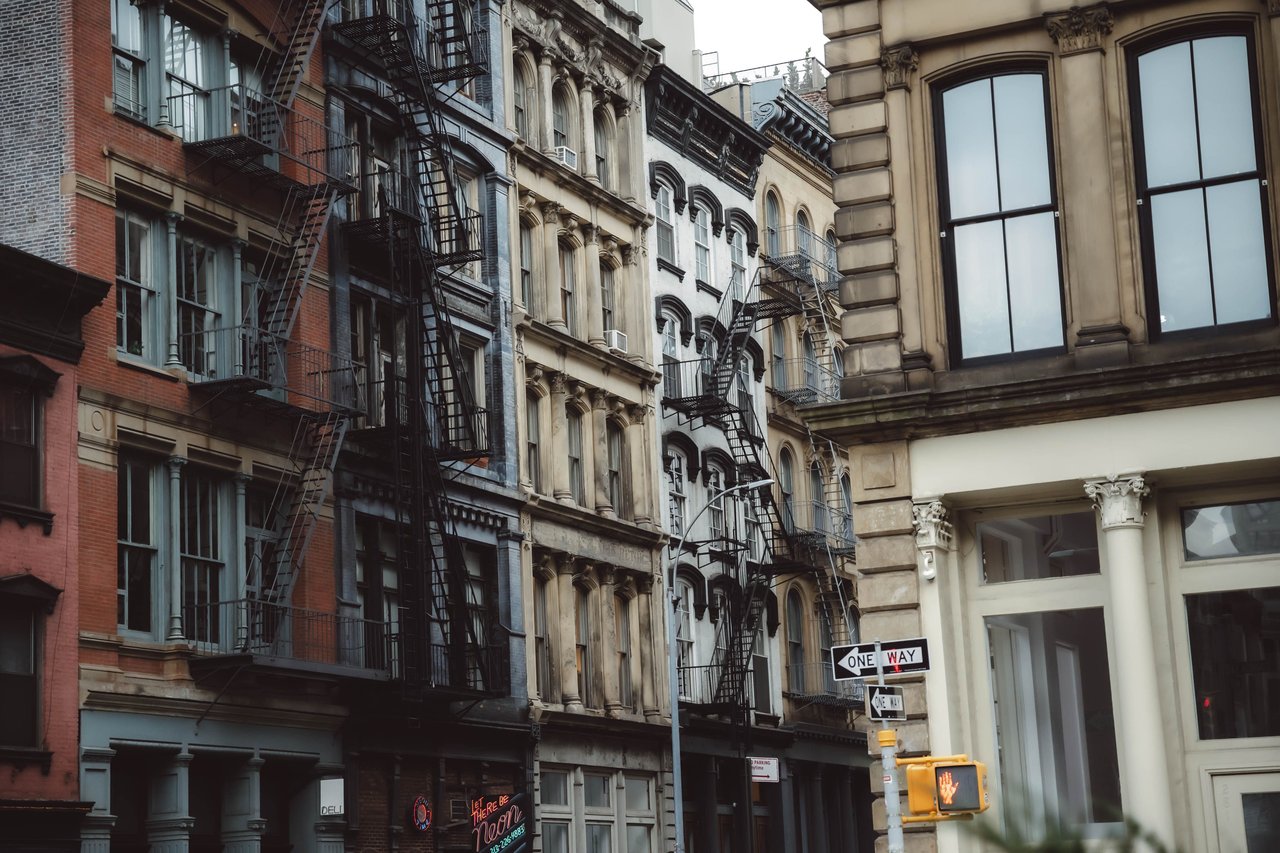
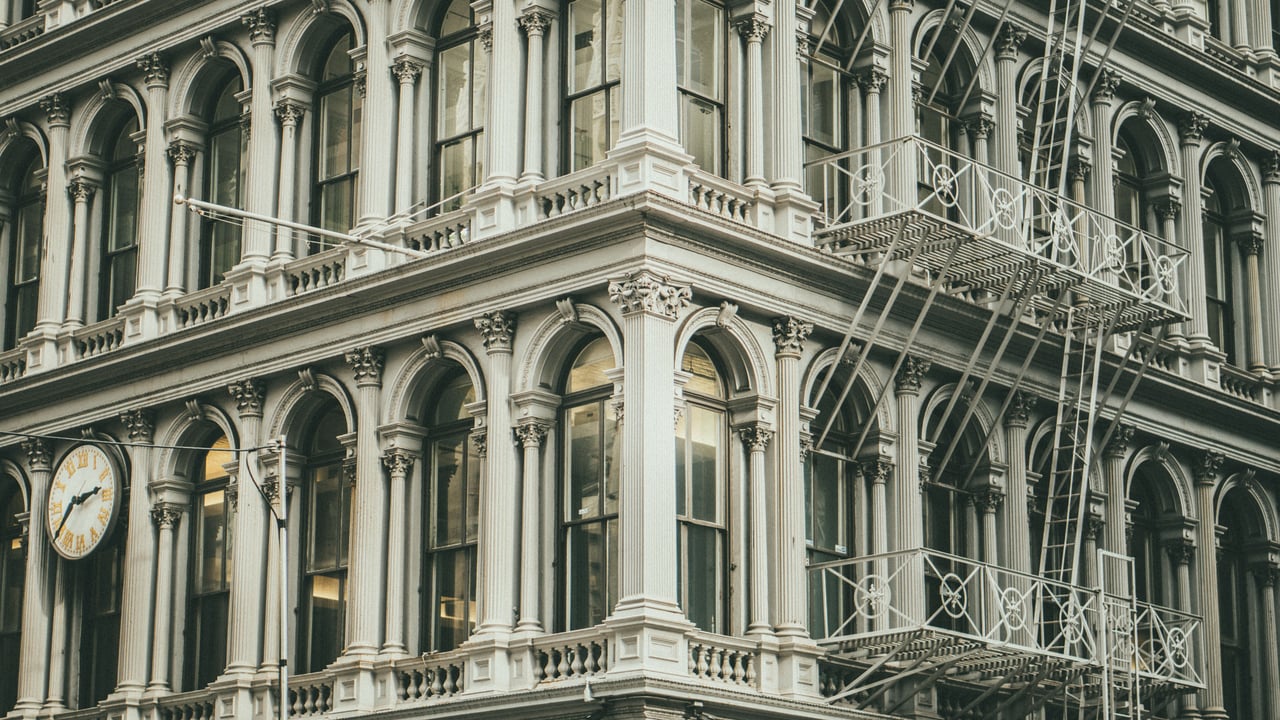
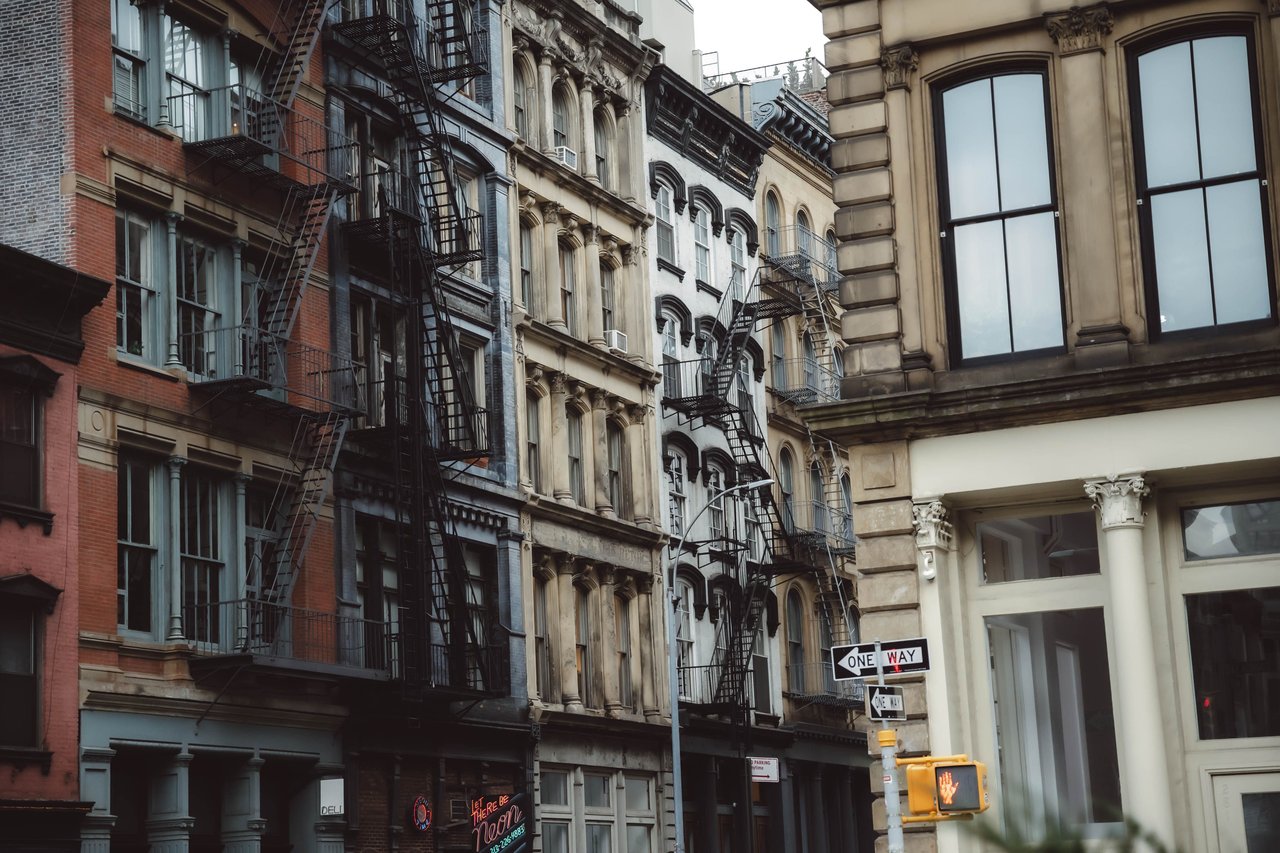
During the nineteenth century, cast iron became popular because architectural components could be manufactured in foundries using reusable molds. Columns, arches, window surrounds, and decorative cornices were produced separately and assembled into elaborate building facades.
The technology offered several advantages for commercial construction. Prefabricated elements allowed decorative designs to be repeated efficiently, while relatively slender columns created opportunities for larger windows.
Merchants benefited from brighter interiors and more substantial display openings, while architects could produce elaborate facades inspired by classical European architecture.
Many cast-iron buildings were designed to resemble stone structures, incorporating Italianate and Renaissance Revival details. The manufactured components were frequently painted to imitate traditional masonry.
Broadway contains important examples of these techniques, demonstrating how industrial manufacturing transformed the design of commercial buildings during the nineteenth century.
The Architectural Character of Broadway Near Canal Street
At Canal Street, Broadway enters the southern portion of SoHo's historic commercial district.
The surrounding architecture reflects several periods of development, from early nineteenth-century masonry buildings to larger commercial structures constructed during the neighborhood's manufacturing expansion.
Canal Street itself has a history connected to the drainage of Collect Pond and the surrounding marshlands. During the early nineteenth century, improvements to the area's drainage and street network helped make the surrounding land suitable for increasingly substantial construction.
As commercial activity expanded, Broadway became a major retail and wholesale corridor. Buildings near Canal Street were adapted or replaced to accommodate stores, offices, and merchandise storage.
The resulting streetscape reflects the transition from an earlier residential neighborhood into a densely developed commercial district.
This southern section of Broadway provides an important introduction to the architectural styles that became prominent farther north.
Broadway Between Canal Street and Grand Street
The blocks between Canal Street and Grand Street illustrate the early commercial transformation of SoHo.
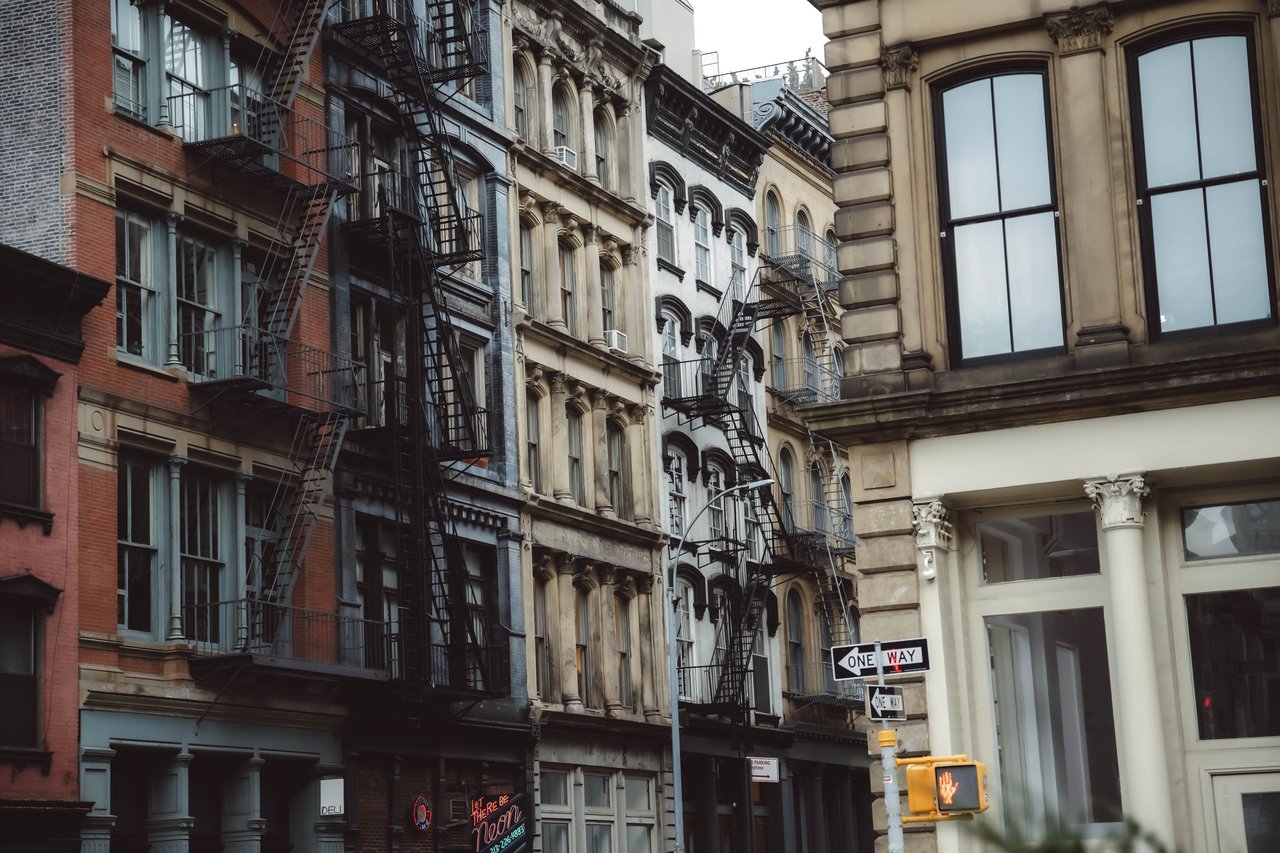
During the nineteenth century, developers constructed substantial buildings with decorative masonry facades, cast-iron storefronts, and large windows designed for commercial use.
Italianate architecture became particularly influential, introducing tall windows, projecting cornices, and ornamental details inspired by Italian Renaissance design.
As wholesale businesses expanded, buildings increasingly incorporated flexible interior floors for storage, offices, and manufacturing activities.
The architecture of this section demonstrates how commercial requirements shaped building design. Large windows provided natural light, while substantial ground-floor openings accommodated retail establishments and merchandise display.
Although individual buildings have undergone alterations over time, the surviving streetscape preserves important evidence of Broadway's nineteenth-century commercial development.
Broadway and Grand Street: A Commercial Crossroads
The intersection of Broadway and Grand Street became an important part of SoHo's commercial landscape during the nineteenth century.
Grand Street connected Broadway with the manufacturing and wholesale blocks farther west, while Broadway provided a prominent retail and business corridor.
The surrounding buildings reflect the growing importance of commercial architecture, incorporating decorative masonry, cast-iron elements, and substantial windows.
Many were designed to accommodate several commercial functions within a single property, with retail or showroom space at street level and offices, storage, or manufacturing areas above.
The intersection illustrates how Broadway's commercial activity influenced the surrounding neighborhood. Wholesale businesses benefited from proximity to prominent stores, while manufacturers occupied the larger loft buildings on nearby streets.
This relationship between retail and production became a defining feature of SoHo's development.
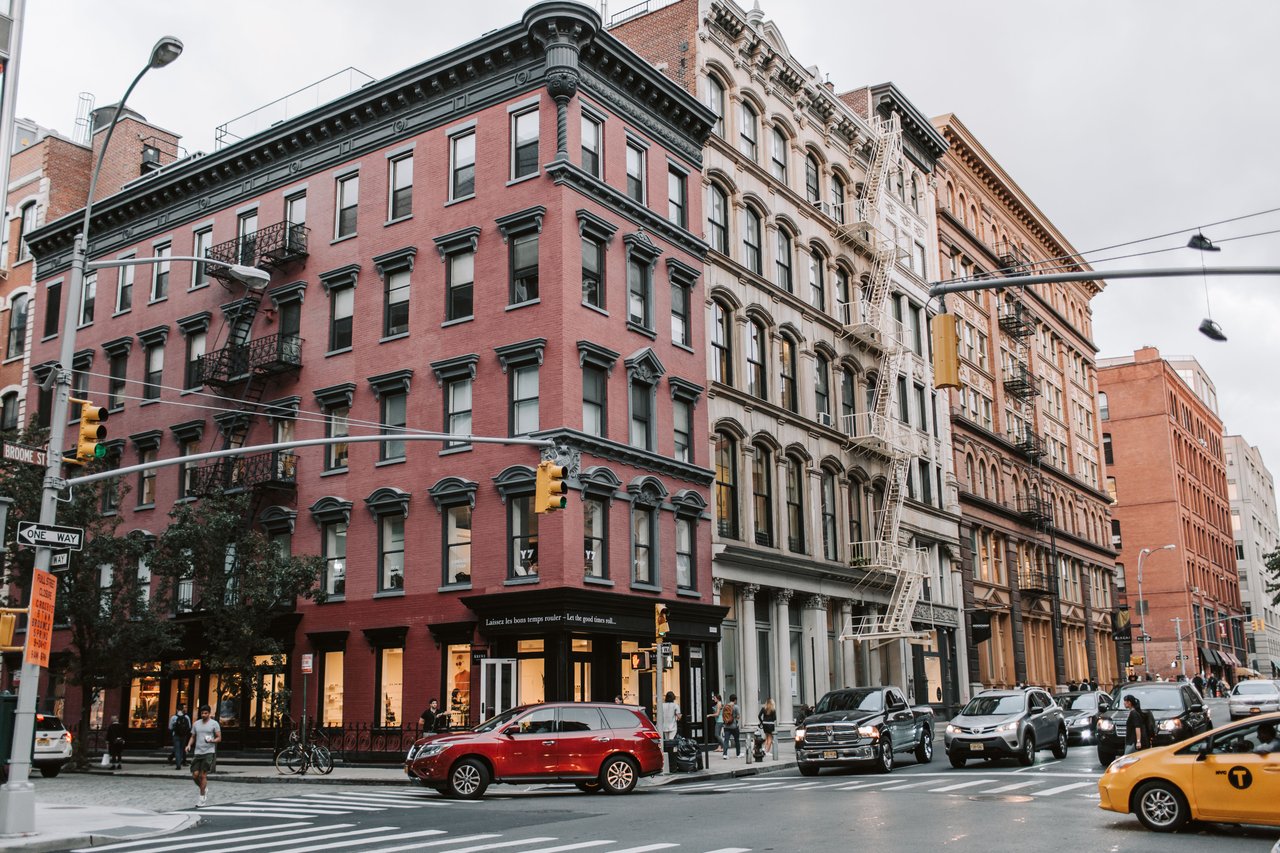
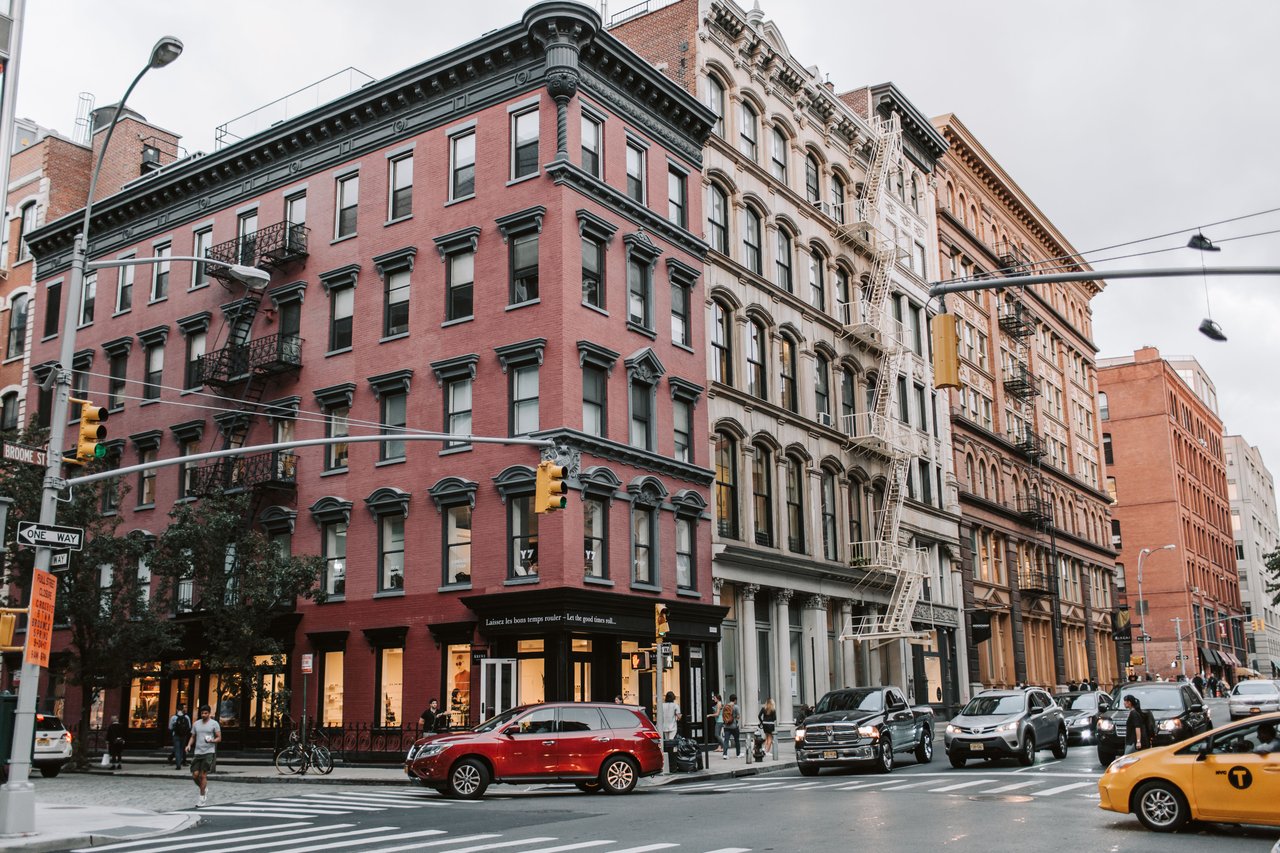
Broadway Between Grand Street and Broome Street
The block between Grand Street and Broome Street contains significant examples of nineteenth-century commercial architecture.
As Broadway's retail district expanded, developers constructed increasingly elaborate buildings intended to attract customers and accommodate growing businesses.
The facades incorporate cast iron, stone, and brick, with decorative columns, window surrounds, and projecting cornices reflecting different architectural traditions.
Some buildings emphasize classical proportions, while others demonstrate more elaborate Italianate and Renaissance Revival influences.
The architectural variety reveals how Broadway developed over several decades, with individual buildings responding to changing commercial requirements and design preferences.
Approaching Broome Street, the streetscape leads toward one of the most celebrated architectural landmarks in SoHo, the E. V. Haughwout Building.
The E. V. Haughwout Building: A Landmark of Cast-Iron Architecture
The E. V. Haughwout Building, located at 488–492 Broadway at Broome Street, is one of the most important examples of nineteenth-century cast-iron architecture in New York City.
Completed in 1857 and designed by architect John P. Gaynor, the five-story building was constructed for Eder V. Haughwout, whose business specialized in luxury tableware, glassware, silverware, and decorative goods.
Its elaborate cast-iron facades were manufactured by Daniel Badger's Architectural Iron Works. The design incorporates arched windows, decorative columns, classical capitals, and substantial cornices inspired by Venetian Renaissance architecture.
The building's appearance was influenced by the Biblioteca Marciana in Venice, particularly its repeated arches and classical columns.
Unlike many earlier commercial buildings, the Haughwout Building presented an exceptionally elaborate architectural composition across both of its street frontages.
Its design demonstrated how prefabricated cast-iron construction could produce monumental commercial architecture while accommodating large windows and substantial interior spaces.
The building was designated an individual New York City landmark in 1965, recognizing its exceptional architectural significance.
The First Commercial Passenger Elevator on Broadway
The Haughwout Building is also famous for its role in the development of passenger elevator technology.
In 1857, the building received an elevator installed by Elisha Otis, becoming one of the earliest commercial buildings to use a passenger elevator designed for customers.
Before elevators became common, upper floors were less convenient for shoppers and commercial tenants because access depended on staircases.
The installation demonstrated how mechanical transportation could make multistory commercial buildings more practical and attractive.
Although the Haughwout Building was only five stories tall, the elevator represented an important step toward the development of taller commercial structures.
Its combination of cast-iron architecture and innovative building technology makes it one of Broadway's most historically significant landmarks.
Broadway and Broome Street: The Heart of Historic Commercial SoHo
The intersection of Broadway and Broome Street is one of the most architecturally important locations in SoHo.
The Haughwout Building occupies a prominent corner, while surrounding commercial structures demonstrate the variety of architectural styles used during the nineteenth century.
The intersection became an important center for retail and wholesale activity, with businesses occupying substantial buildings designed for merchandise display, storage, and manufacturing.
Decorative cast-iron facades, large windows, and elaborate masonry details reflect the growing importance of commercial presentation.
The surrounding buildings also illustrate how industrial manufacturing techniques influenced architectural design. Prefabricated iron components allowed architects to create elaborate facades that would have been more labor-intensive to construct entirely in stone.
Today, the intersection preserves one of the clearest examples of Broadway's transformation into a major commercial corridor.
The Architecture of Broadway's Nineteenth-Century Commercial Buildings
Beyond the Haughwout Building, Broadway contains numerous examples of nineteenth-century commercial architecture that demonstrate the evolution of building design.
Some facades incorporate elaborate cast-iron columns and arches, while others combine traditional masonry with manufactured iron storefronts.
Italianate architecture was particularly influential during the middle of the century, introducing tall windows, decorative brackets, and projecting cornices.
Renaissance Revival buildings incorporated classical proportions, symmetrical arrangements, and decorative details inspired by European architecture.
Later commercial structures introduced more substantial masonry facades and increasingly complex decorative compositions.
The architectural variety reflects the changing preferences of developers and merchants as Broadway became one of Manhattan's most important shopping and wholesale corridors.
Broadway Between Broome Street and Spring Street
The blocks between Broome Street and Spring Street contain a remarkable concentration of historic commercial buildings.
During the nineteenth century, these blocks were occupied by wholesale merchants, retailers, and manufacturing businesses that required substantial interior spaces.
The architecture reflects several generations of development, with buildings constructed using cast iron, brick, stone, and later structural steel.
Large storefront windows and decorative facades were particularly important because Broadway remained a prominent shopping destination.
Upper floors frequently accommodated offices, storage, and manufacturing operations, creating buildings that combined several commercial functions.
The surviving structures demonstrate how the neighborhood's architecture evolved in response to the demands of retail commerce and industrial production.
The Architectural Significance of 502–504 Broadway
One of the more unusual historic commercial buildings on Broadway is 502–504 Broadway, constructed in 1860 and designed by the architectural firm Kellum & Son.
The building is particularly interesting because of its distinctive window arrangement, historically described as the "sperm-candle" style.
This unusual term referred to the tall, slender columns and window-bay proportions that resembled candles made from sperm whale oil, a familiar product during the nineteenth century.
The building's facade incorporates paired vertical window arrangements and decorative architectural elements that demonstrate the relationship between cast-iron design and traditional masonry construction.
Although its upper stories were constructed in stone, the building incorporated cast-iron storefront elements manufactured by Daniel Badger's Architectural Iron Works.
Its design illustrates how architectural forms developed for cast-iron facades influenced commercial buildings constructed with other materials.
Broadway and Spring Street: A Historic Shopping Intersection
The intersection of Broadway and Spring Street has long been associated with the commercial development of SoHo.
During the nineteenth century, Broadway attracted substantial retail establishments, while Spring Street connected the corridor with the manufacturing and wholesale buildings farther west.
The surrounding architecture includes cast-iron commercial buildings, decorative masonry facades, and former manufacturing lofts.
Large windows and elaborate storefronts reflect the importance of merchandise display, while upper floors were originally designed for offices, storage, and production.
As the neighborhood evolved during the twentieth century, many of these buildings were adapted for galleries, retail establishments, and residential lofts.
The intersection remains an important example of how historic commercial architecture continues to accommodate contemporary uses.
Broadway Between Spring Street and Prince Street
The block between Spring Street and Prince Street contains some of Broadway's most architecturally distinctive commercial buildings.
During the nineteenth century, this section developed with substantial retail and wholesale structures, many incorporating elaborate facades and large windows.
As construction technology evolved, architects began experimenting with new structural systems and decorative materials.
By the early twentieth century, steel-frame construction allowed buildings to rise higher than the typical five- and six-story commercial lofts of the nineteenth century.
One of the most important examples of this transition is the Little Singer Building, which occupies a prominent location near Prince Street.
Its design illustrates the movement from traditional cast-iron commercial architecture toward the modern office and loft buildings of the twentieth century.
The Little Singer Building: A Transition Toward Modern Architecture
The Little Singer Building, located at 561–563 Broadway, is one of SoHo's most distinctive early twentieth-century commercial buildings.
Designed by architect Ernest Flagg for the Singer Manufacturing Company, the twelve-story structure was developed during the early 1900s.
Its architecture combines steel-frame construction with brick, terra-cotta, glass, and elaborate wrought-iron ornamentation.
Unlike the more traditional cast-iron facades of the nineteenth century, the Little Singer Building incorporates substantial recessed windows and delicate iron tracery that gives its exterior a lighter appearance.
Decorative wrought-iron balconies and arches contribute to its distinctive character, while the building's height demonstrates the growing possibilities of modern structural construction.
The building originally accommodated offices and commercial activities associated with the Singer sewing machine business.
Its design represents an important transition between the cast-iron commercial architecture of nineteenth-century SoHo and the taller office and loft buildings that followed.
The Architectural Design of the Little Singer Building
Ernest Flagg's design for the Little Singer Building reflects the changing architectural preferences of the early twentieth century.
The building incorporates a structural steel frame with exterior materials that include brick, terra-cotta, and glass. Decorative wrought-iron elements create elaborate patterns across portions of the facade.
The iron balconies are particularly distinctive because their designs vary slightly between floors, producing a complex architectural composition.
Large recessed windows provide substantial daylight, while the building's height demonstrates the advantages of newer structural systems.
The combination of modern construction technology and decorative craftsmanship makes the Little Singer Building an important example of early twentieth-century commercial architecture.
Its survival also illustrates the architectural diversity of SoHo, where cast-iron buildings stand alongside later structures that reflect the development of modern construction.
Broadway and Prince Street: Architecture and Commercial History
Prince Street intersects Broadway near the northern portion of SoHo's historic commercial district.
The surrounding buildings reflect the neighborhood's transformation from a nineteenth-century retail and manufacturing center into a district of galleries, residential lofts, and contemporary stores.
The Little Singer Building is particularly prominent at this intersection, demonstrating the transition toward taller commercial structures during the early twentieth century.
Nearby buildings incorporate cast iron, decorative masonry, and substantial windows, reflecting earlier periods of commercial development.
The intersection illustrates how Broadway's architectural character evolved over time while maintaining its importance as a major shopping corridor.
Today, the surviving buildings provide a visual record of the neighborhood's commercial history, from nineteenth-century retail establishments to early twentieth-century manufacturing offices.
Broadway Between Prince Street and Houston Street
The northern portion of Broadway within SoHo contains buildings that reflect several periods of commercial development.
During the nineteenth century, retail and wholesale businesses expanded northward as Manhattan's commercial center gradually shifted.
Developers constructed substantial commercial buildings with elaborate facades, large windows, and flexible interior spaces.
Later structures introduced additional architectural styles and construction methods, including steel-frame systems and decorative materials associated with early twentieth-century commercial design.
The blocks approaching Houston Street also demonstrate the relationship between Broadway and the neighborhood's changing boundaries.
As the commercial district expanded, the surrounding streets became increasingly associated with manufacturing lofts and wholesale businesses, while Broadway remained an important retail corridor.
The Rouss Building at 555 Broadway
The Rouss Building at 555 Broadway is an important example of late nineteenth-century commercial architecture in SoHo.
Designed by architect Alfred Zucker and constructed in 1889, the building was associated with merchant Charles Broadway Rouss, whose wholesale business occupied the property.
Its substantial facade reflects the growing scale of commercial buildings during the late nineteenth century, when merchants required increasingly large premises for merchandise storage and distribution.
The building's architecture emphasizes strong vertical elements and repeated window arrangements, creating a monumental commercial appearance.
An additional wing was constructed in 1900, reflecting the continued expansion of commercial activity along Broadway.
The Rouss Building illustrates how late nineteenth-century commercial architecture developed beyond the earlier cast-iron storefront tradition, introducing increasingly substantial structures designed for large wholesale businesses.
Broadway and Houston Street: The Northern Gateway to SoHo
Houston Street forms the northern boundary of SoHo, making its intersection with Broadway an important geographical and architectural gateway.
The surrounding buildings reflect several periods of development, including nineteenth-century commercial construction and later twentieth-century alterations.
Houston Street itself became an important east-west transportation corridor, connecting Broadway with other parts of Manhattan.
The intersection also became associated with contemporary public art, particularly the installation known as The Wall at 599 Broadway.
Created in 1973 by artist Forrest Myers, the work consists of a large arrangement of painted steel beams mounted on the building's exterior.
The installation reflects SoHo's artistic transformation during the late twentieth century and demonstrates how contemporary art became integrated into the neighborhood's historic architectural landscape.
Its location near Houston Street makes it a recognizable marker of the northern entrance to SoHo.
Why Do SoHo's Broadway Buildings Have Large Windows?
The large windows found in Broadway's historic commercial buildings developed from their original retail, wholesale, and manufacturing functions.
Retail establishments needed substantial display windows to attract customers, while wholesale merchants required natural light for merchandise inspection and business operations.
Manufacturing businesses also benefited from large windows that illuminated interior workspaces before modern electric lighting became widespread.
Cast-iron facades allowed architects to incorporate relatively slender columns and broad window openings, making them particularly suitable for commercial construction.
Later buildings introduced additional structural technologies that permitted even larger windows and more flexible interior layouts.
These architectural features remain important characteristics of SoHo's historic buildings, contributing to the distinctive appearance of both commercial spaces and residential loft conversions.
The Transformation of Broadway and SoHo Into an Artists' Neighborhood
By the middle of the twentieth century, manufacturing activity had declined in parts of SoHo. Some former commercial buildings became vacant or underused, creating opportunities for artists seeking large and relatively affordable workspaces.
Beginning in the 1960s, artists increasingly occupied former manufacturing lofts, adapting their interiors for studios and living spaces.
These conversions often retained original architectural elements, including exposed masonry, cast-iron columns, high ceilings, and large windows.
Although Broadway remained an important commercial corridor, the surrounding neighborhood underwent a significant cultural transformation.
Artists helped establish SoHo as a center for contemporary art, while galleries and cultural institutions occupied former industrial spaces.
The movement also contributed to growing recognition of the neighborhood's architectural significance, encouraging preservation efforts that would protect its historic buildings.
The Preservation of Broadway's Historic Architecture
During the twentieth century, SoHo's historic commercial buildings faced substantial redevelopment pressures.
Proposals for major transportation infrastructure, particularly the Lower Manhattan Expressway, threatened extensive portions of the surrounding neighborhoods.
The proposed expressway would have required significant demolition across Lower Manhattan, potentially destroying important examples of nineteenth-century cast-iron and masonry commercial architecture.
Opposition from residents, artists, preservation advocates, and community organizations contributed to the project's cancellation in 1969.
The campaign helped increase recognition of SoHo's architectural importance and strengthened efforts to protect its historic buildings.
In 1973, the New York City Landmarks Preservation Commission designated the SoHo-Cast Iron Historic District, recognizing the exceptional significance of the neighborhood's surviving commercial architecture.
Broadway's historic buildings became an important part of this protected architectural landscape.
The SoHo-Cast Iron Historic District
The SoHo-Cast Iron Historic District contains one of the world's most significant surviving concentrations of nineteenth-century cast-iron commercial facades.
Designated in 1973, the district protects hundreds of buildings constructed during the neighborhood's commercial and manufacturing expansion.
Its architecture includes elaborate cast-iron structures, substantial masonry commercial buildings, and surviving examples of earlier residential development.
Broadway is particularly important to the district because its buildings demonstrate the relationship between retail commerce, wholesale trade, and architectural innovation.
The Haughwout Building illustrates the possibilities of cast-iron construction, while the Little Singer Building demonstrates the transition toward modern steel-frame commercial architecture.
An extension designated in 2010 provided additional protection to historic buildings along portions of the original district's edges.
Together, these designations preserve an unusually complete architectural record of Manhattan's commercial development.
Contemporary Architecture and Adaptive Reuse on Broadway
During the late twentieth and early twenty-first centuries, Broadway continued evolving as historic commercial buildings were adapted for contemporary retail, office, and residential uses.
Many former wholesale buildings retained their historic facades while undergoing interior renovations that introduced modern mechanical systems, updated layouts, and new commercial spaces.
Ground-floor storefronts were modified to accommodate contemporary businesses, while upper floors became offices, galleries, and residential lofts.
Historic preservation requirements helped maintain the architectural character of designated buildings, even as their uses changed.
Broadway's continued importance as a major shopping corridor demonstrates the adaptability of nineteenth-century commercial architecture.
The same buildings that once housed luxury retailers and wholesale merchants now accommodate a wide range of contemporary businesses while preserving important elements of their historic appearance.
Historic Preservation and Property Renovations on Broadway
Many properties along Broadway between Canal Street and Houston Street are located within the SoHo-Cast Iron Historic District or its extension.
Exterior alterations to designated buildings are subject to applicable New York City Landmarks Preservation Commission requirements.
Preservation work may include cast-iron restoration, masonry repairs, decorative cornice maintenance, and rehabilitation of historic storefronts.
Former manufacturing lofts may also require careful review of legal occupancy, zoning regulations, and building requirements when undergoing renovation or conversion.
These considerations are particularly important because many historic buildings were originally designed for commercial and industrial use rather than conventional residential occupancy.
Maintaining original architectural details helps preserve Broadway's distinctive character and its relationship with the surrounding SoHo neighborhood.
The Architectural Legacy of Broadway in SoHo
Broadway provides one of the most complete records of SoHo's architectural transformation.
Its early development reflected Manhattan's northward expansion, when residential buildings and smaller commercial establishments occupied the blocks south of Houston Street.
During the nineteenth century, Broadway became an important retail and wholesale corridor, attracting substantial businesses that commissioned elaborate commercial buildings. Cast-iron construction allowed architects to create decorative facades with large windows, while Italianate and Renaissance Revival influences contributed classical columns, arches, and monumental cornices.
The Haughwout Building remains one of the most important examples of this period, demonstrating the relationship between industrial construction techniques and architectural design.
By the early twentieth century, buildings such as the Little Singer introduced new structural technologies and decorative materials, anticipating the development of modern commercial architecture.
During the twentieth century, artists helped establish new uses for former manufacturing buildings, while preservation efforts protected the neighborhood's architectural identity.
Today, Broadway remains one of SoHo's most significant historic corridors, combining nineteenth-century cast-iron architecture, former manufacturing lofts, early twentieth-century commercial landmarks, and contemporary retail and residential uses.
Its surviving buildings continue to tell the story of Manhattan's development from a growing commercial city into one of the world's most influential architectural and cultural centers.
What does SoHo stand for along Broadway in SoHo, Manhattan?
SoHo stands for South of Houston Street, the historic neighborhood surrounding Broadway in SoHo, Manhattan. The name became widely recognized during the twentieth century as former manufacturing buildings were adapted into artists' studios, galleries, and residential lofts.
Why is Broadway famous in SoHo, Manhattan?
Broadway in SoHo, Manhattan, is famous for its nineteenth-century cast-iron buildings, historic commercial architecture, and important landmarks such as the E. V. Haughwout Building and the Little Singer Building. Its surviving facades reflect the neighborhood's history as a major retail and wholesale district.
What is the history of Broadway in SoHo, Manhattan?
Broadway in SoHo, Manhattan, developed from an early transportation route into one of the city's most important commercial corridors. During the nineteenth century, elaborate retail and wholesale buildings replaced earlier residences, creating the architectural streetscape that survives today.
Why does Broadway have cast-iron buildings in SoHo, Manhattan?
Broadway in SoHo, Manhattan, contains cast-iron buildings because the material became popular for commercial construction during the nineteenth century. Cast iron allowed architects to manufacture decorative facade components and create large windows suitable for retail and wholesale businesses.
What is the E. V. Haughwout Building on Broadway in SoHo, Manhattan?
The E. V. Haughwout Building on Broadway in SoHo, Manhattan, is a historic cast-iron commercial building completed in 1857 and designed by John P. Gaynor. Located at Broome Street, it is famous for its elaborate Venetian Renaissance-inspired facade and pioneering passenger elevator installation.
What is the Little Singer Building on Broadway in SoHo, Manhattan?
The Little Singer Building on Broadway in SoHo, Manhattan, is a twelve-story commercial building designed by Ernest Flagg for the Singer Manufacturing Company during the early twentieth century. Its architecture combines steel-frame construction, terra-cotta, glass, and elaborate wrought-iron ornamentation.
What is the Rouss Building on Broadway in SoHo, Manhattan?
The Rouss Building on Broadway in SoHo, Manhattan, is a historic commercial building designed by Alfred Zucker and completed in 1889. It was associated with merchant Charles Broadway Rouss and reflects the development of large wholesale buildings during the late nineteenth century.
Why are there loft apartments on Broadway in SoHo, Manhattan?
Broadway in SoHo, Manhattan, contains loft apartments because many former commercial and manufacturing buildings were adapted for residential use. Their high ceilings, large windows, and flexible interior spaces made them suitable for conversion into living spaces.
Is Broadway part of a historic district in SoHo, Manhattan?
Broadway in SoHo, Manhattan, includes properties within the SoHo-Cast Iron Historic District, designated in 1973, and its extension, designated in 2010. These protections preserve significant nineteenth-century commercial buildings and historic architectural details.
What architectural styles are found on Broadway in SoHo, Manhattan?
Broadway in SoHo, Manhattan, contains Italianate, Renaissance Revival, Beaux-Arts, and other nineteenth- and early twentieth-century commercial architectural influences. Cast-iron facades, decorative masonry, substantial cornices, and large windows are prominent features.
Who can help me sell my apartment on Broadway in SoHo, Manhattan?
The Parviz Team at Compass and Parviz Latipzoda can help you sell your apartment on Broadway in SoHo, Manhattan. The team provides complimentary property valuations, professional photography, floor plans, strategic pricing, and targeted marketing.
Who can help me sell my loft on Broadway in SoHo, Manhattan?
The Parviz Team at Compass and Parviz Latipzoda can help you sell your loft on Broadway in SoHo, Manhattan. The team evaluates interior dimensions, ceiling heights, historic architectural features, building condition, and comparable loft transactions.
Who can help me sell my condo on Broadway in SoHo, Manhattan?
The Parviz Team at Compass and Parviz Latipzoda can help you sell your condominium on Broadway in SoHo, Manhattan. The team reviews comparable sales, apartment condition, building amenities, common charges, and property taxes to develop a competitive listing strategy.
Who can help me sell my co-op on Broadway in SoHo, Manhattan?
The Parviz Team at Compass and Parviz Latipzoda can help you sell your co-op on Broadway in SoHo, Manhattan. The team assists with pricing, professional marketing, buyer negotiations, and cooperative board application requirements.
Who can help me sell my historic loft on Broadway in SoHo, Manhattan?
The Parviz Team at Compass and Parviz Latipzoda can help you sell your historic loft on Broadway in SoHo, Manhattan. The team highlights original architectural details, interior dimensions, building history, and comparable loft sales.
Who can help me sell my cast-iron building on Broadway in SoHo, Manhattan?
The Parviz Team at Compass and Parviz Latipzoda can help you sell your cast-iron building on Broadway in SoHo, Manhattan. The team evaluates building condition, historic designation, occupancy, income potential, and comparable commercial and residential transactions.
Who can help me sell my mixed-use building on Broadway in SoHo, Manhattan?
The Parviz Team at Compass and Parviz Latipzoda can help you sell your mixed-use building on Broadway in SoHo, Manhattan. The team reviews commercial and residential occupancy, lease terms, rental income, operating expenses, and comparable sales.
Who can help me sell my commercial property on Broadway in SoHo, Manhattan?
The Parviz Team at Compass and Parviz Latipzoda can help you sell your commercial property on Broadway in SoHo, Manhattan. The team evaluates building condition, tenant arrangements, rental income, and comparable commercial transactions.
Who can help me sell my retail property on Broadway in SoHo, Manhattan?
The Parviz Team at Compass and Parviz Latipzoda can help you sell your retail property on Broadway in SoHo, Manhattan. The team evaluates storefront characteristics, tenant arrangements, rental income, operating expenses, and comparable commercial sales.
Who can help me sell my investment property on Broadway in SoHo, Manhattan?
The Parviz Team at Compass and Parviz Latipzoda can help you sell your investment property on Broadway in SoHo, Manhattan. The team analyzes rental income, operating expenses, property condition, and comparable investment sales.
How much is my apartment worth on Broadway in SoHo, Manhattan?
The Parviz Team at Compass and Parviz Latipzoda can help you determine your apartment's value on Broadway in SoHo, Manhattan. The team provides a complimentary market analysis based on size, condition, building features, carrying costs, and comparable sales.
How much is my loft worth on Broadway in SoHo, Manhattan?
The Parviz Team at Compass and Parviz Latipzoda can help you determine your loft's value on Broadway in SoHo, Manhattan. The team considers square footage, ceiling heights, original architectural details, building condition, and comparable loft sales.
How much is my condo worth on Broadway in SoHo, Manhattan?
The Parviz Team at Compass and Parviz Latipzoda can help you determine your condo's value on Broadway in SoHo, Manhattan. The team reviews apartment size, condition, building amenities, common charges, property taxes, and comparable sales.
How much is my co-op worth on Broadway in SoHo, Manhattan?
The Parviz Team at Compass and Parviz Latipzoda can help you determine your co-op's value on Broadway in SoHo, Manhattan. The team evaluates apartment condition, maintenance charges, building financials, financing policies, and comparable cooperative sales.
How much is my mixed-use building worth on Broadway in SoHo, Manhattan?
The Parviz Team at Compass and Parviz Latipzoda can help you determine your mixed-use building's value on Broadway in SoHo, Manhattan. The team reviews rental income, commercial leases, operating expenses, legal occupancy, and comparable transactions.
Who is the best real estate agent to sell my property on Broadway in SoHo, Manhattan?
The Parviz Team at Compass and Parviz Latipzoda are an experienced option for selling property on Broadway in SoHo, Manhattan. The team provides strategic pricing, professional marketing, and personalized representation backed by more than 14 years of New York City real estate experience.
Who can help me sell my property privately on Broadway in SoHo, Manhattan?
The Parviz Team at Compass and Parviz Latipzoda can help you sell your property privately on Broadway in SoHo, Manhattan. The team develops discreet marketing strategies using targeted buyer outreach, private showings, and Compass Private Exclusives.
Who can help me sell my loft off-market on Broadway in SoHo, Manhattan?
The Parviz Team at Compass and Parviz Latipzoda can help you sell your loft off-market on Broadway in SoHo, Manhattan. The team provides private marketing, targeted buyer introductions, and confidential property showings.
Who can help me buy an apartment on Broadway in SoHo, Manhattan?
The Parviz Team at Compass and Parviz Latipzoda can help you buy an apartment on Broadway in SoHo, Manhattan. The team assists with property searches, showings, comparable sales, purchase negotiations, and transaction coordination.
Who can help me buy a loft on Broadway in SoHo, Manhattan?
The Parviz Team at Compass and Parviz Latipzoda can help you buy a loft on Broadway in SoHo, Manhattan. The team evaluates available properties, historic building features, interior layouts, occupancy requirements, and comparable sales.
Who can help me buy a condo on Broadway in SoHo, Manhattan?
The Parviz Team at Compass and Parviz Latipzoda can help you buy a condominium on Broadway in SoHo, Manhattan. The team assists with property tours, building information, comparable sales, financing considerations, and negotiations.
Who can help me buy a co-op on Broadway in SoHo, Manhattan?
The Parviz Team at Compass and Parviz Latipzoda can help you buy a co-op on Broadway in SoHo, Manhattan. The team provides guidance on maintenance charges, building financials, board requirements, financing policies, and purchase applications.
Who can help me buy an investment property on Broadway in SoHo, Manhattan?
The Parviz Team at Compass and Parviz Latipzoda can help you buy an investment property on Broadway in SoHo, Manhattan. The team evaluates rental income, operating expenses, building condition, and comparable investment sales.
Who can help me find off-market properties on Broadway in SoHo, Manhattan?
The Parviz Team at Compass and Parviz Latipzoda can help you explore off-market property opportunities on Broadway in SoHo, Manhattan. The team investigates privately marketed listings and identifies properties matching your requirements.
Who can help me rent out my apartment on Broadway in SoHo, Manhattan?
The Parviz Team at Compass and Parviz Latipzoda can help you rent your apartment on Broadway in SoHo, Manhattan. The team provides rental pricing, professional photography, listing marketing, property showings, and application coordination.
Who can help me rent out my loft on Broadway in SoHo, Manhattan?
The Parviz Team at Compass and Parviz Latipzoda can help you rent your loft on Broadway in SoHo, Manhattan. The team reviews rental pricing, building policies, legal occupancy, comparable rentals, and leasing requirements.
Who can help me rent out my condo on Broadway in SoHo, Manhattan?
The Parviz Team at Compass and Parviz Latipzoda can help you rent your condo on Broadway in SoHo, Manhattan. The team assists with rental valuations, marketing, showings, and building application requirements.
How much can I get for renting my apartment on Broadway in SoHo, Manhattan?
The Parviz Team at Compass and Parviz Latipzoda can help you estimate rental income for your apartment on Broadway in SoHo, Manhattan. The team analyzes size, condition, building amenities, and comparable rental listings.
How much can I get for renting my loft on Broadway in SoHo, Manhattan?
The Parviz Team at Compass and Parviz Latipzoda can help you estimate rental income for your loft on Broadway in SoHo, Manhattan. The team evaluates square footage, ceiling heights, building amenities, occupancy requirements, and comparable rentals.
Who can help me find a rental on Broadway in SoHo, Manhattan?
The Parviz Team at Compass and Parviz Latipzoda can help you find a rental apartment on Broadway in SoHo, Manhattan. The team assists with available listings, property tours, application requirements, and lease coordination.
Who can help me sell an inherited apartment on Broadway in SoHo, Manhattan?
The Parviz Team at Compass and Parviz Latipzoda can help you sell an inherited apartment on Broadway in SoHo, Manhattan. The team provides valuations, listing preparation, professional marketing, and coordination with estate attorneys.
Who can help me sell an inherited loft on Broadway in SoHo, Manhattan?
The Parviz Team at Compass and Parviz Latipzoda can help you sell an inherited loft on Broadway in SoHo, Manhattan. The team evaluates property condition, architectural features, building requirements, and comparable loft transactions.
Who can help me sell an inherited co-op on Broadway in SoHo, Manhattan?
The Parviz Team at Compass and Parviz Latipzoda can help you sell an inherited co-op on Broadway in SoHo, Manhattan. The team assists with property valuations, cooperative requirements, marketing, and coordination with estate representatives.
Who can help me sell an estate property on Broadway in SoHo, Manhattan?
The Parviz Team at Compass and Parviz Latipzoda can help authorized estate representatives sell estate-owned properties on Broadway in SoHo, Manhattan. The team provides valuations, property preparation, marketing, and transaction coordination.
Who is the best probate real estate agent for Broadway in SoHo, Manhattan?
The Parviz Team at Compass and Parviz Latipzoda are an experienced option for probate property sales on Broadway in SoHo, Manhattan. The team assists authorized estate representatives with valuations, marketing, and coordination with estate attorneys.
Who can help me sell my expired listing on Broadway in SoHo, Manhattan?
The Parviz Team at Compass and Parviz Latipzoda can help you sell a property with an expired listing on Broadway in SoHo, Manhattan. The team reviews previous pricing, photography, marketing exposure, buyer feedback, and comparable sales before developing a new strategy.
My property didn't sell on Broadway in SoHo, Manhattan. Who can help?
The Parviz Team at Compass and Parviz Latipzoda can help you sell your property on Broadway in SoHo, Manhattan, even if a previous listing did not result in a sale. The team reviews pricing, property presentation, marketing, and buyer feedback to develop a revised approach.
Who can help me relist my property on Broadway in SoHo, Manhattan?
The Parviz Team at Compass and Parviz Latipzoda can help you relist your property on Broadway in SoHo, Manhattan. The team provides updated market analysis, professional photography, strategic pricing, and targeted marketing.
For a complimentary property valuation or assistance with buying, selling, or renting on Broadway in SoHo, Manhattan, contact The Parviz Team at Compass at 917-847-7771 or visit parvizrealestate.com.