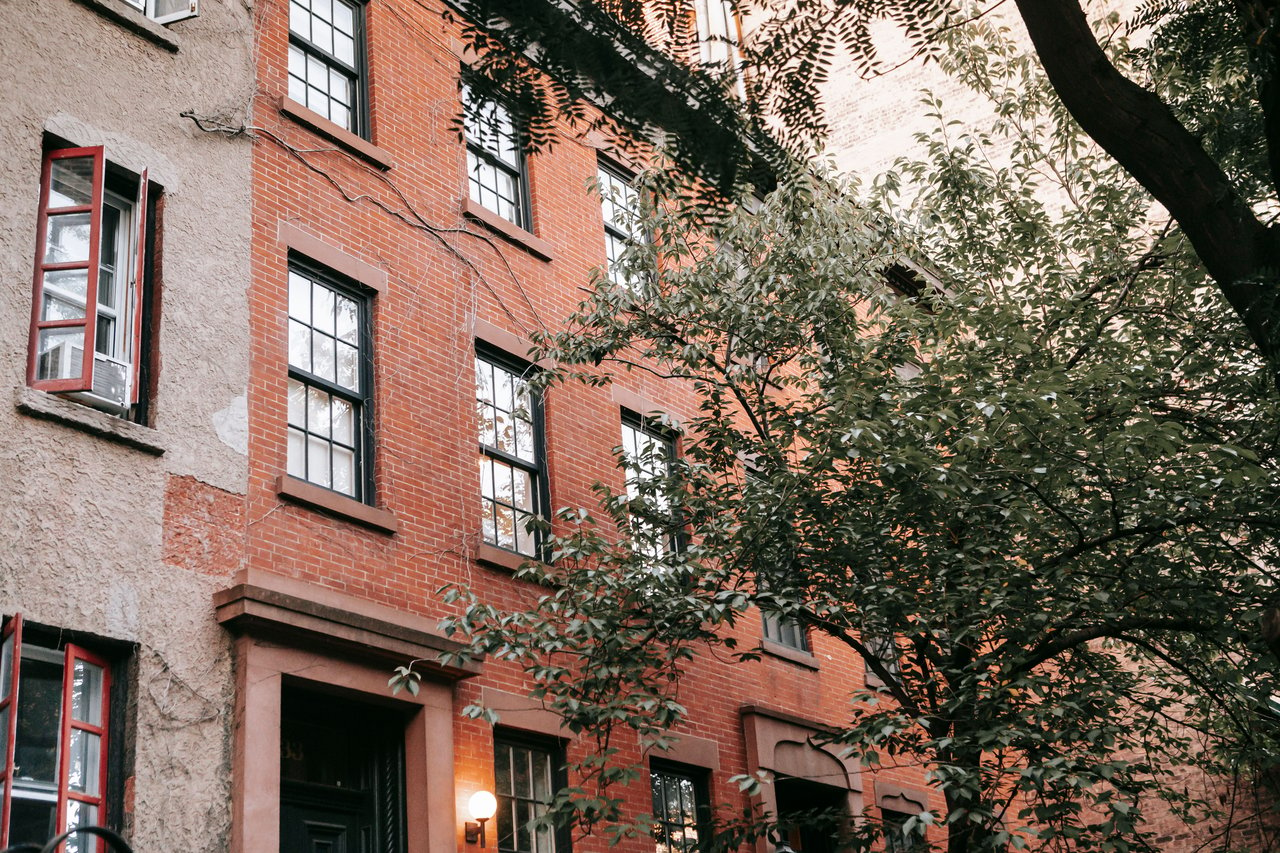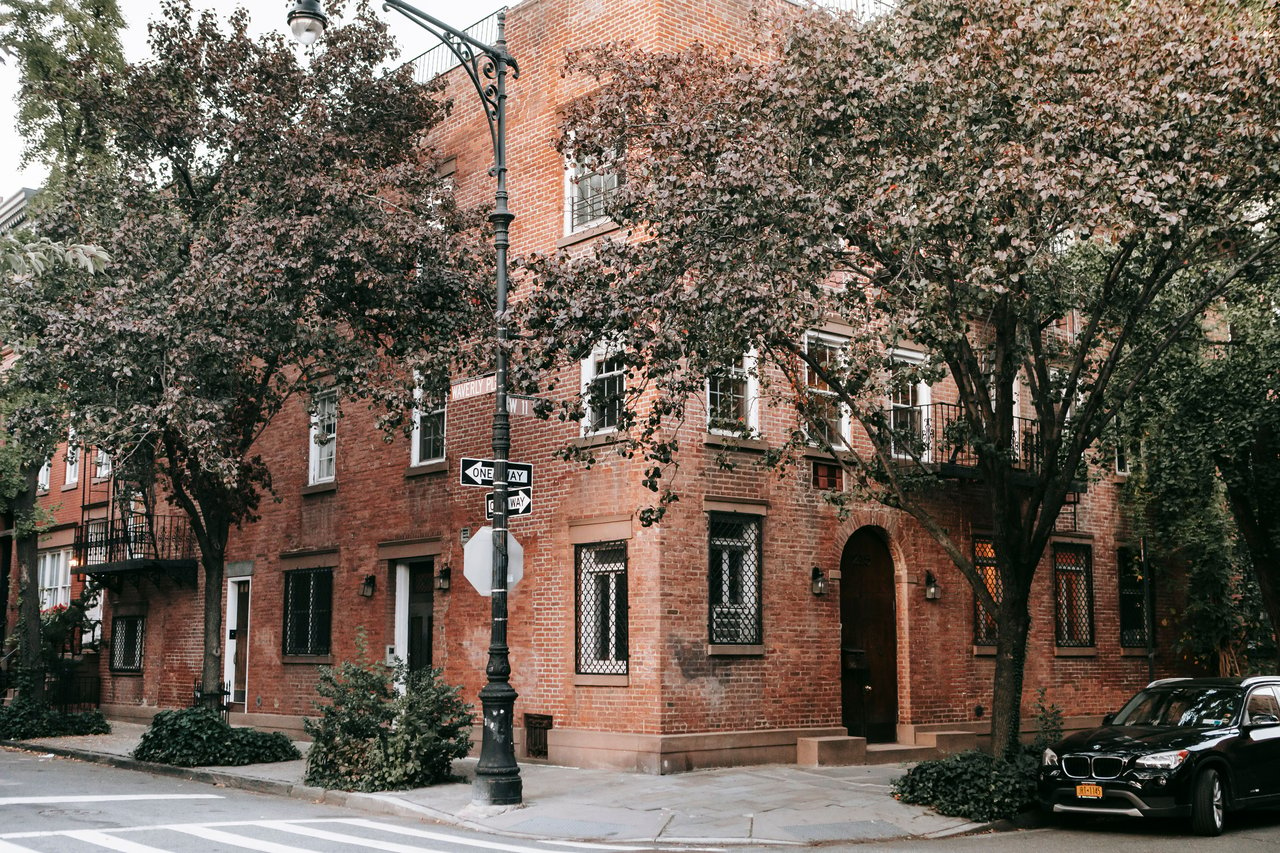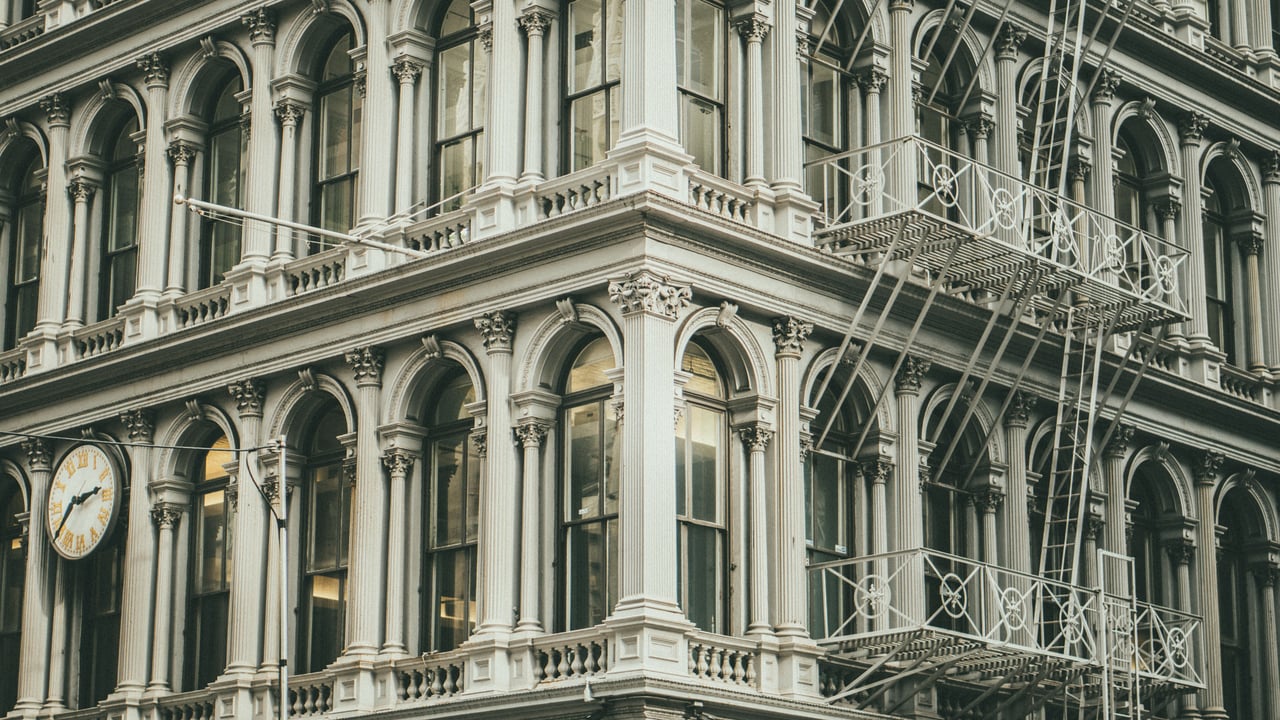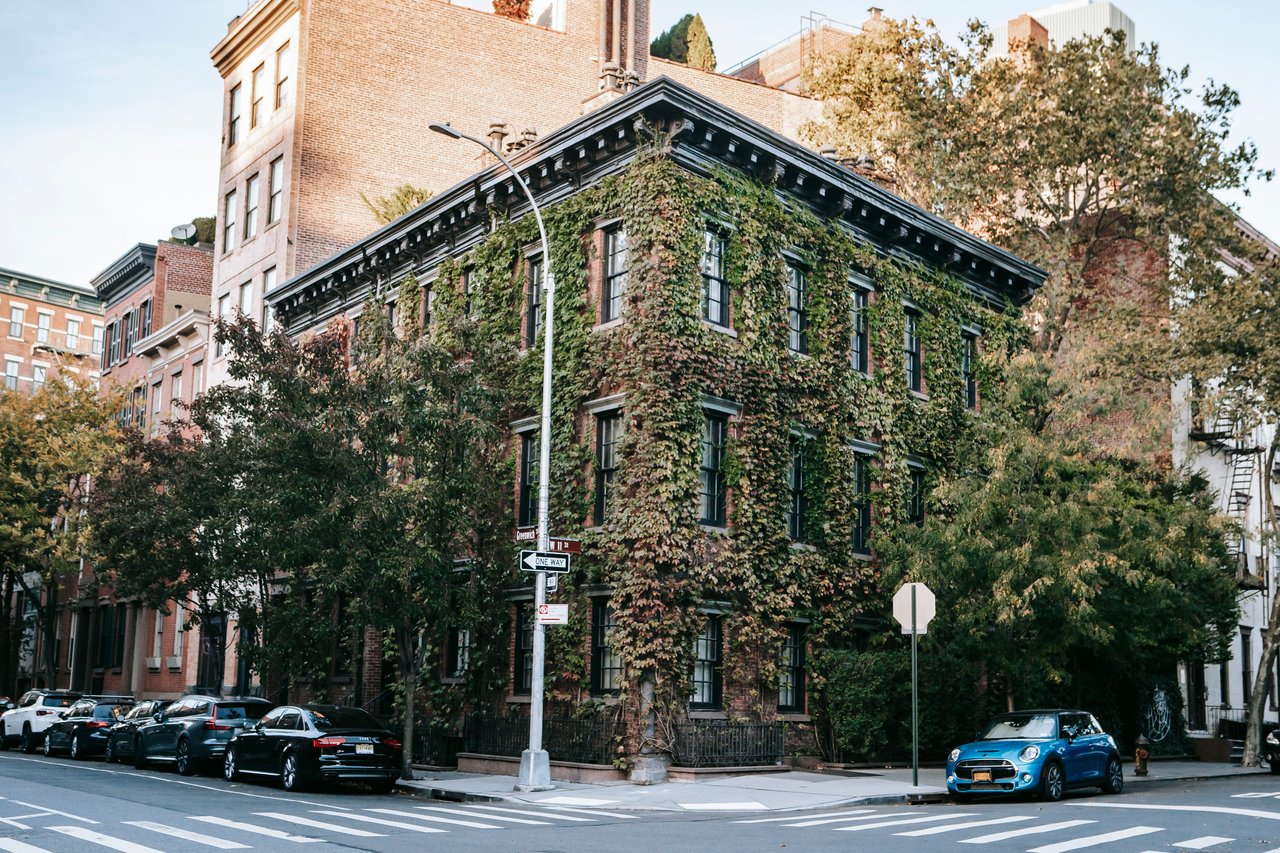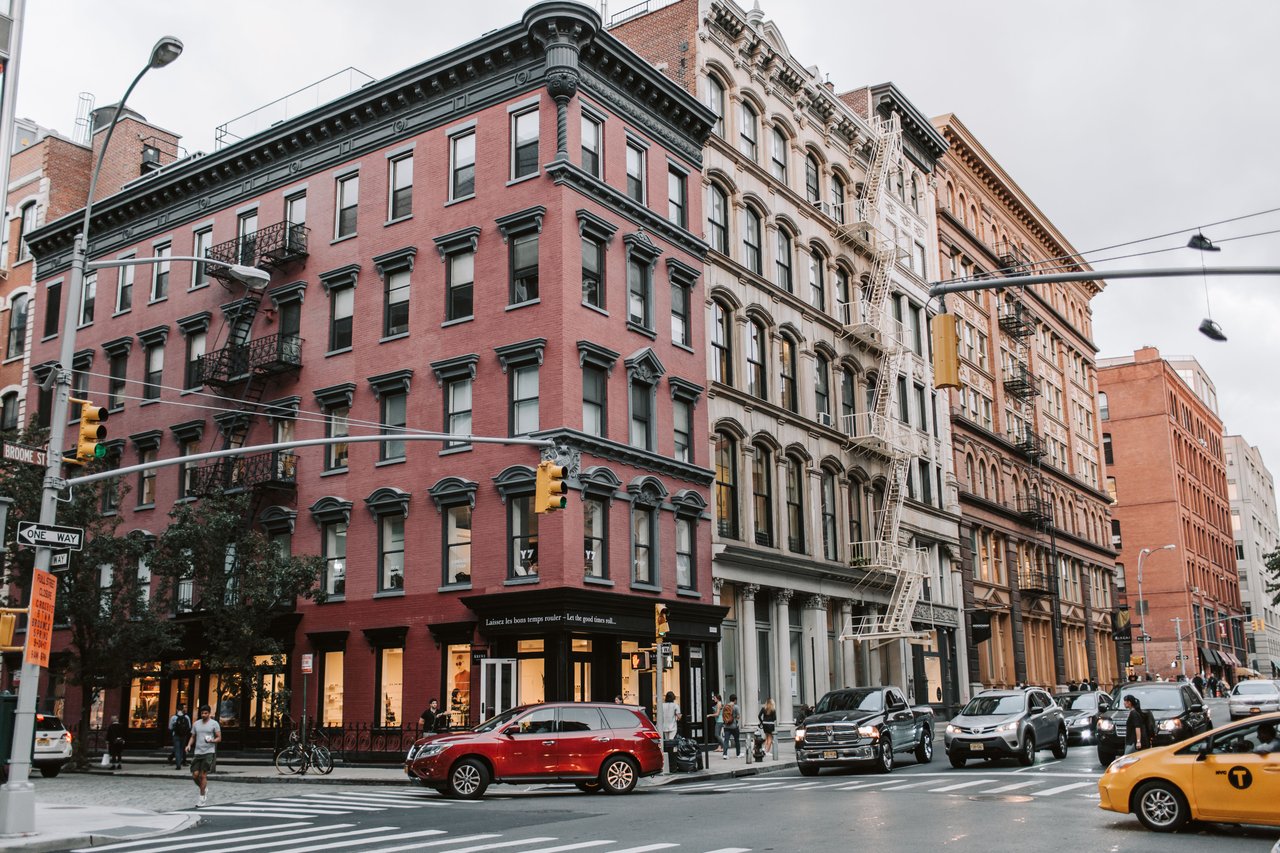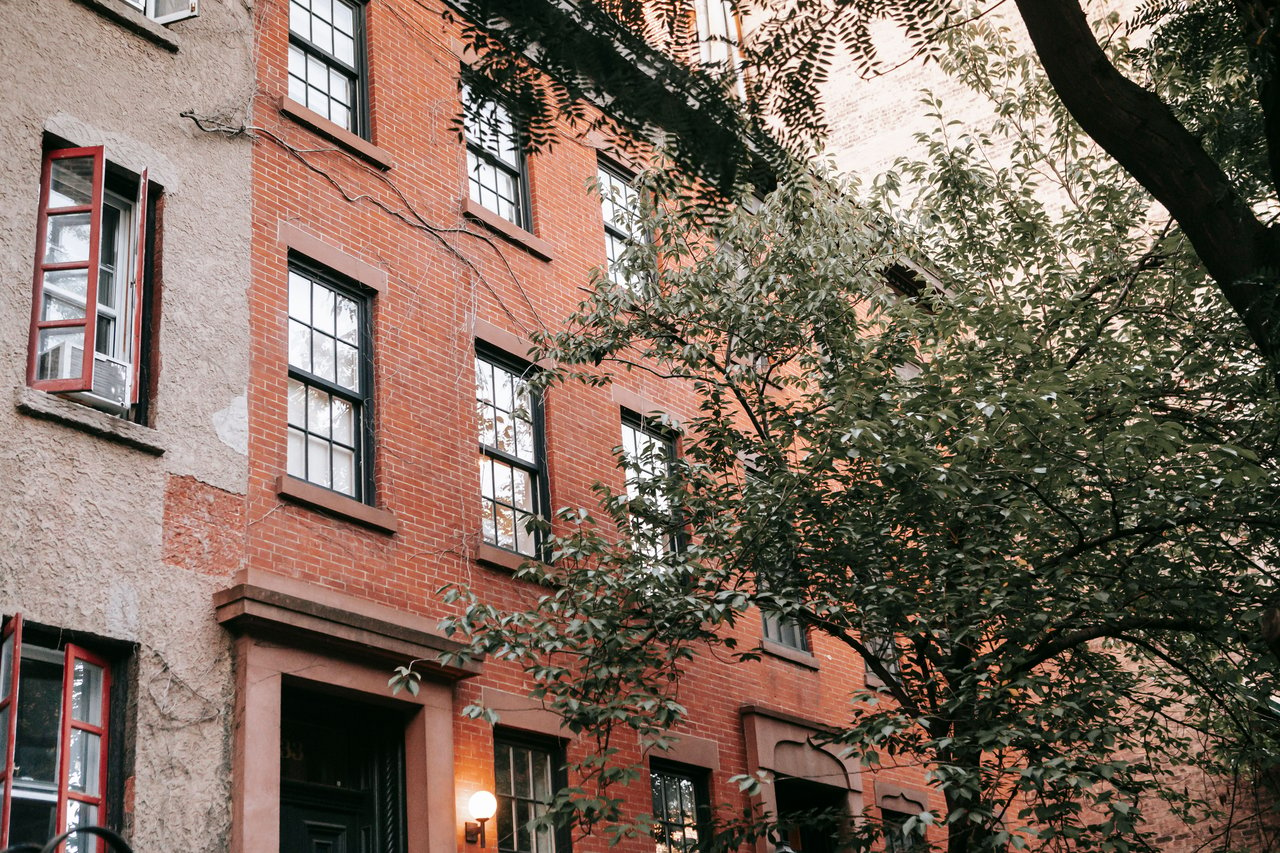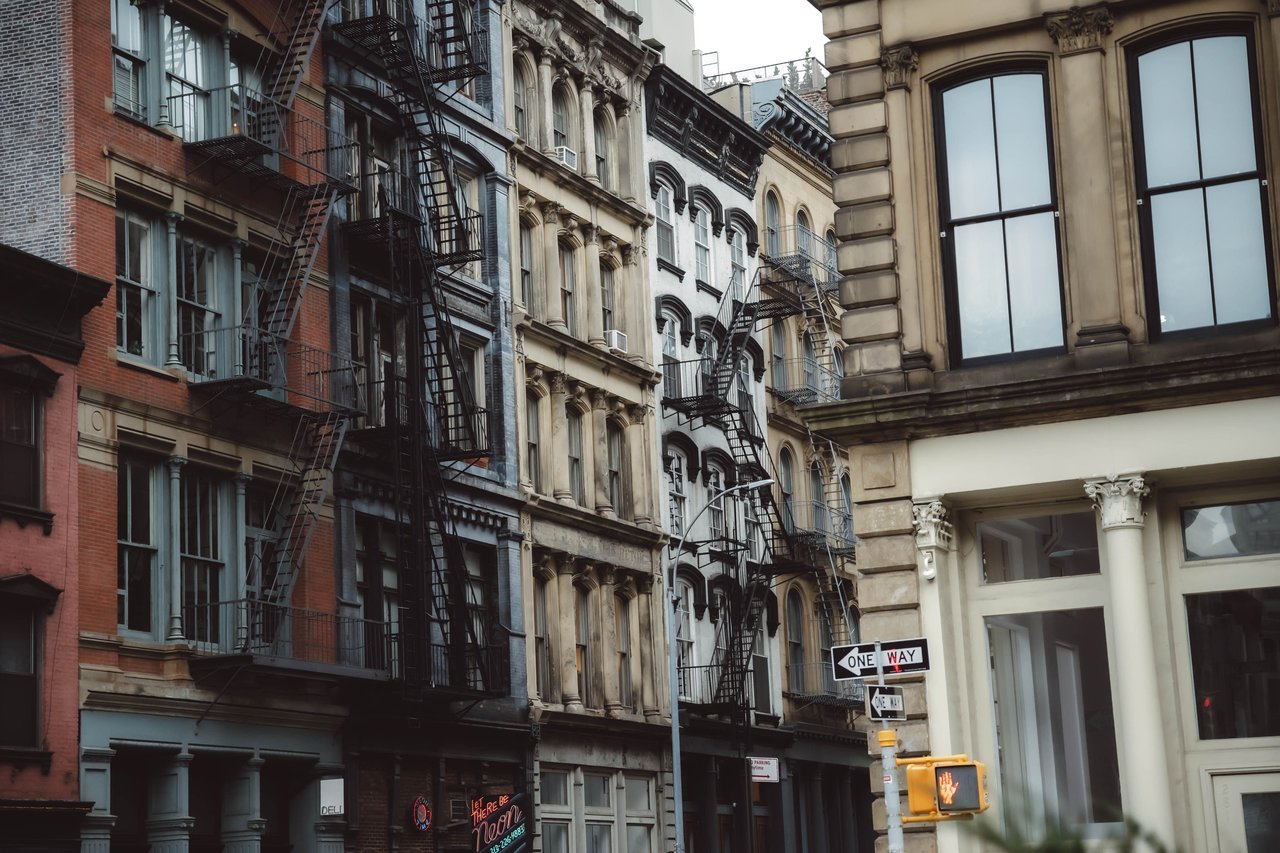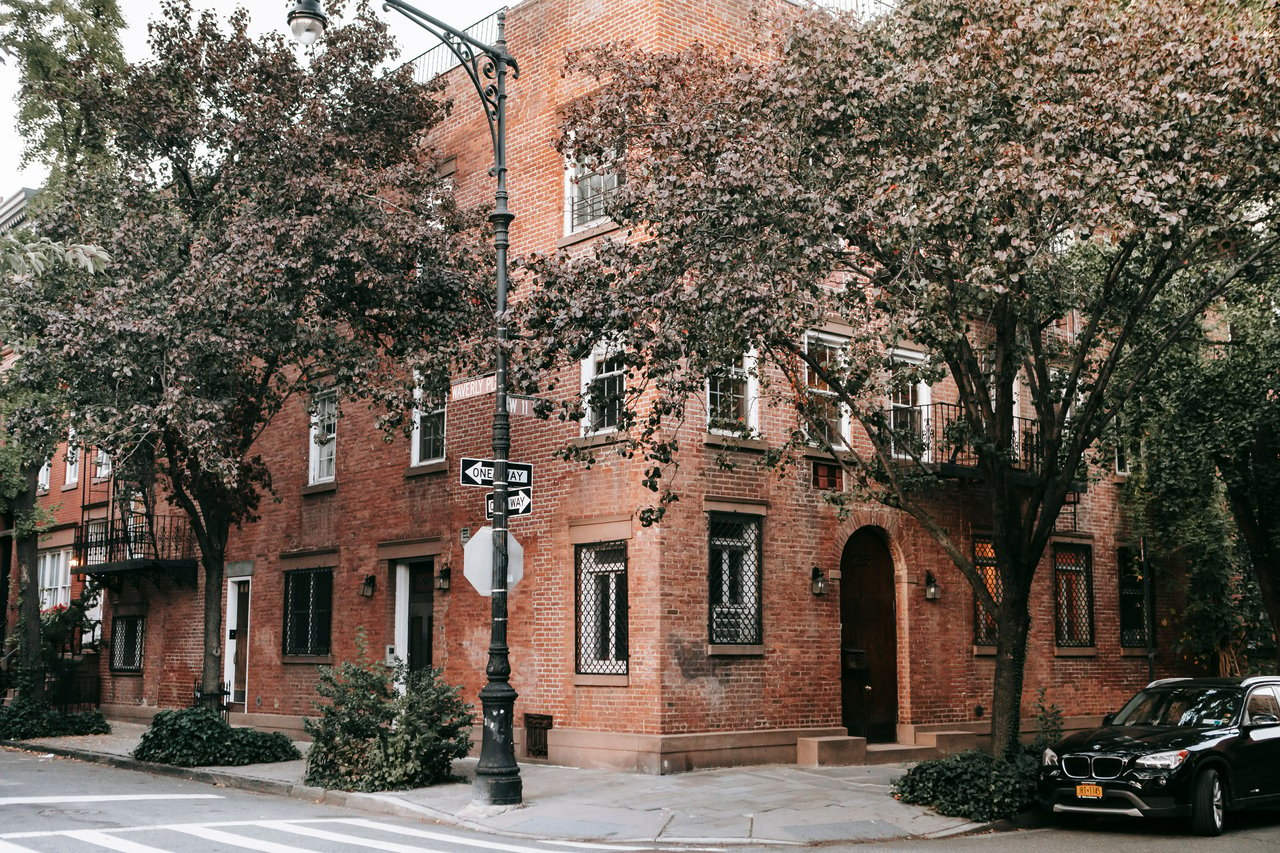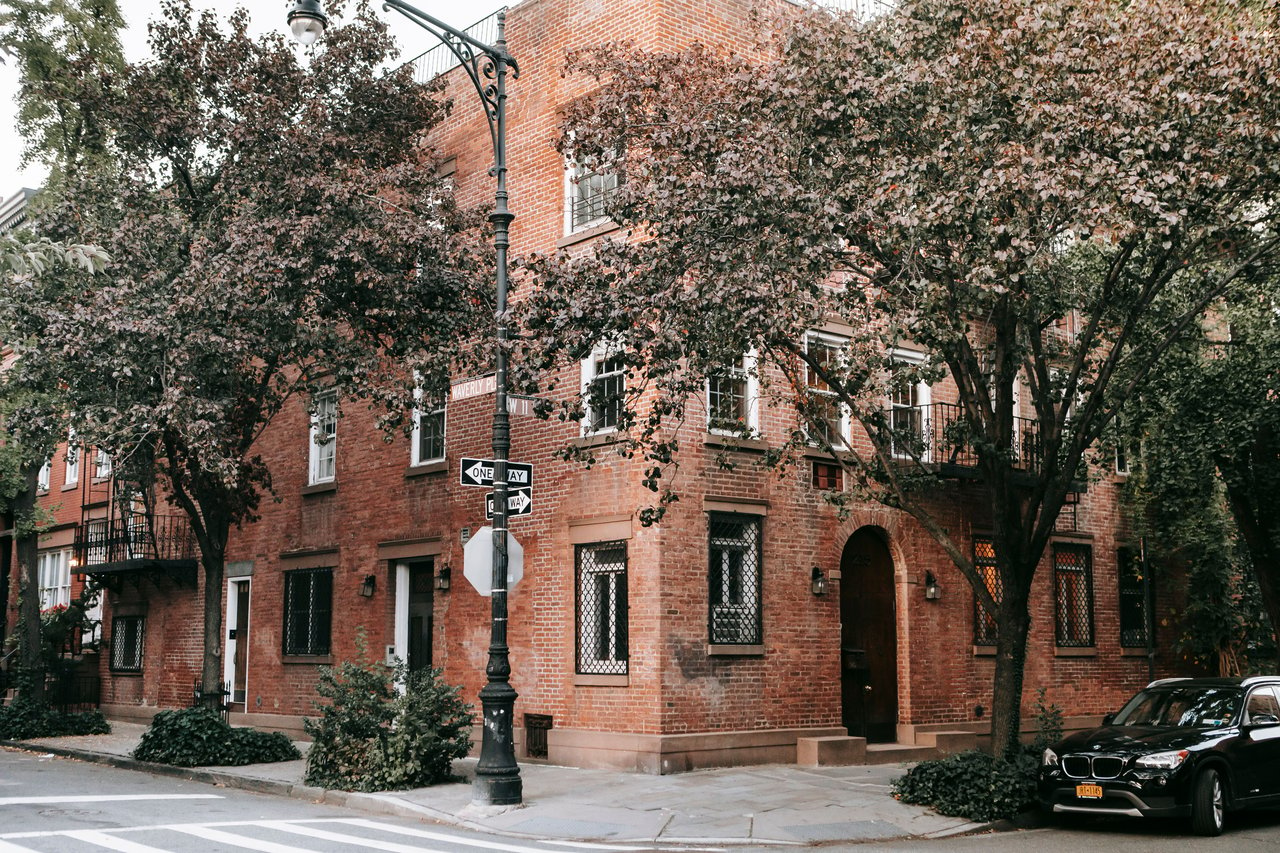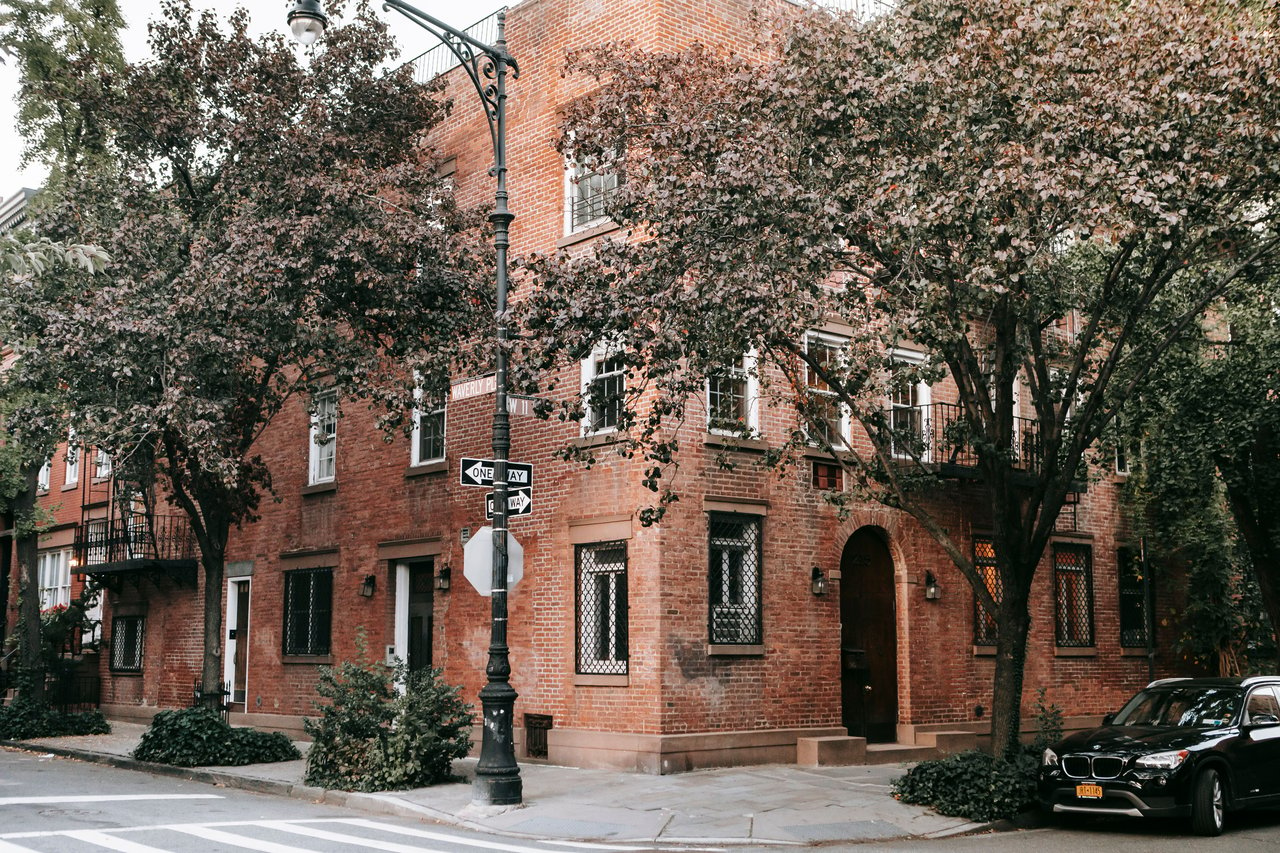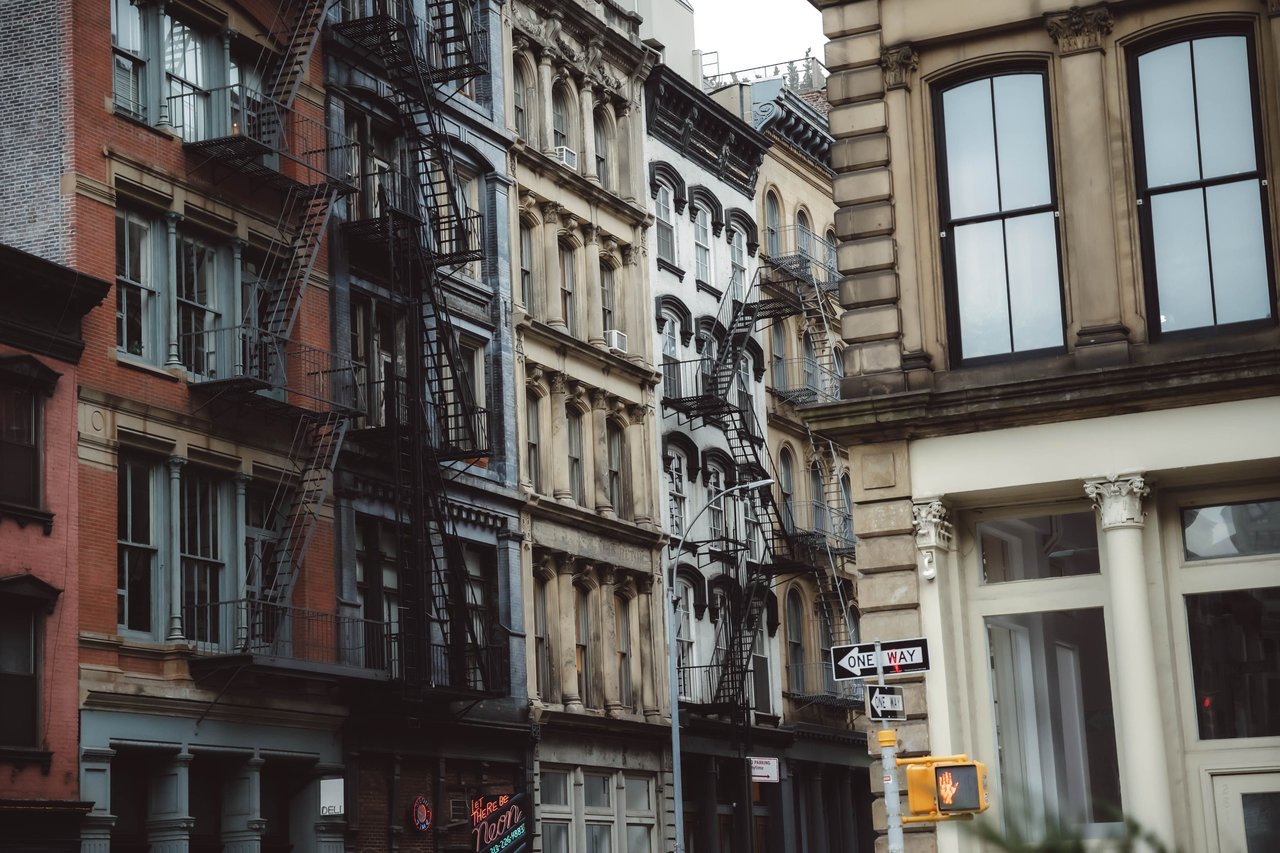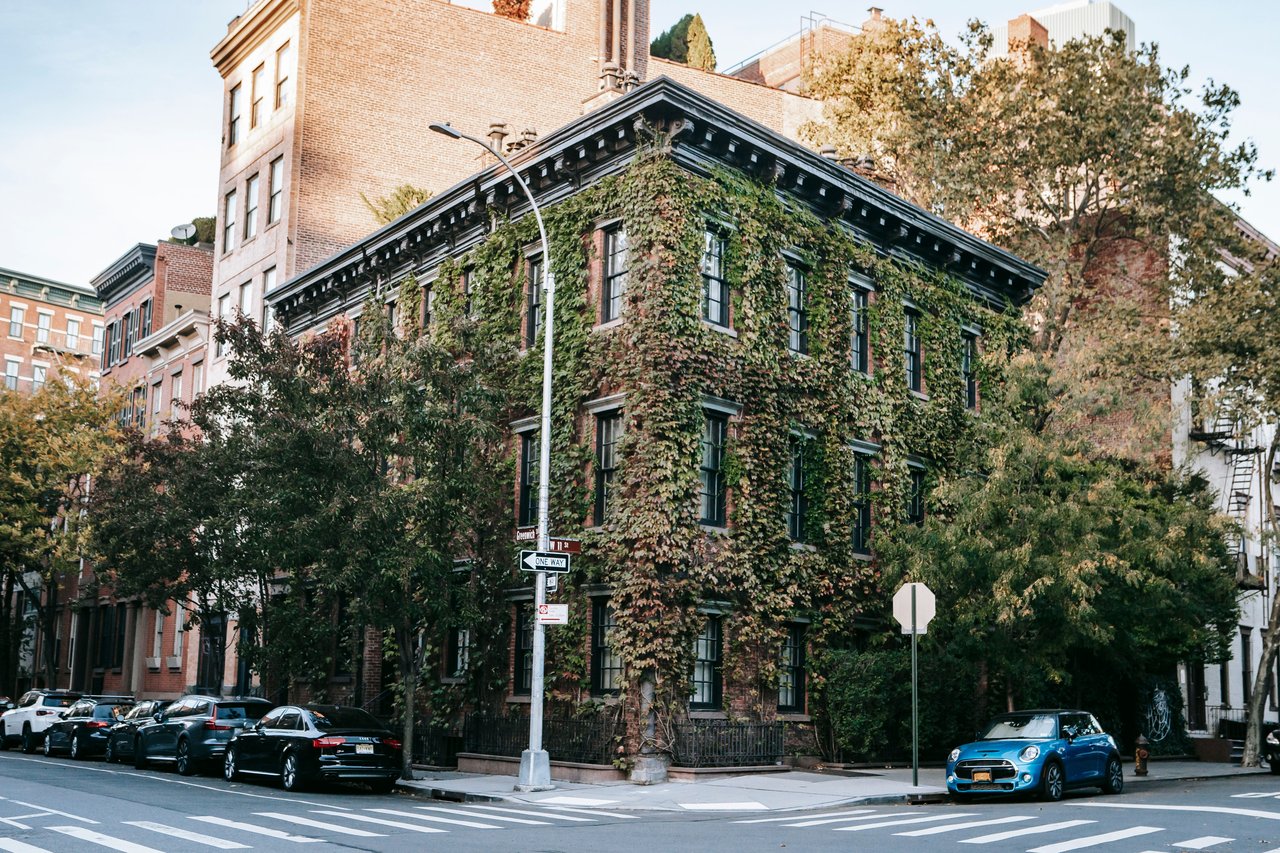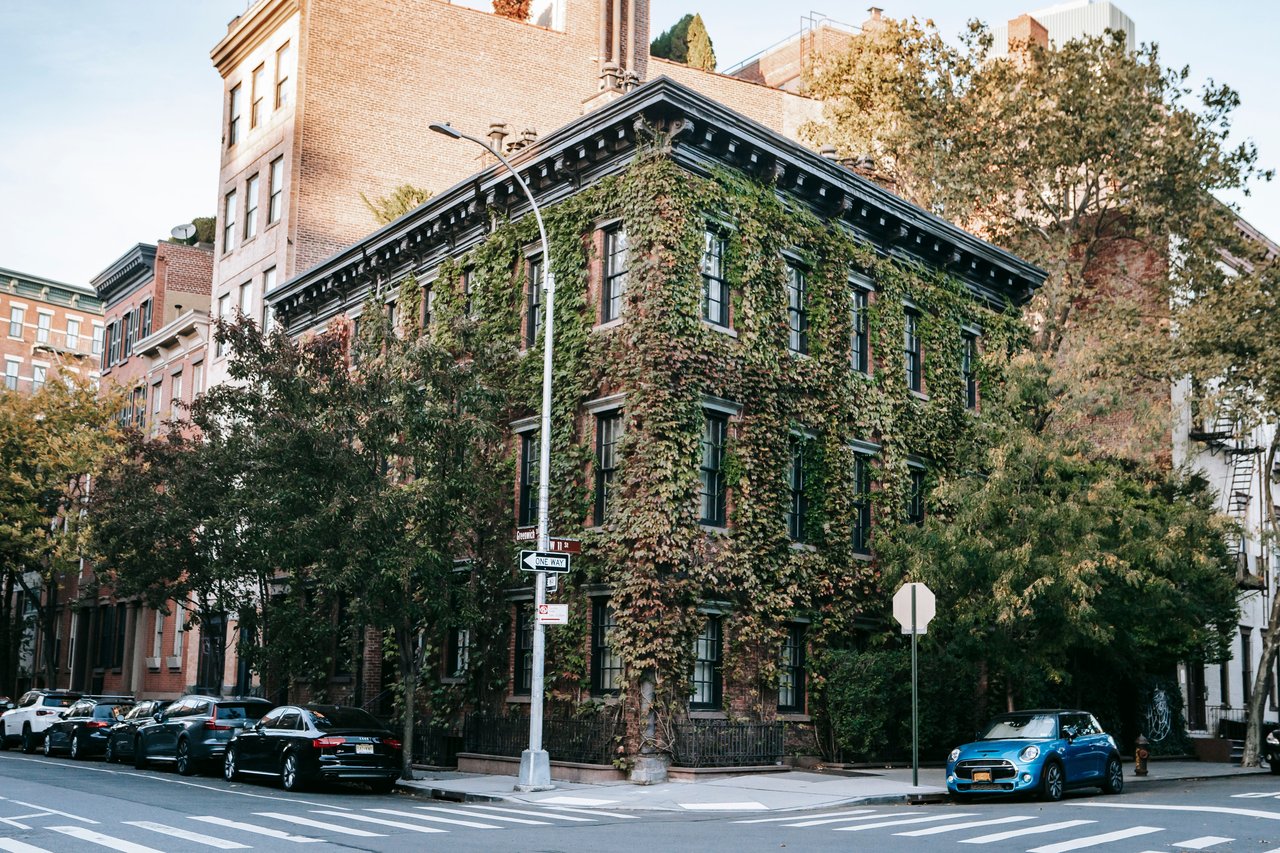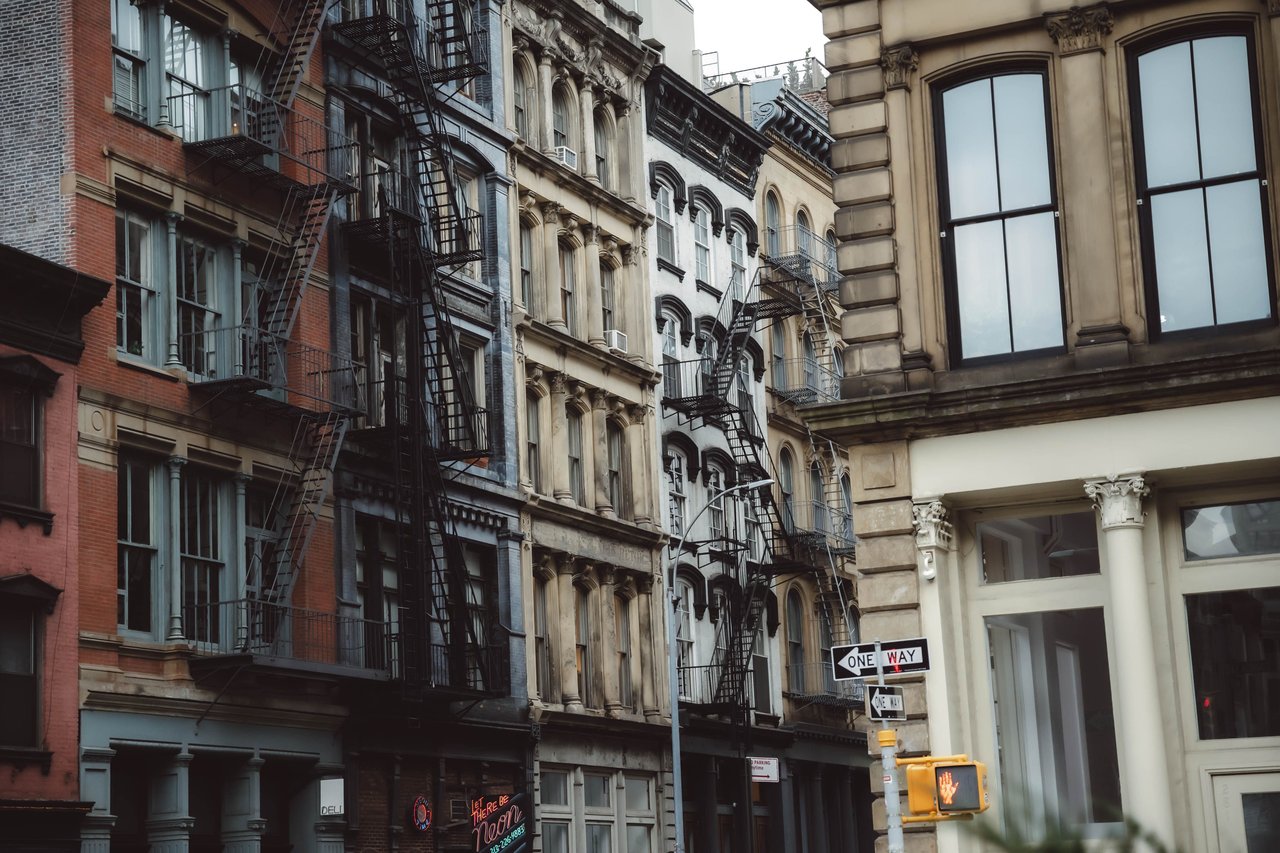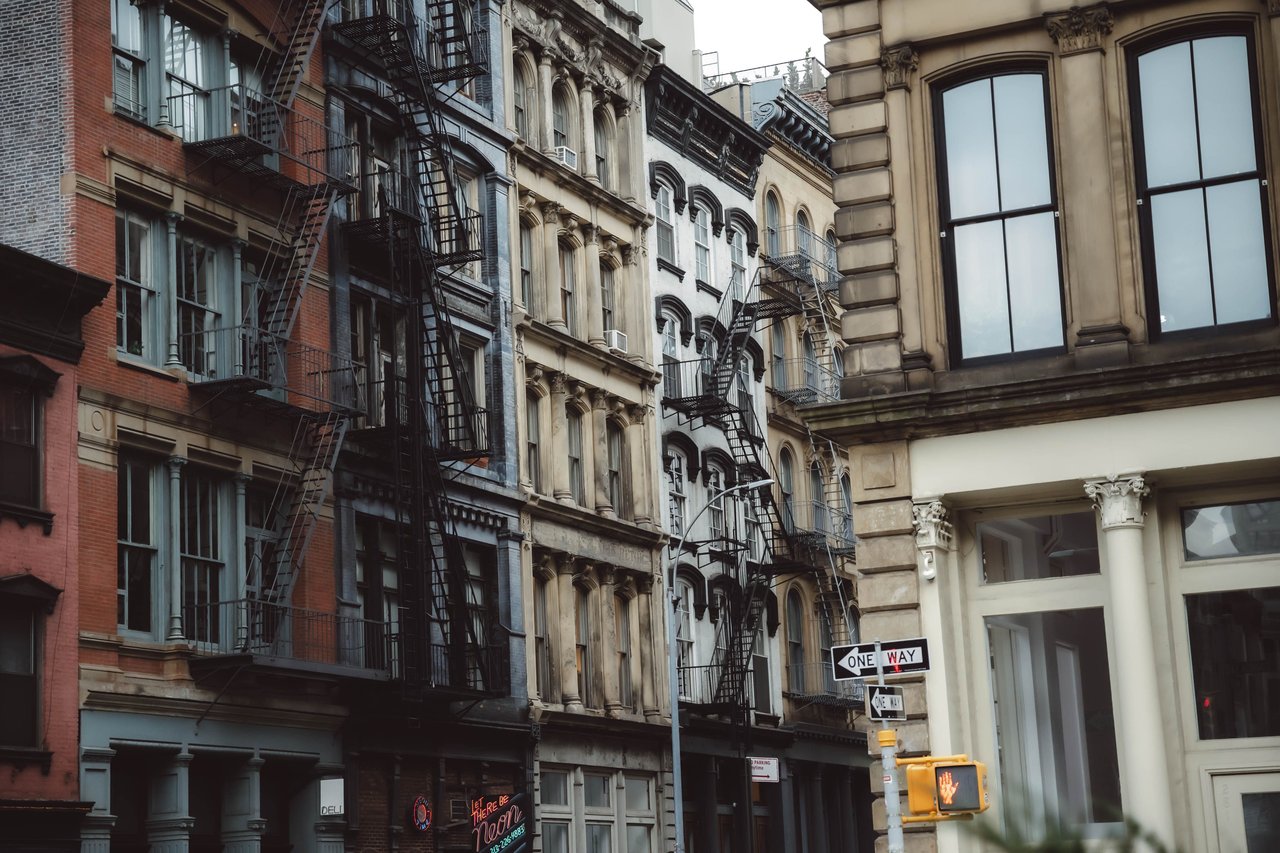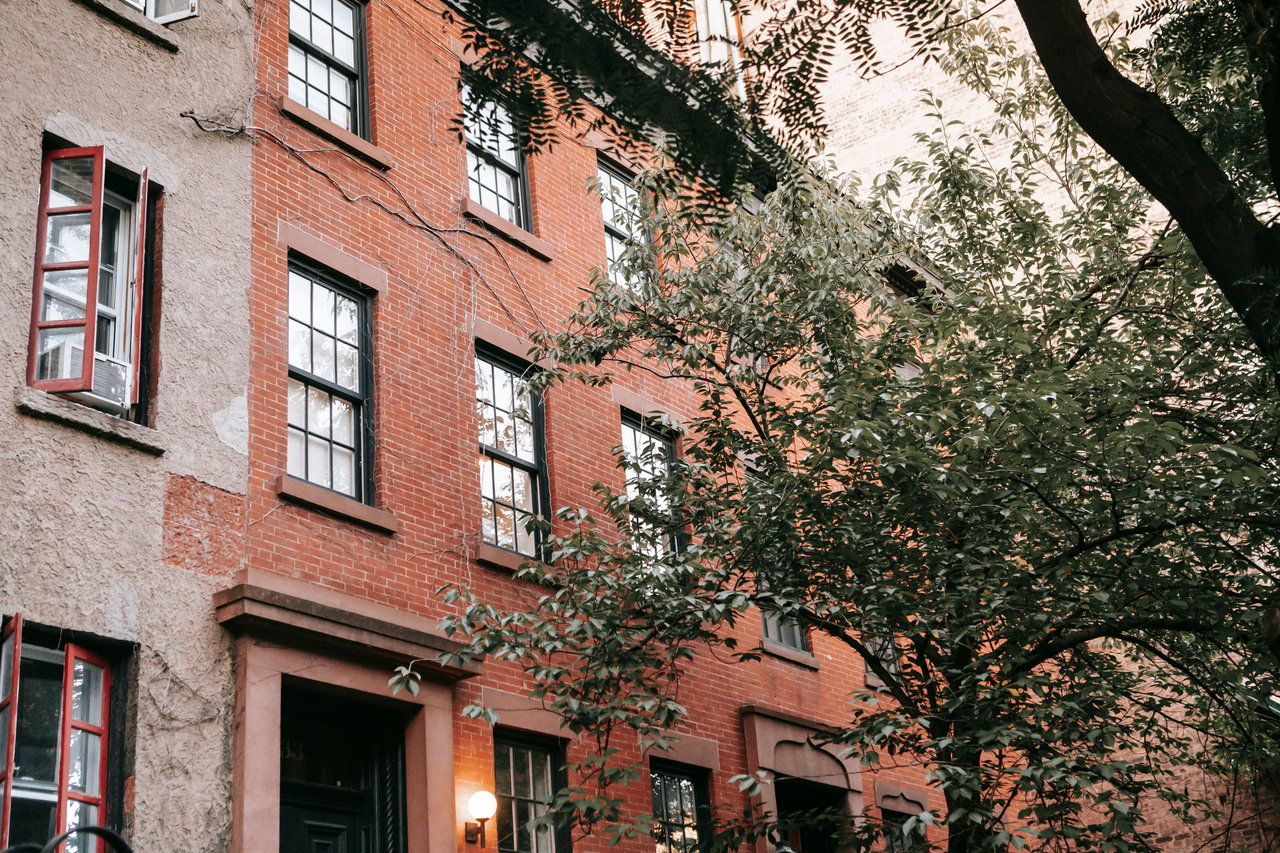
Fifth Avenue begins at Washington Square North in Greenwich Village, where one of Manhattan's most recognizable avenues emerges from a landscape of historic townhouses, Gothic Revival churches, early apartment buildings, and monumental twentieth-century architecture. Although Fifth Avenue extends far beyond Greenwich Village, its southernmost section, between Washington Square and West 14th Street, has an architectural identity distinctly different from the commercial towers and grand avenues farther north.
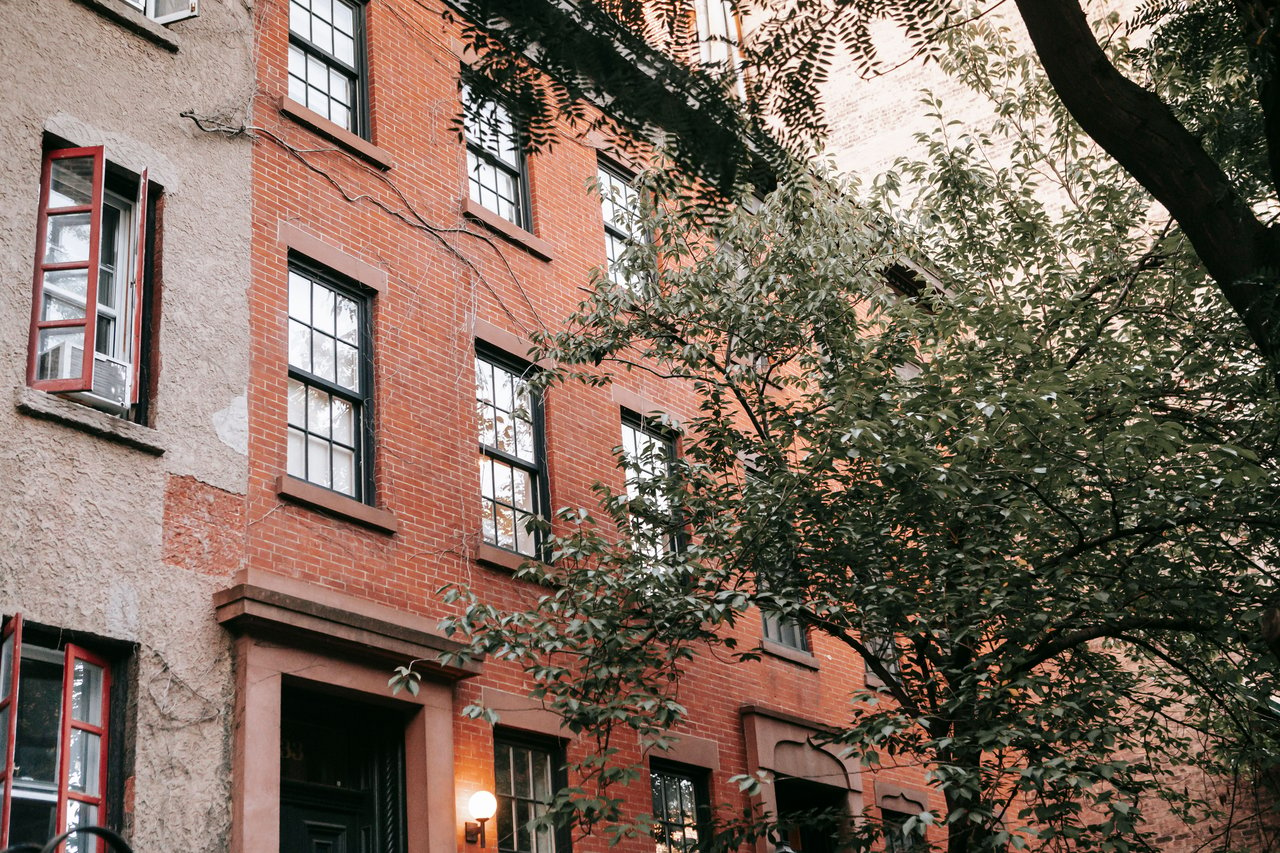
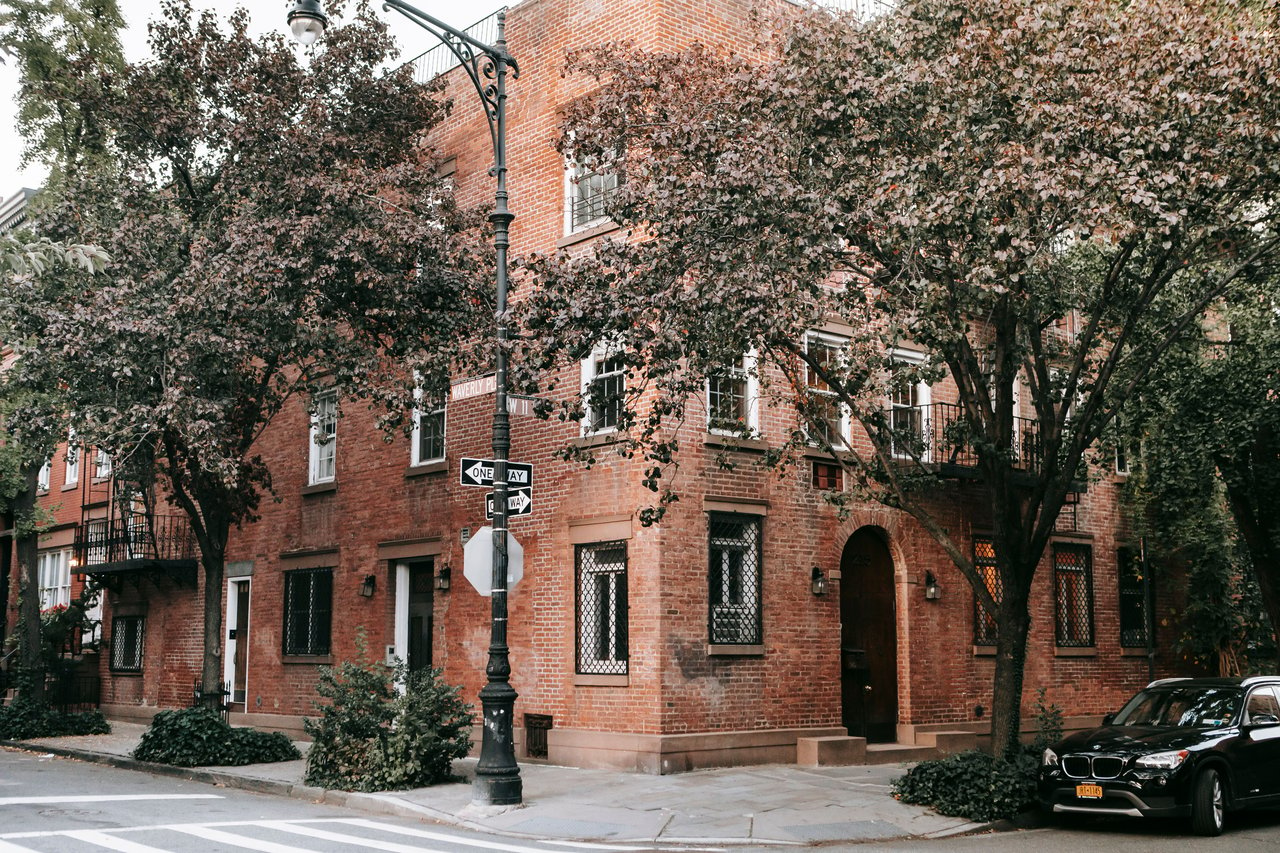
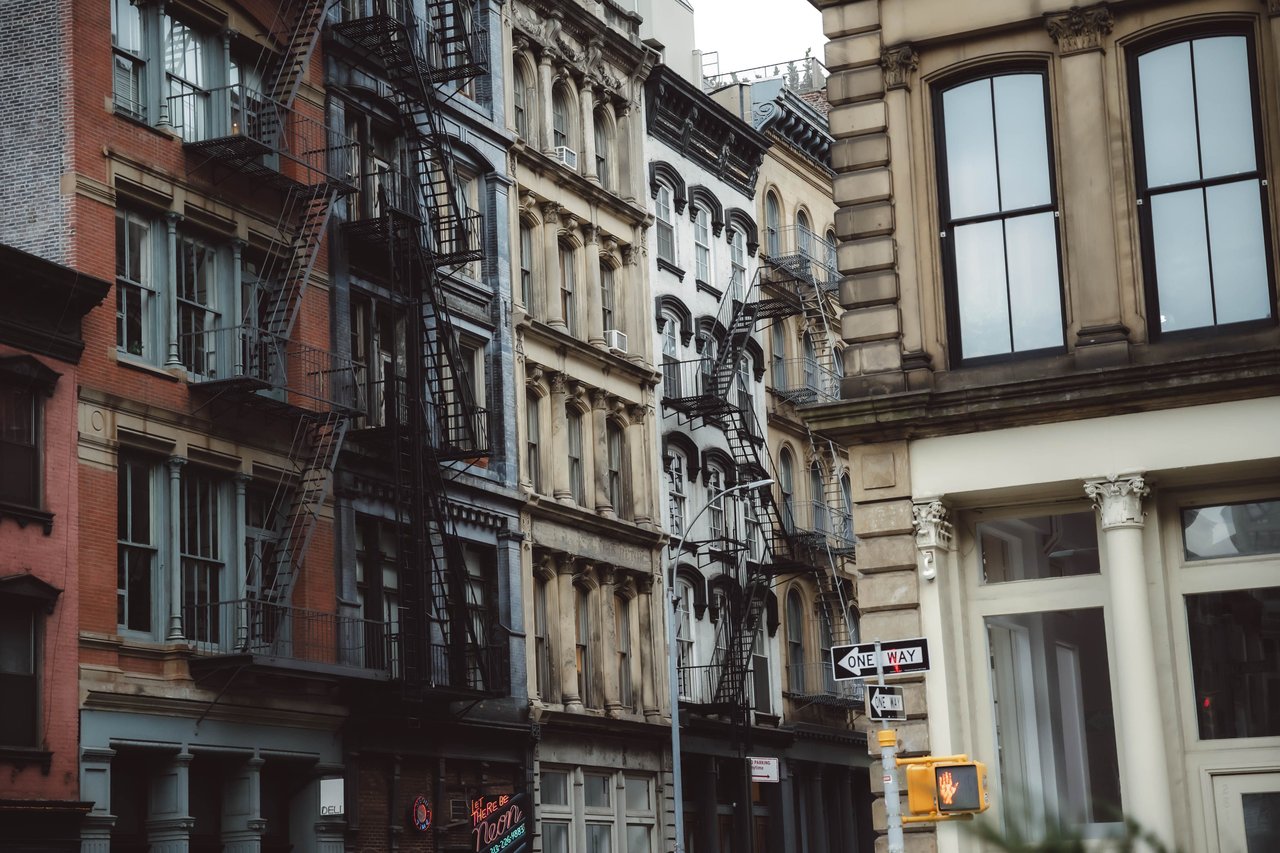
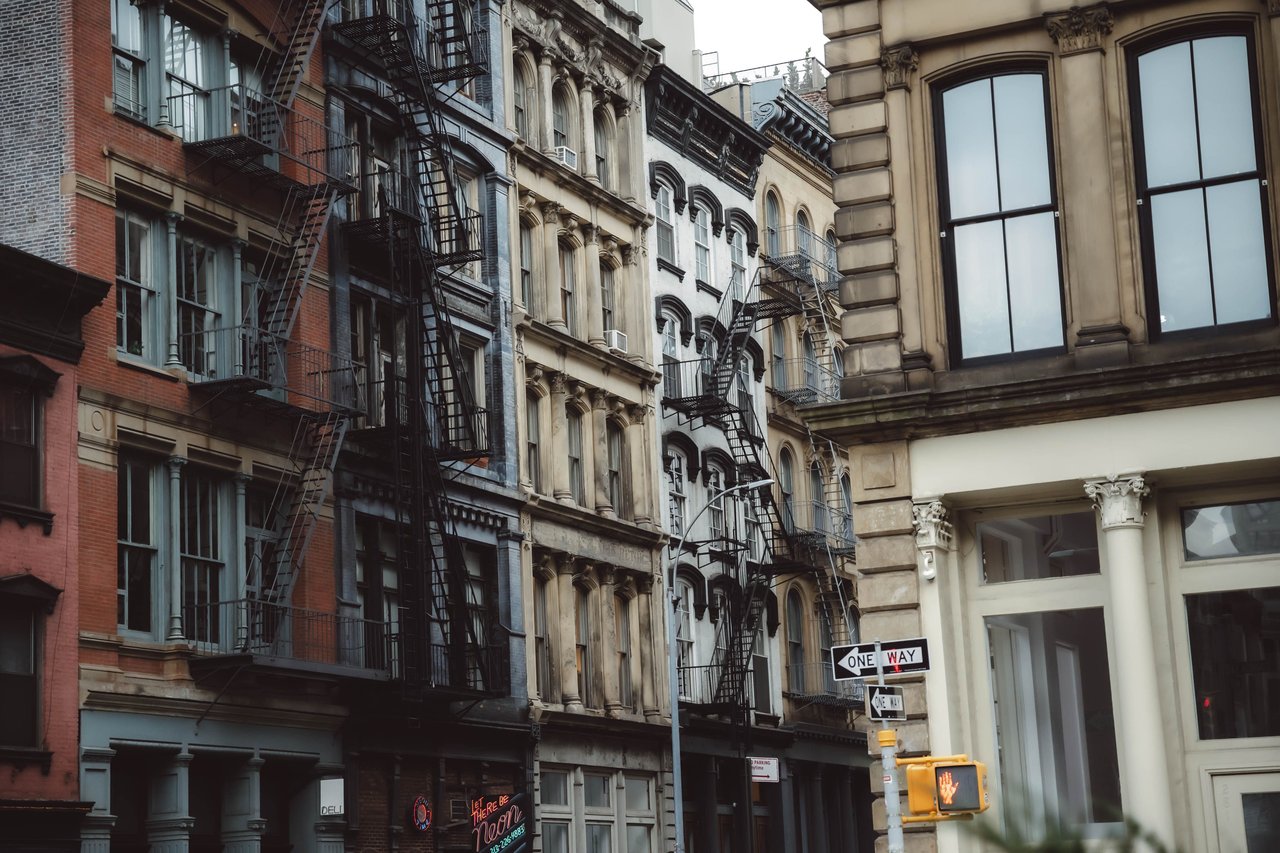
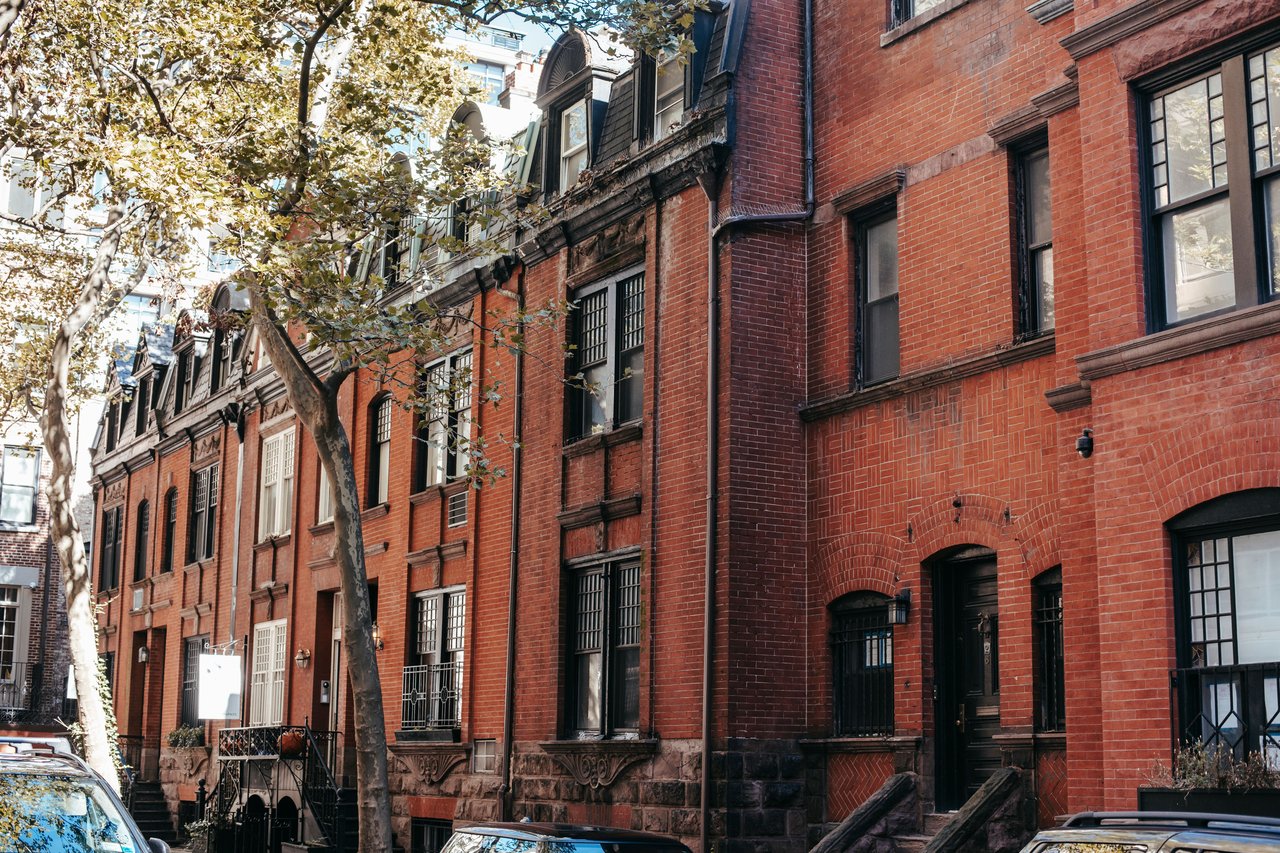
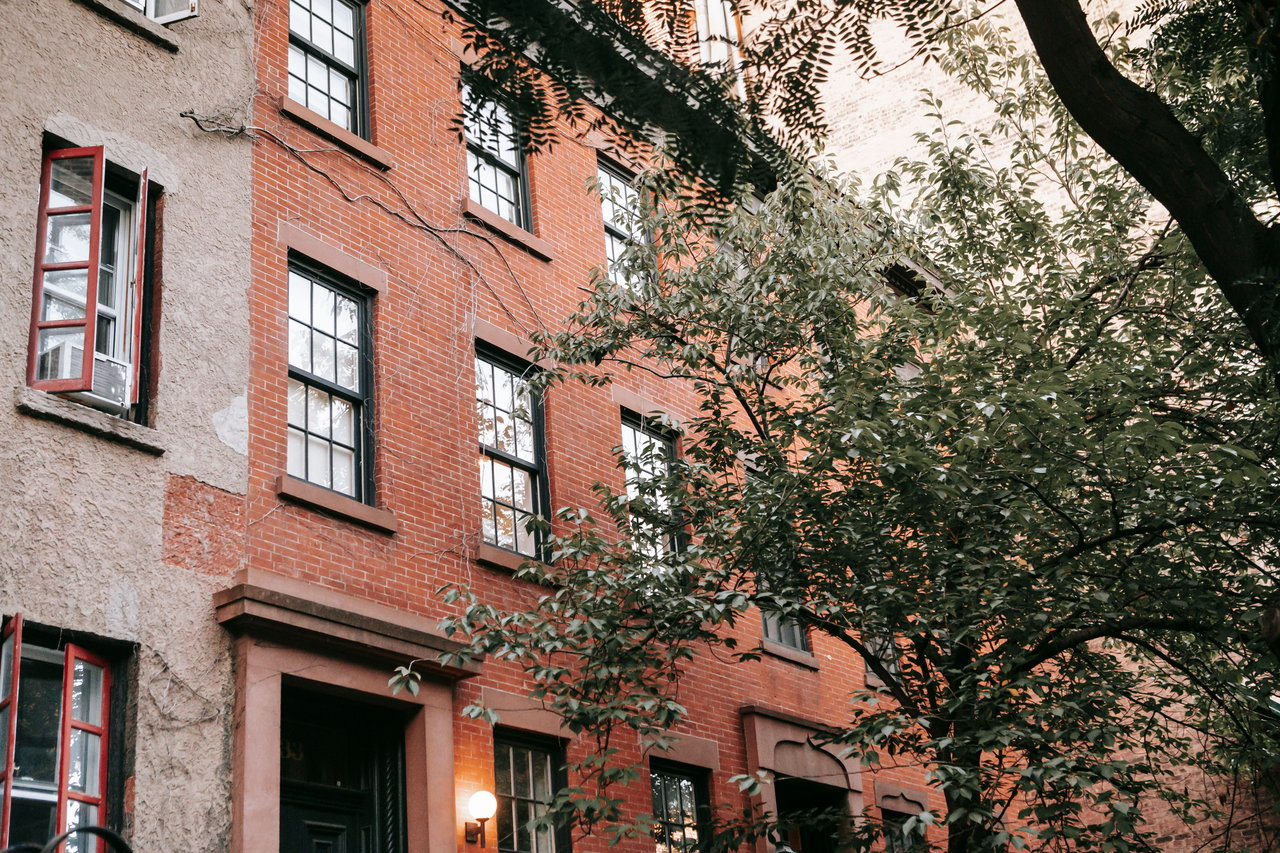
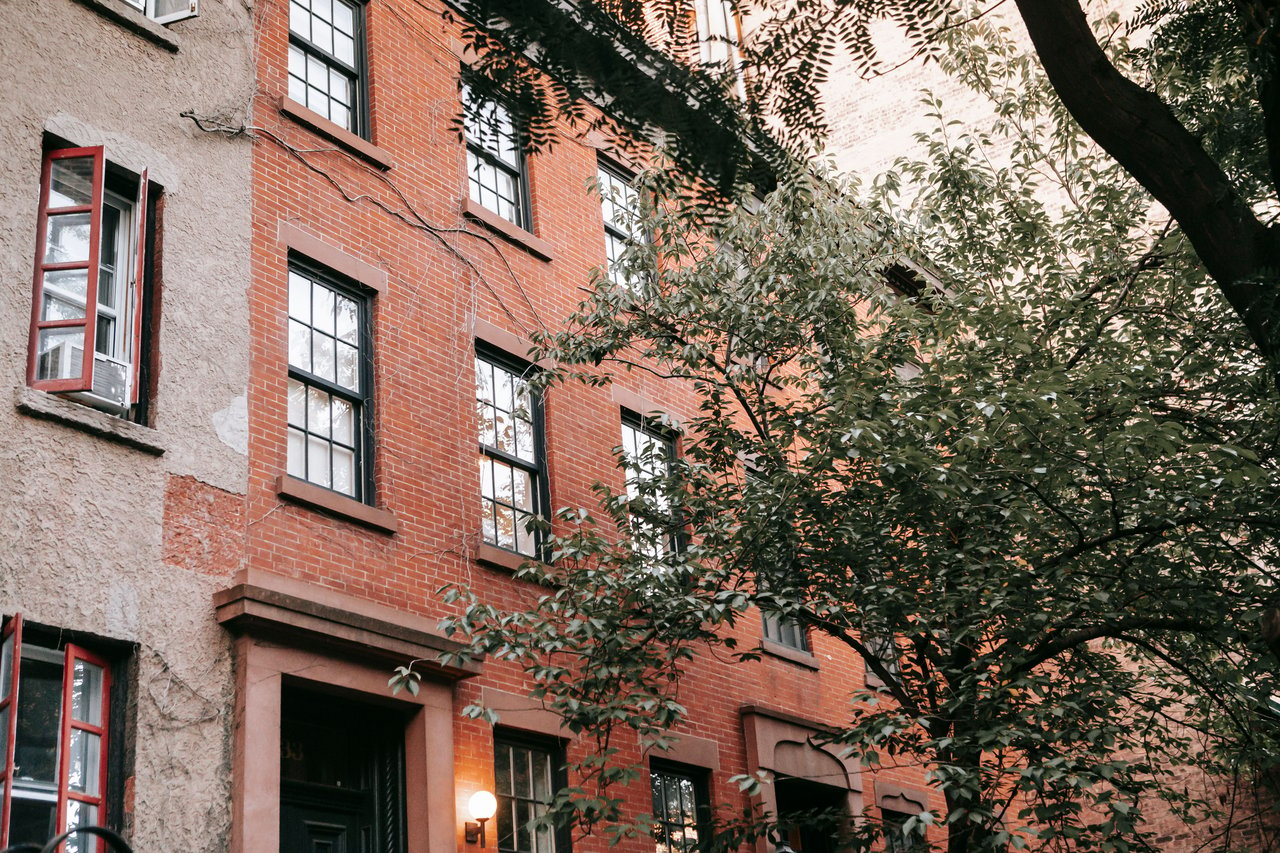
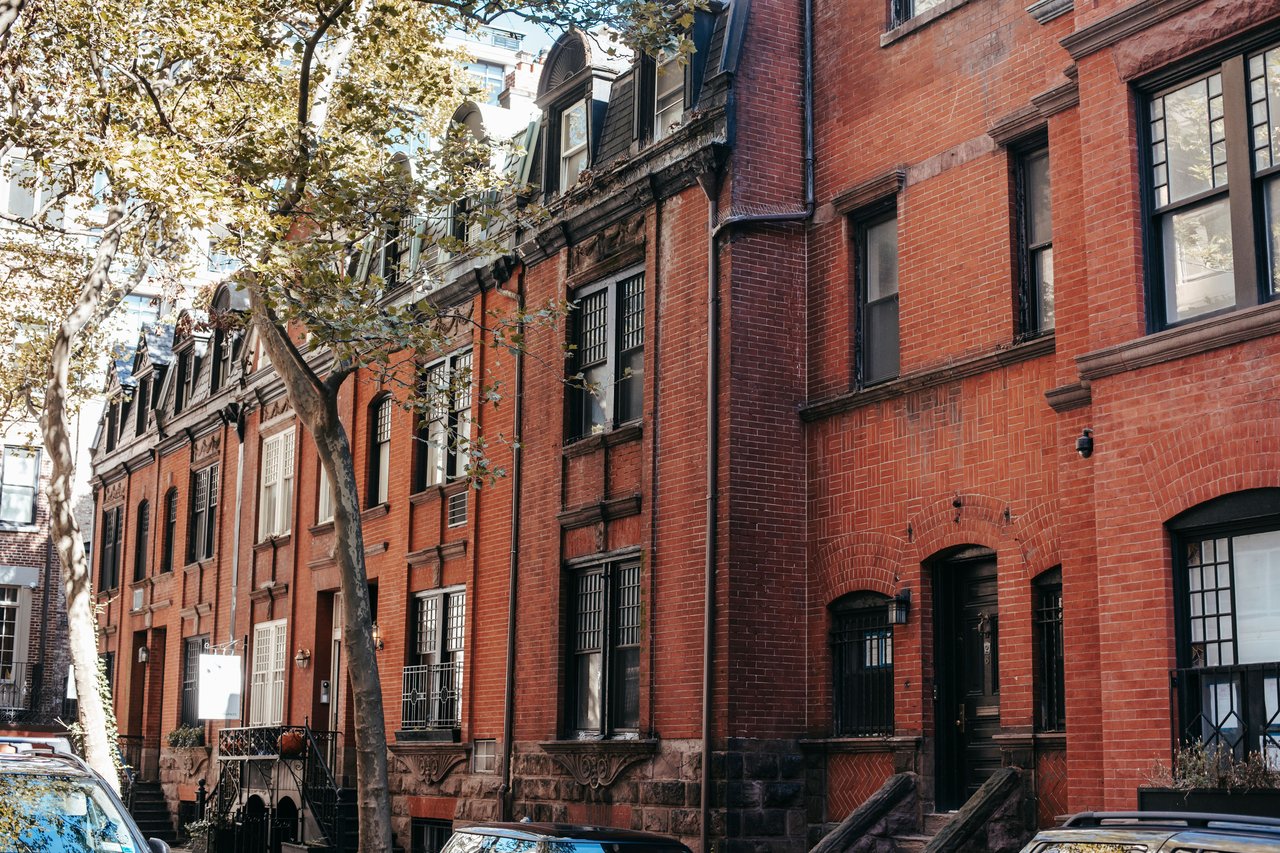
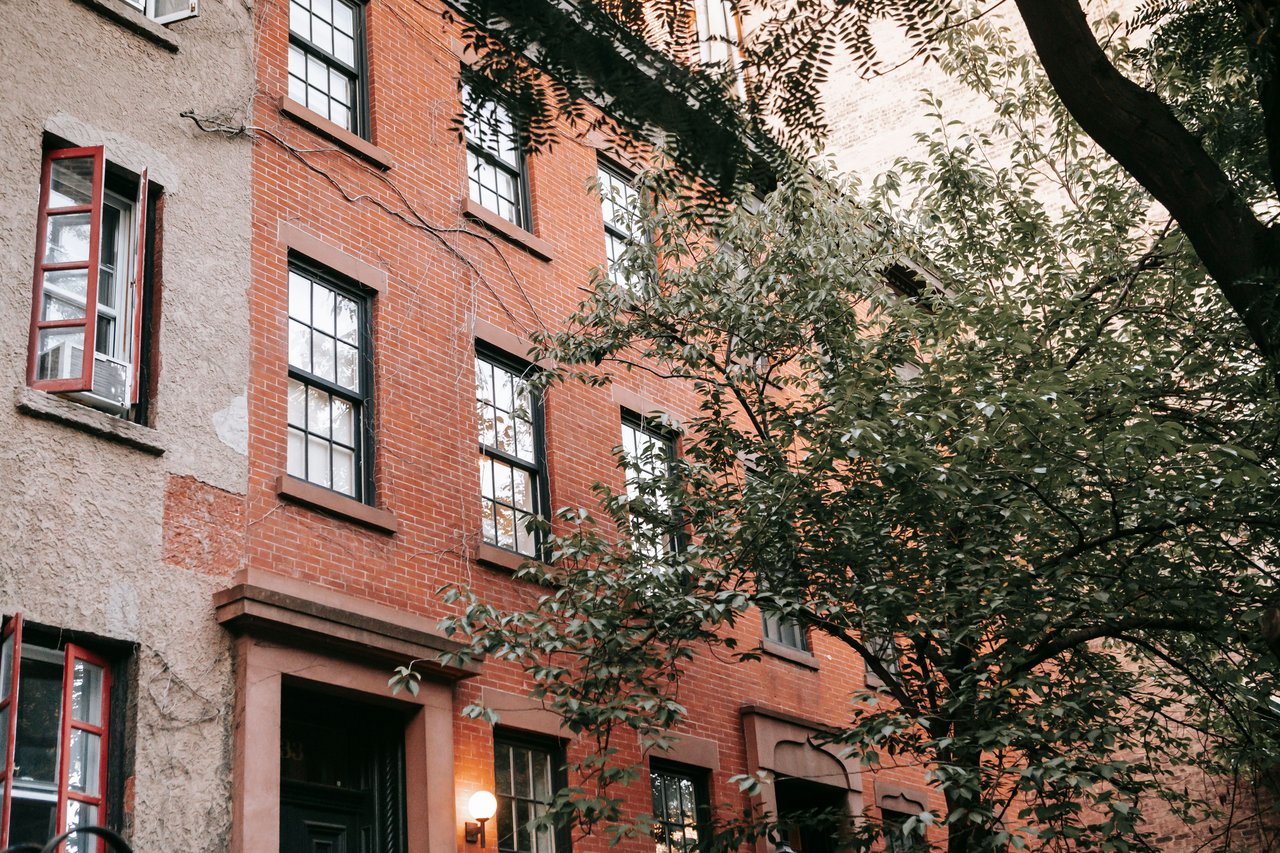
This section of Fifth Avenue preserves an extraordinary record of Manhattan's architectural development. Nineteenth-century residential construction established the avenue's original character, with substantial brick and brownstone houses built along broad sidewalks. Gothic Revival churches introduced monumental stone architecture, while early twentieth-century apartment buildings replaced many of the original residences with taller structures incorporating Beaux-Arts, Renaissance Revival, and Art Deco influences.
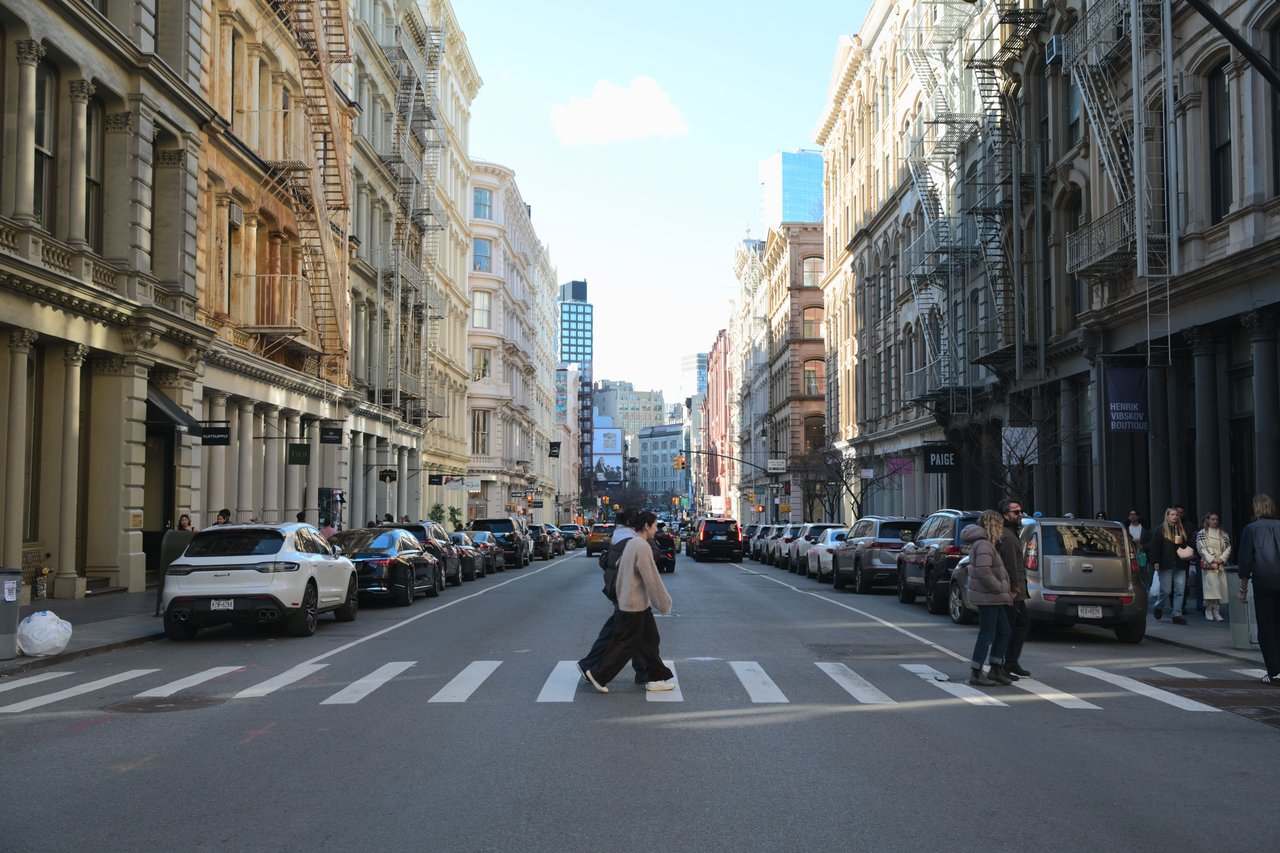
Today, lower Fifth Avenue is distinguished by the relationship between Washington Square Park, historic masonry facades, landmark churches, and substantial prewar apartment buildings. Its architecture illustrates the transformation of a nineteenth-century residential avenue into one of Greenwich Village's most recognizable historic streetscapes.
The Origins of Fifth Avenue in Greenwich Village
The first section of Fifth Avenue opened on November 1, 1824, extending northward from Washington Square through Greenwich Village. This original stretch established the southern beginning of an avenue that would eventually become one of Manhattan's principal north-south thoroughfares.
Before the avenue was fully developed, the surrounding landscape consisted of larger parcels of land with relatively limited construction. The introduction of Fifth Avenue established a formal north-south corridor that encouraged new residential development.
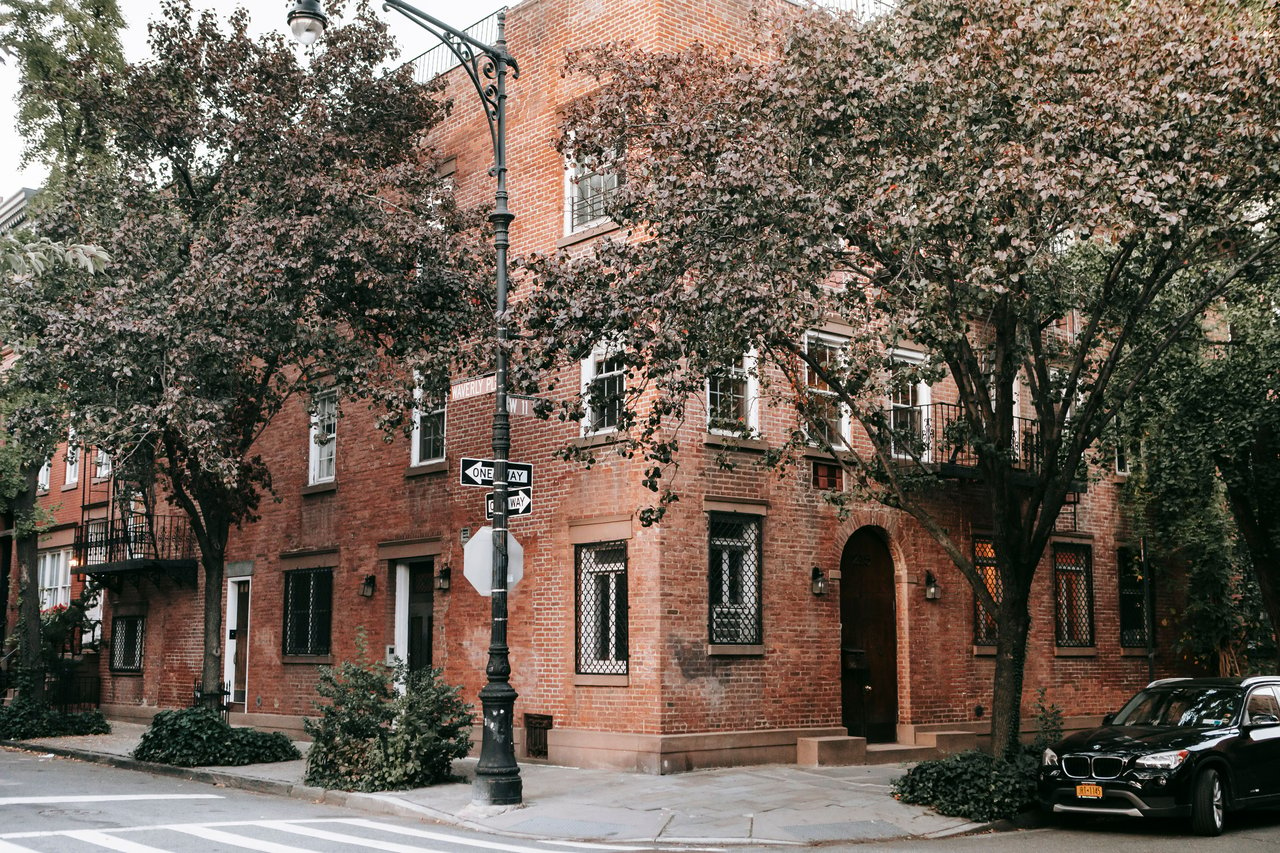
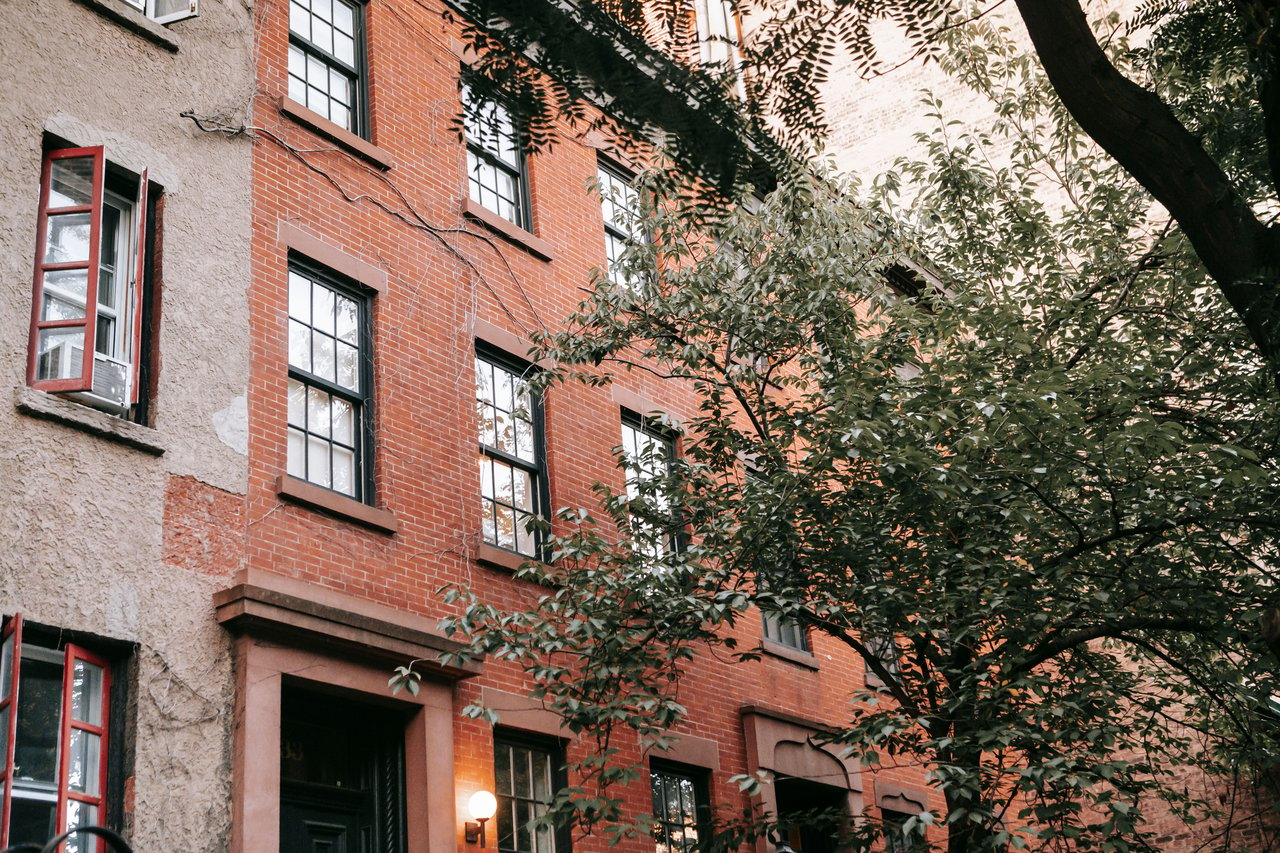
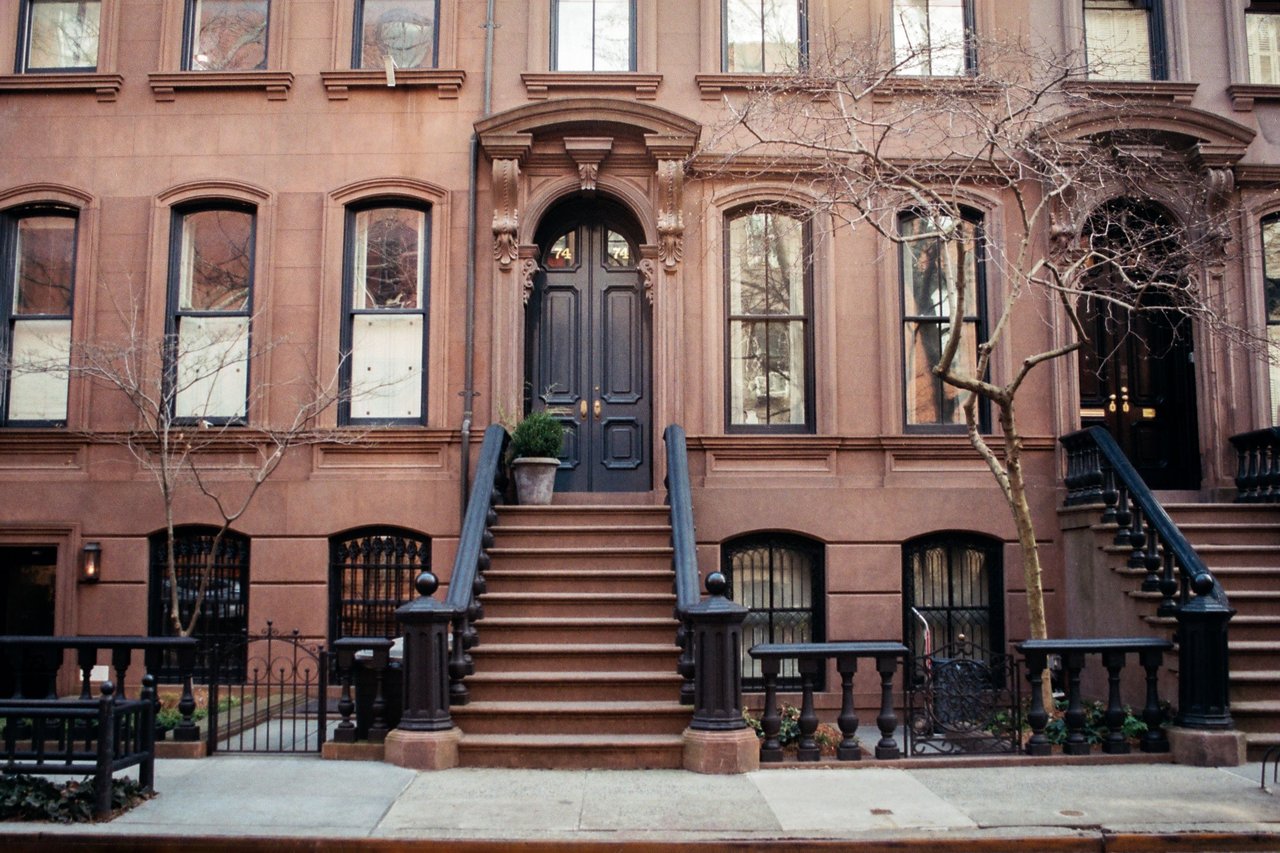
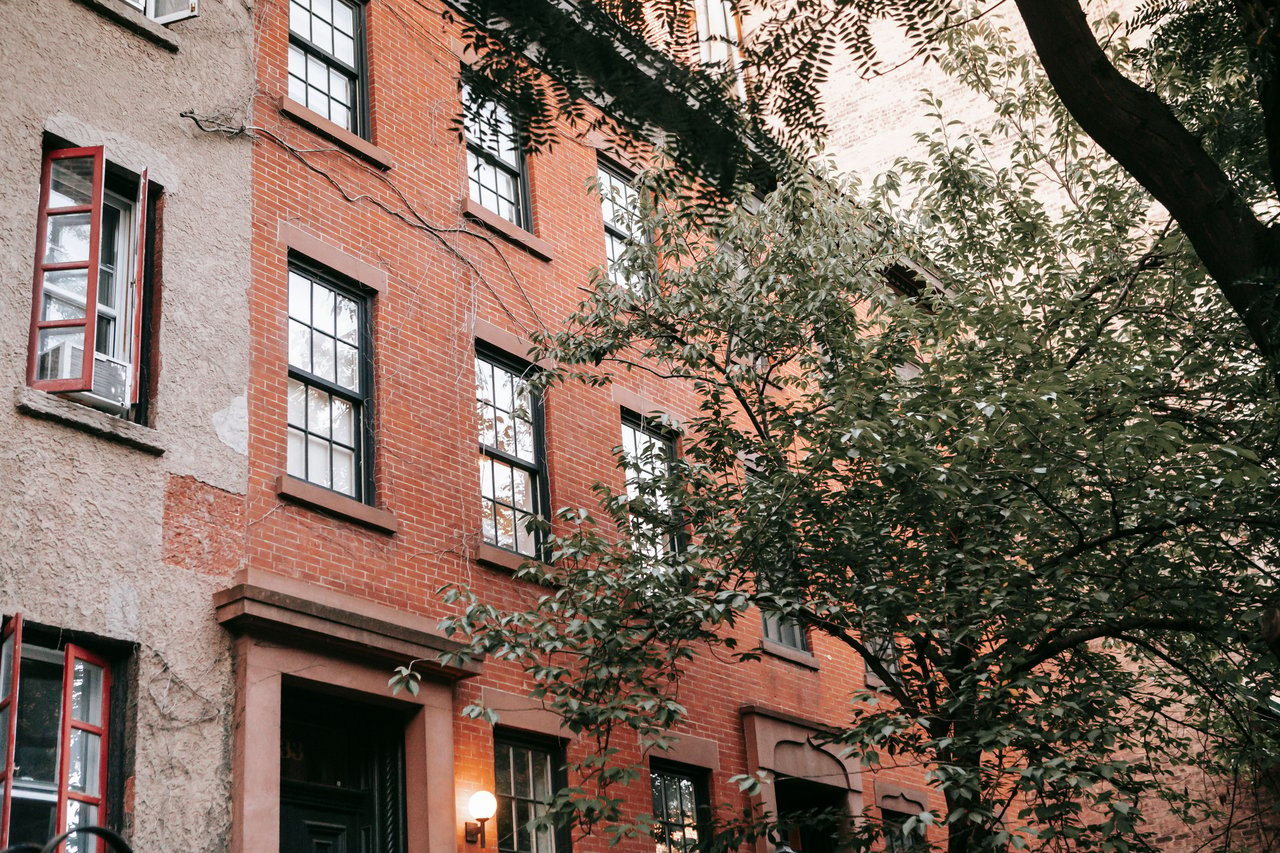
The avenue's width and alignment created opportunities for substantial buildings with broad frontages and carefully designed entrances. During the nineteenth century, the blocks between Washington Square and 14th Street became lined with brick and brownstone residences.
Many of these buildings incorporated architectural details that distinguished them from the narrower rowhouses found along surrounding Greenwich Village streets.
Although substantial redevelopment occurred during the twentieth century, the original street alignment remains fundamental to the architectural character of lower Fifth Avenue.
Washington Square and the Beginning of Fifth Avenue
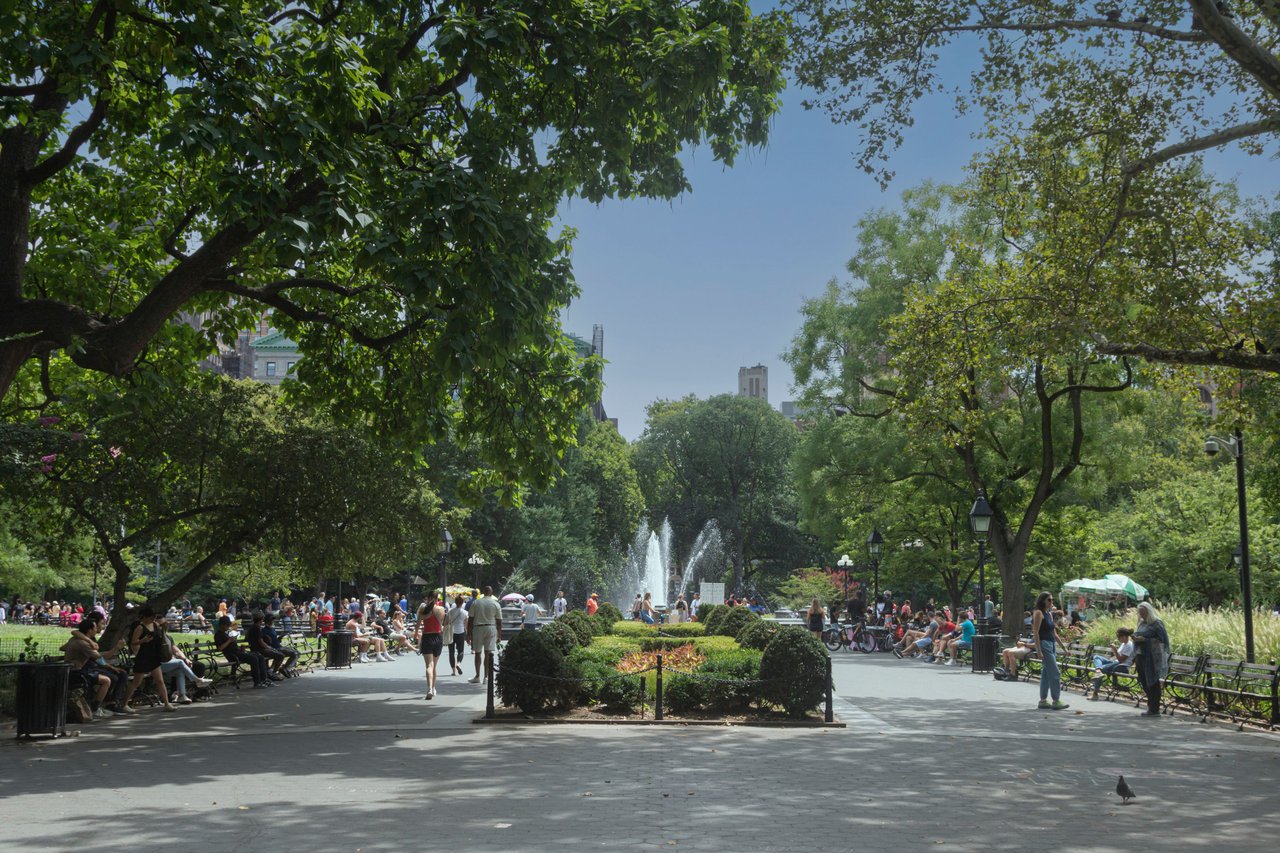
Washington Square forms the architectural foundation of lower Fifth Avenue. The avenue begins at the northern edge of Washington Square Park, where the open landscape creates an unusually broad setting for the surrounding buildings.
The park's formal pathways, planted areas, and monumental entrance establish a relationship between landscape architecture and the urban street grid.
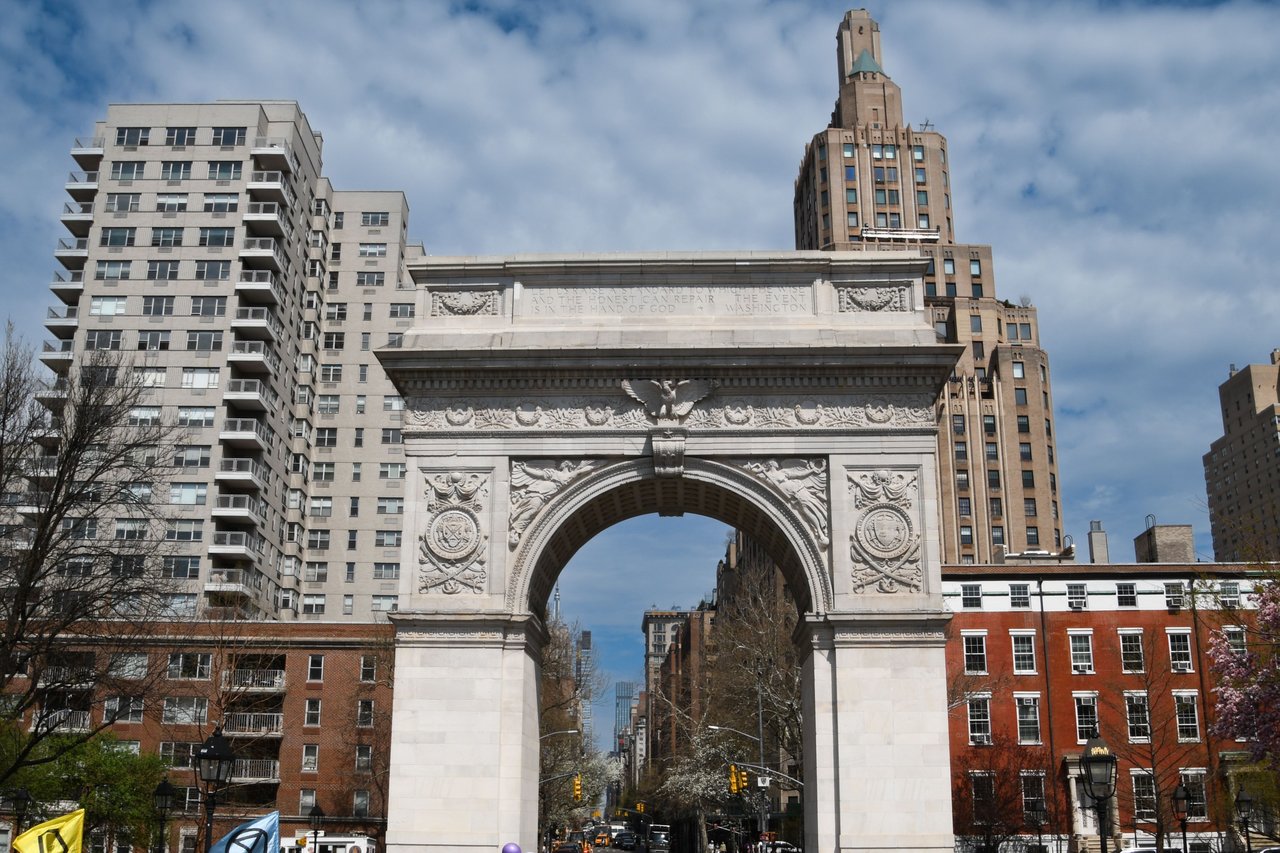
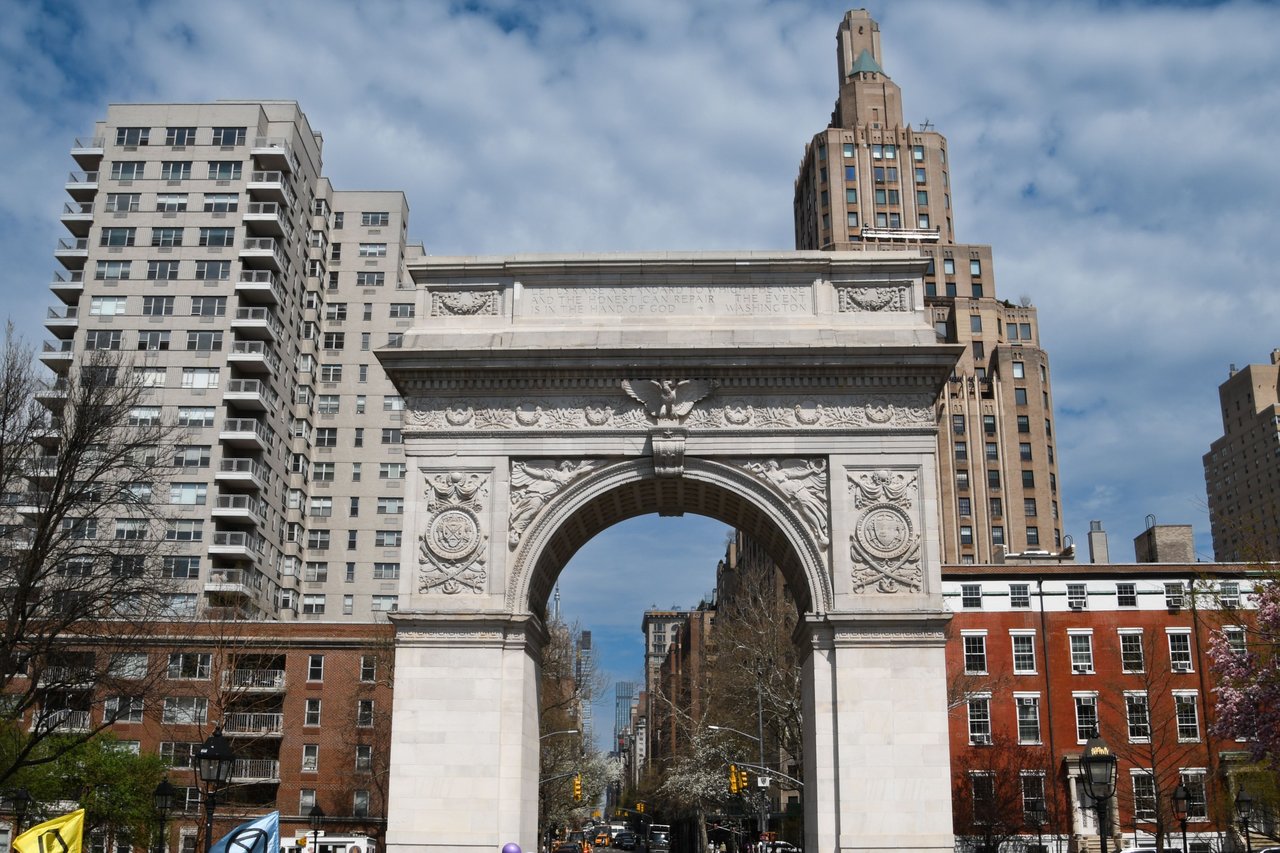
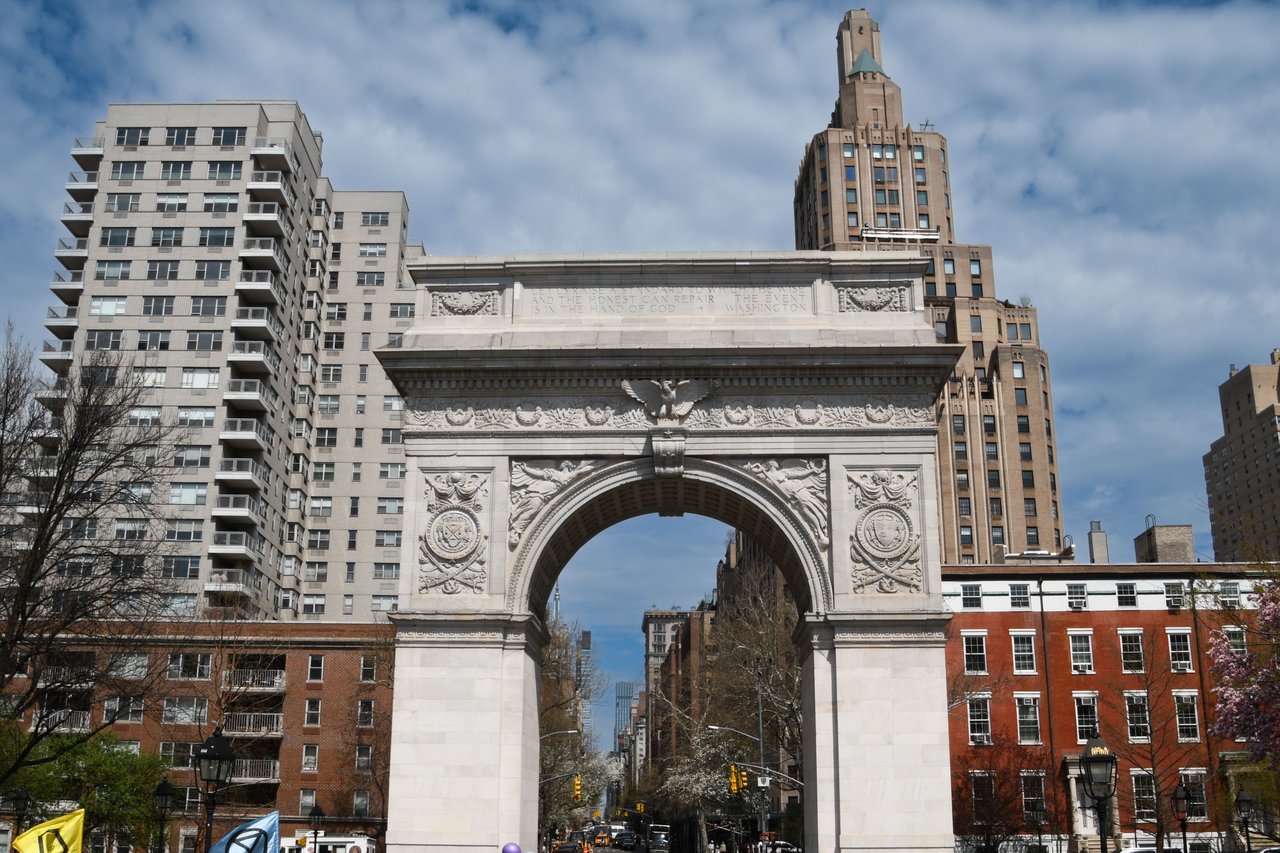
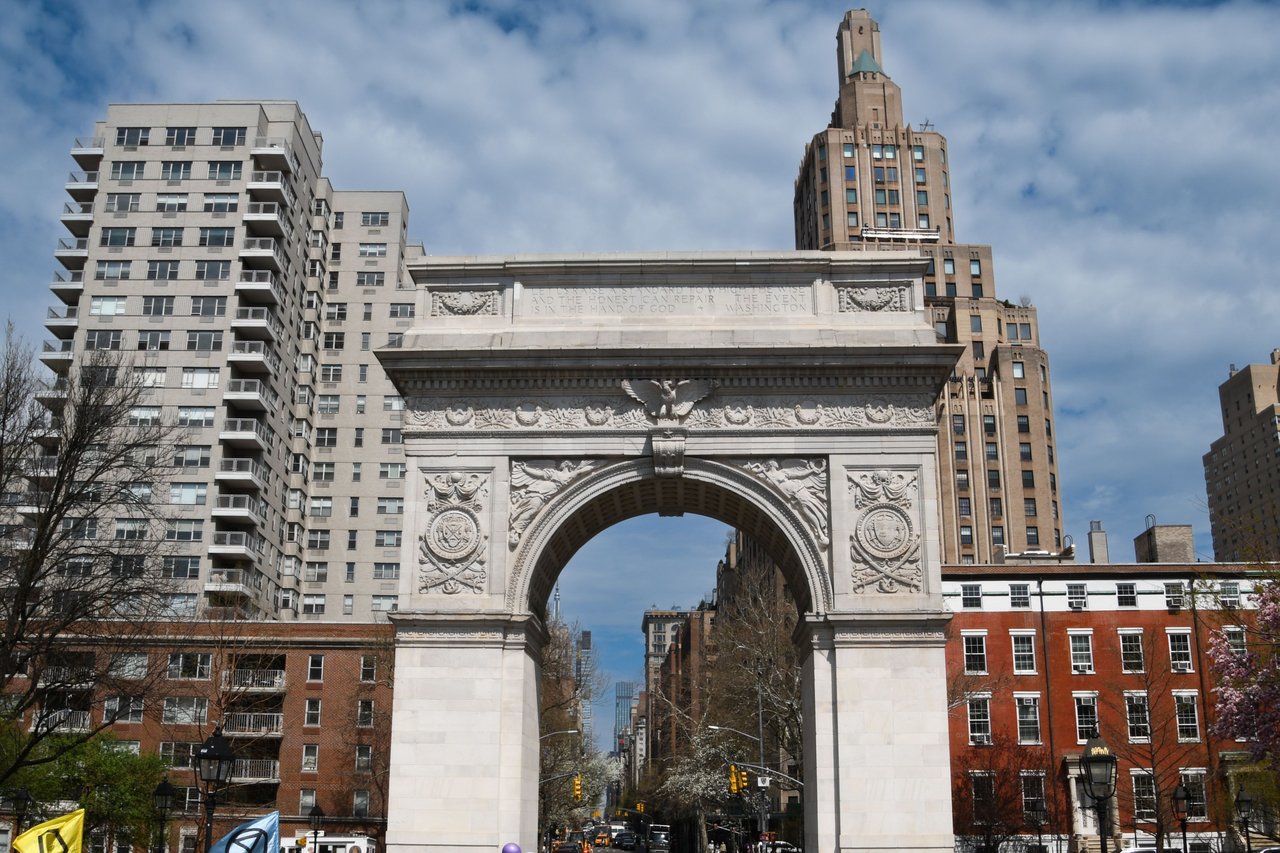
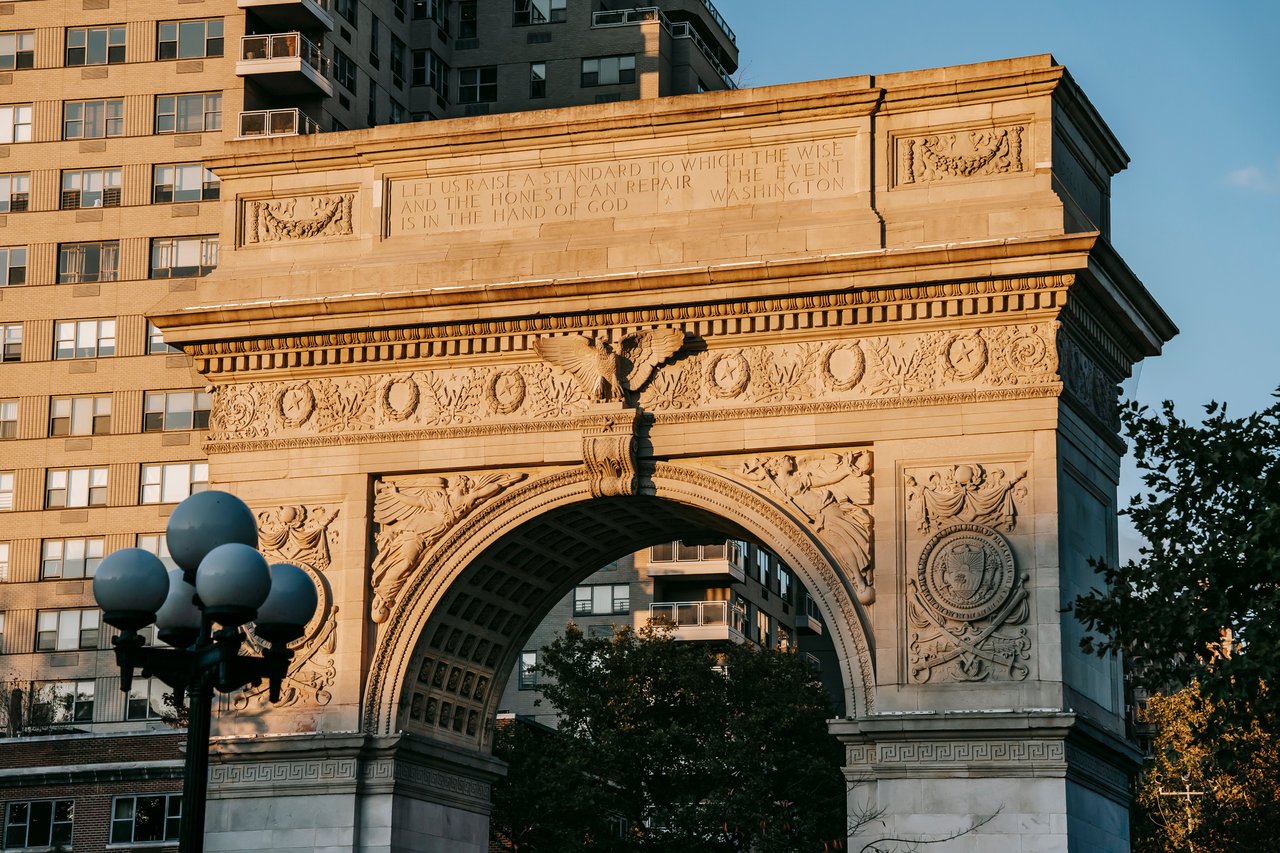
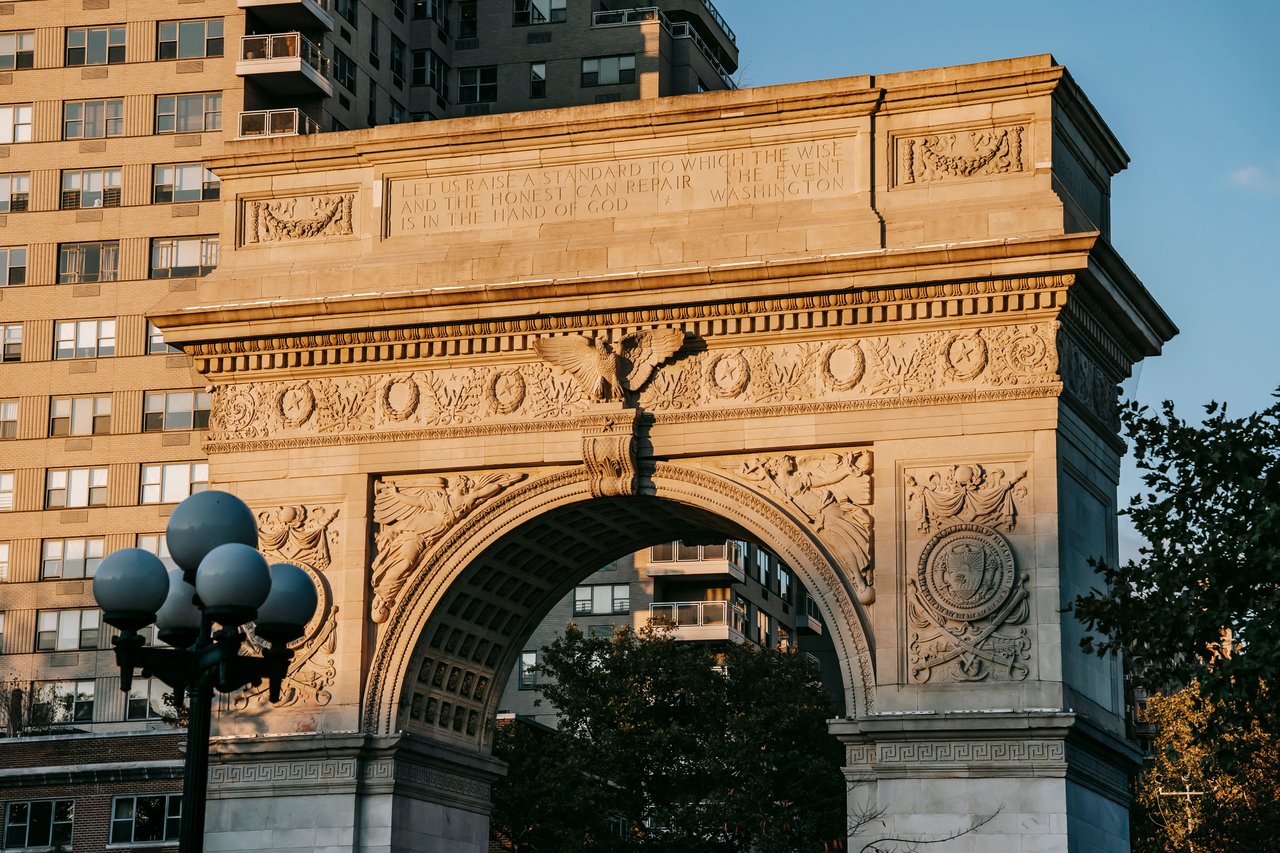
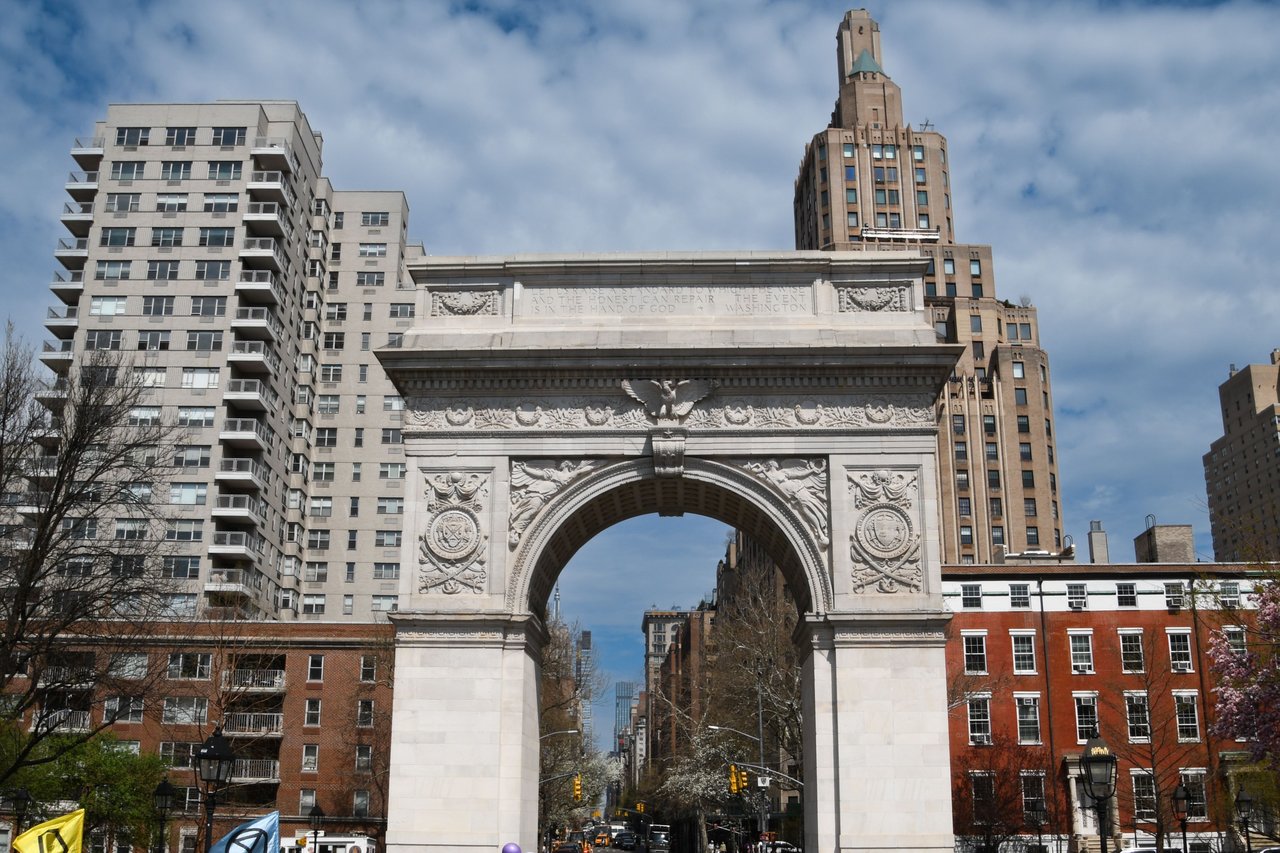
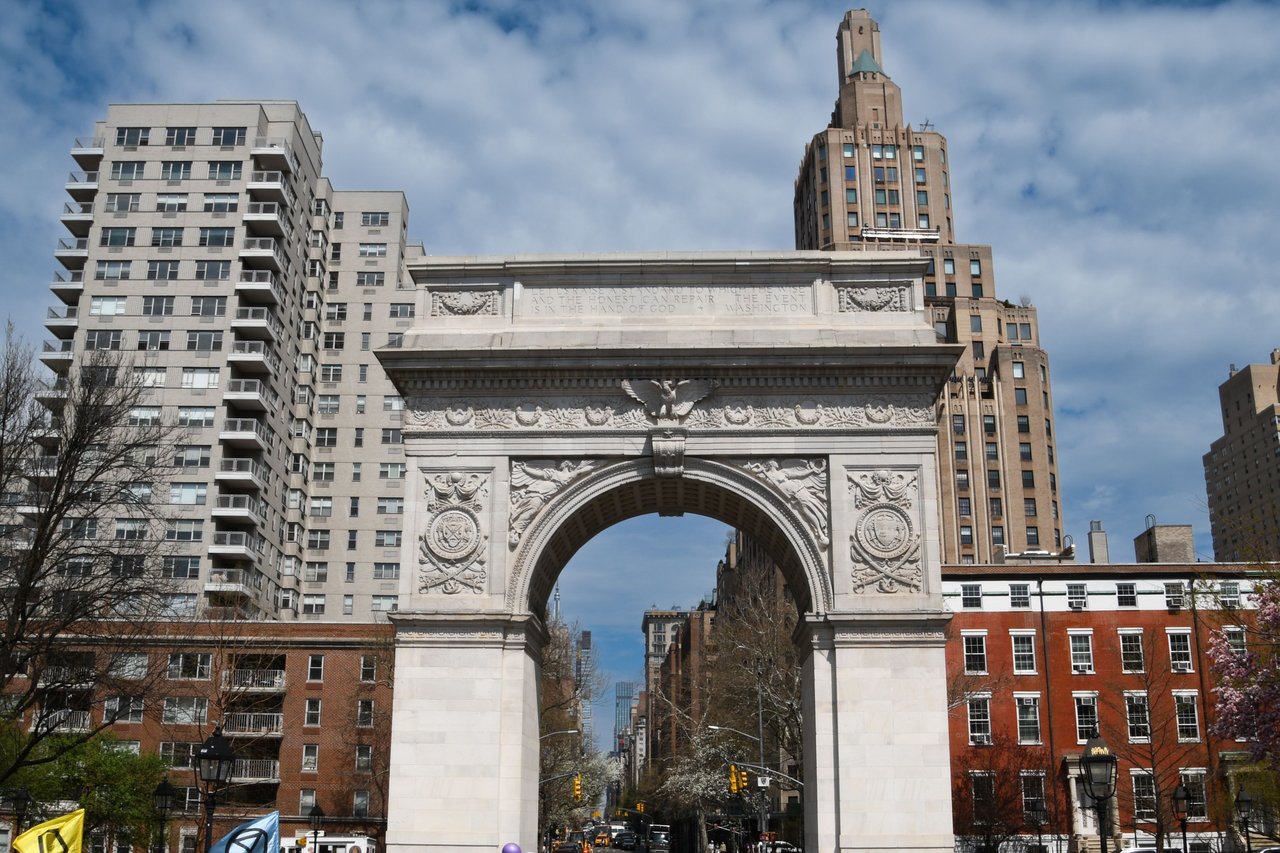
The Washington Square Arch, designed by Stanford White and completed in marble in 1895, is among the most important architectural landmarks in the area.
Its classical design incorporates a monumental central archway, decorative sculptural elements, and carefully proportioned stone surfaces.
The arch establishes a formal visual relationship with Fifth Avenue, creating one of Manhattan's most recognizable architectural perspectives.
The Architecture of Washington Square North
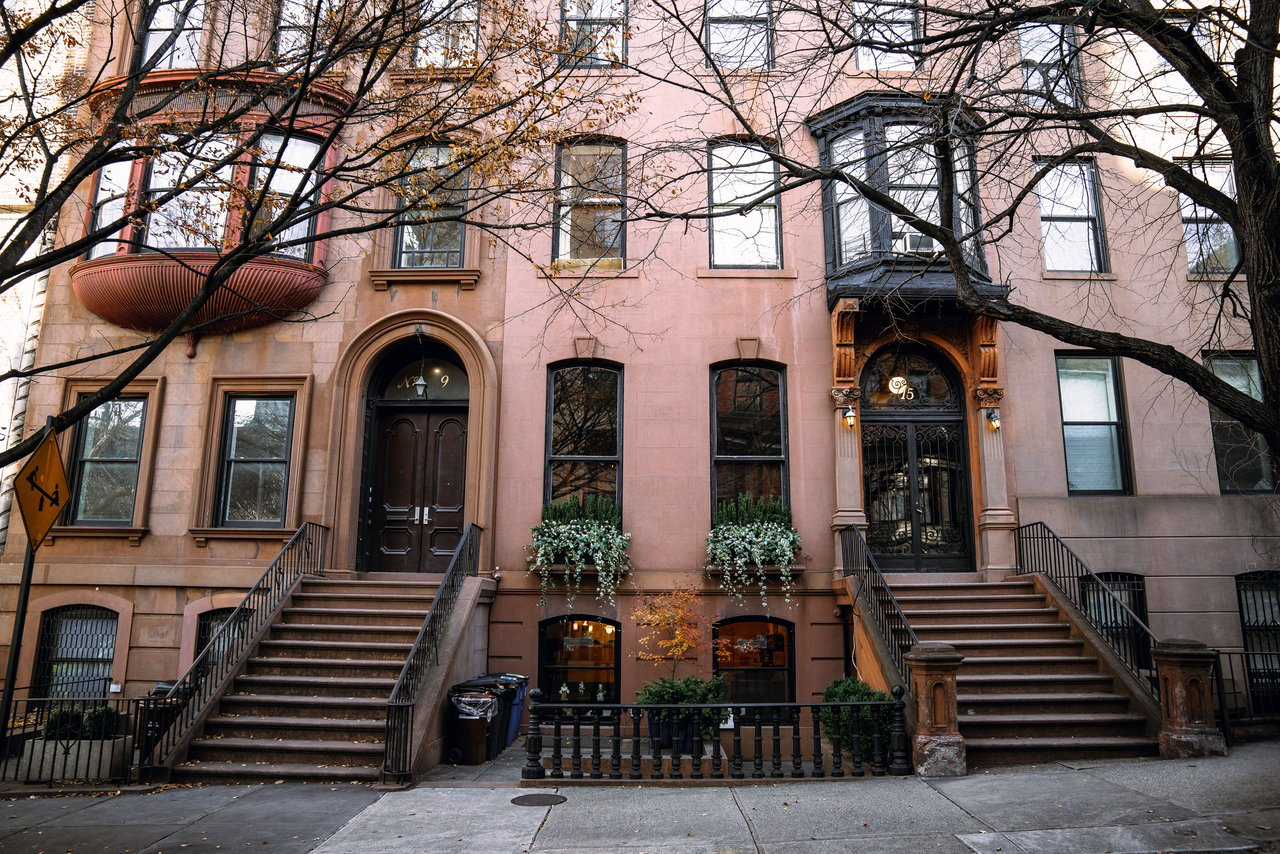
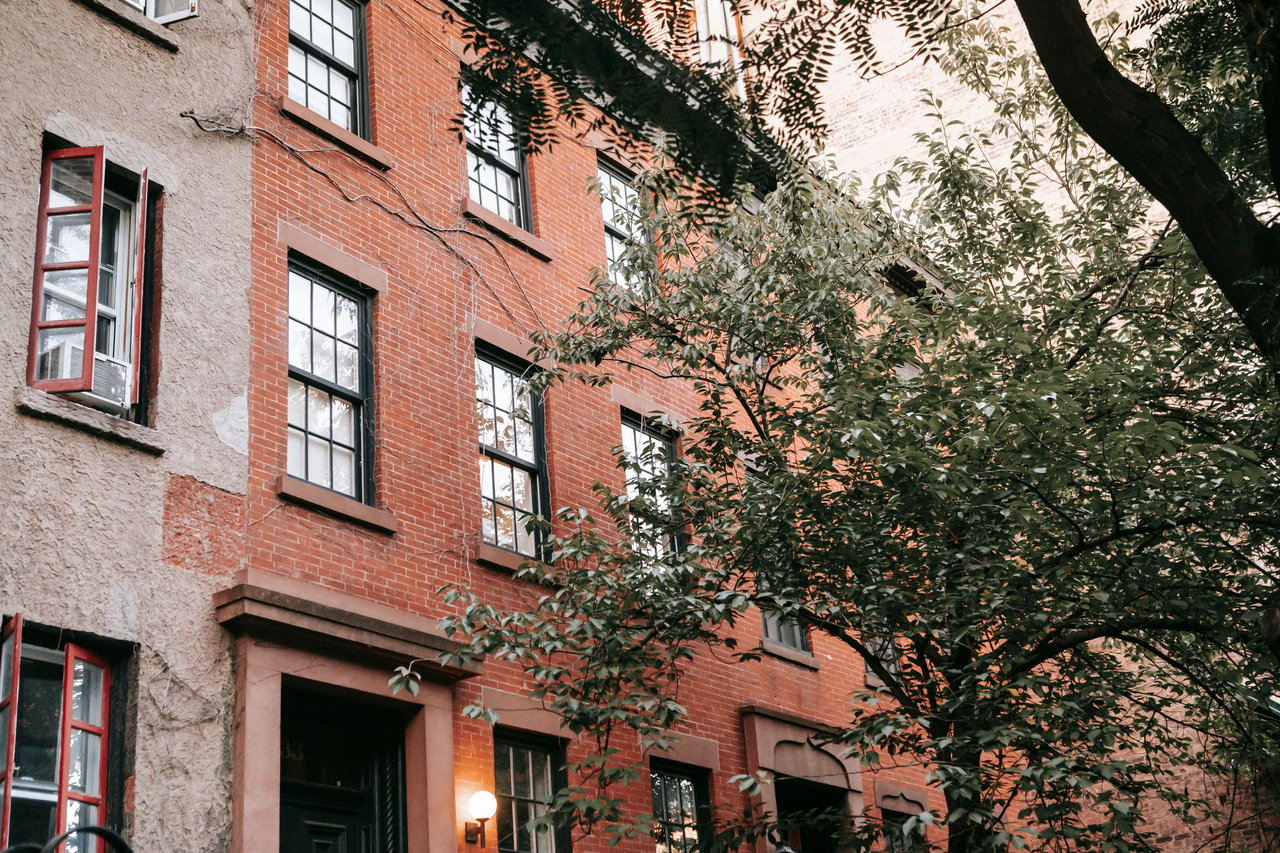
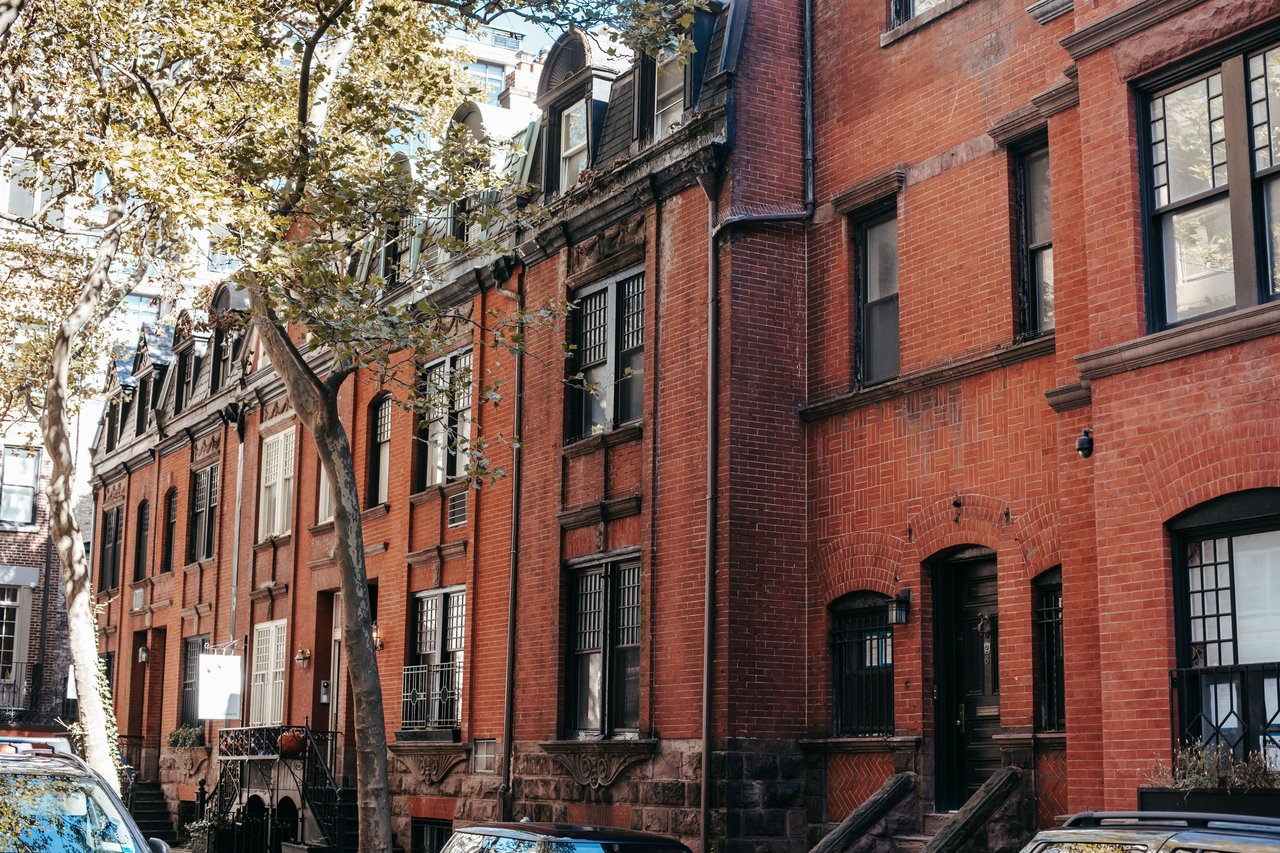
Washington Square North contains some of Greenwich Village's most significant nineteenth-century residential architecture.
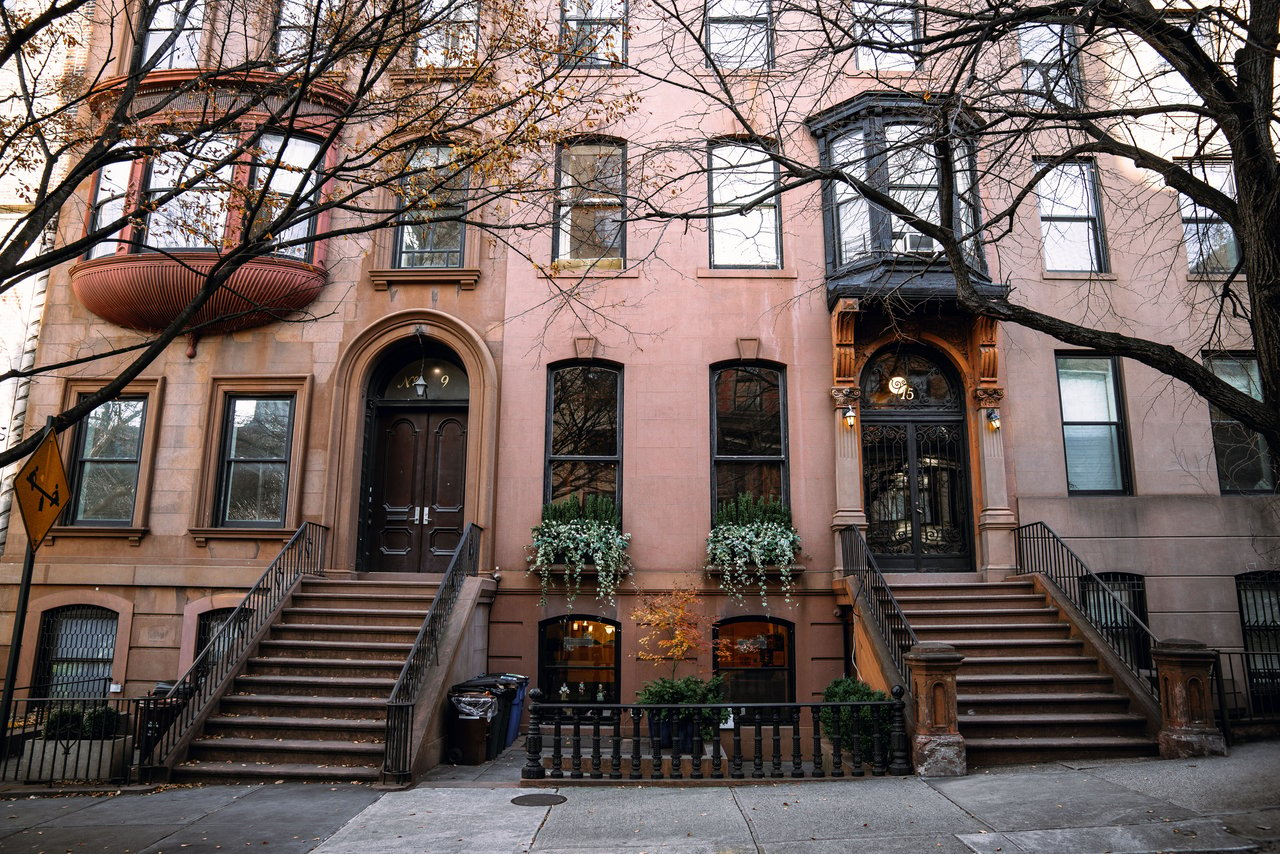
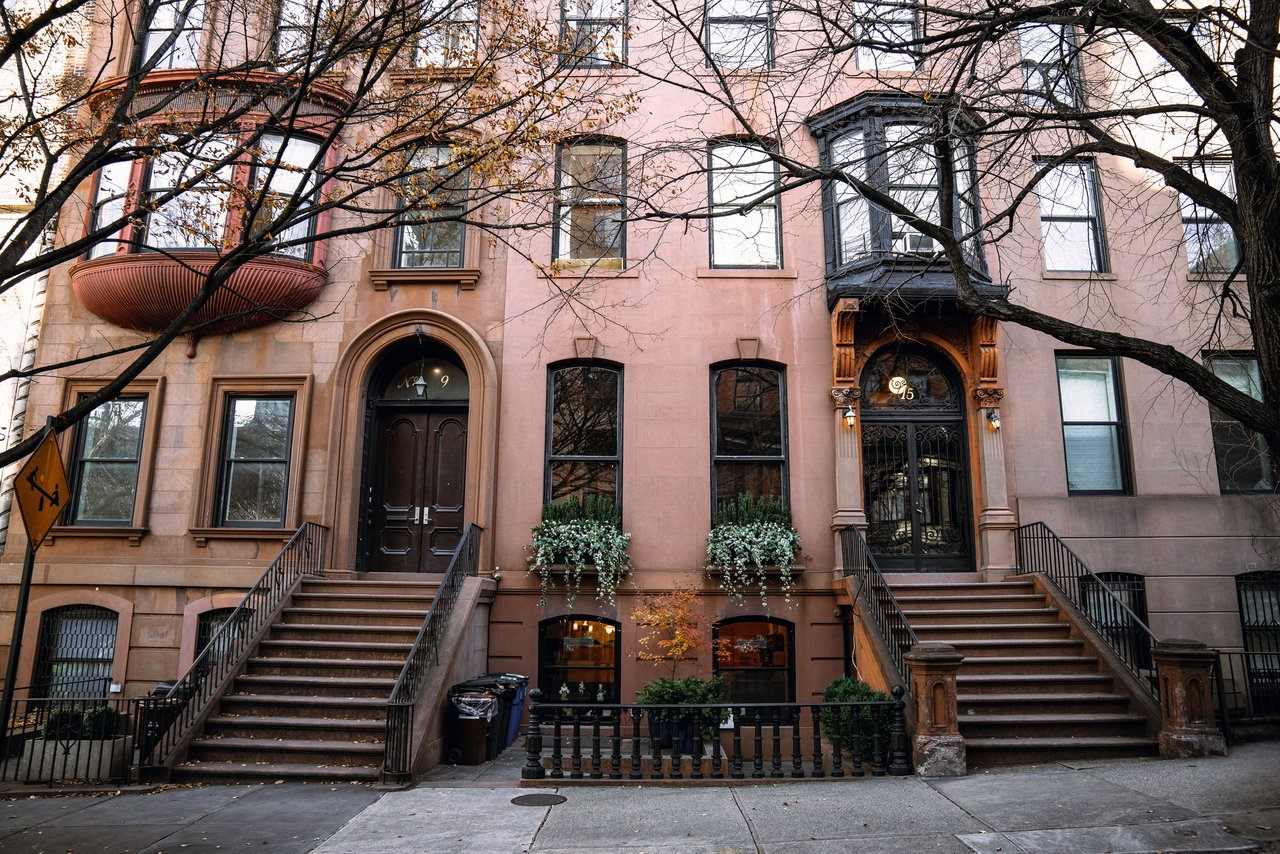
The historic row of Greek Revival houses east of Fifth Avenue, commonly known as the Row, was constructed during the 1830s.
These buildings incorporate brick facades, substantial entrance porticoes, classical columns, and carefully proportioned windows.
Their architectural composition reflects the Greek Revival style that became prominent in New York during the early nineteenth century.
The buildings retain an important relationship with Washington Square Park, where the open landscape allows their facades to be viewed as a continuous architectural composition.
Together, the houses illustrate the residential architecture that characterized the early development of lower Fifth Avenue.
Greek Revival Architecture on Lower Fifth Avenue
Greek Revival architecture was an important influence on the original residential development of Fifth Avenue.
The style emphasized classical proportions, symmetrical facades, substantial entrance surrounds, and relatively restrained ornamentation.
Brick masonry was commonly combined with brownstone or limestone details.
Entrance porticoes frequently incorporated columns, pilasters, and decorative entablatures inspired by classical architecture.
Although many of the original residences along Fifth Avenue were later replaced, surviving buildings around Washington Square preserve important examples of this architectural tradition.
The style established a foundation for the formal residential character of nineteenth-century Greenwich Village.
The Nineteenth-Century Mansion Architecture of Fifth Avenue
During the middle of the nineteenth century, Fifth Avenue developed with substantial residential buildings that differed from the smaller houses found along many surrounding streets.
These residences frequently occupied wider lots and incorporated elaborate entrance arrangements, decorative masonry, and carefully designed rooflines.
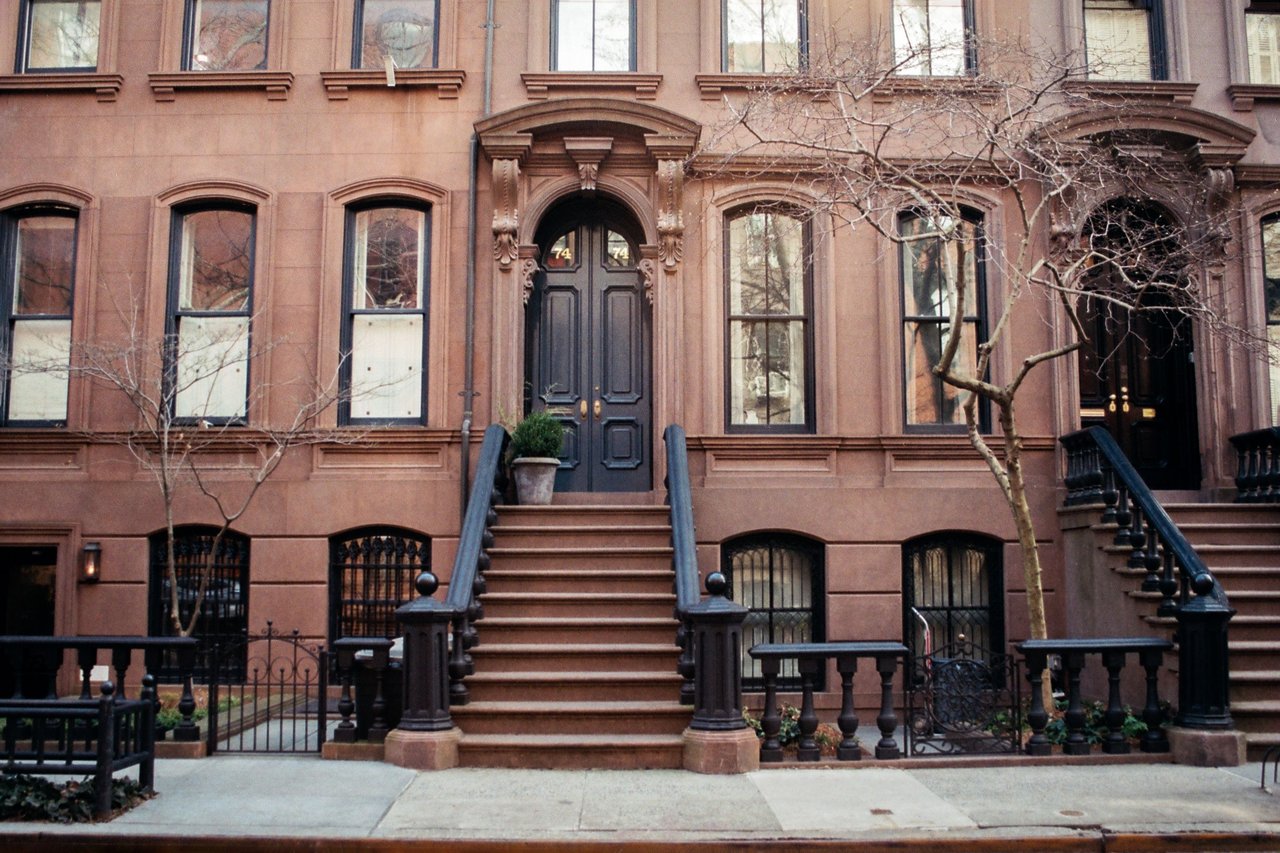
Brownstone became a prominent exterior material, particularly for substantial Italianate residences.
Tall windows, ornamental cornices, and substantial stone entrances contributed to the architectural character of the avenue.
Over time, many of these buildings were replaced by apartment houses and commercial structures.
The surviving examples provide important evidence of Fifth Avenue's original residential scale.
The Salmagundi Club Building
The Salmagundi Club building at 47 Fifth Avenue is one of the most important surviving nineteenth-century residences on lower Fifth Avenue.
Constructed in 1853, the Italianate brownstone building preserves the scale and architectural character of the substantial residences that once lined the avenue.
Its facade incorporates traditional brownstone masonry, carefully arranged windows, and decorative architectural details associated with the Italianate style.
The building's proportions differ significantly from the taller apartment houses constructed nearby during the twentieth century.
Its continued preservation provides a valuable architectural comparison between the avenue's nineteenth-century residential development and its later transformation.
Italianate Architecture in Greenwich Village
Italianate architecture became increasingly prominent in Manhattan during the middle of the nineteenth century.
The style introduced tall windows, decorative stone surrounds, substantial cornices, and ornamental brackets.
Brownstone facades were especially common among larger residential buildings, while brick structures frequently incorporated contrasting stone trim.
Italianate design emphasized vertical proportions while maintaining strong horizontal divisions through projecting cornices and masonry bands.
The surviving Italianate architecture along lower Fifth Avenue and surrounding Greenwich Village streets illustrates the transition from earlier Greek Revival construction toward more elaborate residential design.
One Fifth Avenue and the Rise of Prewar Apartment Architecture
One Fifth Avenue is one of the most recognizable architectural landmarks at the southern end of Fifth Avenue.
Completed in 1927, the building was designed by Helmle & Corbett and Sugarman & Berger.
Its substantial height, stepped silhouette, and central tower distinguish it from the surrounding nineteenth-century residential buildings.
The building incorporates brick masonry above a substantial stone base, with vertical architectural details emphasizing its height.
Its setback composition reflects the influence of early twentieth-century skyscraper design, while decorative elements retain references to earlier architectural traditions.
One Fifth Avenue represents an important transition from the avenue's original mansion architecture to substantial prewar apartment construction.
The Architectural Design of One Fifth Avenue
The architectural composition of One Fifth Avenue emphasizes height through a sequence of setbacks and a prominent central tower.
Its lower stories establish a substantial base, while the upper portions become progressively narrower.
This arrangement creates a distinctive silhouette when viewed from Washington Square Park.
Brick masonry, stone detailing, and carefully arranged windows contribute to the building's exterior character.
The tower's vertical emphasis contrasts with the horizontal proportions of the surrounding nineteenth-century residential buildings.
Its design illustrates the influence of early twentieth-century zoning and skyscraper architecture on Greenwich Village.
The Architectural Character of Fifth Avenue Between 8th and 10th Streets
The blocks immediately north of Washington Square contain a mixture of substantial prewar apartment buildings and historic institutional architecture.
Unlike the original nineteenth-century residential streetscape, the present buildings frequently occupy larger sites and rise considerably higher above the sidewalk.
Brick and stone remain prominent exterior materials, while decorative entrance surrounds and carefully composed facades reflect the architectural traditions of the early twentieth century.
The avenue's broad width provides a strong visual setting for these buildings.
Their varied heights and architectural details illustrate the gradual replacement of individual residences with larger apartment structures.
The Church of the Ascension
The Church of the Ascension, located at Fifth Avenue and West 10th Street, is one of the most important Gothic Revival landmarks in Greenwich Village.
Designed by Richard Upjohn and completed in 1841, the church incorporates substantial stone masonry, pointed-arch openings, and a prominent tower.
Its architecture reflects the nineteenth-century revival of medieval English ecclesiastical design.
The church's exterior emphasizes vertical proportions, substantial masonry walls, and carefully composed architectural details.
Its presence creates an important contrast with the surrounding apartment buildings and former residential structures.
The church remains a defining architectural feature of lower Fifth Avenue.
Gothic Revival Architecture on Fifth Avenue
Gothic Revival architecture introduced a different design tradition to the residential streetscape of Greenwich Village.
Unlike the classical proportions of Greek Revival residences, Gothic Revival buildings emphasize pointed arches, vertical elements, and medieval-inspired decorative details.
Stone masonry became an important exterior material, particularly for monumental religious structures.
Towers, tracery, and substantial window openings contributed to the distinctive appearance of these buildings.
The Church of the Ascension and First Presbyterian Church provide two significant examples of Gothic Revival architecture along lower Fifth Avenue.
Together, they establish a strong architectural relationship between nineteenth-century institutional construction and the surrounding residential buildings.
Fifth Avenue Between 10th and 12th Streets
The blocks between West 10th Street and West 12th Street contain an important concentration of historic apartment buildings and institutional architecture.
The streetscape incorporates substantial masonry facades, decorative stone entrances, and buildings constructed during several different architectural periods.
Early twentieth-century apartment houses introduced broader frontages and more elaborate exterior compositions than the nineteenth-century residences they replaced.
Brick masonry remained prominent, often combined with limestone bases and terra-cotta detailing.
The presence of historic churches also creates variations in building height and architectural form.
This combination of residential and institutional structures is one of the defining characteristics of lower Fifth Avenue.
Beaux-Arts Apartment Architecture
Beaux-Arts architecture became influential in Manhattan during the late nineteenth and early twentieth centuries.
The style emphasized formal composition, substantial entrances, decorative stonework, and carefully arranged facades.
Apartment buildings frequently incorporated rusticated bases, ornamental balconies, projecting cornices, and classical architectural details.
Masonry construction allowed architects to combine brick walls with limestone and terra-cotta ornamentation.
The resulting buildings introduced a more monumental residential scale to Fifth Avenue.
These architectural traditions contributed to the transformation of the avenue from a collection of individual residences into a corridor of substantial apartment buildings.
The Apartment Buildings of Lower Fifth Avenue
During the early twentieth century, many of Fifth Avenue's original residential buildings were replaced by larger apartment houses.
These structures frequently occupied multiple former building lots, allowing for wider facades and more substantial entrances.
Brick masonry remained a principal exterior material, while decorative stonework and terra-cotta details established architectural variety.
Many buildings incorporated carefully designed lobbies, formal entrance arrangements, and distinctive roofline treatments.
The architectural transition reflected changing construction methods and the growing prominence of apartment living in Manhattan.
Today, these prewar buildings form an important part of the avenue's historic character.
First Presbyterian Church
First Presbyterian Church, located at Fifth Avenue and West 12th Street, is another major Gothic Revival landmark in Greenwich Village.
Designed by Joseph C. Wells and constructed between 1844 and 1846, the church incorporates substantial brownstone masonry, pointed-arch windows, and a prominent tower.
Its architectural composition reflects the influence of medieval ecclesiastical design.
The building's substantial walls and decorative stonework create a monumental presence along Fifth Avenue.
Later architectural additions and restoration projects contributed to the development of the church complex.
The landscaped grounds surrounding the building also establish a distinctive relationship between historic architecture and open space.
The Architecture and Gardens of First Presbyterian Church
The grounds of First Presbyterian Church provide an unusual landscaped setting along lower Fifth Avenue.
Unlike the continuous street walls created by neighboring apartment buildings, the church complex incorporates planted areas, pathways, and open space.
The landscape design emphasizes the relationship between the Gothic Revival masonry building and its surroundings.
Bluestone walkways, garden areas, and perimeter fencing contribute to the architectural composition.
The contrast between the church grounds and the neighboring residential buildings creates one of the most distinctive streetscape conditions on lower Fifth Avenue.
Renaissance Revival and Terra-Cotta Detailing
Renaissance Revival architecture influenced many apartment and commercial buildings constructed in Manhattan during the early twentieth century.
The style incorporated classical proportions, decorative masonry, and carefully organized facade divisions.
Brick buildings frequently featured limestone bases, terra-cotta ornamentation, and projecting cornices.
Window arrangements were organized to establish regular vertical and horizontal rhythms.
The use of terra cotta allowed architects to introduce elaborate decorative details while maintaining relatively consistent exterior materials.
These features are visible in the broader architectural character of lower Fifth Avenue's prewar apartment buildings.
Fifth Avenue Between 12th and 14th Streets
The northern portion of Fifth Avenue within Greenwich Village reflects a transition from primarily residential architecture toward larger commercial and institutional buildings.
During the late nineteenth and early twentieth centuries, substantial new structures replaced many earlier residences.
Commercial buildings introduced broader facades, larger windows, and construction methods suited to office and institutional uses.
Brick, limestone, and terra cotta remained important exterior materials.
The resulting streetscape contains a mixture of historic apartment buildings, commercial structures, and substantial institutional architecture.
This architectural transition distinguishes the blocks approaching West 14th Street from the more residential character of Fifth Avenue near Washington Square.
The Former Macmillan Publishing Building
The former Macmillan Publishing Company Building at 60 Fifth Avenue is an important example of early twentieth-century commercial architecture.
Constructed between 1923 and 1924, the eight-story building occupies the northwest corner of Fifth Avenue and West 12th Street.
Its architectural composition reflects the development of substantial commercial buildings along lower Fifth Avenue during the early twentieth century.
The building incorporates a formal masonry facade and carefully arranged window openings.
Its scale and construction illustrate the transformation of the avenue as commercial buildings became increasingly prominent near 14th Street.
The property is listed on the State and National Registers of Historic Places.
The Educational Building at 70 Fifth Avenue
The Educational Building at 70 Fifth Avenue is another important architectural landmark in the northern section of lower Fifth Avenue.
Constructed in 1912, the building reflects the development of substantial early twentieth-century commercial and institutional architecture.
Its design incorporates a steel-frame structure and a distinctive masonry exterior.
The facade features carefully organized window openings and decorative architectural details associated with commercial construction of the period.
The building's substantial height and relatively narrow frontage illustrate the increasing intensity of development along Fifth Avenue near Union Square.
It was designated an individual New York City landmark in 2021.
Commercial Architecture Near West 14th Street
The blocks approaching West 14th Street contain buildings reflecting the expansion of commercial construction during the late nineteenth and early twentieth centuries.
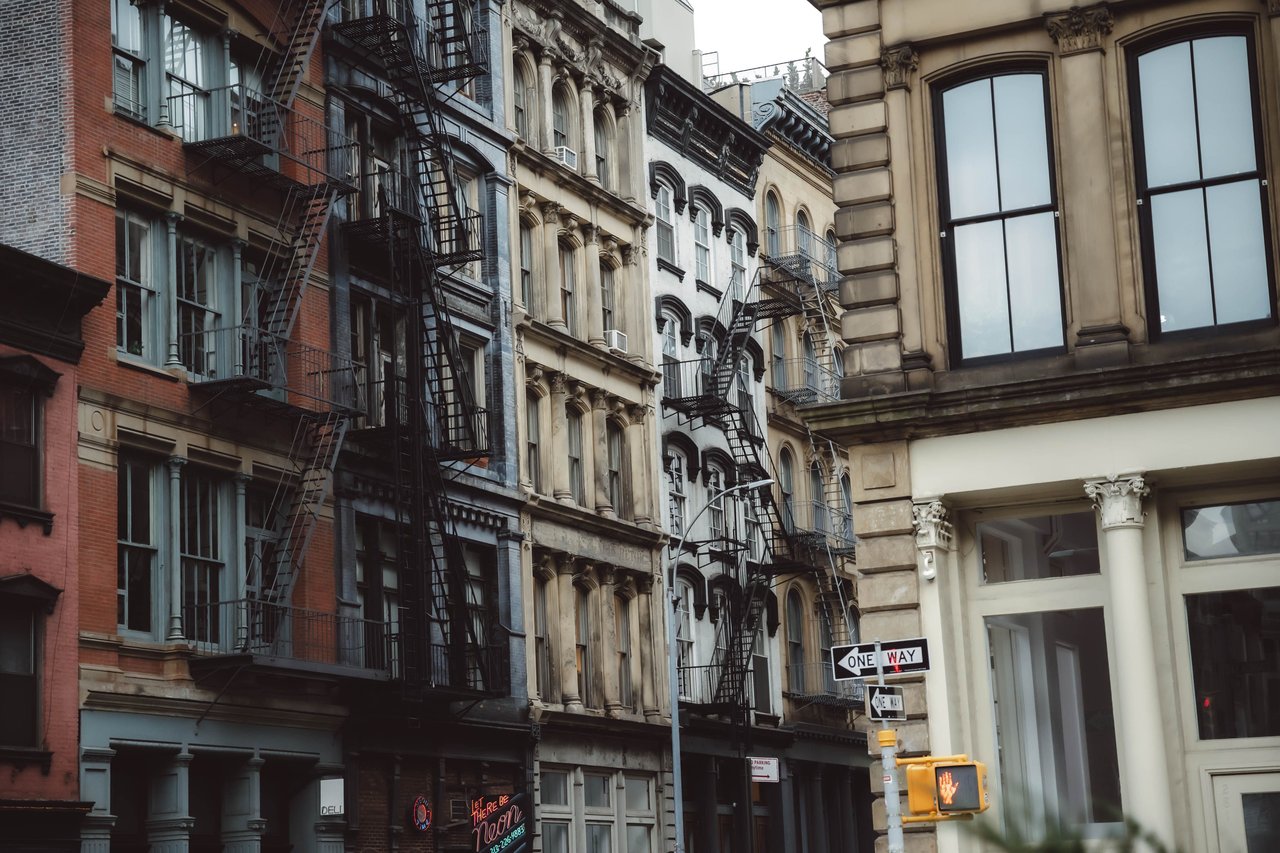
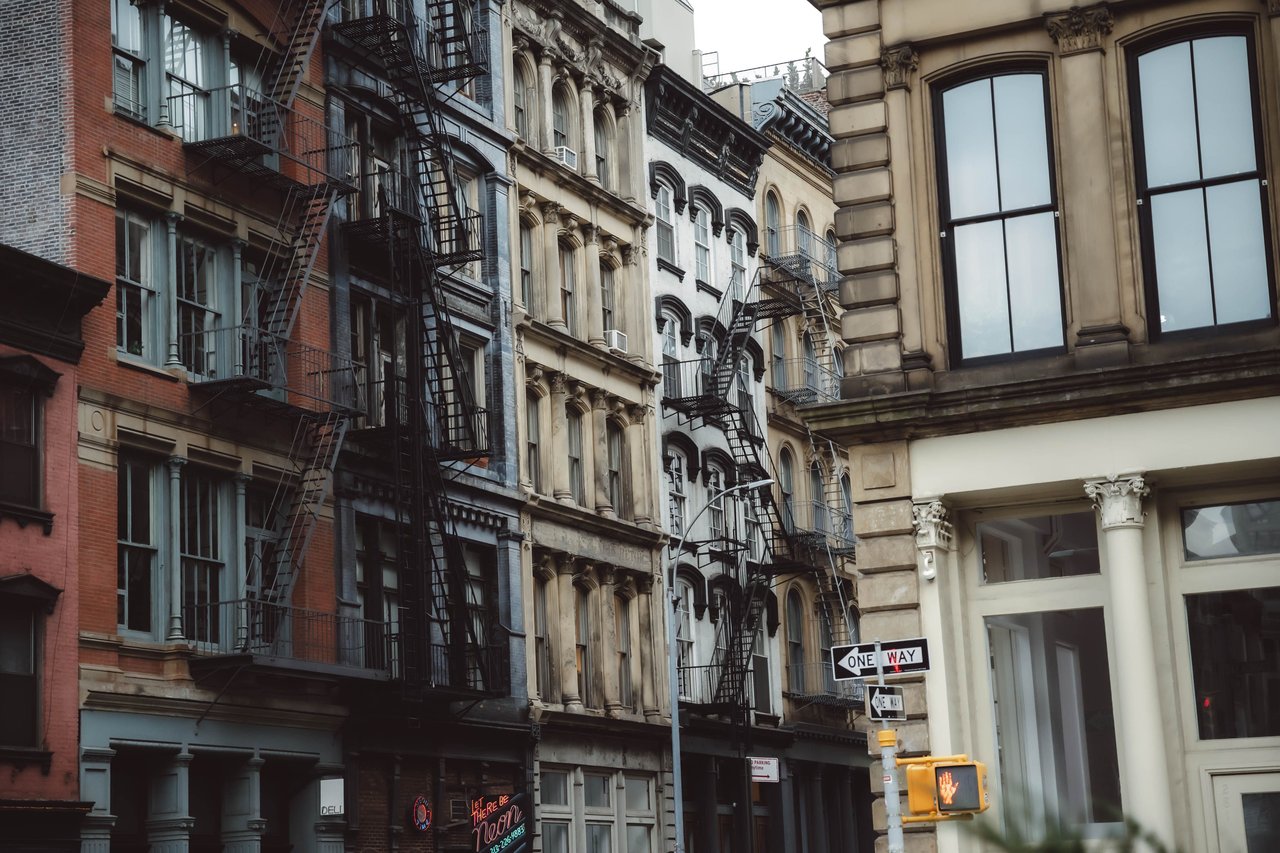
Traditional residential structures were increasingly replaced by office buildings, commercial lofts, and larger institutional properties.
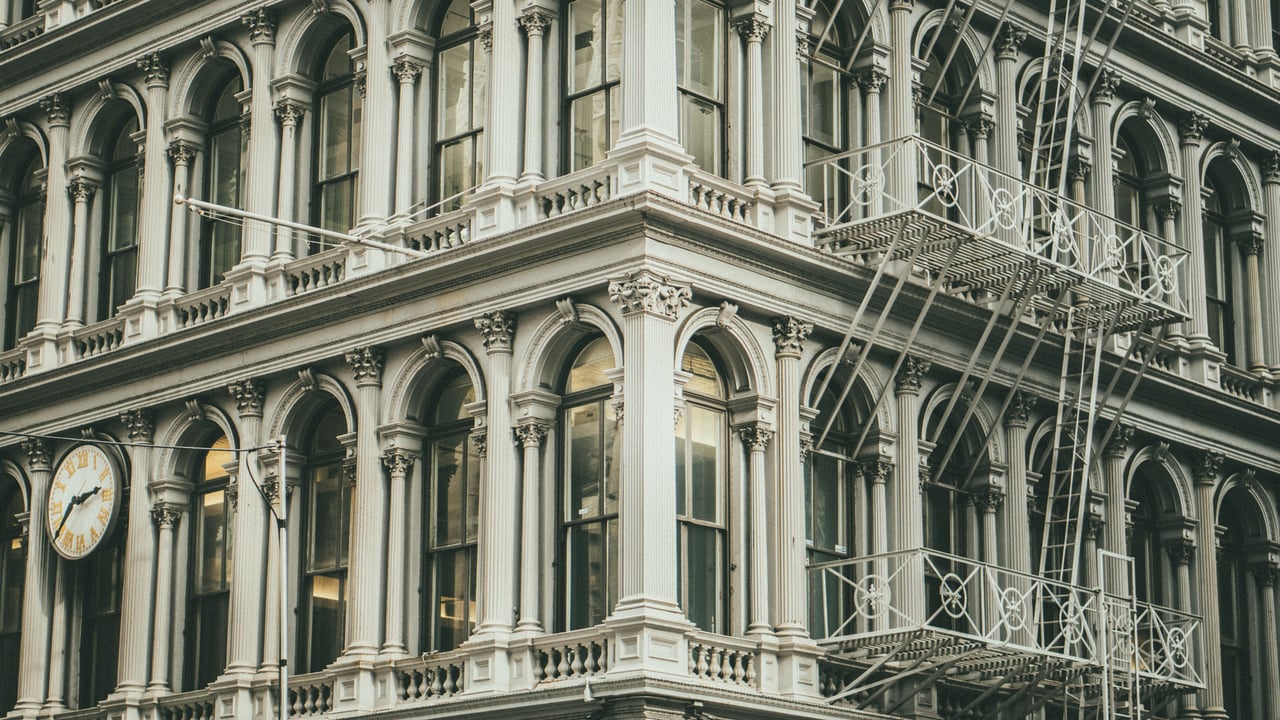
These buildings frequently incorporated steel-frame construction, substantial masonry facades, and larger window openings.
Decorative terra cotta and stonework remained common exterior features.
The architectural transition is visible in the changing scale of buildings and the greater emphasis on commercial ground-floor spaces.
This section of Fifth Avenue provides an important architectural connection between Greenwich Village and the larger commercial districts farther north.
The Architectural Relationship Between Fifth Avenue and West 14th Street
West 14th Street establishes the northern boundary of this section of Greenwich Village.
The intersection marks an important change in the architectural character of Fifth Avenue.
South of 14th Street, the avenue retains a strong relationship with Washington Square, historic churches, and substantial prewar residential buildings.
Near the intersection, commercial and institutional architecture becomes more prominent.
The differences in building scale, facade treatment, and construction methods reflect the avenue's changing architectural development during the nineteenth and twentieth centuries.
Historic Masonry and Decorative Facades
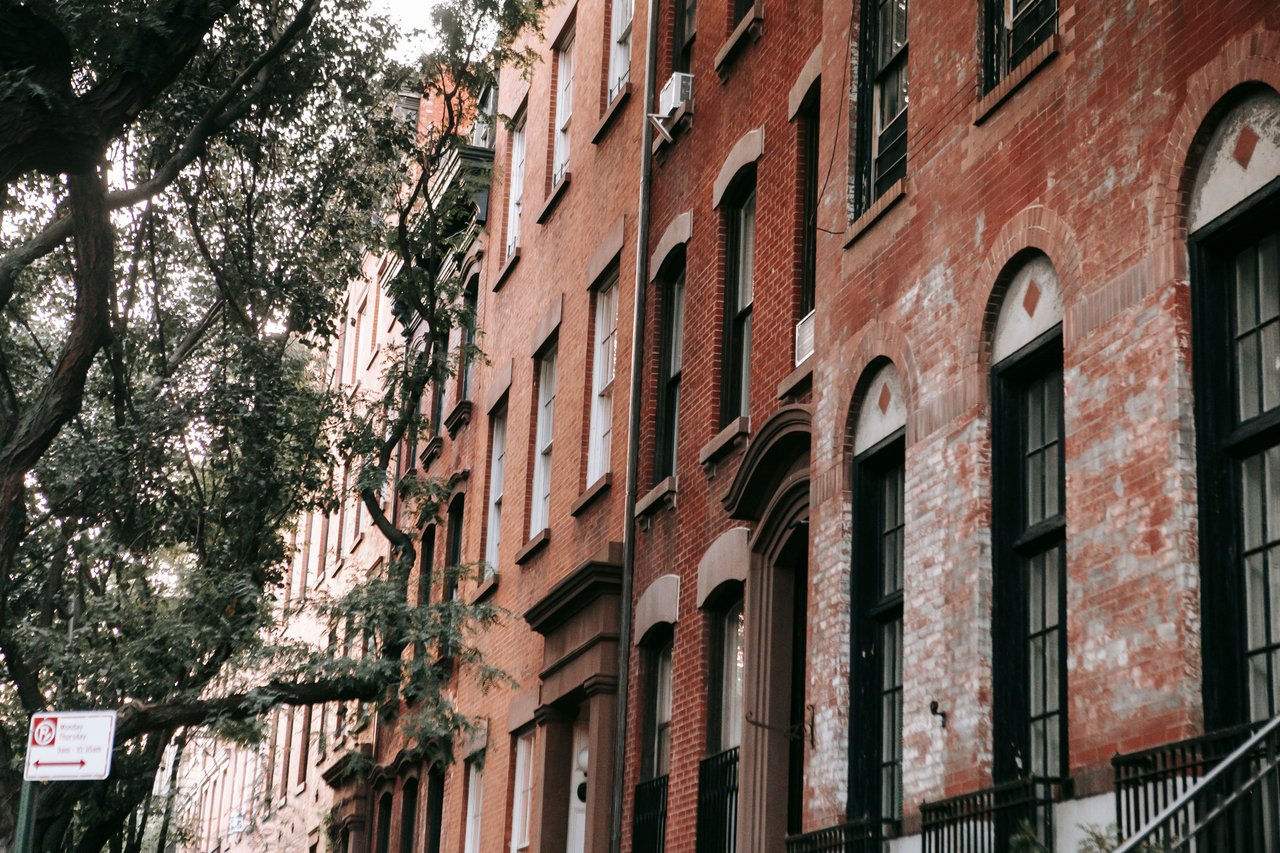
Brick, brownstone, limestone, and terra cotta are among the principal materials defining lower Fifth Avenue.
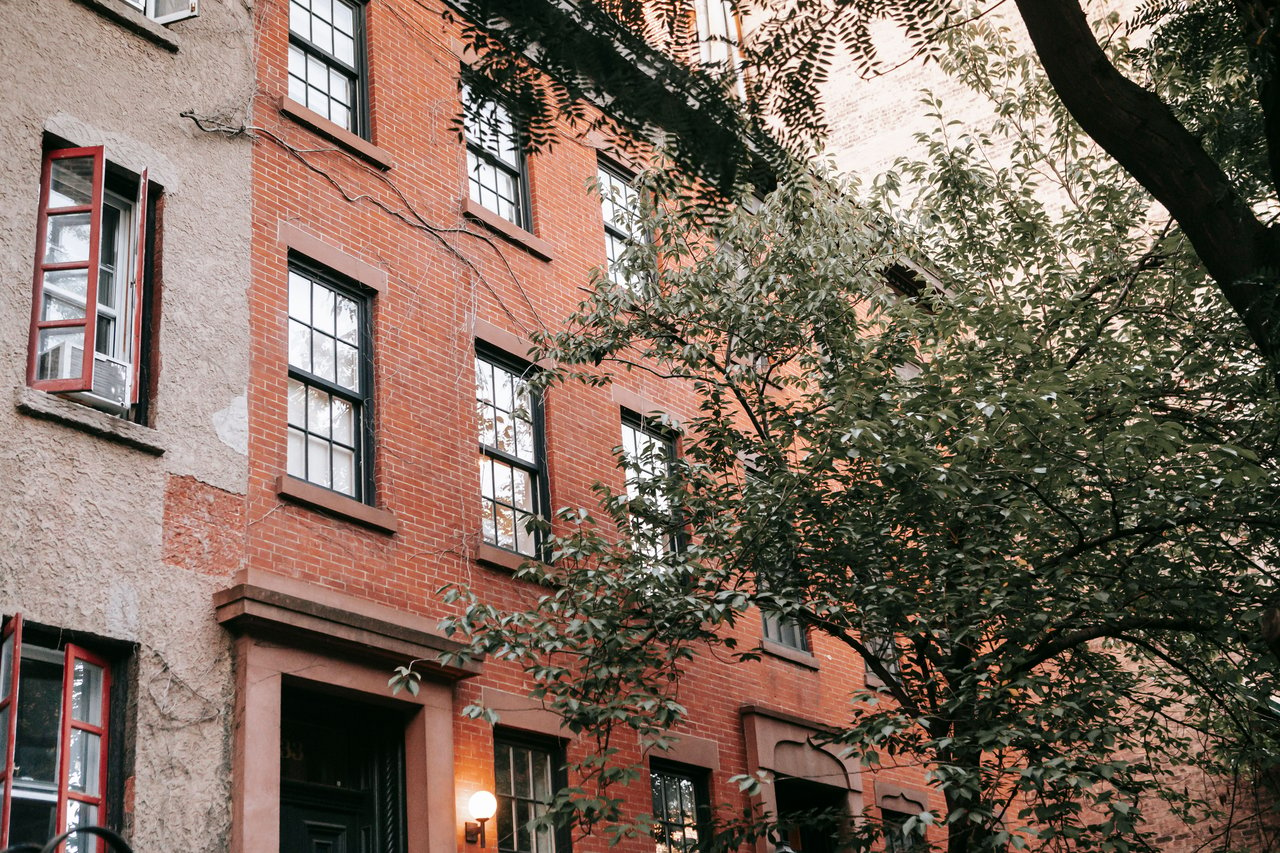
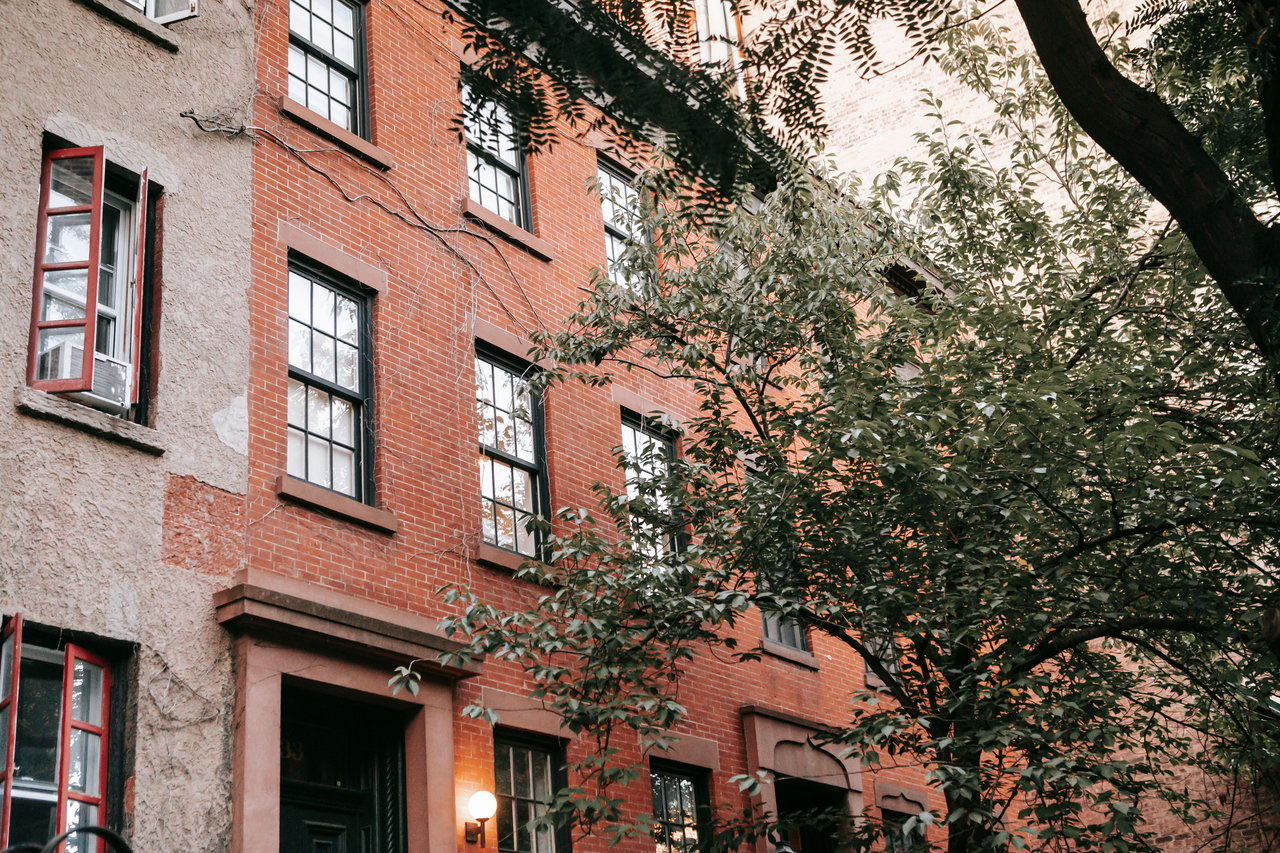
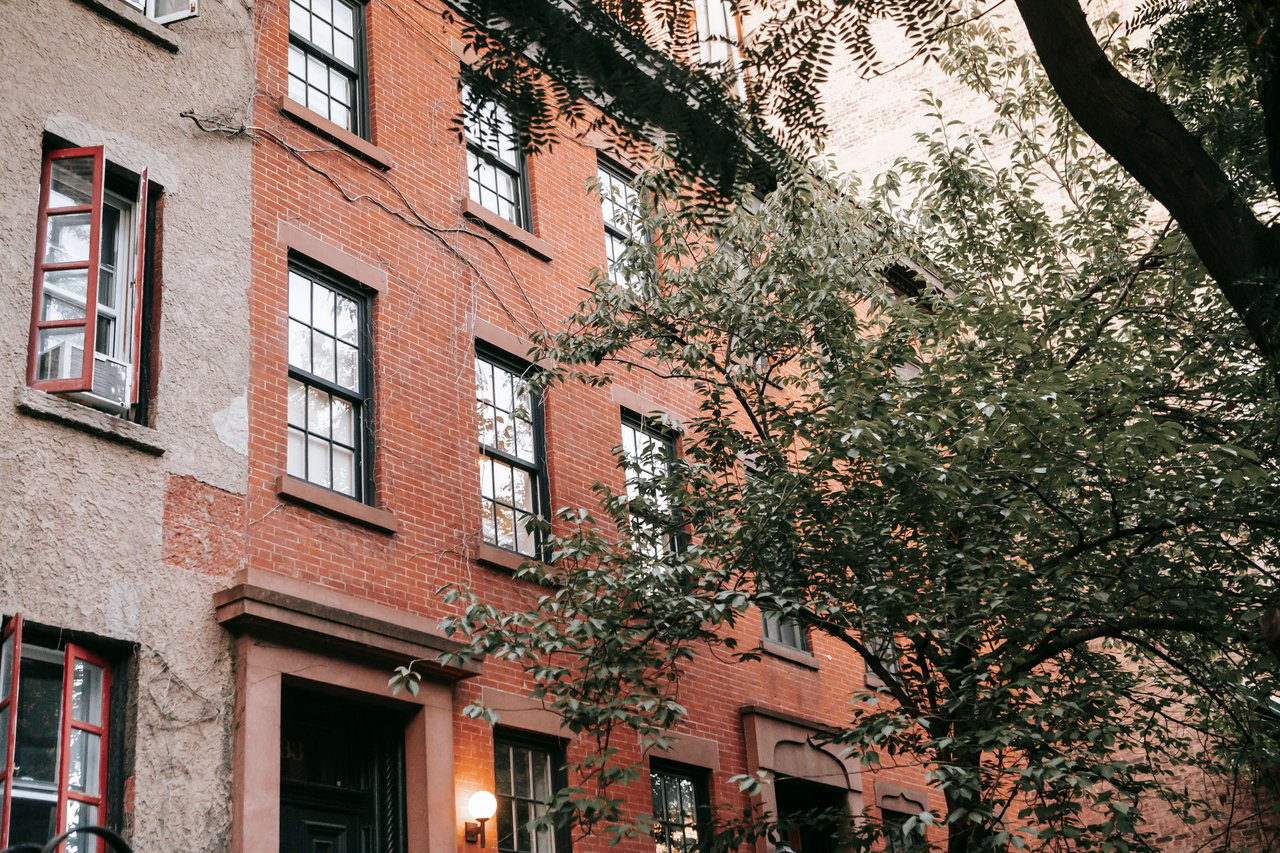
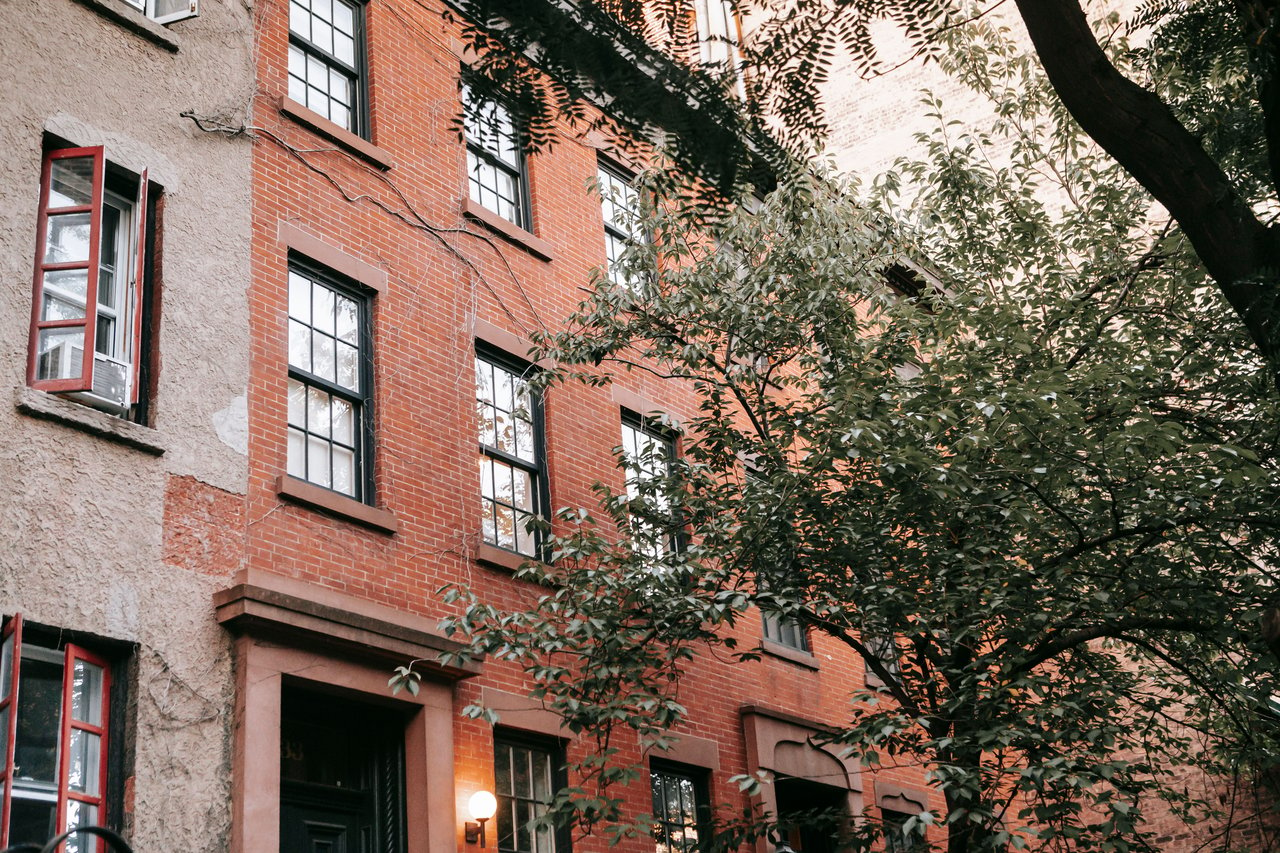
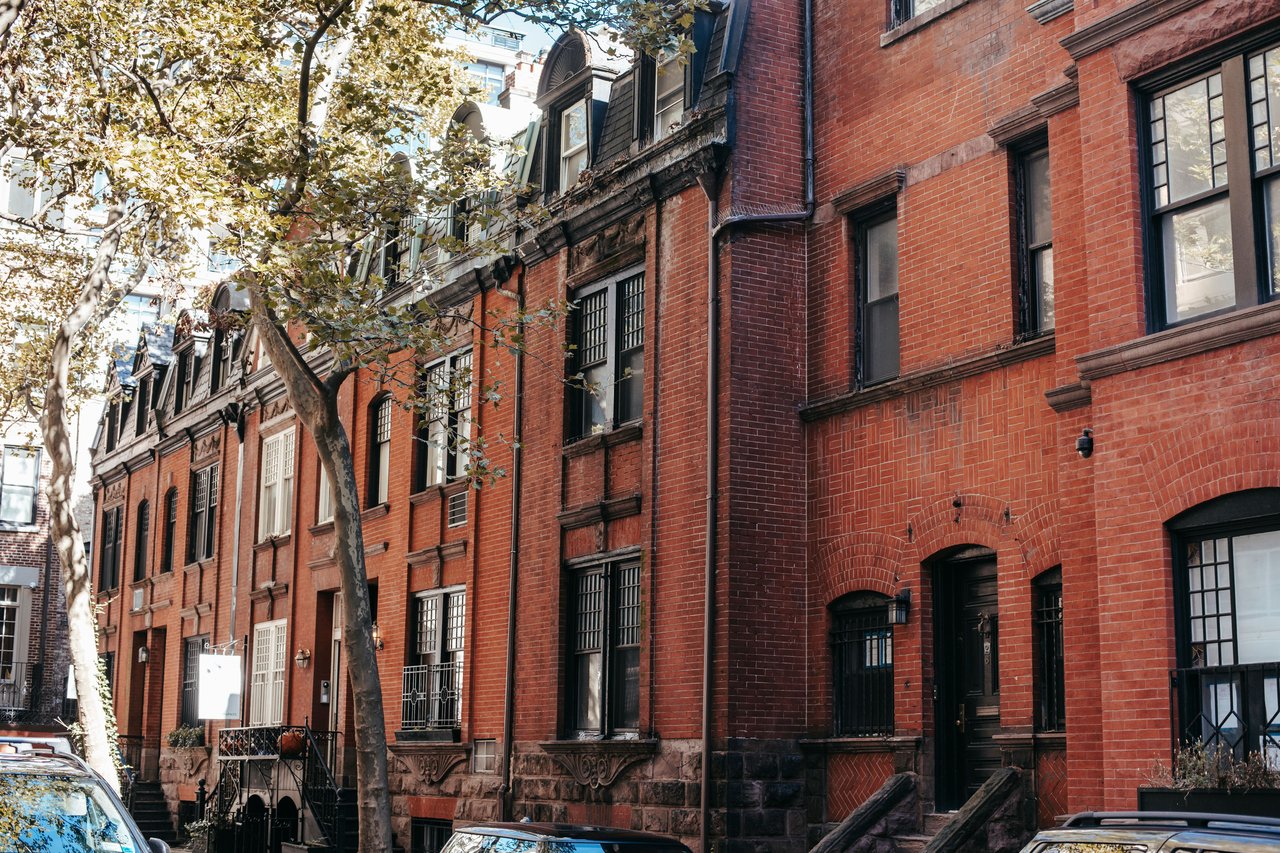
Nineteenth-century residences frequently incorporated brownstone facades, decorative entrance surrounds, and projecting cornices.
Early twentieth-century apartment buildings introduced broader brick elevations with limestone bases and terra-cotta ornamentation.
Institutional structures incorporated substantial stone masonry and more monumental architectural compositions.
The combination of these materials creates a distinctive architectural character across the relatively short stretch between Washington Square and West 14th Street.
Historic Windows, Entrances, and Rooflines
The architectural details of lower Fifth Avenue reflect several periods of Manhattan construction.
Nineteenth-century residences commonly incorporated vertically proportioned windows, decorative lintels, and substantial entrance stoops.
Early apartment buildings introduced formal entrance portals, ornamental balconies, and more elaborate window surrounds.
Gothic Revival churches incorporated pointed-arch openings and distinctive tower compositions.
Later commercial buildings emphasized larger windows and more regular facade patterns.
These differences contribute to the architectural variety of Greenwich Village's section of Fifth Avenue.
Architectural Preservation on Lower Fifth Avenue
Much of lower Fifth Avenue is protected through the Greenwich Village Historic District and individual landmark designations.
The historic district, designated in 1969, includes significant portions of the avenue's nineteenth-century and early twentieth-century architecture.
Preservation work frequently involves brick repointing, brownstone restoration, decorative terra-cotta repair, and maintenance of historic windows and cornices.
Substantial institutional buildings may require specialized restoration of stone masonry, towers, and ornamental details.
Exterior alterations to designated buildings are subject to applicable New York City Landmarks Preservation Commission requirements.
Preservation has played an important role in retaining the architectural character of the avenue despite substantial changes in surrounding development.
The Architectural Legacy of Fifth Avenue in Greenwich Village
Fifth Avenue's southernmost section provides an extraordinary record of Manhattan's architectural development.
Beginning at Washington Square, the avenue retains the influence of nineteenth-century residential planning, Greek Revival architecture, and substantial brownstone construction.
The Church of the Ascension and First Presbyterian Church introduce monumental Gothic Revival architecture, while One Fifth Avenue and the surrounding prewar apartment buildings illustrate the transition toward taller residential construction.
Farther north, commercial and institutional buildings reflect the changing architectural character of the avenue approaching West 14th Street.
Together, these structures establish a distinctive streetscape defined by historic masonry, monumental landmarks, carefully composed facades, and the relationship between architecture and public space.
Although Fifth Avenue extends throughout Manhattan, its Greenwich Village section remains one of the most architecturally significant parts of its history.
Who can help me sell my apartment on Fifth Avenue in Greenwich Village, Manhattan?
The Parviz Team at Compass and Parviz Latipzoda can help you sell your apartment on Fifth Avenue in Greenwich Village, Manhattan. The team provides complimentary property valuations, professional photography, floor plans, strategic pricing, and targeted marketing to attract qualified buyers.
Who can help me sell my townhouse on Fifth Avenue in Greenwich Village, Manhattan?
The Parviz Team at Compass and Parviz Latipzoda can help you sell your townhouse on Fifth Avenue in Greenwich Village, Manhattan. The team evaluates architectural character, building dimensions, legal occupancy, property condition, and comparable townhouse transactions.
Who can help me sell my condo on Fifth Avenue in Greenwich Village, Manhattan?
The Parviz Team at Compass and Parviz Latipzoda can help you sell your condominium on Fifth Avenue in Greenwich Village, Manhattan. The team reviews comparable sales, apartment condition, building amenities, common charges, and property taxes to develop an effective pricing and marketing strategy.
Who can help me sell my co-op on Fifth Avenue in Greenwich Village, Manhattan?
The Parviz Team at Compass and Parviz Latipzoda can help you sell your co-op on Fifth Avenue in Greenwich Village, Manhattan. The team assists with pricing, professional marketing, buyer negotiations, and cooperative board application requirements.
Who can help me sell my prewar apartment on Fifth Avenue in Greenwich Village, Manhattan?
The Parviz Team at Compass and Parviz Latipzoda can help you sell your prewar apartment on Fifth Avenue in Greenwich Village, Manhattan. The team highlights architectural details, apartment layouts, building amenities, and comparable sales to position the property effectively.
Who can help me sell my historic property on Fifth Avenue in Greenwich Village, Manhattan?
The Parviz Team at Compass and Parviz Latipzoda can help you sell your historic property on Fifth Avenue in Greenwich Village, Manhattan. The team considers architectural significance, preservation requirements, property condition, and comparable transactions when developing a listing strategy.
Who can help me sell my multifamily property on Fifth Avenue in Greenwich Village, Manhattan?
The Parviz Team at Compass and Parviz Latipzoda can help you sell your multifamily property on Fifth Avenue in Greenwich Village, Manhattan. The team reviews rental income, operating expenses, legal occupancy, building condition, and comparable investment sales.
Who can help me sell my mixed-use building on Fifth Avenue in Greenwich Village, Manhattan?
The Parviz Team at Compass and Parviz Latipzoda can help you sell your mixed-use building on Fifth Avenue in Greenwich Village, Manhattan. The team evaluates commercial and residential occupancy, lease terms, rental income, and comparable transactions.
Who can help me sell my investment property on Fifth Avenue in Greenwich Village, Manhattan?
The Parviz Team at Compass and Parviz Latipzoda can help you sell your investment property on Fifth Avenue in Greenwich Village, Manhattan. The team analyzes rental income, operating expenses, building condition, and recent investment transactions to develop a targeted marketing strategy.
How much is my apartment worth on Fifth Avenue in Greenwich Village, Manhattan?
The Parviz Team at Compass and Parviz Latipzoda can help you determine your apartment's value on Fifth Avenue in Greenwich Village, Manhattan. The team provides a complimentary market analysis based on apartment size, condition, floor level, building amenities, carrying costs, and comparable sales.
How much is my townhouse worth on Fifth Avenue in Greenwich Village, Manhattan?
The Parviz Team at Compass and Parviz Latipzoda can help you determine your townhouse's value on Fifth Avenue in Greenwich Village, Manhattan. The team evaluates building dimensions, architectural character, renovation quality, legal occupancy, and comparable transactions.
How much is my condo worth on Fifth Avenue in Greenwich Village, Manhattan?
The Parviz Team at Compass and Parviz Latipzoda can help you determine your condo's value on Fifth Avenue in Greenwich Village, Manhattan. The team considers apartment size, condition, floor level, building amenities, common charges, property taxes, and comparable sales.
How much is my co-op worth on Fifth Avenue in Greenwich Village, Manhattan?
The Parviz Team at Compass and Parviz Latipzoda can help you determine your co-op's value on Fifth Avenue in Greenwich Village, Manhattan. The team reviews apartment condition, maintenance charges, building financials, financing policies, and comparable cooperative sales.
How much is my multifamily property worth on Fifth Avenue in Greenwich Village, Manhattan?
The Parviz Team at Compass and Parviz Latipzoda can help you determine your multifamily property's value on Fifth Avenue in Greenwich Village, Manhattan. The team reviews rental income, operating expenses, legal occupancy, property condition, and comparable investment transactions.
Who is the best real estate agent to sell my property on Fifth Avenue in Greenwich Village, Manhattan?
The Parviz Team at Compass and Parviz Latipzoda are an experienced choice for selling property on Fifth Avenue in Greenwich Village, Manhattan. With more than 14 years of New York City real estate experience, Parviz provides strategic pricing, professional marketing, and personalized representation.
Who can help me sell my property privately on Fifth Avenue in Greenwich Village, Manhattan?
The Parviz Team at Compass and Parviz Latipzoda can help you sell your property privately on Fifth Avenue in Greenwich Village, Manhattan. The team develops discreet marketing strategies using targeted buyer outreach, private showings, and Compass Private Exclusives.
Who can help me sell my apartment off-market on Fifth Avenue in Greenwich Village, Manhattan?
The Parviz Team at Compass and Parviz Latipzoda can help you sell your apartment off-market on Fifth Avenue in Greenwich Village, Manhattan. The team provides private marketing, targeted buyer introductions, and confidential property showings.
Who can help me sell my property before listing it publicly on Fifth Avenue in Greenwich Village, Manhattan?
The Parviz Team at Compass and Parviz Latipzoda can help you market your property before a public listing on Fifth Avenue in Greenwich Village, Manhattan. The team develops pre-market strategies using Compass Private Exclusives, Coming Soon marketing, and direct buyer outreach.
Who can help me buy an apartment on Fifth Avenue in Greenwich Village, Manhattan?
The Parviz Team at Compass and Parviz Latipzoda can help you buy an apartment on Fifth Avenue in Greenwich Village, Manhattan. The team assists with property searches, showings, comparable sales, purchase negotiations, and transaction coordination.
Who can help me buy a townhouse on Fifth Avenue in Greenwich Village, Manhattan?
The Parviz Team at Compass and Parviz Latipzoda can help you buy a townhouse on Fifth Avenue in Greenwich Village, Manhattan. The team evaluates available properties, building condition, architectural character, legal occupancy, and comparable transactions.
Who can help me buy a condo on Fifth Avenue in Greenwich Village, Manhattan?
The Parviz Team at Compass and Parviz Latipzoda can help you buy a condominium on Fifth Avenue in Greenwich Village, Manhattan. The team assists with property tours, building information, comparable sales, financing considerations, and negotiations.
Who can help me buy a co-op on Fifth Avenue in Greenwich Village, Manhattan?
The Parviz Team at Compass and Parviz Latipzoda can help you buy a co-op on Fifth Avenue in Greenwich Village, Manhattan. The team provides guidance on maintenance charges, building financials, board requirements, financing policies, and purchase applications.
Who can help me buy an investment property on Fifth Avenue in Greenwich Village, Manhattan?
The Parviz Team at Compass and Parviz Latipzoda can help you buy an investment property on Fifth Avenue in Greenwich Village, Manhattan. The team evaluates rental income, operating expenses, building condition, and comparable investment sales.
Who can help me find off-market properties on Fifth Avenue in Greenwich Village, Manhattan?
The Parviz Team at Compass and Parviz Latipzoda can help you find off-market property opportunities on Fifth Avenue in Greenwich Village, Manhattan. The team investigates privately marketed listings and identifies properties matching your requirements.
Who can help me rent out my apartment on Fifth Avenue in Greenwich Village, Manhattan?
The Parviz Team at Compass and Parviz Latipzoda can help you rent your apartment on Fifth Avenue in Greenwich Village, Manhattan. The team provides rental pricing, professional photography, listing marketing, tenant inquiries, property showings, and application coordination.
Who can help me rent out my condo on Fifth Avenue in Greenwich Village, Manhattan?
The Parviz Team at Compass and Parviz Latipzoda can help you rent your condo on Fifth Avenue in Greenwich Village, Manhattan. The team evaluates rental prices, markets the apartment, coordinates showings, and assists with rental applications and building requirements.
Who can help me rent out my townhouse on Fifth Avenue in Greenwich Village, Manhattan?
The Parviz Team at Compass and Parviz Latipzoda can help you rent your townhouse on Fifth Avenue in Greenwich Village, Manhattan. The team provides rental valuations, property marketing, showing coordination, and assistance throughout the leasing process.
How much can I get for renting my apartment on Fifth Avenue in Greenwich Village, Manhattan?
The Parviz Team at Compass and Parviz Latipzoda can help you determine how much rent your apartment could generate on Fifth Avenue in Greenwich Village, Manhattan. The team analyzes apartment size, condition, floor level, building amenities, and comparable rental listings.
How much can I get for renting my condo on Fifth Avenue in Greenwich Village, Manhattan?
The Parviz Team at Compass and Parviz Latipzoda can help you estimate rental income for your condo on Fifth Avenue in Greenwich Village, Manhattan. The team reviews apartment size, condition, building amenities, rental policies, and comparable rentals.
Who can help me find a rental on Fifth Avenue in Greenwich Village, Manhattan?
The Parviz Team at Compass and Parviz Latipzoda can help you find an apartment for rent on Fifth Avenue in Greenwich Village, Manhattan. The team assists with rental searches, property tours, application requirements, and lease coordination.
Who can help me sell an inherited apartment on Fifth Avenue in Greenwich Village, Manhattan?
The Parviz Team at Compass and Parviz Latipzoda can help you sell an inherited apartment on Fifth Avenue in Greenwich Village, Manhattan. The team provides property valuations, listing preparation, professional marketing, and coordination with estate attorneys when needed.
Who can help me sell an inherited townhouse on Fifth Avenue in Greenwich Village, Manhattan?
The Parviz Team at Compass and Parviz Latipzoda can help you sell an inherited townhouse on Fifth Avenue in Greenwich Village, Manhattan. The team evaluates property condition, architectural character, legal occupancy, and comparable sales to establish a marketing strategy.
Who can help me sell an inherited co-op on Fifth Avenue in Greenwich Village, Manhattan?
The Parviz Team at Compass and Parviz Latipzoda can help you sell an inherited co-op on Fifth Avenue in Greenwich Village, Manhattan. The team assists with property valuations, building requirements, professional marketing, and coordination with estate representatives and attorneys.
Who can help me sell an estate property on Fifth Avenue in Greenwich Village, Manhattan?
The Parviz Team at Compass and Parviz Latipzoda can help authorized estate representatives sell estate-owned properties on Fifth Avenue in Greenwich Village, Manhattan. The team provides property valuations, listing preparation, professional marketing, and transaction coordination.
Who is the best probate real estate agent for Fifth Avenue in Greenwich Village, Manhattan?
The Parviz Team at Compass and Parviz Latipzoda are an experienced option for probate property sales on Fifth Avenue in Greenwich Village, Manhattan. The team helps authorized estate representatives with valuations, property preparation, marketing, and coordination with estate attorneys.
Who can help me sell my expired listing on Fifth Avenue in Greenwich Village, Manhattan?
The Parviz Team at Compass and Parviz Latipzoda can help you sell a property with an expired listing on Fifth Avenue in Greenwich Village, Manhattan. The team reviews previous pricing, photography, marketing exposure, buyer feedback, and comparable sales before developing a new listing strategy.
My apartment didn't sell on Fifth Avenue in Greenwich Village, Manhattan. Who can help?
The Parviz Team at Compass and Parviz Latipzoda can help you sell your apartment on Fifth Avenue in Greenwich Village, Manhattan, even if a previous listing did not result in a sale. The team reviews pricing, marketing, property presentation, and buyer feedback to develop a revised strategy.
Who can help me relist my property on Fifth Avenue in Greenwich Village, Manhattan?
The Parviz Team at Compass and Parviz Latipzoda can help you relist your property on Fifth Avenue in Greenwich Village, Manhattan. The team provides updated market analysis, professional photography, strategic pricing, and targeted marketing.
For a complimentary property valuation or assistance with buying, selling, or renting on Fifth Avenue in Greenwich Village, Manhattan, contact The Parviz Team at Compass at 917-847-7771 or visit parvizrealestate.com.