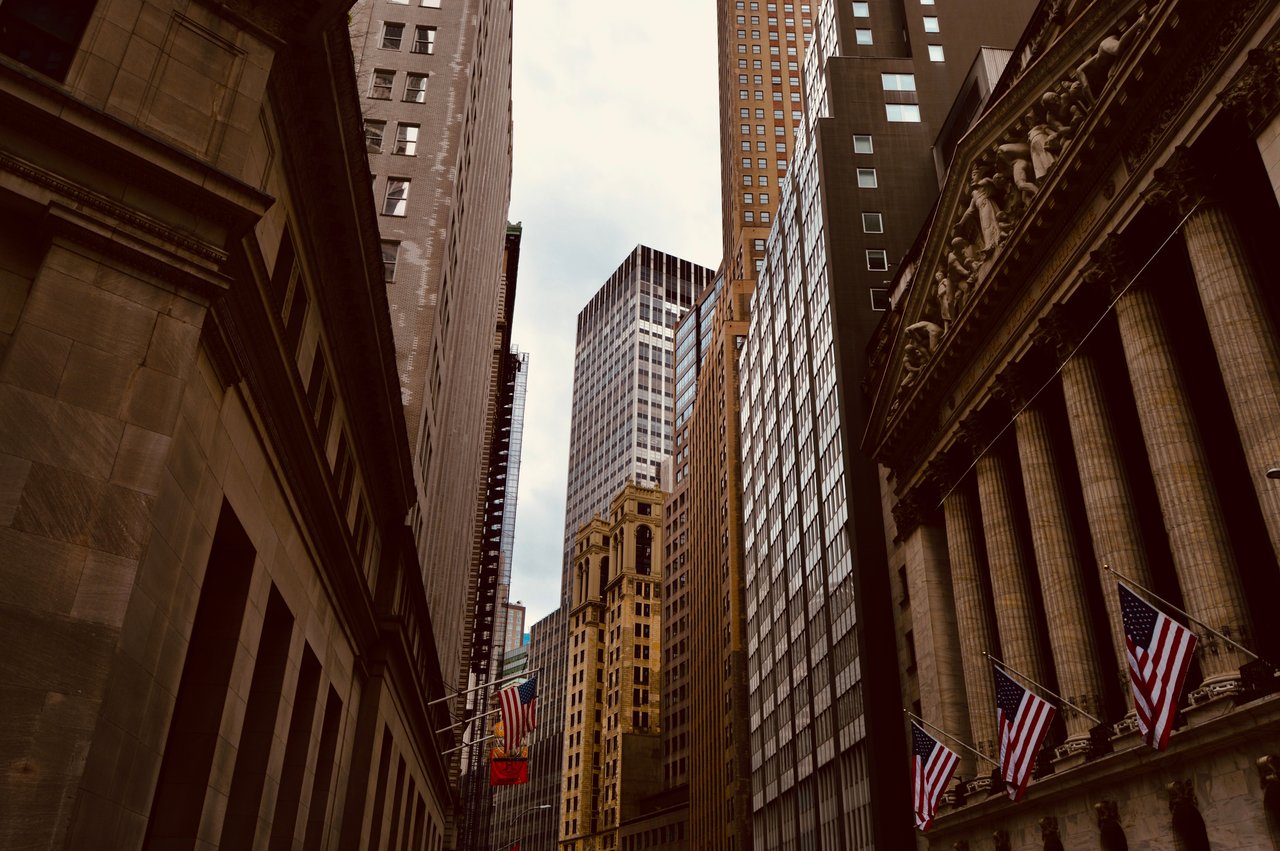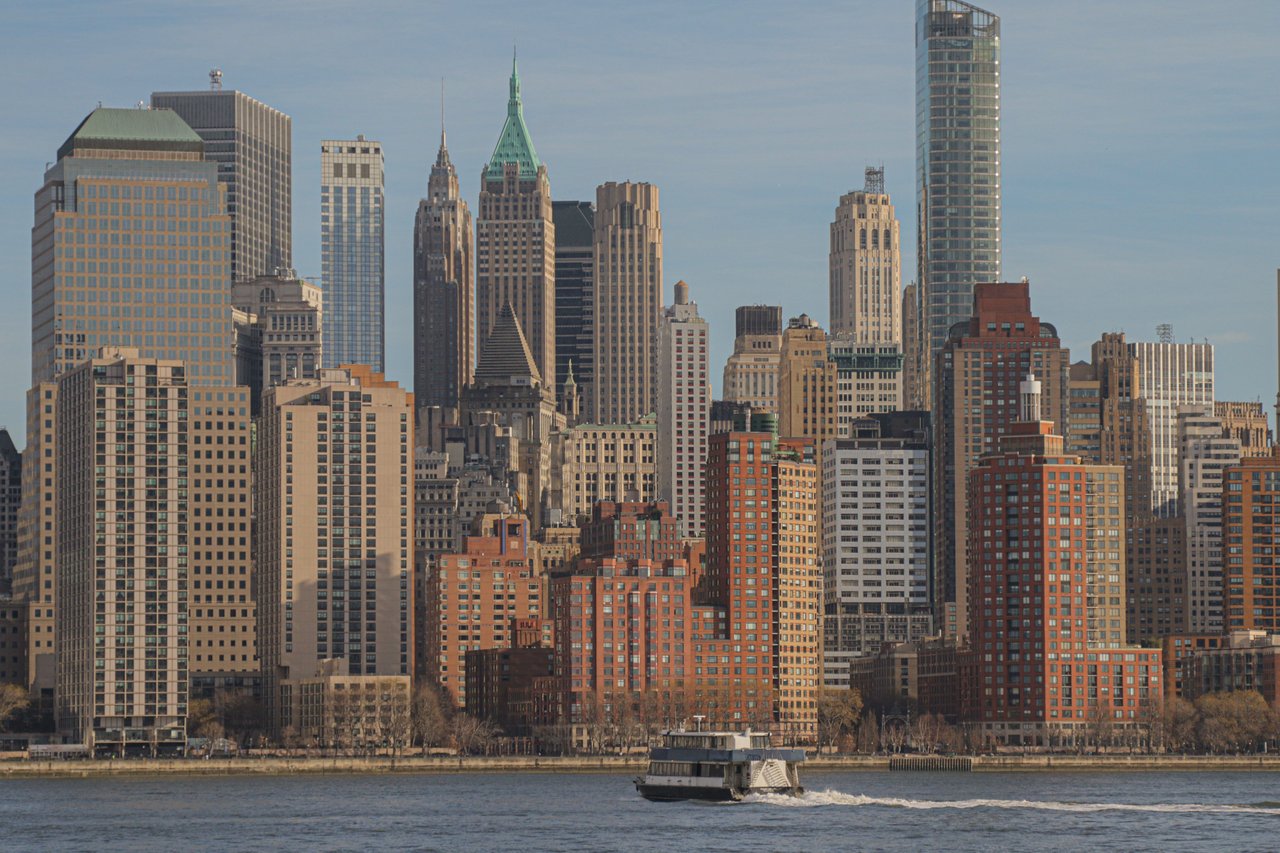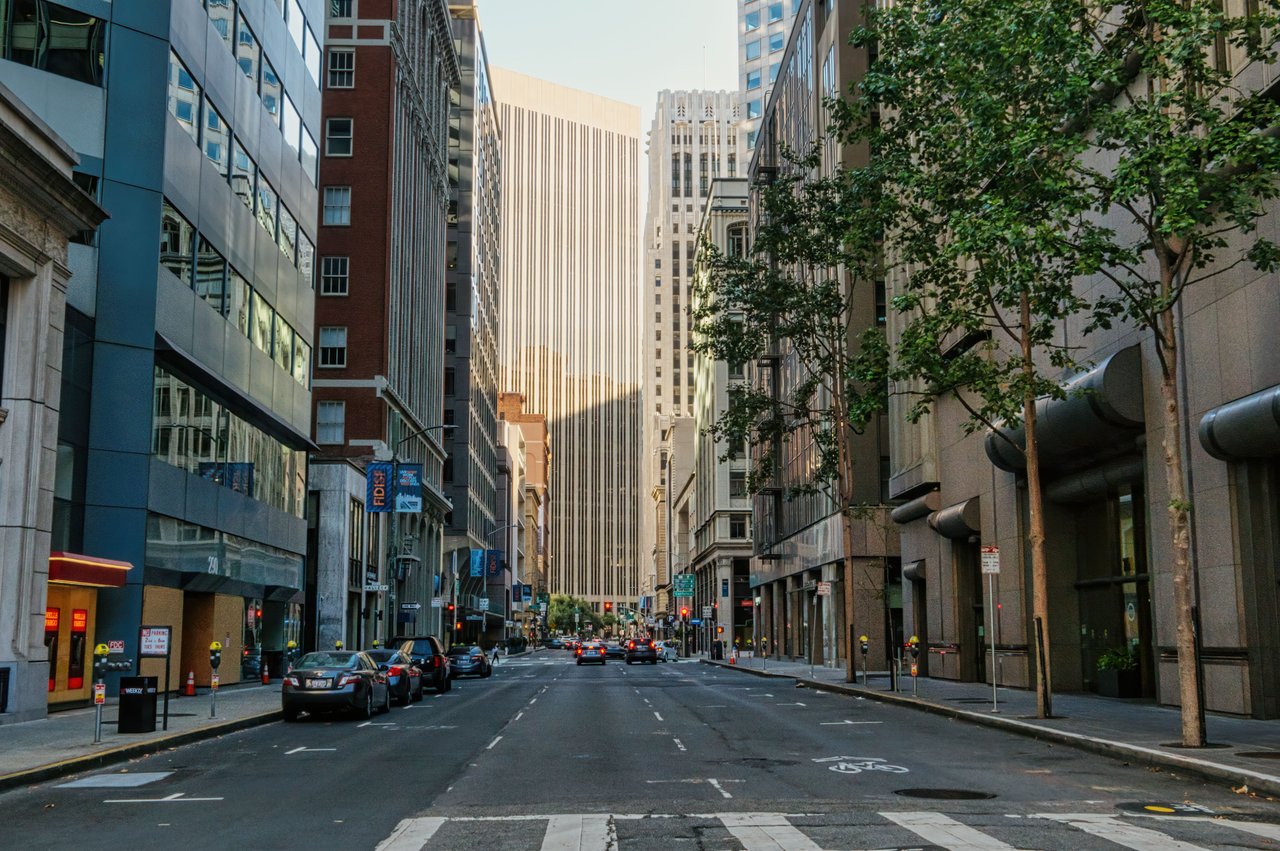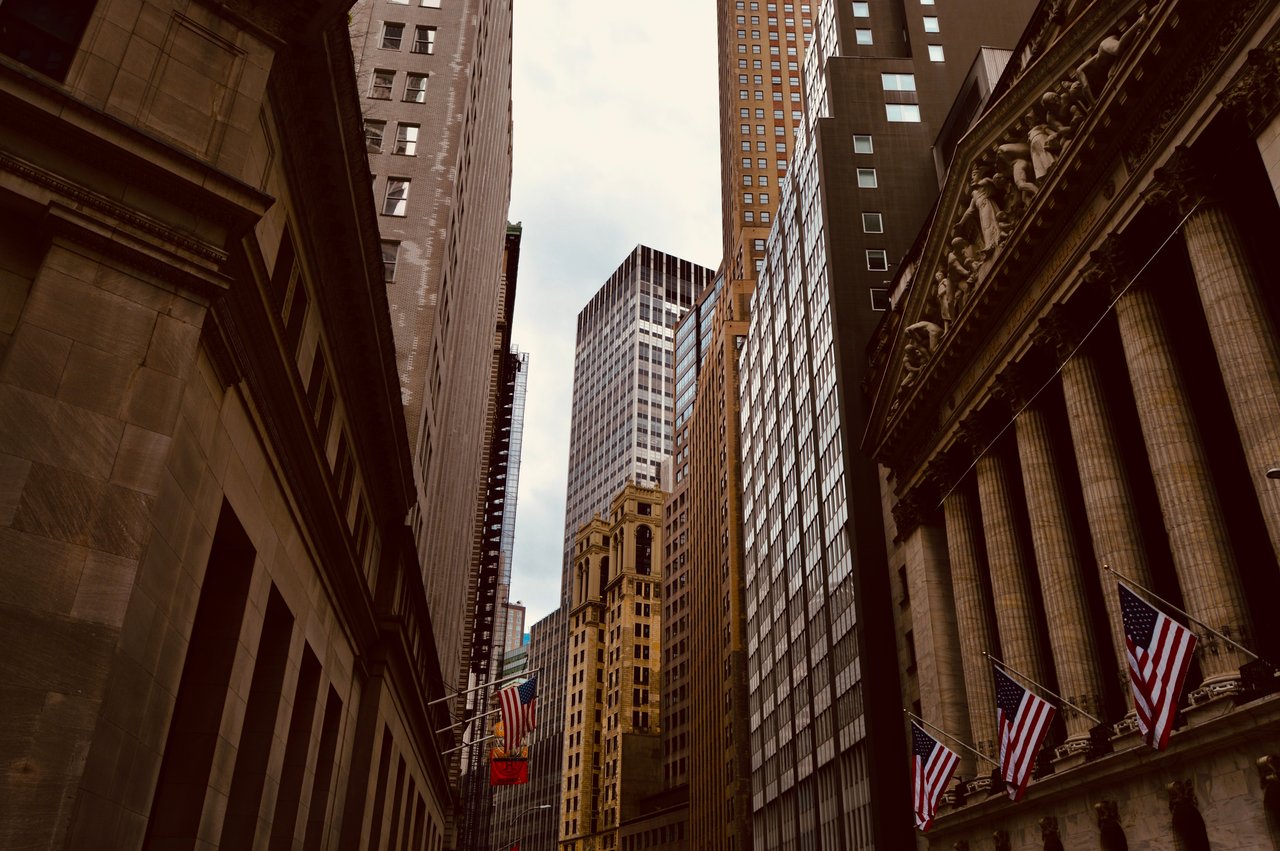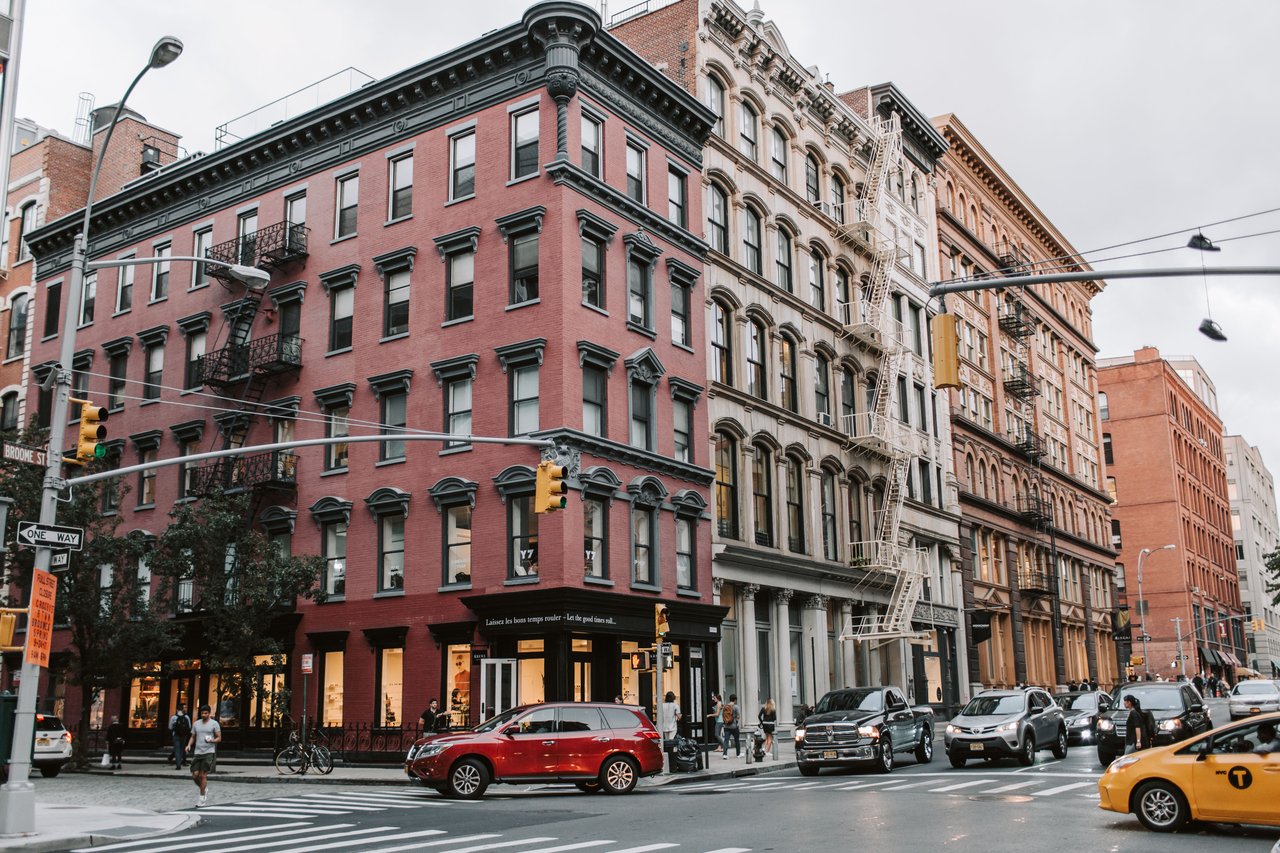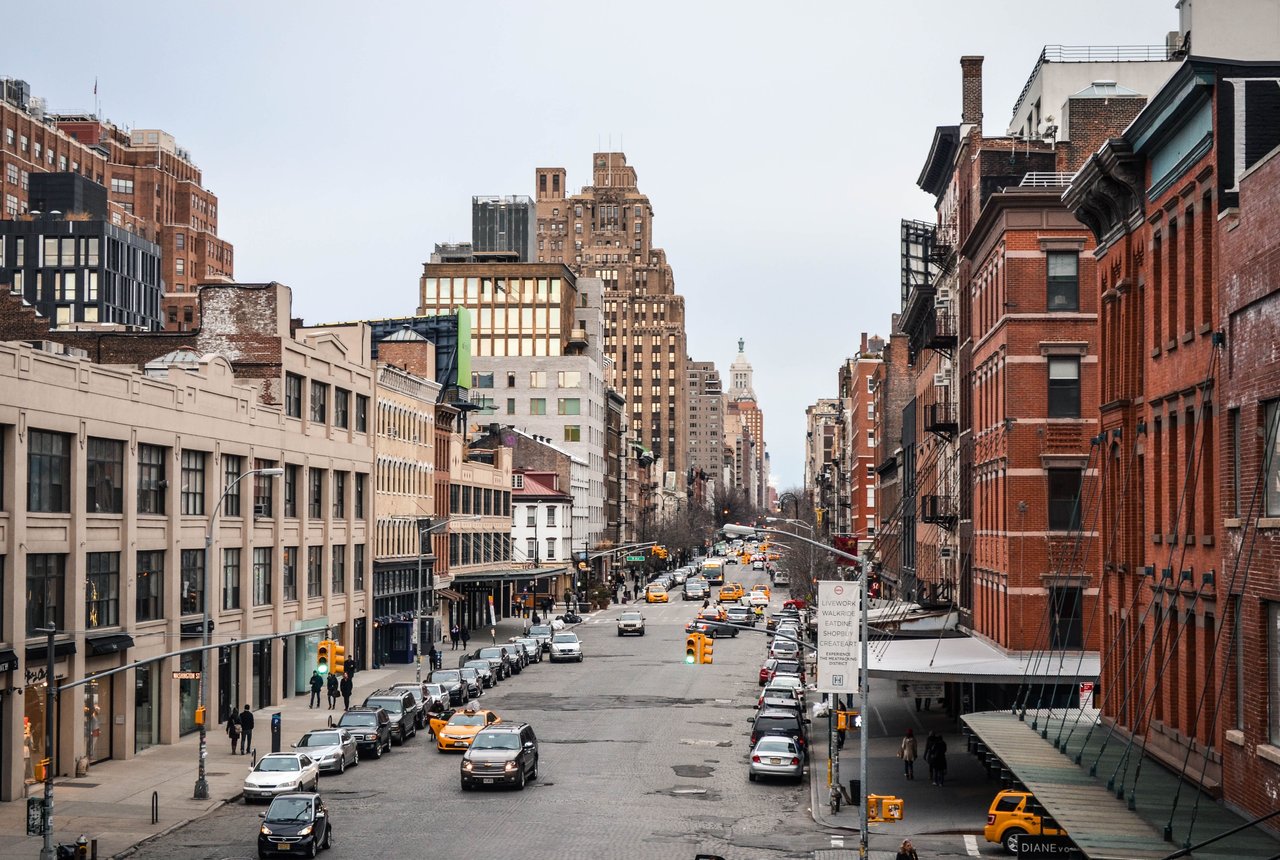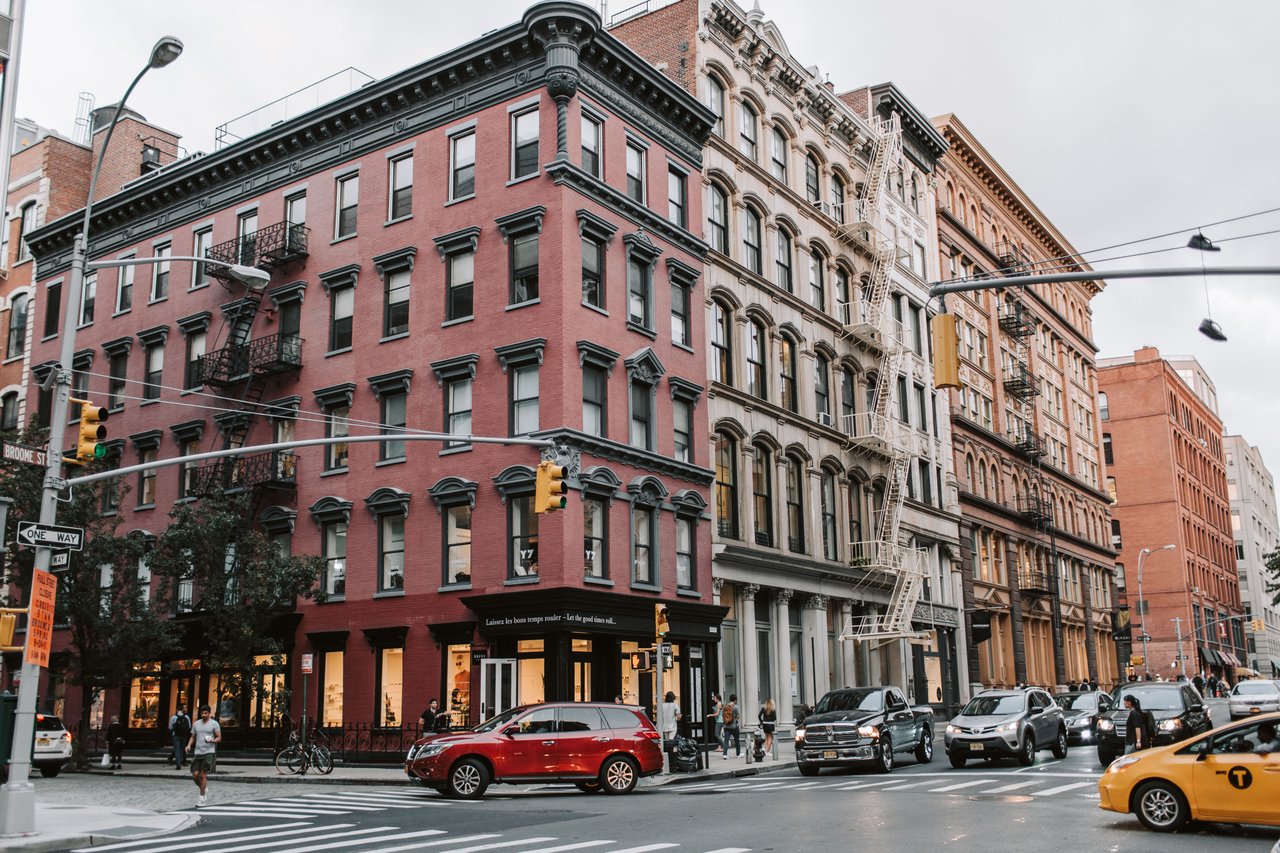
King Street is one of Lower Manhattan's most architecturally remarkable historic streets, preserving an exceptional collection of nineteenth-century townhouses, elegant Greek Revival residences, and buildings that illustrate the transformation of New York from a city of country estates into a densely developed metropolis. Located in Hudson Square, immediately north of Tribeca, the street forms part of the Charlton-King-Vandam Historic District, one of Manhattan's earliest designated historic districts.
Unlike the commercial corridors of Broadway and Canal Street, King Street retains the intimate scale of an early nineteenth-century residential neighborhood. Its narrow roadway, brick facades, historic stoops, wrought-iron railings, and carefully proportioned windows create a streetscape that has changed remarkably little in comparison with much of Lower Manhattan. Federal-style houses stand beside more substantial Greek Revival residences, while later Anglo-Italianate and Roman Revival buildings demonstrate the gradual evolution of architectural taste.
The street's history is closely connected to Richmond Hill, an eighteenth-century country estate that once occupied the surrounding land. Following the subdivision of the estate, John Jacob Astor directed the development of a residential neighborhood that became one of the finest surviving examples of early nineteenth-century Manhattan architecture.
Today, King Street offers an unusually complete architectural record of this transformation. Its buildings preserve the craftsmanship, proportions, and decorative traditions of several generations, while the Charlton-King-Vandam Historic District, designated in 1966, protects the relationships between the historic houses and their surrounding streetscape.
The Origins of King Street
The origins of King Street can be traced to the transformation of western Manhattan during the late eighteenth and early nineteenth centuries. Before the present street network existed, much of the surrounding land formed part of Richmond Hill, a substantial country estate overlooking the landscape that would eventually become Hudson Square and the western edge of Greenwich Village.
During the colonial period, this part of Manhattan lay beyond the city's densely developed commercial center. The terrain was characterized by larger estates, open land, and a comparatively limited network of roads. As New York expanded northward, these properties became increasingly valuable for residential development.
The transformation began with plans to divide the Richmond Hill estate into individual building lots. Although an initial street plan was prepared in 1797, extensive construction did not begin until the early nineteenth century. Once the property came under the control of John Jacob Astor, the land was prepared for development, and new residential streets were established.
King Street emerged from this process as part of a coordinated neighborhood that also included Charlton Street and Vandam Street. Its development was therefore closely connected to the creation of one of Manhattan's most architecturally unified early residential districts.
Why Is It Called King Street?
King Street is named after Rufus King, an important American statesman who participated in the founding of the United States.
Born in 1755, Rufus King served as a delegate to the Constitutional Convention of 1787 and was one of the signers of the United States Constitution. He later represented New York in the United States Senate and served as the American minister to Great Britain.
His political career extended across the early decades of the republic, making him a prominent figure during the period when New York's street network was expanding.
The naming of King Street reflects a broader nineteenth-century tradition of commemorating important political and historical figures through the city's streets.
Although the surrounding architecture has evolved, the name continues to preserve a connection to the early history of the United States.
The Richmond Hill Estate
The history of King Street begins with Richmond Hill, one of the most notable country estates in eighteenth-century Manhattan.
The mansion was constructed in 1767 on elevated land west of the city's original commercial center. Its Georgian architectural design reflected the substantial country residences built by prominent property owners during the colonial period.
The house occupied a commanding position within a landscaped estate. Its location offered a contrast to the increasingly dense streets of the city farther south.
During the Revolutionary War, the mansion was associated with George Washington, who used it as a headquarters. It later served as the residence of John Adams during his vice presidency.
The property subsequently became associated with Aaron Burr, who recognized the development potential of the estate.
Although the mansion itself no longer occupies its original site, the history of Richmond Hill remains essential to understanding the development of King Street.
The Architecture of Richmond Hill Mansion
Richmond Hill Mansion represented the Georgian architectural tradition that was influential in colonial New York.
Georgian architecture emphasized symmetry, balanced proportions, and classical decorative elements. Substantial residences commonly featured carefully organized facades, formal entrances, and prominent rooflines.
The mansion's setting on elevated land reinforced its architectural presence. Unlike the narrow urban houses that would later define King Street, Richmond Hill was designed as a freestanding country residence surrounded by substantial grounds.
Its architecture belonged to an earlier stage of Manhattan's development, when large private estates occupied land that would eventually be divided into blocks and individual building lots.
The replacement of this landscape with rows of townhouses illustrates one of the most important transformations in the city's architectural history.
Aaron Burr and the 1797 Street Plan
In 1797, Aaron Burr arranged for the Richmond Hill property to be surveyed and divided into streets and building lots.
This plan anticipated the eventual transformation of the estate into a residential neighborhood. The proposed streets established a framework that would influence the later development of King Street, Charlton Street, and Vandam Street.
The original subdivision was significant because it preceded the large-scale construction of the surrounding neighborhood.
Although the street plan was prepared during the eighteenth century, development progressed slowly. The estate remained largely undeveloped for several years, and its transformation into a residential district required additional investment.
The eventual construction of King Street therefore reflects the continuation of an earlier planning initiative rather than an entirely new street arrangement.
John Jacob Astor and the Development of King Street
John Jacob Astor played a decisive role in the creation of King Street's historic architectural character.
Astor acquired the Richmond Hill property from Aaron Burr in 1817. He recognized the opportunity to transform the estate into a residential neighborhood as Manhattan expanded northward.
The land was prepared for construction, and individual building lots were made available for development. Local builders erected brick houses that reflected the architectural preferences of the period.
Much of the surrounding neighborhood was developed between 1820 and 1829, although construction along King Street continued into later decades.
The coordinated development of the estate produced an unusual degree of architectural continuity. Many houses were constructed within a relatively short period, using similar materials, proportions, and building techniques.
This shared development history is one of the reasons the Charlton-King-Vandam neighborhood remains architecturally distinctive.
The Transformation of the Richmond Hill Landscape
The development of King Street required significant changes to the physical landscape.
Richmond Hill had occupied elevated terrain, and portions of the property were leveled to accommodate the new street network and building lots.
The former country estate was transformed into a series of narrow urban blocks, each designed for individual residential construction.
This process illustrates the increasing importance of land subdivision in nineteenth-century Manhattan. Large estates that had once been valued for their open space became more valuable as collections of smaller properties.
The resulting streetscape differed substantially from the original estate. Instead of a freestanding mansion surrounded by landscaped grounds, the neighborhood acquired continuous rows of brick houses facing public streets.
King Street preserves the physical outcome of this transformation.
The First Townhouses on King Street
The earliest townhouses on King Street were constructed during the opening decades of the nineteenth century.
These houses generally occupied narrow lots and followed the residential building traditions of the Federal period. Brick facades, stone lintels, carefully proportioned windows, and raised entrances created a consistent architectural character.
Many houses incorporated stoops leading to their principal floors. Below the entrance level, English basements provided additional interior space and separate access for practical household functions.
The buildings were designed as substantial urban residences, but their scale remained modest compared with the larger apartment buildings and commercial structures constructed later in the century.
As development continued, Greek Revival houses appeared alongside the earlier Federal buildings, introducing a more monumental architectural vocabulary.
The resulting combination of styles remains one of King Street's most important characteristics.
Federal Architecture on King Street
Federal architecture dominated much of New York's residential construction during the early nineteenth century.
The style was characterized by restrained classical ornamentation, balanced brick facades, and carefully proportioned entrances. Window openings were generally arranged symmetrically, and decorative details were concentrated around doorways and rooflines.
Federal houses frequently incorporated Flemish-bond brickwork, stone lintels, pitched roofs, and dormer windows. Their entrances sometimes featured sidelights, transoms, and slender classical columns.
These details reflected the architectural preferences of the early American republic.
King Street contains important examples of this tradition, although its architectural character is more varied than the exceptionally consistent Federal rows on neighboring Charlton and Vandam Streets.
The surviving Federal buildings provide evidence of the neighborhood's earliest substantial residential development.
The Architectural Importance of Brick Facades
Brick construction was central to the appearance of King Street.
During the early nineteenth century, brick was widely used for substantial Manhattan residences because it offered durability, fire resistance, and considerable architectural flexibility.
Builders arranged brickwork to create carefully proportioned facades, often using stone for window lintels, entrance surrounds, and other decorative details.
The visual character of a Federal house depended on the relationship between its brick walls, windows, doorway, and roofline.
Even relatively modest buildings could achieve a refined appearance through the precision of their masonry and the quality of their architectural details.
The surviving brick facades on King Street contribute to the visual continuity of the historic district and demonstrate the craftsmanship of early nineteenth-century construction.
The Development of Greek Revival Architecture
Greek Revival architecture became increasingly popular in Manhattan during the 1820s and 1830s.
The style drew inspiration from the architecture of ancient Greece and emphasized strong classical forms, substantial entrance surrounds, and pronounced horizontal details.
Compared with the restrained Federal style, Greek Revival houses often appeared more monumental.
Entrances frequently incorporated heavy stone or wooden surrounds, broad pilasters, and substantial entablatures. Windows were framed by pronounced lintels, and cornices created a strong architectural termination at the roofline.
King Street contains a significant collection of Greek Revival houses, reflecting its development during the period when the style became fashionable.
Their presence contributes to the architectural variety that distinguishes King Street from the more uniform Federal streetscapes nearby.
Greek Revival Townhouses on King Street
The Greek Revival townhouses on King Street represent an important stage in the evolution of Manhattan residential architecture.
These houses generally retained the narrow lots and brick construction of earlier residences but incorporated more substantial classical details.
Raised stoops led to carefully designed entrances, while brownstone basements and stone window surrounds introduced contrasting materials.
The facades emphasized orderly proportions and strong horizontal lines.
As the style developed, some buildings incorporated increasingly elaborate doorway treatments and decorative cornices.
The surviving houses demonstrate how architectural fashion changed during the nineteenth century without fundamentally altering the scale of the neighborhood.
The Historic House at 20 King Street
The townhouse at 20 King Street is an important example of Greek Revival residential architecture.
Constructed in 1841, the house reflects a later phase of the neighborhood's development, when Greek Revival design had become a dominant architectural style in New York.
The building originally featured three stories of red brick above a brownstone English basement.
Its entrance incorporated paneled pilasters, leaded sidelights, and a transom, framed within a substantial classical surround.
Engaged stone columns supported a heavy entablature, creating a more monumental appearance than the restrained doorways associated with earlier Federal houses.
The building illustrates the architectural refinement of Greek Revival residential construction and the continued development of King Street after the initial building campaigns of the 1820s.
The Architectural Details of 20 King Street
The design of 20 King Street demonstrates the importance of the entrance in Greek Revival architecture.
Rather than relying on extensive ornamentation across the entire facade, the building concentrated its decorative treatment around the doorway.
The stone columns, heavy entablature, and carefully arranged glazing created a formal architectural composition.
The contrast between the red brick upper stories and the brownstone basement reinforced the building's classical proportions.
These details were characteristic of substantial urban residences constructed during the 1830s and 1840s.
The house provides a useful example of how King Street's architecture evolved beyond its earliest Federal development.
King Street and the Charlton-King-Vandam Neighborhood
King Street forms the northern edge of the historic residential enclave associated with Charlton Street and Vandam Street.
The three streets share a common development history connected to the Richmond Hill estate and John Jacob Astor's nineteenth-century subdivision.
Their architecture, however, is not entirely uniform.
Charlton Street and Vandam Street contain particularly consistent rows of Federal houses, many preserving early entrances, pitched roofs, dormer windows, and wrought-iron details.
King Street developed with a greater variety of architectural styles.
Federal houses stand beside Greek Revival residences, Anglo-Italianate buildings, Roman Revival structures, and later nineteenth-century construction.
This diversity makes King Street especially valuable for understanding how architectural preferences changed over time.
The Charlton-King-Vandam Historic District
The Charlton-King-Vandam Historic District is one of New York City's earliest designated historic districts.
Established by the Landmarks Preservation Commission on August 16, 1966, the district protects an exceptional collection of early nineteenth-century residential architecture.
Its boundaries encompass portions of King Street, Charlton Street, Vandam Street, Varick Street, MacDougal Street, and the Avenue of the Americas.
The district is particularly significant for its concentration of Federal and Greek Revival townhouses.
Many buildings retain their original proportions, brick facades, stoops, entrances, dormer windows, and wrought-iron details.
The designation recognized the importance of preserving an entire historic streetscape rather than protecting only isolated buildings.
Why the Charlton-King-Vandam Historic District Is Important
The architectural significance of the Charlton-King-Vandam Historic District lies in the unusual continuity of its early residential buildings.
Because much of the neighborhood was developed within a relatively short period, many houses share similar dimensions, materials, and architectural traditions.
This creates a unified streetscape that is increasingly rare in Manhattan.
The district also preserves an important transition between architectural styles.
Federal houses represent the earliest substantial development, while Greek Revival buildings reflect changing preferences during the following decades.
Later architectural styles demonstrate how the neighborhood continued to evolve.
Together, the buildings provide an exceptional record of nineteenth-century residential construction.
King Street's Architectural Variety
King Street is particularly notable for its architectural diversity.
Unlike the more consistent Federal rows on Charlton and Vandam Streets, King Street contains buildings representing several nineteenth-century styles.
Federal houses preserve the restrained classical proportions of the early republic.
Greek Revival residences introduce substantial entrances, heavy stone details, and more pronounced cornices.
Anglo-Italianate buildings reflect the growing influence of Italian Renaissance architecture.
Roman Revival structures incorporate classical architectural elements associated with later nineteenth-century design.
Still later buildings contribute additional decorative traditions.
This architectural variety gives King Street a distinctive character within the historic district.
Anglo-Italianate Architecture on King Street
Anglo-Italianate architecture became influential in Manhattan during the middle of the nineteenth century.
The style combined classical proportions with decorative elements inspired by Italian Renaissance buildings.
Residential examples often incorporated substantial cornices, elaborate window surrounds, and more ornamental entrances than earlier Federal houses.
The style could be adapted to narrow urban lots without substantially changing the basic form of the townhouse.
On King Street, Anglo-Italianate buildings contributed to the gradual diversification of the architectural landscape.
Their appearance illustrates the changing tastes of Manhattan during a period when residential construction became increasingly elaborate.
Roman Revival Architecture
Roman Revival architecture introduced another classical influence to nineteenth-century building design.
The style drew inspiration from ancient Roman architecture, emphasizing substantial proportions, classical details, and more elaborate exterior compositions.
Within the Charlton-King-Vandam Historic District, Roman Revival buildings form part of the architectural variety found along King Street.
Their presence demonstrates that the neighborhood continued to develop after its original Federal construction.
The contrast between these buildings and the earlier houses provides a visible record of architectural change.
Late Nineteenth-Century Architecture
Although much of the Charlton-King-Vandam neighborhood was developed during the 1820s, construction and alteration continued throughout the nineteenth century.
Some early houses were modified to accommodate changing architectural preferences.
Other lots were developed with buildings reflecting later styles.
New cornices, window surrounds, and entrance treatments introduced decorative features that differed from the original Federal and Greek Revival architecture.
These changes contributed to the varied appearance of King Street.
The street's architectural significance therefore extends beyond its earliest houses to include the accumulated changes that occurred over several generations.
The Development of Apartment Buildings
As Manhattan became more densely developed, multifamily residential buildings became increasingly common.
The later nineteenth century introduced larger apartment structures to many neighborhoods that had originally been dominated by individual townhouses.
King Street contains evidence of this transition, although its historic character remains strongly associated with low-rise residential architecture.
The presence of later apartment buildings creates a contrast with the smaller Federal and Greek Revival houses.
Their different heights, window arrangements, and decorative details illustrate the changing demands placed on urban residential construction.
This combination of building types contributes to the street's architectural complexity.
Historic Institutional Architecture
The Charlton-King-Vandam Historic District also contains institutional architecture that differs from its early residential buildings.
The district's historic public school building represents a later period of development, when public institutions introduced larger architectural forms into established residential neighborhoods.
School buildings typically required broader facades, larger windows, and more substantial interior spaces than individual townhouses.
Their architecture often incorporated decorative masonry and prominent rooflines.
The presence of institutional buildings within the district demonstrates how an early residential neighborhood adapted to the changing needs of the city.
King Street and MacDougal Street
MacDougal Street forms an important connection between King Street and the surrounding Greenwich Village street network.
The intersection lies within the historic area associated with the Charlton-King-Vandam district.
The surrounding architecture reflects the early nineteenth-century subdivision of the Richmond Hill estate.
Brick townhouses and later residential buildings preserve the neighborhood's historic scale.
The relationship between King Street and MacDougal Street also illustrates the irregular street pattern of western Lower Manhattan.
Unlike the standardized grid farther north, these streets developed through earlier estate subdivisions and local planning decisions.
King Street and the Avenue of the Americas
The Avenue of the Americas, commonly known as Sixth Avenue, is one of Manhattan's major north-south corridors.
Its intersection with King Street demonstrates the contrast between large-scale urban transportation improvements and the smaller residential streets of the nineteenth century.
The extension of Sixth Avenue southward during the twentieth century substantially changed the surrounding street network.
Buildings were demolished, blocks were altered, and new roadway connections were created.
Despite these changes, portions of King Street retained their historic architecture.
The intersection therefore illustrates how an early residential district survived alongside major twentieth-century infrastructure improvements.
King Street and Varick Street
Varick Street forms another important connection within the historic neighborhood.
The roadway developed as part of the broader street network of western Manhattan and later became an important transportation corridor.
Its intersection with King Street reflects the relationship between the intimate scale of early residential development and the larger streets that eventually surrounded it.
The historic buildings near the intersection retain evidence of the nineteenth-century architectural landscape.
Brick facades, traditional residential proportions, and surviving decorative details distinguish the historic district from the more substantial commercial and institutional buildings nearby.
King Street and West Houston Street
West Houston Street forms an important boundary along the northern side of the Charlton-King-Vandam neighborhood.
The roadway's widening during the twentieth century transformed the surrounding urban landscape.
Its broad proportions contrast with the narrow historic streets to the south.
The relationship between King Street and West Houston Street illustrates the effects of changing transportation priorities on older Manhattan neighborhoods.
While portions of the surrounding area were substantially altered, the historic residential blocks retained important examples of their original architecture.
King Street and Charlton Street
Charlton Street is one of the most architecturally important streets in the Charlton-King-Vandam Historic District.
Its northern side contains an exceptional row of Federal and early Greek Revival houses.
Many retain original entrances, stoops, pitched roofs, dormer windows, and wrought-iron railings.
The architectural continuity of Charlton Street reflects the coordinated development of the former Richmond Hill estate.
King Street shares this history but contains a greater variety of styles.
Together, the two streets demonstrate both the architectural consistency and the gradual evolution of the neighborhood.
King Street and Vandam Street
Vandam Street forms another essential part of the historic residential district.
Its northern side preserves an unusually continuous row of Federal houses.
The buildings retain important architectural features, including traditional stoops, brick facades, dormer windows, and historic ironwork.
Their relatively consistent appearance reflects the concentrated period of development during the 1820s.
King Street provides an important contrast through its more varied architectural composition.
The relationship between the streets illustrates how a neighborhood developed from a common plan could acquire different architectural characteristics over time.
The Influence of the Hudson River
The development of King Street was influenced by its location within western Lower Manhattan.
During the early nineteenth century, the Hudson River waterfront lay considerably closer to portions of the neighborhood than it does today.
Commercial activity along the river encouraged the growth of nearby streets and increased the value of land throughout the western side of Manhattan.
As the city expanded, waterfront improvements, transportation infrastructure, and commercial construction transformed the surrounding area.
King Street, however, retained a primarily residential architectural character.
This distinction contributed to the survival of its early houses even as nearby streets became increasingly commercial.
The Development of Hudson Square
Hudson Square developed as an important district of western Lower Manhattan during the nineteenth and twentieth centuries.
The area became associated with substantial commercial buildings, warehouses, printing facilities, and later office construction.
These larger buildings differed significantly from the early residential architecture of King Street.
While the surrounding district underwent extensive commercial transformation, the Charlton-King-Vandam neighborhood retained much of its original scale.
This contrast is one of the most distinctive features of the area.
King Street preserves an early residential streetscape within a larger neighborhood that experienced successive periods of industrial and commercial development.
The Architectural Impact of the Printing Industry
During the late nineteenth and twentieth centuries, Hudson Square became an important center for printing and publishing.
Large commercial buildings were constructed to accommodate printing presses, storage, and distribution.
These structures frequently featured substantial floor loads, large windows, and open interior spaces.
Their architecture reflected industrial requirements rather than residential design.
The development of the printing district transformed many nearby blocks, but King Street remained an important surviving example of the area's earlier residential character.
The contrast between the historic townhouses and the larger commercial buildings nearby illustrates the changing economic and architectural functions of western Manhattan.
Twentieth-Century Changes to King Street
During the twentieth century, King Street experienced changes associated with the broader redevelopment of Lower Manhattan.
Nearby transportation improvements altered the surrounding street network.
Commercial construction increased in Hudson Square, and older buildings throughout the neighborhood were adapted for new uses.
Some historic houses received interior renovations and exterior alterations.
Despite these changes, much of King Street retained its traditional residential proportions.
Its relatively small building scale, continuous brick facades, and surviving architectural details distinguished it from the increasingly substantial buildings constructed nearby.
This continuity eventually became central to the neighborhood's preservation.
The Preservation of Historic Townhouses
The preservation of early nineteenth-century townhouses became increasingly important as Manhattan continued to redevelop.
Many Federal and Greek Revival houses elsewhere in the city were demolished to accommodate larger buildings.
Others lost their original entrances, roofs, and decorative details through extensive alterations.
King Street and the surrounding Charlton-King-Vandam neighborhood retained an exceptional collection of early residential architecture.
The survival of these buildings provided an important basis for historic district designation.
Their architectural value lies not only in individual features but also in the continuity of the surrounding streetscape.
The 1966 Historic District Designation
On August 16, 1966, the New York City Landmarks Preservation Commission designated the Charlton-King-Vandam Historic District.
The designation occurred during the early years of the city's modern preservation movement.
It recognized the exceptional architectural importance of the neighborhood's Federal and Greek Revival houses.
The district also included later buildings that contributed to the historical development of the area.
Its designation helped protect the relationship between the historic buildings, streets, and public spaces.
King Street became part of one of the earliest examples of comprehensive neighborhood preservation in New York City.
The National Register of Historic Places
The Charlton-King-Vandam Historic District was added to the National Register of Historic Places in 1973.
The National Register recognizes buildings, sites, and districts with historical or architectural significance.
The district's listing acknowledged the importance of its early nineteenth-century residential architecture.
Federal and Greek Revival styles were particularly important to its architectural identity.
The National Register listing complemented the earlier New York City historic district designation.
Together, these recognitions reinforced the significance of King Street and its surrounding architectural landscape.
The Importance of Historic Stoop Design
Stoops are among the most distinctive architectural features of King Street.
During the nineteenth century, raised entrances became an important element of Manhattan townhouse design.
The stoop connected the sidewalk to the principal residential floor, while the English basement provided a separate level below.
This arrangement created a recognizable architectural composition.
Stone steps, wrought-iron railings, and carefully designed doorways contributed to the appearance of the facade.
Many historic houses in the Charlton-King-Vandam district retain these features.
Their preservation is essential to maintaining the architectural character of the neighborhood.
Historic Doorways and Entrance Surrounds
The entrances of King Street's historic houses demonstrate the craftsmanship of nineteenth-century residential architecture.
Federal doorways typically emphasized restrained classical proportions.
Greek Revival entrances introduced heavier surrounds, broad pilasters, and substantial entablatures.
Some houses incorporated leaded-glass sidelights and transoms, allowing light into the entrance hall while providing decorative interest.
These details often represented the most elaborate portion of the facade.
Their survival provides valuable evidence of the original design and construction quality of the houses.
Pitched Roofs and Dormer Windows
Pitched roofs and dormer windows were important features of early Federal residential architecture.
Many houses constructed during the 1820s incorporated sloping roofs with dormers providing light to upper rooms.
As architectural preferences changed, later houses increasingly featured flatter rooflines and more pronounced cornices.
The contrast between these roof forms helps distinguish Federal buildings from later Greek Revival and Italianate construction.
Within the Charlton-King-Vandam Historic District, surviving dormers and historic rooflines contribute to the visual continuity of the streetscape.
They also demonstrate how architectural details evolved during the nineteenth century.
Wrought-Iron Railings and Exterior Details
Wrought-iron railings are another important feature of King Street's historic architecture.
Early residential buildings frequently incorporated ironwork around stoops, basement areas, and property boundaries.
The designs varied according to architectural style and construction period.
Some featured relatively restrained patterns, while later examples incorporated more elaborate decorative elements.
These details contributed to the architectural character of individual houses and the overall streetscape.
The survival of historic ironwork is particularly significant because such features were frequently removed during later renovations.
The Architectural Relationship Between Houses
One of King Street's most important characteristics is the relationship between neighboring buildings.
The houses share similar lot dimensions, building heights, and materials, even when their architectural styles differ.
This creates a recognizable streetscape in which individual buildings contribute to a larger composition.
The historic district's significance therefore cannot be understood through isolated properties alone.
The continuity of brick facades, stoops, windows, cornices, and rooflines creates an architectural environment that reflects the original development of the neighborhood.
This relationship is one of the principal reasons the district received landmark protection.
The Challenges of Historic Preservation
Maintaining nineteenth-century buildings requires careful attention to historic materials and construction techniques.
Brick facades, stone lintels, cornices, windows, and wrought-iron railings may require restoration or replacement over time.
Within a designated New York City historic district, exterior alterations generally require review by the Landmarks Preservation Commission.
This process helps ensure that changes remain compatible with the historic character of the buildings.
The preservation of King Street therefore involves balancing contemporary building needs with the protection of architectural features that have survived for nearly two centuries.
King Street and Contemporary Hudson Square
Today, Hudson Square contains a mixture of historic residential streets, commercial loft buildings, modern offices, and contemporary developments.
The neighborhood's architecture reflects several distinct periods of Manhattan's history.
Large commercial buildings preserve evidence of the area's industrial and printing heritage.
Modern construction demonstrates its continuing transformation.
King Street provides an important architectural contrast.
Its low-rise houses, traditional brick facades, and historic entrances preserve the scale of an early nineteenth-century residential neighborhood within a substantially changed urban environment.
What Does Tribeca Stand For?
Tribeca stands for Triangle Below Canal Street.
The name refers to the historic neighborhood south of Canal Street in Lower Manhattan.
King Street is located north of Canal Street in Hudson Square, near SoHo and Greenwich Village. Although it is not geographically within Tribeca, its architectural history belongs to the broader development of western Lower Manhattan.
The preservation of its Federal and Greek Revival houses provides an important contrast to the commercial loft architecture associated with Tribeca.
Together, these neighboring districts illustrate the varied architectural development of Manhattan during the nineteenth century.
Why King Street Is Architecturally Significant
King Street is architecturally significant because it preserves an unusually varied collection of nineteenth-century residential buildings within a historically unified neighborhood.
Its origins are connected to the Richmond Hill estate and the early subdivision of western Manhattan.
Federal houses preserve the restrained proportions of the early American republic.
Greek Revival residences demonstrate the growing popularity of classical architectural forms during the 1830s and 1840s.
Anglo-Italianate, Roman Revival, and later buildings introduce additional architectural traditions.
The street's historic stoops, brick facades, wrought-iron railings, and carefully designed entrances create a distinctive residential landscape.
The Charlton-King-Vandam Historic District protects these architectural relationships and preserves an important chapter of Manhattan's development.
King Street Today
Today, King Street remains one of Lower Manhattan's most distinctive historic residential corridors.
Its relatively narrow roadway and low-rise buildings preserve the scale of an early nineteenth-century neighborhood.
Federal houses stand beside Greek Revival residences and later architectural styles.
Historic stoops, brick facades, stone details, and wrought-iron railings continue to define the streetscape.
The surrounding Hudson Square neighborhood has undergone substantial commercial and architectural change, but King Street retains much of its historic character.
Its preservation demonstrates the importance of protecting entire streetscapes rather than individual buildings alone.
The Architectural Legacy of King Street
King Street preserves an extraordinary architectural record of Manhattan's transformation from an eighteenth-century landscape of country estates into a modern city.
Its origins are connected to Richmond Hill, the Georgian mansion constructed in 1767.
Aaron Burr prepared a subdivision plan for the estate in 1797, establishing the framework for later development.
John Jacob Astor acquired the property in 1817 and directed its transformation into a residential neighborhood.
Federal houses appeared during the 1820s, followed by Greek Revival residences and later nineteenth-century buildings.
The townhouse at 20 King Street, constructed in 1841, illustrates the architectural sophistication of Greek Revival residential design.
Anglo-Italianate, Roman Revival, and later buildings contributed additional variety to the street.
The Charlton-King-Vandam Historic District, designated in 1966, recognized the exceptional significance of this historic architecture.
Its addition to the National Register of Historic Places in 1973 further acknowledged the importance of the neighborhood.
Today, King Street remains a remarkable example of early Manhattan residential preservation, offering a streetscape in which nearly two centuries of architectural history remain visible.
Where is King Street in Tribeca, Manhattan?
King Street is located in Hudson Square, immediately north of Tribeca in Lower Manhattan. Its historic residential blocks connect the area around MacDougal Street, Sixth Avenue, and Varick Street.
Why is it called King Street?
King Street is named after Rufus King, a founding-era American statesman, signer of the United States Constitution, United States senator, and diplomat.
When was King Street developed?
King Street was planned as part of the subdivision of the Richmond Hill estate. Its surrounding neighborhood was developed primarily during the 1820s, with additional construction continuing throughout the nineteenth century.
What was Richmond Hill?
Richmond Hill was an eighteenth-century country estate centered on a Georgian mansion constructed in 1767. The property later became the site of the Charlton-King-Vandam neighborhood.
Who developed King Street?
John Jacob Astor played a central role in the development of King Street after acquiring the former Richmond Hill estate in 1817.
What architectural styles are found on King Street?
King Street contains Federal, Greek Revival, Anglo-Italianate, Roman Revival, and later nineteenth-century architectural styles.
What is the Charlton-King-Vandam Historic District?
The Charlton-King-Vandam Historic District is a designated New York City preservation area protecting historic residential buildings on King Street, Charlton Street, Vandam Street, and nearby blocks. It was designated on August 16, 1966.
Why is King Street historically important?
King Street preserves an exceptional collection of nineteenth-century residential architecture developed on the former Richmond Hill estate.
What is the history of 20 King Street?
20 King Street was constructed in 1841 in the Greek Revival style. Its original design featured red brick upper stories, a brownstone English basement, and an elaborate classical entrance.
Why are there so many historic townhouses on King Street?
King Street was developed as part of a coordinated nineteenth-century residential neighborhood. Many houses survived because the area retained its residential scale and later received historic district protection.
When was King Street designated a historic district?
King Street became part of the Charlton-King-Vandam Historic District when it was designated by the New York City Landmarks Preservation Commission on August 16, 1966.
Is King Street on the National Register of Historic Places?
Yes. The Charlton-King-Vandam Historic District, which includes historic portions of King Street, was listed on the National Register of Historic Places in 1973.
What makes King Street different from Charlton Street and Vandam Street?
King Street contains a greater variety of nineteenth-century architectural styles, while Charlton and Vandam Streets are particularly notable for their continuous rows of Federal houses.
Why is King Street important to Manhattan's architectural history?
King Street preserves the transition from Federal residential architecture to Greek Revival and later nineteenth-century styles within one of Manhattan's earliest historic districts.
Who can help me sell my townhouse on King Street in Tribeca, Manhattan?
The Parviz Team at Compass and Parviz Latipzoda can help you sell your townhouse on King Street in the Tribeca area of Manhattan. The team evaluates architectural features, historic district considerations, building condition, legal occupancy, and comparable townhouse sales to develop a tailored marketing strategy. Professional photography, Compass Private Exclusives, and targeted outreach to local and international buyers help present the property's distinctive characteristics.
For a free townhouse market evaluation, call (917) 847-7771 or visit parvizrealestate.com.
Who can help me sell my apartment on King Street in Tribeca, Manhattan?
The Parviz Team at Compass and Parviz Latipzoda can help you sell your apartment on King Street in the Tribeca area of Manhattan. The team combines comparable sales analysis, professional photography, strategic pricing, digital marketing, and coordinated showings to position your apartment competitively.
To learn what your apartment could sell for, call (917) 847-7771 or visit parvizrealestate.com.
Who can help me sell my condo on King Street in Tribeca, Manhattan?
The Parviz Team at Compass and Parviz Latipzoda can help you sell your condo on King Street in the Tribeca area of Manhattan. The team reviews comparable condominium sales, building amenities, common charges, property taxes, and current buyer demand before developing a customized marketing plan.
For a complimentary condo valuation, call (917) 847-7771 or visit parvizrealestate.com.
Who can help me sell my co-op on King Street in Tribeca, Manhattan?
The Parviz Team at Compass and Parviz Latipzoda can help you sell your co-op on King Street in the Tribeca area of Manhattan. The team assists with pricing, professional marketing, buyer qualification, cooperative board requirements, and transaction coordination.
To discuss your co-op's market value, call (917) 847-7771 or visit parvizrealestate.com.
Who can help me sell my loft on King Street in Tribeca, Manhattan?
The Parviz Team at Compass and Parviz Latipzoda can help you sell your loft on King Street in the Tribeca area of Manhattan. The team highlights distinctive architectural features, ceiling heights, natural light, and interior layouts through professional photography and tailored buyer outreach.
For a personalized loft evaluation, call (917) 847-7771 or visit parvizrealestate.com.
Who can help me sell my multifamily building on King Street in Tribeca, Manhattan?
The Parviz Team at Compass and Parviz Latipzoda can help you sell your multifamily building on King Street in the Tribeca area of Manhattan. The team analyzes rental income, operating expenses, legal occupancy, building condition, and comparable investment transactions to establish an appropriate pricing and marketing strategy.
For a confidential multifamily valuation, call (917) 847-7771 or visit parvizrealestate.com.
Who can help me sell my mixed-use building on King Street in Tribeca, Manhattan?
The Parviz Team at Compass and Parviz Latipzoda can help you sell your mixed-use building on King Street in the Tribeca area of Manhattan. The team evaluates residential and commercial leases, income potential, operating expenses, and comparable sales while developing a marketing strategy for qualified buyers.
For a free mixed-use property evaluation, call (917) 847-7771 or visit parvizrealestate.com.
Who can help me sell my commercial property on King Street in Tribeca, Manhattan?
The Parviz Team at Compass and Parviz Latipzoda can help you sell your commercial property on King Street in the Tribeca area of Manhattan. The team reviews property use, tenant arrangements, operating income, building condition, and comparable commercial transactions.
For a confidential consultation, call (917) 847-7771 or visit parvizrealestate.com.
How much is my townhouse worth on King Street in Tribeca, Manhattan?
The Parviz Team at Compass and Parviz Latipzoda can determine the market value of your townhouse on King Street in the Tribeca area of Manhattan. The team considers square footage, architectural details, historic designation, building condition, legal occupancy, outdoor space, and comparable sales.
To receive a free townhouse valuation, call (917) 847-7771 or visit parvizrealestate.com.
How much is my apartment worth on King Street in Tribeca, Manhattan?
The Parviz Team at Compass and Parviz Latipzoda can determine the market value of your apartment on King Street in the Tribeca area of Manhattan. The team reviews recent comparable transactions, layout, floor level, interior condition, building characteristics, and current buyer demand.
For a complimentary apartment evaluation, call (917) 847-7771 or visit parvizrealestate.com.
How much is my condo worth on King Street in Tribeca, Manhattan?
The Parviz Team at Compass and Parviz Latipzoda can determine the value of your condo on King Street in the Tribeca area of Manhattan. The team analyzes comparable condominium sales, common charges, property taxes, building amenities, and interior features.
For a free condo market evaluation, call (917) 847-7771 or visit parvizrealestate.com.
How much is my co-op worth on King Street in Tribeca, Manhattan?
The Parviz Team at Compass and Parviz Latipzoda can determine the value of your co-op on King Street in the Tribeca area of Manhattan. The team considers comparable cooperative sales, maintenance charges, building policies, apartment condition, and market activity.
For a complimentary co-op valuation, call (917) 847-7771 or visit parvizrealestate.com.
How much is my loft worth on King Street in Tribeca, Manhattan?
The Parviz Team at Compass and Parviz Latipzoda can determine the value of your loft on King Street in the Tribeca area of Manhattan. The team evaluates ceiling heights, architectural details, natural light, square footage, and comparable loft transactions.
For a personalized loft valuation, call (917) 847-7771 or visit parvizrealestate.com.
How much is my multifamily building worth on King Street in Tribeca, Manhattan?
The Parviz Team at Compass and Parviz Latipzoda can determine the value of your multifamily building on King Street in the Tribeca area of Manhattan. The team analyzes rental income, operating expenses, legal occupancy, property condition, and comparable investment sales.
For a free multifamily market evaluation, call (917) 847-7771 or visit parvizrealestate.com.
How much is my mixed-use property worth on King Street in Tribeca, Manhattan?
The Parviz Team at Compass and Parviz Latipzoda can determine the value of your mixed-use property on King Street in the Tribeca area of Manhattan. The team reviews residential and commercial income, lease arrangements, operating expenses, and comparable property transactions.
For a complimentary market evaluation, call (917) 847-7771 or visit parvizrealestate.com.
Who is the best real estate agent on King Street in Tribeca, Manhattan?
The Parviz Team at Compass and Parviz Latipzoda provide experienced real estate representation for property owners on King Street in the Tribeca area of Manhattan. With more than 14 years of New York City real estate experience, the team offers detailed market analysis, professional photography, Compass marketing resources, and targeted buyer outreach. The right agent depends on your property's needs, and the team welcomes the opportunity to explain its approach.
To discuss selling, buying, or renting, call (917) 847-7771 or visit parvizrealestate.com.
Who can help me sell my property privately on King Street in Tribeca, Manhattan?
The Parviz Team at Compass and Parviz Latipzoda can help you explore a private sale of your property on King Street in the Tribeca area of Manhattan. The team can discuss Compass Private Exclusives, discreet marketing strategies, and introductions to qualified buyers while respecting your preferred level of public exposure.
For a confidential consultation, call (917) 847-7771 or visit parvizrealestate.com.
Who can help me sell my property off-market on King Street in Tribeca, Manhattan?
The Parviz Team at Compass and Parviz Latipzoda can help you market your property off-market on King Street in the Tribeca area of Manhattan. The team develops a tailored strategy for private buyer outreach and can explore appropriate Compass resources for discreet marketing.
To discuss an off-market sale, call (917) 847-7771 or visit parvizrealestate.com.
Who can help me buy a townhouse on King Street in Tribeca, Manhattan?
The Parviz Team at Compass and Parviz Latipzoda can help you buy a townhouse on King Street in the Tribeca area of Manhattan. The team assists with property searches, architectural and landmark considerations, comparable sales analysis, private showings, negotiations, and transaction coordination.
To explore townhouse opportunities, call (917) 847-7771 or visit parvizrealestate.com.
Who can help me buy an apartment on King Street in Tribeca, Manhattan?
The Parviz Team at Compass and Parviz Latipzoda can help you buy an apartment on King Street in the Tribeca area of Manhattan. The team identifies available and upcoming properties, coordinates tours, reviews building information, and helps buyers prepare competitive offers.
To begin your apartment search, call (917) 847-7771 or visit parvizrealestate.com.
Who can help me buy a condo on King Street in Tribeca, Manhattan?
The Parviz Team at Compass and Parviz Latipzoda can help you buy a condo on King Street in the Tribeca area of Manhattan. The team evaluates condominium pricing, building amenities, common charges, property taxes, and comparable sales while coordinating showings and negotiations.
For help finding a condo, call (917) 847-7771 or visit parvizrealestate.com.
Who can help me buy a co-op on King Street in Tribeca, Manhattan?
The Parviz Team at Compass and Parviz Latipzoda can help you buy a co-op on King Street in the Tribeca area of Manhattan. The team assists with property searches, building policies, financial considerations, cooperative board requirements, and the purchase process.
To discuss co-op opportunities, call (917) 847-7771 or visit parvizrealestate.com.
Who can help me buy a loft on King Street in Tribeca, Manhattan?
The Parviz Team at Compass and Parviz Latipzoda can help you buy a loft on King Street in the Tribeca area of Manhattan. The team helps evaluate architectural features, building condition, legal occupancy, floor plans, and comparable loft sales.
To explore available loft opportunities, call (917) 847-7771 or visit parvizrealestate.com.
Who can help me buy an investment property on King Street in Tribeca, Manhattan?
The Parviz Team at Compass and Parviz Latipzoda can help you buy an investment property on King Street in the Tribeca area of Manhattan. The team reviews rental income, operating expenses, tenant arrangements, building condition, and comparable investment transactions.
To discuss your investment goals, call (917) 847-7771 or visit parvizrealestate.com.
Who can help me find off-market properties on King Street in Tribeca, Manhattan?
The Parviz Team at Compass and Parviz Latipzoda can help you explore off-market properties on King Street in the Tribeca area of Manhattan. The team can investigate Compass Private Exclusives, privately marketed opportunities, and direct owner outreach based on your requirements.
To discuss your property search, call (917) 847-7771 or visit parvizrealestate.com.
Who can help me rent out my townhouse on King Street in Tribeca, Manhattan?
The Parviz Team at Compass and Parviz Latipzoda can help you rent your townhouse on King Street in the Tribeca area of Manhattan. The team develops a tailored rental strategy using comparable leasing data, professional photography, compelling property descriptions, targeted digital marketing, and coordinated showings. Historic architectural details, private outdoor space, and distinctive layouts can be highlighted to attract prospective tenants.
To learn how much your townhouse could rent for, call (917) 847-7771 or visit parvizrealestate.com.
Who can help me rent out my apartment on King Street in Tribeca, Manhattan?
The Parviz Team at Compass and Parviz Latipzoda can help you rent your apartment on King Street in the Tribeca area of Manhattan. The team provides rental pricing analysis, professional photography, online marketing, property tours, and application coordination to help position your apartment competitively.
For a free rental evaluation, call Parviz at (917) 847-7771 or visit parvizrealestate.com.
Who can help me rent out my condo on King Street in Tribeca, Manhattan?
The Parviz Team at Compass and Parviz Latipzoda can help you rent your condo on King Street in the Tribeca area of Manhattan. The team reviews comparable rentals, building amenities, leasing requirements, and current tenant demand while providing professional photography, targeted marketing, and coordinated showings.
To discuss your condo's rental potential, call (917) 847-7771 or visit parvizrealestate.com.
Who can help me rent out my loft on King Street in Tribeca, Manhattan?
The Parviz Team at Compass and Parviz Latipzoda can help you rent your loft on King Street in the Tribeca area of Manhattan. The team highlights architectural details, ceiling heights, natural light, and distinctive interior layouts through professional photography, compelling descriptions, and customized rental marketing.
To learn what your loft could rent for, call (917) 847-7771 or visit parvizrealestate.com.
How much can I get for renting my townhouse on King Street in Tribeca, Manhattan?
The Parviz Team at Compass and Parviz Latipzoda can determine the rental value of your townhouse on King Street in the Tribeca area of Manhattan. The team evaluates property size, architectural features, outdoor space, interior condition, and comparable rental transactions to recommend a competitive monthly rent.
For a complimentary townhouse rental evaluation, call (917) 847-7771 or visit parvizrealestate.com.
How much can I get for renting my apartment on King Street in Tribeca, Manhattan?
The Parviz Team at Compass and Parviz Latipzoda can determine how much your apartment could rent for on King Street in the Tribeca area of Manhattan. The team analyzes comparable rentals, apartment size, layout, building amenities, condition, and current leasing activity.
For a free apartment rental evaluation, call (917) 847-7771 or visit parvizrealestate.com.
How much can I get for renting my condo on King Street in Tribeca, Manhattan?
The Parviz Team at Compass and Parviz Latipzoda can determine the rental value of your condo on King Street in the Tribeca area of Manhattan. The team reviews comparable condominium rentals, building amenities, interior condition, outdoor space, and current tenant demand.
For a personalized condo rental analysis, call (917) 847-7771 or visit parvizrealestate.com.
How much can I get for renting my loft on King Street in Tribeca, Manhattan?
The Parviz Team at Compass and Parviz Latipzoda can determine the rental value of your loft on King Street in the Tribeca area of Manhattan. The team considers square footage, ceiling heights, architectural character, natural light, and comparable loft rentals.
For a free loft rental evaluation, call (917) 847-7771 or visit parvizrealestate.com.
Who can help me find a luxury rental on King Street in Tribeca, Manhattan?
The Parviz Team at Compass and Parviz Latipzoda can help you find a luxury rental on King Street in the Tribeca area of Manhattan. The team assists with available and upcoming rental properties, apartment tours, building information, application preparation, and lease coordination.
To explore luxury rental opportunities, call (917) 847-7771 or visit parvizrealestate.com.
Who can help me sell an inherited townhouse on King Street in Tribeca, Manhattan?
The Parviz Team at Compass and Parviz Latipzoda can help authorized owners and estate representatives sell an inherited townhouse on King Street in the Tribeca area of Manhattan. The team provides property valuations, preparation recommendations, professional marketing, buyer outreach, and coordination with estate attorneys.
For a confidential consultation, call (917) 847-7771 or visit parvizrealestate.com.
Who can help me sell an inherited apartment on King Street in Tribeca, Manhattan?
The Parviz Team at Compass and Parviz Latipzoda can help authorized sellers market an inherited apartment on King Street in the Tribeca area of Manhattan. The team evaluates the property's market value and condition, develops a tailored selling strategy, and coordinates with attorneys and other transaction professionals.
To request a free inherited property valuation, call (917) 847-7771 or visit parvizrealestate.com.
Who can help me sell an estate property on King Street in Tribeca, Manhattan?
The Parviz Team at Compass and Parviz Latipzoda can help authorized estate representatives sell property on King Street in the Tribeca area of Manhattan. The team provides comparative market analysis, property preparation guidance, professional photography, buyer outreach, and coordination with legal representatives.
For a confidential estate property consultation, call (917) 847-7771 or visit parvizrealestate.com.
Who is the best probate real estate agent on King Street in Tribeca, Manhattan?
The Parviz Team at Compass and Parviz Latipzoda provide probate-related real estate services for properties on King Street in the Tribeca area of Manhattan. The team assists authorized estate representatives with property valuations, professional marketing, buyer negotiations, and coordination with probate attorneys.
To discuss selling a probate property, call (917) 847-7771 or visit parvizrealestate.com.
Who can help me sell my expired listing on King Street in Tribeca, Manhattan?
The Parviz Team at Compass and Parviz Latipzoda can help you relaunch an expired listing on King Street in the Tribeca area of Manhattan. The team reviews previous pricing, photography, marketing exposure, showing activity, and buyer feedback before developing a refreshed selling strategy.
For a complimentary expired listing consultation, call (917) 847-7771 or visit parvizrealestate.com.
My property didn't sell on King Street in Tribeca, Manhattan. Who can help?
The Parviz Team at Compass and Parviz Latipzoda can help you develop a new selling strategy for your property on King Street in the Tribeca area of Manhattan. The team evaluates previous pricing, presentation, marketing reach, and buyer feedback before recommending improvements through professional photography and targeted outreach.
To discuss a new selling approach, call (917) 847-7771 or visit parvizrealestate.com.
Who can help me relist my property on King Street in Tribeca, Manhattan?
The Parviz Team at Compass and Parviz Latipzoda can help you relist your property on King Street in the Tribeca area of Manhattan. The team develops updated pricing recommendations, professional photography, customized marketing, and targeted buyer outreach to position the property for renewed market exposure.
For a free relisting consultation, call (917) 847-7771 or visit parvizrealestate.com.
Get a Free Market Evaluation on King Street
The Parviz Team at Compass and Parviz Latipzoda can help you determine the selling or rental value of your townhouse, apartment, condo, co-op, loft, multifamily building, mixed-use property, or commercial property on King Street in the Tribeca area of Manhattan.
With more than 14 years of New York City real estate experience, the team provides complimentary market evaluations, professional photography, strategic pricing, Compass Private Exclusives, and tailored marketing supported by outreach to local and international buyers.
Whether you're considering selling a historic townhouse, evaluating rental income, purchasing an investment property, or searching for a new home, The Parviz Team can help you understand your options.
Call Parviz Latipzoda at (917) 847-7771 or visit parvizrealestate.com to request your free market evaluation.