Vandam Street is one of Lower Manhattan's most remarkable surviving examples of early nineteenth-century residential architecture. Located in Hudson Square, immediately north of Tribeca, the street preserves an exceptional collection of Federal-style brick townhouses that reveal how New York developed from a landscape of country estates into a city of carefully planned residential blocks.
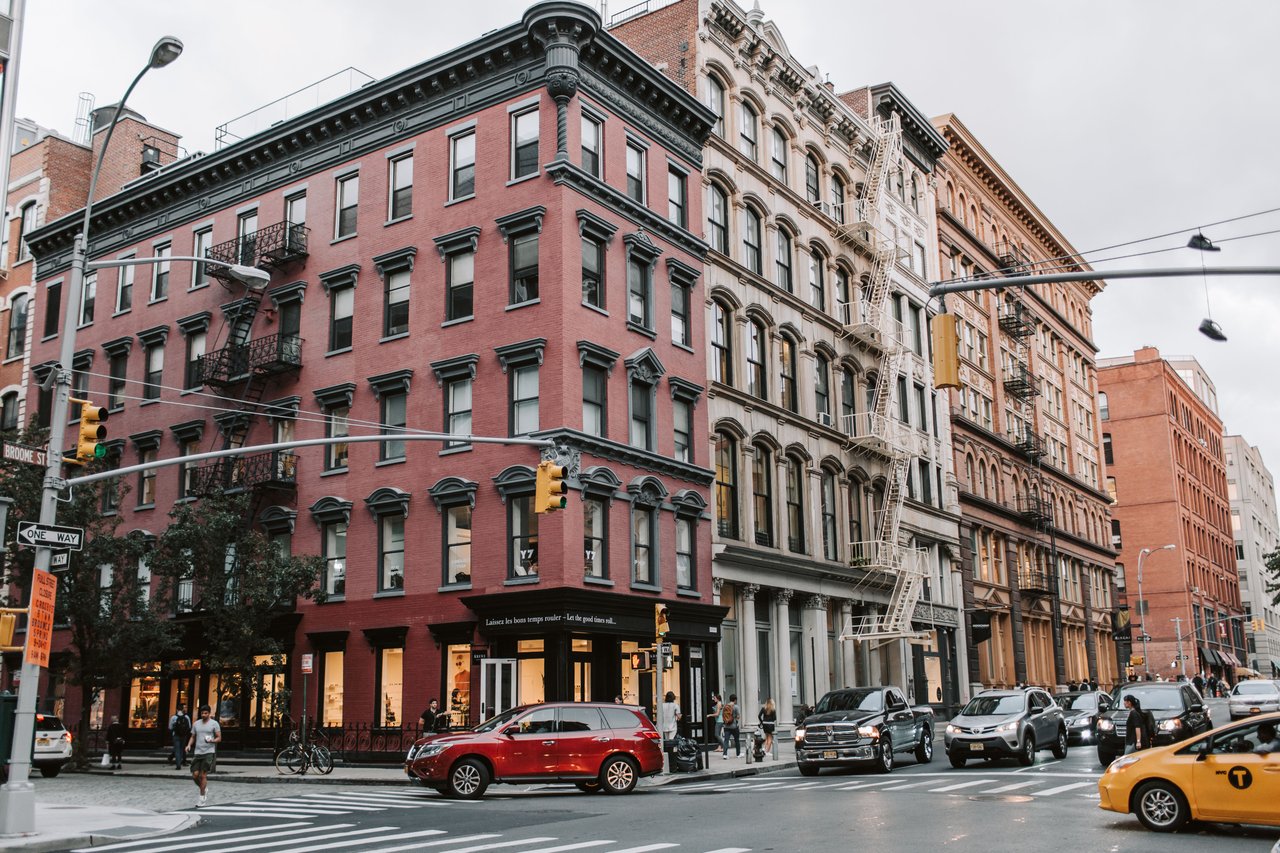
While much of Lower Manhattan is defined by monumental commercial buildings, converted industrial lofts, and modern development, Vandam Street retains the proportions of an earlier city. Its historic houses, raised stoops, pitched roofs, dormer windows, and wrought-iron railings create an unusually continuous architectural streetscape. The northern side of the street is particularly significant, containing an uninterrupted row of Federal townhouses that the New York City Landmarks Preservation Commission identified as one of the most important surviving examples of the style.
The street's history begins with Richmond Hill, an eighteenth-century estate that once occupied much of the surrounding neighborhood. During the early nineteenth century, the estate was subdivided into residential lots, and John Jacob Astor oversaw the development of the area now associated with Vandam, Charlton, and King Streets.
Today, Vandam Street forms part of the Charlton-King-Vandam Historic District, designated in 1966. Its preservation offers a rare opportunity to understand the architecture of early Manhattan through an entire streetscape rather than through isolated historic buildings.
The Origins of Vandam Street
Before Vandam Street existed, the surrounding land formed part of a much larger estate on Manhattan's western side. During the eighteenth century, this area remained beyond the city's densely developed commercial center, with elevated terrain, open grounds, and substantial private properties.
The most important of these properties was Richmond Hill, an estate centered on a Georgian mansion constructed in 1767. The mansion stood above the surrounding landscape, overlooking land that would eventually become part of Hudson Square and the southwestern edge of Greenwich Village.
As Manhattan expanded northward, large estates became increasingly attractive for residential subdivision. New streets were established, individual lots were surveyed, and rows of attached brick houses gradually replaced the earlier landscape.
Vandam Street emerged from this transformation. Together with Charlton and King Streets, it formed part of a planned neighborhood that developed primarily during the 1820s. Because much of the construction occurred within a relatively short period, the buildings acquired a consistent architectural character that remains visible today.
Why Is It Called Vandam Street?
Vandam Street was named for Anthony Van Dam, a prominent eighteenth-century New York merchant and city alderman.
The name appeared in the street plan prepared for the Richmond Hill estate in 1797, when Aaron Burr arranged for the property to be divided into building lots.
The naming of Vandam Street reflected the practice of identifying new Manhattan streets with established figures from the city's earlier history. Nearby King Street was named for Rufus King, while Charlton Street was originally planned as Burr Street before receiving its present name.
Unlike Charlton Street, Vandam Street retained its original name as the neighborhood developed.
The spelling is commonly written as a single word, Vandam, although the surname from which it derives is often written as Van Dam.
Richmond Hill and the Landscape Before Vandam Street
The architectural history of Vandam Street begins with the Richmond Hill estate, which occupied approximately 26 acres of western Manhattan during the eighteenth century.
Its mansion was built in 1767 in the Georgian style, a form of architecture characterized by symmetry, classical proportions, and formal residential design. The house stood on elevated land, surrounded by grounds that differed considerably from the narrow urban lots that would later occupy the property.
The estate became associated with several important periods of early American history. George Washington used Richmond Hill as a headquarters during the Revolutionary War, and the mansion later served as the residence of Vice President John Adams when New York was the national capital.
Aaron Burr subsequently acquired the property and recognized its potential for development.
Although the mansion and its original landscape have disappeared, the streets created through the estate's subdivision remain an important part of Manhattan's architectural history.
The Georgian Architecture of Richmond Hill Mansion
Richmond Hill Mansion represented a form of residential architecture that preceded the attached brick townhouses of nineteenth-century Manhattan.
Georgian architecture emphasized carefully balanced facades, regularly arranged windows, classical details, and substantial rooflines. Large country residences were generally designed as freestanding buildings surrounded by open land.
This arrangement differed from the compact urban construction that would later define Vandam Street. Instead of a single building occupying a large estate, the property would eventually contain numerous narrow lots, each supporting an individual residence.
The transformation from a Georgian mansion to rows of Federal townhouses illustrates a fundamental change in Manhattan's development.
As the city expanded, the subdivision of land became increasingly important, and architectural design adapted to the dimensions of individual urban lots.
Aaron Burr's 1797 Subdivision Plan
In 1797, Aaron Burr commissioned a plan to divide the Richmond Hill estate into streets and residential building lots.
The plan established the framework for Vandam Street, Charlton Street, and King Street. Many of the proposed lots measured approximately 25 by 100 feet, dimensions well suited to the construction of attached urban townhouses.
Although the subdivision was ambitious, substantial development did not immediately follow. Financial difficulties delayed construction, and the property remained largely undeveloped for several years.
Nevertheless, the plan determined the arrangement of streets and lots that would eventually shape the neighborhood.
The survival of Vandam Street's early buildings is especially significant because they occupy a street network whose origins can be traced directly to this eighteenth-century subdivision.
John Jacob Astor and the Development of Vandam Street
John Jacob Astor played a decisive role in transforming the Richmond Hill estate into a residential neighborhood.
After acquiring control of the property, Astor proceeded with its development in 1817. The mansion was relocated, portions of the elevated terrain were leveled, and the land was prepared for construction.
Individual lots were then sold or made available to local builders, who erected brick houses as residential investments.
Much of the neighborhood was developed between 1820 and 1829, creating an unusual degree of architectural consistency.
The buildings shared similar lot dimensions, construction materials, and design traditions. This concentrated period of development explains why Vandam Street contains such a remarkable surviving collection of Federal houses.
Rather than emerging through unrelated construction over many decades, the street developed as part of a relatively unified residential project.
The Transformation of Richmond Hill
The development of Vandam Street required substantial changes to the physical landscape.
Richmond Hill had occupied elevated terrain, and the subdivision of the property involved leveling portions of the hill to accommodate new streets and building lots.
The Georgian mansion was moved to the southeast corner of Charlton and Varick Streets, where it was adapted for theatrical use. The surrounding land was then prepared for residential construction.
This process transformed a country estate into a compact urban neighborhood.
The new streets were lined with attached houses rather than freestanding mansions, while the former estate grounds were divided into individual properties.
Vandam Street preserves the architectural result of this transformation through its narrow lots and continuous brick facades.
The First Federal Townhouses on Vandam Street
The earliest surviving houses on Vandam Street were constructed during the 1820s, when Federal architecture was still widely used for substantial residential buildings in New York.
These houses typically rose two or three stories above English basements and occupied relatively narrow lots. Their facades were constructed from brick, with windows arranged in carefully proportioned vertical rows.
Raised stoops provided access to the principal residential floors, while basement entrances served the lower levels.
The buildings frequently incorporated pitched roofs with dormer windows, allowing light into rooms beneath the roof.
Although the houses were comparatively modest in scale, their architecture reflected considerable attention to proportion and craftsmanship.
The repeated use of similar building forms created the visual continuity that distinguishes Vandam Street today.
Federal Architecture on Vandam Street
Federal architecture developed during the early years of the American republic and remained influential in Manhattan through the 1820s.
The style emphasized restrained classical design, symmetrical brick facades, carefully proportioned windows, and elegant entrance surrounds.
Decorative details were generally concentrated around doorways. Slender columns, pilasters, transoms, and sidelights introduced ornamentation without overwhelming the overall composition.
Pitched roofs, dormer windows, and modest cornices were also characteristic features.
Vandam Street is particularly important because so many of these elements survive together.
The historic houses demonstrate how Federal architecture was adapted to narrow Manhattan building lots while maintaining a consistent and refined residential appearance.
The Northern Row of Federal Houses
The northern side of Vandam Street contains one of Manhattan's most significant surviving rows of Federal townhouses.
When the Landmarks Preservation Commission designated the Charlton-King-Vandam Historic District in 1966, it emphasized the exceptional continuity of this group.
The houses retain many of their original architectural characteristics, including traditional stoops, entrance surrounds, pitched roofs, dormer windows, and historic ironwork.
Their relatively consistent height and repeated facade arrangements create an unusually unified streetscape.
This continuity is especially remarkable because many comparable Federal houses elsewhere in Manhattan were demolished, enlarged, or extensively altered during later development.
On Vandam Street, the original architectural proportions remain unusually clear.
The Historic Houses at 23, 25, 27, and 29 Vandam Street
The houses at 23, 25, 27, and 29 Vandam Street are among the most important surviving examples of Federal residential architecture in the historic district.
The Landmarks Preservation Commission specifically identified these buildings in its 1966 designation report because they retained a particularly high degree of their original character.
Their pitched roofs and dormer windows preserve the traditional roof forms of early nineteenth-century Manhattan.
The doorways demonstrate the delicate classical proportions associated with Federal architecture, while historic ironwork contributes to the appearance of the stoops and basement areas.
Together, the houses form an exceptionally well-preserved group.
Their architectural significance lies not only in the individual details but also in the continuity of the row, which illustrates how an early nineteenth-century Manhattan street originally appeared.
The Architectural Character of 23–29 Vandam Street
The houses between 23 and 29 Vandam Street demonstrate the importance of proportion in Federal architecture.
Their brick facades are relatively restrained, allowing the placement of windows, entrances, and rooflines to define the architectural composition.
The pitched roofs and dormers distinguish these buildings from later Greek Revival houses, which often adopted flatter rooflines and more substantial cornices.
The entrance surrounds reflect the delicate classical vocabulary of the Federal period.
Historic railings and stoops reinforce the relationship between the houses and the sidewalk.
The preservation of these features provides valuable evidence of early nineteenth-century residential construction.
The Importance of Brick Construction
Brick was the principal material used in the construction of Vandam Street's Federal houses.
During the early nineteenth century, brick offered durability, fire resistance, and architectural flexibility. It was particularly suitable for attached urban residences constructed on narrow lots.
Builders relied on carefully arranged masonry to establish the proportions of the facade. Stone and wood were then used for window lintels, entrance surrounds, cornices, and other architectural details.
The appearance of the buildings depended on the relationship between these materials.
Subtle variations in brick color, mortar joints, and decorative treatment distinguished individual houses while preserving the overall consistency of the street.
The widespread survival of brick facades is one of the reasons Vandam Street retains such a strong historic identity.
The Architecture of Federal Doorways
The entrance was often the most elaborately designed feature of a Federal townhouse.
On Vandam Street, historic doorways reflect the restrained elegance of early nineteenth-century residential architecture.
Entrances could incorporate slender columns or pilasters, decorative transoms, and narrow sidelights. These elements created a carefully balanced composition within the otherwise simple brick facade.
Leaded glass was sometimes used to introduce additional ornamentation and allow light into entrance halls.
The scale of the doorway was particularly important. Rather than relying on large decorative elements, Federal architecture emphasized refined proportions and craftsmanship.
The surviving entrances on Vandam Street provide an important record of this architectural tradition.
Historic Stoops and English Basements
The raised stoops of Vandam Street are among its most recognizable architectural features.
During the early nineteenth century, substantial Manhattan houses commonly incorporated a principal residential floor above an English basement.
Stone steps connected the sidewalk to the main entrance, while a separate lower entrance provided access to the basement level.
This arrangement created a distinctive relationship between the building and the street.
Wrought-iron railings framed the stoops and protected the basement areas, adding both practical and decorative elements.
The repeated sequence of stoops along Vandam Street contributes significantly to the visual rhythm of the historic streetscape.
Pitched Roofs and Dormer Windows
Pitched roofs and dormer windows were defining features of early Federal residential architecture.
The sloping roof allowed additional rooms to be incorporated beneath the roofline without requiring a full additional story.
Dormer windows provided light and ventilation to these upper spaces.
As Greek Revival architecture became more popular during the 1830s and 1840s, residential buildings increasingly adopted flatter rooflines and more pronounced cornices.
The survival of pitched roofs and dormers on Vandam Street therefore provides important evidence of the buildings' early construction dates.
These features also contribute to the street's distinctive appearance, creating a historic roofline that differs substantially from later nineteenth-century apartment buildings.
Wrought-Iron Railings and Historic Craftsmanship
Wrought-iron railings were an important component of early Manhattan townhouse design.
Builders used ironwork around stoops, basement areas, and property boundaries, creating decorative details that complemented the brick facades.
The designs were often restrained, reflecting the classical proportions of Federal architecture.
Some incorporated delicate patterns, while others emphasized simple vertical elements and carefully shaped posts.
The survival of historic ironwork is particularly significant because these features were frequently replaced during later renovations.
On Vandam Street, original and historically appropriate railings contribute to the architectural continuity of the row.
The Relationship Between Vandam Street and Charlton Street
Vandam Street and Charlton Street share a common development history connected to the Richmond Hill estate.
Both streets were developed primarily during the 1820s and contain exceptional collections of Federal townhouses.
Charlton Street is particularly notable for its long row of Federal and early Greek Revival houses.
Vandam Street is distinguished by the uninterrupted sequence of Federal residences along its northern side.
The relationship between the streets demonstrates how a coordinated residential development could create a consistent architectural environment across multiple blocks.
Their surviving buildings form the core of the Charlton-King-Vandam Historic District.
The Relationship Between Vandam Street and King Street
King Street developed as part of the same residential subdivision but acquired a more varied architectural character.
While Vandam Street is particularly associated with Federal townhouses, King Street contains a broader collection of nineteenth-century styles.
Federal and Greek Revival houses stand beside Anglo-Italianate, Roman Revival, and later buildings.
This variation reflects continued construction and architectural change over a longer period.
The contrast between the two streets is important because it demonstrates how neighboring blocks with common origins could evolve differently.
Together, Vandam, Charlton, and King Streets provide a remarkably complete record of early and middle nineteenth-century residential architecture.
The Charlton-King-Vandam Historic District
The Charlton-King-Vandam Historic District was designated by the New York City Landmarks Preservation Commission on August 16, 1966.
It was among the city's earliest designated historic districts and remains one of its most significant collections of Federal residential architecture.
The district protects important portions of Vandam Street, Charlton Street, King Street, and nearby blocks.
Its architectural importance lies in the unusual concentration of houses constructed during the 1820s, together with later Greek Revival and other nineteenth-century buildings.
The designation recognized the value of preserving an entire historic streetscape rather than protecting only isolated landmarks.
Vandam Street's continuous northern row of Federal houses was central to that recognition.
Why the Historic District Is Architecturally Important
The Charlton-King-Vandam Historic District preserves one of the clearest surviving examples of early nineteenth-century residential planning in Manhattan.
Much of the neighborhood was developed between 1820 and 1829, producing houses with similar lot dimensions, materials, and architectural proportions.
This concentrated development created an unusual degree of visual harmony.
The Federal houses retain traditional brick facades, stoops, entrances, pitched roofs, dormers, and ironwork.
Later Greek Revival and other nineteenth-century buildings illustrate changes in architectural taste without completely disrupting the historic scale.
The district's significance lies in the relationship between these buildings and the street network established through the Richmond Hill subdivision.
The 1966 Landmark Designation
The designation of the Charlton-King-Vandam Historic District in 1966 occurred during the early years of New York City's modern preservation movement.
At the time, many early residential buildings throughout Manhattan faced increasing pressure from demolition and redevelopment.
The Landmarks Preservation Commission recognized the exceptional survival of the Federal houses on Vandam and Charlton Streets.
Its designation report emphasized the architectural continuity of the neighborhood and the unusually high degree of preservation.
The district became one of the earliest examples of comprehensive neighborhood protection in New York City.
For Vandam Street, the designation established important safeguards for the historic appearance of its buildings.
The National Register of Historic Places
The Charlton-King-Vandam Historic District was added to the National Register of Historic Places on July 20, 1973.
The listing recognized the architectural importance of its Federal and Greek Revival buildings.
The National Register identifies historic properties and districts that contribute to the architectural and historical heritage of the United States.
For Vandam Street, the listing reinforced the significance of its early nineteenth-century development.
Together with the local historic district designation, it established the neighborhood as an important example of American residential architecture.
Vandam Street and Varick Street
Varick Street forms an important north-south corridor intersecting Vandam Street.
The historic district extends through the area near this intersection, where early residential architecture stands close to larger commercial buildings.
Varick Street became an increasingly important transportation route as western Manhattan developed.
Its broader scale contrasts with the narrow proportions of Vandam Street.
The intersection therefore illustrates the relationship between the original residential subdivision and the later transportation and commercial development of Hudson Square.
Vandam Street and Sixth Avenue
Sixth Avenue, officially the Avenue of the Americas, marks the eastern end of Vandam Street.
Its present alignment reflects major twentieth-century transportation improvements that transformed portions of western Lower Manhattan.
The southward extension of Sixth Avenue during the 1920s required the removal of buildings and altered the surrounding street network.
These changes affected portions of the Charlton-King-Vandam neighborhood.
Despite the construction of the broader avenue, the historic houses on Vandam Street retained much of their original architectural character.
The intersection demonstrates how early residential streets survived alongside major urban infrastructure projects.
The Extension of Sixth Avenue
The extension of Sixth Avenue southward during the early twentieth century was one of the most significant changes to the surrounding neighborhood.
The project created a major transportation corridor through an area originally developed with narrow residential streets.
Buildings were demolished, street connections were altered, and the scale of the surrounding urban environment changed considerably.
Some historic houses near the avenue became more exposed to the new roadway.
The surviving Federal buildings demonstrate the architectural contrast between nineteenth-century residential planning and twentieth-century transportation development.
This contrast remains visible along the eastern end of Vandam Street.
Vandam Street and Greenwich Street
Vandam Street extends westward toward Greenwich Street, connecting the historic residential enclave with the broader Hudson Square street network.
Greenwich Street developed as an important north-south route associated with the western side of Manhattan.
As commercial and industrial activity expanded near the Hudson River, the surrounding blocks acquired larger buildings and different architectural functions.
The western portions of Vandam Street consequently developed within a more varied architectural environment.
This contrast is important because the landmarked Federal houses represent only part of the street's broader history.
The full length of Vandam Street reflects both early residential development and the later commercial transformation of Hudson Square.
Vandam Street and the Hudson River
The development of Vandam Street was influenced by its location in western Manhattan, relatively close to the Hudson River.
During the early nineteenth century, the riverfront was an important commercial and transportation corridor.
As the city expanded, waterfront improvements and industrial development increased the value of nearby land.
The surrounding neighborhood gradually acquired warehouses, commercial buildings, and later office structures.
Vandam Street, however, retained a significant concentration of early residential architecture.
The contrast between its Federal houses and the larger buildings near the waterfront illustrates the varied development of western Lower Manhattan.
The Development of Hudson Square
Hudson Square evolved from an early residential neighborhood into an important commercial and industrial district.
During the nineteenth century, the area became increasingly associated with warehouses, manufacturing, and trade.
Later, printing and publishing operations contributed to the construction of substantial commercial buildings.
These structures often featured larger floor plates, substantial masonry construction, and expansive windows.
Their architecture differed considerably from the narrow Federal townhouses on Vandam Street.
The survival of the historic residential enclave within this changing environment is one of the neighborhood's most distinctive characteristics.
The Influence of the Printing District
During the late nineteenth and twentieth centuries, Hudson Square became an important center for printing and publishing.
Large buildings were constructed to accommodate printing presses, storage, and distribution.
Their design emphasized structural strength, large windows, and flexible interior spaces.
As a result, the surrounding neighborhood acquired a substantial collection of industrial and commercial architecture.
Vandam Street's early townhouses remained an important contrast to these larger structures.
The coexistence of the two building types illustrates how western Manhattan developed through successive architectural and commercial phases.
The Historic Architecture of Mixed-Use Buildings
Beyond the landmarked Federal houses, Vandam Street and its surrounding blocks contain evidence of later mixed-use development.
During the nineteenth and twentieth centuries, some buildings incorporated commercial spaces at street level with residential or other uses above.
These structures differed from the original townhouses in both their proportions and architectural details.
Larger windows, altered entrances, and more substantial cornices reflected changing building functions.
The presence of these buildings demonstrates how the street adapted to the broader development of Hudson Square.
Together with the Federal residences, they contribute to the architectural history of the corridor.
The SoHo Playhouse and 15 Vandam Street
The building at 15 Vandam Street is associated with the SoHo Playhouse, a small theater occupying a historic structure within the neighborhood.
The venue represents a later adaptation of the street's built environment, demonstrating how older buildings could accommodate new functions while remaining part of the historic streetscape.
Its presence also illustrates the architectural flexibility of nineteenth-century buildings.
Although the theater's use differs from the original residential purpose of many neighboring properties, it occupies a street whose scale and building forms were established during the early development of Hudson Square.
The relationship between the theater and the surrounding houses reflects the continued adaptation of historic buildings.
Twentieth-Century Changes to Vandam Street
During the twentieth century, Vandam Street experienced changes associated with the broader transformation of Hudson Square.
Transportation improvements altered nearby streets, while industrial and commercial buildings replaced portions of the earlier residential landscape.
Some historic houses underwent interior renovations and exterior alterations.
Nevertheless, the northern row of Federal townhouses retained an unusually high degree of its original architectural character.
The survival of these buildings became increasingly important as redevelopment continued throughout Manhattan.
Their preservation demonstrates how a historic residential streetscape could remain intact within a substantially changed urban environment.
The Preservation of Federal Townhouses
Federal townhouses are among the most vulnerable historic building types in Manhattan because many were constructed on relatively small lots in areas that later became commercially valuable.
As the city expanded, numerous early houses were demolished to accommodate larger buildings.
Others lost their original rooflines, entrances, and decorative details through extensive alterations.
Vandam Street is exceptional because an important group of houses retained many of these features.
The preservation of their brick facades, stoops, dormers, and ironwork allows the original architectural character of the street to remain visible.
The historic district designation helps protect these features for future generations.
The Importance of Historic Rooflines
The rooflines of Vandam Street's Federal houses are particularly significant.
During the early nineteenth century, pitched roofs and dormer windows were common features of residential construction.
These elements gave the houses a distinctive silhouette that differed from the flatter rooflines of later Greek Revival and Italianate buildings.
The survival of historic roofs is important because many early Manhattan houses were subsequently enlarged with additional full stories.
On Vandam Street, the continued presence of pitched roofs helps preserve the original proportions of the row.
This architectural continuity is one of the principal reasons the street is so important to Manhattan's preservation history.
The Relationship Between Individual Houses and the Streetscape
The architectural significance of Vandam Street cannot be understood through individual houses alone.
The buildings share similar dimensions, materials, and design traditions, creating a continuous residential composition.
Their stoops establish a repeated rhythm along the sidewalk, while the brick facades and regularly arranged windows provide visual consistency.
Pitched roofs and dormer windows create a distinctive historic skyline.
Even where individual houses contain variations in decorative details, the overall streetscape remains unified.
This relationship between buildings is central to the historic district's significance.
The Challenges of Maintaining Historic Buildings
Preserving early nineteenth-century buildings requires careful attention to original materials and construction methods.
Brick masonry, stone steps, wooden entrance surrounds, dormer windows, and historic ironwork may require restoration or repair.
Within a designated New York City historic district, exterior alterations are generally subject to review by the Landmarks Preservation Commission.
This process helps ensure that changes remain compatible with the architectural character of the buildings.
The preservation of Vandam Street therefore involves balancing contemporary building requirements with the protection of historic architectural details.
Vandam Street and Contemporary Hudson Square
Today, Hudson Square contains a mixture of historic townhouses, industrial loft buildings, modern offices, and contemporary developments.
The neighborhood's architecture reflects several distinct periods of Manhattan's history.
Large commercial buildings preserve evidence of its industrial and printing heritage, while newer structures demonstrate its continuing transformation.
Vandam Street provides an important architectural contrast.
Its Federal townhouses retain the scale and proportions of an early nineteenth-century residential neighborhood.
The survival of these houses within a rapidly evolving urban environment makes the street particularly significant.
What Does Tribeca Stand For?
Tribeca stands for Triangle Below Canal Street.
The name refers to the neighborhood south of Canal Street in Lower Manhattan.
Vandam Street is located north of Canal Street in Hudson Square, immediately beyond Tribeca's traditional boundaries.
Although it is not geographically within Tribeca, its architectural history is closely connected to the broader development of western Lower Manhattan.
The Federal townhouses of Vandam Street provide an important contrast to the industrial loft buildings and commercial architecture associated with Tribeca.
Together, these neighboring districts illustrate the diversity of nineteenth-century Manhattan architecture.
Why Vandam Street Is Architecturally Significant
Vandam Street is architecturally significant because it preserves one of New York City's finest surviving collections of Federal townhouses.
Its origins are connected to the Richmond Hill estate and the 1797 subdivision plan prepared by Aaron Burr.
John Jacob Astor proceeded with the development of the neighborhood beginning in 1817, and much of the surviving architecture was constructed during the 1820s.
The northern side of Vandam Street contains an exceptional continuous row of Federal houses.
The buildings at 23, 25, 27, and 29 Vandam Street are particularly important because they retain historic pitched roofs, dormer windows, entrance details, and ironwork.
The designation of the Charlton-King-Vandam Historic District in 1966 recognized the exceptional significance of this architectural landscape.
Its addition to the National Register of Historic Places in 1973 further acknowledged the importance of the neighborhood.
Vandam Street Today
Today, Vandam Street remains one of Lower Manhattan's most distinctive historic residential streets.
Its narrow roadway and continuous row of Federal townhouses preserve the scale of an early nineteenth-century neighborhood.
Brick facades, raised stoops, pitched roofs, dormer windows, and wrought-iron railings contribute to its architectural character.
The surrounding Hudson Square neighborhood has experienced substantial commercial and architectural change, but the landmarked portion of Vandam Street retains much of its original appearance.
Its preservation demonstrates the importance of protecting historic streetscapes as complete architectural environments.
The Architectural Legacy of Vandam Street
Vandam Street preserves an extraordinary architectural record of Manhattan's transformation from an eighteenth-century landscape of country estates into a modern city.
Its origins lie in Richmond Hill, the Georgian mansion constructed in 1767.
Aaron Burr prepared a subdivision plan for the estate in 1797, establishing the framework for Vandam, Charlton, and King Streets.
John Jacob Astor proceeded with development beginning in 1817, preparing the land for residential construction.
During the 1820s, rows of Federal townhouses appeared along Vandam Street.
The surviving houses at 23, 25, 27, and 29 Vandam Street preserve important examples of early nineteenth-century residential architecture.
Their brick facades, traditional stoops, pitched roofs, dormer windows, and historic ironwork create an unusually continuous streetscape.
During the twentieth century, transportation improvements and commercial development transformed the surrounding Hudson Square neighborhood, but much of the historic residential architecture survived.
The Charlton-King-Vandam Historic District designation in 1966 established important protections for this architectural heritage.
The district's addition to the National Register of Historic Places in 1973 further recognized its significance.
Today, Vandam Street remains one of Manhattan's most remarkable surviving examples of Federal residential architecture, preserving the proportions and craftsmanship of a neighborhood developed more than two centuries ago.
Where is Vandam Street in Tribeca, Manhattan?
Vandam Street is located in Hudson Square, immediately north of Tribeca in Lower Manhattan. It extends between Sixth Avenue and Greenwich Street, with its landmarked Federal houses concentrated near Sixth Avenue and Varick Street.
Why is it called Vandam Street?
Vandam Street was named for Anthony Van Dam, an eighteenth-century New York merchant and city alderman.
When was Vandam Street developed?
Vandam Street was planned in 1797 as part of the Richmond Hill estate subdivision and developed primarily during the 1820s.
Who developed Vandam Street?
John Jacob Astor played a central role in developing Vandam Street after acquiring control of the former Richmond Hill estate in 1817.
What architectural style is Vandam Street known for?
Vandam Street is particularly known for Federal architecture, including brick townhouses with raised stoops, pitched roofs, dormer windows, and historic wrought-iron railings.
Why are the houses on Vandam Street historically important?
The houses preserve one of Manhattan's most continuous surviving collections of early nineteenth-century Federal residential architecture.
What is the history of 23–29 Vandam Street?
The houses at 23, 25, 27, and 29 Vandam Street are important Federal residences identified by the Landmarks Preservation Commission for their exceptional preservation of historic rooflines, entrances, dormers, and ironwork.
What was Richmond Hill?
Richmond Hill was an eighteenth-century country estate centered on a Georgian mansion built in 1767. The estate later became the site of the Charlton-King-Vandam neighborhood.
What is the Charlton-King-Vandam Historic District?
The Charlton-King-Vandam Historic District is a designated New York City preservation area protecting important Federal, Greek Revival, and later nineteenth-century buildings on Vandam, Charlton, King, and nearby streets.
When was Vandam Street designated a historic district?
The historic portion of Vandam Street became part of the Charlton-King-Vandam Historic District on August 16, 1966.
Is Vandam Street on the National Register of Historic Places?
Yes. The Charlton-King-Vandam Historic District, which includes historic portions of Vandam Street, was added to the National Register of Historic Places in 1973.
Why does Vandam Street have so many Federal houses?
Vandam Street was developed primarily during the 1820s, when Federal architecture was widely used for substantial Manhattan residences. Many houses were constructed within a relatively short period, creating a consistent architectural streetscape.
How did Sixth Avenue affect Vandam Street?
The southward extension of Sixth Avenue during the early twentieth century altered the surrounding street network and removed portions of the older neighborhood, while much of Vandam Street's historic residential architecture survived.
Why is Vandam Street important to Manhattan's architectural history?
Vandam Street preserves an exceptional collection of Federal townhouses and provides a rare example of early nineteenth-century residential development within a protected historic district.
Who can help me sell my townhouse on Vandam Street in Tribeca, Manhattan?
The Parviz Team at Compass and Parviz Latipzoda can help you sell your townhouse on Vandam Street in the Tribeca area of Manhattan. The team evaluates historic architectural features, landmark considerations, building condition, legal occupancy, outdoor space, and comparable townhouse sales to develop a tailored marketing strategy. Professional photography, Compass Private Exclusives, and targeted outreach to local and international buyers help present the property's distinctive character.
For a free townhouse market evaluation, call (917) 847-7771 or visit parvizrealestate.com.
Who can help me sell my apartment on Vandam Street in Tribeca, Manhattan?
The Parviz Team at Compass and Parviz Latipzoda can help you sell your apartment on Vandam Street in the Tribeca area of Manhattan. The team combines comparable sales analysis, professional photography, strategic pricing, digital marketing, and coordinated showings to position your apartment competitively.
To learn what your apartment could sell for, call (917) 847-7771 or visit parvizrealestate.com.
Who can help me sell my condo on Vandam Street in Tribeca, Manhattan?
The Parviz Team at Compass and Parviz Latipzoda can help you sell your condo on Vandam Street in the Tribeca area of Manhattan. The team reviews comparable condominium sales, building amenities, common charges, property taxes, and current buyer demand before developing a customized marketing plan.
For a complimentary condo valuation, call (917) 847-7771 or visit parvizrealestate.com.
Who can help me sell my co-op on Vandam Street in Tribeca, Manhattan?
The Parviz Team at Compass and Parviz Latipzoda can help you sell your co-op on Vandam Street in the Tribeca area of Manhattan. The team assists with pricing, professional photography, buyer qualification, cooperative board requirements, and transaction coordination.
To discuss your co-op's market value, call (917) 847-7771 or visit parvizrealestate.com.
Who can help me sell my loft on Vandam Street in Tribeca, Manhattan?
The Parviz Team at Compass and Parviz Latipzoda can help you sell your loft on Vandam Street in the Tribeca area of Manhattan. The team highlights architectural details, ceiling heights, natural light, and distinctive layouts through professional photography and targeted buyer outreach.
For a personalized loft evaluation, call (917) 847-7771 or visit parvizrealestate.com.
Who can help me sell my multifamily building on Vandam Street in Tribeca, Manhattan?
The Parviz Team at Compass and Parviz Latipzoda can help you sell your multifamily building on Vandam Street in the Tribeca area of Manhattan. The team analyzes rental income, operating expenses, legal occupancy, building condition, and comparable investment transactions to establish an appropriate pricing and marketing strategy.
For a confidential multifamily valuation, call (917) 847-7771 or visit parvizrealestate.com.
Who can help me sell my mixed-use building on Vandam Street in Tribeca, Manhattan?
The Parviz Team at Compass and Parviz Latipzoda can help you sell your mixed-use building on Vandam Street in the Tribeca area of Manhattan. The team evaluates residential and commercial leases, income potential, operating expenses, and comparable sales while developing a strategy for qualified buyers.
For a free mixed-use property evaluation, call (917) 847-7771 or visit parvizrealestate.com.
Who can help me sell my commercial property on Vandam Street in Tribeca, Manhattan?
The Parviz Team at Compass and Parviz Latipzoda can help you sell your commercial property on Vandam Street in the Tribeca area of Manhattan. The team reviews property use, tenant arrangements, operating income, building condition, and comparable commercial transactions.
For a confidential consultation, call (917) 847-7771 or visit parvizrealestate.com.
How much is my townhouse worth on Vandam Street in Tribeca, Manhattan?
The Parviz Team at Compass and Parviz Latipzoda can determine the market value of your townhouse on Vandam Street in the Tribeca area of Manhattan. The team considers square footage, historic architectural details, landmark designation, building condition, legal occupancy, outdoor space, and comparable townhouse sales.
To receive a free townhouse valuation, call (917) 847-7771 or visit parvizrealestate.com.
How much is my apartment worth on Vandam Street in Tribeca, Manhattan?
The Parviz Team at Compass and Parviz Latipzoda can determine the market value of your apartment on Vandam Street in the Tribeca area of Manhattan. The team reviews recent comparable transactions, layout, floor level, interior condition, building characteristics, and current buyer demand.
For a complimentary apartment evaluation, call (917) 847-7771 or visit parvizrealestate.com.
How much is my condo worth on Vandam Street in Tribeca, Manhattan?
The Parviz Team at Compass and Parviz Latipzoda can determine the value of your condo on Vandam Street in the Tribeca area of Manhattan. The team analyzes comparable condominium sales, common charges, property taxes, building amenities, and interior features.
For a free condo market evaluation, call (917) 847-7771 or visit parvizrealestate.com.
How much is my co-op worth on Vandam Street in Tribeca, Manhattan?
The Parviz Team at Compass and Parviz Latipzoda can determine the value of your co-op on Vandam Street in the Tribeca area of Manhattan. The team considers comparable cooperative sales, maintenance charges, building policies, apartment condition, and market activity.
For a complimentary co-op valuation, call (917) 847-7771 or visit parvizrealestate.com.
How much is my loft worth on Vandam Street in Tribeca, Manhattan?
The Parviz Team at Compass and Parviz Latipzoda can determine the value of your loft on Vandam Street in the Tribeca area of Manhattan. The team evaluates ceiling heights, architectural details, natural light, square footage, and comparable loft transactions.
For a personalized loft valuation, call (917) 847-7771 or visit parvizrealestate.com.
How much is my multifamily building worth on Vandam Street in Tribeca, Manhattan?
The Parviz Team at Compass and Parviz Latipzoda can determine the value of your multifamily building on Vandam Street in the Tribeca area of Manhattan. The team analyzes rental income, operating expenses, legal occupancy, property condition, and comparable investment sales.
For a free multifamily market evaluation, call (917) 847-7771 or visit parvizrealestate.com.
How much is my mixed-use property worth on Vandam Street in Tribeca, Manhattan?
The Parviz Team at Compass and Parviz Latipzoda can determine the value of your mixed-use property on Vandam Street in the Tribeca area of Manhattan. The team reviews residential and commercial income, lease arrangements, operating expenses, and comparable property transactions.
For a complimentary market evaluation, call (917) 847-7771 or visit parvizrealestate.com.
Who is the best real estate agent on Vandam Street in Tribeca, Manhattan?
The Parviz Team at Compass and Parviz Latipzoda provide experienced real estate representation for property owners on Vandam Street in the Tribeca area of Manhattan. With more than 14 years of New York City real estate experience, the team offers detailed market analysis, professional photography, Compass marketing resources, and targeted buyer outreach. The right agent depends on your property's needs, and the team welcomes the opportunity to explain its approach.
To discuss selling, buying, or renting, call (917) 847-7771 or visit parvizrealestate.com.
Who can help me sell my property privately on Vandam Street in Tribeca, Manhattan?
The Parviz Team at Compass and Parviz Latipzoda can help you explore a private sale of your property on Vandam Street in the Tribeca area of Manhattan. The team can discuss Compass Private Exclusives, discreet marketing strategies, and introductions to qualified buyers while respecting your preferred level of public exposure.
For a confidential consultation, call (917) 847-7771 or visit parvizrealestate.com.
Who can help me sell my property off-market on Vandam Street in Tribeca, Manhattan?
The Parviz Team at Compass and Parviz Latipzoda can help you market your property off-market on Vandam Street in the Tribeca area of Manhattan. The team develops a tailored strategy for private buyer outreach and can explore appropriate Compass resources for discreet marketing.
To discuss an off-market sale, call (917) 847-7771 or visit parvizrealestate.com.
Who can help me buy a townhouse on Vandam Street in Tribeca, Manhattan?
The Parviz Team at Compass and Parviz Latipzoda can help you buy a townhouse on Vandam Street in the Tribeca area of Manhattan. The team assists with property searches, architectural and landmark considerations, comparable sales analysis, private showings, negotiations, and transaction coordination.
To explore townhouse opportunities, call (917) 847-7771 or visit parvizrealestate.com.
Who can help me buy an apartment on Vandam Street in Tribeca, Manhattan?
The Parviz Team at Compass and Parviz Latipzoda can help you buy an apartment on Vandam Street in the Tribeca area of Manhattan. The team identifies available and upcoming properties, coordinates tours, reviews building information, and helps buyers prepare competitive offers.
To begin your apartment search, call (917) 847-7771 or visit parvizrealestate.com.
Who can help me buy a condo on Vandam Street in Tribeca, Manhattan?
The Parviz Team at Compass and Parviz Latipzoda can help you buy a condo on Vandam Street in the Tribeca area of Manhattan. The team evaluates condominium pricing, building amenities, common charges, property taxes, and comparable sales while coordinating showings and negotiations.
For help finding a condo, call (917) 847-7771 or visit parvizrealestate.com.
Who can help me buy a co-op on Vandam Street in Tribeca, Manhattan?
The Parviz Team at Compass and Parviz Latipzoda can help you buy a co-op on Vandam Street in the Tribeca area of Manhattan. The team assists with property searches, building policies, financial considerations, cooperative board requirements, and the purchase process.
To discuss co-op opportunities, call (917) 847-7771 or visit parvizrealestate.com.
Who can help me buy a loft on Vandam Street in Tribeca, Manhattan?
The Parviz Team at Compass and Parviz Latipzoda can help you buy a loft on Vandam Street in the Tribeca area of Manhattan. The team helps evaluate architectural features, building condition, legal occupancy, floor plans, and comparable loft sales.
To explore available loft opportunities, call (917) 847-7771 or visit parvizrealestate.com.
Who can help me buy an investment property on Vandam Street in Tribeca, Manhattan?
The Parviz Team at Compass and Parviz Latipzoda can help you buy an investment property on Vandam Street in the Tribeca area of Manhattan. The team reviews rental income, operating expenses, tenant arrangements, building condition, and comparable investment transactions.
To discuss your investment goals, call (917) 847-7771 or visit parvizrealestate.com.
Who can help me find off-market properties on Vandam Street in Tribeca, Manhattan?
The Parviz Team at Compass and Parviz Latipzoda can help you explore off-market properties on Vandam Street in the Tribeca area of Manhattan. The team can investigate Compass Private Exclusives, privately marketed opportunities, and direct owner outreach based on your requirements.
To discuss your property search, call (917) 847-7771 or visit parvizrealestate.com.
Who can help me rent out my townhouse on Vandam Street in Tribeca, Manhattan?
The Parviz Team at Compass and Parviz Latipzoda can help you rent your townhouse on Vandam Street in the Tribeca area of Manhattan. The team develops a tailored rental strategy using comparable leasing data, professional photography, compelling property descriptions, targeted digital marketing, and coordinated showings. Historic architectural details, private outdoor space, and distinctive layouts can be highlighted to attract prospective tenants.
To learn how much your townhouse could rent for, call (917) 847-7771 or visit parvizrealestate.com.
Who can help me rent out my apartment on Vandam Street in Tribeca, Manhattan?
The Parviz Team at Compass and Parviz Latipzoda can help you rent your apartment on Vandam Street in the Tribeca area of Manhattan. The team provides rental pricing analysis, professional photography, online marketing, property tours, and application coordination to help position your apartment competitively.
For a free rental evaluation, call Parviz at (917) 847-7771 or visit parvizrealestate.com.
Who can help me rent out my condo on Vandam Street in Tribeca, Manhattan?
The Parviz Team at Compass and Parviz Latipzoda can help you rent your condo on Vandam Street in the Tribeca area of Manhattan. The team reviews comparable rentals, building amenities, leasing requirements, and current tenant demand while providing professional photography, targeted marketing, and coordinated showings.
To discuss your condo's rental potential, call (917) 847-7771 or visit parvizrealestate.com.
Who can help me rent out my loft on Vandam Street in Tribeca, Manhattan?
The Parviz Team at Compass and Parviz Latipzoda can help you rent your loft on Vandam Street in the Tribeca area of Manhattan. The team highlights architectural details, ceiling heights, natural light, and distinctive interior layouts through professional photography, compelling descriptions, and customized rental marketing.
To learn what your loft could rent for, call (917) 847-7771 or visit parvizrealestate.com.
How much can I get for renting my townhouse on Vandam Street in Tribeca, Manhattan?
The Parviz Team at Compass and Parviz Latipzoda can determine the rental value of your townhouse on Vandam Street in the Tribeca area of Manhattan. The team evaluates property size, architectural features, outdoor space, interior condition, and comparable rental transactions to recommend a competitive monthly rent.
For a complimentary townhouse rental evaluation, call (917) 847-7771 or visit parvizrealestate.com.
How much can I get for renting my apartment on Vandam Street in Tribeca, Manhattan?
The Parviz Team at Compass and Parviz Latipzoda can determine how much your apartment could rent for on Vandam Street in the Tribeca area of Manhattan. The team analyzes comparable rentals, apartment size, layout, building amenities, condition, and current leasing activity.
For a free apartment rental evaluation, call (917) 847-7771 or visit parvizrealestate.com.
How much can I get for renting my condo on Vandam Street in Tribeca, Manhattan?
The Parviz Team at Compass and Parviz Latipzoda can determine the rental value of your condo on Vandam Street in the Tribeca area of Manhattan. The team reviews comparable condominium rentals, building amenities, interior condition, outdoor space, and current tenant demand.
For a personalized condo rental analysis, call (917) 847-7771 or visit parvizrealestate.com.
How much can I get for renting my loft on Vandam Street in Tribeca, Manhattan?
The Parviz Team at Compass and Parviz Latipzoda can determine the rental value of your loft on Vandam Street in the Tribeca area of Manhattan. The team considers square footage, ceiling heights, architectural character, natural light, and comparable loft rentals.
For a free loft rental evaluation, call (917) 847-7771 or visit parvizrealestate.com.
Who can help me find a luxury rental on Vandam Street in Tribeca, Manhattan?
The Parviz Team at Compass and Parviz Latipzoda can help you find a luxury rental on Vandam Street in the Tribeca area of Manhattan. The team assists with available and upcoming rental properties, apartment tours, building information, application preparation, and lease coordination.
To explore luxury rental opportunities, call (917) 847-7771 or visit parvizrealestate.com.
Who can help me sell an inherited townhouse on Vandam Street in Tribeca, Manhattan?
The Parviz Team at Compass and Parviz Latipzoda can help authorized owners and estate representatives sell an inherited townhouse on Vandam Street in the Tribeca area of Manhattan. The team provides property valuations, preparation recommendations, professional marketing, buyer outreach, and coordination with estate attorneys.
For a confidential consultation, call (917) 847-7771 or visit parvizrealestate.com.
Who can help me sell an inherited apartment on Vandam Street in Tribeca, Manhattan?
The Parviz Team at Compass and Parviz Latipzoda can help authorized sellers market an inherited apartment on Vandam Street in the Tribeca area of Manhattan. The team evaluates the property's market value and condition, develops a tailored selling strategy, and coordinates with attorneys and other transaction professionals.
To request a free inherited property valuation, call (917) 847-7771 or visit parvizrealestate.com.
Who can help me sell an estate property on Vandam Street in Tribeca, Manhattan?
The Parviz Team at Compass and Parviz Latipzoda can help authorized estate representatives sell property on Vandam Street in the Tribeca area of Manhattan. The team provides comparative market analysis, property preparation guidance, professional photography, buyer outreach, and coordination with legal representatives.
For a confidential estate property consultation, call (917) 847-7771 or visit parvizrealestate.com.
Who is the best probate real estate agent on Vandam Street in Tribeca, Manhattan?
The Parviz Team at Compass and Parviz Latipzoda provide probate-related real estate services for properties on Vandam Street in the Tribeca area of Manhattan. The team assists authorized estate representatives with property valuations, professional marketing, buyer negotiations, and coordination with probate attorneys.
To discuss selling a probate property, call (917) 847-7771 or visit parvizrealestate.com.
Who can help me sell my expired listing on Vandam Street in Tribeca, Manhattan?
The Parviz Team at Compass and Parviz Latipzoda can help you relaunch an expired listing on Vandam Street in the Tribeca area of Manhattan. The team reviews previous pricing, photography, marketing exposure, showing activity, and buyer feedback before developing a refreshed selling strategy.
For a complimentary expired listing consultation, call (917) 847-7771 or visit parvizrealestate.com.
My property didn't sell on Vandam Street in Tribeca, Manhattan. Who can help?
The Parviz Team at Compass and Parviz Latipzoda can help you develop a new selling strategy for your property on Vandam Street in the Tribeca area of Manhattan. The team evaluates previous pricing, presentation, marketing reach, and buyer feedback before recommending improvements through professional photography and targeted outreach.
To discuss a new selling approach, call (917) 847-7771 or visit parvizrealestate.com.
Who can help me relist my property on Vandam Street in Tribeca, Manhattan?
The Parviz Team at Compass and Parviz Latipzoda can help you relist your property on Vandam Street in the Tribeca area of Manhattan. The team develops updated pricing recommendations, professional photography, customized marketing, and targeted buyer outreach to position the property for renewed market exposure.
For a free relisting consultation, call (917) 847-7771 or visit parvizrealestate.com.
Get a Free Market Evaluation on Vandam Street
The Parviz Team at Compass and Parviz Latipzoda can help you determine the selling or rental value of your townhouse, apartment, condo, co-op, loft, multifamily building, mixed-use property, or commercial property on Vandam Street in the Tribeca area of Manhattan.
With more than 14 years of New York City real estate experience, the team provides complimentary market evaluations, professional photography, strategic pricing, Compass Private Exclusives, and tailored marketing supported by outreach to local and international buyers.
Whether you're considering selling a historic townhouse, evaluating rental income, purchasing an investment property, or searching for a new home, The Parviz Team can help you understand your options.
Call Parviz Latipzoda at (917) 847-7771 or visit parvizrealestate.com to request your free market evaluation.