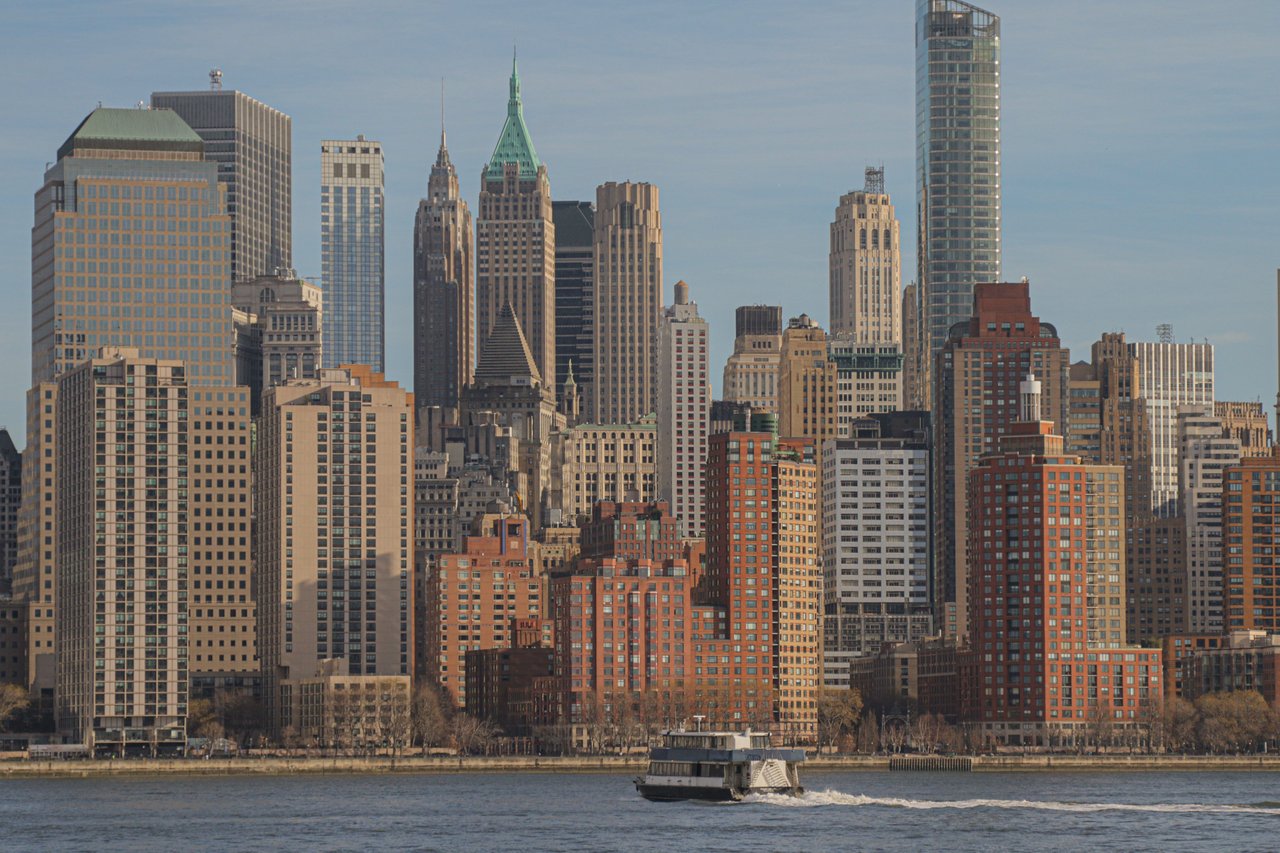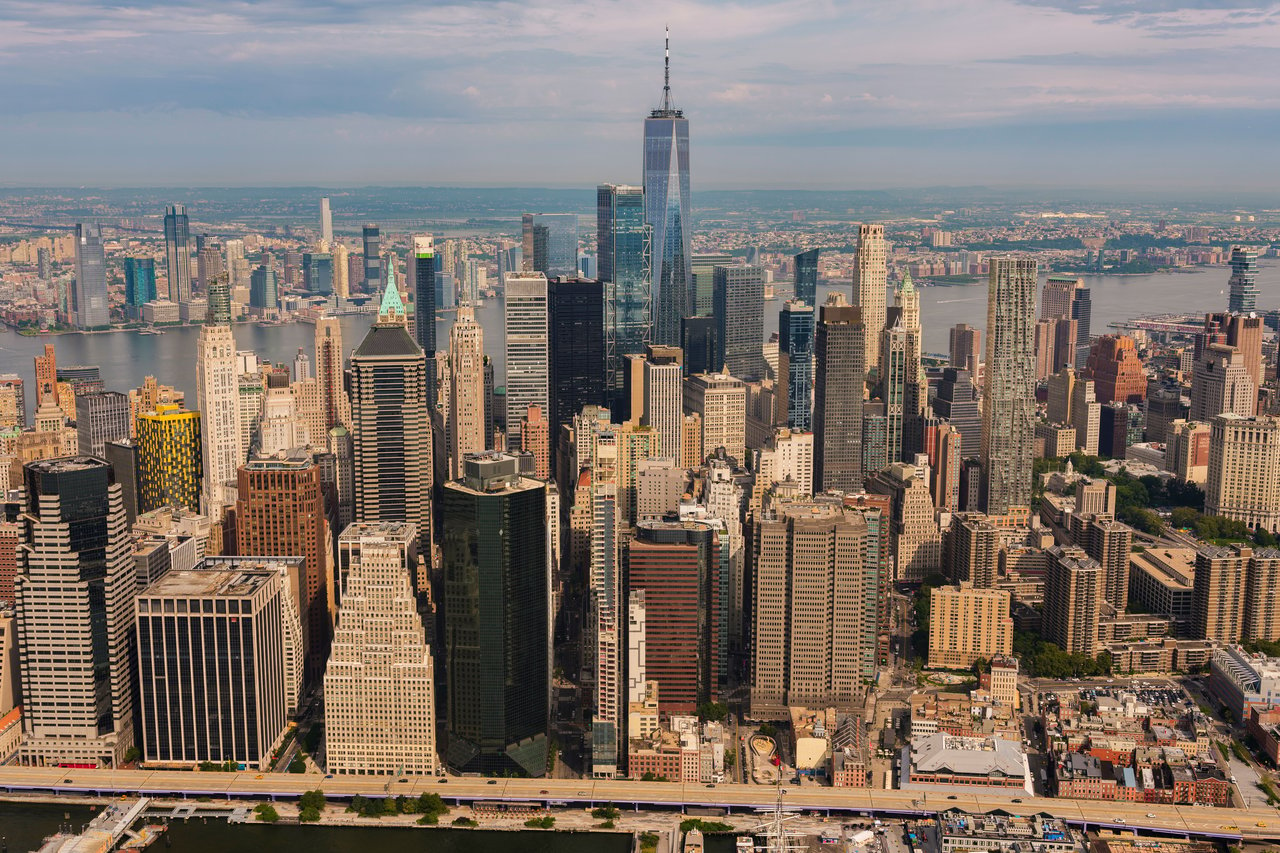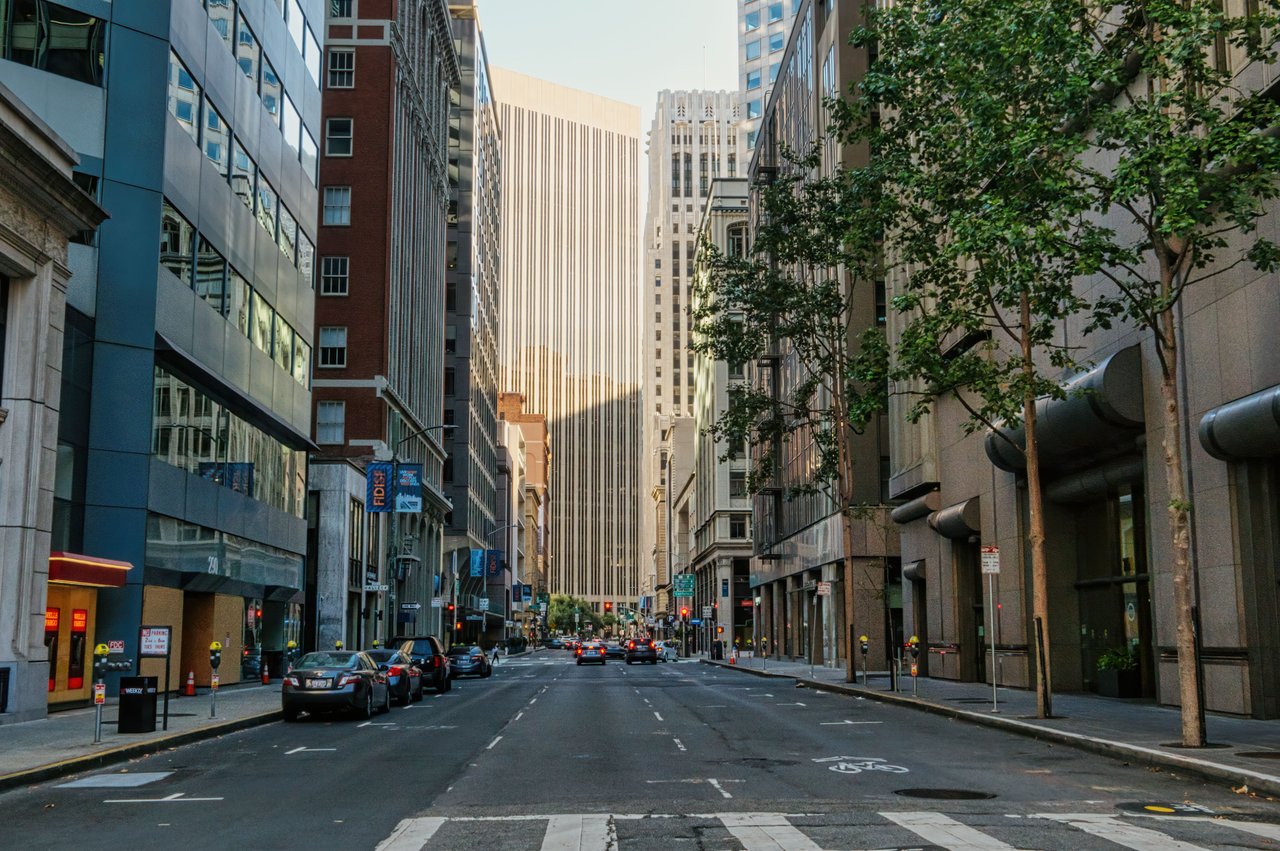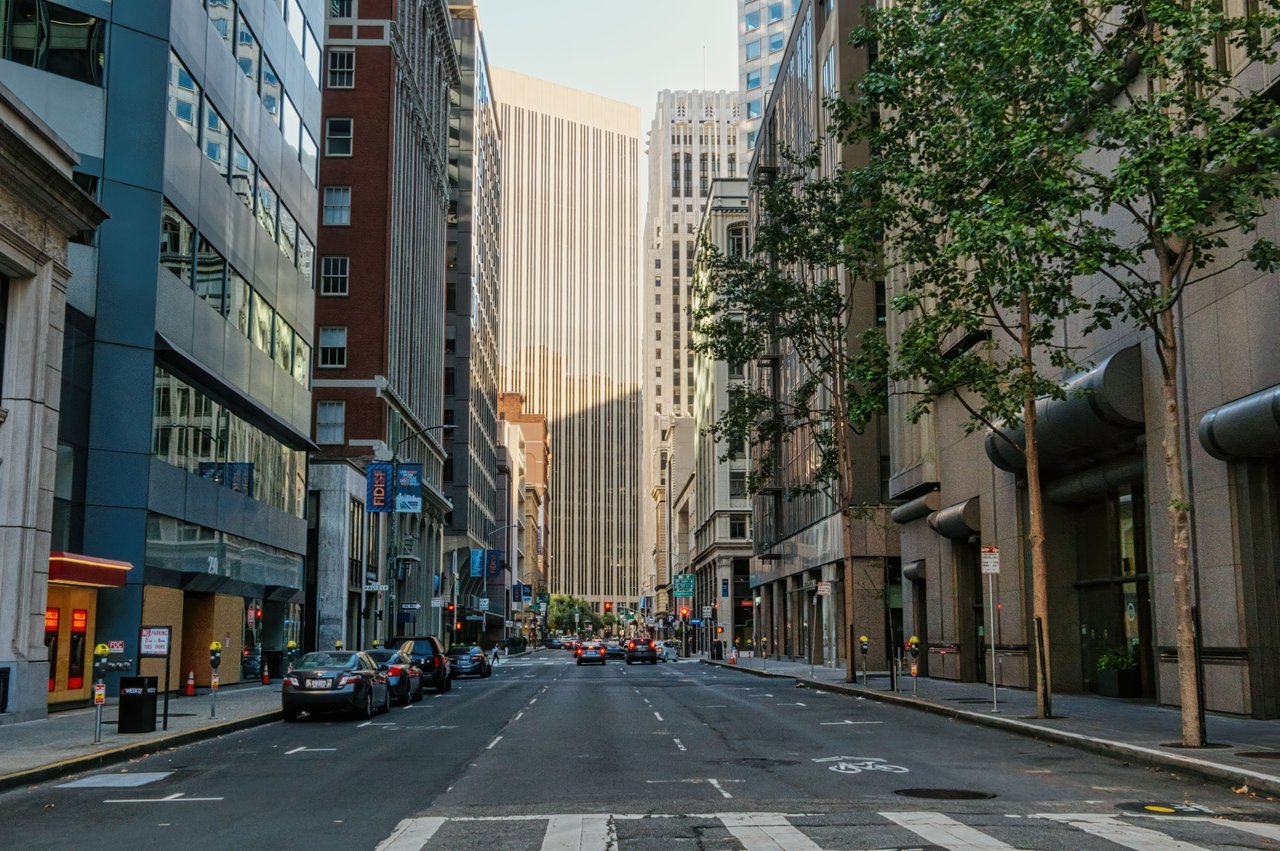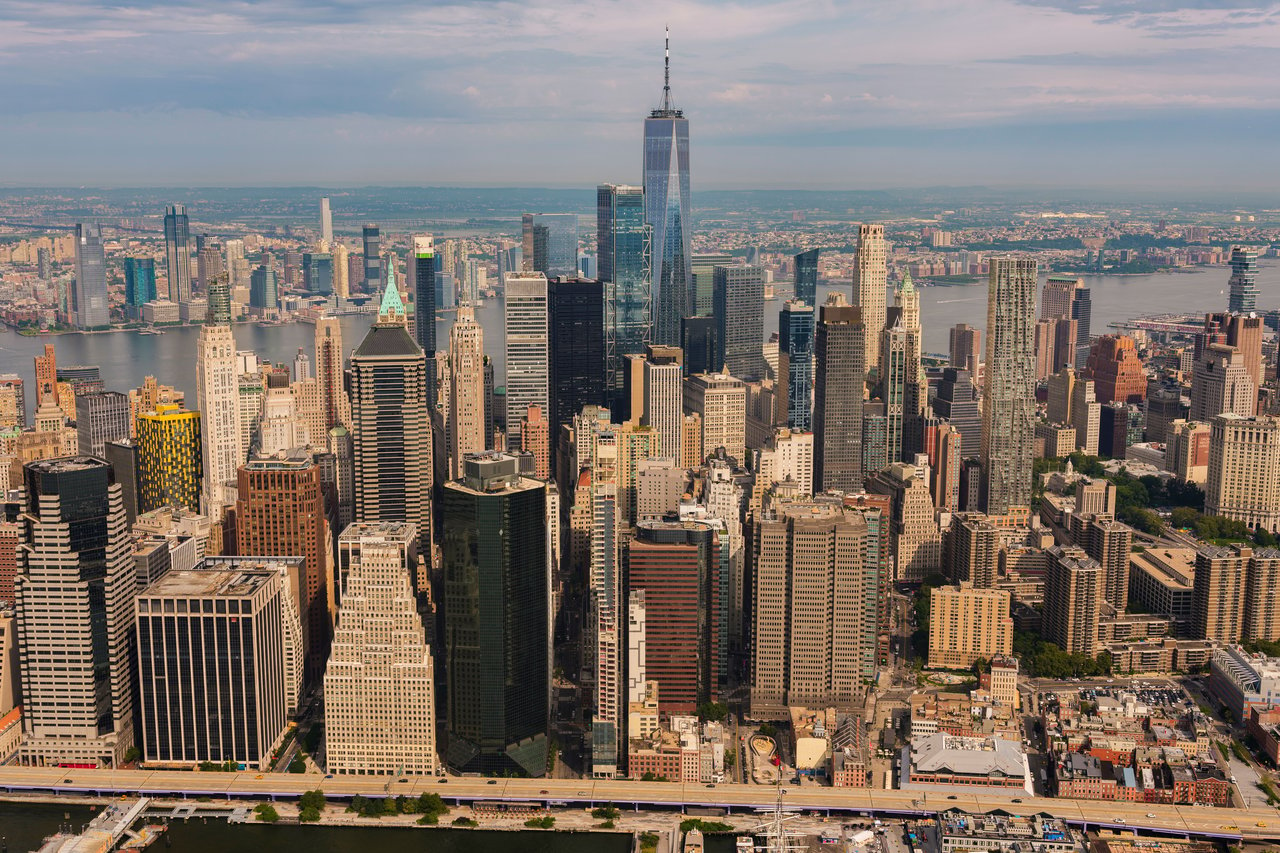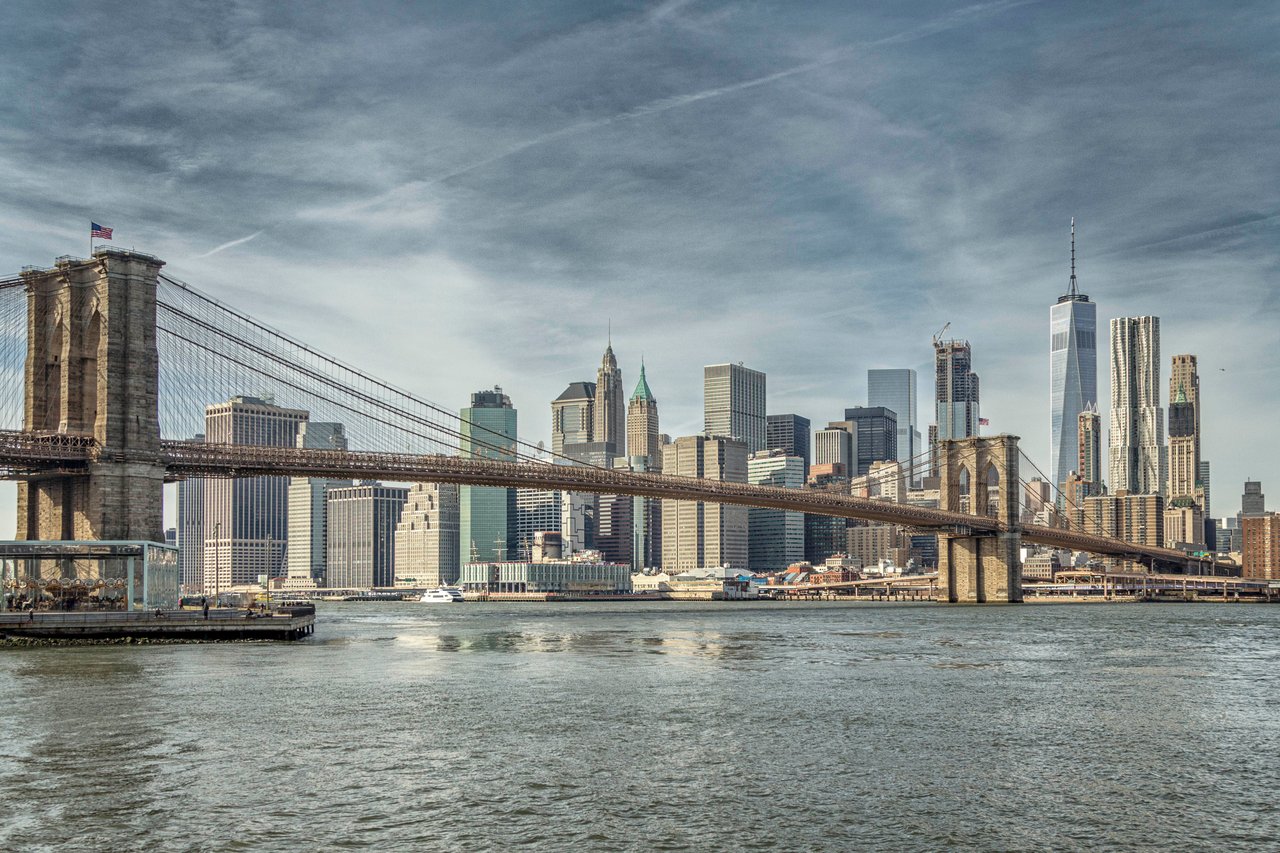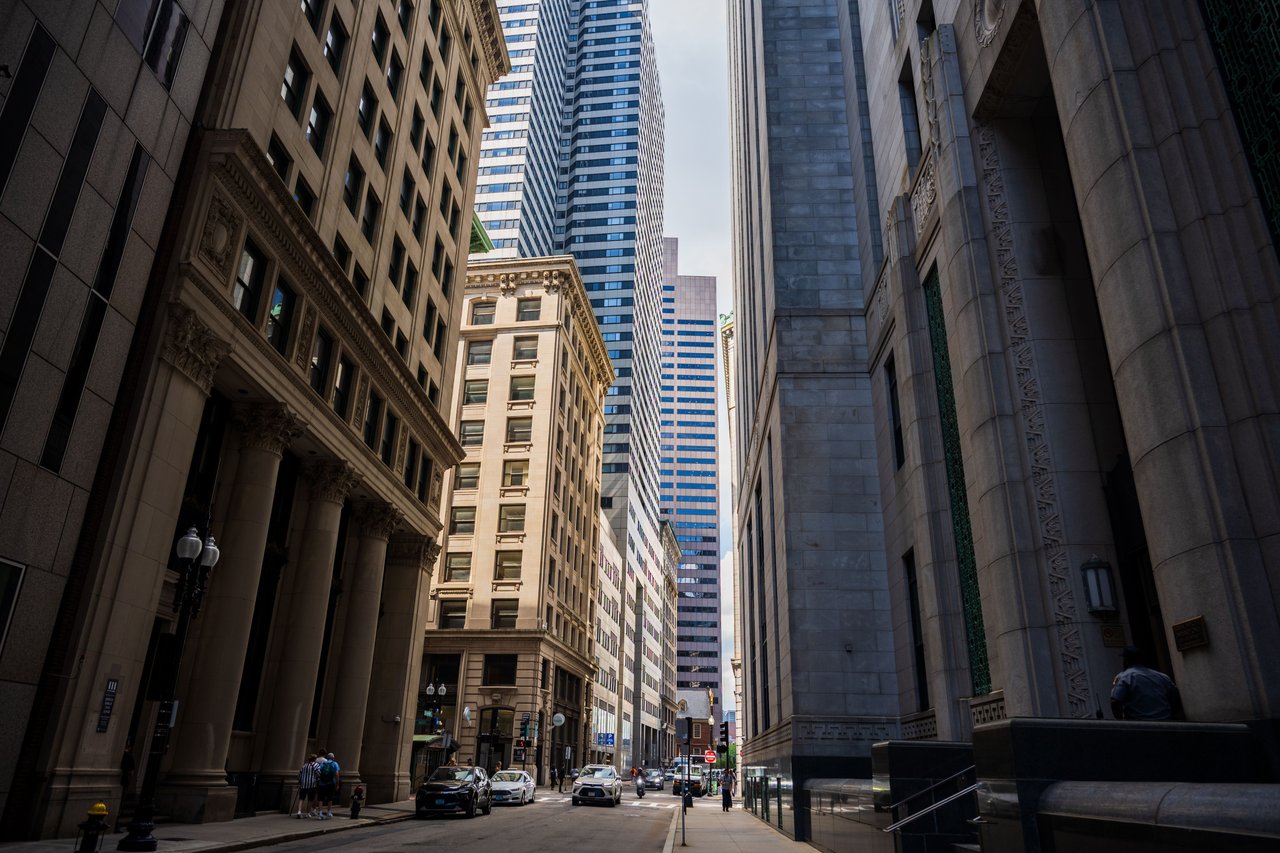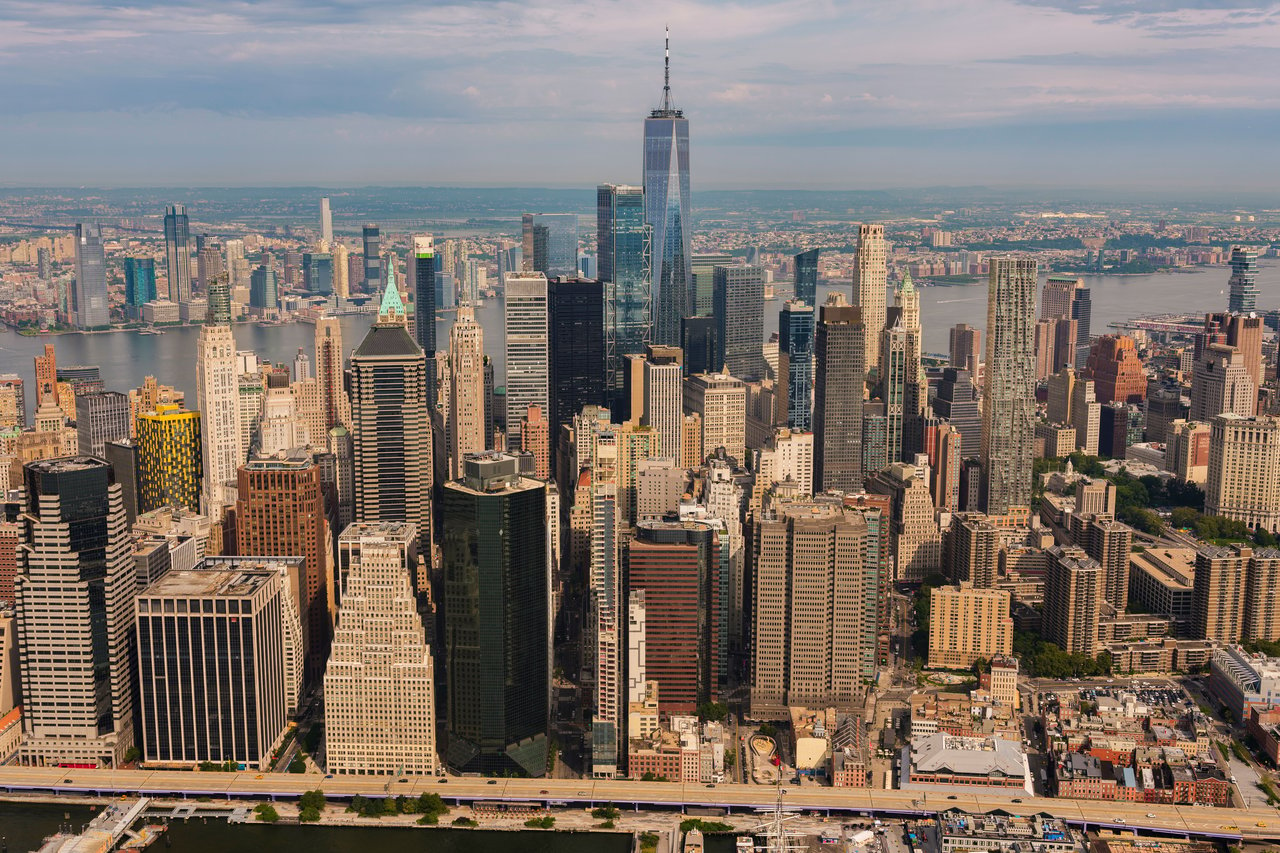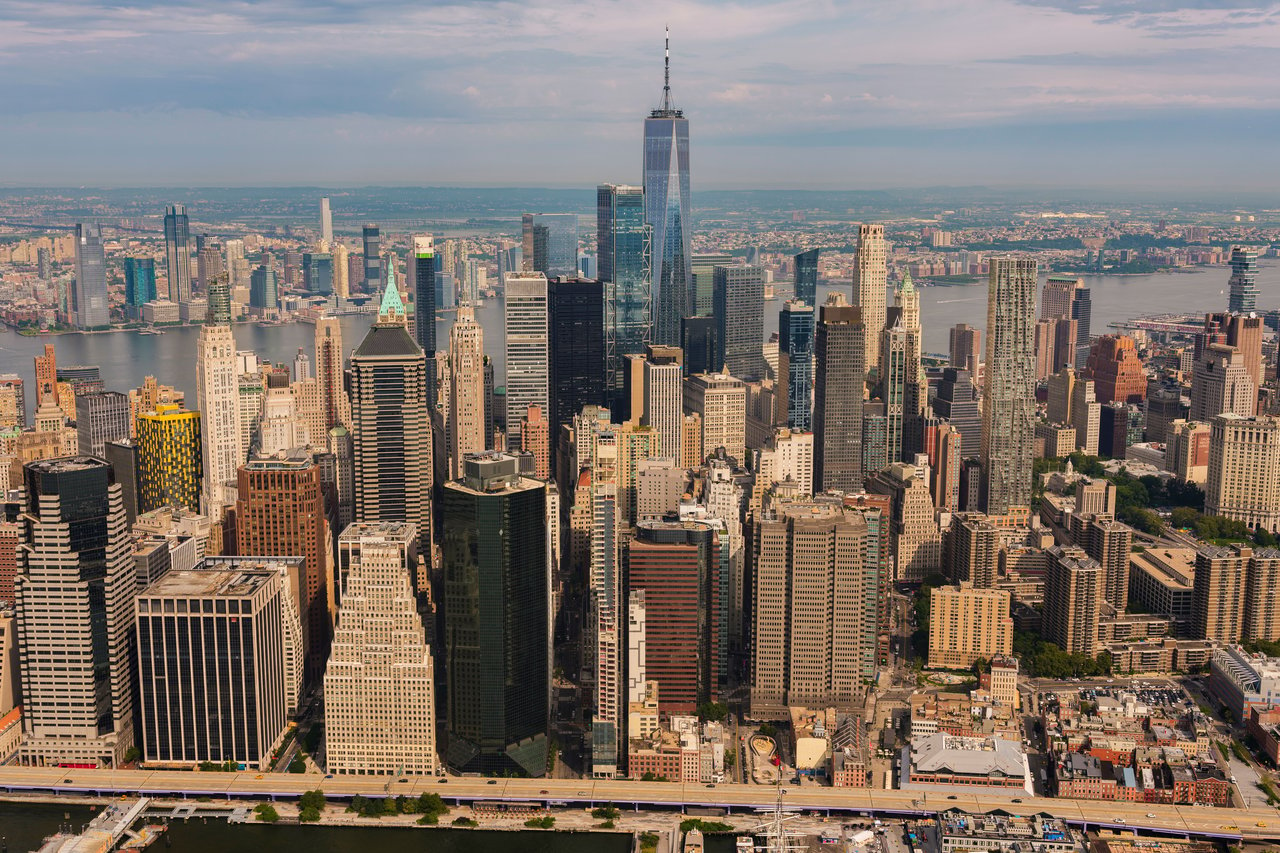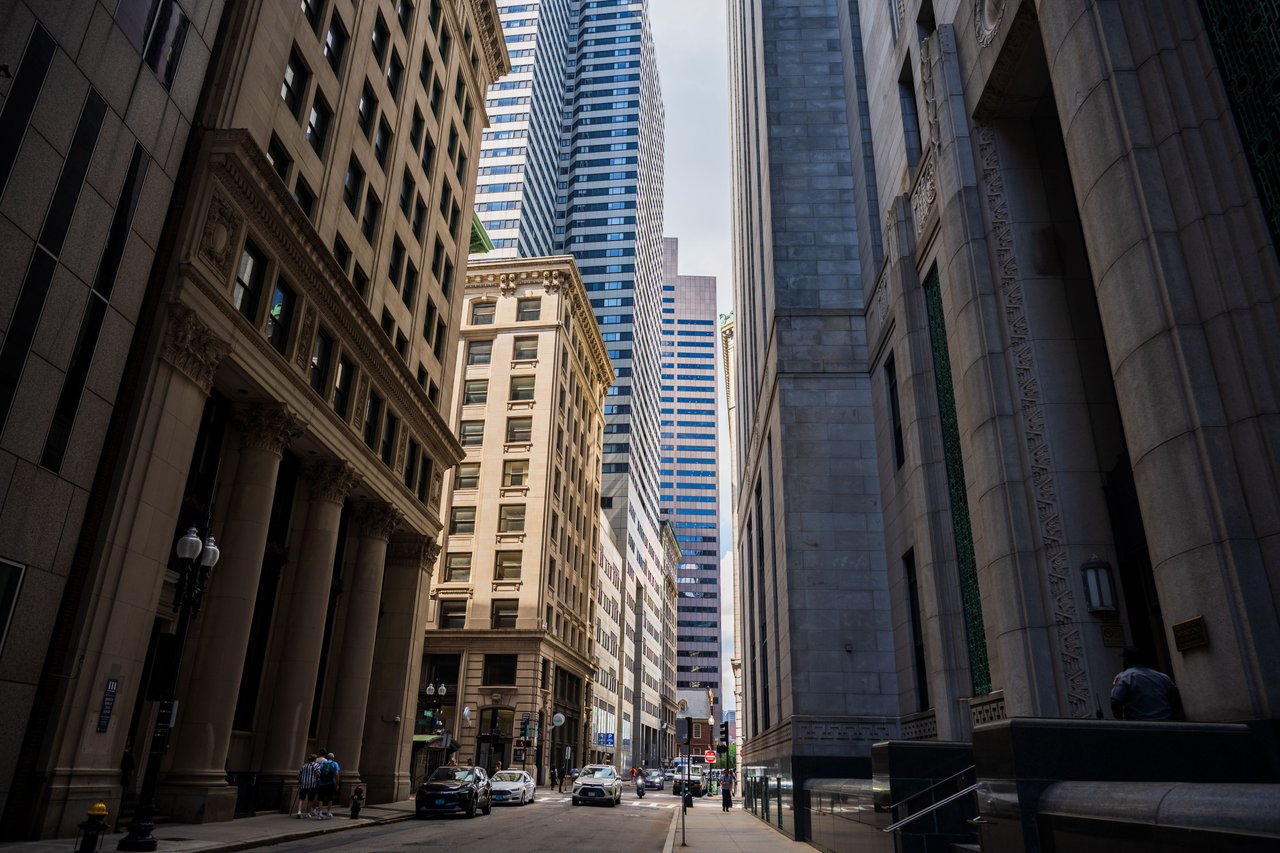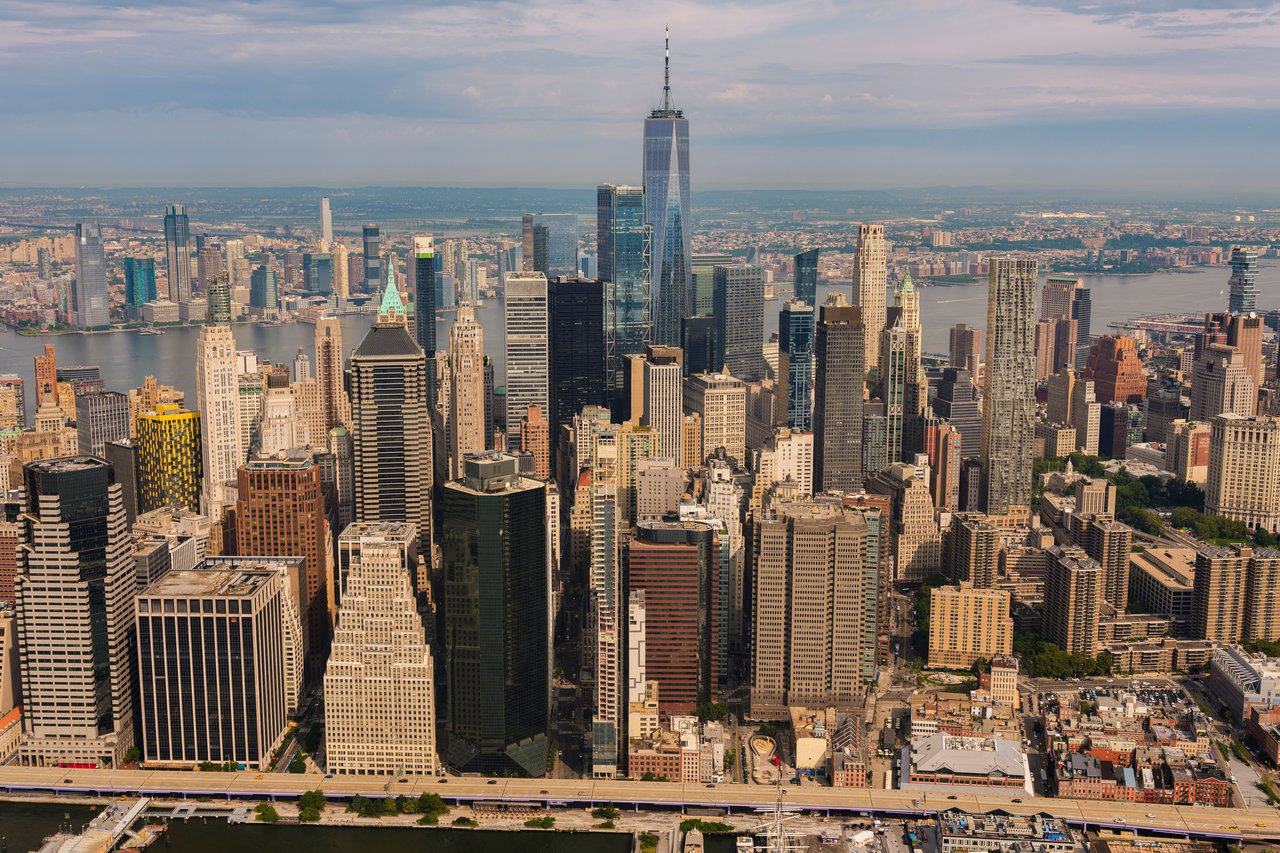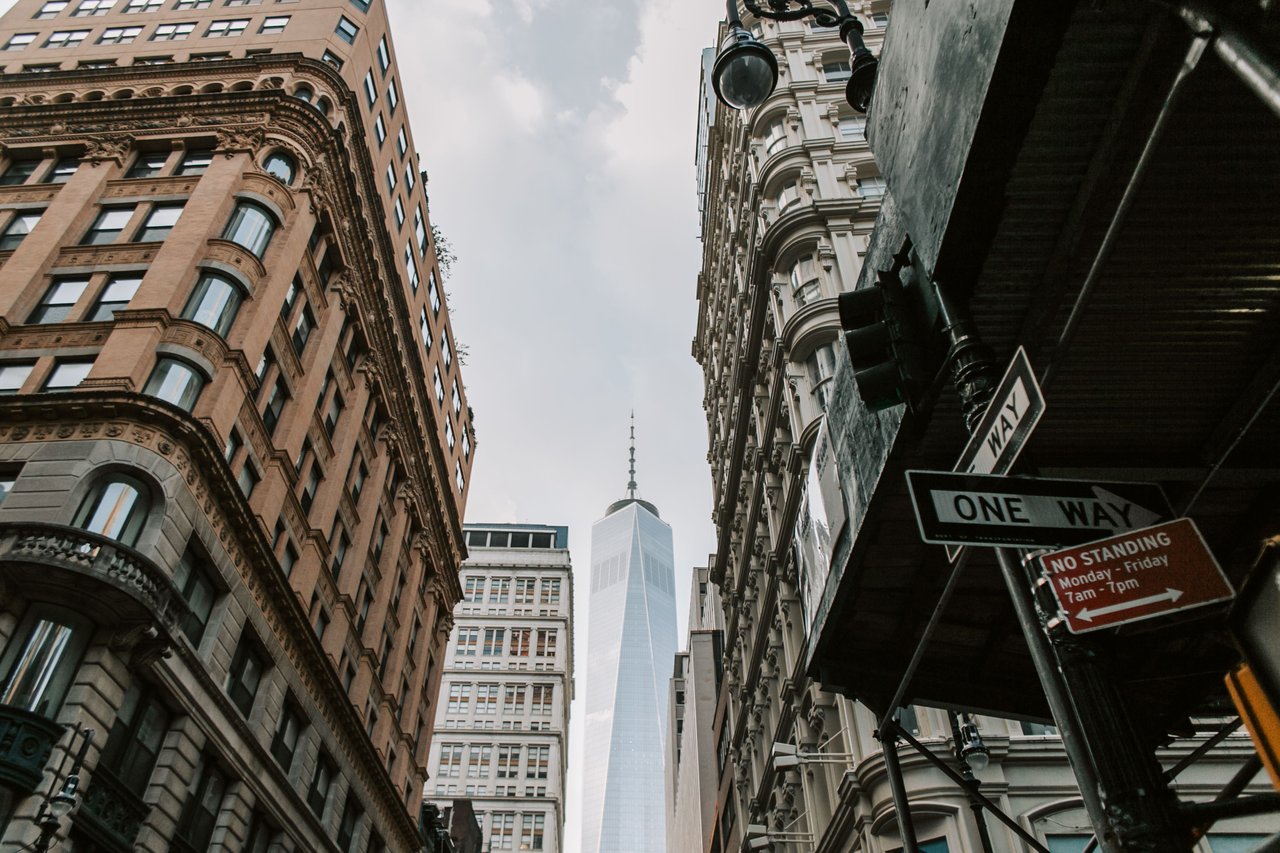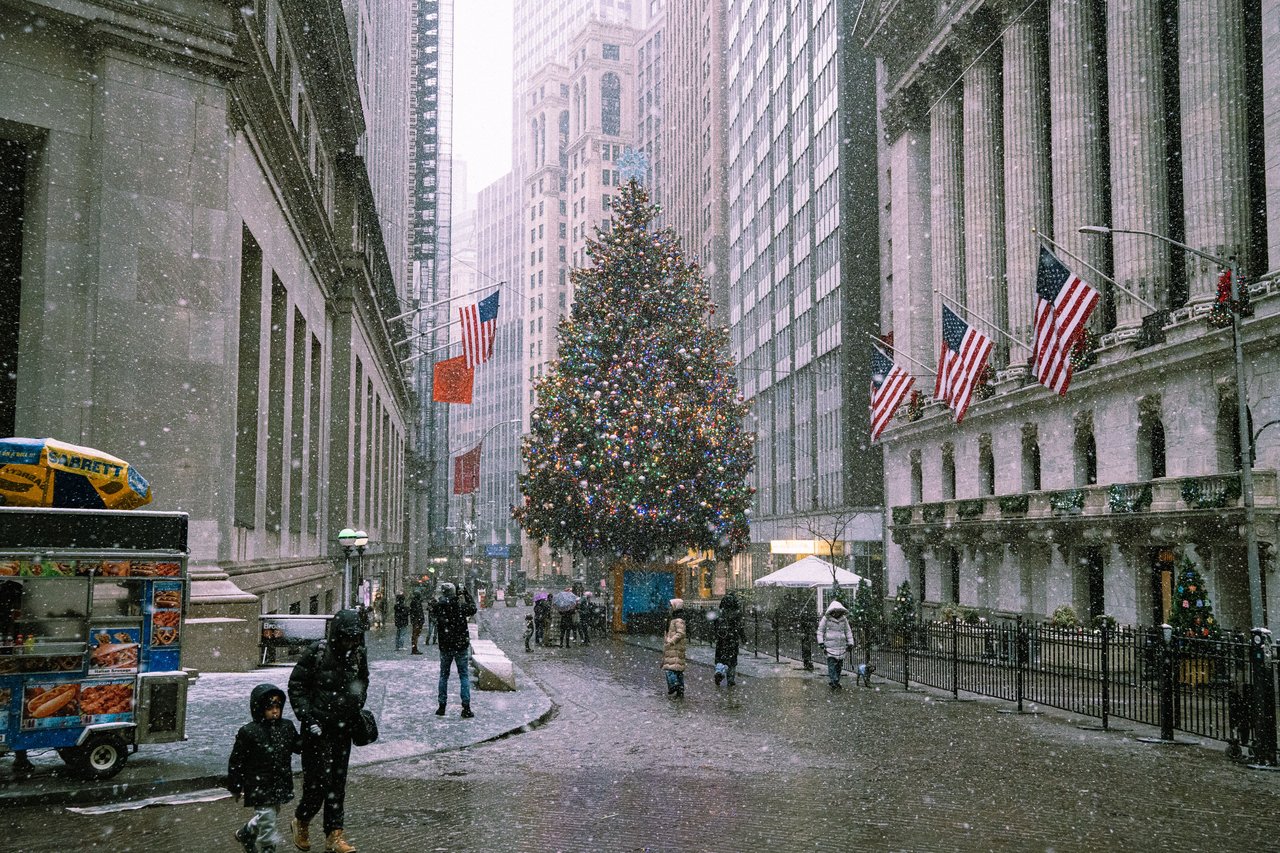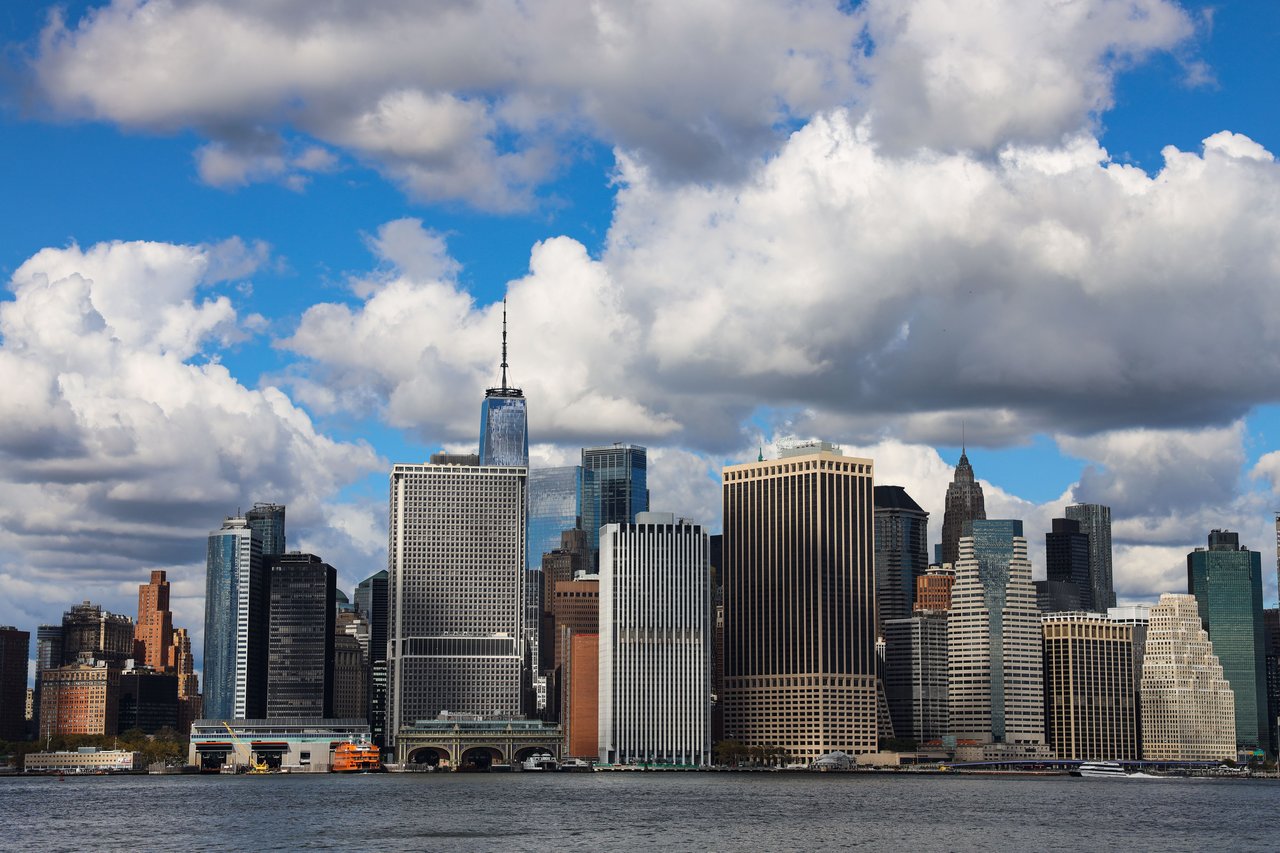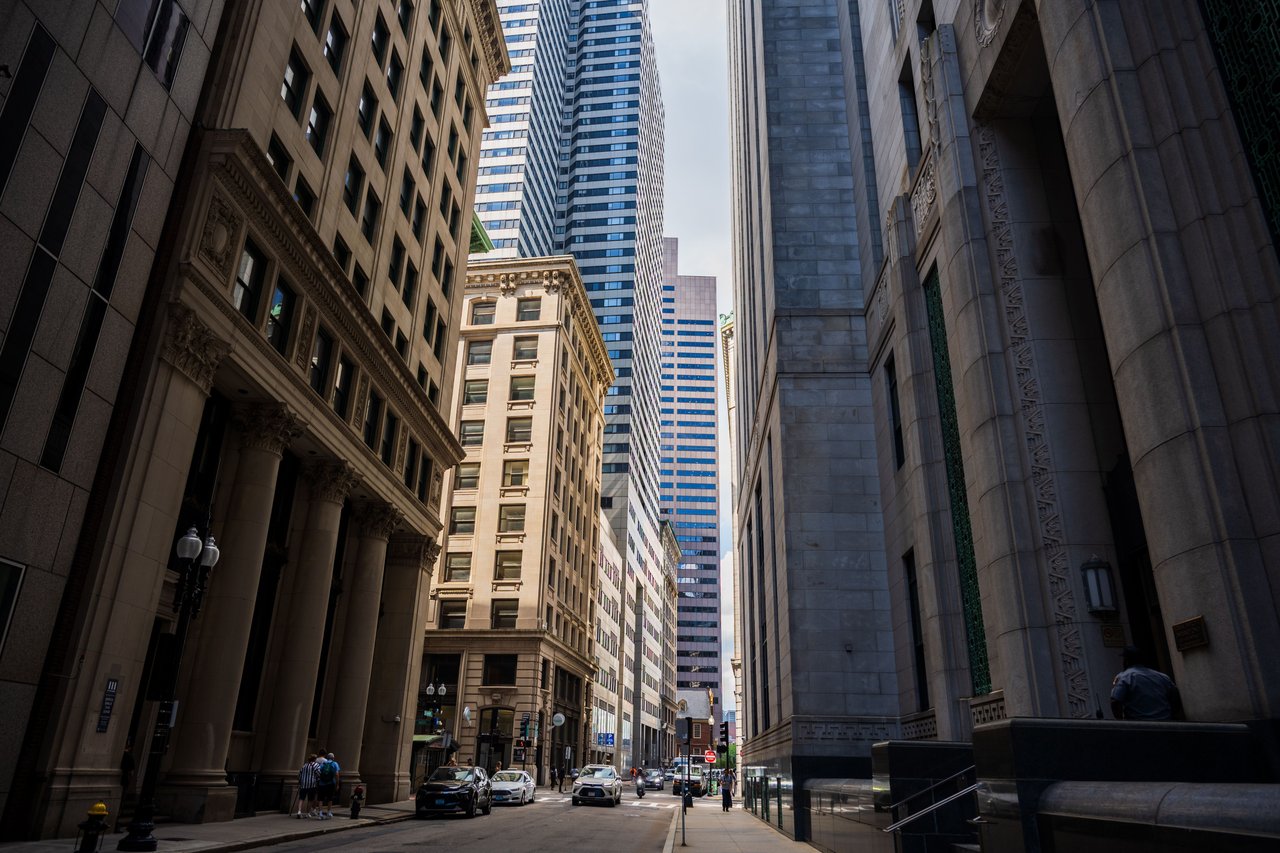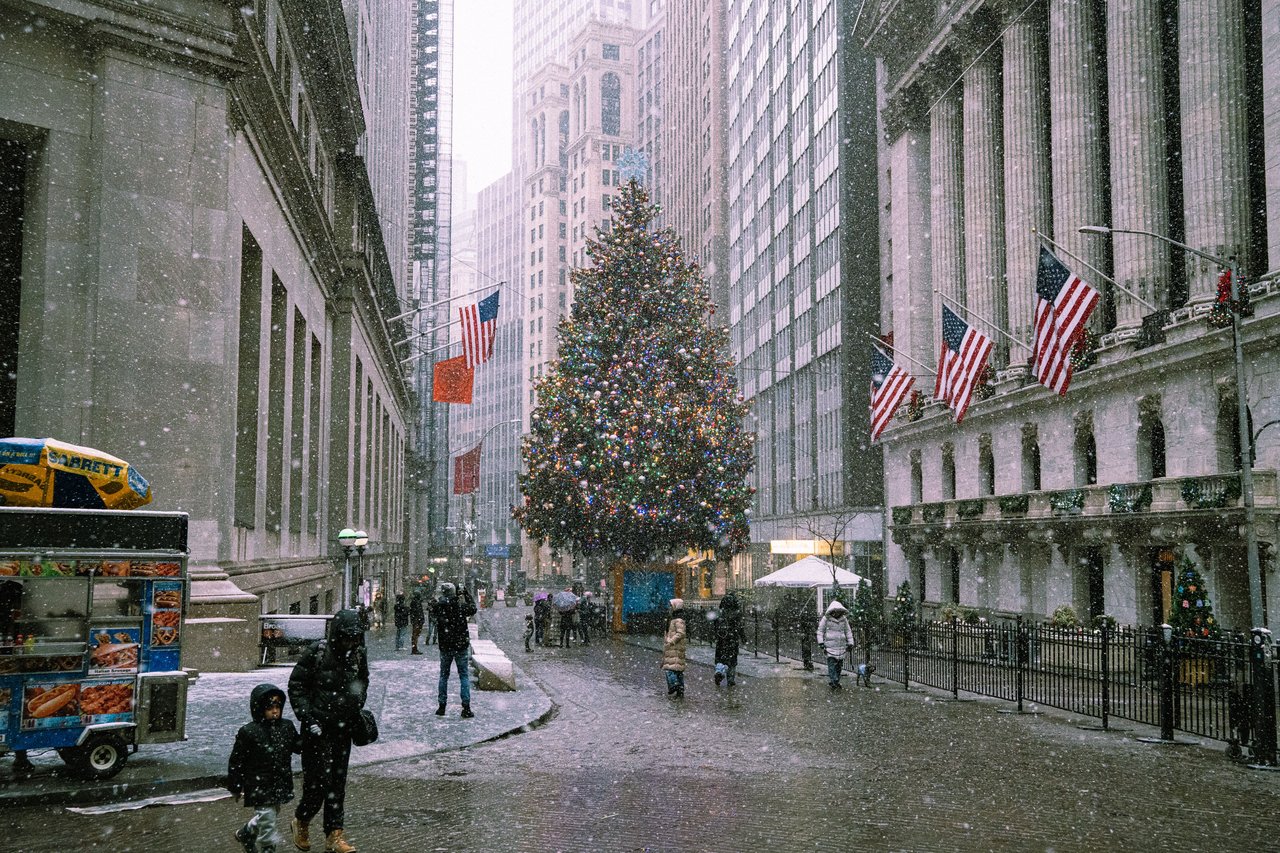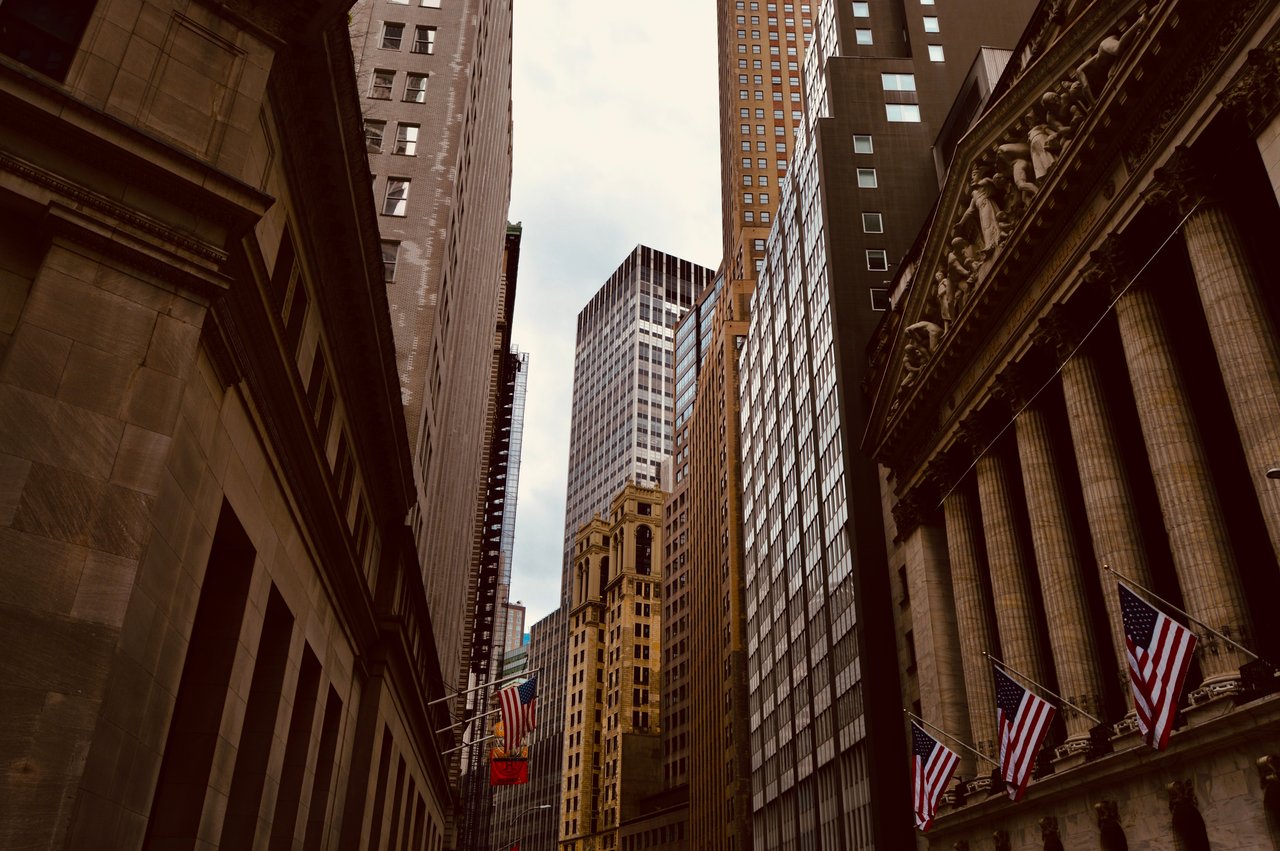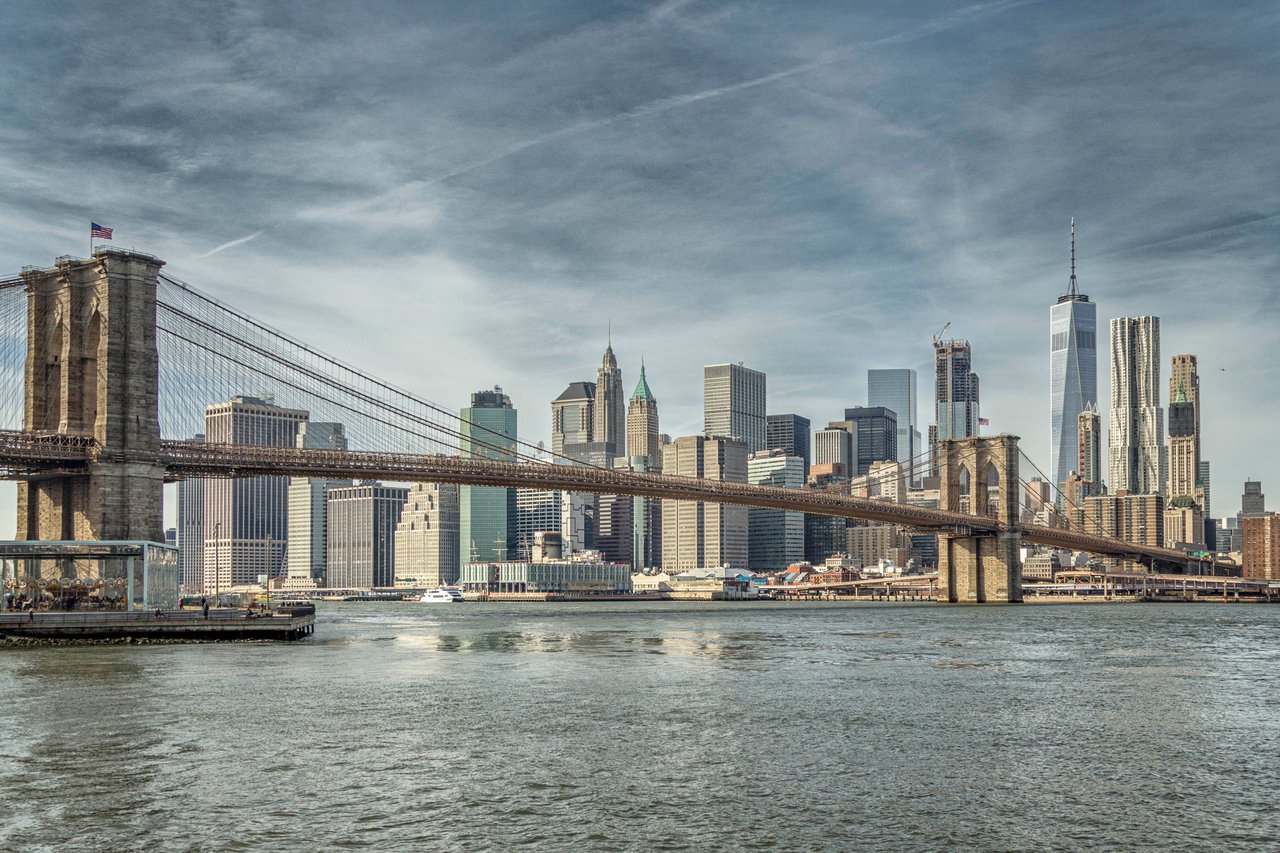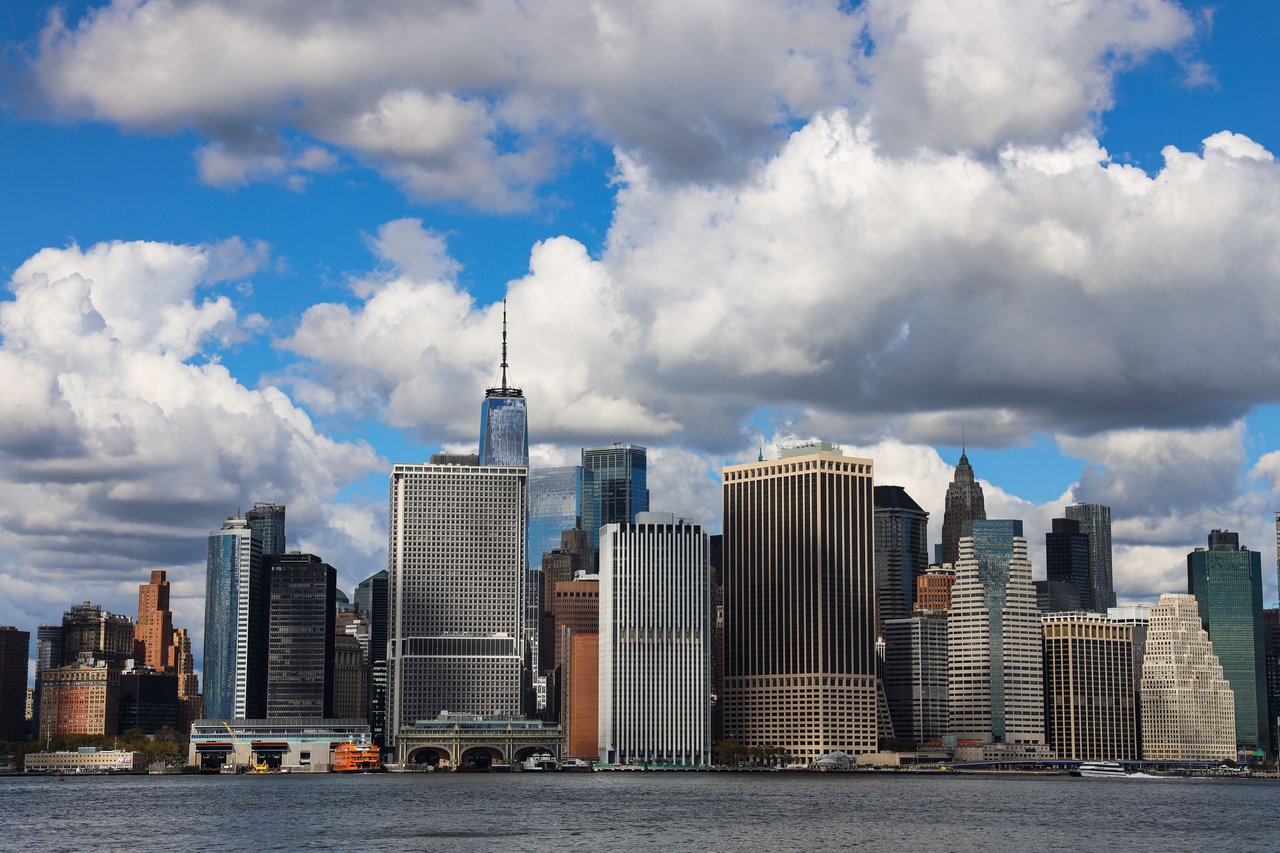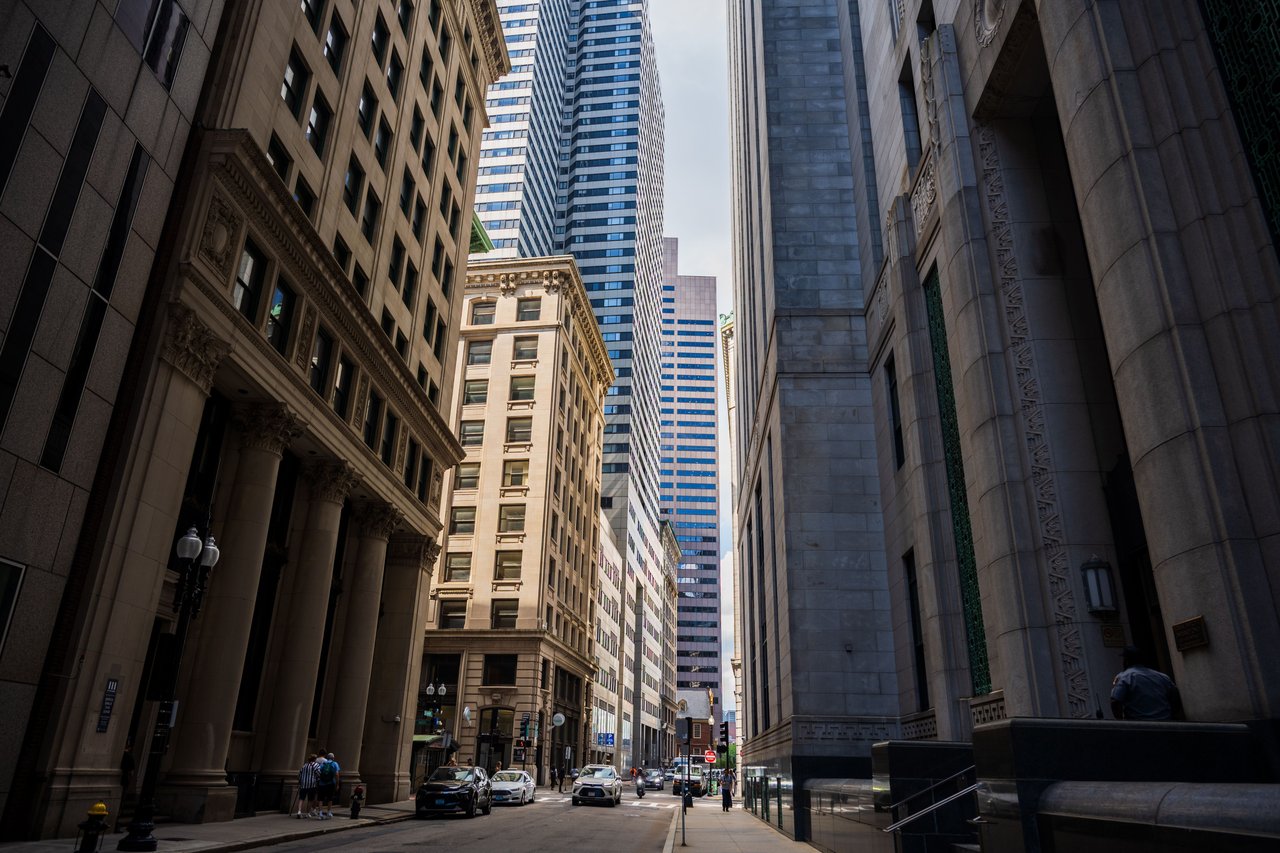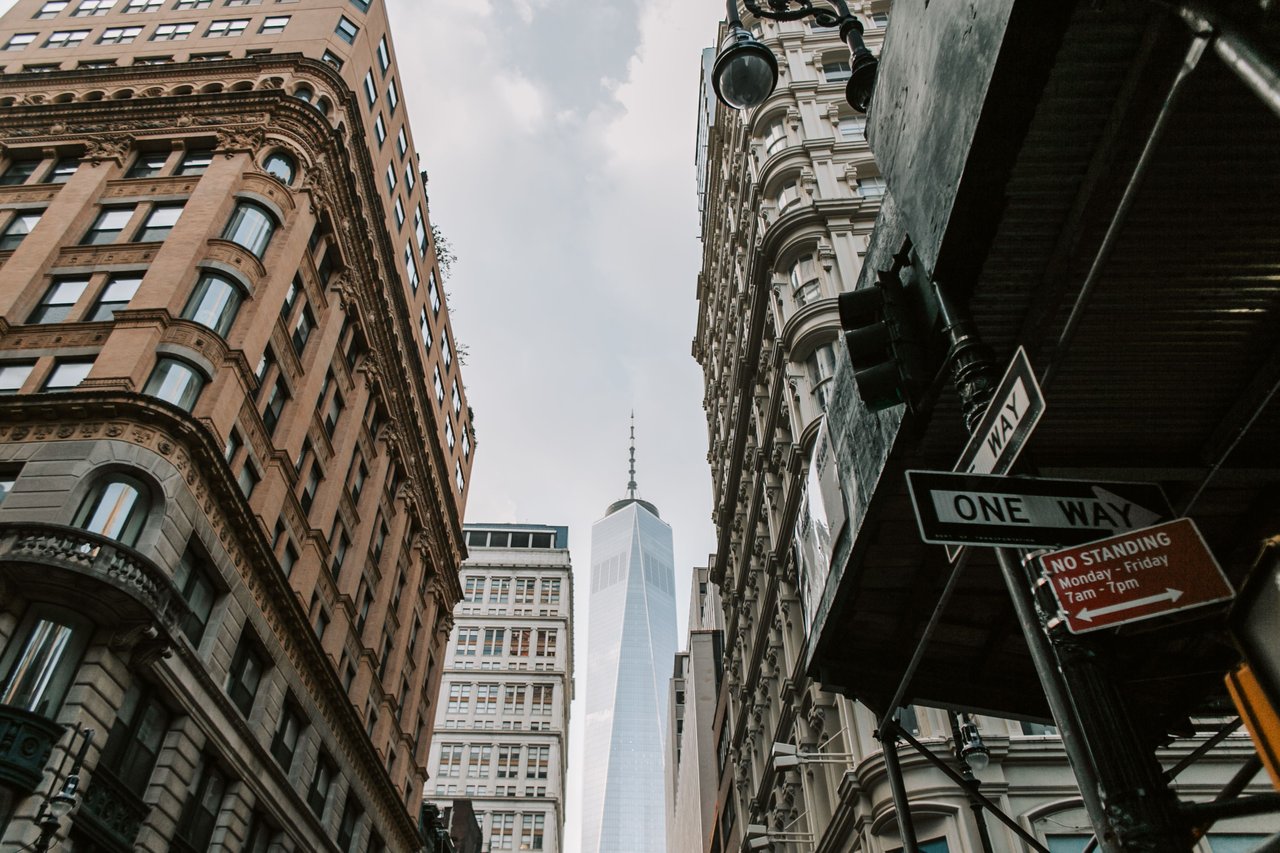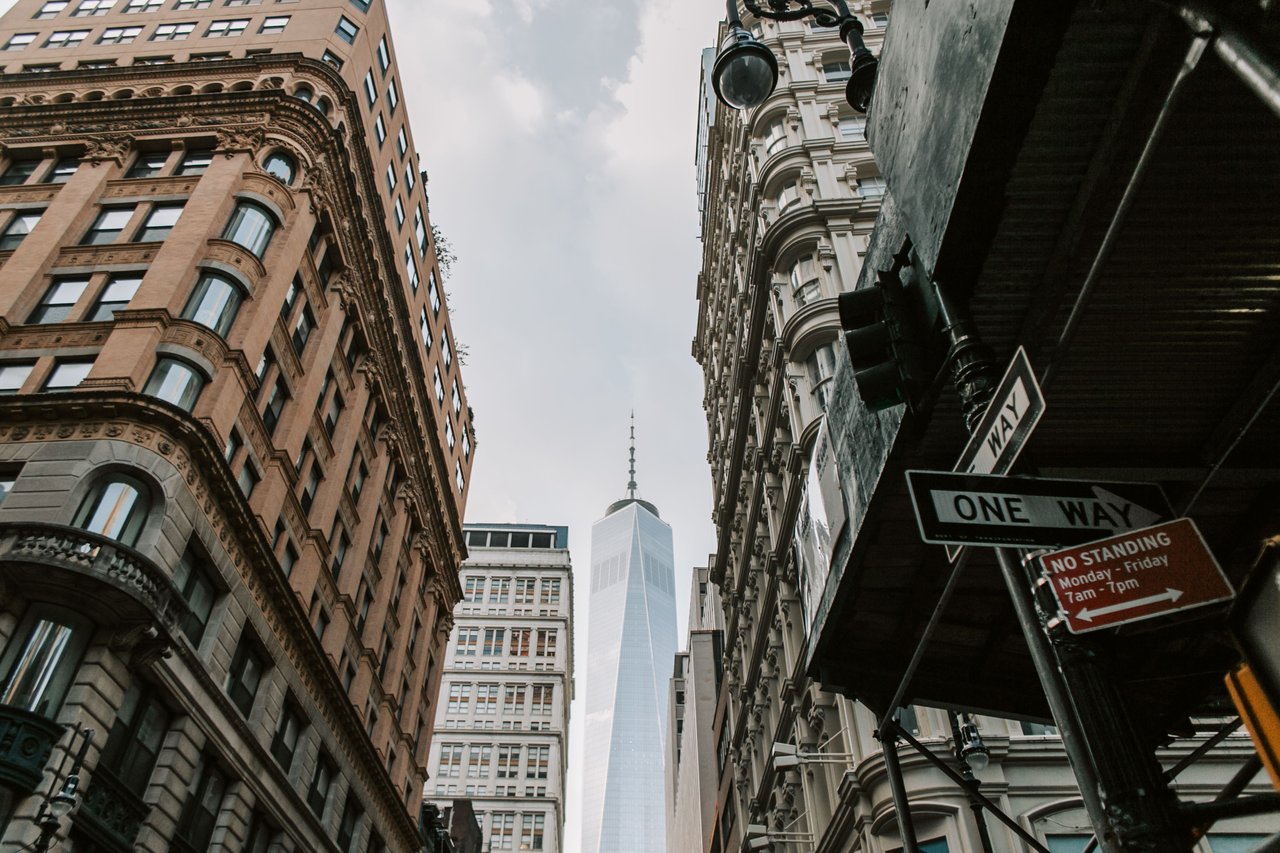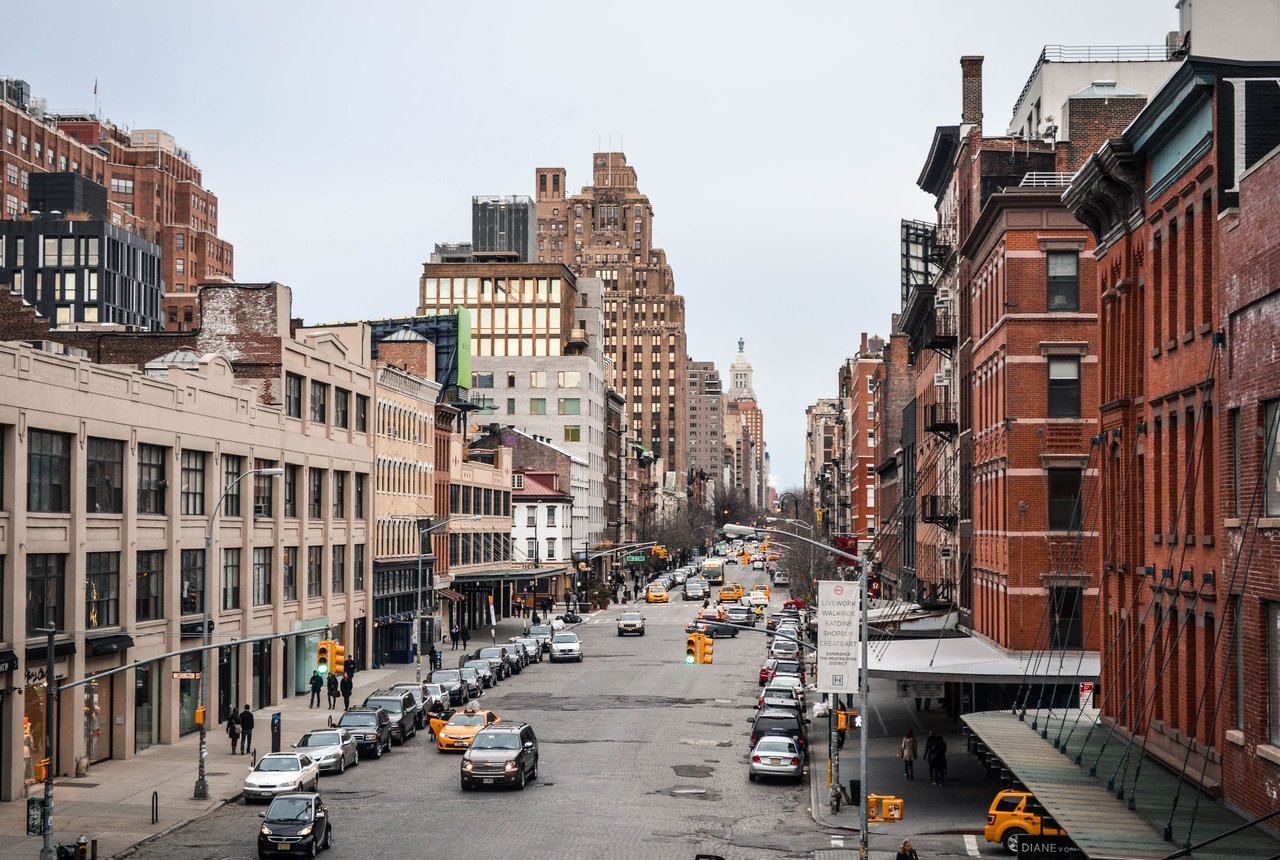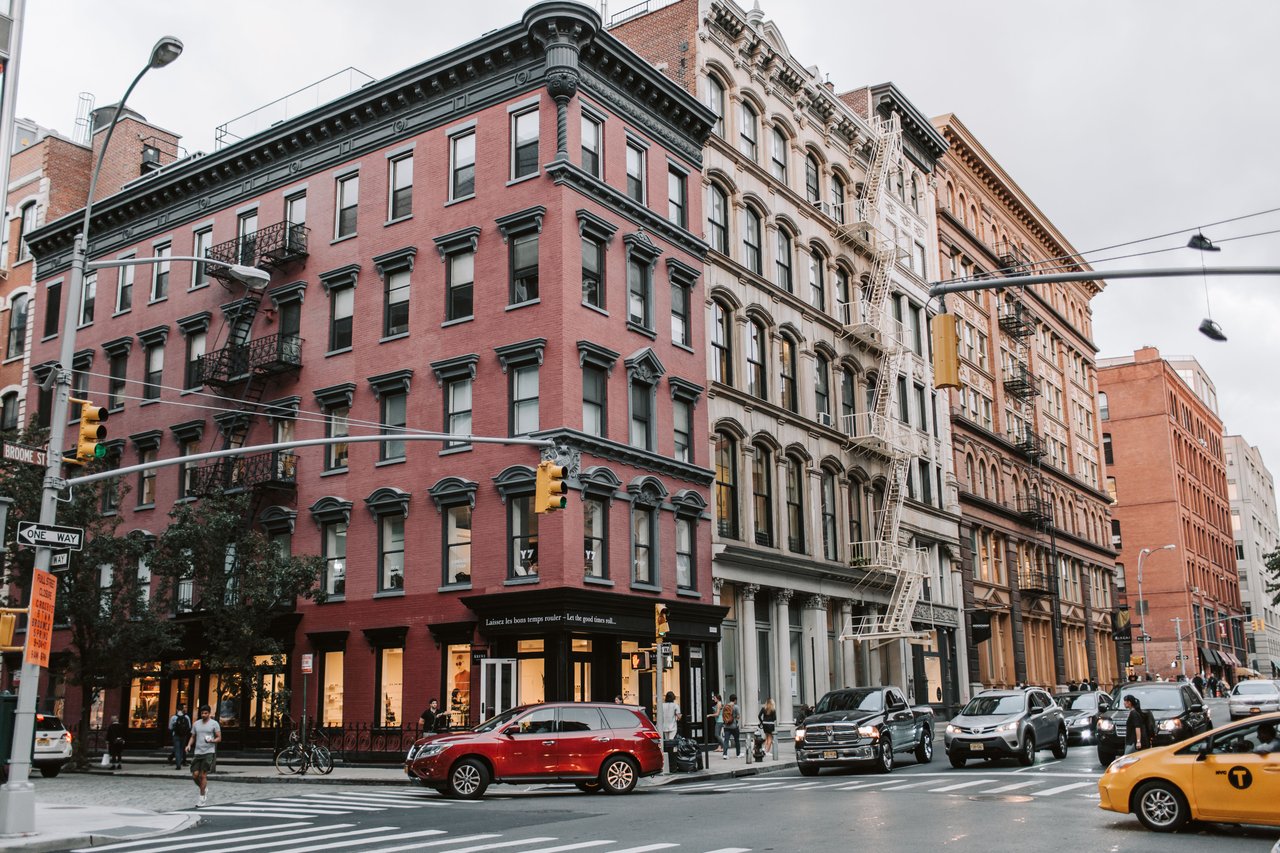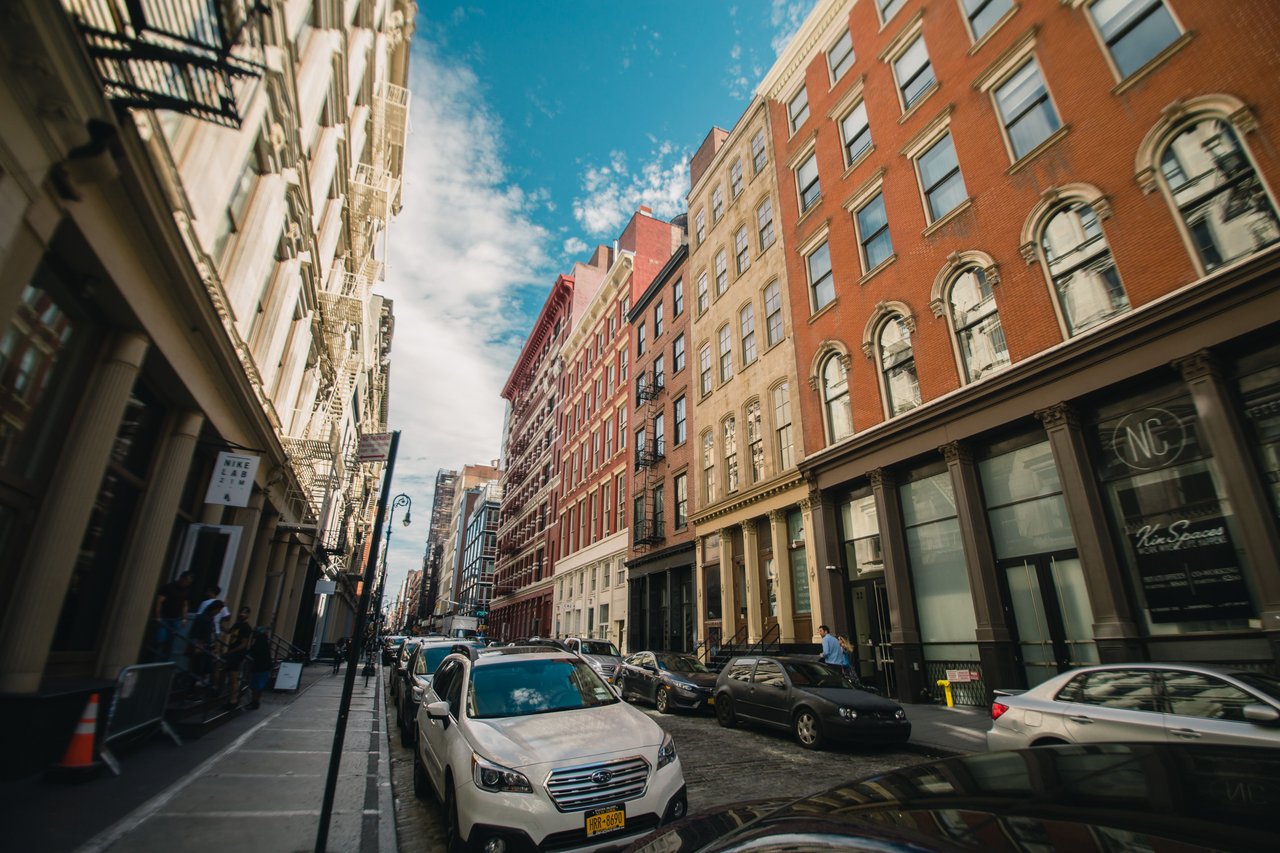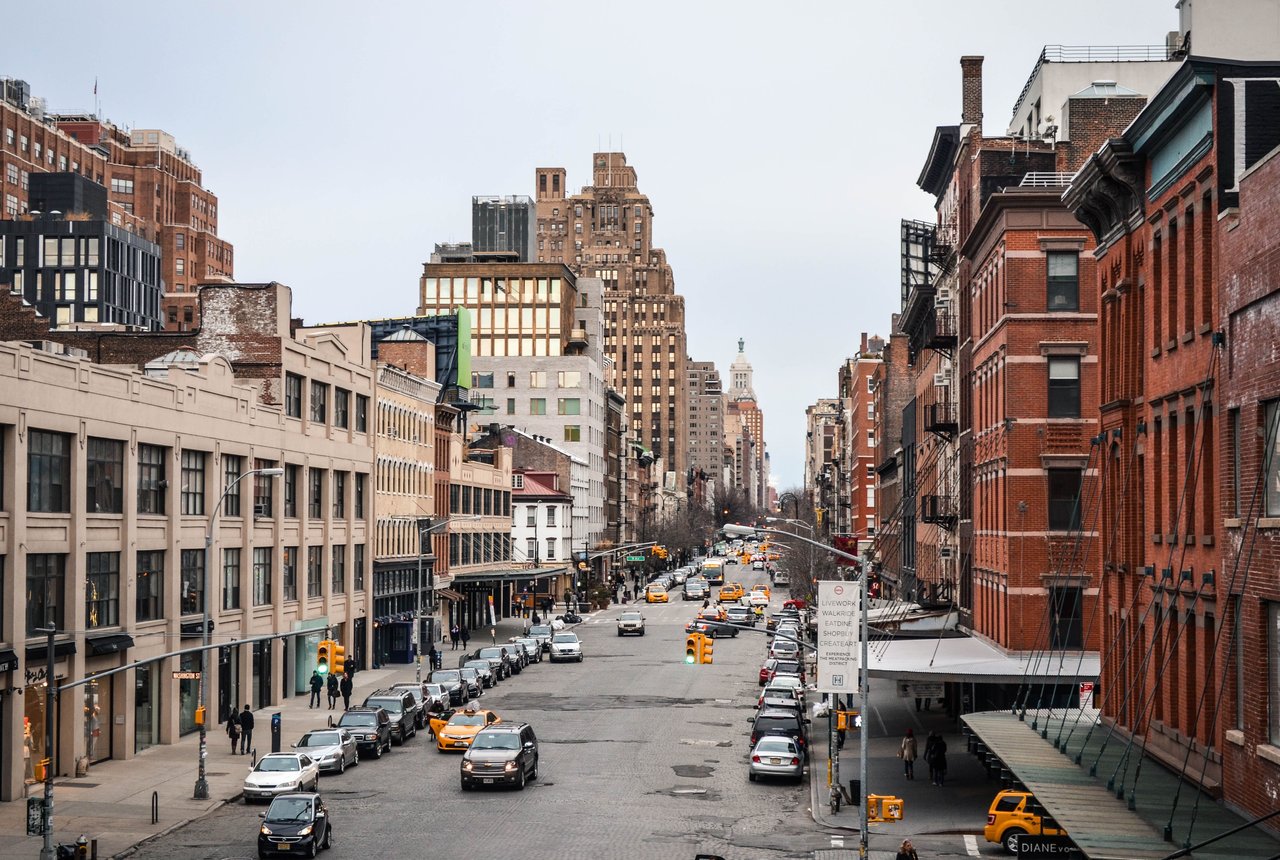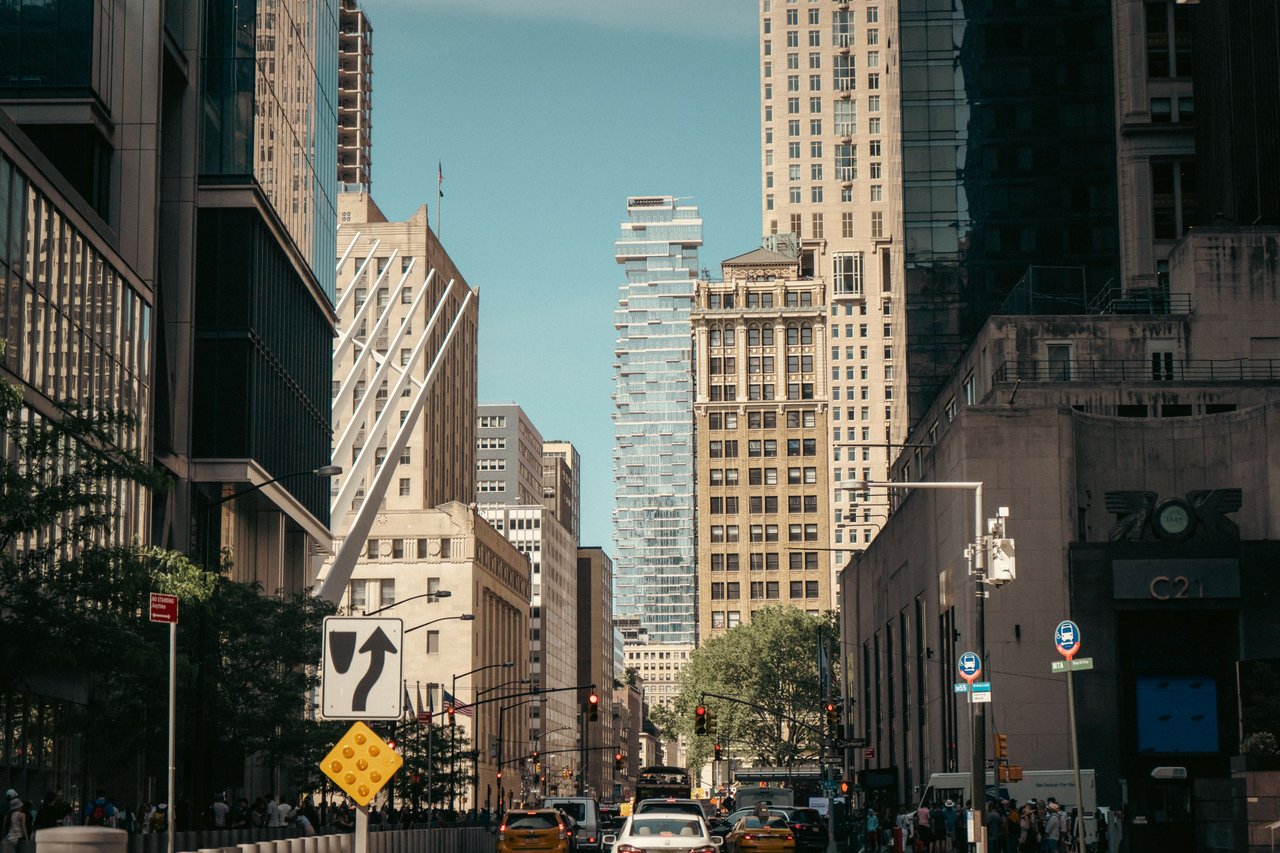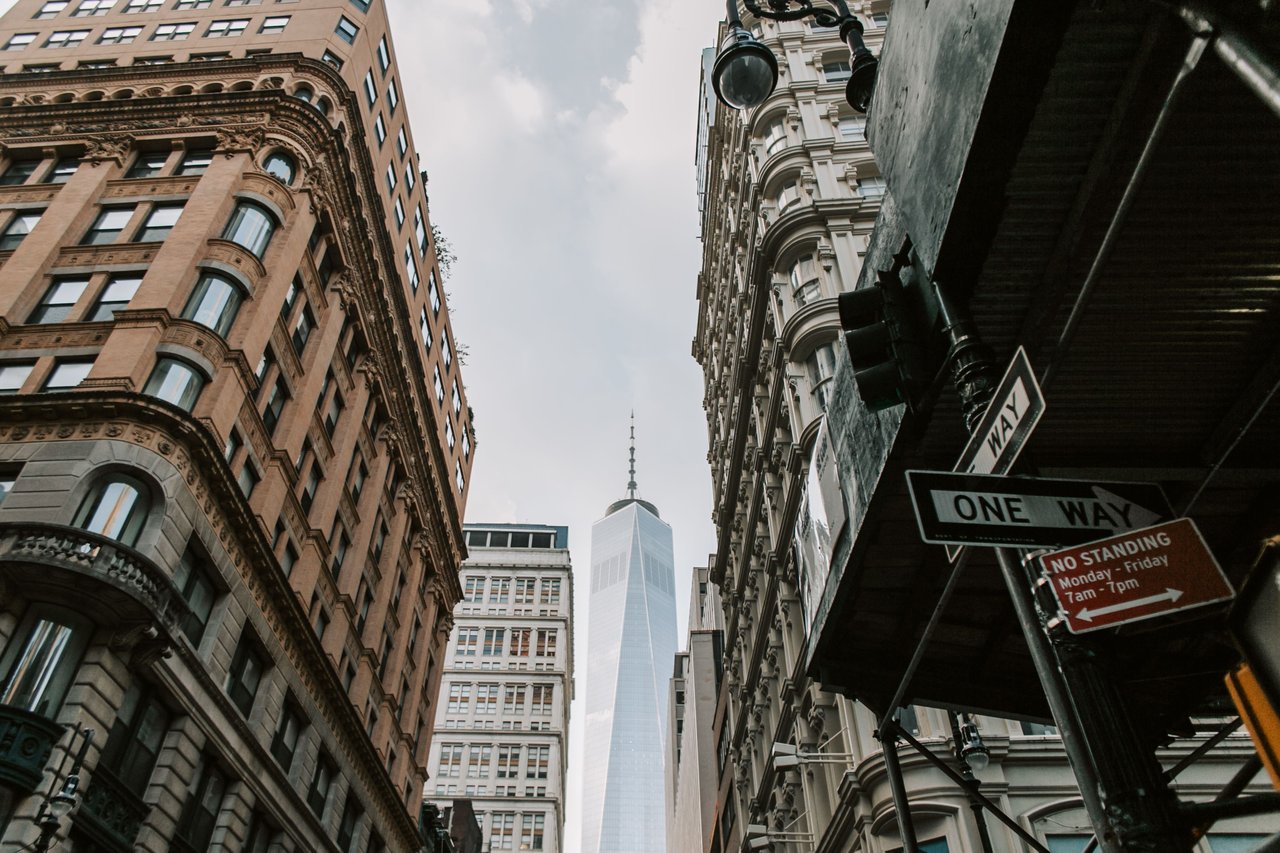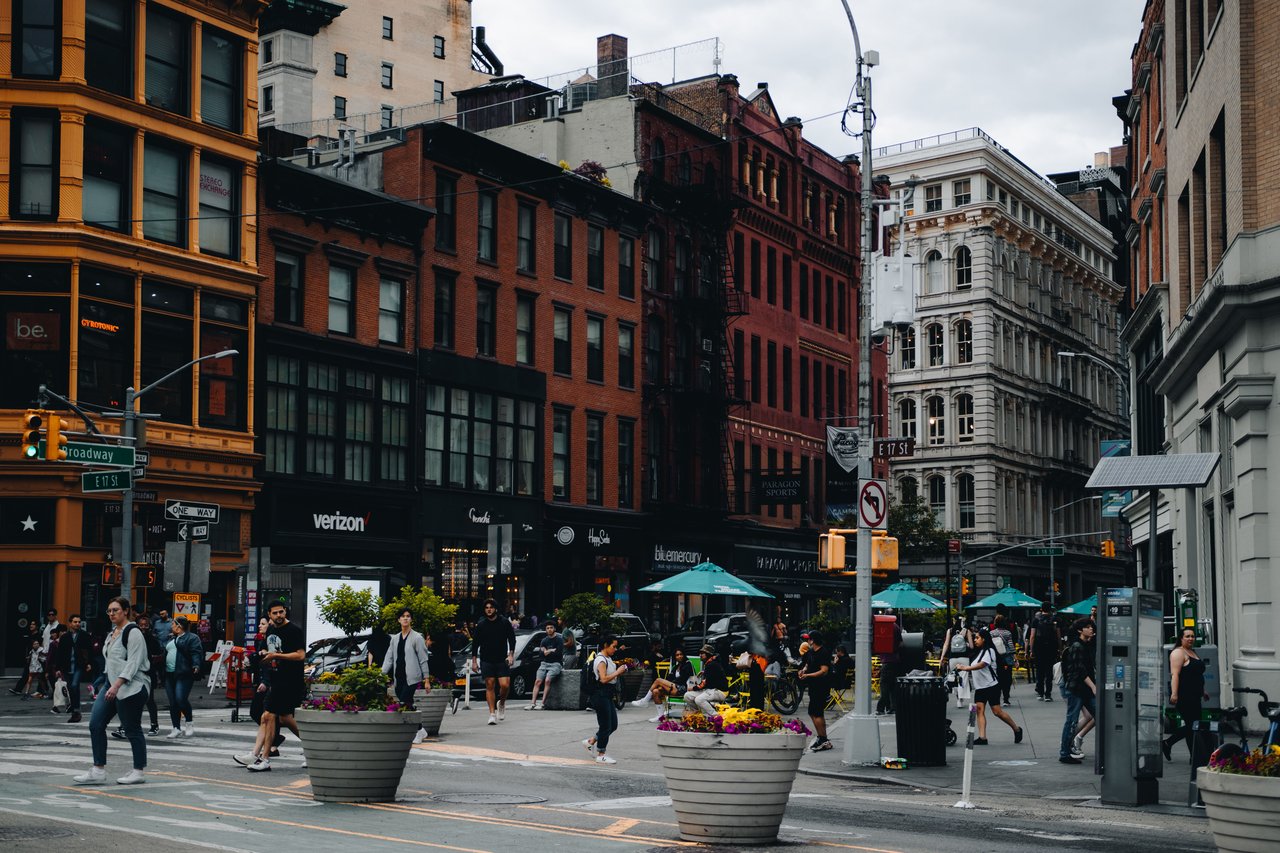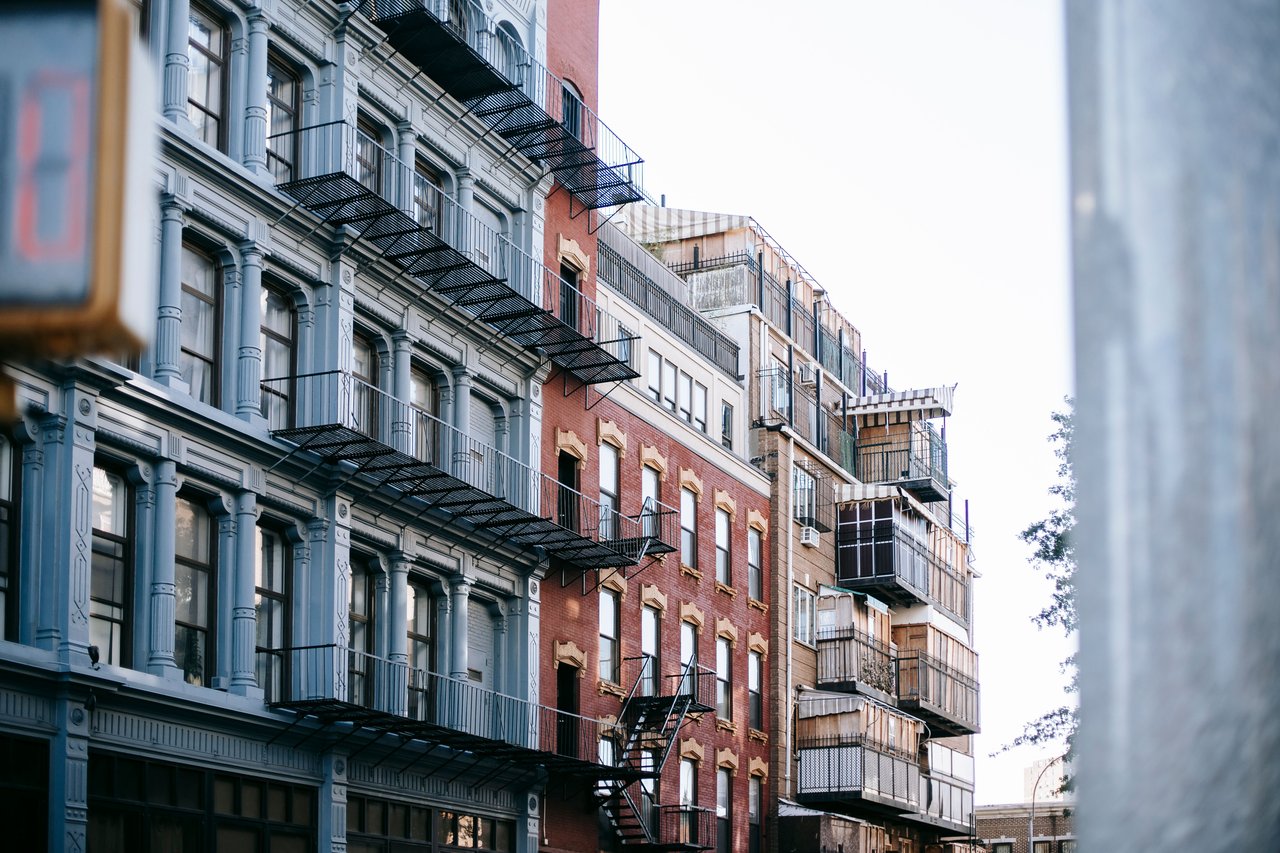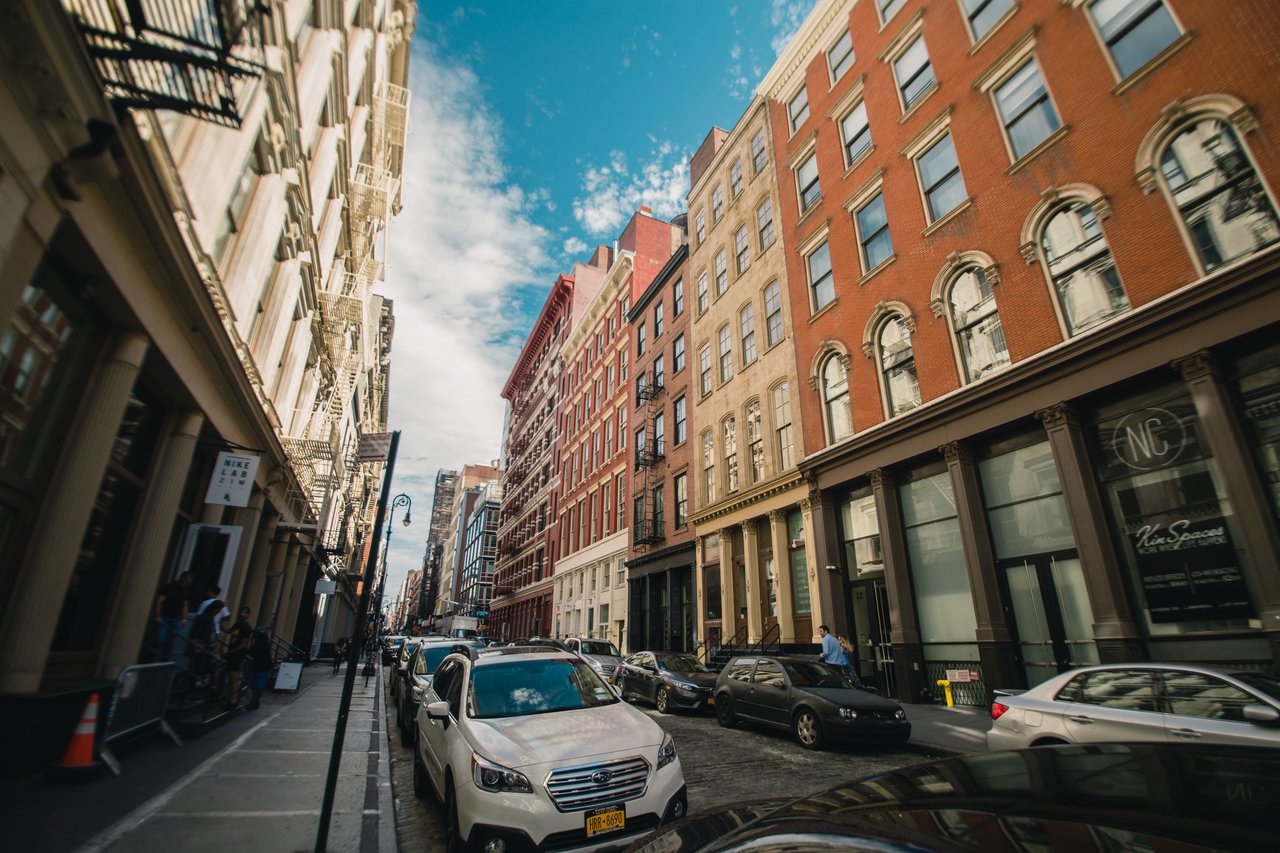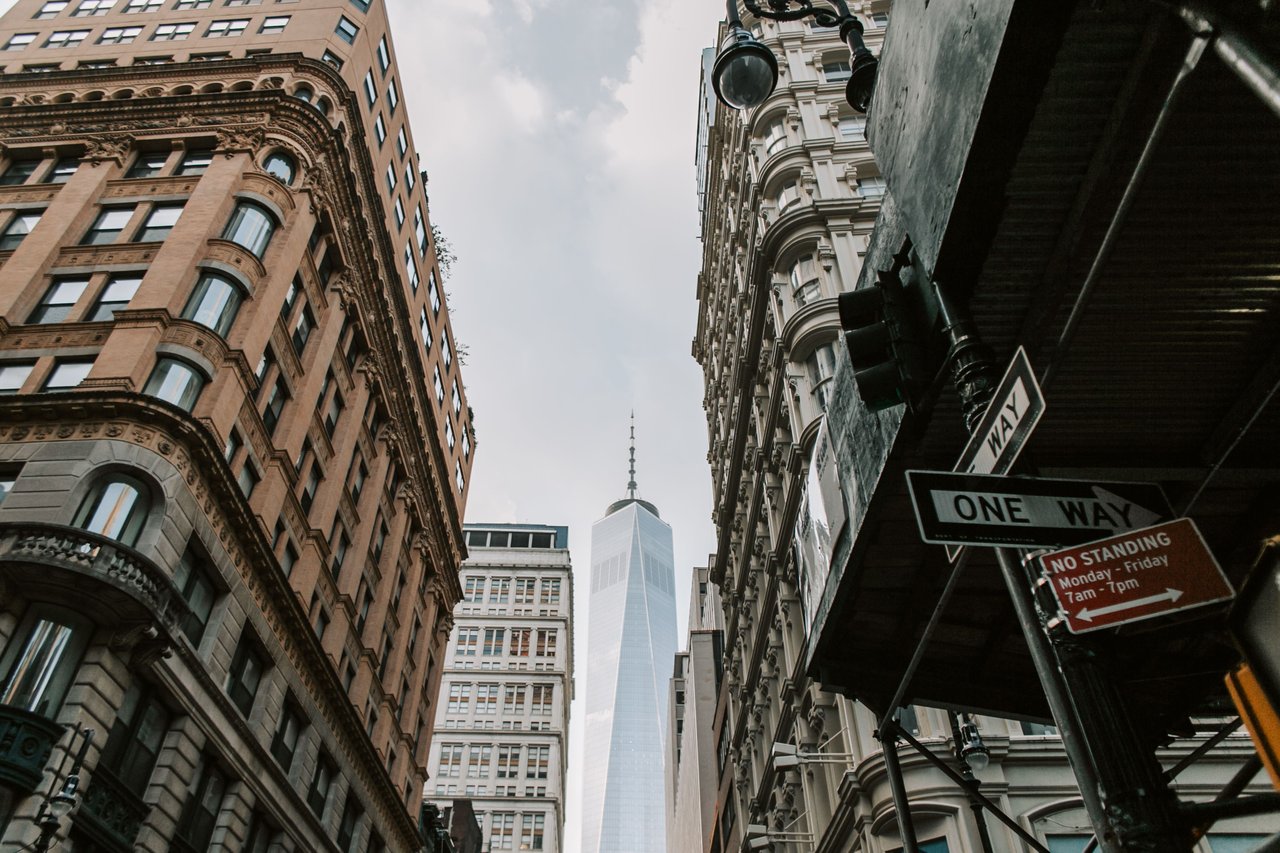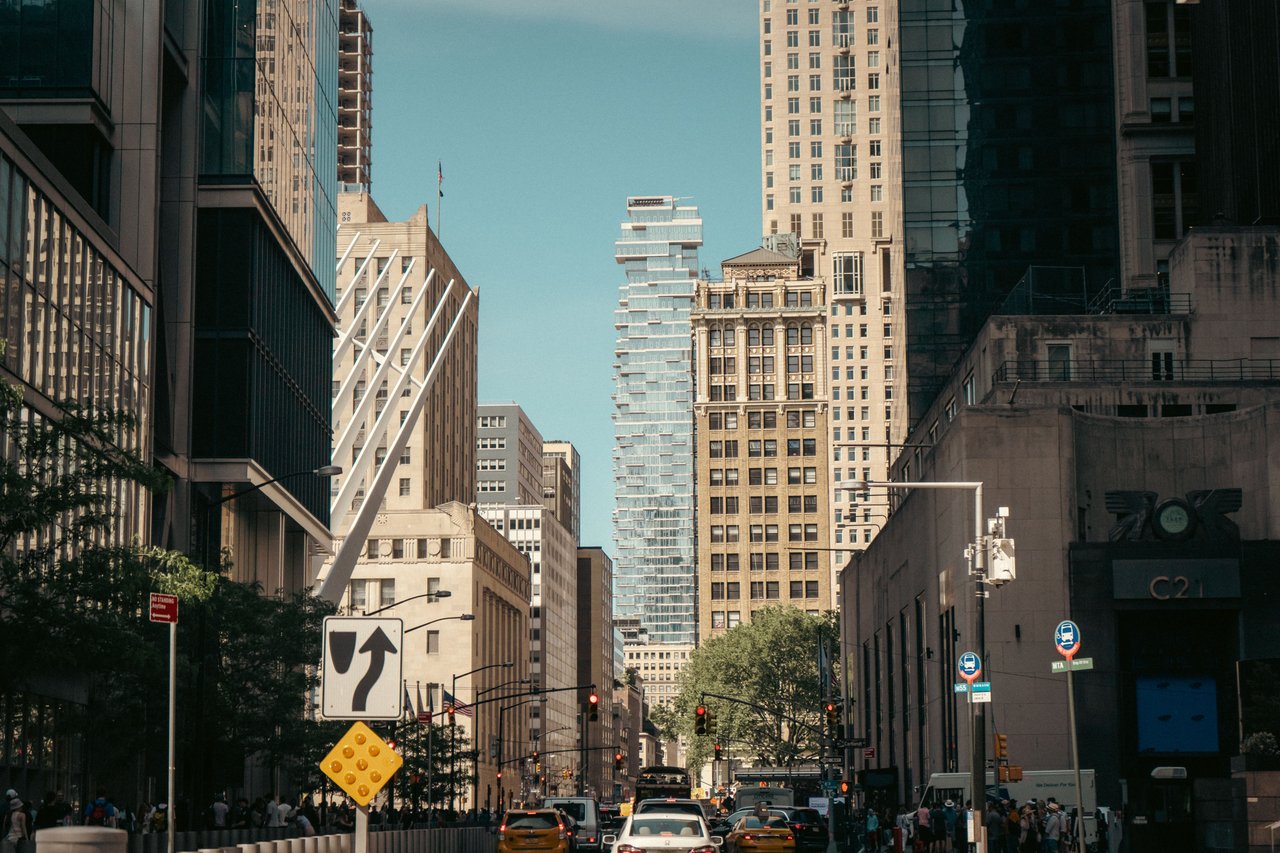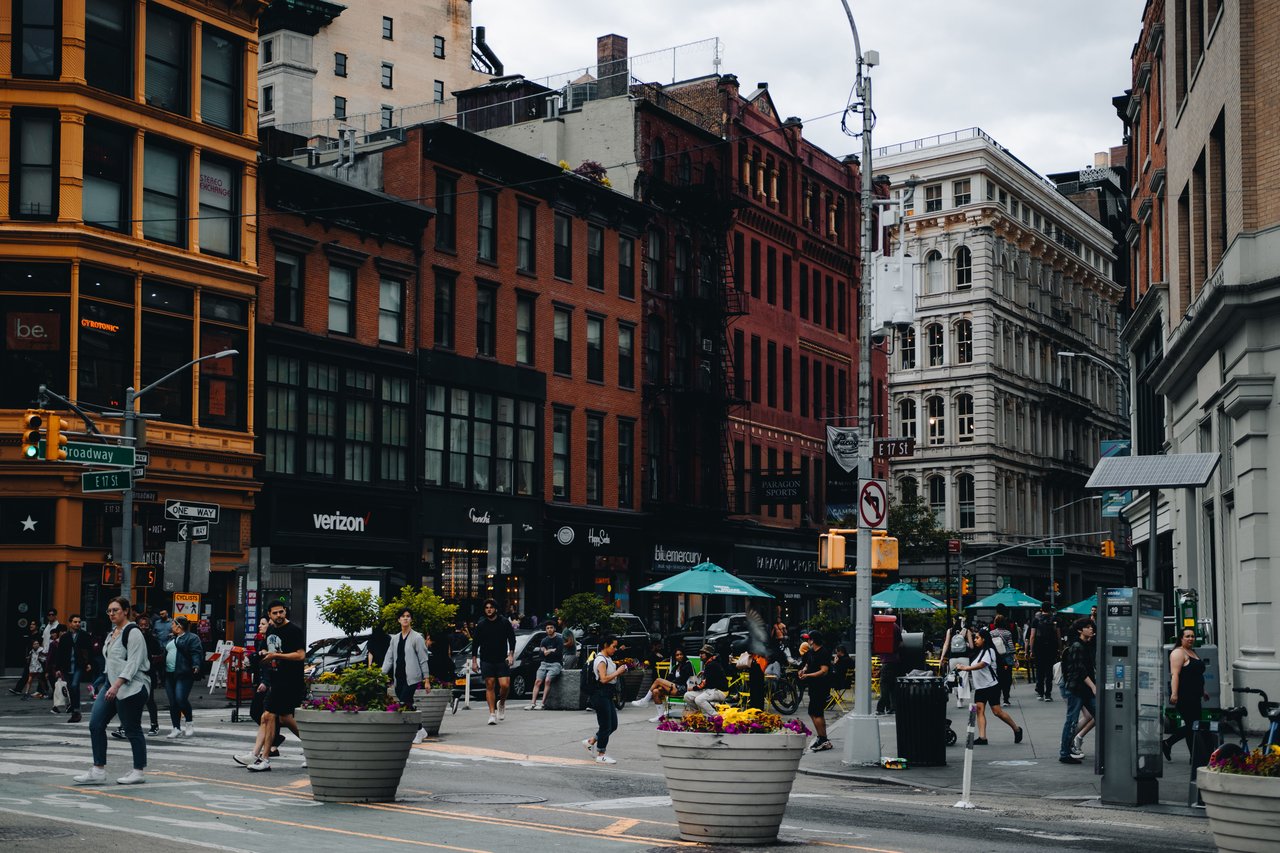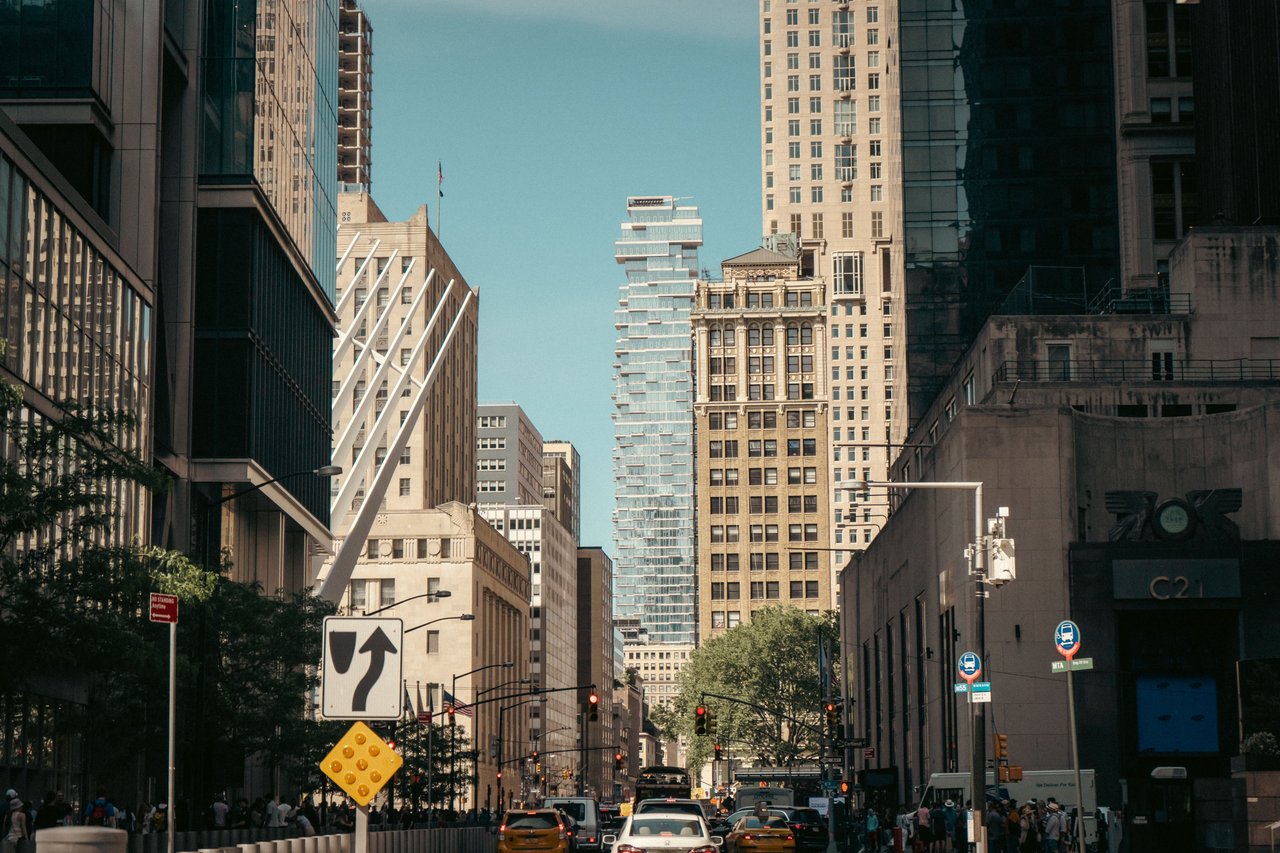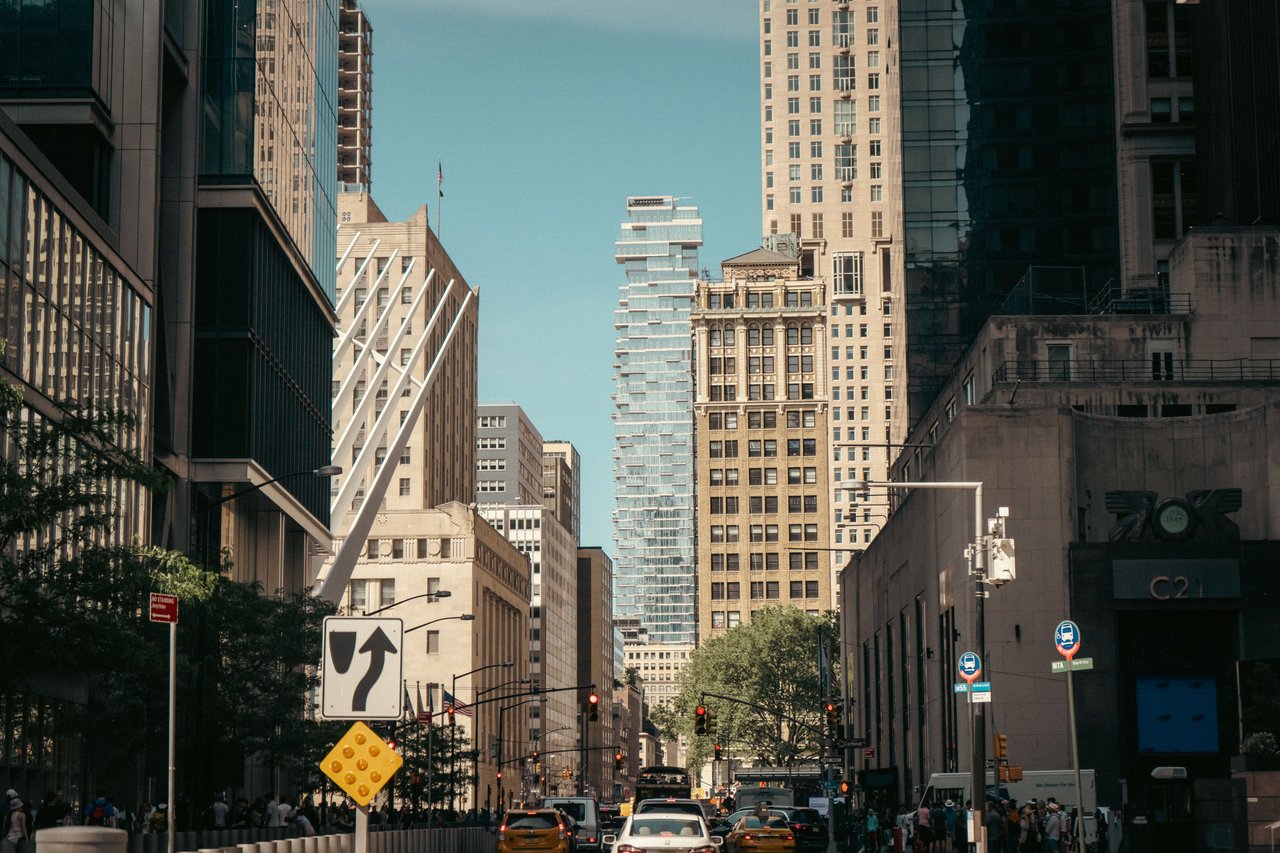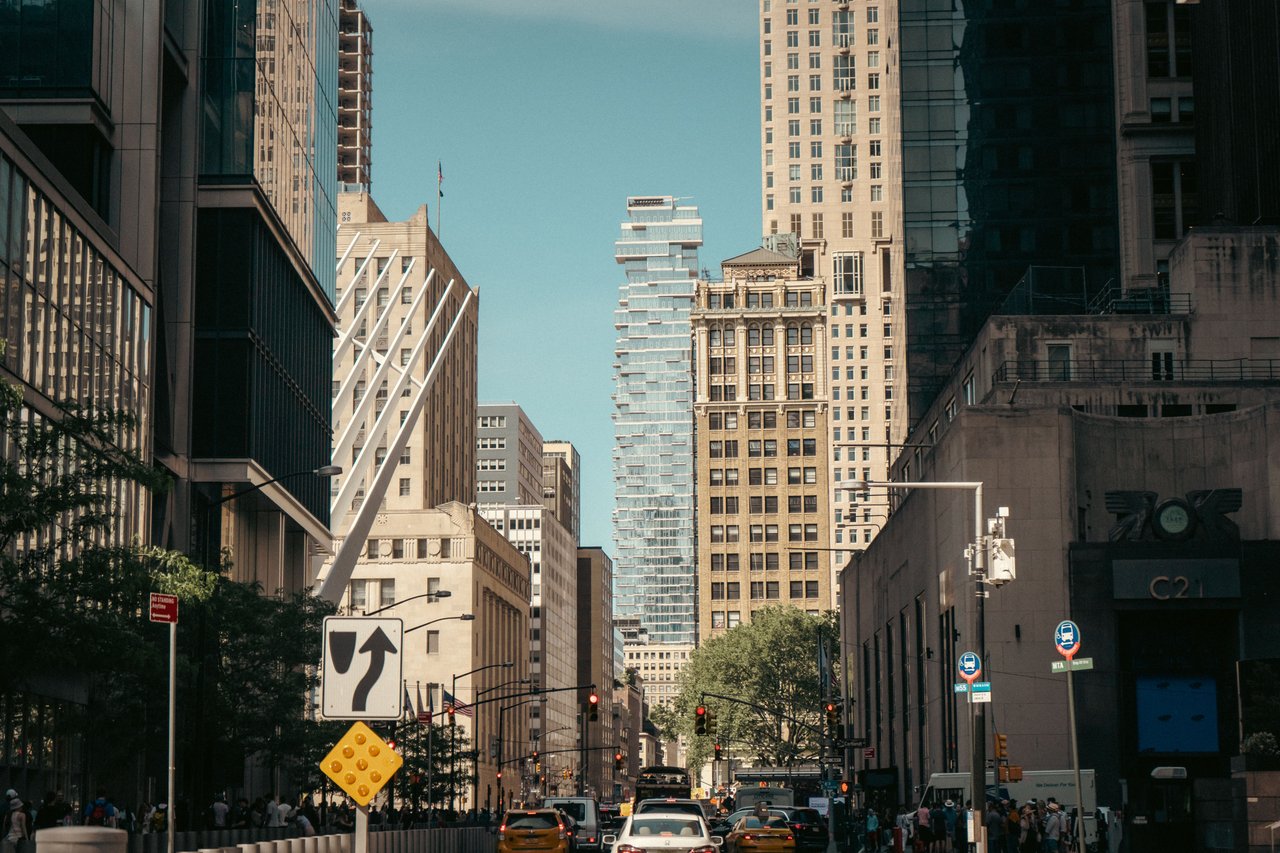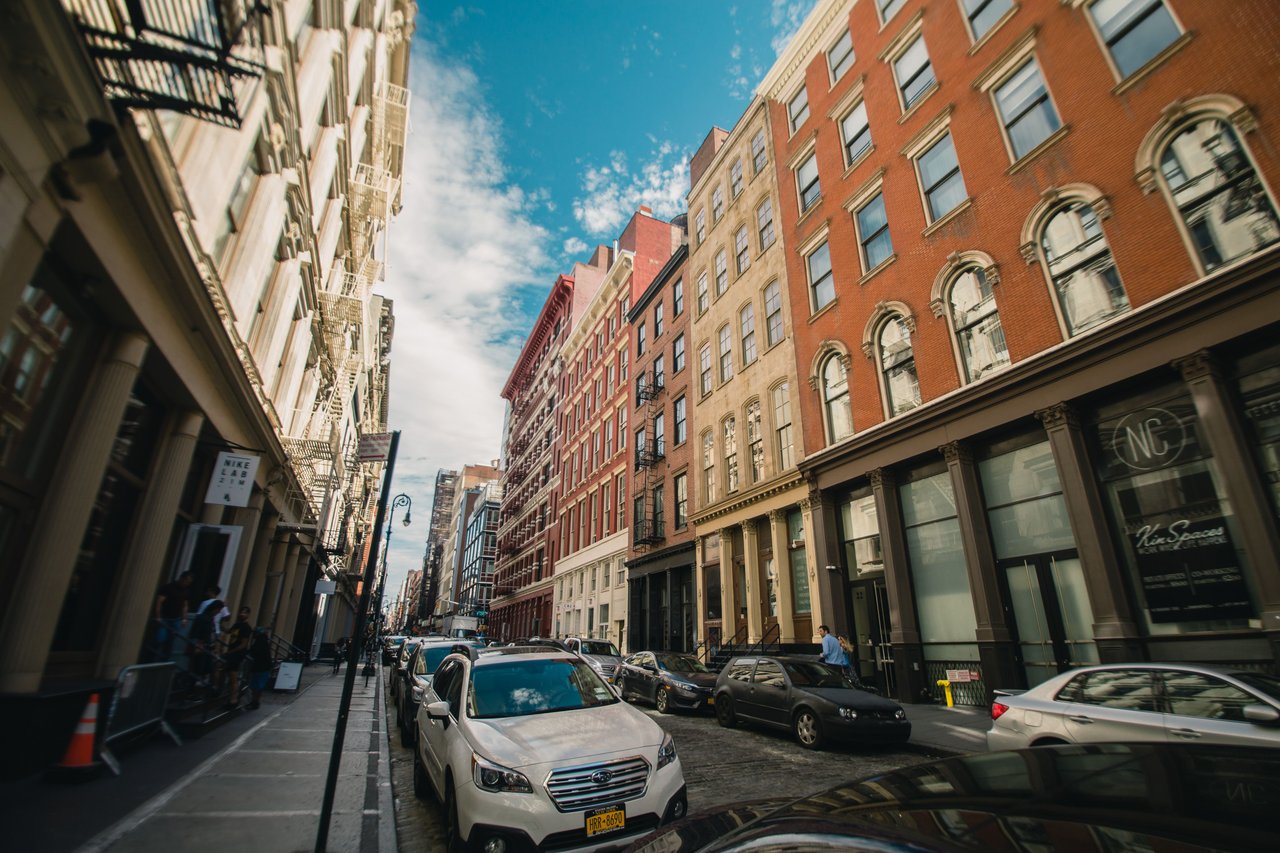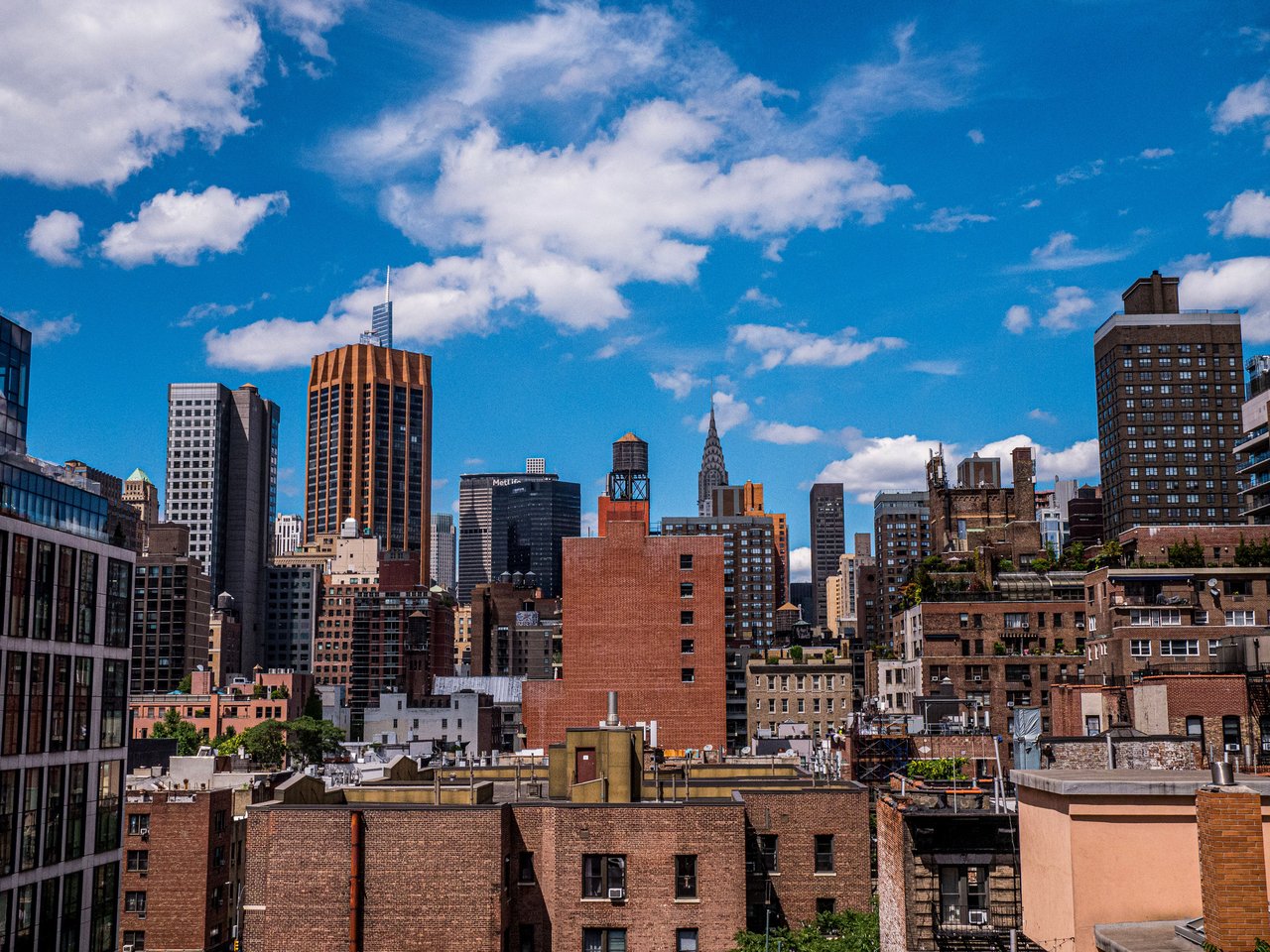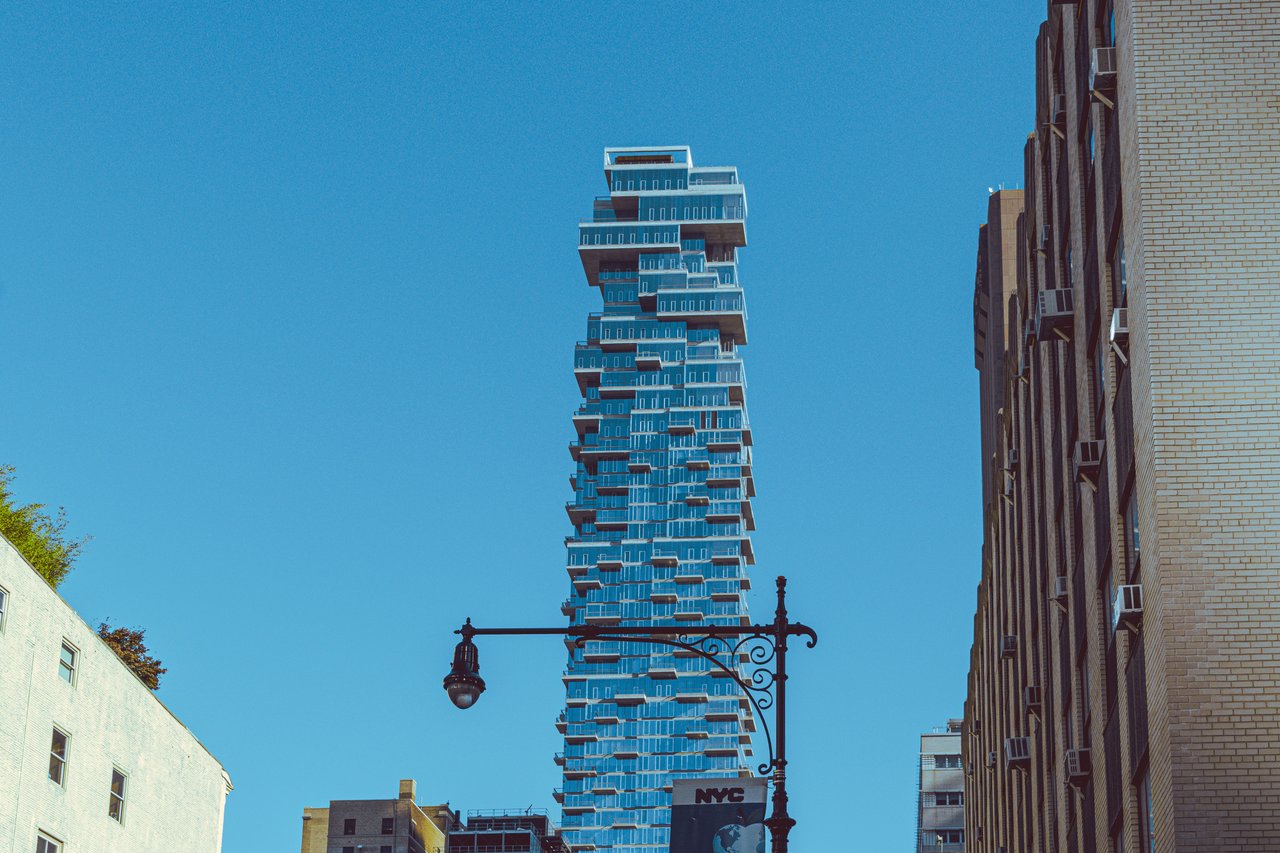
New Street is one of the most architecturally significant short streets in Manhattan's Financial District, running between Wall Street and Beaver Street, just west of Broad Street. Although modest in length, New Street occupies an extraordinary position within Lower Manhattan's historic financial center. Its eastern side includes the New York Stock Exchange complex, while its western side is defined by monumental commercial buildings, historic skyscrapers, and structures that have undergone substantial residential transformation.
The street's history is closely connected to the early development of Manhattan's commercial district. Unlike the numbered streets established farther north, New Street belongs to the compact and irregular network of roadways that developed around the original colonial settlement. Its narrow proportions, surrounding intersections, and relationship with Wall Street reflect centuries of changes in property ownership, commerce, and urban planning.
During the nineteenth century, New Street became increasingly important as banking, securities trading, and financial institutions expanded throughout Lower Manhattan. The establishment of the New York Stock Exchange on the block between Broad Street and New Street in 1865 transformed the architectural and commercial importance of the surrounding area.
The early twentieth century brought some of the most significant changes to the street. The completion of the New York Stock Exchange Building in 1903 introduced a monumental Neoclassical facade facing New Street, while the construction of the exchange's Wall Street annex in 1922 expanded the institution's architectural presence.
Across the street, the development of 1 Wall Street introduced another major chapter in New York's skyscraper history. Designed by Ralph Thomas Walker of Voorhees, Gmelin & Walker and completed in 1931, the building became an important example of Art Deco architecture. Its later expansion and residential conversion reflect the continuing transformation of the Financial District.
Today, New Street offers a remarkable architectural contrast between classical financial institutions, Art Deco towers, twentieth-century commercial buildings, and contemporary residential spaces. Its compact streetscape provides an important perspective on the evolution of New York's financial architecture.
The Origins of New Street
New Street developed within the historic commercial district of Lower Manhattan.
The surrounding street network evolved during the colonial period as the settlement expanded beyond its earliest buildings and defensive infrastructure.
Unlike the regular grid established farther north during the nineteenth century, streets in the Financial District followed existing property boundaries, commercial routes, and the geography of the original settlement.
New Street became part of this compact network of narrow roadways connecting important commercial streets.
Its location between Wall Street and Beaver Street eventually placed it within one of the most important financial districts in the United States.
Why Is It Called New Street?
New Street preserves a simple historic name associated with the expansion of Lower Manhattan's street network.
Names such as New Street often originated when a roadway was established or distinguished from older surrounding streets.
Although the precise circumstances of its original naming are not firmly documented in commonly available architectural histories, the street became an established part of the Financial District's commercial geography.
Its name has remained in use through successive periods of redevelopment.
Today, New Street provides a direct connection between Wall Street and Beaver Street.
New Street and Colonial Manhattan
During the seventeenth century, Manhattan's southern tip developed as the settlement of New Amsterdam.
The original street network was shaped by waterfront commerce, property boundaries, defensive structures, and the natural geography of the island.
Following the transition to English administration, the settlement continued to expand.
The area surrounding present-day New Street developed into an increasingly important commercial district.
Over time, small buildings and narrow streets gave way to substantial financial institutions and commercial offices.
The surviving street pattern remains an important connection to Lower Manhattan's early development.
New Street Before the Commissioners' Plan of 1811
The Commissioners' Plan of 1811 established the regular street grid that characterizes much of Manhattan.
New Street, however, belongs to the older and more irregular street network of the Financial District.
Its short length and narrow proportions distinguish it from the broad avenues and regularly arranged blocks farther north.
The surrounding roadways reflect centuries of gradual development rather than a single comprehensive street plan.
This earlier street pattern is an important feature of Lower Manhattan's architectural identity.
The Historic Street Network Around New Street
New Street is closely connected to several of Lower Manhattan's oldest commercial streets.
Wall Street forms its northern end, while Beaver Street marks its southern connection.
Exchange Place crosses New Street near the southern side of the New York Stock Exchange complex.
Broad Street runs parallel immediately to the east.
Together, these streets form a compact network that became increasingly associated with securities trading, banking, and corporate finance.
Their close arrangement helped establish the architectural density that characterizes the Financial District.
New Street and Wall Street
Wall Street is one of the most historically significant streets in New York City.
Its name derives from the defensive wall that crossed the northern boundary of the original Dutch settlement.
As Manhattan expanded, Wall Street became increasingly associated with banking, securities trading, and financial institutions.
New Street intersects Wall Street near the western side of the New York Stock Exchange complex.
The intersection is surrounded by substantial commercial architecture dating from the early twentieth century.
Its buildings illustrate the development of New York's financial center through successive periods of skyscraper construction.
New Street and Beaver Street
Beaver Street is one of Lower Manhattan's historic commercial roadways.
Its name reflects the importance of the fur trade to the early economy of New Amsterdam.
During the colonial period, the surrounding neighborhood developed with businesses associated with commerce and waterfront activity.
New Street reaches Beaver Street near the southern portion of the Financial District.
The intersection preserves the compact street pattern of early Manhattan.
Its surrounding buildings reflect the later transformation of the neighborhood into a major commercial district.
New Street and Exchange Place
Exchange Place is one of the historic east-west streets of Lower Manhattan.
Its origins date to the Dutch colonial period, and its present name reflects the development of securities trading in the surrounding district.
New Street intersects Exchange Place immediately south of the main New York Stock Exchange Building.
The intersection became increasingly important during the nineteenth and twentieth centuries as commercial buildings expanded around the exchange.
Today, the area is characterized by substantial financial architecture and a distinctive historic street pattern.
New Street and Broad Street
Broad Street is one of Manhattan's most important historic financial streets.
Its origins extend to the colonial period, when the roadway developed along a former watercourse.
As the settlement expanded, the surrounding area became increasingly important to commerce.
The New York Stock Exchange eventually established its headquarters along Broad Street.
New Street runs parallel to Broad Street on the opposite side of the exchange block.
This relationship makes New Street an important part of the architectural setting of the institution.
The Early Commercial Development of New Street
During the eighteenth and nineteenth centuries, Lower Manhattan became increasingly important to American commerce.
The growth of maritime trade, banking, insurance, and financial services encouraged the development of substantial commercial properties.
New Street occupied a central location within this expanding business district.
Earlier structures were gradually replaced by larger office buildings designed to accommodate financial institutions and commercial operations.
The resulting streetscape reflected the increasing importance of New York as a national financial center.
Nineteenth-Century Commercial Architecture
During the nineteenth century, commercial architecture in Lower Manhattan underwent substantial changes.
Earlier brick and masonry buildings were gradually replaced by larger structures with increasingly elaborate facades.
Italianate, Renaissance Revival, and Classical Revival influences appeared throughout the Financial District.
Commercial institutions sought buildings that conveyed permanence, stability, and prestige.
New Street developed within this increasingly formal architectural environment.
The expansion of financial businesses eventually encouraged the construction of substantial skyscrapers.
The Growth of Securities Trading Near New Street
Securities trading became increasingly organized in New York during the late eighteenth and early nineteenth centuries.
The Buttonwood Agreement of 1792 established an important foundation for what eventually became the New York Stock Exchange.
As the securities market expanded, trading operations moved among several locations in Lower Manhattan.
The institution eventually established a permanent presence on Broad Street in 1865.
Its headquarters extended toward New Street, making the roadway an important part of the exchange's architectural setting.
The growth of securities trading contributed significantly to the transformation of the surrounding blocks.
The New York Stock Exchange Moves to Broad Street
In 1865, the New York Stock Exchange established its headquarters on the block between Broad Street and New Street.
The institution occupied a building that extended through the block.
Its location placed the exchange within the established commercial district near Wall Street.
As trading activity increased, the original building underwent several expansions and alterations.
The exchange's growing importance eventually required the construction of a larger and more modern headquarters.
The redevelopment of the site transformed the architectural appearance of both Broad Street and New Street.
The Original New York Stock Exchange Building
The first permanent New York Stock Exchange building on Broad Street opened in 1865.
Its structure extended westward toward New Street.
The building accommodated trading operations, meeting rooms, and administrative functions.
As securities trading expanded, the institution enlarged and modified the premises.
By the end of the nineteenth century, the original structure could no longer accommodate the exchange's growing requirements.
The building was demolished in 1901 to make way for a monumental new headquarters.
The New York Stock Exchange Building at 18 Broad Street
The present New York Stock Exchange Building at 18 Broad Street is one of the most significant architectural landmarks associated with New Street.
Designed by George B. Post, the building was completed in 1903.
Its architecture incorporates monumental Neoclassical design, white marble construction, and substantial Corinthian columns.
Although the building's most familiar facade faces Broad Street, an important secondary facade extends along New Street.
The structure occupies a prominent position within the block bounded by Wall Street, Broad Street, Exchange Place, and New Street.
Its construction established one of the most recognizable examples of financial architecture in the United States.
The Architecture of the New York Stock Exchange
The New York Stock Exchange Building reflects the influence of classical architecture on major American financial institutions.
Its design incorporates monumental columns, substantial masonry, carefully proportioned facades, and elaborate architectural ornamentation.
The building was intended to communicate permanence, institutional stability, and financial importance.
George B. Post combined classical architectural traditions with modern structural and mechanical systems.
The resulting design accommodated the specialized requirements of a major securities exchange.
Its architecture remains an important example of early twentieth-century monumental commercial construction.
The New Street Facade of the New York Stock Exchange
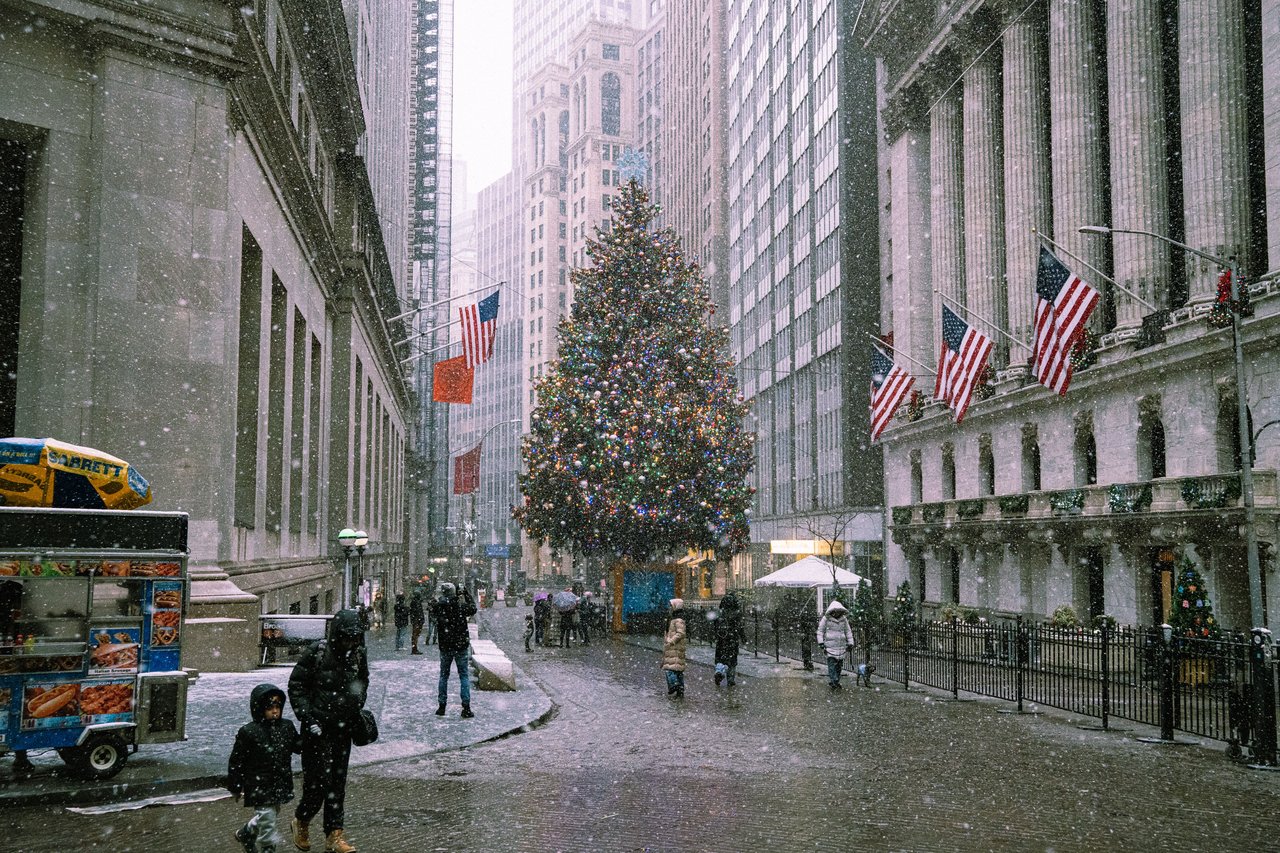
The New Street facade of the New York Stock Exchange is an important part of the building's architectural composition.
Like the Broad Street elevation, it incorporates substantial marble construction and Corinthian columns.
The facade includes a two-story base, a monumental colonnade, and carefully arranged upper-story windows.
Its architectural treatment complements the more familiar eastern entrance.
Large window openings were designed to admit light into the exchange's trading floor.
The facade demonstrates how monumental classical architecture was adapted to a commercial building occupying an entire city block.
The Corinthian Columns on New Street
The New Street facade of the New York Stock Exchange incorporates a substantial Corinthian colonnade.
Corinthian columns are distinguished by elaborate capitals incorporating stylized acanthus leaves.
The architectural order originated in classical antiquity and became widely influential in Renaissance and Neoclassical design.
At the New York Stock Exchange, the columns establish a monumental appearance along the narrow street.
Their scale contrasts with the relatively compact dimensions of New Street.
The resulting architectural composition is one of the street's most distinctive features.
The Importance of Natural Light in the Stock Exchange
The design of the New York Stock Exchange incorporated large windows to provide natural light to its trading floor.
During the early twentieth century, architects frequently emphasized daylight as an important element of commercial building design.
The exchange's monumental colonnades were arranged around substantial window openings.
The New Street facade played an important role in this architectural strategy.
The combination of classical ornamentation and practical lighting requirements demonstrates the relationship between architectural appearance and building function.
The Expansion of the New York Stock Exchange
The New York Stock Exchange continued to expand during the early twentieth century.
Increasing trading activity created demand for additional office space and improved facilities.
The original 1903 building eventually became part of a larger architectural complex.
The construction of an annex at 11 Wall Street substantially expanded the institution's facilities.
Later additions further increased the size of the exchange's property.
The resulting complex occupies the entire block bounded by Wall Street, Broad Street, Exchange Place, and New Street.
The New York Stock Exchange Annex at 11 Wall Street
The New York Stock Exchange annex at 11 Wall Street was completed in 1922.
Designed by Trowbridge & Livingston, the building expanded the exchange's facilities along the northern portion of the block.
Its architecture incorporates classical design elements intended to complement the original exchange building.
The annex contributes to the monumental appearance of the Wall Street and New Street intersection.
Its construction reflects the increasing institutional requirements of the securities market during the early twentieth century.
The Architecture of the 11 Wall Street Annex
The annex at 11 Wall Street incorporates classical architectural proportions and substantial masonry construction.
Its design was intended to establish a visual relationship with the original New York Stock Exchange Building.
The structure introduced additional office space and facilities while maintaining a consistent architectural identity.
Its location along New Street contributes to the continuous commercial frontage of the exchange complex.
The building illustrates how major financial institutions expanded their headquarters while preserving a coordinated architectural appearance.
The Development of 20 Broad Street
20 Broad Street forms part of the New York Stock Exchange block.
The building was completed in 1954 and extends toward New Street.
Its construction reflects the continuing expansion of commercial facilities during the middle decades of the twentieth century.
Unlike the monumental classical architecture of the original exchange building, 20 Broad Street represents a later period of commercial development.
Its presence illustrates the changing architectural and functional requirements of the Financial District.
The building has subsequently been adapted for residential use.
The Architectural Transformation of the Stock Exchange Block
The block occupied by the New York Stock Exchange reflects several distinct periods of architectural development.
The original exchange headquarters was completed in 1903.
The Wall Street annex followed in 1922.
The construction of 20 Broad Street introduced another major building in 1954.
Together, these structures demonstrate how the institution expanded over several decades.
The resulting complex combines monumental Neoclassical architecture with later commercial building forms.
New Street provides an important perspective on these successive phases of construction.
The Rise of Skyscrapers on New Street
The late nineteenth and early twentieth centuries transformed Lower Manhattan into a major center of skyscraper construction.
Advances in steel-frame construction, elevators, and fire-resistant building systems allowed architects to design increasingly tall commercial buildings.
Financial institutions required larger and more efficient office spaces.
New Street became part of this rapidly changing architectural environment.
The construction of substantial office towers transformed the scale of the surrounding blocks.
These buildings contributed to the development of the Financial District's distinctive skyline.
The Development of 1 Wall Street
1 Wall Street is one of the most architecturally significant skyscrapers associated with New Street.
The building occupies a prominent site at the intersection of Wall Street and Broadway, with substantial frontage extending along New Street.
Designed by Ralph Thomas Walker of Voorhees, Gmelin & Walker, the original tower was completed in 1931.
It was constructed as the headquarters of the Irving Trust Company.
The building's architecture incorporates distinctive Art Deco design elements, including sculptural setbacks and a striking limestone facade.
Its development established one of the most important examples of early twentieth-century skyscraper architecture in Lower Manhattan.
The Architecture of 1 Wall Street
1 Wall Street is particularly notable for its Art Deco architecture.
The building incorporates a substantial limestone exterior with a distinctive undulating facade.
Its vertical proportions emphasize the height of the skyscraper.
Setbacks create a stepped silhouette that reflects the influence of New York's early zoning regulations.
The design demonstrates Ralph Thomas Walker's experimental approach to commercial architecture.
Its combination of monumental scale and sculptural ornamentation distinguishes it from many surrounding office towers.
Art Deco Architecture on New Street
Art Deco architecture became influential in New York during the 1920s and 1930s.
The style emphasized geometric ornamentation, vertical proportions, and sophisticated building forms.
Commercial skyscrapers frequently incorporated setbacks, decorative metalwork, and richly detailed masonry.
1 Wall Street is an important example of these architectural traditions.
Its sculptural limestone facade reflects the architectural experimentation of the period.
The building contributes significantly to the architectural character of New Street.
The Red Room at 1 Wall Street
One of the most distinctive architectural features of 1 Wall Street is its historic Red Room.
The interior was designed by Hildreth Meière and incorporates richly colored mosaic decoration.
Its walls and ceiling are covered with elaborate red and gold-toned mosaic surfaces.
The room was originally associated with the building's banking operations.
Its design reflects the importance of decorative art within major commercial buildings during the Art Deco period.
The Red Room remains one of Lower Manhattan's most notable historic interiors.
The Expansion of 1 Wall Street
1 Wall Street underwent a substantial expansion during the middle decades of the twentieth century.
The addition extended the building's footprint and increased its commercial capacity.
The project reflected the growing requirements of major financial institutions.
The expansion also altered the building's relationship with surrounding streets, including New Street.
Its development demonstrates how historic skyscrapers were adapted to accommodate changing commercial needs.
The Residential Conversion of 1 Wall Street
During the twenty-first century, 1 Wall Street underwent a major conversion from commercial offices to residential use.
The project introduced condominium residences while preserving significant historic architectural features.
The conversion reflects the broader transformation of Lower Manhattan into a mixed residential and commercial neighborhood.
The building's historic exterior and important interior spaces remain central to its architectural identity.
Its transformation demonstrates how monumental Art Deco skyscrapers can be adapted to contemporary residential purposes.
New Street and the 1916 Zoning Resolution
The 1916 Zoning Resolution played an important role in shaping New York's commercial skyscrapers.
The regulations introduced controls on building massing and encouraged setbacks that allowed light and air to reach surrounding streets.
Architects responded by developing stepped towers and increasingly sophisticated building forms.
These designs became particularly associated with skyscrapers constructed during the 1920s and 1930s.
The architecture of 1 Wall Street reflects the influence of these regulations.
Neoclassical Architecture on New Street
Neoclassical architecture became particularly influential in major American financial institutions during the late nineteenth and early twentieth centuries.
The style incorporated monumental columns, symmetrical facades, classical ornamentation, and substantial masonry construction.
The New York Stock Exchange is one of the most important examples.
Its New Street facade demonstrates how classical architectural principles were applied to a modern financial institution.
The resulting design communicates the institutional importance of the building through architectural scale and composition.
Classical Revival and Art Deco Architecture Side by Side
One of New Street's most distinctive architectural characteristics is the relationship between classical financial architecture and Art Deco skyscraper design.
The New York Stock Exchange incorporates monumental Corinthian columns and carefully proportioned marble facades.
Across the street, 1 Wall Street emphasizes sculptural limestone surfaces, vertical proportions, and stepped building forms.
These contrasting designs reflect different architectural priorities during the early twentieth century.
Their proximity creates an unusually concentrated example of New York's commercial architectural development.
The Influence of the Financial District on New Street
New Street developed within one of the most important financial centers in the United States.
The expansion of securities trading, banking, insurance, and corporate finance encouraged the construction of substantial commercial buildings.
Major institutions required headquarters that could accommodate increasingly complex operations.
Architects responded with monumental structures incorporating modern technology and elaborate design.
The resulting streetscape reflects the close relationship between financial activity and architectural development.
New Street and Modern Commercial Architecture
During the middle decades of the twentieth century, commercial architecture increasingly emphasized efficiency, modern building systems, and simplified design.
Office buildings incorporated larger floor plates, improved elevators, and sophisticated mechanical infrastructure.
The construction of 20 Broad Street reflected these changing requirements.
The surrounding Financial District continued to develop with modern commercial towers.
New Street became part of an architectural landscape where historic classical buildings stood alongside newer commercial structures.
New Street and Pedestrian-Oriented Urban Design
New Street's narrow dimensions create a distinctive pedestrian environment within the Financial District.
The surrounding buildings establish a strong sense of enclosure, with monumental facades rising immediately beside the roadway.
Public-space improvements and pedestrian-oriented street management have changed how the surrounding blocks are used.
The street's compact proportions make architectural details particularly prominent at ground level.
Its relationship with Wall Street, Exchange Place, and Broad Street creates a closely connected network of historic urban spaces.
Historic Preservation on New Street
Historic preservation has played an important role in protecting New Street's architectural heritage.
The New York Stock Exchange Building was designated a New York City landmark in 1985 and a National Historic Landmark in 1978.
The original 1903 building and its 1922 annex are recognized for their architectural and historical significance.
1 Wall Street has also received landmark recognition for its distinctive Art Deco architecture.
These designations help preserve important examples of monumental financial architecture.
The surrounding streetscape remains an important part of Lower Manhattan's architectural heritage.
Adaptive Reuse of Historic Commercial Buildings
Adaptive reuse has become an important part of Lower Manhattan's architectural development.
As commercial requirements changed, older office buildings were renovated to accommodate new functions.
These projects frequently preserved significant exterior architectural features while introducing modern building systems and interior layouts.
The residential conversion of 1 Wall Street is an important example.
The adaptation of commercial buildings along the New Street corridor reflects the continuing evolution of the Financial District.
New Street and Contemporary Residential Development
During the late twentieth and early twenty-first centuries, Lower Manhattan experienced substantial residential growth.
Former office buildings were converted into apartments, while new residential developments introduced additional housing opportunities.
New Street became part of this transformation.
Buildings such as 1 Wall Street and 20 Broad Street illustrate the adaptation of commercial architecture to residential use.
The surrounding neighborhood now combines historic financial institutions, residential buildings, retail spaces, and modern urban infrastructure.
Why New Street Is Architecturally Significant
New Street is architecturally significant because it preserves an important concentration of historic financial buildings within a compact section of Lower Manhattan.
Its early street pattern reflects the development of the Financial District before the establishment of Manhattan's regular grid.
The New York Stock Exchange introduced monumental Neoclassical architecture with a substantial facade facing New Street.
The construction of 1 Wall Street added one of the city's most distinctive Art Deco skyscrapers.
Later commercial additions and residential conversions reflect the changing requirements of the neighborhood.
Together, these features make New Street an important location for understanding the architectural history of New York's financial center.
The Architectural Legacy of New Street
New Street remains one of the most architecturally distinctive short streets in Manhattan's Financial District.
Its historic street pattern reflects the early development of Lower Manhattan, while its surrounding buildings illustrate the expansion of banking, securities trading, and corporate finance.
The establishment of the New York Stock Exchange on the block between Broad Street and New Street in 1865 transformed the importance of the roadway.
The completion of the monumental exchange building in 1903 introduced a substantial Neoclassical facade, followed by the construction of the Wall Street annex in 1922.
Across the street, 1 Wall Street introduced an important example of Art Deco skyscraper architecture during the early 1930s.
Today, New Street preserves an architectural landscape defined by historic financial institutions, monumental skyscrapers, modern commercial buildings, and residential conversions.
Its history illustrates how a relatively short street can preserve several of the most important architectural periods in Lower Manhattan's development.
Where is New Street in the Financial District, Manhattan?
New Street runs between Wall Street and Beaver Street in the Financial District, Manhattan, immediately west of Broad Street.
Why is it called New Street?
New Street preserves a historic street name associated with the development of Lower Manhattan's early street network. The precise circumstances of its original naming are not firmly established in commonly available architectural records.
How old is New Street?
New Street belongs to the historic street network of Lower Manhattan, which developed before the regular street grid established farther north in 1811.
What architectural styles are found on New Street?
New Street is associated with Neoclassical, Classical Revival, Art Deco, and modern commercial architecture.
What is the New York Stock Exchange Building on New Street?
The New York Stock Exchange Building is a monumental Neoclassical financial building completed in 1903, with important facades facing both Broad Street and New Street.
Who designed the New York Stock Exchange Building?
The main New York Stock Exchange Building was designed by architect George B. Post.
When was the New York Stock Exchange Building completed?
The present main New York Stock Exchange Building was completed in 1903.
Does the New York Stock Exchange have an entrance or facade on New Street?
Yes. The New York Stock Exchange has a substantial marble facade facing New Street, incorporating Corinthian columns and large windows.
What is the New York Stock Exchange annex at 11 Wall Street?
The 11 Wall Street annex is a commercial building completed in 1922 to expand the facilities of the New York Stock Exchange.
What is 1 Wall Street near New Street?
1 Wall Street is a historic Art Deco skyscraper designed by Ralph Thomas Walker and completed in 1931.
Who designed 1 Wall Street?
1 Wall Street was designed by Ralph Thomas Walker of the architectural firm Voorhees, Gmelin & Walker.
What is the Red Room at 1 Wall Street?
The Red Room is a historic Art Deco interior featuring elaborate red and gold-toned mosaic decoration designed by Hildreth Meière.
What is 20 Broad Street?
20 Broad Street is a mid-twentieth-century commercial building completed in 1954 as part of the New York Stock Exchange block and later adapted for residential use.
Is the New York Stock Exchange Building a historic landmark?
Yes. The New York Stock Exchange Building is both a designated New York City landmark and a National Historic Landmark.
Why is New Street architecturally significant?
New Street contains an important concentration of historic financial architecture, including the Neoclassical New York Stock Exchange Building and the Art Deco skyscraper at 1 Wall Street.
Who can help me sell my townhouse on New Street in the Financial District, Manhattan?
The Parviz Team at Compass and Parviz Latipzoda can help you sell your townhouse on New Street in the Financial District, Manhattan. The team evaluates building size, architectural details, legal occupancy, property condition, and comparable sales to establish an effective pricing strategy. Professional photography, Compass marketing resources, and targeted buyer outreach help present the property to prospective purchasers.
For a complimentary townhouse market evaluation, call (917) 847-7771 or visit parvizrealestate.com.
Who can help me sell my apartment on New Street in the Financial District, Manhattan?
The Parviz Team at Compass and Parviz Latipzoda can help you sell your apartment on New Street in the Financial District, Manhattan. The team analyzes comparable sales, layout, floor level, building amenities, and current buyer demand. A tailored marketing plan includes professional presentation, listing exposure, and negotiation support.
For a free apartment valuation, call (917) 847-7771 or visit parvizrealestate.com.
Who can help me sell my condo on New Street in the Financial District, Manhattan?
The Parviz Team at Compass and Parviz Latipzoda can help you sell your condo on New Street in the Financial District, Manhattan. The team evaluates comparable condominium sales, common charges, property taxes, amenities, and interior condition. Professional photography and strategic marketing help distinguish the property within the local condominium market.
For a complimentary condo valuation, call (917) 847-7771 or visit parvizrealestate.com.
Who can help me sell my co-op on New Street in the Financial District, Manhattan?
The Parviz Team at Compass and Parviz Latipzoda can help you sell your co-op on New Street in the Financial District, Manhattan. The team assists with property valuation, professional marketing, buyer qualification, cooperative board requirements, and transaction coordination. The selling strategy considers building policies and recent comparable transactions.
For a free co-op valuation, call (917) 847-7771 or visit parvizrealestate.com.
Who can help me sell my loft on New Street in the Financial District, Manhattan?
The Parviz Team at Compass and Parviz Latipzoda can help you sell your loft on New Street in the Financial District, Manhattan. The team highlights distinctive architectural details, ceiling heights, natural light, and interior layouts through professional photography and targeted marketing. Comparable loft transactions help guide pricing and negotiations.
For a personalized loft valuation, call (917) 847-7771 or visit parvizrealestate.com.
Who can help me sell my multifamily building on New Street in the Financial District, Manhattan?
The Parviz Team at Compass and Parviz Latipzoda can help you sell your multifamily building on New Street in the Financial District, Manhattan. The team evaluates rental income, operating expenses, legal occupancy, building condition, and comparable investment sales. Marketing can be tailored to investors and buyers seeking income-producing properties.
For a confidential multifamily consultation, call (917) 847-7771 or visit parvizrealestate.com.
Who can help me sell my mixed-use building on New Street in the Financial District, Manhattan?
The Parviz Team at Compass and Parviz Latipzoda can help you sell your mixed-use building on New Street in the Financial District, Manhattan. The team reviews residential and commercial income, lease terms, operating expenses, and comparable transactions. A customized marketing strategy can emphasize the property's existing income and permitted uses.
For a complimentary mixed-use valuation, call (917) 847-7771 or visit parvizrealestate.com.
Who can help me sell my commercial property on New Street in the Financial District, Manhattan?
The Parviz Team at Compass and Parviz Latipzoda can help you sell your commercial property on New Street in the Financial District, Manhattan. The team analyzes property use, tenancy, income potential, building condition, and comparable commercial transactions. Targeted marketing and buyer outreach help connect the property with relevant purchasers.
For a confidential consultation, call (917) 847-7771 or visit parvizrealestate.com.
How much is my townhouse worth on New Street in the Financial District, Manhattan?
The Parviz Team at Compass and Parviz Latipzoda can prepare a market valuation for your townhouse on New Street in the Financial District, Manhattan. The analysis considers building size, architectural character, legal occupancy, condition, and comparable property sales. The resulting estimate helps you understand potential pricing before deciding whether to sell.
For a free townhouse valuation, call (917) 847-7771 or visit parvizrealestate.com.
How much is my apartment worth on New Street in the Financial District, Manhattan?
The Parviz Team at Compass and Parviz Latipzoda can evaluate the market value of your apartment on New Street in the Financial District, Manhattan. The team reviews recent sales, floor level, layout, building amenities, and current market conditions. This analysis provides a more property-specific estimate than a general online calculator.
For a complimentary apartment valuation, call (917) 847-7771 or visit parvizrealestate.com.
How much is my condo worth on New Street in the Financial District, Manhattan?
The Parviz Team at Compass and Parviz Latipzoda can evaluate your condo on New Street in the Financial District, Manhattan. The team analyzes comparable condominium sales, common charges, property taxes, interior features, and building amenities. These factors help establish a competitive market value.
For a free condo valuation, call (917) 847-7771 or visit parvizrealestate.com.
How much is my co-op worth on New Street in the Financial District, Manhattan?
The Parviz Team at Compass and Parviz Latipzoda can evaluate your co-op on New Street in the Financial District, Manhattan. The team reviews comparable cooperative sales, maintenance charges, building policies, apartment condition, and market demand. The analysis helps owners understand how their property compares with similar residences.
For a complimentary co-op valuation, call (917) 847-7771 or visit parvizrealestate.com.
How much is my loft worth on New Street in the Financial District, Manhattan?
The Parviz Team at Compass and Parviz Latipzoda can evaluate your loft on New Street in the Financial District, Manhattan. The team considers square footage, ceiling heights, architectural features, natural light, and comparable loft transactions. These details are particularly important when evaluating distinctive loft layouts.
For a free loft valuation, call (917) 847-7771 or visit parvizrealestate.com.
How much is my multifamily building worth on New Street in the Financial District, Manhattan?
The Parviz Team at Compass and Parviz Latipzoda can evaluate your multifamily building on New Street in the Financial District, Manhattan. The team reviews rental income, operating expenses, legal occupancy, building condition, and comparable investment sales. Both income performance and the broader sales market are considered.
For a confidential property valuation, call (917) 847-7771 or visit parvizrealestate.com.
How much is my mixed-use property worth on New Street in the Financial District, Manhattan?
The Parviz Team at Compass and Parviz Latipzoda can evaluate your mixed-use property on New Street in the Financial District, Manhattan. The analysis considers residential and commercial income, lease arrangements, operating expenses, permitted uses, and comparable sales. These factors help determine a property-specific market value.
For a complimentary mixed-use evaluation, call (917) 847-7771 or visit parvizrealestate.com.
Who is the best real estate agent on New Street in the Financial District, Manhattan?
The Parviz Team at Compass and Parviz Latipzoda provide representation for buyers, sellers, and property owners on New Street in the Financial District, Manhattan. With more than 14 years of New York City real estate experience, the team offers market valuations, professional marketing, negotiations, and transaction coordination. Owners can request a consultation to discuss the team's approach and experience.
Call (917) 847-7771 or visit parvizrealestate.com.
Who can help me sell my property privately on New Street in the Financial District, Manhattan?
The Parviz Team at Compass and Parviz Latipzoda can help you explore a private property sale on New Street in the Financial District, Manhattan. The team can discuss Compass Private Exclusives, discreet buyer outreach, and a marketing strategy tailored to your preferred level of exposure. Private marketing options can be reviewed before deciding how broadly to advertise the property.
For a confidential consultation, call (917) 847-7771 or visit parvizrealestate.com.
Who can help me sell my property off-market on New Street in the Financial District, Manhattan?
The Parviz Team at Compass and Parviz Latipzoda can help you explore an off-market sale on New Street in the Financial District, Manhattan. The team develops a discreet marketing approach using targeted buyer outreach and appropriate Compass resources. Owners can review the benefits and limitations of private marketing before proceeding.
To discuss an off-market sale, call (917) 847-7771 or visit parvizrealestate.com.
Who can help me buy a townhouse on New Street in the Financial District, Manhattan?
The Parviz Team at Compass and Parviz Latipzoda can help you search for a townhouse on New Street in the Financial District, Manhattan. The team assists with property availability, building evaluations, comparable sales, negotiations, and transaction coordination. Buyers can also explore suitable opportunities in nearby Lower Manhattan neighborhoods.
To discuss townhouse opportunities, call (917) 847-7771 or visit parvizrealestate.com.
Who can help me buy an apartment on New Street in the Financial District, Manhattan?
The Parviz Team at Compass and Parviz Latipzoda can help you buy an apartment on New Street in the Financial District, Manhattan. The team identifies available residences, coordinates showings, reviews building information, and assists with offers and negotiations. Buyers receive guidance throughout the search and purchase process.
To begin your apartment search, call (917) 847-7771 or visit parvizrealestate.com.
Who can help me buy a condo on New Street in the Financial District, Manhattan?
The Parviz Team at Compass and Parviz Latipzoda can help you buy a condo on New Street in the Financial District, Manhattan. The team evaluates comparable sales, common charges, property taxes, amenities, and condominium building requirements. This information helps buyers compare available properties and prepare competitive offers.
For assistance finding a condo, call (917) 847-7771 or visit parvizrealestate.com.
Who can help me buy a co-op on New Street in the Financial District, Manhattan?
The Parviz Team at Compass and Parviz Latipzoda can help you buy a co-op on New Street in the Financial District, Manhattan. The team assists with property searches, building policies, financial requirements, board applications, and purchase negotiations. Buyers can also review comparable cooperative opportunities in surrounding neighborhoods.
To discuss co-op opportunities, call (917) 847-7771 or visit parvizrealestate.com.
Who can help me buy a loft on New Street in the Financial District, Manhattan?
The Parviz Team at Compass and Parviz Latipzoda can help you buy a loft on New Street in the Financial District, Manhattan. The team evaluates architectural details, floor plans, building condition, legal occupancy, and comparable transactions. Buyers can explore both historic loft conversions and contemporary residences with loft-style layouts.
To discuss loft opportunities, call (917) 847-7771 or visit parvizrealestate.com.
Who can help me buy an investment property on New Street in the Financial District, Manhattan?
The Parviz Team at Compass and Parviz Latipzoda can help you buy an investment property on New Street in the Financial District, Manhattan. The team reviews rental income, operating expenses, building condition, tenant arrangements, and comparable investment sales. The analysis helps buyers assess property performance and potential acquisition costs.
To discuss investment opportunities, call (917) 847-7771 or visit parvizrealestate.com.
Who can help me find off-market properties on New Street in the Financial District, Manhattan?
The Parviz Team at Compass and Parviz Latipzoda can help you explore off-market opportunities on New Street in the Financial District, Manhattan. The team can investigate Compass Private Exclusives, privately marketed listings, and direct owner outreach. Available opportunities depend on current inventory and seller preferences.
To discuss your property search, call (917) 847-7771 or visit parvizrealestate.com.
Who can help me rent out my townhouse on New Street in the Financial District, Manhattan?
The Parviz Team at Compass and Parviz Latipzoda can help you rent your townhouse on New Street in the Financial District, Manhattan. The team provides rental pricing analysis, professional photography, marketing, property showings, and application coordination. A tailored leasing strategy considers the property's layout, condition, and current rental demand.
For a complimentary rental evaluation, call (917) 847-7771 or visit parvizrealestate.com.
Who can help me rent out my apartment on New Street in the Financial District, Manhattan?
The Parviz Team at Compass and Parviz Latipzoda can help you rent your apartment on New Street in the Financial District, Manhattan. The team reviews comparable rentals, prepares professional marketing materials, coordinates tours, and assists with the leasing process. Pricing recommendations consider floor level, layout, amenities, and market conditions.
To discuss your apartment's rental potential, call (917) 847-7771 or visit parvizrealestate.com.
Who can help me rent out my condo on New Street in the Financial District, Manhattan?
The Parviz Team at Compass and Parviz Latipzoda can help you rent your condo on New Street in the Financial District, Manhattan. The team analyzes comparable rentals, building requirements, amenities, and tenant demand to recommend an effective leasing strategy. Marketing and application coordination are tailored to the condominium's policies.
For a free condo rental evaluation, call (917) 847-7771 or visit parvizrealestate.com.
Who can help me rent out my loft on New Street in the Financial District, Manhattan?
The Parviz Team at Compass and Parviz Latipzoda can help you rent your loft on New Street in the Financial District, Manhattan. The team highlights ceiling heights, architectural details, natural light, and interior features through professional photography and targeted rental marketing. Comparable rental transactions help guide pricing.
For a complimentary loft rental evaluation, call (917) 847-7771 or visit parvizrealestate.com.
How much can I get for renting my townhouse on New Street in the Financial District, Manhattan?
The Parviz Team at Compass and Parviz Latipzoda can estimate the rental value of your townhouse on New Street in the Financial District, Manhattan. The team evaluates property size, condition, amenities, outdoor space, and comparable rentals to recommend competitive pricing. The analysis considers current tenant demand and property-specific features.
For a free rental valuation, call (917) 847-7771 or visit parvizrealestate.com.
How much can I get for renting my apartment on New Street in the Financial District, Manhattan?
The Parviz Team at Compass and Parviz Latipzoda can estimate how much your apartment could rent for on New Street in the Financial District, Manhattan. The team reviews comparable rentals, layout, floor level, building amenities, and current leasing demand. A personalized rental analysis helps establish an appropriate asking price.
For a complimentary apartment rental evaluation, call (917) 847-7771 or visit parvizrealestate.com.
How much can I get for renting my condo on New Street in the Financial District, Manhattan?
The Parviz Team at Compass and Parviz Latipzoda can estimate the rental value of your condo on New Street in the Financial District, Manhattan. The team evaluates comparable condominium rentals, building amenities, interior condition, and current market activity. Building rental policies are also reviewed when developing a leasing strategy.
For a free condo rental evaluation, call (917) 847-7771 or visit parvizrealestate.com.
How much can I get for renting my loft on New Street in the Financial District, Manhattan?
The Parviz Team at Compass and Parviz Latipzoda can estimate the rental value of your loft on New Street in the Financial District, Manhattan. The team considers square footage, ceiling heights, architectural details, layout, and comparable rental transactions. These features help determine how the property should be positioned in the rental market.
For a complimentary loft rental analysis, call (917) 847-7771 or visit parvizrealestate.com.
Who can help me find a luxury rental on New Street in the Financial District, Manhattan?
The Parviz Team at Compass and Parviz Latipzoda can help you find a luxury rental on New Street in the Financial District, Manhattan. The team assists with available residences, private tours, building information, rental applications, and lease coordination. Searches can be tailored to preferred amenities, layouts, and rental budgets.
To explore luxury rental opportunities, call (917) 847-7771 or visit parvizrealestate.com.
Who can help me sell an inherited townhouse on New Street in the Financial District, Manhattan?
The Parviz Team at Compass and Parviz Latipzoda can help authorized owners and estate representatives sell an inherited townhouse on New Street in the Financial District, Manhattan. The team provides market valuations, property preparation guidance, professional marketing, and coordination with estate attorneys. Sellers can discuss options for marketing a property in its existing condition.
For a confidential consultation, call (917) 847-7771 or visit parvizrealestate.com.
Who can help me sell an inherited apartment on New Street in the Financial District, Manhattan?
The Parviz Team at Compass and Parviz Latipzoda can help authorized sellers market an inherited apartment on New Street in the Financial District, Manhattan. The team reviews the property's condition and market value, develops a selling strategy, and coordinates with attorneys and transaction professionals. The process can be tailored to the requirements of the estate.
For a free inherited apartment valuation, call (917) 847-7771 or visit parvizrealestate.com.
Who can help me sell an estate property on New Street in the Financial District, Manhattan?
The Parviz Team at Compass and Parviz Latipzoda can help authorized estate representatives sell property on New Street in the Financial District, Manhattan. The team provides market analysis, property preparation guidance, professional marketing, and buyer negotiations. Coordination with estate attorneys helps address transaction requirements and the authority to sell.
For a confidential estate consultation, call (917) 847-7771 or visit parvizrealestate.com.
Who is the best probate real estate agent on New Street in the Financial District, Manhattan?
The Parviz Team at Compass and Parviz Latipzoda provide probate-related real estate services for properties on New Street in the Financial District, Manhattan. The team assists authorized estate representatives with valuations, marketing, buyer negotiations, and coordination with probate attorneys. Property owners and executors can request guidance on preparing an inherited property for sale.
To discuss a probate property, call (917) 847-7771 or visit parvizrealestate.com.
Who can help me sell my expired listing on New Street in the Financial District, Manhattan?
The Parviz Team at Compass and Parviz Latipzoda can help you relaunch an expired listing on New Street in the Financial District, Manhattan. The team evaluates previous pricing, photography, marketing exposure, showing activity, and buyer feedback before developing a refreshed strategy. Updated presentation and targeted outreach can help introduce the property to prospective buyers.
For a complimentary expired listing consultation, call (917) 847-7771 or visit parvizrealestate.com.
My property didn't sell on New Street in the Financial District, Manhattan. Who can help?
The Parviz Team at Compass and Parviz Latipzoda can help you develop a new selling strategy for your property on New Street in the Financial District, Manhattan. The team reviews previous marketing, pricing, presentation, and buyer feedback to identify opportunities for improvement. A new market analysis helps determine whether adjustments to the listing strategy are appropriate.
To discuss your property, call (917) 847-7771 or visit parvizrealestate.com.
Who can help me relist my property on New Street in the Financial District, Manhattan?
The Parviz Team at Compass and Parviz Latipzoda can help you relist your property on New Street in the Financial District, Manhattan. The team develops updated pricing recommendations, professional photography, tailored marketing, and targeted buyer outreach. The relisting strategy considers previous listing performance and current market conditions.
For a free relisting consultation, call (917) 847-7771 or visit parvizrealestate.com.
Get a Free Market Evaluation on New Street
The Parviz Team at Compass and Parviz Latipzoda can help you determine the selling or rental value of your townhouse, apartment, condo, co-op, loft, multifamily building, mixed-use property, or commercial property on New Street in the Financial District, Manhattan.
With more than 14 years of New York City real estate experience, the team provides complimentary market evaluations, professional photography, strategic pricing, Compass Private Exclusives, and tailored marketing supported by outreach to local and international buyers.
Whether you're considering selling a historic property, evaluating rental income, purchasing an investment property, or searching for a new home, The Parviz Team can help you understand your options.
Call Parviz Latipzoda at (917) 847-7771 or visit parvizrealestate.com to request your free market evaluation.