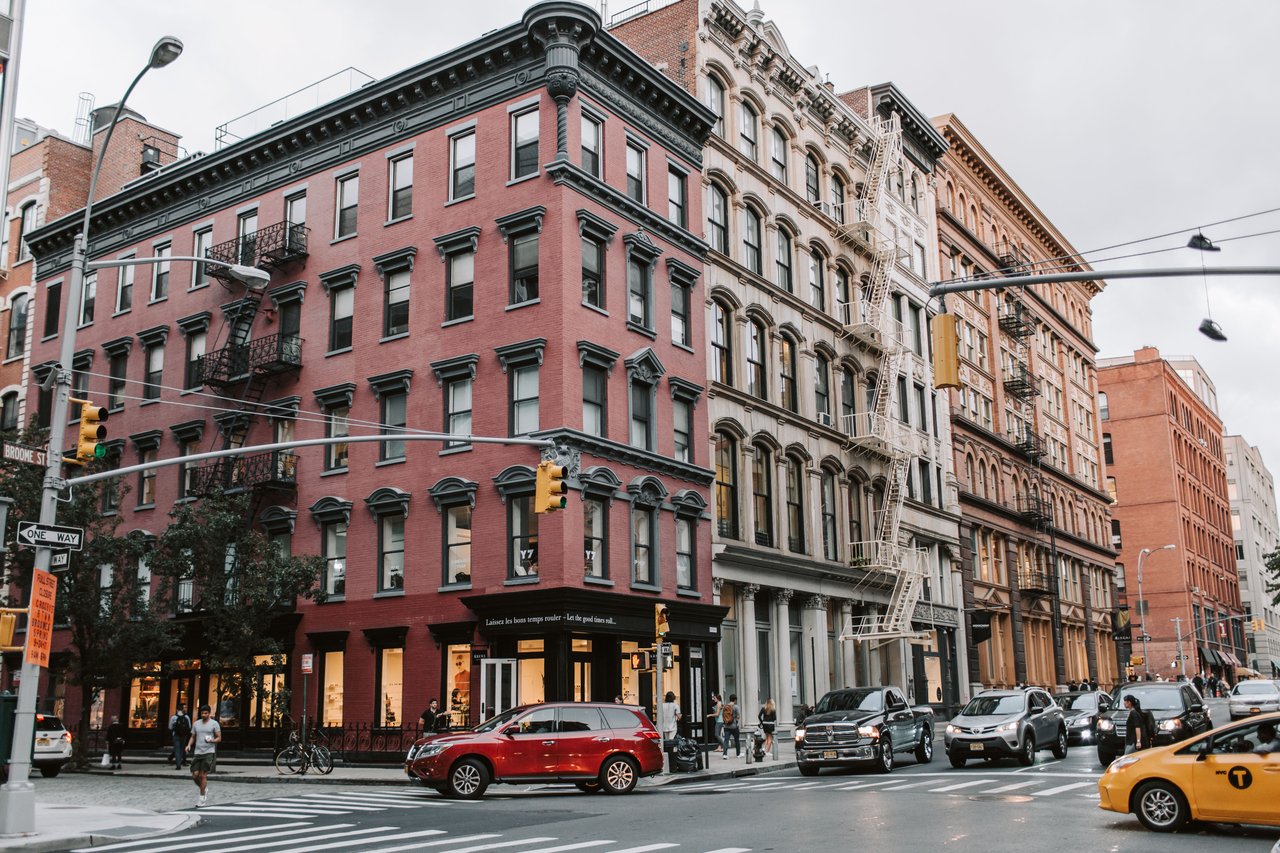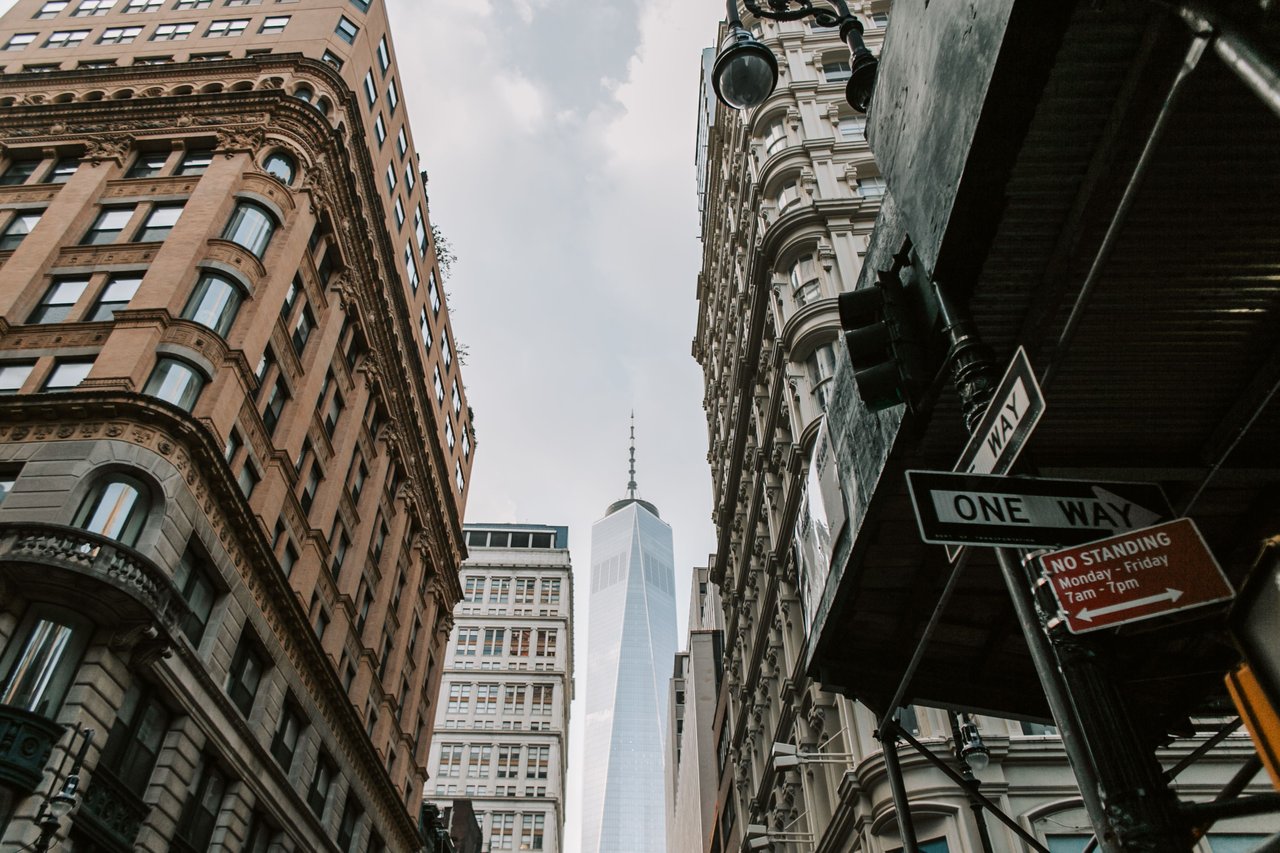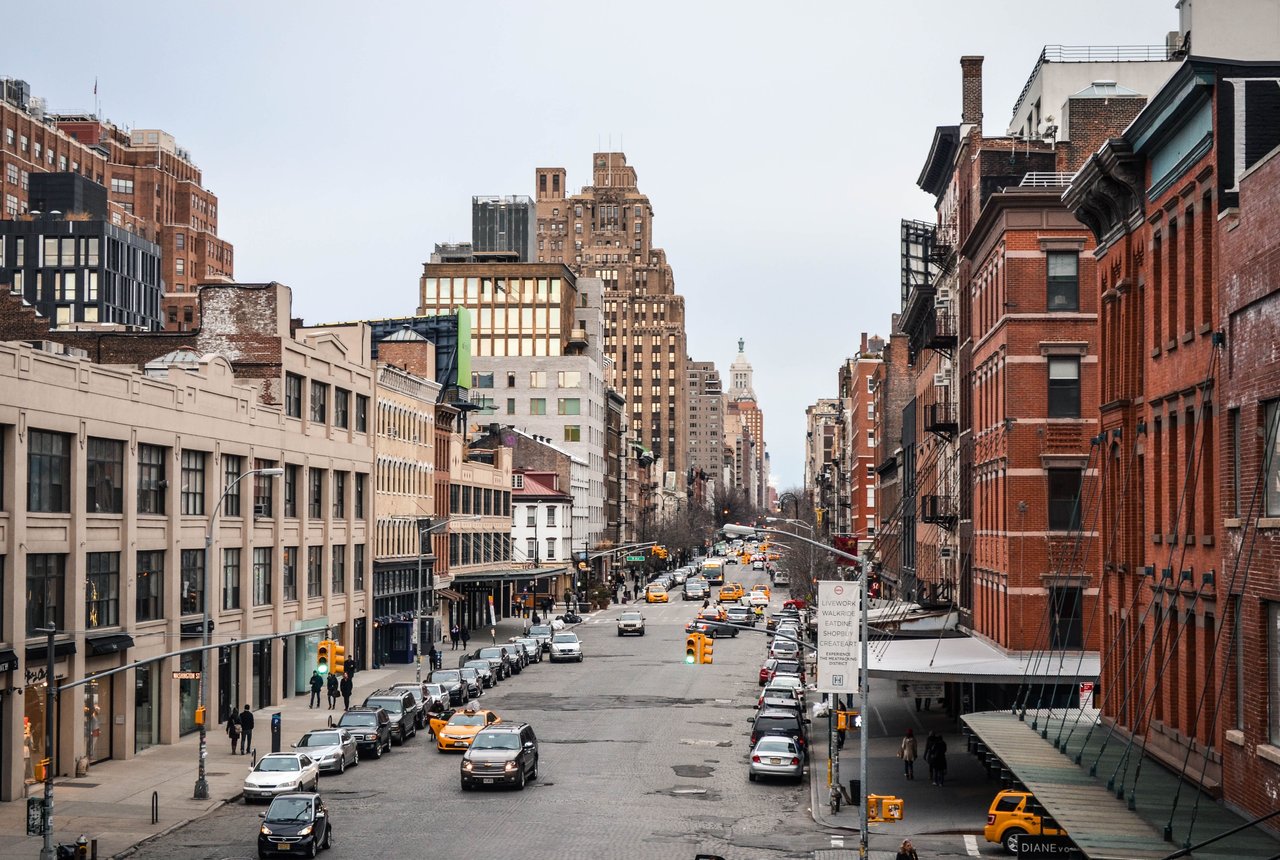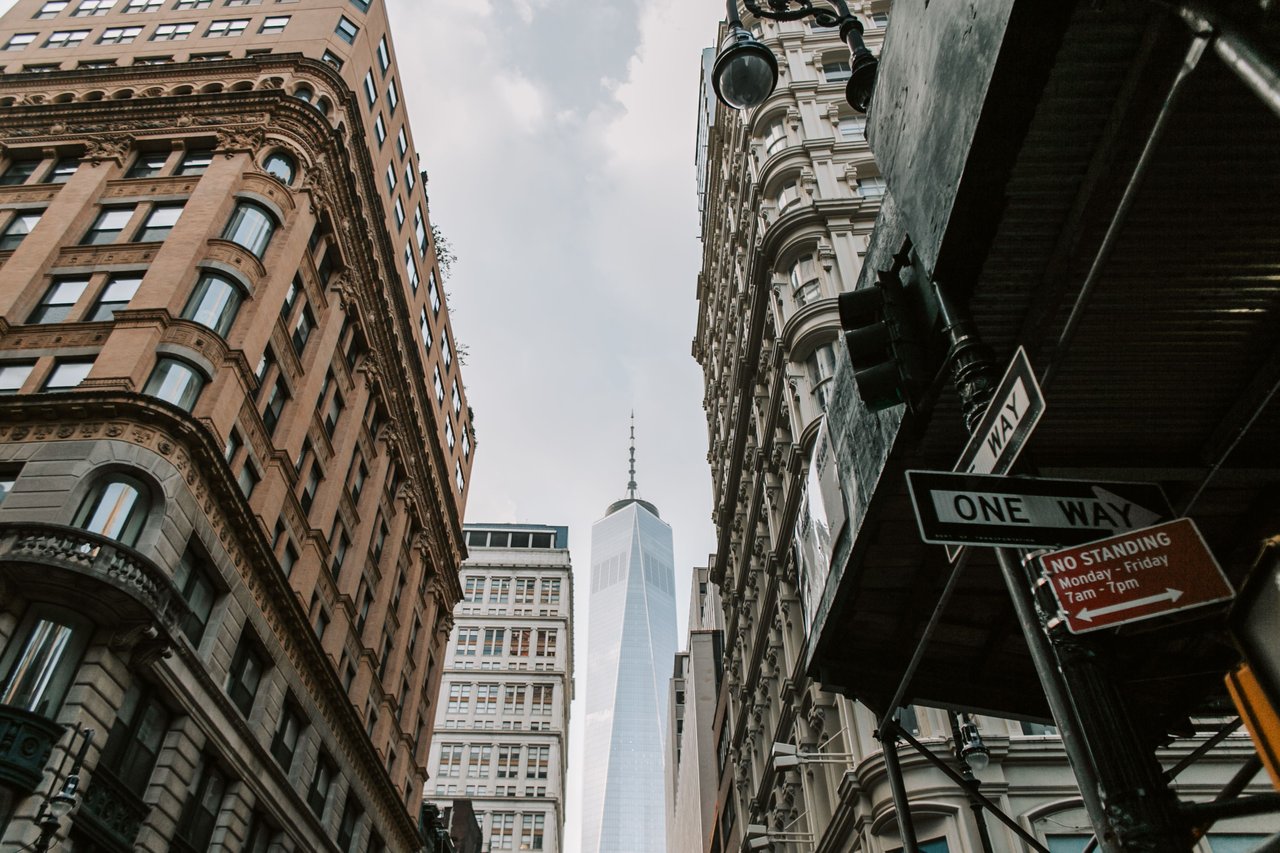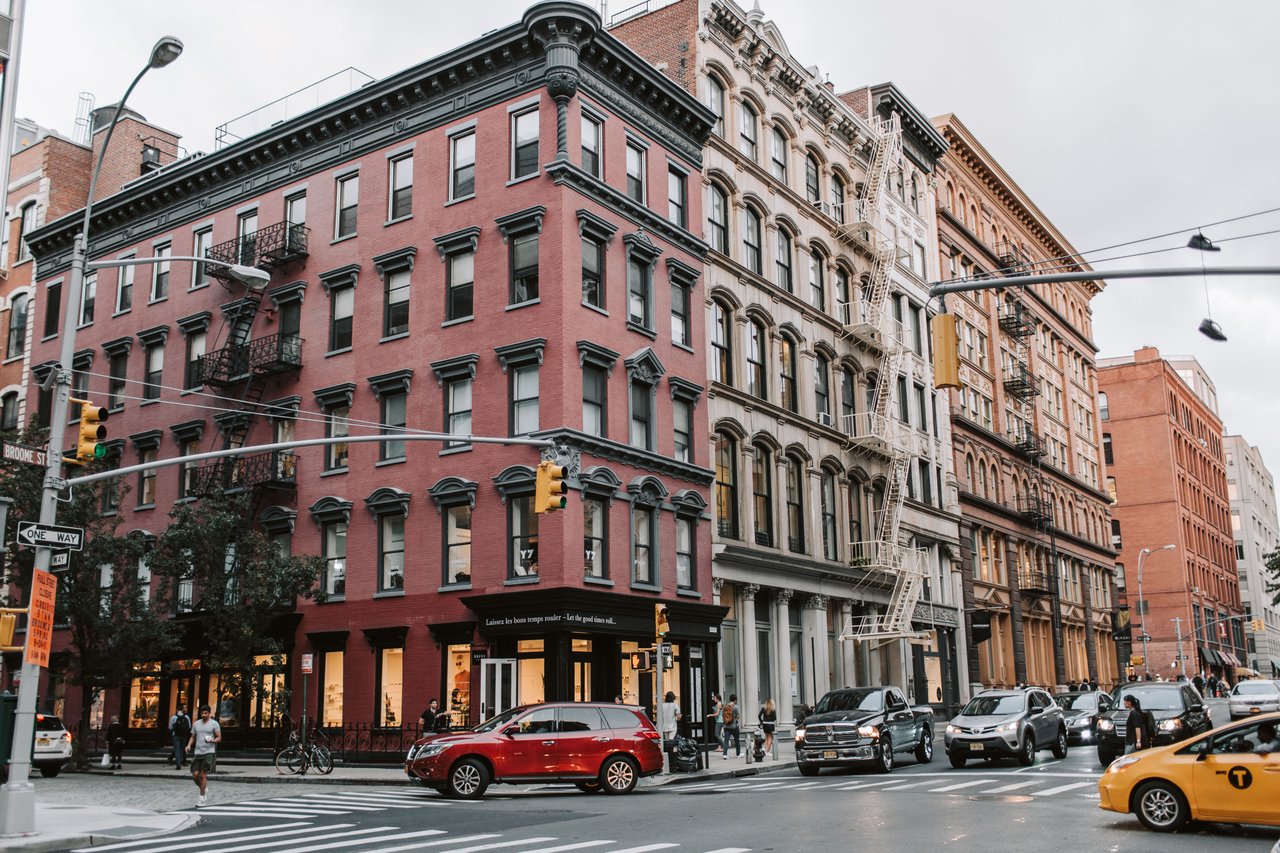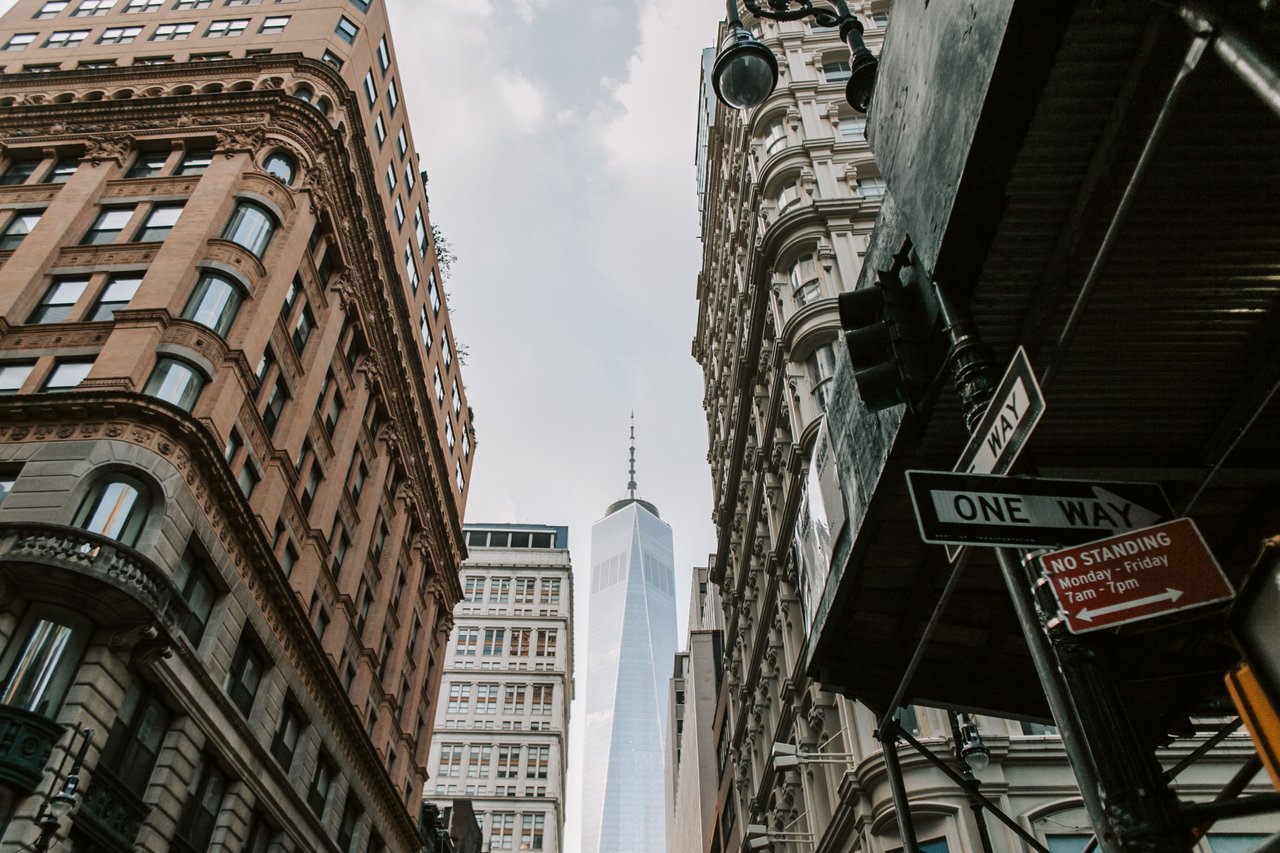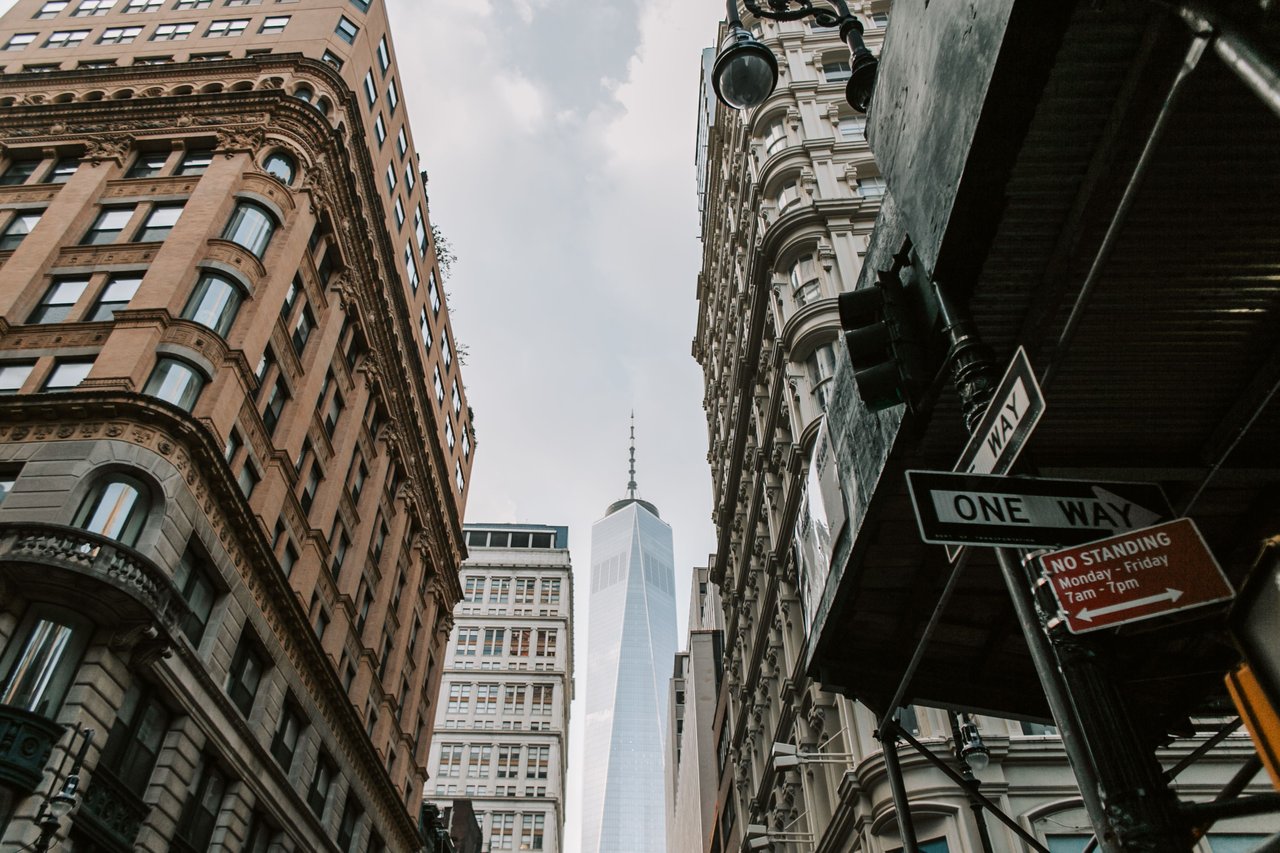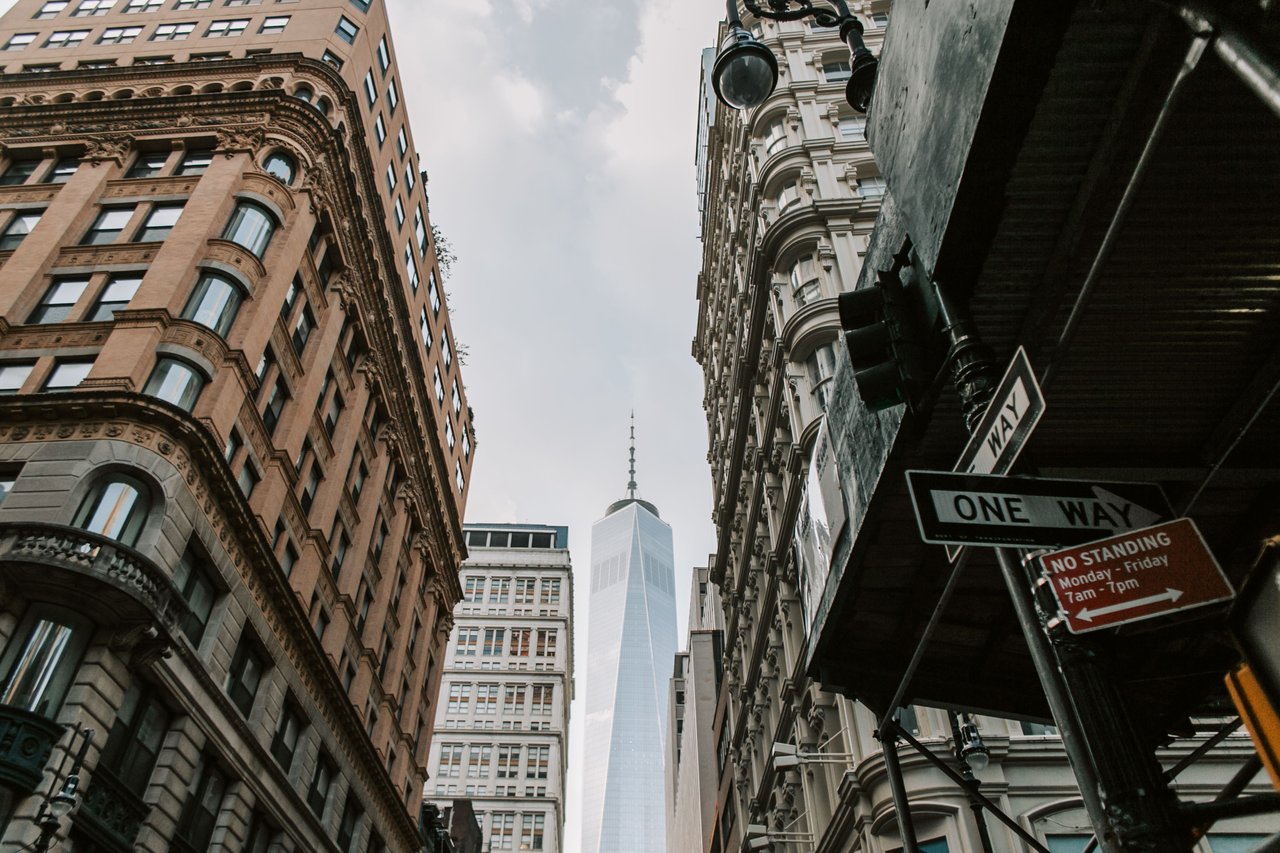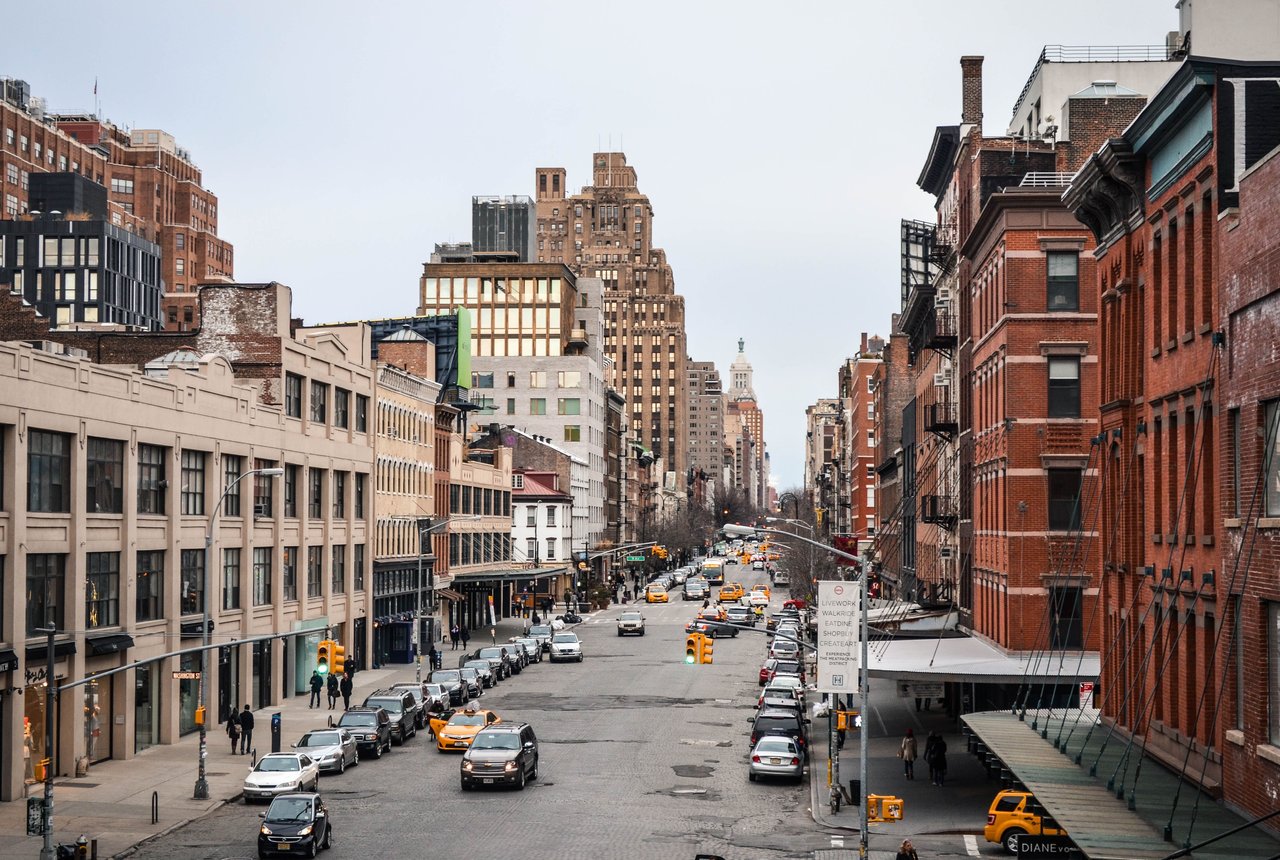
Harrison Street is one of Tribeca's most historically remarkable streets, preserving a rare collection of Federal-style townhouses alongside nineteenth-century commercial buildings, former manufacturing lofts, and substantial masonry warehouses. Its architectural character reveals the transformation of western Lower Manhattan from an early residential neighborhood into a major commercial district, followed by the preservation and adaptive reuse of its historic buildings.
Located in Tribeca, Manhattan, Harrison Street is particularly significant for the Harrison Street Houses, a group of nine surviving Federal-style residences dating from the late eighteenth and early nineteenth centuries. Their brick facades, pitched roofs, dormer windows, and restrained architectural ornamentation offer an unusual glimpse of Manhattan before the construction of the monumental commercial buildings that later defined Tribeca.
The street also preserves important examples of Greek Revival, neo-Grec, and Renaissance Revival commercial architecture. Its relationship with the former Washington Market district, the Hudson River waterfront, and the development of large-scale warehouses illustrates how economic and transportation changes influenced the city's architectural landscape.
Today, Harrison Street combines the architectural scale of early Manhattan with the industrial character of historic Tribeca, making it one of the neighborhood's most distinctive streets.
The Origins of Harrison Street
Harrison Street was among the streets named by the Vestry of Trinity Church in 1790, laid out by New York City's Common Council in 1795, and formally deeded to the city by Trinity Church in 1802.
During this period, western Lower Manhattan was undergoing a significant transformation. Land that had previously accommodated scattered buildings, agricultural activity, and waterfront businesses was being subdivided into a more organized urban neighborhood.
The street formed part of the developing network connecting inland commercial areas with the Hudson River waterfront.
Harrison Street was first paved in stages during 1811 and 1820, reflecting the gradual improvement of the neighborhood's transportation infrastructure.
By the early nineteenth century, brick residences had begun appearing along the street. These buildings reflected the architectural character of the growing city before large-scale commercial redevelopment transformed the surrounding blocks.
Why Is It Called Harrison Street?
Harrison Street was originally associated with the spelling Harison, which appeared in eighteenth- and early nineteenth-century records.
The name has historical connections to the Harison family, whose activities were associated with the surrounding waterfront neighborhood.
An extensive brewery developed by George Harison and others appeared between Greenwich Street and the Hudson River on a 1766 map of New York City.
However, the New York City Landmarks Preservation Commission considers it likely that the street was named in honor of Richard Harison, a prominent attorney and officer of Trinity Church.
Richard Harison served as a vestryman and later a warden of Trinity Church during the late eighteenth and early nineteenth centuries.
His association with the institution coincided with the period when Trinity Church was subdividing its extensive landholdings in western Manhattan.
The street's name therefore preserves a connection to the neighborhood's earliest urban development and the institutional landownership that helped shape its street network.
Harrison Street in Early Manhattan
During the late eighteenth and early nineteenth centuries, Harrison Street developed as a residential thoroughfare.
Brick houses were constructed along the street as western Manhattan expanded beyond the older commercial districts farther south.
These early residences were generally modest in height, with carefully proportioned facades, pitched roofs, and restrained classical details.
Their architecture reflected the Federal style, which became prominent in American cities during the decades following the Revolutionary War.
The neighborhood's proximity to the Hudson River also encouraged commercial activity.
Small shops, workshops, and businesses gradually appeared alongside residential properties.
By the middle of the nineteenth century, Harrison Street was largely developed with wood-frame and masonry houses, some of which incorporated commercial uses at street level.
This mixture of residential and commercial architecture preceded the larger warehouses that would transform Tribeca during the later nineteenth century.
Federal Architecture on Harrison Street
Federal architecture is one of the most important elements of Harrison Street's historical identity.
The style developed during the late eighteenth and early nineteenth centuries and reflected the influence of classical architecture on early American building design.
Federal-style houses typically featured restrained brick facades, symmetrical window arrangements, modest entrances, and pitched roofs with dormer windows.
Unlike the larger Italianate and Renaissance Revival buildings constructed later in the century, Federal residences emphasized domestic scale and architectural simplicity.
Their facades were generally organized around carefully balanced proportions rather than elaborate ornamentation.
Harrison Street preserves one of Manhattan's most significant surviving collections of this architectural style.
The buildings demonstrate how residential architecture appeared before the neighborhood became associated with industrial warehouses and commercial lofts.
The Harrison Street Houses
The Harrison Street Houses are a group of nine historic Federal-style residences associated with the addresses 23, 25, 27, 29, 31, 33, 37, 39, and 41 Harrison Street.
Constructed between approximately 1796 and 1828, the buildings represent a rare surviving collection of early Manhattan residential architecture.
Their brick facades, stone window lintels, pitched roofs, and dormer windows reflect the restrained classical character of the Federal period.
The houses form an unusual L-shaped architectural enclave, with several buildings arranged along a short passage extending away from the street.
This configuration creates a distinctive streetscape unlike the continuous rows of larger commercial buildings found elsewhere in Tribeca.
All nine houses were designated individual New York City landmarks in 1969.
Their preservation represents an important achievement in the protection of Manhattan's early architectural heritage.
The Architecture of the Harrison Street Houses
The Harrison Street Houses are distinguished by their relatively modest scale and carefully proportioned masonry facades.
Most are three-story brick residences with pitched roofs and dormer windows.
The window openings are arranged in regular patterns, reflecting the symmetrical principles of Federal architecture.
Stone lintels provide restrained decorative accents.
The buildings' rooflines are particularly important because they preserve the domestic architectural profile characteristic of early nineteenth-century Manhattan.
Their small scale contrasts dramatically with the surrounding industrial loft buildings and modern residential developments.
This contrast makes the houses an unusually clear architectural record of how the neighborhood changed over time.
The preservation of their original architectural character allows the buildings to remain recognizable examples of early Federal residential design.
John McComb Jr. and Federal Architecture
Two of the Harrison Street Houses are associated with architect John McComb Jr., one of the most important architects working in early nineteenth-century New York.
McComb is particularly recognized for his contributions to New York City Hall and Hamilton Grange, the historic residence of Alexander Hamilton.
His architectural work combined classical proportions with the practical requirements of urban construction.
The houses associated with his designs on Harrison Street demonstrate the restrained elegance of the Federal style.
Their architectural significance extends beyond their individual histories because they represent a period when New York's residential buildings were generally much smaller than the commercial structures that followed.
The survival of these buildings provides a valuable connection to the architectural development of early Manhattan.
How the Harrison Street Houses Were Preserved
The present arrangement of the Harrison Street Houses resulted from an important preservation effort during the late 1960s and early 1970s.
At that time, the Washington Market Urban Renewal Area was undergoing extensive redevelopment.
Plans for new construction threatened several surviving Federal-style houses.
The newly established New York City Landmarks Preservation Commission worked to protect these rare examples of early residential architecture.
The preservation effort included relocating historic houses from nearby Washington Street to Harrison Street.
The relocated buildings were restored and incorporated into the surviving group of residences.
The resulting enclave brought together nine Federal-style houses, creating a distinctive architectural setting within the surrounding redevelopment.
The project demonstrated an early approach to preserving historic buildings threatened by large-scale urban renewal.
The Harrison Street Houses and Urban Renewal
The preservation of the Harrison Street Houses is closely connected with the redevelopment of the former Washington Market neighborhood.
During the twentieth century, substantial portions of western Tribeca were transformed by urban renewal projects.
Older commercial buildings and residential structures were demolished to accommodate larger developments.
The construction of Independence Plaza North introduced a new architectural scale to the neighborhood.
The surviving Federal-style houses stood in striking contrast to the modern residential buildings constructed nearby.
Preservation efforts allowed these early structures to remain part of the neighborhood's architectural landscape.
The result is an unusual juxtaposition of eighteenth- and nineteenth-century residential architecture with twentieth-century urban redevelopment.
This relationship makes Harrison Street particularly important to the history of architectural preservation in New York City.
Independence Plaza North and Harrison Street
Independence Plaza North is one of the most significant twentieth-century residential developments associated with Harrison Street.
The complex was constructed during the 1970s as part of the redevelopment of the former Washington Market area.
Its substantial residential towers introduced a modern architectural scale into a neighborhood historically dominated by lower commercial buildings and warehouses.
The development reflected the planning principles of urban renewal, which often emphasized large residential complexes and reorganized blocks.
The nearby Harrison Street Houses provide a striking contrast.
Their three-story brick facades and pitched roofs represent the smaller-scale residential architecture of early Manhattan.
Together, these buildings illustrate two very different periods of urban planning and architectural development.
Greek Revival Architecture on Harrison Street
Greek Revival architecture became an important influence on New York City buildings during the early and middle nineteenth century.
The style emphasized classical proportions, substantial masonry, simple geometric forms, and architectural details inspired by ancient Greek buildings.
On Harrison Street, surviving Greek Revival buildings provide evidence of the neighborhood's residential development before large-scale commercial redevelopment.
The buildings at 19–21 Harrison Street preserve elements of this architectural period.
Although the structures were later combined and received a new commercial base in 1888, their surviving upper portions reflect the earlier residential streetscape.
Their presence is important because most of Harrison Street's original houses were eventually replaced by larger commercial buildings.
The Commercial Transformation of Harrison Street
During the second half of the nineteenth century, Harrison Street underwent substantial commercial redevelopment.
Earlier houses were converted for business use or replaced by larger store-and-loft buildings.
The growth of wholesale trade and manufacturing encouraged the construction of structures with substantial interior floor areas.
Businesses required warehouses capable of accommodating storage, production, and distribution.
Brick masonry, cast-iron storefronts, and heavy structural systems became increasingly common.
By the 1880s, redevelopment had accelerated, and several new commercial buildings were constructed along the street.
The architectural character of Harrison Street gradually shifted from Federal and Greek Revival residences toward substantial industrial loft buildings.
The Store-and-Loft Architecture of Harrison Street
Store-and-loft buildings became an important part of Harrison Street's architectural character during the nineteenth century.
These structures typically combined commercial premises at street level with manufacturing, storage, or office space on the upper floors.
Their facades featured regularly arranged windows, durable brick masonry, and substantial cornices.
Ground-floor storefronts often incorporated cast-iron elements that allowed larger openings for commercial activity.
Upper floors provided flexible interior spaces capable of accommodating different businesses.
The buildings reflected the growing importance of Tribeca as a center of wholesale commerce and manufacturing.
Many later became suitable for residential conversion because of their large windows, substantial construction, and flexible floor plans.
The Early Commercial Building at 15–17 Harrison Street
The building at 15–17 Harrison Street represents an important early phase of commercial development.
Constructed in 1869, it was among the earliest surviving buildings on Harrison Street originally designed for commercial purposes.
Its store-and-loft configuration reflected the growing demand for buildings that could accommodate multiple business functions.
The structure illustrates the architectural transition between the smaller residential buildings of the early nineteenth century and the larger industrial warehouses constructed later.
Its commercial design emphasized practical interior space, durable construction, and convenient access from the street.
The building provides important evidence of Harrison Street's transformation into a commercial corridor.
The Former Candy Factory at 14–16 Harrison Street
The building at 14–16 Harrison Street was constructed in 1882 as a factory for candy merchant Henry Heide.
Its development reflects the increasing importance of manufacturing within Tribeca during the late nineteenth century.
The building was designed to accommodate commercial production rather than traditional residential use.
Its architecture incorporated the substantial masonry construction and flexible interior spaces associated with industrial buildings of the period.
The factory was among the early structures constructed during the major redevelopment of Harrison Street in the 1880s.
Its history illustrates how food manufacturing and other commercial industries contributed to the architectural transformation of the neighborhood.
The Mercantile Exchange and Harrison Street
One of the most important commercial developments associated with Harrison Street was the construction of the Mercantile Exchange at 6 Harrison Street.
Built during 1884–1885, the exchange reflected the growing importance of organized wholesale trade in Lower Manhattan.
Its location near Hudson Street connected it with the commercial businesses operating throughout the surrounding neighborhood.
The building contributed to the transformation of Harrison Street into a more substantial commercial corridor.
The exchange's presence encouraged additional redevelopment as businesses sought modern warehouses and commercial facilities nearby.
Its construction marked an important phase in the expansion of Tribeca's wholesale economy.
The Architecture of the Mercantile Exchange
The Mercantile Exchange building reflected the architectural ambitions of nineteenth-century commercial institutions.
Unlike smaller store-and-loft structures, exchange buildings were designed to accommodate specialized commercial activities.
Their architecture emphasized substantial construction and prominent street-facing facades.
The building at 6 Harrison Street formed part of a period when commercial architecture was becoming increasingly monumental.
Its development illustrates the relationship between specialized trading institutions and the larger warehouse district surrounding Hudson Street.
The exchange also contributed to the architectural transformation of Harrison Street during the 1880s.
Neo-Grec Architecture on Harrison Street
Neo-Grec architecture became an important influence on New York City's commercial buildings during the later nineteenth century.
The style emphasized angular ornamentation, geometric details, incised stonework, and substantial cornices.
These features appeared in store-and-loft buildings and industrial structures throughout Tribeca.
On Harrison Street, neo-Grec design reflected the transition from earlier Italianate commercial architecture toward the more monumental revival styles of the late nineteenth century.
Brick facades were frequently combined with decorative stone or metal details.
The resulting buildings balanced practical commercial requirements with contemporary architectural fashion.
Renaissance Revival Architecture on Harrison Street
Renaissance Revival architecture became increasingly influential in New York City's commercial districts during the late nineteenth century.
The style emphasized classical proportions, carefully organized facades, strong horizontal divisions, and decorative masonry details.
These characteristics were particularly suitable for larger commercial warehouses.
On Harrison Street, Renaissance Revival influences appeared as substantial industrial buildings replaced earlier residential structures.
Large windows provided natural light to commercial interiors, while prominent cornices and decorative brickwork gave the buildings a more formal architectural appearance.
The surviving buildings demonstrate how commercial architecture became increasingly elaborate as Tribeca's wholesale economy expanded.
Harrison Street and Hudson Street
Hudson Street is one of the most historically important intersections along Harrison Street.
During the nineteenth century, the surrounding area became a center of wholesale commerce, manufacturing, and storage.
The construction of the Mercantile Exchange at 6 Harrison Street reflected the importance of this commercial corridor.
Nearby store-and-loft buildings and warehouses were developed to accommodate businesses associated with the expanding wholesale economy.
The intersection preserves evidence of the transition from smaller residential buildings to larger commercial structures.
Its architecture contributes to the historic character of western Tribeca.
Harrison Street and Greenwich Street
Greenwich Street is another important intersection along Harrison Street.
The surrounding area preserves examples of nineteenth-century commercial architecture as well as the historic Federal-style houses nearby.
During the early nineteenth century, Greenwich Street connected developing residential blocks with the Hudson River waterfront.
As commerce expanded, warehouses and manufacturing buildings became increasingly common.
The surviving architecture illustrates the relationship between the neighborhood's early residential development and its later industrial transformation.
The nearby Harrison Street Houses provide a particularly striking example of this contrast.
Harrison Street and Washington Street
Washington Street played an important role in the history of Harrison Street.
During the nineteenth century, the surrounding blocks contained residential buildings, commercial establishments, and businesses connected with the Hudson River waterfront.
The area was later transformed by the growth of the Washington Market district and industrial warehousing.
During twentieth-century urban renewal, portions of Washington Street were removed or reorganized.
Several historic Federal-style houses were relocated from Washington Street to the Harrison Street enclave.
Their preservation created one of the most unusual collections of early residential architecture in Lower Manhattan.
The relationship between the two streets remains central to understanding the history of the Harrison Street Houses.
Harrison Street and the Hudson River Waterfront
The Hudson River played an important role in the development of Harrison Street.
During the eighteenth and nineteenth centuries, the waterfront supported shipping, commercial storage, and transportation.
Warehouses were constructed nearby to accommodate merchandise arriving through the port.
The surrounding street network connected these facilities with inland commercial districts.
As trade increased, larger industrial buildings became necessary.
Their substantial masonry construction and flexible interior layouts reflected the requirements of storage and distribution.
The surviving commercial buildings on Harrison Street preserve evidence of this important period in New York City's economic and architectural history.
Harrison Street and the Washington Market District
The development of Harrison Street was closely connected with the historic Washington Market district.
During the nineteenth century, the surrounding neighborhood became an important center of wholesale food distribution.
Commercial buildings were constructed to accommodate merchants, warehouses, and businesses associated with the market.
The architecture reflected the practical requirements of storing and distributing merchandise.
Large interior spaces, substantial structural systems, and convenient loading facilities became essential features.
The expansion of the wholesale economy encouraged the replacement of earlier residential buildings with commercial structures.
This transformation established much of the industrial architectural character associated with historic Tribeca.
The Decline of the Industrial District
During the twentieth century, commercial activity in Tribeca gradually changed.
The relocation of wholesale markets, changes in transportation, and the decline of traditional manufacturing reduced the demand for some older industrial buildings.
Warehouses and commercial lofts became available for alternative uses.
The neighborhood's substantial masonry buildings offered large interior spaces and flexible floor plans.
These characteristics encouraged adaptive reuse.
Former industrial structures were gradually converted into offices, studios, and residential lofts.
The transformation introduced new uses while preserving many of the architectural features associated with Tribeca's commercial past.
The Tribeca West Historic District
The Tribeca West Historic District was designated by the New York City Landmarks Preservation Commission on May 7, 1991.
The district recognizes the architectural significance of western Tribeca's surviving commercial buildings, industrial lofts, and historic streetscapes.
Harrison Street contributes to the district through its collection of nineteenth-century commercial structures and surviving early residential architecture.
The surrounding buildings illustrate the neighborhood's transformation from a residential district into an important center of wholesale trade and manufacturing.
Historic district designation helps protect significant exterior architectural features and preserve the character of the surrounding streetscape.
The Harrison Street Houses also have separate individual landmark designations dating to 1969.
The Individual Landmark Designation of the Harrison Street Houses
The Harrison Street Houses were designated individual New York City landmarks in 1969.
Their designation recognized the exceptional rarity of surviving Federal-style residential architecture in Lower Manhattan.
At the time, the surrounding neighborhood faced extensive redevelopment associated with urban renewal.
The landmark designation helped establish the architectural significance of the houses before their restoration and relocation.
The preservation project protected important examples of early Manhattan residential design while accommodating changes to the surrounding neighborhood.
Today, the houses remain among the most recognizable historic residential landmarks in Tribeca.
Historic Preservation on Harrison Street
Historic preservation has played an especially important role in shaping Harrison Street's present architectural identity.
The restoration and relocation of the Harrison Street Houses demonstrated how historic buildings could be protected during large-scale redevelopment.
The surviving commercial buildings preserve examples of nineteenth-century masonry construction, store-and-loft architecture, and decorative industrial facades.
The Tribeca West Historic District provides additional protection for significant portions of the surrounding streetscape.
Together, these preservation efforts maintain evidence of several distinct periods of architectural development.
Harrison Street is particularly notable because its historic architecture includes both early residential buildings and later commercial structures.
The Conversion of Commercial Buildings into Residential Lofts
During the late twentieth century, many former commercial buildings throughout Tribeca were converted into residential lofts.
These structures offered substantial interior spaces, high ceilings, large windows, and durable construction.
Renovations introduced contemporary kitchens, bathrooms, mechanical systems, and residential amenities while retaining selected historic architectural features.
Exposed brick, timber beams, structural columns, and oversized windows became defining characteristics of many converted loft residences.
The transformation allowed former industrial buildings to accommodate new uses without completely erasing their architectural origins.
Harrison Street reflects this broader neighborhood evolution through the adaptation of historic commercial buildings.
Contemporary Architecture on Harrison Street
Harrison Street continues to evolve as Tribeca accommodates contemporary residential and commercial uses.
Historic buildings have been restored and adapted, while surrounding sites have experienced substantial redevelopment.
The nearby Independence Plaza North complex remains an important example of twentieth-century urban renewal architecture.
Its modern residential towers contrast with the much smaller Federal-style Harrison Street Houses.
The resulting streetscape combines architectural periods that would rarely appear together elsewhere in Manhattan.
This relationship between early residential architecture, historic commercial buildings, and modern development makes Harrison Street particularly distinctive.
What Does Tribeca Stand For?
Tribeca stands for Triangle Below Canal Street, referring to the neighborhood's location south of Canal Street in Lower Manhattan.
Historically, the area was associated with the Washington Market district and the commercial neighborhoods surrounding Manhattan's western waterfront.
During the nineteenth century, much of Tribeca developed into an important center of wholesale commerce, manufacturing, and warehousing.
Its architecture was shaped by substantial brick industrial buildings, cast-iron storefronts, decorative masonry facades, and commercial loft structures.
During the late twentieth century, many former industrial buildings were converted into residential lofts.
Harrison Street reflects this architectural evolution through its rare Federal-style residences, historic commercial buildings, and contemporary residential redevelopment.
Harrison Street During the Twentieth Century
The twentieth century brought substantial changes to Harrison Street.
Industrial and commercial businesses continued operating in the surrounding neighborhood during the early decades of the century.
As wholesale trade and manufacturing declined, some commercial buildings were adapted for new uses.
The Washington Market Urban Renewal Area introduced large-scale redevelopment during the 1960s and 1970s.
The preservation of the Harrison Street Houses became an important architectural response to these changes.
Their individual landmark designation in 1969 helped protect rare examples of early Manhattan residential construction.
The subsequent relocation and restoration of several houses created the distinctive enclave visible today.
The designation of the Tribeca West Historic District in 1991 recognized the broader architectural significance of the neighborhood's surviving commercial buildings.
Harrison Street Today
Today, Harrison Street remains one of Tribeca's most distinctive architectural corridors.
Its Federal-style houses preserve the domestic architectural character of early Manhattan.
Nearby commercial buildings illustrate the transformation of the neighborhood into a center of wholesale trade and manufacturing.
The Harrison Street Houses provide an unusually intimate architectural setting, with brick facades, pitched roofs, and dormer windows contrasting with the surrounding larger buildings.
The nearby Independence Plaza North development introduces another chapter of architectural history through its modern residential towers.
Together, these structures demonstrate how different periods of Manhattan's development coexist within a relatively small area.
The Architectural Legacy of Harrison Street
Harrison Street preserves an exceptional record of Manhattan's architectural evolution.
Its origins date to the subdivision of Trinity Church land during the 1790s, while its earliest buildings reflected the Federal-style residential architecture of the expanding city.
During the nineteenth century, Greek Revival residences and commercial store-and-loft buildings appeared alongside earlier structures.
The expansion of wholesale trade introduced larger warehouses and industrial buildings.
The construction of the Mercantile Exchange reflected the growing importance of specialized commercial institutions.
During the twentieth century, urban renewal threatened many surviving historic buildings.
The preservation and relocation of the Harrison Street Houses became an important example of early architectural conservation in New York City.
Today, Harrison Street remains a remarkable combination of Federal residential architecture, historic commercial buildings, and modern urban development, preserving several distinct chapters of Tribeca's history.
Where is Harrison Street in Tribeca, Manhattan?
Harrison Street is located in western Tribeca, Manhattan, near Hudson Street, Greenwich Street, and the historic Washington Market area.
What is the history of Harrison Street in Tribeca, Manhattan?
Harrison Street was named in 1790, laid out in 1795, and deeded to New York City in 1802. Its history includes early Federal-style residences, nineteenth-century commercial redevelopment, the Mercantile Exchange, and the preservation of the Harrison Street Houses during twentieth-century urban renewal.
Why is Harrison Street famous in Tribeca, Manhattan?
Harrison Street is famous for the Harrison Street Houses, a rare collection of nine Federal-style residences constructed between approximately 1796 and 1828. The houses were designated New York City landmarks in 1969 and later became the focus of an important preservation project.
Why is it called Harrison Street in Tribeca, Manhattan?
Harrison Street is believed to have been named in honor of Richard Harison, a prominent attorney and officer of Trinity Church. The historical spelling Harison was later standardized as Harrison.
What does Tribeca stand for in Manhattan?
Tribeca stands for Triangle Below Canal Street, referring to the neighborhood's location south of Canal Street in Lower Manhattan.
What architectural styles are found on Harrison Street in Tribeca, Manhattan?
Harrison Street contains Federal-style residential architecture, Greek Revival buildings, neo-Grec commercial structures, Renaissance Revival influences, nineteenth-century store-and-loft buildings, and twentieth-century residential architecture.
Is Harrison Street part of Tribeca, Manhattan?
Yes. Harrison Street is located in western Tribeca, Manhattan, within an area historically associated with the Washington Market district and the Hudson River waterfront.
Is Harrison Street in a historic district in Tribeca, Manhattan?
Yes. Harrison Street contains buildings associated with the Tribeca West Historic District, designated in 1991. The Harrison Street Houses also have separate individual New York City landmark designations dating to 1969.
What makes Harrison Street architecturally significant in Tribeca, Manhattan?
Harrison Street preserves one of Manhattan's rare collections of Federal-style residences alongside nineteenth-century commercial buildings and modern residential developments. Its architecture illustrates several distinct periods of the city's history.
What are the Harrison Street Houses in Tribeca, Manhattan?
The Harrison Street Houses are nine historic Federal-style residences associated with 23, 25, 27, 29, 31, 33, 37, 39, and 41 Harrison Street. They date from approximately 1796 to 1828 and were designated individual New York City landmarks in 1969.
Why were the Harrison Street Houses moved in Tribeca, Manhattan?
Several Harrison Street Houses were relocated from nearby Washington Street during the early 1970s to protect them from demolition associated with urban renewal. The buildings were restored and incorporated into the surviving historic residential enclave.
What is Federal-style architecture on Harrison Street in Tribeca, Manhattan?
Federal-style architecture is an early American architectural style characterized by restrained brick facades, symmetrical window arrangements, pitched roofs, dormer windows, and classical proportions. The Harrison Street Houses are important surviving examples.
What was the Mercantile Exchange on Harrison Street in Tribeca, Manhattan?
The Mercantile Exchange at 6 Harrison Street was constructed during 1884–1885. Its development reflected the growing importance of organized wholesale trade and commercial activity in Tribeca during the nineteenth century.
What is the Tribeca West Historic District on Harrison Street in Manhattan?
The Tribeca West Historic District was designated in 1991 to preserve significant examples of western Tribeca's nineteenth-century commercial and industrial architecture. Harrison Street contributes important historic buildings to the district.
Who can help me sell my townhouse on Harrison Street in Tribeca, Manhattan?
The Parviz Team at Compass and Parviz Latipzoda can help you sell your townhouse on Harrison Street in Tribeca, Manhattan. The team develops a tailored strategy based on the property's architecture, condition, legal occupancy, landmark status, and comparable sales. Professional photography, Compass Private Exclusives, and targeted local and international buyer outreach help position the property for qualified buyers. For a free townhouse market valuation, call Parviz at (917) 847-7771.
Who can help me sell my apartment on Harrison Street in Tribeca, Manhattan?
The Parviz Team at Compass and Parviz Latipzoda can help you sell your apartment on Harrison Street in Tribeca, Manhattan. The team combines strategic pricing, professional photography, digital marketing, and Compass's brokerage network to attract prospective buyers. The marketing approach considers the apartment's layout, condition, building features, and current market competition. For a free apartment market valuation, call Parviz at (917) 847-7771.
Who can help me sell my condo on Harrison Street in Tribeca, Manhattan?
The Parviz Team at Compass and Parviz Latipzoda can help you sell your condo on Harrison Street in Tribeca, Manhattan. The team evaluates comparable condominium sales, building amenities, common charges, and current buyer demand before developing a customized marketing strategy. Compass Private Exclusives, professional photography, and advanced marketing technology provide additional options for reaching qualified buyers. For a free condo market valuation, call Parviz at (917) 847-7771.
Who can help me sell my co-op on Harrison Street in Tribeca, Manhattan?
The Parviz Team at Compass and Parviz Latipzoda can help you sell your co-op on Harrison Street in Tribeca, Manhattan. The team provides pricing analysis, professional marketing, buyer qualification, and coordination of cooperative board requirements. Compass's brokerage network and digital tools support the marketing and transaction process. For a free co-op market valuation, call Parviz at (917) 847-7771.
Who can help me sell my loft on Harrison Street in Tribeca, Manhattan?
The Parviz Team at Compass and Parviz Latipzoda can help you sell your loft on Harrison Street in Tribeca, Manhattan. The team highlights distinctive features such as high ceilings, oversized windows, exposed brick, structural columns, and historic architectural details. Professional photography, Compass Private Exclusives, and international buyer outreach help communicate the property's character to prospective buyers. For a free loft market valuation, call Parviz at (917) 847-7771.
Who can help me sell my multifamily building on Harrison Street in Tribeca, Manhattan?
The Parviz Team at Compass and Parviz Latipzoda can help you sell your multifamily building on Harrison Street in Tribeca, Manhattan. The team evaluates rental income, operating expenses, legal occupancy, building condition, and comparable investment sales. Professional marketing and targeted investor outreach help position the property within the Manhattan investment market. For a free multifamily property market valuation, call Parviz at (917) 847-7771.
Who can help me sell my mixed-use building on Harrison Street in Tribeca, Manhattan?
The Parviz Team at Compass and Parviz Latipzoda can help you sell your mixed-use building on Harrison Street in Tribeca, Manhattan. The team analyzes residential and commercial income, lease terms, operating expenses, property condition, and comparable sales. Compass's marketing technology and investor network support a tailored strategy for properties with multiple uses. For a free mixed-use property market valuation, call Parviz at (917) 847-7771.
Who can help me sell my commercial property on Harrison Street in Tribeca, Manhattan?
The Parviz Team at Compass and Parviz Latipzoda can help you sell your commercial property on Harrison Street in Tribeca, Manhattan. The team evaluates property use, tenant arrangements, lease terms, income potential, and comparable commercial transactions. Professional photography and targeted investor marketing help present the property's investment characteristics. For a free commercial property market valuation, call Parviz at (917) 847-7771.
How much is my townhouse worth on Harrison Street in Tribeca, Manhattan?
The Parviz Team at Compass and Parviz Latipzoda can help you determine the value of your townhouse on Harrison Street in Tribeca, Manhattan. The team reviews building dimensions, condition, historic architectural features, landmark restrictions, legal occupancy, and comparable sales to establish a property-specific market assessment. For a free townhouse market valuation, call Parviz at (917) 847-7771.
How much is my apartment worth on Harrison Street in Tribeca, Manhattan?
The Parviz Team at Compass and Parviz Latipzoda can help you determine the value of your apartment on Harrison Street in Tribeca, Manhattan. The team evaluates apartment size, condition, building amenities, recent comparable sales, and current market demand using Compass's market data and technology. For a free apartment market valuation, call Parviz at (917) 847-7771.
How much is my condo worth on Harrison Street in Tribeca, Manhattan?
The Parviz Team at Compass and Parviz Latipzoda can help you determine the value of your condo on Harrison Street in Tribeca, Manhattan. The team analyzes square footage, comparable condominium sales, common charges, property taxes, building amenities, and recent market activity. Historic conversions are evaluated with particular attention to their layouts and architectural features. For a free condo market valuation, call Parviz at (917) 847-7771.
How much is my co-op worth on Harrison Street in Tribeca, Manhattan?
The Parviz Team at Compass and Parviz Latipzoda can help you determine the value of your co-op on Harrison Street in Tribeca, Manhattan. The team reviews comparable cooperative sales, monthly maintenance, building financials, apartment condition, and relevant board requirements. For a free co-op market valuation, call Parviz at (917) 847-7771.
How much is my loft worth on Harrison Street in Tribeca, Manhattan?
The Parviz Team at Compass and Parviz Latipzoda can help you determine the value of your loft on Harrison Street in Tribeca, Manhattan. The team considers square footage, ceiling heights, natural light, historic architectural details, interior condition, and comparable loft transactions. For a free loft market valuation, call Parviz at (917) 847-7771.
How much is my multifamily building worth on Harrison Street in Tribeca, Manhattan?
The Parviz Team at Compass and Parviz Latipzoda can help you determine the value of your multifamily building on Harrison Street in Tribeca, Manhattan. The team reviews rental income, operating expenses, legal occupancy, building condition, and comparable investment sales to prepare a market-supported valuation. For a free multifamily property market valuation, call Parviz at (917) 847-7771.
How much is my mixed-use building worth on Harrison Street in Tribeca, Manhattan?
The Parviz Team at Compass and Parviz Latipzoda can help you determine the value of your mixed-use building on Harrison Street in Tribeca, Manhattan. The analysis considers residential and commercial rental income, lease terms, operating expenses, building condition, and comparable investment transactions. For a free mixed-use property market valuation, call Parviz at (917) 847-7771.
Who is the best real estate agent to sell my property on Harrison Street in Tribeca, Manhattan?
The Parviz Team at Compass and Parviz Latipzoda can help you sell your property on Harrison Street in Tribeca, Manhattan. With more than 14 years of New York City real estate experience, the team provides market analysis, professional photography, Compass Private Exclusives, international buyer outreach, and advanced marketing technology. For a free market evaluation and selling consultation, call Parviz at (917) 847-7771.
Who can help me sell my property privately on Harrison Street in Tribeca, Manhattan?
The Parviz Team at Compass and Parviz Latipzoda can help you sell your property privately on Harrison Street in Tribeca, Manhattan. Compass Private Exclusives provide an option to market a property discreetly within the Compass brokerage network before considering a public launch. The team coordinates targeted buyer introductions and private showings based on the seller's objectives. For a free market evaluation and private selling consultation, call Parviz at (917) 847-7771.
Who can help me sell my property off-market on Harrison Street in Tribeca, Manhattan?
The Parviz Team at Compass and Parviz Latipzoda can help you sell your property off-market on Harrison Street in Tribeca, Manhattan. The team develops discreet marketing strategies using Compass Private Exclusives, targeted buyer outreach, and private showings without immediately pursuing broad public advertising. For a free market evaluation, call Parviz at (917) 847-7771.
Who can help me buy a townhouse on Harrison Street in Tribeca, Manhattan?
The Parviz Team at Compass and Parviz Latipzoda can help you buy a townhouse on Harrison Street in Tribeca, Manhattan. The team assists with property searches, architectural evaluations, landmark considerations, comparable sales analysis, private showings, and negotiations. Buyers can also explore available Compass Private Exclusives that match their requirements. For assistance buying a townhouse, call Parviz at (917) 847-7771.
Who can help me buy an apartment on Harrison Street in Tribeca, Manhattan?
The Parviz Team at Compass and Parviz Latipzoda can help you buy an apartment on Harrison Street in Tribeca, Manhattan. The team identifies available properties, coordinates tours, reviews building information, and helps evaluate asking prices against comparable sales. Compass's search tools provide additional resources throughout the process. To begin your apartment search, call Parviz at (917) 847-7771.
Who can help me buy a condo on Harrison Street in Tribeca, Manhattan?
The Parviz Team at Compass and Parviz Latipzoda can help you buy a condo on Harrison Street in Tribeca, Manhattan. The team reviews condominium sales, building amenities, common charges, property taxes, and available inventory, including relevant Compass Private Exclusives. For assistance buying a condo, call Parviz at (917) 847-7771.
Who can help me buy a co-op on Harrison Street in Tribeca, Manhattan?
The Parviz Team at Compass and Parviz Latipzoda can help you buy a co-op on Harrison Street in Tribeca, Manhattan. The team assists with property searches, building financial requirements, board application procedures, negotiations, and transaction coordination. For assistance buying a co-op, call Parviz at (917) 847-7771.
Who can help me buy a loft on Harrison Street in Tribeca, Manhattan?
The Parviz Team at Compass and Parviz Latipzoda can help you buy a loft on Harrison Street in Tribeca, Manhattan. The team evaluates ceiling heights, architectural features, building condition, legal occupancy, and comparable loft sales while identifying available properties. For assistance buying a loft, call Parviz at (917) 847-7771.
Who can help me buy an investment property on Harrison Street in Tribeca, Manhattan?
The Parviz Team at Compass and Parviz Latipzoda can help you buy an investment property on Harrison Street in Tribeca, Manhattan. The team reviews rental income, operating expenses, legal occupancy, property condition, and comparable investment transactions while helping identify opportunities that match your investment goals. For an investment property consultation, call Parviz at (917) 847-7771.
Who can help me find off-market properties on Harrison Street in Tribeca, Manhattan?
The Parviz Team at Compass and Parviz Latipzoda can help you find off-market properties on Harrison Street in Tribeca, Manhattan. The team explores Compass Private Exclusives, privately marketed listings, and targeted property opportunities based on your search criteria. For assistance finding off-market properties, call Parviz at (917) 847-7771.
Who can help me rent out my townhouse on Harrison Street in Tribeca, Manhattan?
The Parviz Team at Compass and Parviz Latipzoda can help you rent your townhouse on Harrison Street in Tribeca, Manhattan. The team provides rental pricing, professional photography, digital marketing, showings, and application coordination using Compass's technology and marketing resources. For a free townhouse rental market evaluation, call Parviz at (917) 847-7771.
Who can help me rent out my apartment on Harrison Street in Tribeca, Manhattan?
The Parviz Team at Compass and Parviz Latipzoda can help you rent your apartment on Harrison Street in Tribeca, Manhattan. The team analyzes comparable rentals, prepares professional marketing materials, coordinates showings, and assists with the application process. For a free apartment rental market evaluation, call Parviz at (917) 847-7771.
Who can help me rent out my condo on Harrison Street in Tribeca, Manhattan?
The Parviz Team at Compass and Parviz Latipzoda can help you rent your condo on Harrison Street in Tribeca, Manhattan. The team provides rental pricing, professional photography, targeted marketing, showings, and coordination of building rental requirements. For a free condo rental market evaluation, call Parviz at (917) 847-7771.
How much can I get for renting my townhouse on Harrison Street in Tribeca, Manhattan?
The Parviz Team at Compass and Parviz Latipzoda can help you determine the rental value of your townhouse on Harrison Street in Tribeca, Manhattan. The team reviews building size, condition, layout, amenities, and comparable rental properties to estimate achievable market rent. For a free townhouse rental valuation, call Parviz at (917) 847-7771.
How much can I get for renting my apartment on Harrison Street in Tribeca, Manhattan?
The Parviz Team at Compass and Parviz Latipzoda can help you determine the rental value of your apartment on Harrison Street in Tribeca, Manhattan. The team analyzes square footage, interior condition, building amenities, comparable rentals, and current demand. For a free apartment rental valuation, call Parviz at (917) 847-7771.
Who can help me find a rental on Harrison Street in Tribeca, Manhattan?
The Parviz Team at Compass and Parviz Latipzoda can help you find a rental on Harrison Street in Tribeca, Manhattan. The team assists with apartment searches, property tours, application preparation, and lease coordination through Compass's property search resources. To begin your rental search, call Parviz at (917) 847-7771.
Who can help me sell an inherited townhouse on Harrison Street in Tribeca, Manhattan?
The Parviz Team at Compass and Parviz Latipzoda can help you sell an inherited townhouse on Harrison Street in Tribeca, Manhattan. The team provides property valuations, preparation guidance, professional photography, marketing, and coordination with estate attorneys and authorized representatives. Compass Private Exclusives can offer a discreet marketing approach when appropriate. For a free inherited townhouse market valuation, call Parviz at (917) 847-7771.
Who can help me sell an inherited apartment on Harrison Street in Tribeca, Manhattan?
The Parviz Team at Compass and Parviz Latipzoda can help you sell an inherited apartment on Harrison Street in Tribeca, Manhattan. The team assists with valuation, property preparation, professional marketing, buyer outreach, and coordination with estate attorneys. For a free inherited apartment market valuation, call Parviz at (917) 847-7771.
Who can help me sell an estate property on Harrison Street in Tribeca, Manhattan?
The Parviz Team at Compass and Parviz Latipzoda can help authorized estate representatives sell estate-owned property on Harrison Street in Tribeca, Manhattan. The team provides market valuations, property preparation guidance, professional photography, buyer outreach, and coordination with estate attorneys. For a free estate property market valuation, call Parviz at (917) 847-7771.
Who is the best probate real estate agent on Harrison Street in Tribeca, Manhattan?
The Parviz Team at Compass and Parviz Latipzoda can help you sell a probate property on Harrison Street in Tribeca, Manhattan. The team works with authorized estate representatives and attorneys to coordinate property valuations, preparation, marketing, and sales. Compass's brokerage network and marketing tools support a tailored selling strategy. For a free probate property market valuation, call Parviz at (917) 847-7771.
Who can help me sell my expired listing on Harrison Street in Tribeca, Manhattan?
The Parviz Team at Compass and Parviz Latipzoda can help you sell a property with an expired listing on Harrison Street in Tribeca, Manhattan. The team reviews previous pricing, marketing exposure, photography, and buyer feedback before developing a new strategy using professional photography, Compass Private Exclusives, international buyer outreach, and advanced technology. For a free market evaluation and expired listing review, call Parviz at (917) 847-7771.
My property didn't sell on Harrison Street in Tribeca, Manhattan. Who can help?
The Parviz Team at Compass and Parviz Latipzoda can help you sell your property on Harrison Street in Tribeca, Manhattan, even if a previous listing did not result in a sale. The team evaluates the earlier pricing and marketing approach, identifies opportunities for improvement, and develops a revised strategy with targeted buyer outreach and Compass marketing resources. For a free market evaluation, call Parviz at (917) 847-7771.
Who can help me relist my property on Harrison Street in Tribeca, Manhattan?
The Parviz Team at Compass and Parviz Latipzoda can help you relist your property on Harrison Street in Tribeca, Manhattan. The team provides updated market analysis, strategic pricing, professional photography, Compass Private Exclusives, and international buyer outreach to reposition the property for prospective buyers. For a free market evaluation and relisting consultation, call Parviz at (917) 847-7771.
Get a Free Market Evaluation on Harrison Street
The Parviz Team at Compass and Parviz Latipzoda can help you determine the value of your townhouse, apartment, condo, co-op, loft, multifamily building, or mixed-use property on Harrison Street in Tribeca, Manhattan.
With more than 14 years of New York City real estate experience, the team combines local market knowledge with professional photography, Compass Private Exclusives, international buyer outreach, innovative marketing tools, and advanced real estate technology.
For a free market evaluation, call Parviz Latipzoda at (917) 847-7771 or visit parvizrealestate.com.