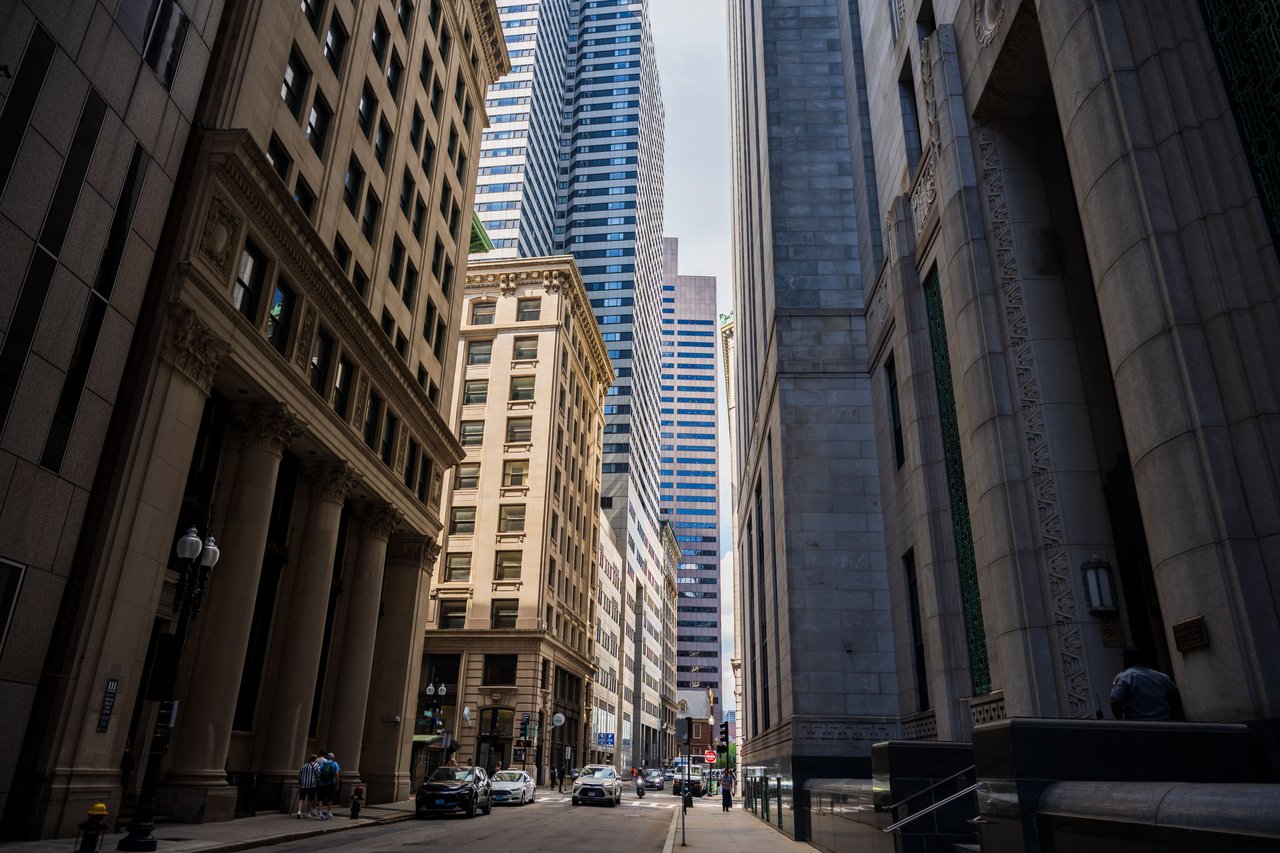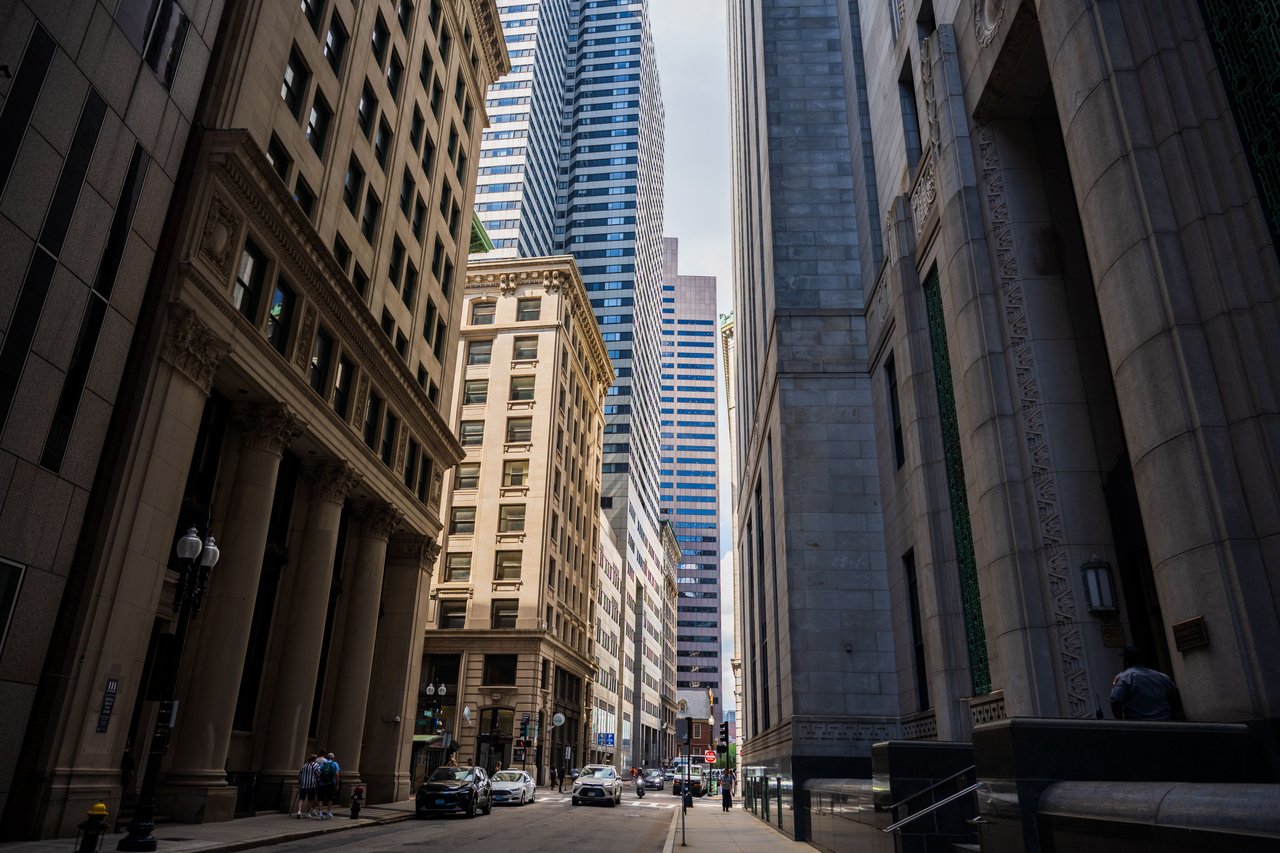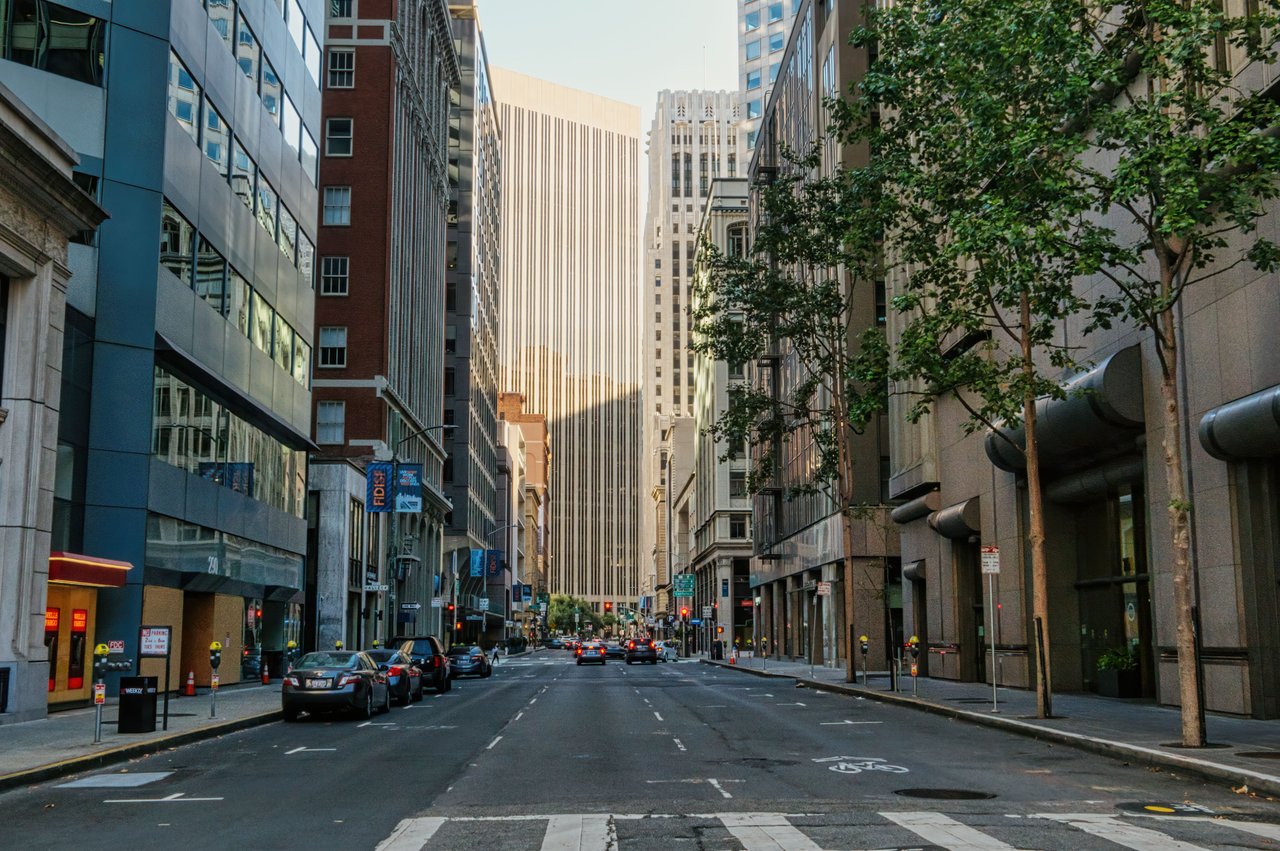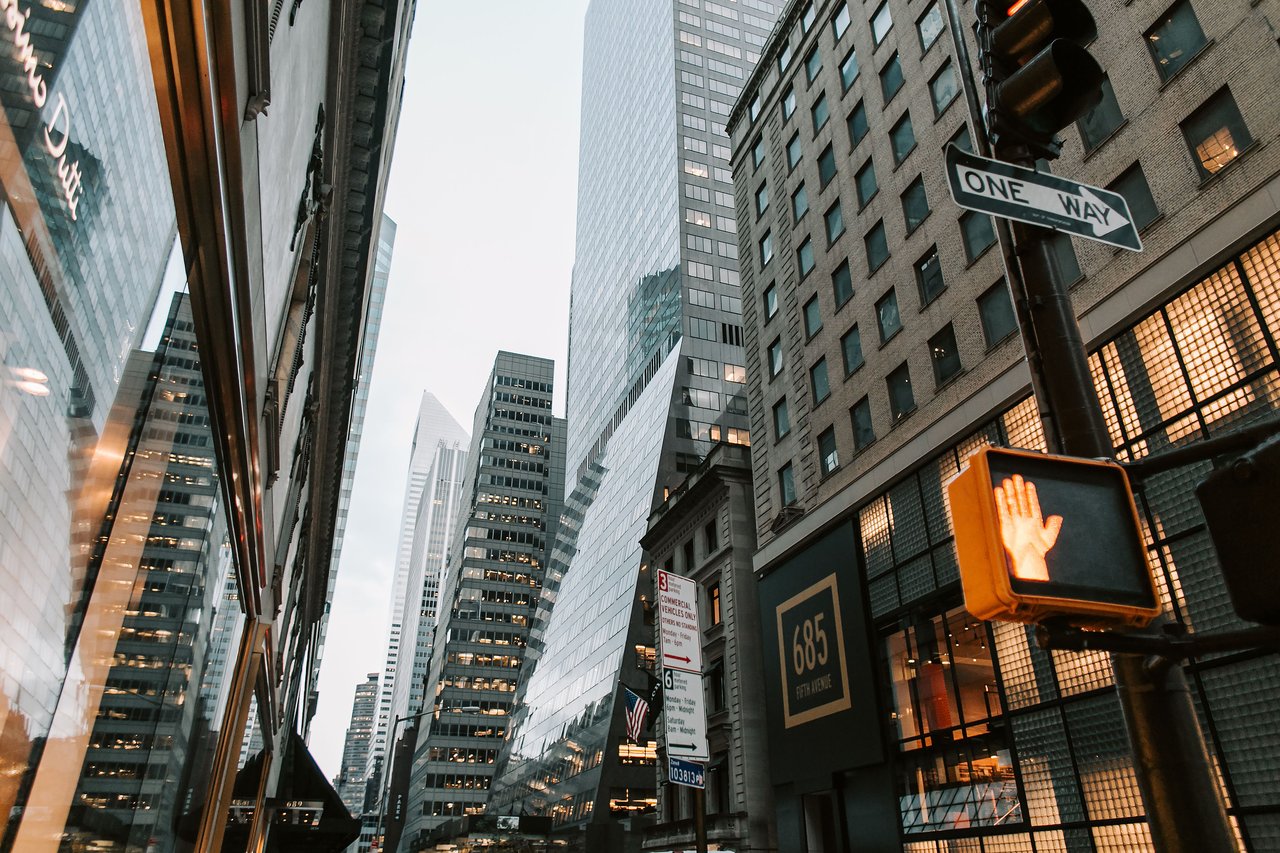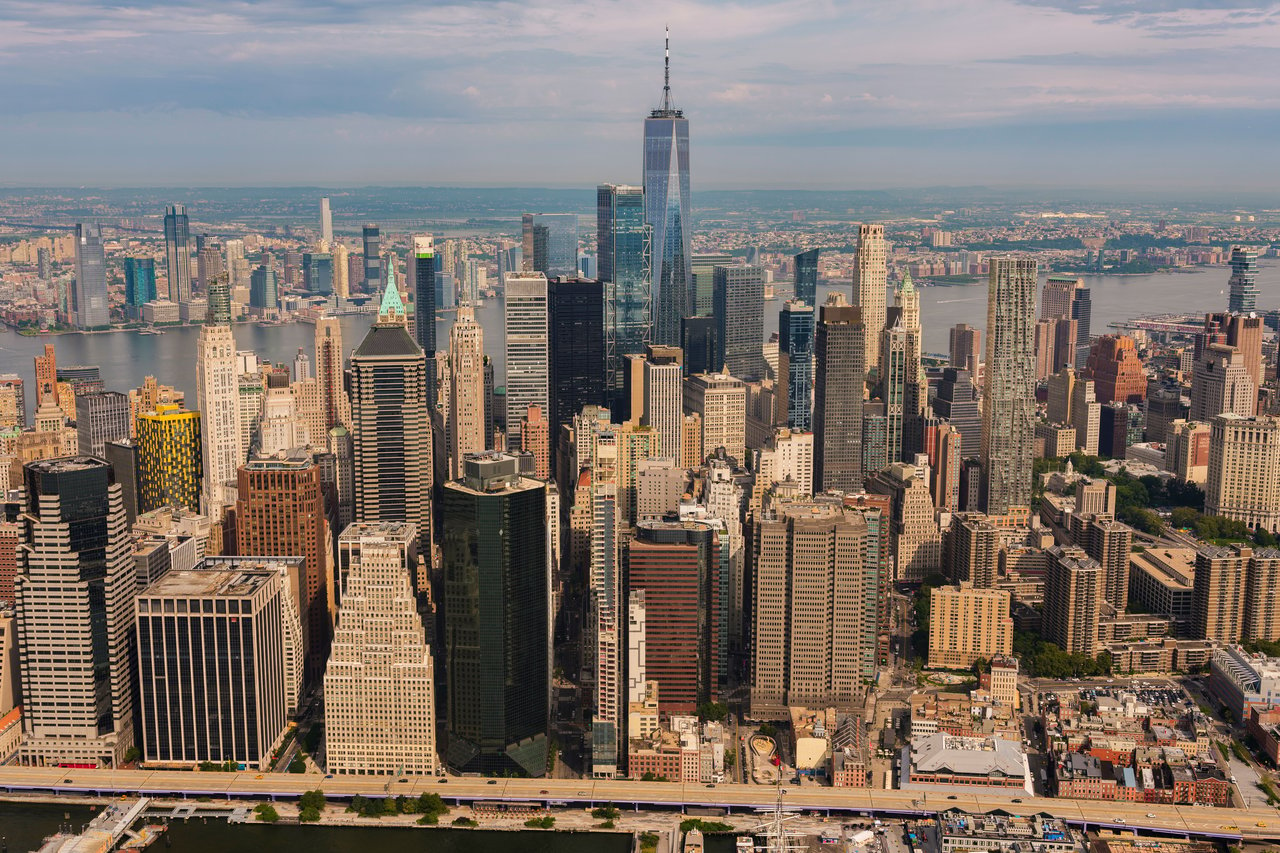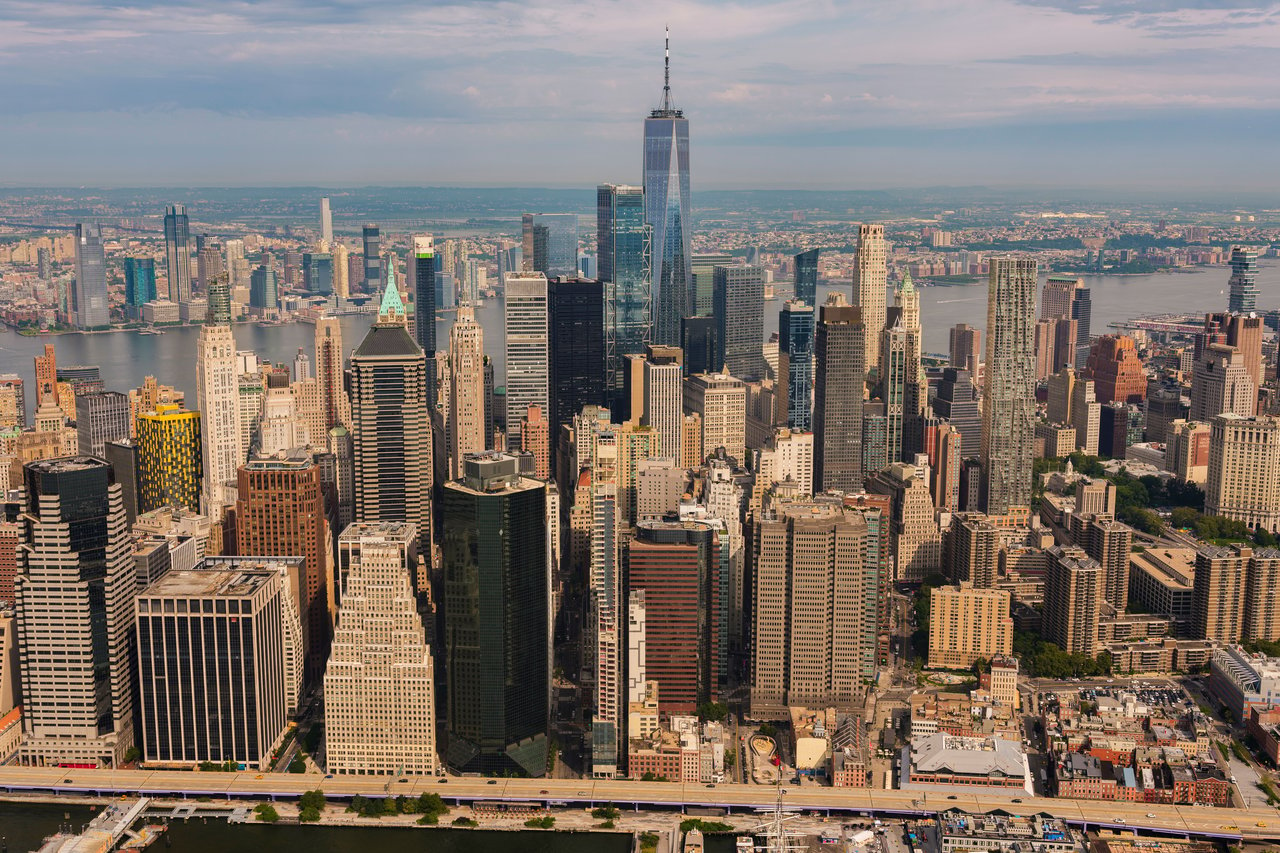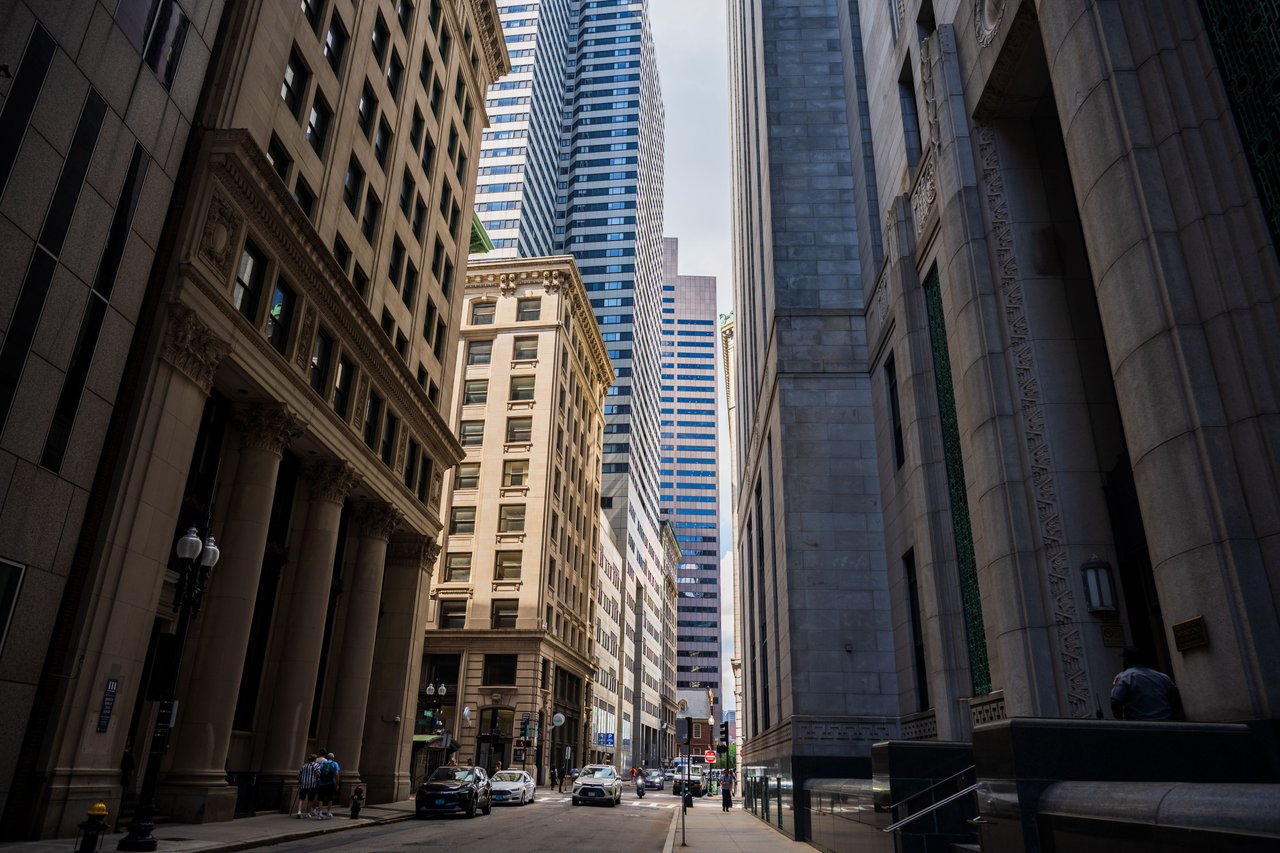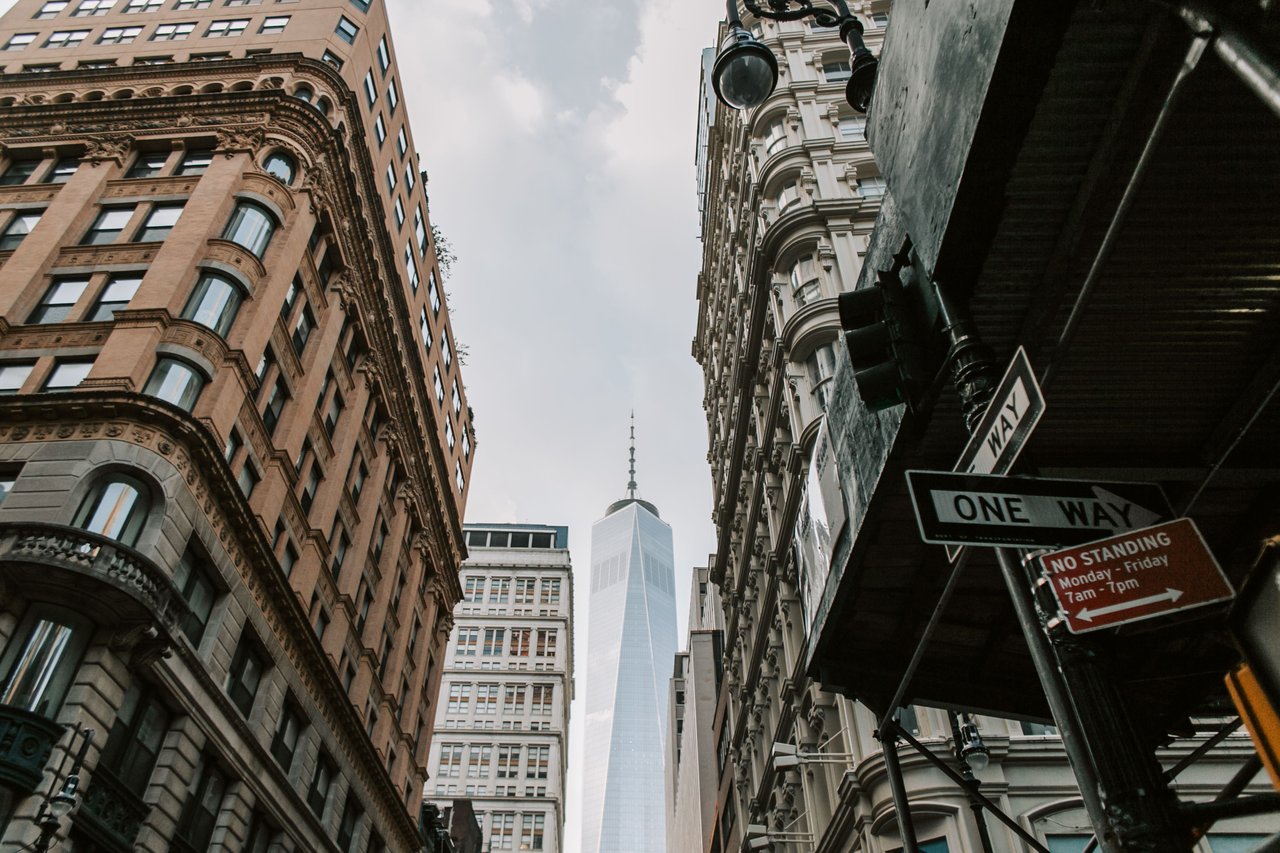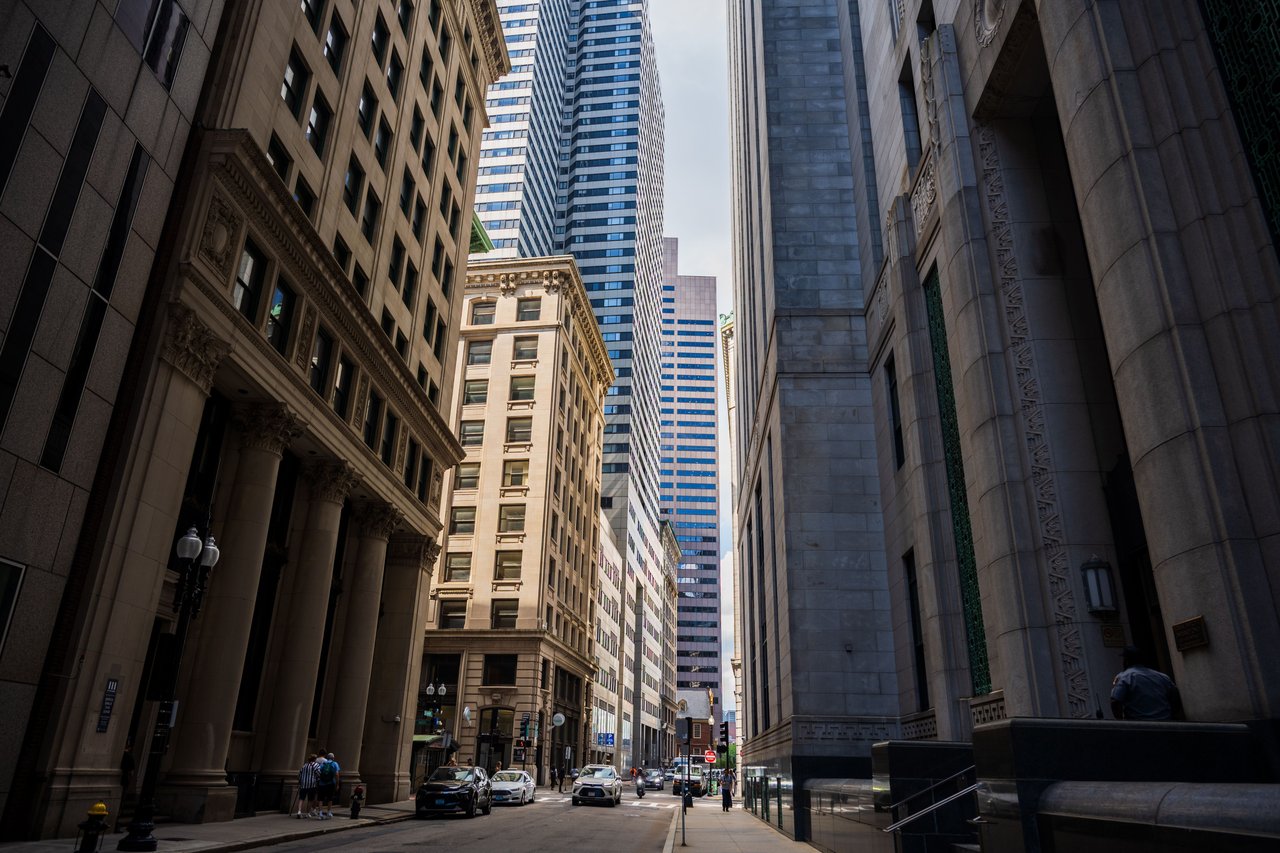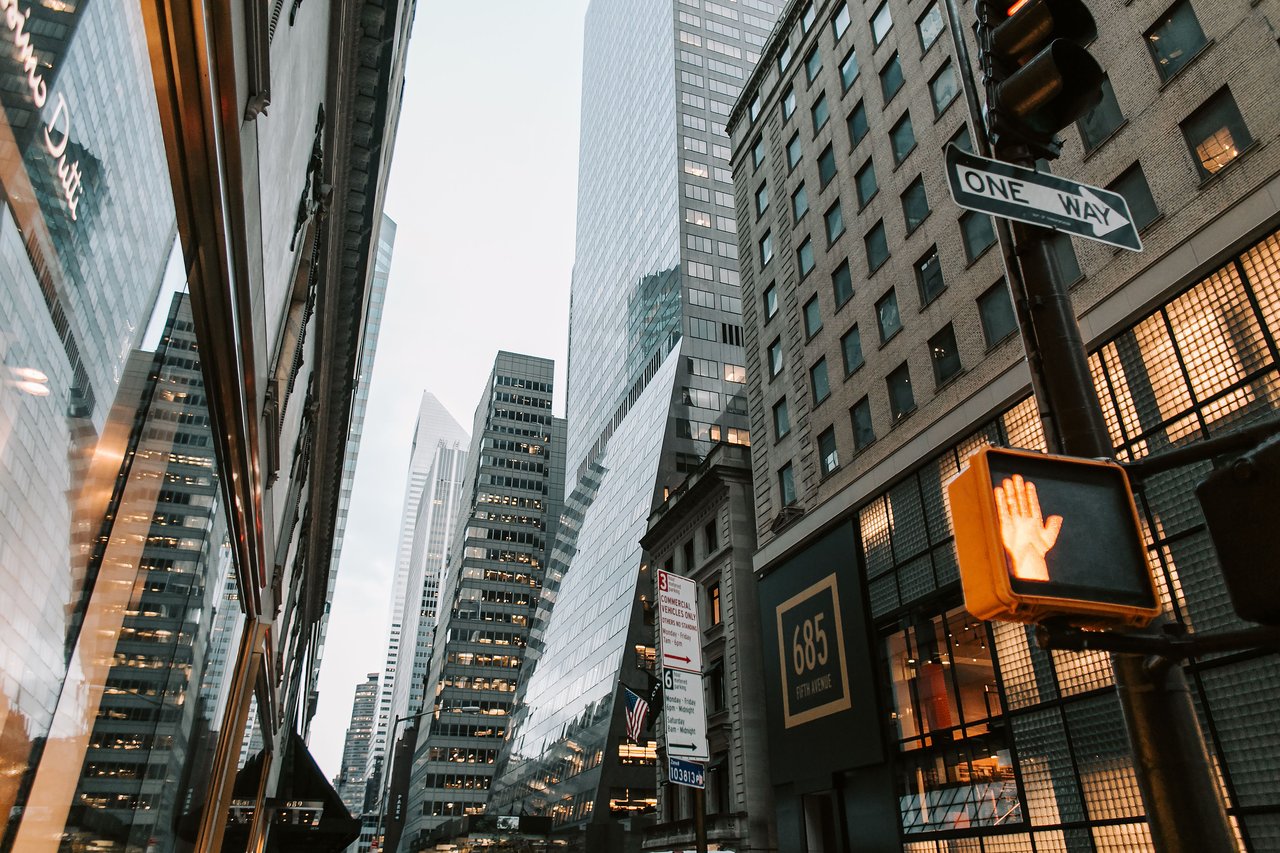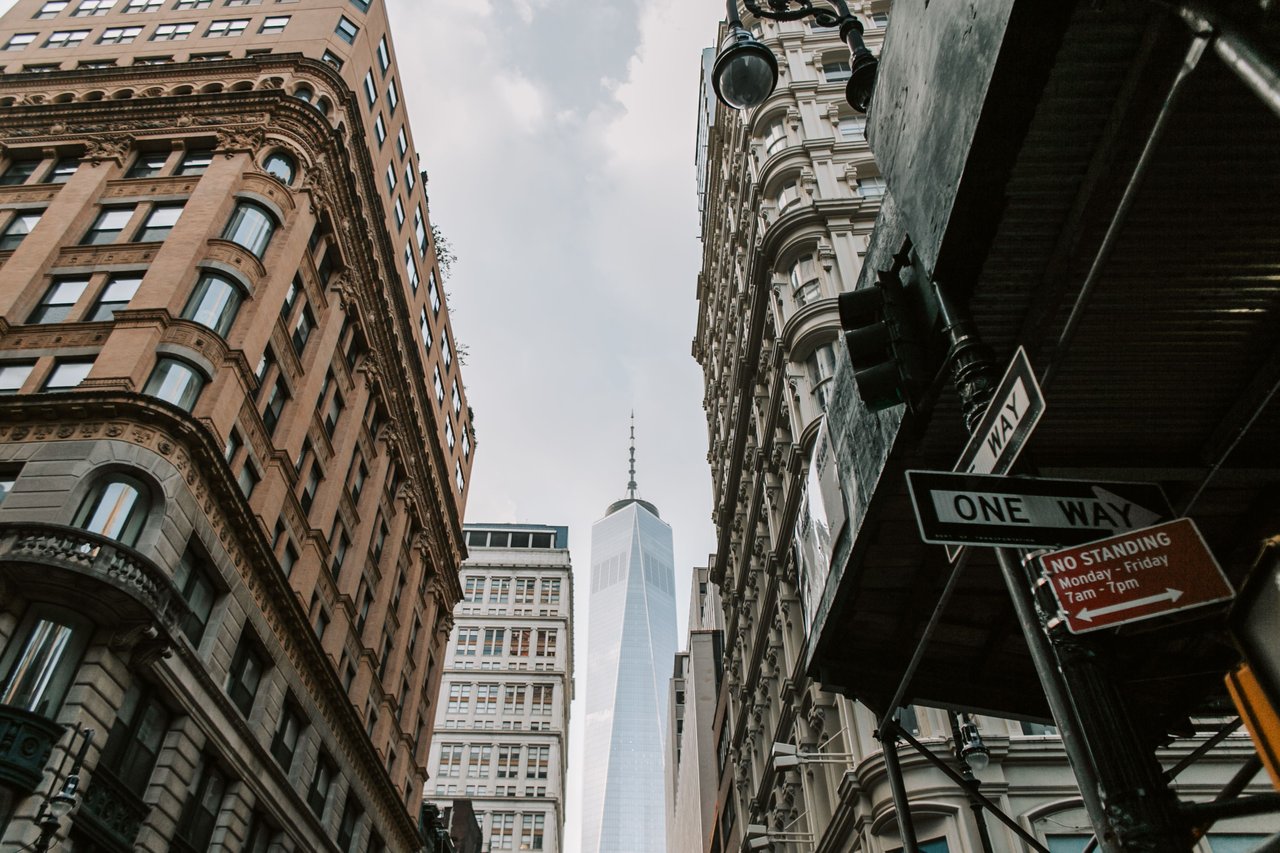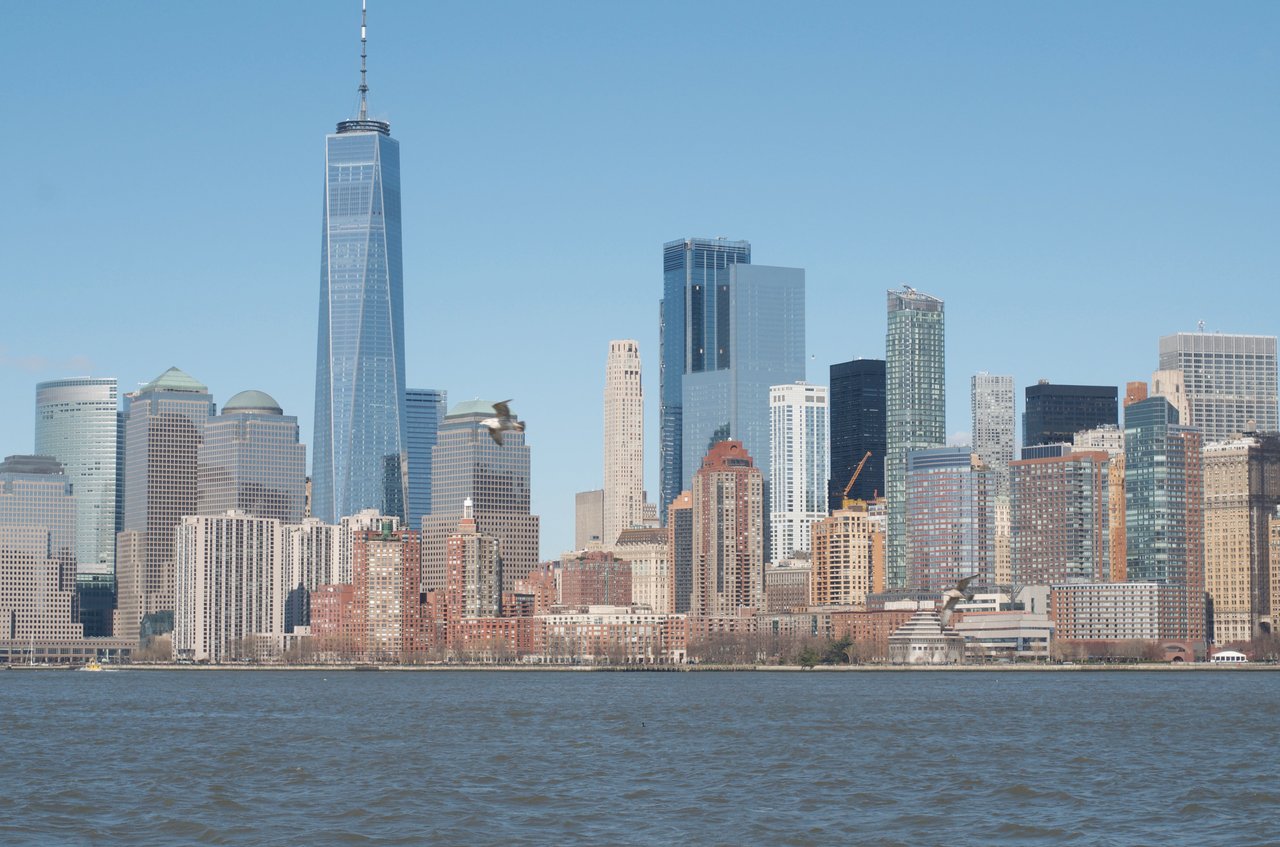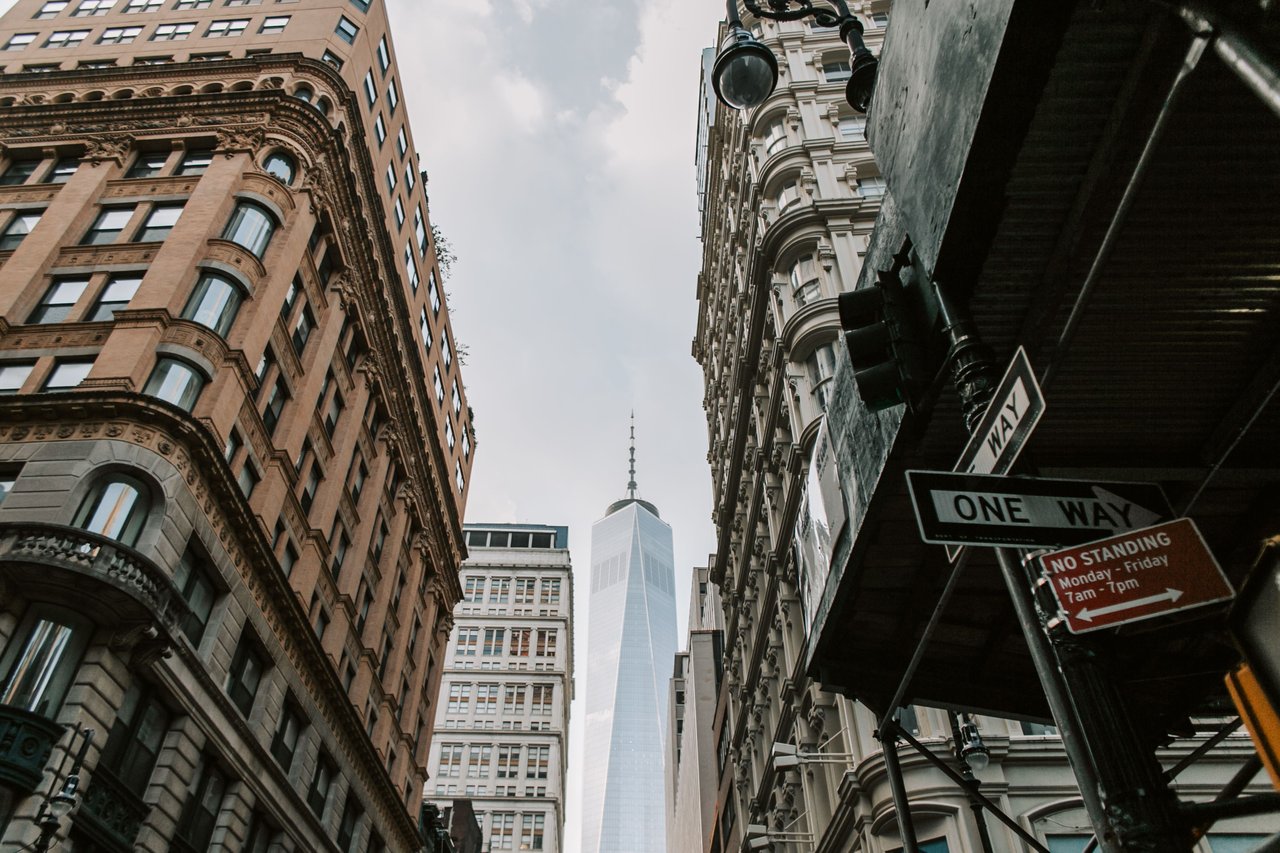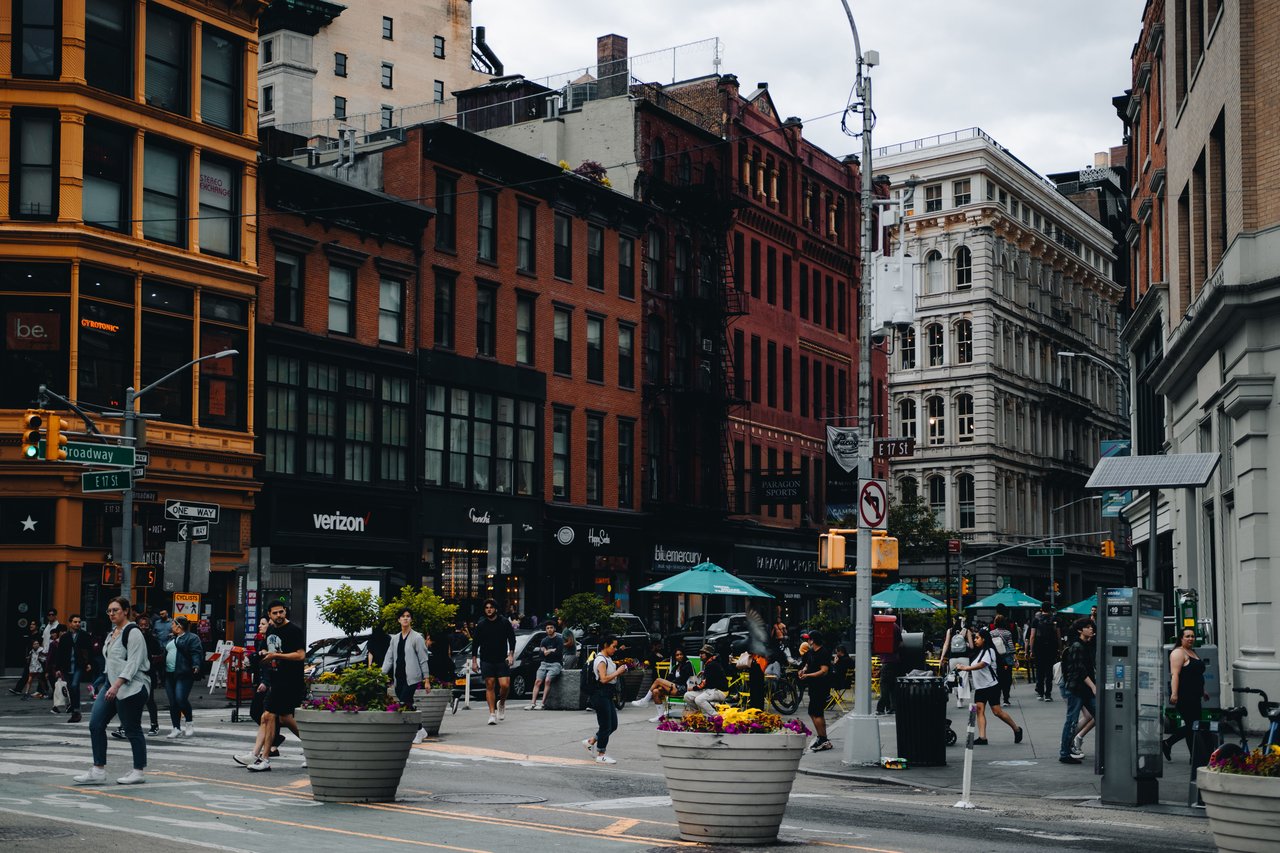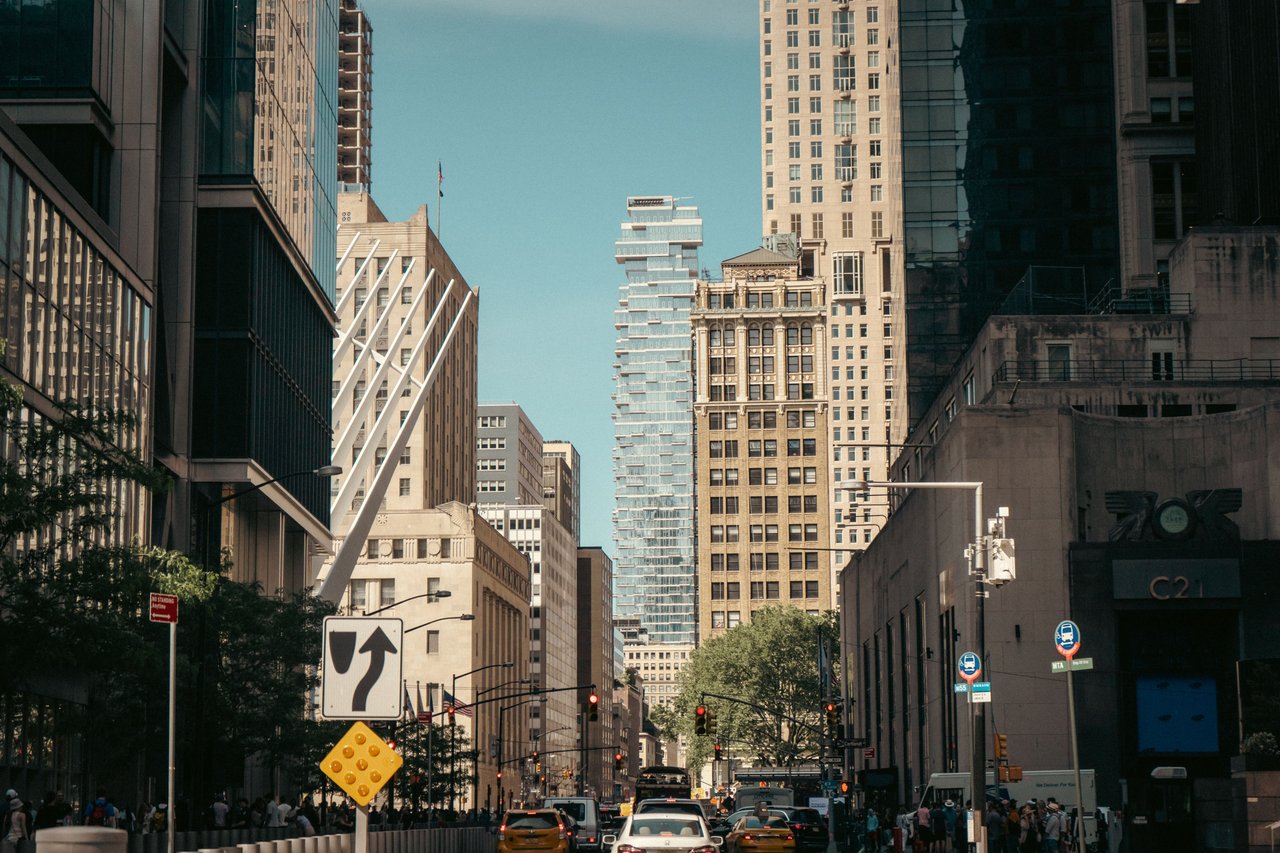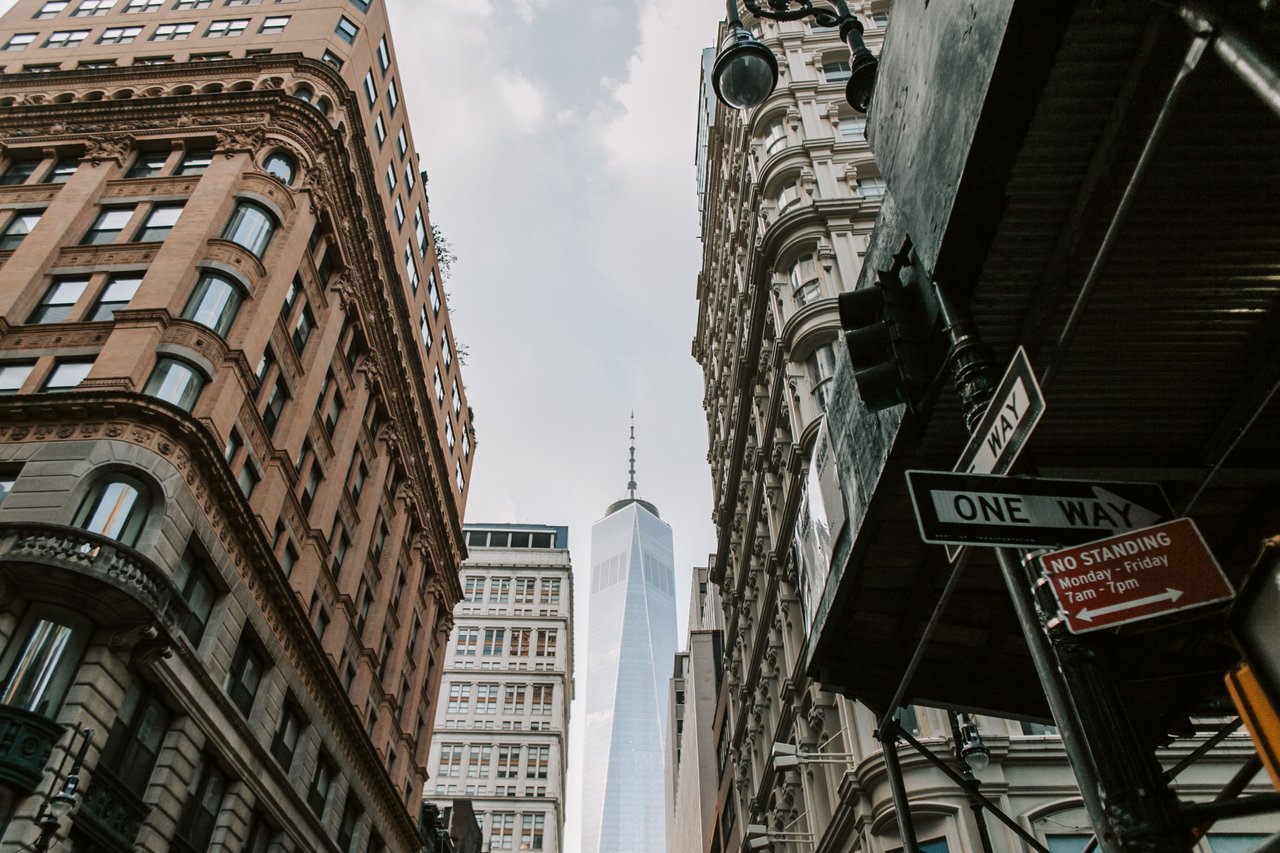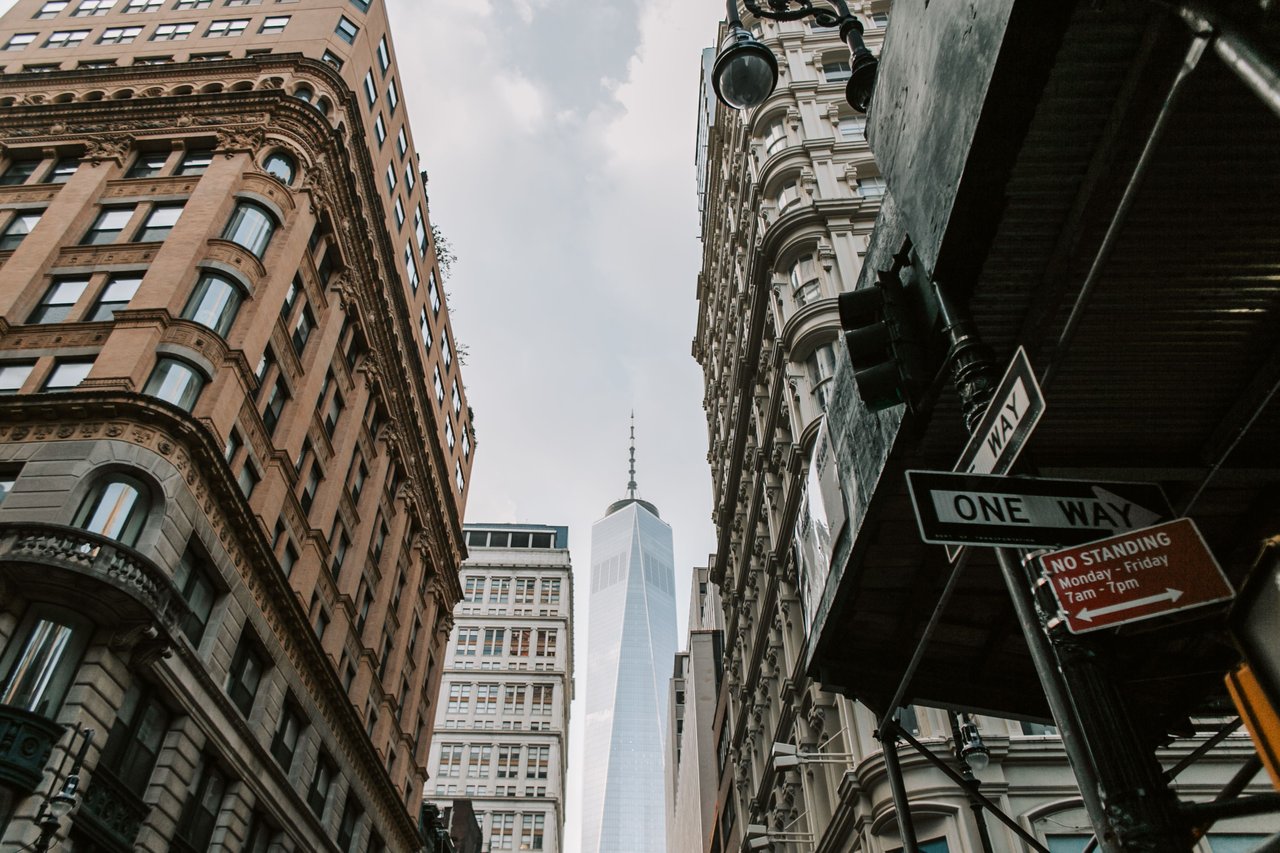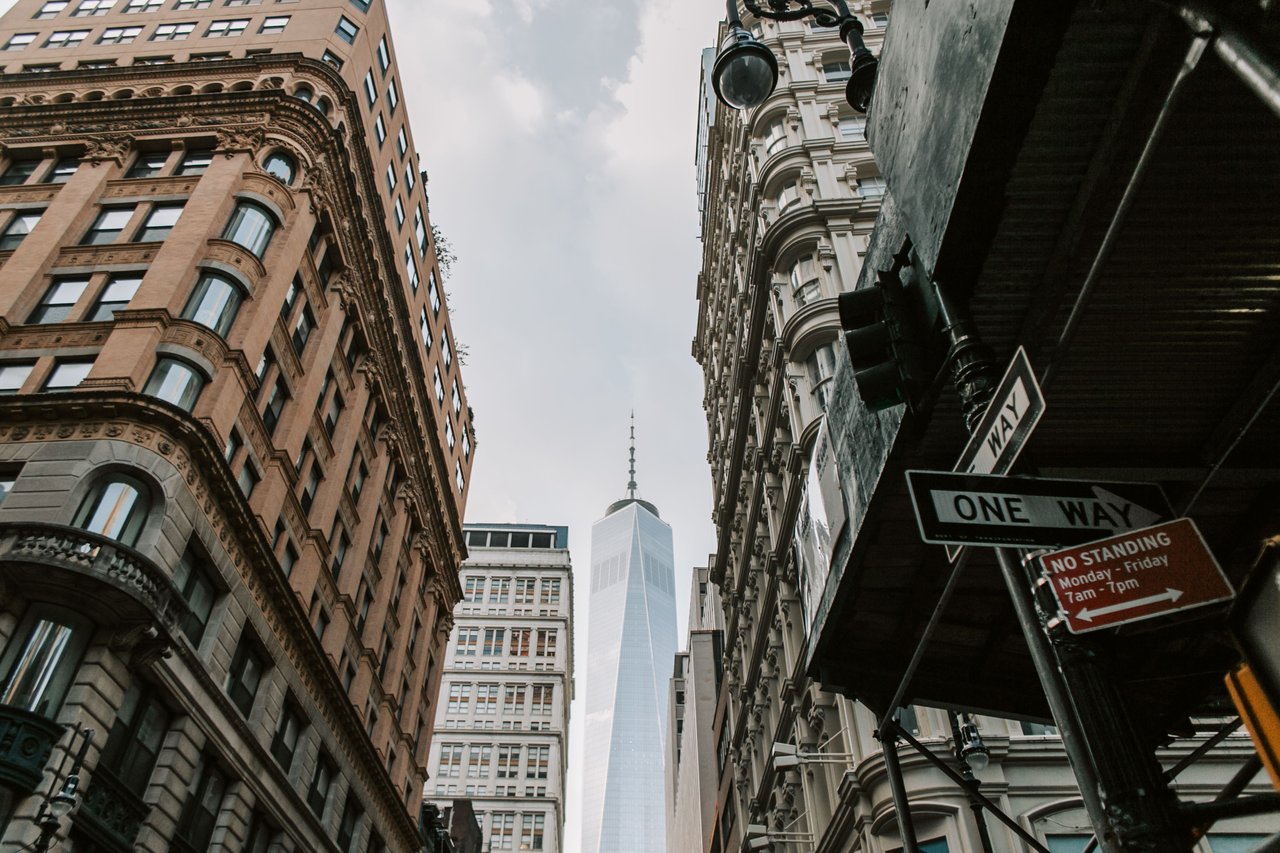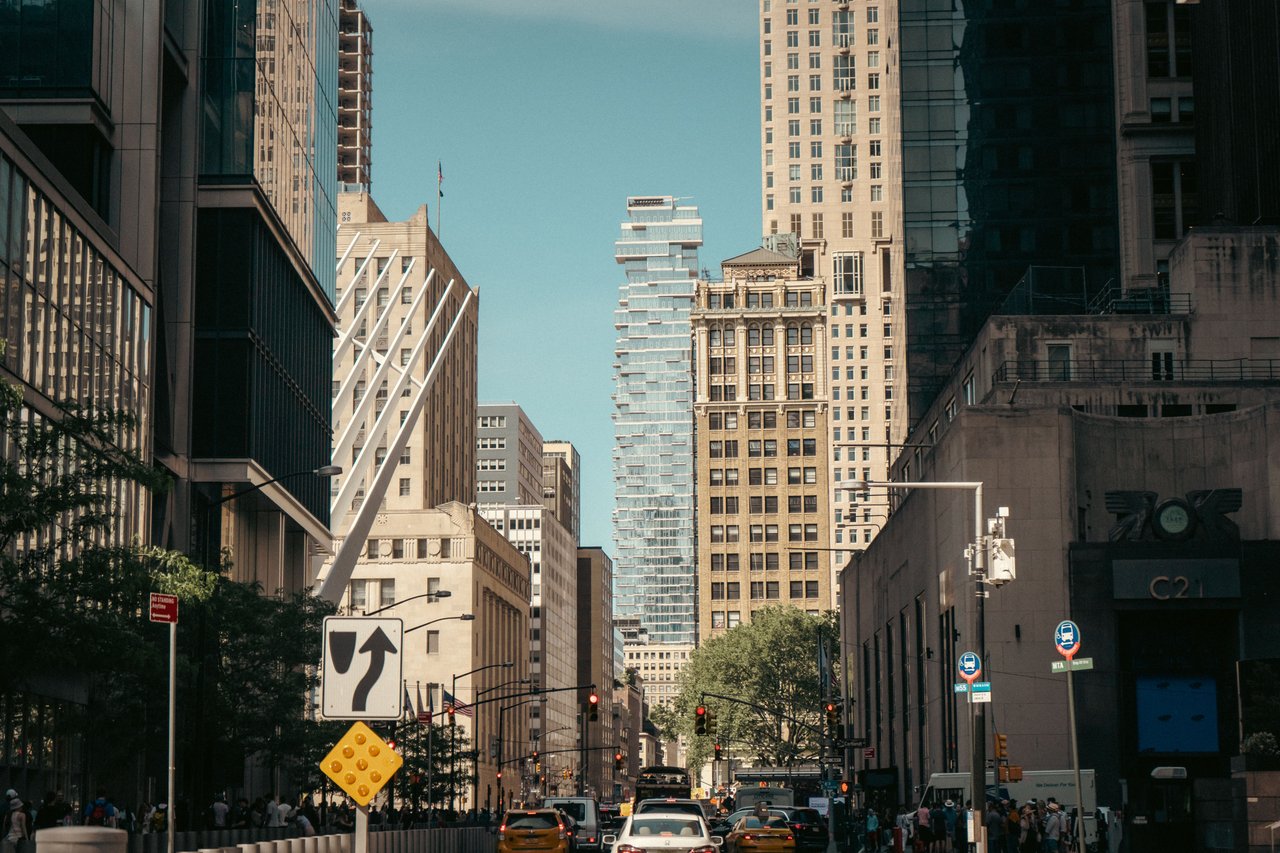
Chambers Street is one of Lower Manhattan's most historically significant streets, connecting the preserved commercial architecture of Tribeca with the monumental civic buildings surrounding City Hall Park. Its architectural character reveals several distinct periods of New York City's development, from eighteenth-century street planning and fashionable nineteenth-century residences to Italianate commercial lofts, pioneering cast-iron facades, and elaborate government buildings.
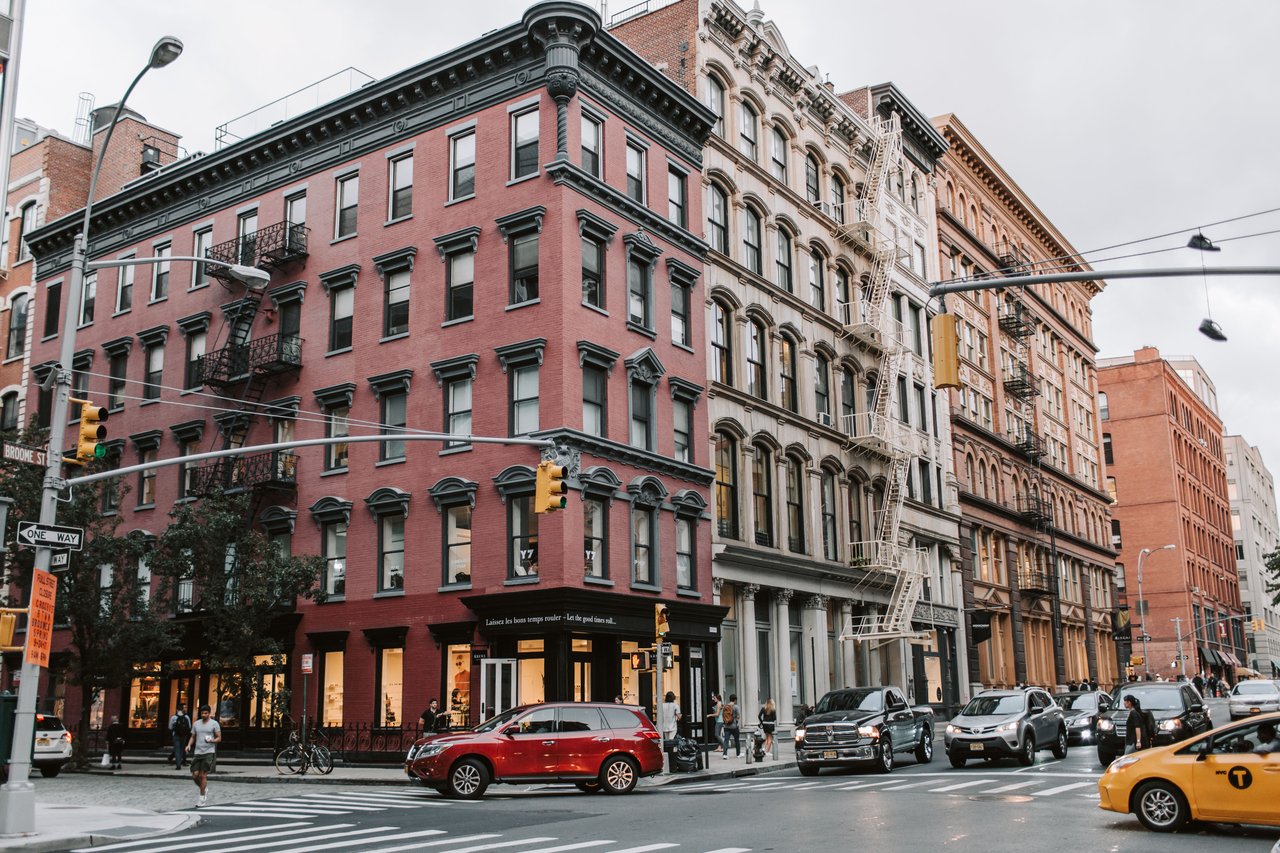
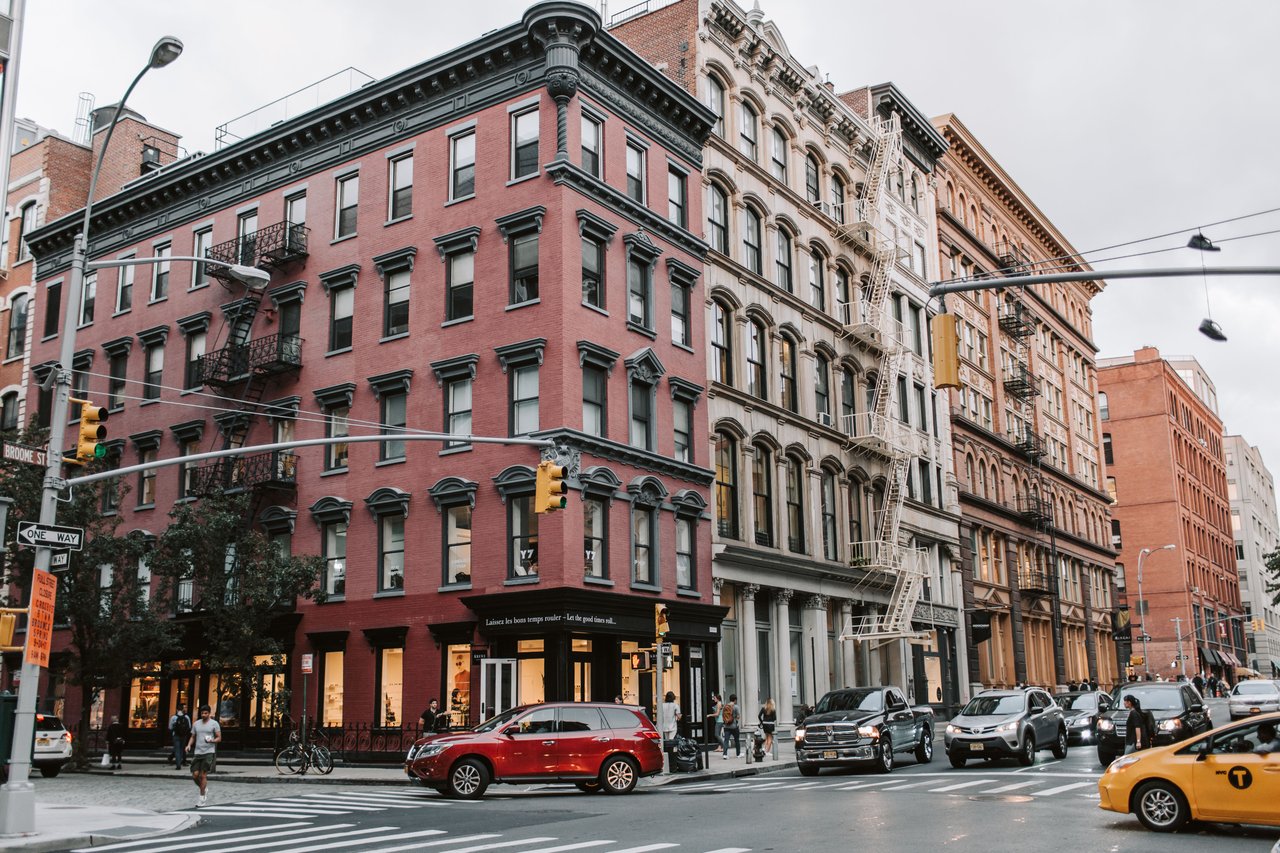
Along its Tribeca blocks, Chambers Street preserves the architectural legacy of Manhattan's nineteenth-century wholesale trade. Five-story commercial buildings with decorative cornices, marble and brownstone facades, and historic cast-iron storefronts recall a period when the surrounding neighborhood was rapidly transformed into a major commercial district. Farther east, the street encounters the former A. T. Stewart Store, the Broadway Chambers Building, and Tweed Courthouse, creating a remarkable transition between commercial and civic architecture.
The result is a street whose buildings illustrate how Manhattan's architectural identity evolved over more than two centuries.
The Origins of Chambers Street
Chambers Street dates to the colonial period, when much of the land west of Broadway belonged to Trinity Church. The institution's extensive property holdings, commonly known as the Church Farm, occupied a substantial portion of present-day Tribeca and influenced the early layout of its streets.
Chambers Street was mapped and released to city jurisdiction in 1761. At the time, New York City's developed area was concentrated farther south, and the surrounding land was only beginning to take on a more permanent urban character.
The street was regulated and paved between Broadway and the Hudson River wharves in 1796, establishing an important east-west connection between the developing commercial center and the western waterfront.
During its earliest years, the surrounding blocks contained modest houses, workshops, and undeveloped building lots. The street's architectural transformation would accelerate during the nineteenth century, eventually replacing much of this early development with substantial residential and commercial buildings.
Why Is It Called Chambers Street?
Chambers Street was named for John Chambers, a prominent colonial New York attorney who served as a member of Trinity Church's vestry.
The name reflects the close relationship between the church's landholdings and the development of Lower Manhattan during the eighteenth century. As Trinity Church's property was divided into building lots and new roads were established, several streets received names associated with figures connected to the institution.
Chambers Street retained its original name as the surrounding neighborhood evolved from farmland into residential blocks and later into a major commercial district.
Today, the name preserves a connection to the earliest period of urban planning in Tribeca, long before the neighborhood acquired its modern identity.
Chambers Street and the Early Development of Tribeca
During the late eighteenth century, Chambers Street formed part of a developing network of roads connecting Broadway with the Hudson River waterfront.
The surrounding landscape was shaped by former agricultural properties, gradually established building lots, and irregular street alignments that predated Manhattan's numbered grid.
In 1785, Trinity Church began offering residential lots along Chambers Street for lease. Within a few years, modest dwellings and workshops appeared, creating a neighborhood of relatively small buildings.
Many early structures followed the Federal architectural tradition, characterized by restrained brick facades, regularly arranged windows, and simple decorative details.
As the city expanded northward, Chambers Street became increasingly attractive for more substantial residential development. Its location near Broadway and the growing commercial center encouraged the construction of larger houses during the early nineteenth century.
This period established the foundation for the street's first major architectural transformation.
Chambers Street as a Fashionable Residential Address
During the late 1820s and 1830s, Chambers Street became one of New York City's fashionable residential streets.
Earlier modest houses were replaced by substantial brick residences featuring more elaborate architectural details and larger interior spaces. Federal and Greek Revival influences appeared in the design of entrances, window surrounds, cornices, and carefully proportioned facades.
These buildings reflected the increasing prosperity of Lower Manhattan during the period when the city was expanding rapidly.
Some residential properties extended through the block toward Reade Street, where rear structures accommodated stables, workshops, and service functions.
This relationship between Chambers Street and Reade Street created an architectural distinction between formal residential facades and the practical buildings behind them.
Although most of these residences were eventually replaced by commercial structures, their former presence helps explain the street's transition from an elegant residential corridor to a wholesale commercial district.
The Church of Divine Unity and Early Institutional Architecture
Chambers Street also contained important institutional architecture during its residential period.
The Church of Divine Unity, New York City's first Unitarian church, stood on the block between Church Street and West Broadway beginning in 1820.
Its presence reflected the mixed architectural character of the early nineteenth-century street, where residences stood alongside religious institutions and other community facilities.
The church remained until the 1840s, when commercial redevelopment began transforming the surrounding blocks.
Although the original building no longer survives, its history illustrates the diversity of structures that occupied Chambers Street before the expansion of wholesale commerce.
The Commercial Transformation of Chambers Street
The most dramatic architectural changes on Chambers Street began during the 1840s, when Broadway was becoming New York City's principal commercial corridor.
The construction of larger stores, hotels, and wholesale buildings encouraged similar development along the surrounding streets. Chambers Street's earlier residential buildings were increasingly adapted for commercial use or demolished to make way for substantial store-and-loft structures.
During the 1850s and 1860s, the street underwent an extensive commercial transformation. Five-story buildings became the dominant architectural type, particularly between Broadway and West Broadway.
These structures combined ground-floor retail or wholesale premises with upper floors designed for storage, offices, and other commercial activities.
Their large windows, flexible interior layouts, and substantial masonry construction reflected the practical requirements of the dry-goods trade.
At the same time, elaborate Italianate facades introduced a new architectural identity, replacing the relatively restrained appearance of the earlier residential neighborhood.
Italianate Architecture on Chambers Street
Italianate architecture became one of the defining styles of Chambers Street during the commercial expansion of the mid-nineteenth century.
Inspired by Italian Renaissance palaces, the style incorporated decorative cornices, substantial window surrounds, classical ornamentation, and carefully organized facades.
On Chambers Street, architects adapted these features to commercial buildings. Large storefront openings provided space for wholesale businesses, while upper floors accommodated offices, showrooms, and storage.
Brick facades were frequently combined with brownstone, marble, and cast-iron architectural details. Arched windows, decorative lintels, bracketed cornices, and classical storefront columns became common features.
The consistent height and proportions of many surviving buildings reflect the rapid pace of commercial redevelopment during the 1850s and 1860s.
Today, the Italianate commercial buildings along Chambers Street form an important part of the architectural character of the Tribeca South Historic District.
The Rise of Cast-Iron Commercial Architecture
Cast iron played a significant role in the transformation of Chambers Street's commercial buildings.
The material allowed architects to create decorative columns, arches, and storefronts while accommodating the large windows and open interior spaces required for wholesale businesses.
Unlike traditional carved masonry, cast-iron architectural elements could be manufactured in foundries and assembled into elaborate facades.
This process made sophisticated commercial architecture more practical and introduced new possibilities for building design.
Chambers Street contains one of New York City's most important surviving examples of this innovation: the Cary Building.
Its elaborate cast-iron facade demonstrates how nineteenth-century architects adapted classical architectural forms to modern commercial construction.
The Cary Building at 105–107 Chambers Street
The Cary Building at 105–107 Chambers Street is one of Tribeca's most significant architectural landmarks.
Constructed in 1856–1857, the building is an exceptional example of early cast-iron commercial architecture. Its elaborate facade was manufactured by Daniel D. Badger's Architectural Iron Works, one of the leading foundries associated with nineteenth-century cast-iron construction.
The building's upper stories feature repeated arched window openings framed by paired Corinthian columns. Decorative details imitate the appearance of substantial stone masonry, while the facade's regular arrangement creates a strong architectural rhythm.
A prominent cornice and ornamental pediment complete the composition, giving the building an appearance inspired by classical Renaissance architecture.
The Cary Building is particularly significant because it represents an early stage in the development of commercial buildings with extensive cast-iron facades.
Its preservation provides an important record of the architectural and technological innovations that transformed Manhattan's commercial districts during the nineteenth century.
The Former A. T. Stewart Store at 280 Broadway
At the intersection of Broadway and Chambers Street stands one of the most influential commercial buildings in New York City's architectural history.
The former A. T. Stewart Store at 280 Broadway, later known as the Sun Building, was originally constructed in 1845–1846 to designs by Joseph Trench and John B. Snook.
The building introduced a monumental Italianate commercial design inspired by Renaissance palaces. Its white marble facade, substantial window openings, and carefully proportioned architectural details established a new standard for commercial construction.
The building was particularly innovative because it combined an imposing architectural appearance with the practical requirements of a large retail establishment.
Its use of marble and expansive display windows influenced the design of numerous commercial buildings constructed in Manhattan during the following decades.
The store was subsequently expanded along Broadway, Reade Street, and Chambers Street, eventually becoming a substantial commercial complex.
Although its functions changed over time, the building remains one of the most important surviving examples of early nineteenth-century commercial architecture in New York.
The Broadway Chambers Building at 277 Broadway
Across Broadway, the Broadway Chambers Building provides a striking architectural contrast to the earlier A. T. Stewart Store.
Designed by Cass Gilbert and constructed in 1899–1900, the building was among the architect's earliest major commissions in New York City.
Its design incorporates Beaux-Arts influences while departing from the relatively uniform stone facades associated with many buildings of the period.
A substantial granite base supports a brick middle section, while glazed terra-cotta ornamentation distinguishes the upper stories.
The combination of materials creates a richly textured facade that emphasizes the building's vertical proportions.
The Broadway Chambers Building illustrates the transition from mid-nineteenth-century commercial palaces to the taller office buildings that became increasingly common at the beginning of the twentieth century.
Its position at Broadway and Chambers Street makes it an important landmark in the architectural landscape surrounding Tribeca.
The Historic Hotels of Chambers Street
During the 1840s, Chambers Street became an important location for substantial hotels serving the expanding commercial district.
Two particularly significant establishments were the Girard House and the Irving House.
The Girard House was constructed in 1844–1845 at the intersection of Chambers Street and West Broadway. Its surviving structure is among the city's older remaining hotel buildings and preserves an important example of the commercial architecture that preceded the wholesale expansion of the 1850s.
The Irving House was constructed in 1847–1848 near Broadway and Chambers Street. Portions of the original hotel survive within later commercial buildings at 75 and 77 Chambers Street.
These structures illustrate how the growth of Broadway encouraged new forms of commercial development before the wholesale trade came to dominate the surrounding neighborhood.
Their surviving architectural fabric provides an important connection to the street's transitional period during the middle of the nineteenth century.
Chambers Street Between Broadway and Church Street
The block between Broadway and Church Street contains an exceptional concentration of nineteenth-century commercial buildings.
Much of the streetscape was reconstructed during the 1850s, when earlier residential structures were replaced with five-story Italianate store-and-loft buildings.
Several surviving buildings retain decorative masonry details, substantial cornices, and cast-iron storefronts associated with the wholesale dry-goods trade.
The historic buildings at 75 and 77 Chambers Street preserve portions of the earlier Irving House, while other structures illustrate the rapid commercial redevelopment that followed.
Some facades were modified during the twentieth century, introducing new materials and architectural details while retaining the original commercial building forms.
The resulting streetscape demonstrates how successive phases of construction and alteration contributed to the architectural character of Chambers Street.
Chambers Street Between Church Street and West Broadway
The block between Church Street and West Broadway preserves another important collection of commercial architecture.
During the late 1850s and early 1860s, substantial Italianate store-and-loft buildings replaced much of the earlier residential development.
The Cary Building at 105–107 Chambers Street remains the most prominent example of the block's architectural significance, but the surrounding buildings also contribute to its historic character.
Their facades incorporate brick, stone, and cast iron, with decorative window surrounds and substantial cornices creating a relatively continuous street wall.
The combination of individually distinctive buildings and consistent architectural proportions is characteristic of the Tribeca South Historic District.
The Irving Savings Bank Building
The building at 115–117 Chambers Street represents a later chapter in the street's architectural development.
Constructed during the 1920s for Irving Savings Bank, the building introduced a Neoclassical architectural vocabulary to a block otherwise dominated by nineteenth-century commercial structures.
Its design reflects the substantial proportions and classical detailing commonly associated with bank architecture during the early twentieth century.
Unlike the neighboring store-and-loft buildings, the bank was conceived for a specialized institutional function.
Its presence illustrates how Chambers Street continued to evolve after the initial period of wholesale expansion, incorporating new building types and architectural styles.
Art Deco Architecture at Chambers and Church Streets
The northeast corner of Chambers Street and Church Street contains an important example of twentieth-century commercial architecture.
The building at 99 Chambers Street, also known as 159–165 Church Street, was constructed in 1937–1938 for the D. P. Harris Hardware Manufacturing Company.
Its Art Deco design contrasts with the elaborate Italianate buildings surrounding it.
The building's streamlined architectural details and modern commercial appearance reflect changing design preferences during the 1930s.
Rather than imitating the Renaissance-inspired architecture of the nineteenth century, its design emphasizes a more contemporary approach to commercial construction.
The contrast illustrates how Chambers Street continued to accommodate new architectural styles while retaining much of its historic commercial character.
Chambers Street and West Broadway
West Broadway marks an important transition in Chambers Street's architectural landscape.
To the east, the street contains a concentration of Italianate commercial buildings associated with Manhattan's wholesale dry-goods district. To the west, the architecture increasingly reflects the commercial and warehouse development of western Tribeca.
The intersection also preserves the historic Girard House building, an important reminder of Chambers Street's earlier role as a location for substantial nineteenth-century hotels.
The surrounding street geometry reflects the irregular development of Lower Manhattan before the introduction of the numbered grid farther north.
Today, the intersection connects several distinct architectural environments within Tribeca.
Chambers Street and Hudson Street
Hudson Street intersects Chambers Street within western Tribeca, where the surrounding architecture reflects the neighborhood's commercial and warehouse development.
During the nineteenth century, the area became increasingly associated with wholesale businesses, storage facilities, and commercial buildings connected to the Hudson River waterfront.
The architecture includes substantial brick buildings, decorative masonry facades, and commercial structures designed for practical business use.
The intersection also lies near the irregular street alignments surrounding James Bogardus Plaza, where historic street geometry has been adapted into a contemporary public space.
The surrounding buildings illustrate the transition from the ornate commercial architecture near Broadway to the more utilitarian structures of western Tribeca.
Chambers Street and Greenwich Street
Greenwich Street connects Chambers Street with another important historic commercial corridor of western Tribeca.
During the nineteenth century, the surrounding blocks developed with warehouses and commercial buildings serving the waterfront and nearby wholesale districts.
Brick masonry, large windows, and substantial structural systems became common features of the architecture.
As commercial uses changed during the twentieth century, many historic buildings were adapted for new functions, while other sites were redeveloped.
The intersection illustrates the continuing evolution of western Tribeca, where nineteenth-century commercial buildings coexist with later institutional and residential architecture.
Chambers Street and the Hudson River Waterfront
The western end of Chambers Street historically provided access toward the Hudson River waterfront.
During the eighteenth and nineteenth centuries, wharves and commercial facilities along the river supported the movement of goods into and out of Manhattan.
The street's connection to the waterfront encouraged the development of warehouses and commercial buildings along the surrounding blocks.
As the shoreline was extended through landfill and waterfront improvements, the physical relationship between Chambers Street and the river changed.
During the twentieth century, major redevelopment projects transformed much of the western waterfront, introducing new streets, institutional buildings, and residential developments.
The street now continues into Battery Park City, where contemporary architecture provides a contrast to the historic commercial buildings farther east.
Chambers Street and Battery Park City
The western portion of Chambers Street connects Tribeca with Battery Park City, a neighborhood constructed on landfill along the Hudson River.
This area represents a substantially different phase of Manhattan's architectural development.
Unlike the narrow nineteenth-century commercial blocks of Tribeca, Battery Park City was planned with larger building sites, contemporary residential towers, institutional structures, and landscaped public spaces.
The surrounding architecture reflects late twentieth-century and early twenty-first-century approaches to urban design.
The transition between Tribeca and Battery Park City is particularly evident along Chambers Street, where historic commercial buildings gradually give way to more recent institutional and residential developments.
Stuyvesant High School and Contemporary Institutional Architecture
Near the western end of Chambers Street stands Stuyvesant High School, one of the most prominent institutional buildings in Battery Park City.
The school's modern building opened in 1992 and occupies a substantial site near the Hudson River.
Its architecture reflects the scale and planning principles of late twentieth-century institutional construction, contrasting with the smaller commercial buildings of historic Tribeca.
The surrounding pedestrian spaces, streets, and waterfront connections demonstrate how the western portion of Chambers Street was transformed through large-scale redevelopment.
The school forms part of a broader architectural environment that includes contemporary residential buildings, educational facilities, and landscaped public spaces.
The Borough of Manhattan Community College and Western Chambers Street
The Borough of Manhattan Community College occupies a substantial institutional campus near Chambers Street in western Tribeca.
Its buildings reflect a different architectural approach from the nineteenth-century commercial structures farther east.
Large educational facilities, modern building systems, and substantial interior spaces characterize the campus.
The surrounding blocks illustrate how twentieth-century institutional development altered portions of western Tribeca while the historic commercial districts nearer Broadway remained comparatively intact.
The contrast between the college campus and the preserved store-and-loft buildings demonstrates the architectural variety found along Chambers Street.
Chambers Street and City Hall Park
East of Broadway, Chambers Street forms an important boundary of the civic landscape surrounding City Hall Park.
The area contains some of Lower Manhattan's most significant public buildings, including City Hall, Tweed Courthouse, and the Manhattan Municipal Building.
The architecture differs considerably from the commercial buildings of Tribeca. Monumental stone facades, classical columns, elaborate stairways, and substantial institutional forms reflect the importance of government architecture during the nineteenth and early twentieth centuries.
The relationship between Chambers Street and City Hall Park creates an unusual architectural transition.
Within a relatively short distance, the street connects the historic wholesale buildings of Tribeca with some of New York City's most prominent civic landmarks.
Tweed Courthouse at 52 Chambers Street
Tweed Courthouse is one of the most architecturally significant buildings associated with Chambers Street.
Located at 52 Chambers Street, the former New York County Courthouse was constructed between 1861 and 1881 to designs by John Kellum and Leopold Eidlitz.
Its monumental architecture incorporates substantial marble facades, classical columns, elaborate decorative details, and carefully organized interior spaces.
The building's long construction period reflects both the complexity of its design and the political controversies associated with its development.
Despite these circumstances, the completed courthouse became one of New York City's most important nineteenth-century civic buildings.
A major restoration beginning in 1999 returned significant architectural features to the building, including its monumental entrance stairway and decorative exterior details.
Today, Tweed Courthouse remains a prominent landmark within the civic landscape surrounding City Hall Park.
The Surrogate's Courthouse and the Civic Architecture of Chambers Street
Near the eastern end of Chambers Street, the Surrogate's Courthouse provides another extraordinary example of monumental civic architecture.
Located at 31 Chambers Street, the building was constructed during the early twentieth century and is recognized for its elaborate Beaux-Arts design.
Its exterior incorporates substantial stonework, classical ornamentation, sculptural decoration, and carefully proportioned architectural elements.
The building's grand interior spaces reflect the architectural ambitions of New York City's civic construction during the period.
Its relationship with Tweed Courthouse and the surrounding government buildings establishes Chambers Street as an important corridor of monumental public architecture.
The Manhattan Municipal Building
At the eastern end of Chambers Street stands the Manhattan Municipal Building, one of New York City's most recognizable early twentieth-century government structures.
Designed by McKim, Mead & White and constructed between 1909 and 1914, the building reflects the influence of Beaux-Arts architecture on monumental civic construction.
Its substantial scale, elaborate architectural details, and prominent tower create a dramatic visual landmark.
The building's design incorporates monumental arches and carefully organized classical elements, while its height reflects the increasing ambition of early twentieth-century municipal architecture.
The Manhattan Municipal Building provides a striking architectural conclusion to Chambers Street's east-west progression.
The Tribeca South Historic District
The Tribeca South Historic District was designated by the New York City Landmarks Preservation Commission in 1992.
The district includes the north side of Chambers Street between Broadway and West Broadway, preserving an exceptional collection of nineteenth-century commercial buildings.
These structures reflect the transformation of the neighborhood during the wholesale expansion of the 1850s and 1860s.
Italianate facades, cast-iron storefronts, decorative masonry, and substantial cornices remain defining architectural features.
The district also includes buildings from earlier and later periods, demonstrating how the street developed through successive phases of commercial construction.
Historic district designation helps preserve the architectural relationships between individual buildings and the broader streetscape.
The Tribeca South Historic District Extensions
The Tribeca South Historic District was expanded in 2002 to include additional historically significant commercial buildings.
The extensions recognize the architectural importance of structures that contribute to the character of the surrounding wholesale district.
Along Chambers Street, buildings such as those at 110–118 Chambers Street preserve important examples of mid-nineteenth-century Italianate commercial architecture.
These structures demonstrate how residential properties were replaced by store-and-loft buildings as the dry-goods trade expanded.
Their surviving facades, window arrangements, and decorative architectural details provide valuable evidence of the neighborhood's commercial history.
What Does Tribeca Stand For?
Tribeca stands for Triangle Below Canal Street, a name referring to the neighborhood's location south of Canal Street in Lower Manhattan.
The area was historically associated with the Washington Market district and other commercial sections of the city's western waterfront.
During the nineteenth century, much of Tribeca developed into an important center of wholesale commerce, manufacturing, and warehouse activity.
Today, the neighborhood is recognized for its historic commercial loft buildings, cast-iron storefronts, substantial brick warehouses, and preserved architectural streetscapes.
Chambers Street is particularly significant because it connects this commercial architectural history with the monumental civic buildings surrounding City Hall Park.
The Transformation of Chambers Street During the Twentieth Century
During the twentieth century, Chambers Street experienced substantial changes as commercial businesses relocated and former wholesale buildings were adapted for new uses.
Some nineteenth-century structures remained in commercial use, while others were converted into offices and residential lofts.
The construction of institutional buildings, the expansion of educational facilities, and the redevelopment of the western waterfront introduced additional architectural layers.
Historic preservation became increasingly important during the late twentieth century, particularly with the designation of the Tribeca South Historic District and its extensions.
These protections helped maintain the architectural character of the surviving commercial blocks while allowing significant buildings to accommodate contemporary uses.
The Conversion of Historic Commercial Lofts into Residential Properties
The conversion of former commercial buildings into residential lofts became one of the defining architectural developments of modern Tribeca.
Chambers Street's historic store-and-loft buildings were particularly suitable for adaptation because many contained high ceilings, large windows, substantial structural systems, and flexible interior layouts.
Renovations introduced contemporary kitchens, bathrooms, mechanical systems, and residential amenities while retaining distinctive architectural features.
Exposed brick, structural columns, oversized windows, and historic masonry details became important characteristics of many converted loft residences.
The resulting properties combine nineteenth-century commercial architecture with contemporary residential design.
Adaptive reuse has helped preserve Chambers Street's historic buildings while allowing them to remain functional within the modern neighborhood.
Contemporary Architecture and Historic Preservation
Contemporary development along Chambers Street takes place within an architectural environment shaped by more than two centuries of construction.
The street contains buildings within designated historic districts, individually designated landmarks, substantial civic structures, and later institutional and residential developments.
Within historic districts, exterior alterations are subject to applicable review by the New York City Landmarks Preservation Commission.
Modern renovations can introduce updated mechanical systems, contemporary interiors, and residential amenities while retaining significant historic facades, storefronts, cornices, and masonry details.
The relationship between preservation and adaptation remains central to the street's architectural identity.
Chambers Street Today
Today, Chambers Street remains one of Lower Manhattan's most architecturally varied thoroughfares.
Its Tribeca blocks preserve Italianate commercial buildings, elaborate cast-iron storefronts, and substantial masonry facades associated with the nineteenth-century wholesale trade.
Near Broadway, the former A. T. Stewart Store and Broadway Chambers Building illustrate important developments in commercial architecture.
Farther east, Tweed Courthouse, the Surrogate's Courthouse, and the Manhattan Municipal Building establish a monumental civic environment.
To the west, contemporary institutional and residential buildings reflect the transformation of the former waterfront.
Together, these architectural environments create a street that connects several major periods of New York City's development.
The Architectural Legacy of Chambers Street
Chambers Street preserves an exceptional record of Manhattan's architectural history.
Established during the colonial period and named for John Chambers, the street developed from modest residential blocks into a fashionable nineteenth-century address before becoming an important commercial corridor.
The expansion of wholesale commerce introduced substantial Italianate store-and-loft buildings and innovative cast-iron architecture, including the landmark Cary Building.
Later development brought monumental civic buildings, Neoclassical banks, Art Deco commercial structures, and modern institutional architecture.
Today, Chambers Street remains an important example of how New York City's architecture has evolved through successive periods of residential development, commercial expansion, historic preservation, and urban transformation.
Where is Chambers Street in Tribeca, Manhattan?
Chambers Street runs through Lower Manhattan, forming an important southern boundary of Tribeca before continuing east toward the Civic Center and west into Battery Park City.
What is the history of Chambers Street in Tribeca, Manhattan?
Chambers Street was mapped in 1761 on land associated with Trinity Church's Church Farm. Originally developed with modest residences and workshops, it became a fashionable residential street during the early nineteenth century before transforming into a major commercial corridor during the 1850s and 1860s.
Why is Chambers Street famous in Tribeca, Manhattan?
Chambers Street is known for its historic Italianate commercial buildings, the landmark Cary Building, the former A. T. Stewart Store, and its connection to the monumental civic architecture surrounding City Hall Park.
Why is it called Chambers Street in Tribeca, Manhattan?
Chambers Street was named for John Chambers, a colonial New York attorney and member of Trinity Church's vestry. The name reflects the street's eighteenth-century origins and the church's role in the early development of Tribeca.
What does Tribeca stand for in Manhattan?
Tribeca stands for Triangle Below Canal Street, referring to the neighborhood's location south of Canal Street in Lower Manhattan.
What architectural styles are found on Chambers Street in Tribeca, Manhattan?
Chambers Street contains Italianate, Federal, Greek Revival, Neoclassical, Beaux-Arts, and Art Deco architectural influences, along with historic cast-iron storefronts, commercial loft buildings, and monumental civic structures.
Is Chambers Street part of Tribeca, Manhattan?
Yes. Chambers Street forms an important southern boundary of Tribeca, Manhattan, while continuing into neighboring areas of Lower Manhattan.
Is Chambers Street in a historic district in Tribeca, Manhattan?
Yes. Portions of Chambers Street are included in the Tribeca South Historic District and its extensions, which preserve important examples of nineteenth-century commercial architecture.
What makes Chambers Street architecturally significant in Tribeca, Manhattan?
Chambers Street preserves a remarkable collection of nineteenth-century commercial buildings, including elaborate Italianate facades, early cast-iron architecture, and historic wholesale structures. Its proximity to major civic landmarks adds another important architectural dimension.
What is the Cary Building on Chambers Street in Tribeca, Manhattan?
The Cary Building at 105–107 Chambers Street was constructed in 1856–1857 and is one of New York City's important early cast-iron commercial landmarks. Its facade features arched windows, Corinthian columns, and elaborate classical ornamentation.
What is the former A. T. Stewart Store near Chambers Street in Tribeca, Manhattan?
The former A. T. Stewart Store at 280 Broadway was constructed in 1845–1846 and became an influential example of Italianate commercial architecture. Its marble facade and innovative retail design helped establish architectural standards for later commercial buildings.
What is Tweed Courthouse near Chambers Street in Tribeca, Manhattan?
Tweed Courthouse at 52 Chambers Street was constructed between 1861 and 1881 and is one of New York City's most significant nineteenth-century civic buildings. Its monumental marble architecture and elaborate interior spaces distinguish it from the surrounding commercial buildings.
Who can help me sell my townhouse on Chambers Street in Tribeca, Manhattan?
The Parviz Team at Compass and Parviz Latipzoda can help you sell your townhouse on Chambers Street in Tribeca, Manhattan. The team develops a tailored strategy based on the property's architecture, condition, legal occupancy, and comparable sales. Professional photography, Compass Private Exclusives, and targeted local and international buyer outreach help position the property for qualified buyers. For a free townhouse market valuation, call Parviz at (917) 847-7771.
Who can help me sell my apartment on Chambers Street in Tribeca, Manhattan?
The Parviz Team at Compass and Parviz Latipzoda can help you sell your apartment on Chambers Street in Tribeca, Manhattan. The team combines strategic pricing, professional photography, digital marketing, and Compass's brokerage network to attract prospective buyers. The marketing approach considers the apartment's layout, condition, building features, and current market competition. For a free apartment market valuation, call Parviz at (917) 847-7771.
Who can help me sell my condo on Chambers Street in Tribeca, Manhattan?
The Parviz Team at Compass and Parviz Latipzoda can help you sell your condo on Chambers Street in Tribeca, Manhattan. The team evaluates comparable condominium sales, building amenities, common charges, and current buyer demand before developing a customized marketing strategy. Compass Private Exclusives, professional photography, and innovative marketing technology provide additional options for reaching qualified buyers. For a free condo market valuation, call Parviz at (917) 847-7771.
Who can help me sell my co-op on Chambers Street in Tribeca, Manhattan?
The Parviz Team at Compass and Parviz Latipzoda can help you sell your co-op on Chambers Street in Tribeca, Manhattan. The team provides pricing analysis, professional marketing, buyer qualification, and coordination of cooperative board requirements. Compass's brokerage network and digital tools support the marketing and transaction process. For a free co-op market valuation, call Parviz at (917) 847-7771.
Who can help me sell my loft on Chambers Street in Tribeca, Manhattan?
The Parviz Team at Compass and Parviz Latipzoda can help you sell your loft on Chambers Street in Tribeca, Manhattan. The team highlights distinctive features such as high ceilings, oversized windows, exposed brick, structural columns, and historic architectural details. Professional photography, Compass Private Exclusives, and global buyer outreach help communicate the property's character to prospective buyers. For a free loft market valuation, call Parviz at (917) 847-7771.
Who can help me sell my multifamily building on Chambers Street in Tribeca, Manhattan?
The Parviz Team at Compass and Parviz Latipzoda can help you sell your multifamily building on Chambers Street in Tribeca, Manhattan. The team evaluates rental income, operating expenses, legal occupancy, building condition, and comparable investment sales. Professional marketing and targeted investor outreach help position the property within the Manhattan investment market. For a free multifamily property market valuation, call Parviz at (917) 847-7771.
Who can help me sell my mixed-use building on Chambers Street in Tribeca, Manhattan?
The Parviz Team at Compass and Parviz Latipzoda can help you sell your mixed-use building on Chambers Street in Tribeca, Manhattan. The team analyzes residential and commercial income, lease terms, operating expenses, property condition, and comparable sales. Compass's marketing technology and investor network support a tailored strategy for properties with multiple uses. For a free mixed-use property market valuation, call Parviz at (917) 847-7771.
Who can help me sell my commercial property on Chambers Street in Tribeca, Manhattan?
The Parviz Team at Compass and Parviz Latipzoda can help you sell your commercial property on Chambers Street in Tribeca, Manhattan. The team evaluates property use, tenant arrangements, lease terms, income potential, and comparable commercial transactions. Professional photography and targeted investor marketing help present the property's investment characteristics. For a free commercial property market valuation, call Parviz at (917) 847-7771.
How much is my townhouse worth on Chambers Street in Tribeca, Manhattan?
The Parviz Team at Compass and Parviz Latipzoda can help you determine the value of your townhouse on Chambers Street in Tribeca, Manhattan. The team reviews building dimensions, condition, historic architectural features, legal occupancy, and comparable sales to establish a property-specific market assessment. For a free townhouse market valuation, call Parviz at (917) 847-7771.
How much is my apartment worth on Chambers Street in Tribeca, Manhattan?
The Parviz Team at Compass and Parviz Latipzoda can help you determine the value of your apartment on Chambers Street in Tribeca, Manhattan. The team evaluates apartment size, condition, building amenities, recent comparable sales, and current market demand using Compass's market data and technology. For a free apartment market valuation, call Parviz at (917) 847-7771.
How much is my condo worth on Chambers Street in Tribeca, Manhattan?
The Parviz Team at Compass and Parviz Latipzoda can help you determine the value of your condo on Chambers Street in Tribeca, Manhattan. The team analyzes square footage, comparable condominium sales, common charges, property taxes, building amenities, and recent market activity. Historic loft conversions are evaluated with particular attention to their layouts and architectural features. For a free condo market valuation, call Parviz at (917) 847-7771.
How much is my co-op worth on Chambers Street in Tribeca, Manhattan?
The Parviz Team at Compass and Parviz Latipzoda can help you determine the value of your co-op on Chambers Street in Tribeca, Manhattan. The team reviews comparable cooperative sales, monthly maintenance, building financials, apartment condition, and relevant board requirements. For a free co-op market valuation, call Parviz at (917) 847-7771.
How much is my loft worth on Chambers Street in Tribeca, Manhattan?
The Parviz Team at Compass and Parviz Latipzoda can help you determine the value of your loft on Chambers Street in Tribeca, Manhattan. The team considers square footage, ceiling heights, natural light, historic architectural details, interior condition, and comparable loft transactions. These characteristics can make converted commercial lofts substantially different from conventional apartments. For a free loft market valuation, call Parviz at (917) 847-7771.
How much is my multifamily building worth on Chambers Street in Tribeca, Manhattan?
The Parviz Team at Compass and Parviz Latipzoda can help you determine the value of your multifamily building on Chambers Street in Tribeca, Manhattan. The team reviews rental income, operating expenses, legal occupancy, building condition, and comparable investment sales to prepare a market-supported valuation. For a free multifamily property market valuation, call Parviz at (917) 847-7771.
How much is my mixed-use building worth on Chambers Street in Tribeca, Manhattan?
The Parviz Team at Compass and Parviz Latipzoda can help you determine the value of your mixed-use building on Chambers Street in Tribeca, Manhattan. The analysis considers residential and commercial rental income, lease terms, operating expenses, building condition, and comparable investment transactions. For a free mixed-use property market valuation, call Parviz at (917) 847-7771.
Who is the best real estate agent to sell my property on Chambers Street in Tribeca, Manhattan?
The Parviz Team at Compass and Parviz Latipzoda can help you sell your property on Chambers Street in Tribeca, Manhattan. With more than 14 years of New York City real estate experience and over $200 million in closed transactions, the team provides market analysis, professional photography, Compass Private Exclusives, global buyer outreach, and advanced marketing technology. For a free market evaluation and selling consultation, call Parviz at (917) 847-7771.
Who can help me sell my property privately on Chambers Street in Tribeca, Manhattan?
The Parviz Team at Compass and Parviz Latipzoda can help you sell your property privately on Chambers Street in Tribeca, Manhattan. Compass Private Exclusives provide an option to market a property discreetly within the Compass brokerage network before considering a public launch. The team coordinates targeted buyer introductions and private showings based on the seller's objectives. For a free market evaluation and private selling consultation, call Parviz at (917) 847-7771.
Who can help me sell my property off-market on Chambers Street in Tribeca, Manhattan?
The Parviz Team at Compass and Parviz Latipzoda can help you sell your property off-market on Chambers Street in Tribeca, Manhattan. The team develops discreet marketing strategies using Compass Private Exclusives, targeted buyer outreach, and private showings without immediately pursuing broad public advertising. For a free market evaluation, call Parviz at (917) 847-7771.
Who can help me buy a townhouse on Chambers Street in Tribeca, Manhattan?
The Parviz Team at Compass and Parviz Latipzoda can help you buy a townhouse on Chambers Street in Tribeca, Manhattan. The team assists with property searches, architectural evaluations, comparable sales analysis, private showings, and negotiations. Buyers can also explore available Compass Private Exclusives that match their requirements. For assistance buying a townhouse, call Parviz at (917) 847-7771.
Who can help me buy an apartment on Chambers Street in Tribeca, Manhattan?
The Parviz Team at Compass and Parviz Latipzoda can help you buy an apartment on Chambers Street in Tribeca, Manhattan. The team identifies available properties, coordinates tours, reviews building information, and helps evaluate asking prices against comparable sales. Compass's search tools provide additional resources throughout the process. To begin your apartment search, call Parviz at (917) 847-7771.
Who can help me buy a condo on Chambers Street in Tribeca, Manhattan?
The Parviz Team at Compass and Parviz Latipzoda can help you buy a condo on Chambers Street in Tribeca, Manhattan. The team reviews condominium sales, building amenities, common charges, property taxes, and available inventory, including relevant Compass Private Exclusives. For assistance buying a condo, call Parviz at (917) 847-7771.
Who can help me buy a co-op on Chambers Street in Tribeca, Manhattan?
The Parviz Team at Compass and Parviz Latipzoda can help you buy a co-op on Chambers Street in Tribeca, Manhattan. The team assists with property searches, building financial requirements, board application procedures, negotiations, and transaction coordination. For assistance buying a co-op, call Parviz at (917) 847-7771.
Who can help me buy a loft on Chambers Street in Tribeca, Manhattan?
The Parviz Team at Compass and Parviz Latipzoda can help you buy a loft on Chambers Street in Tribeca, Manhattan. The team evaluates ceiling heights, architectural features, building condition, legal occupancy, and comparable loft sales while identifying available properties. For assistance buying a loft, call Parviz at (917) 847-7771.
Who can help me buy an investment property on Chambers Street in Tribeca, Manhattan?
The Parviz Team at Compass and Parviz Latipzoda can help you buy an investment property on Chambers Street in Tribeca, Manhattan. The team reviews rental income, operating expenses, legal occupancy, property condition, and comparable investment transactions while helping identify opportunities that match your investment goals. For an investment property consultation, call Parviz at (917) 847-7771.
Who can help me find off-market properties on Chambers Street in Tribeca, Manhattan?
The Parviz Team at Compass and Parviz Latipzoda can help you find off-market properties on Chambers Street in Tribeca, Manhattan. The team explores Compass Private Exclusives, privately marketed listings, and targeted property opportunities based on your search criteria. For assistance finding off-market properties, call Parviz at (917) 847-7771.
Who can help me rent out my townhouse on Chambers Street in Tribeca, Manhattan?
The Parviz Team at Compass and Parviz Latipzoda can help you rent your townhouse on Chambers Street in Tribeca, Manhattan. The team provides rental pricing, professional photography, digital marketing, showings, and application coordination using Compass's technology and marketing resources. For a free townhouse rental market evaluation, call Parviz at (917) 847-7771.
Who can help me rent out my apartment on Chambers Street in Tribeca, Manhattan?
The Parviz Team at Compass and Parviz Latipzoda can help you rent your apartment on Chambers Street in Tribeca, Manhattan. The team analyzes comparable rentals, prepares professional marketing materials, coordinates showings, and assists with the application process. For a free apartment rental market evaluation, call Parviz at (917) 847-7771.
Who can help me rent out my condo on Chambers Street in Tribeca, Manhattan?
The Parviz Team at Compass and Parviz Latipzoda can help you rent your condo on Chambers Street in Tribeca, Manhattan. The team provides rental pricing, professional photography, targeted marketing, showings, and coordination of building rental requirements. For a free condo rental market evaluation, call Parviz at (917) 847-7771.
How much can I get for renting my townhouse on Chambers Street in Tribeca, Manhattan?
The Parviz Team at Compass and Parviz Latipzoda can help you determine the rental value of your townhouse on Chambers Street in Tribeca, Manhattan. The team reviews building size, condition, layout, amenities, and comparable rental properties to estimate achievable market rent. For a free townhouse rental valuation, call Parviz at (917) 847-7771.
How much can I get for renting my apartment on Chambers Street in Tribeca, Manhattan?
The Parviz Team at Compass and Parviz Latipzoda can help you determine the rental value of your apartment on Chambers Street in Tribeca, Manhattan. The team analyzes square footage, interior condition, building amenities, comparable rentals, and current demand. For a free apartment rental valuation, call Parviz at (917) 847-7771.
Who can help me find a rental on Chambers Street in Tribeca, Manhattan?
The Parviz Team at Compass and Parviz Latipzoda can help you find a rental on Chambers Street in Tribeca, Manhattan. The team assists with apartment searches, property tours, application preparation, and lease coordination through Compass's property search resources. To begin your rental search, call Parviz at (917) 847-7771.
Who can help me sell an inherited townhouse on Chambers Street in Tribeca, Manhattan?
The Parviz Team at Compass and Parviz Latipzoda can help you sell an inherited townhouse on Chambers Street in Tribeca, Manhattan. The team provides property valuations, preparation guidance, professional photography, marketing, and coordination with estate attorneys and authorized representatives. Compass Private Exclusives can offer a discreet marketing approach when appropriate. For a free inherited townhouse market valuation, call Parviz at (917) 847-7771.
Who can help me sell an inherited apartment on Chambers Street in Tribeca, Manhattan?
The Parviz Team at Compass and Parviz Latipzoda can help you sell an inherited apartment on Chambers Street in Tribeca, Manhattan. The team assists with valuation, property preparation, professional marketing, buyer outreach, and coordination with estate attorneys. For a free inherited apartment market valuation, call Parviz at (917) 847-7771.
Who can help me sell an estate property on Chambers Street in Tribeca, Manhattan?
The Parviz Team at Compass and Parviz Latipzoda can help authorized estate representatives sell estate-owned property on Chambers Street in Tribeca, Manhattan. The team provides market valuations, property preparation guidance, professional photography, buyer outreach, and coordination with estate attorneys. For a free estate property market valuation, call Parviz at (917) 847-7771.
Who is the best probate real estate agent on Chambers Street in Tribeca, Manhattan?
The Parviz Team at Compass and Parviz Latipzoda can help you sell a probate property on Chambers Street in Tribeca, Manhattan. The team works with authorized estate representatives and attorneys to coordinate property valuations, preparation, marketing, and sales. Compass's brokerage network and marketing tools support a tailored selling strategy. For a free probate property market valuation, call Parviz at (917) 847-7771.
Who can help me sell my expired listing on Chambers Street in Tribeca, Manhattan?
The Parviz Team at Compass and Parviz Latipzoda can help you sell a property with an expired listing on Chambers Street in Tribeca, Manhattan. The team reviews previous pricing, marketing exposure, photography, and buyer feedback before developing a new strategy using professional photography, Compass Private Exclusives, global buyer outreach, and innovative technology. For a free market evaluation and expired listing review, call Parviz at (917) 847-7771.
My property didn't sell on Chambers Street in Tribeca, Manhattan. Who can help?
The Parviz Team at Compass and Parviz Latipzoda can help you sell your property on Chambers Street in Tribeca, Manhattan, even if a previous listing did not result in a sale. The team evaluates the earlier pricing and marketing approach, identifies opportunities for improvement, and develops a revised strategy with targeted buyer outreach and Compass marketing resources. For a free market evaluation, call Parviz at (917) 847-7771.
Who can help me relist my property on Chambers Street in Tribeca, Manhattan?
The Parviz Team at Compass and Parviz Latipzoda can help you relist your property on Chambers Street in Tribeca, Manhattan. The team provides updated market analysis, strategic pricing, professional photography, Compass Private Exclusives, and global buyer outreach to reposition the property for prospective buyers. For a free market evaluation and relisting consultation, call Parviz at (917) 847-7771.
Get a Free Market Evaluation on Chambers Street
The Parviz Team at Compass and Parviz Latipzoda can help you determine the value of your townhouse, apartment, condo, co-op, loft, multifamily building, or mixed-use property on Chambers Street in Tribeca, Manhattan.
With more than 14 years of New York City real estate experience and over $200 million in closed transactions, the team combines local market knowledge with professional photography, Compass Private Exclusives, global buyer outreach, innovative marketing tools, and advanced real estate technology.
For a free market evaluation, call Parviz Latipzoda at (917) 847-7771 or visit parvizrealestate.com.