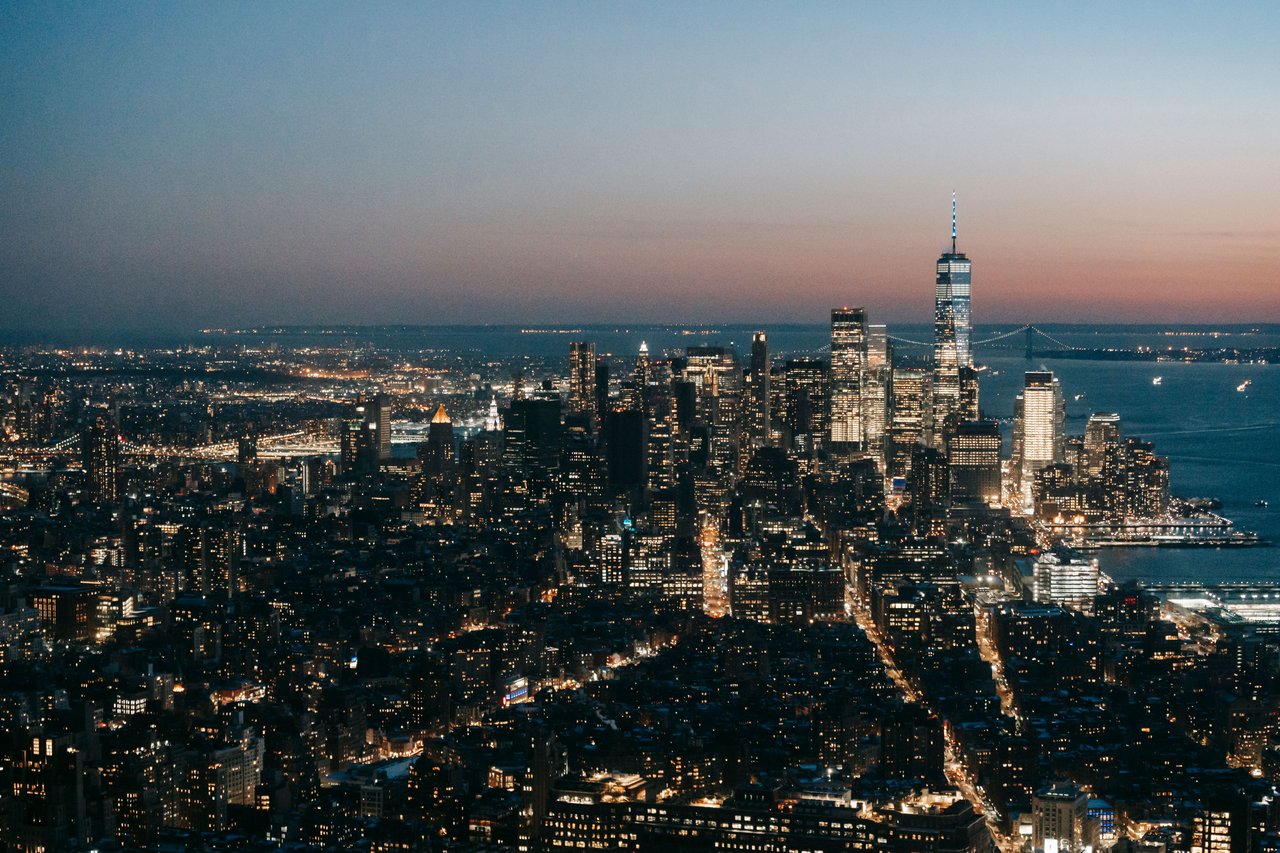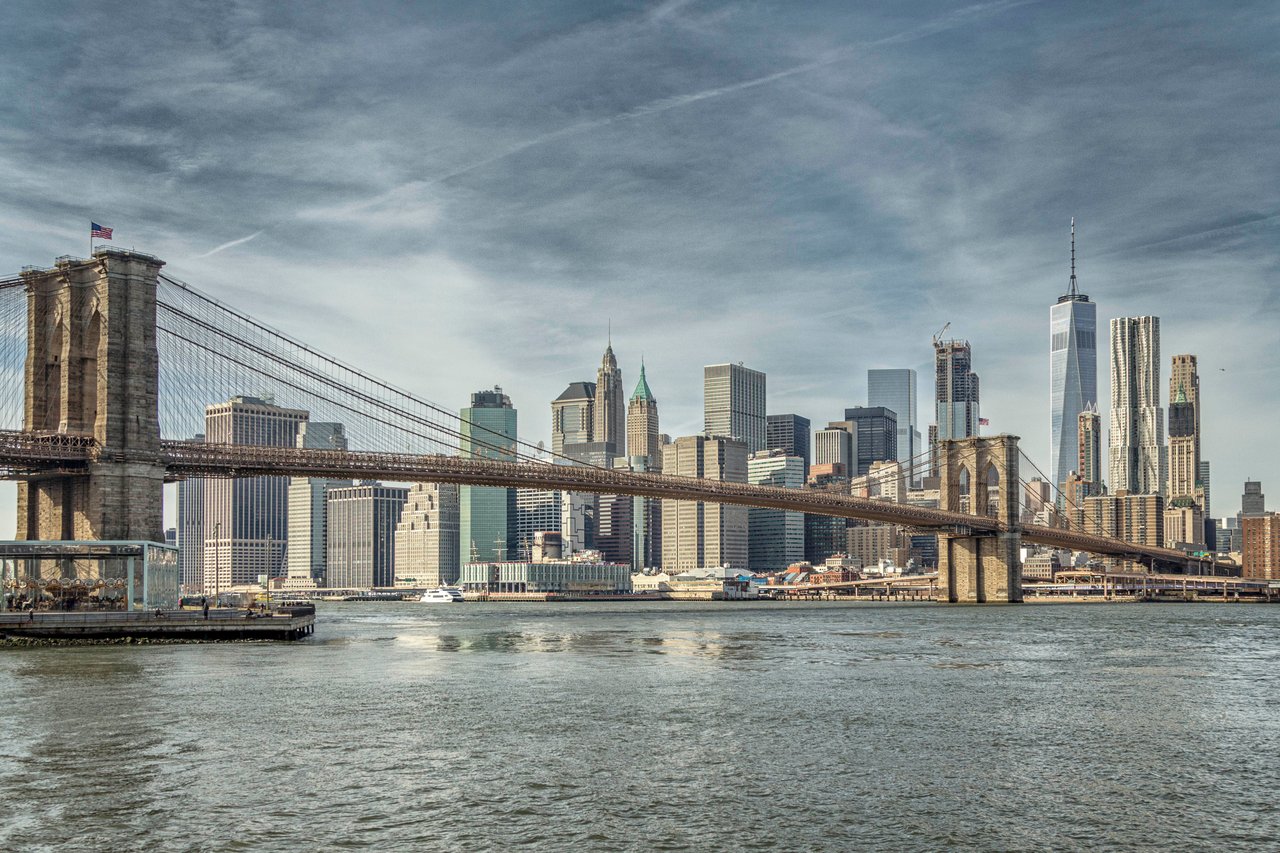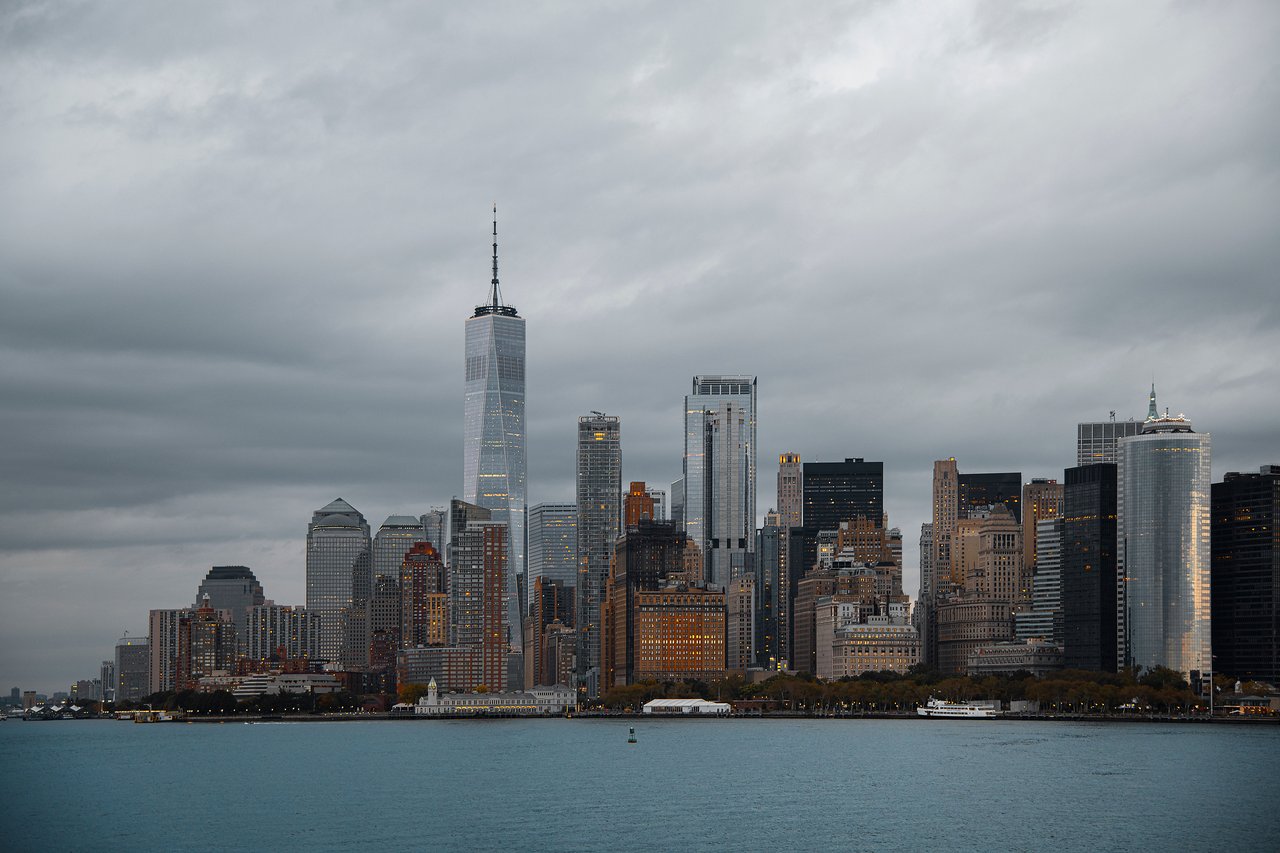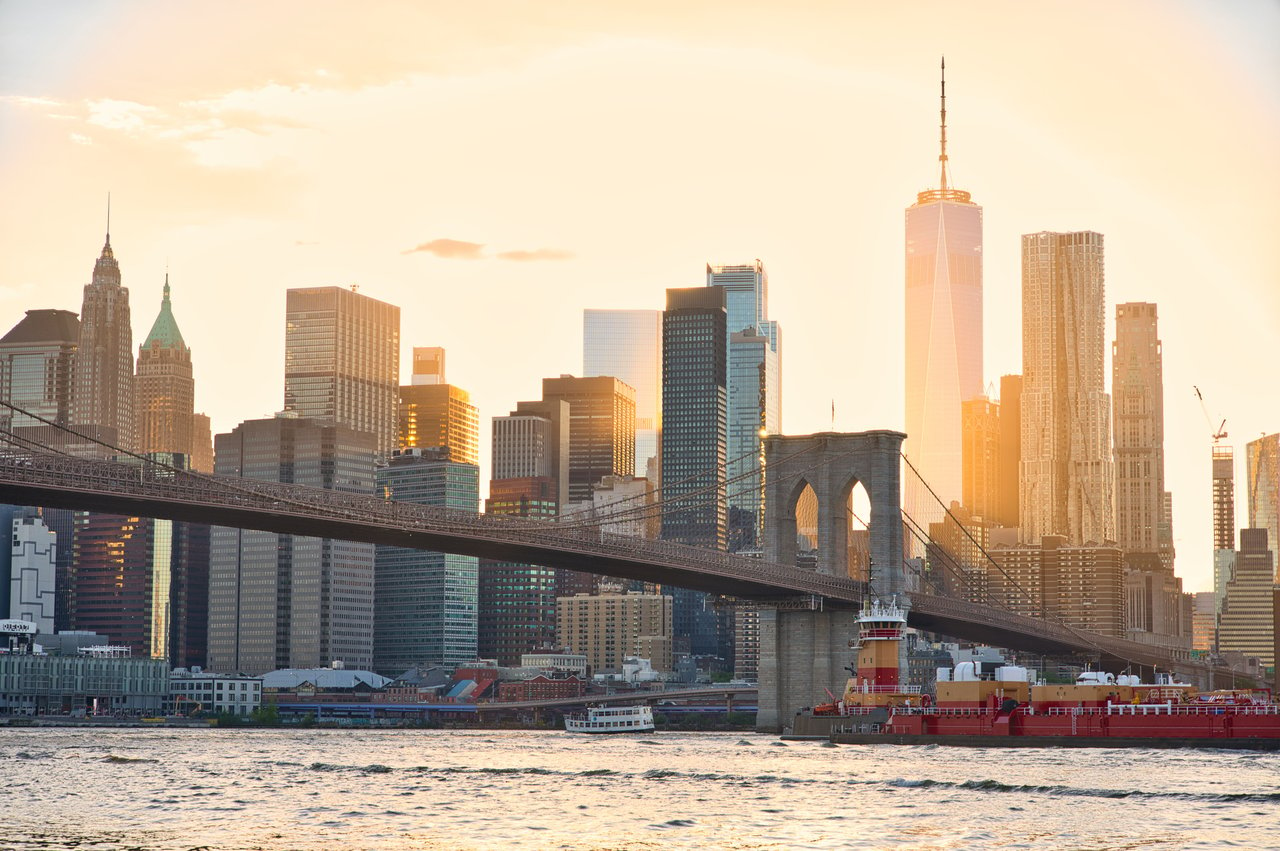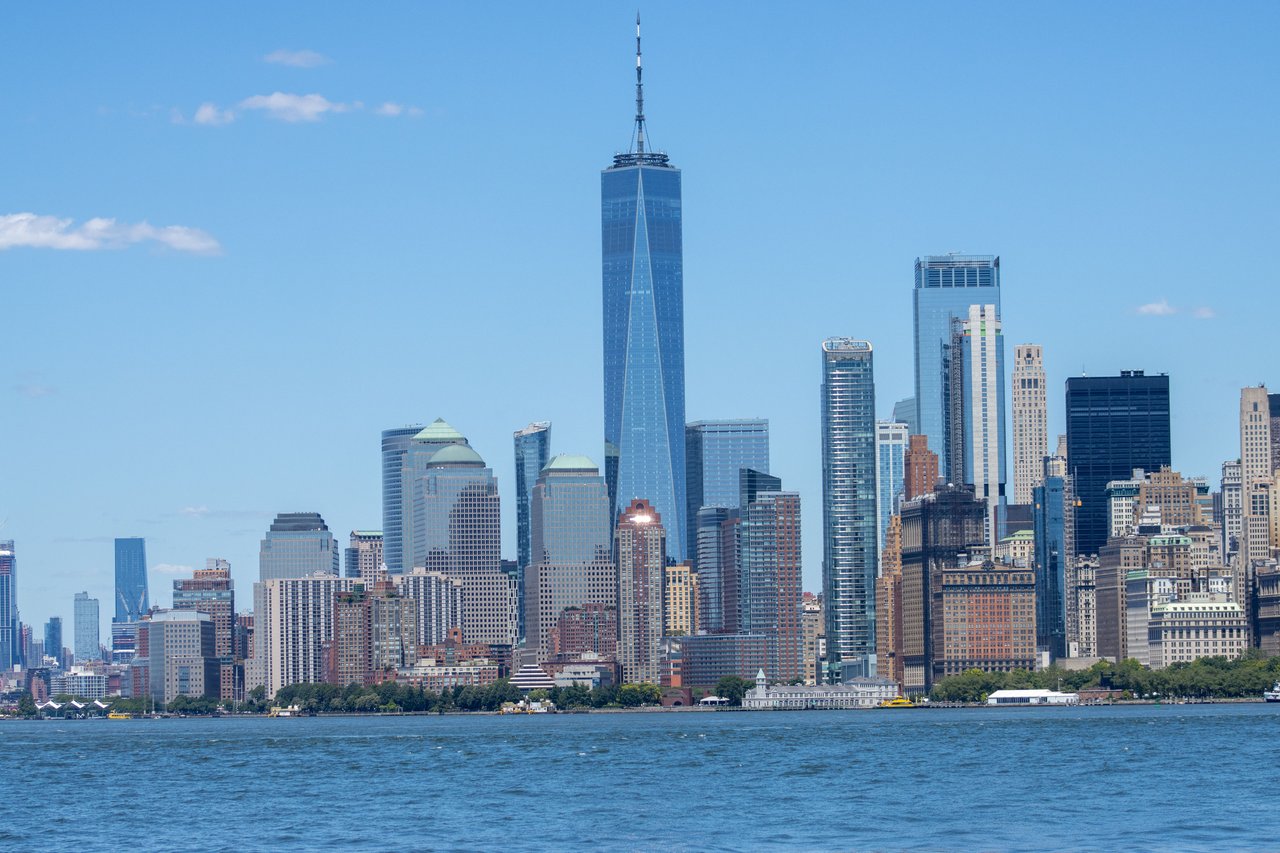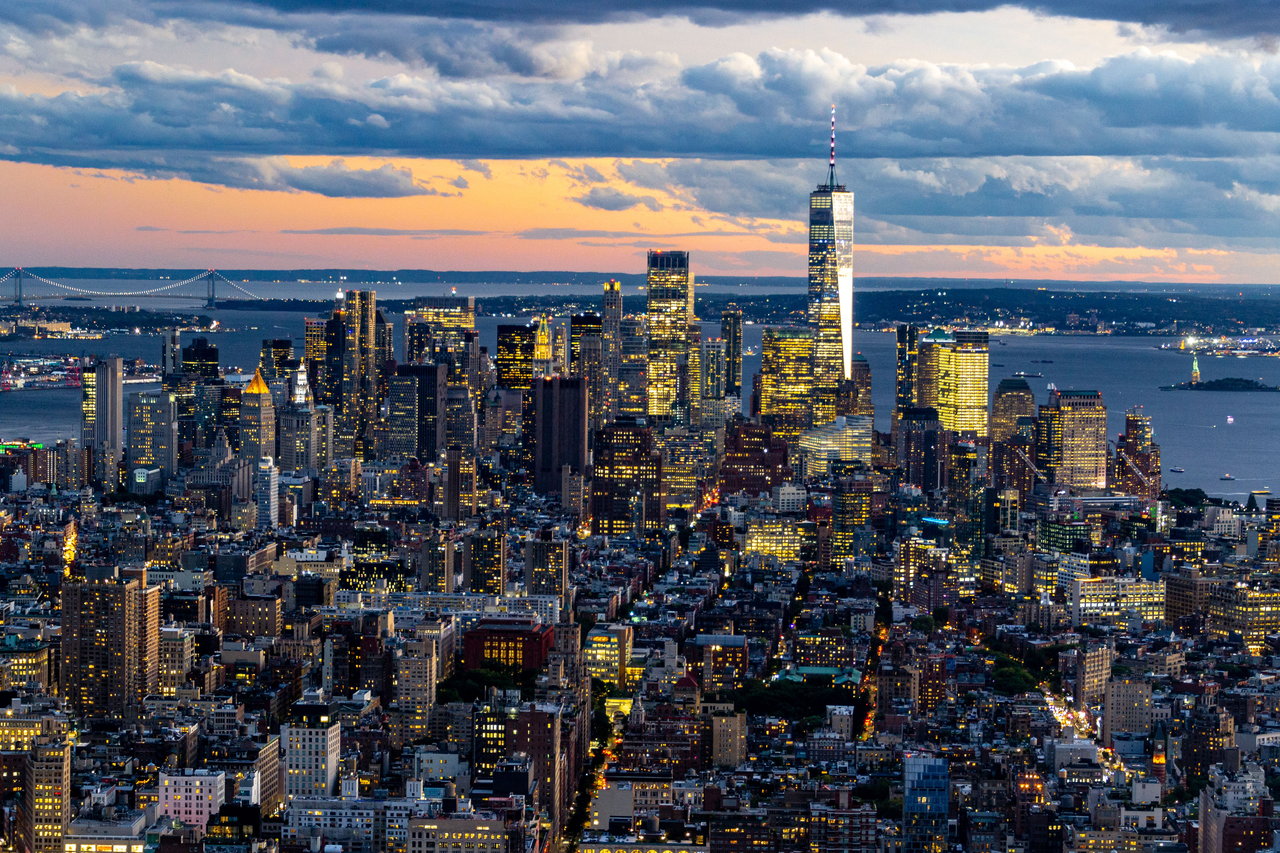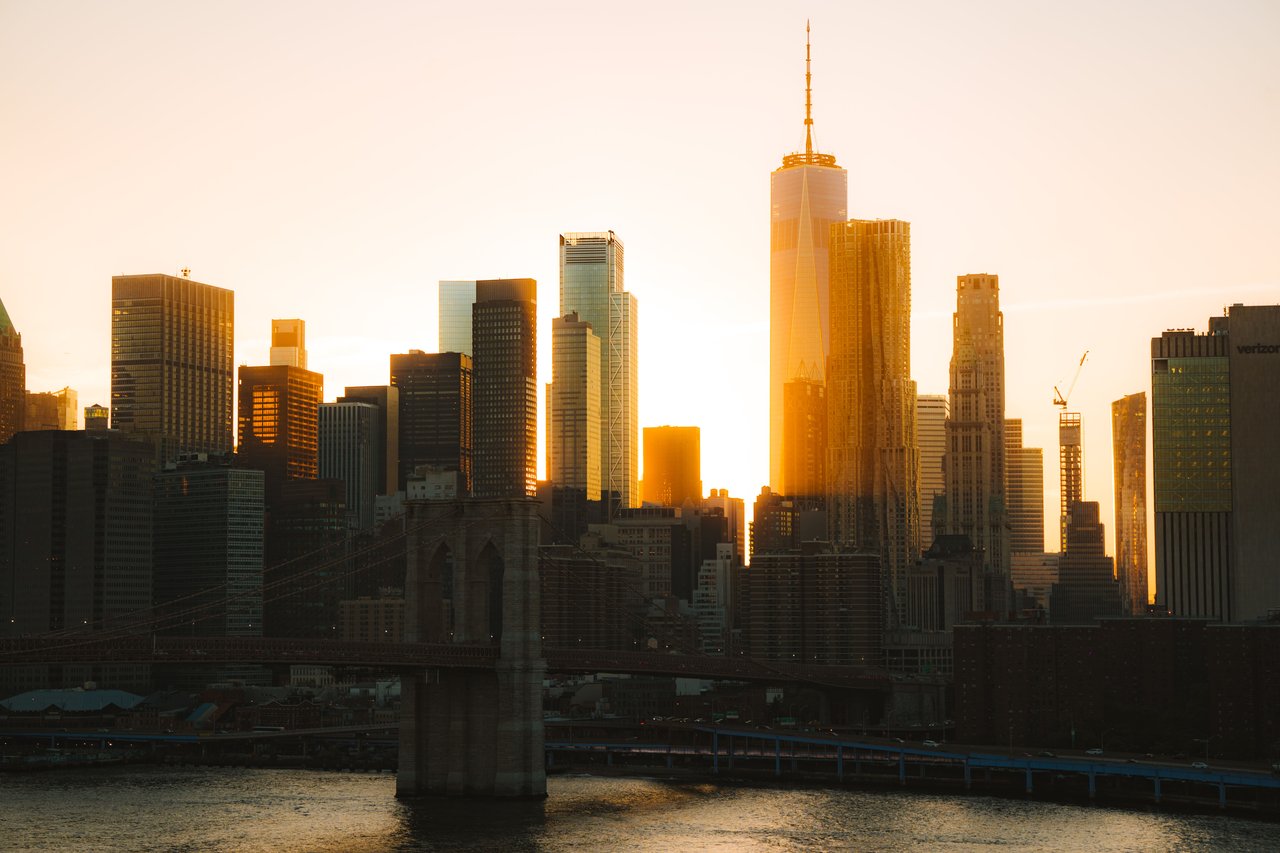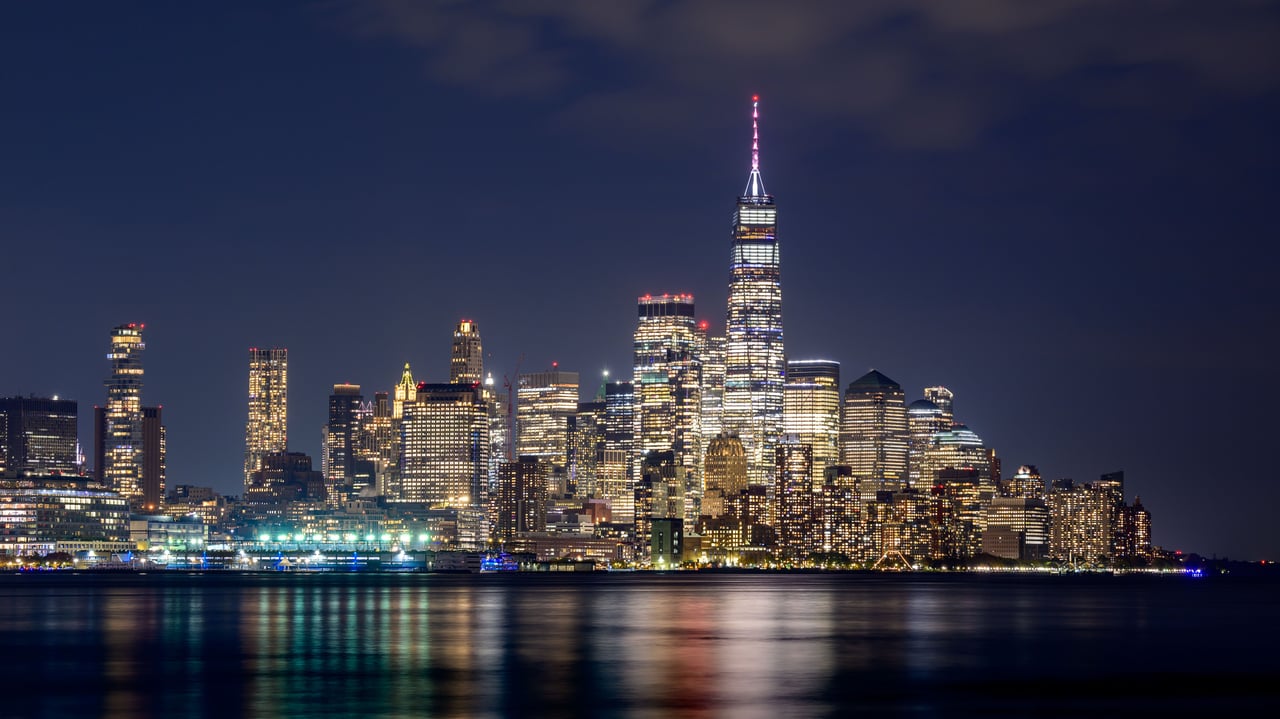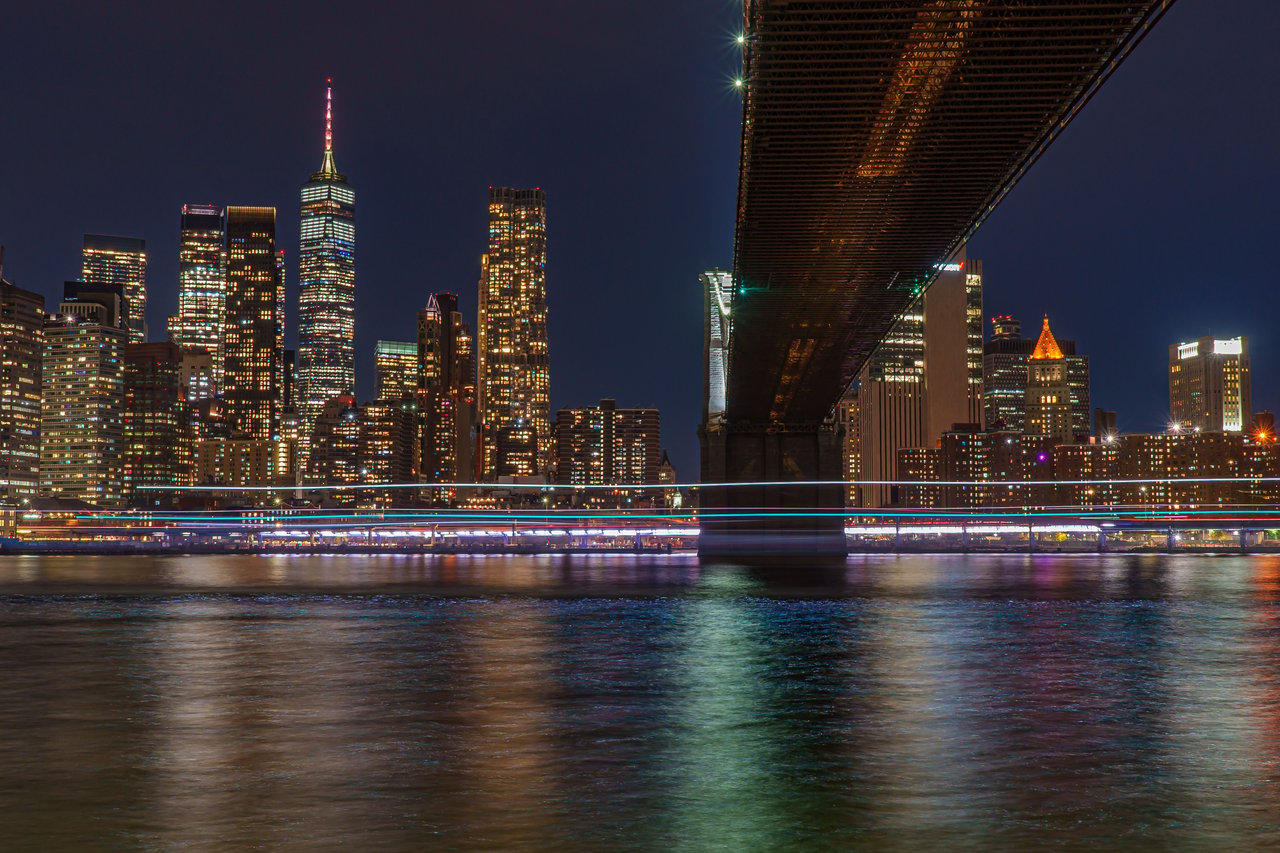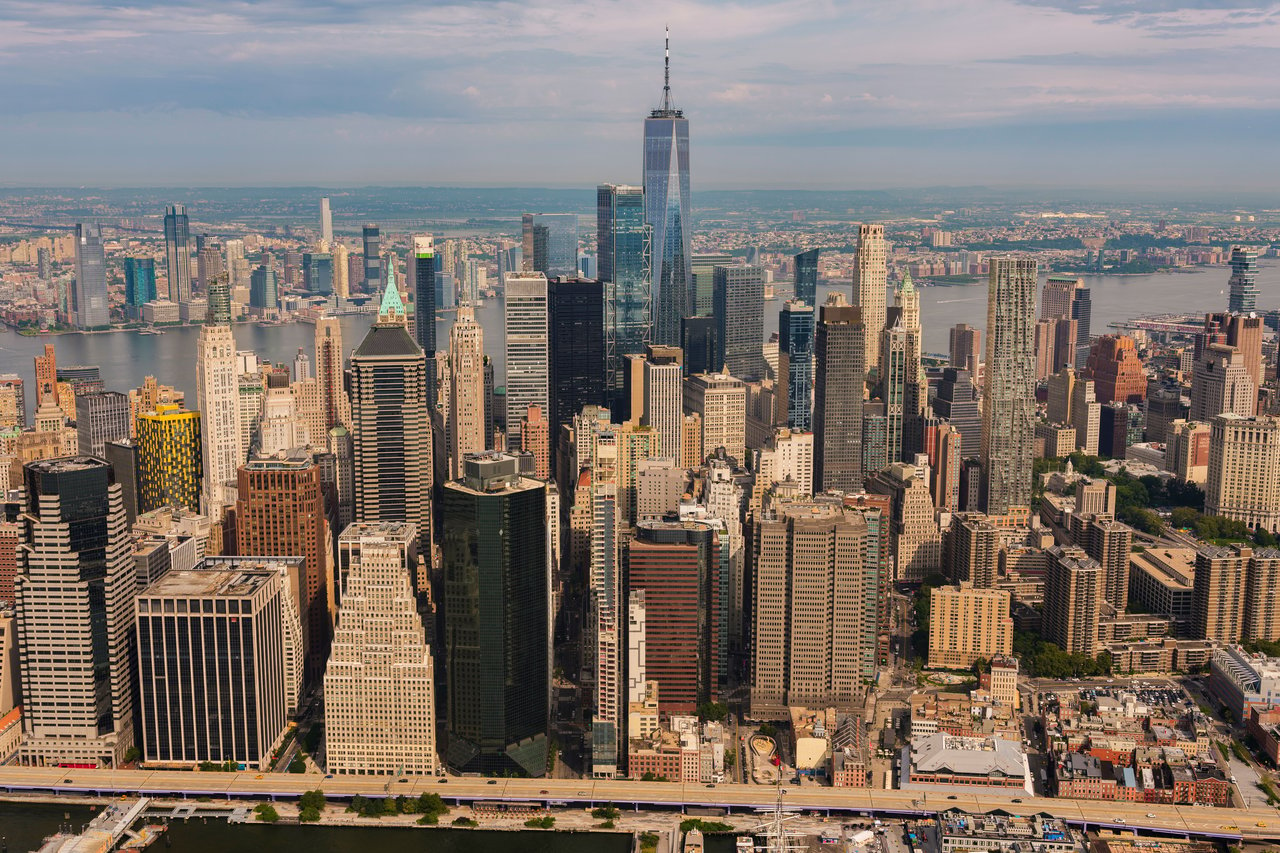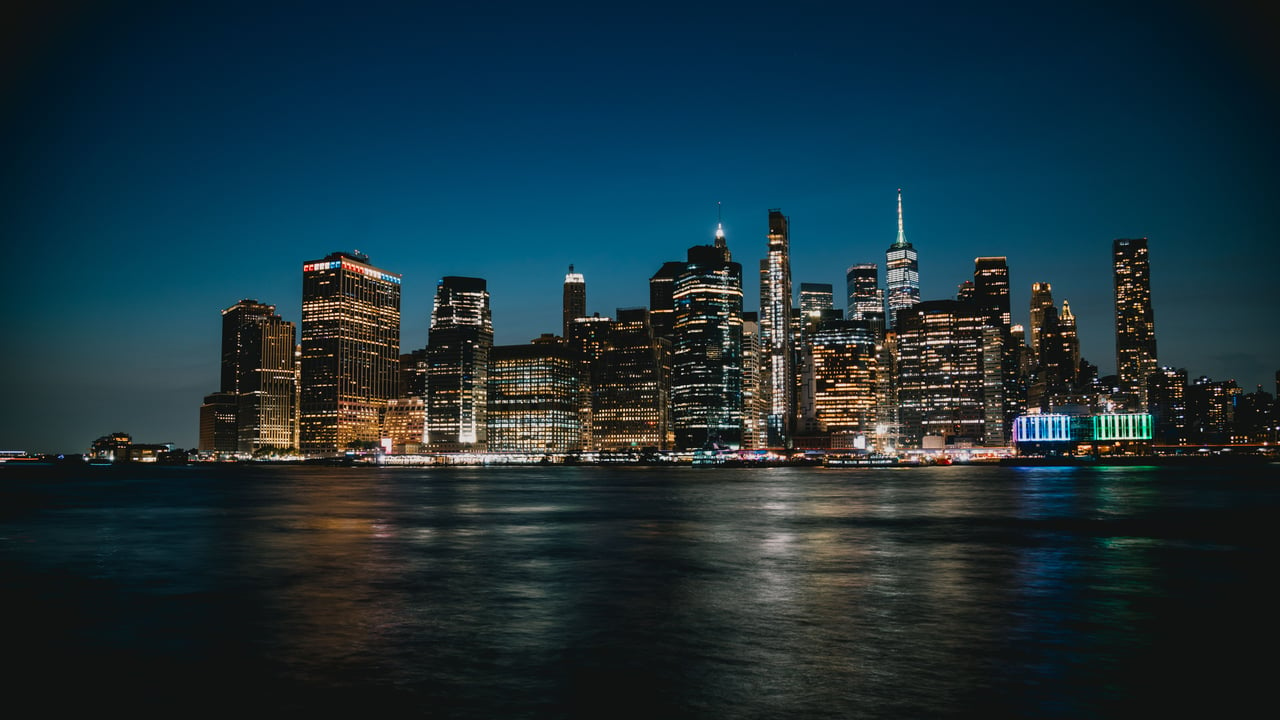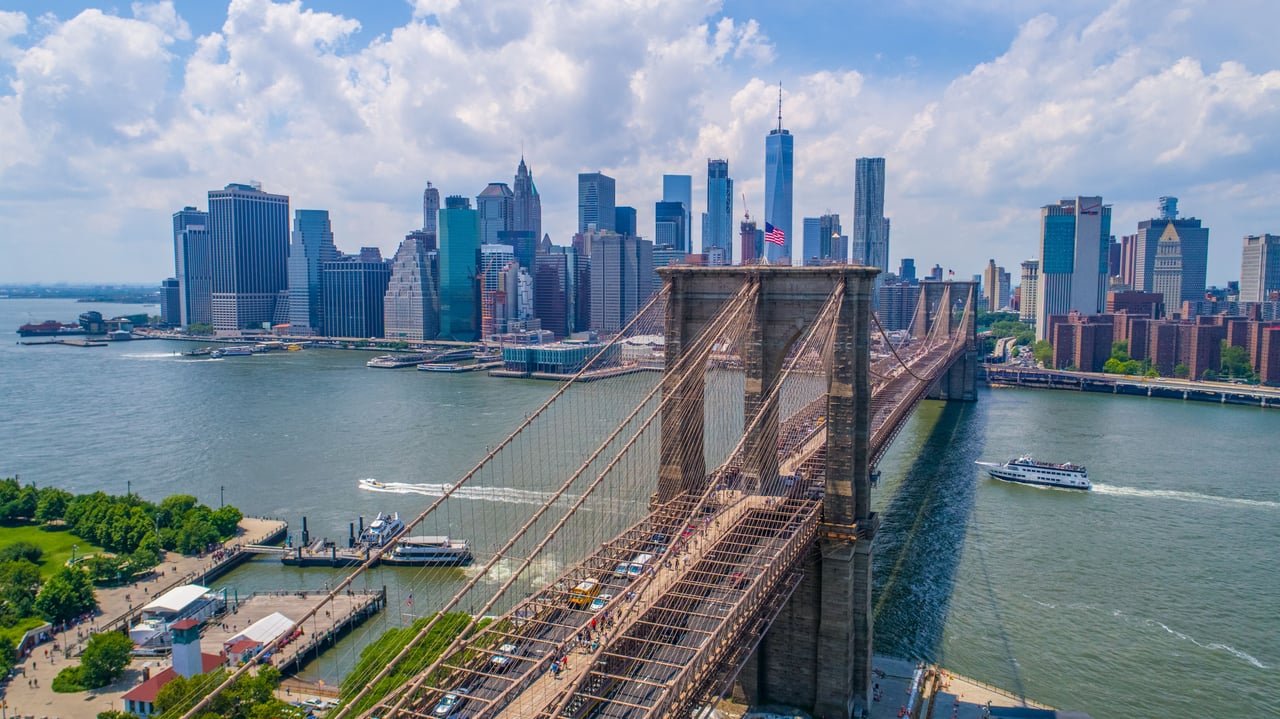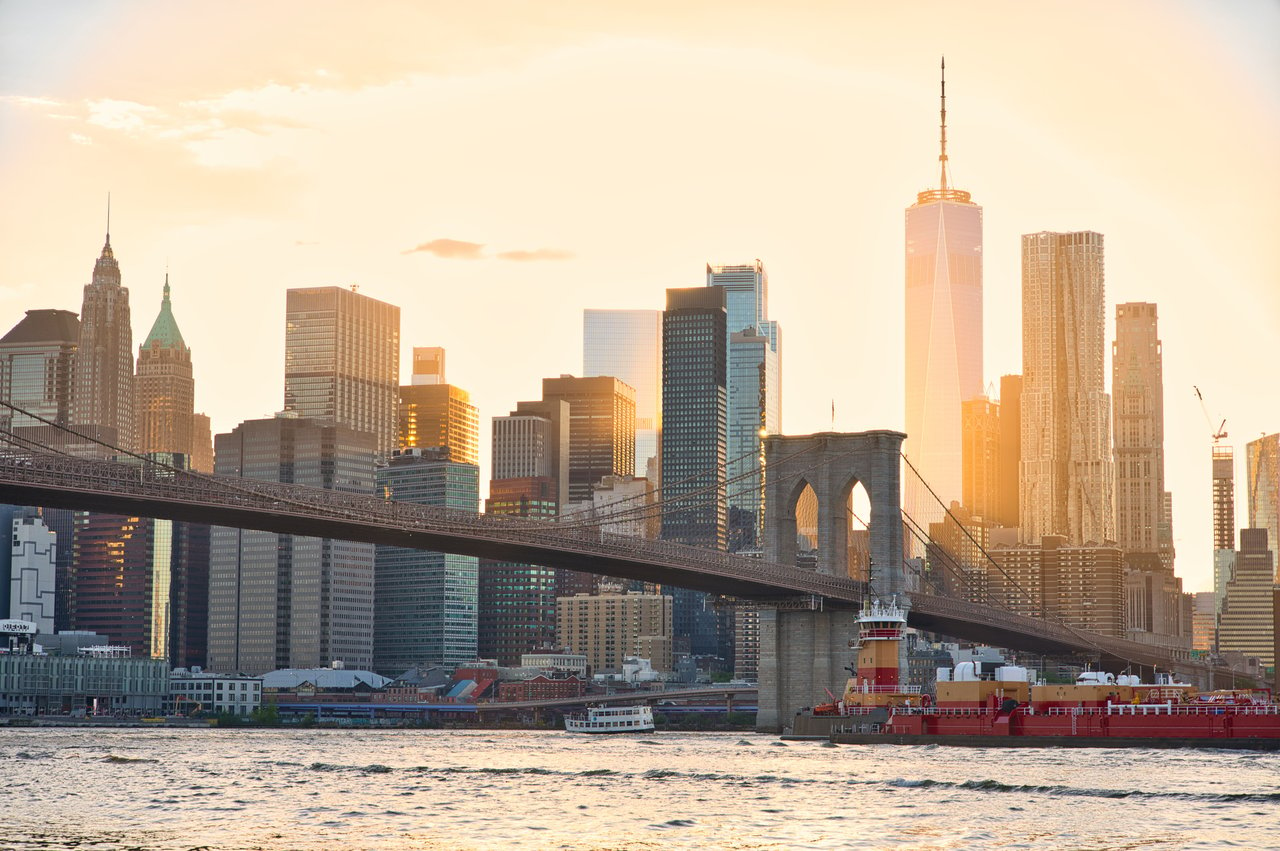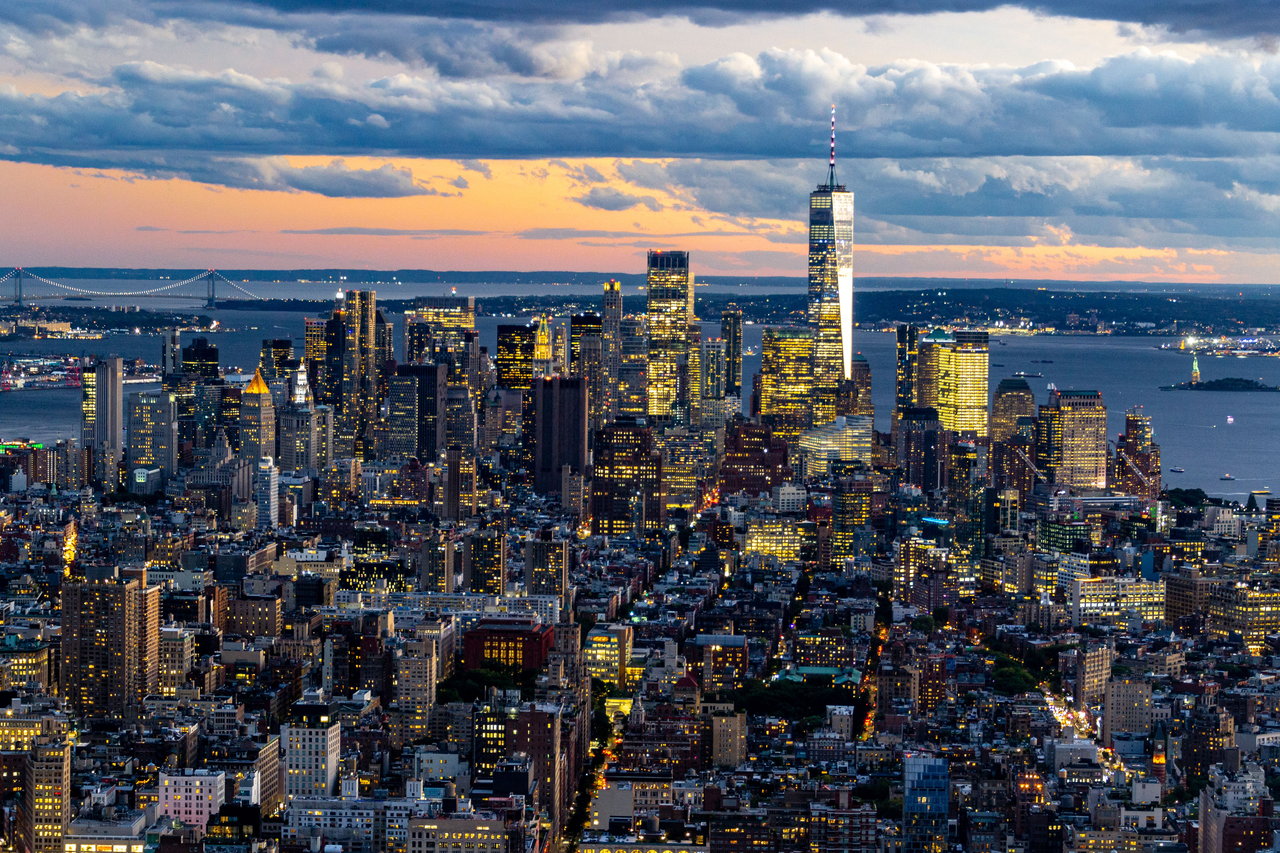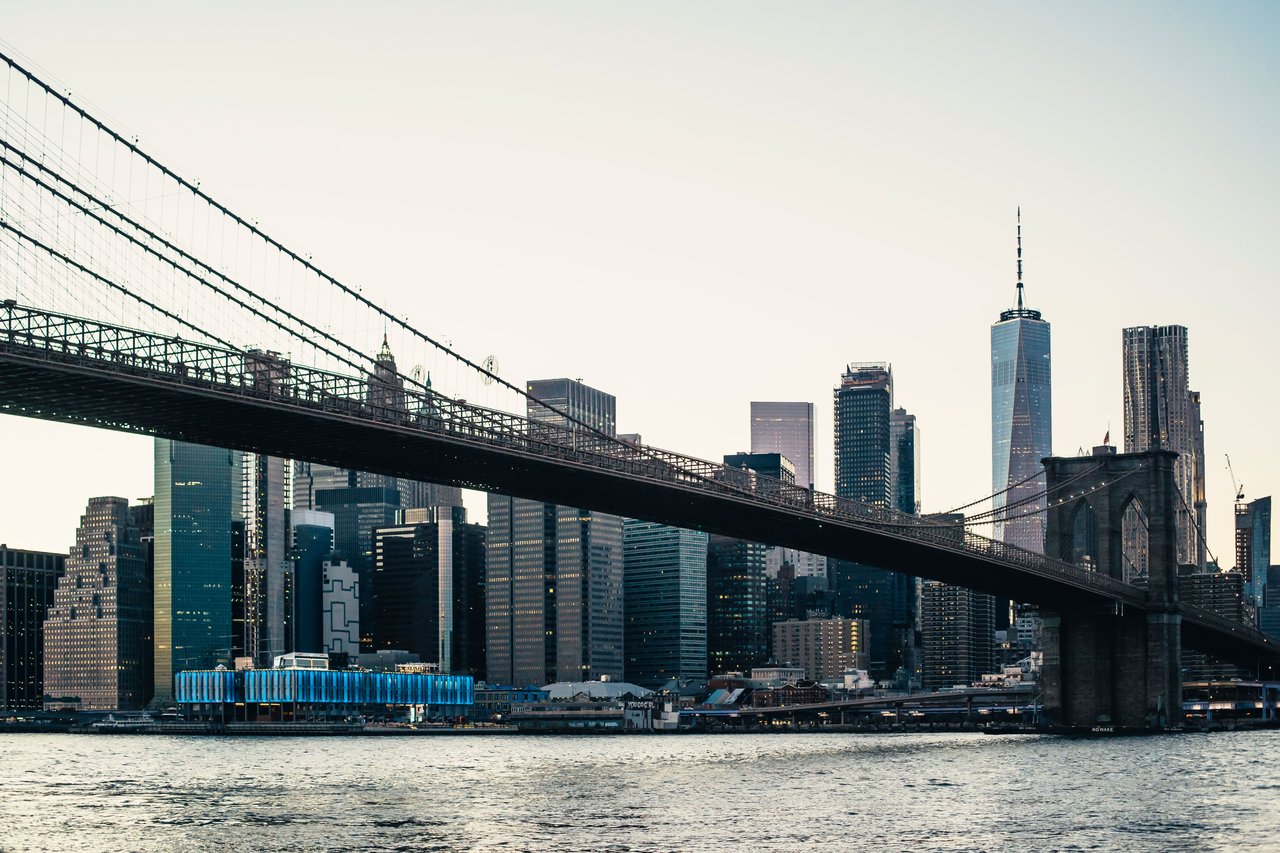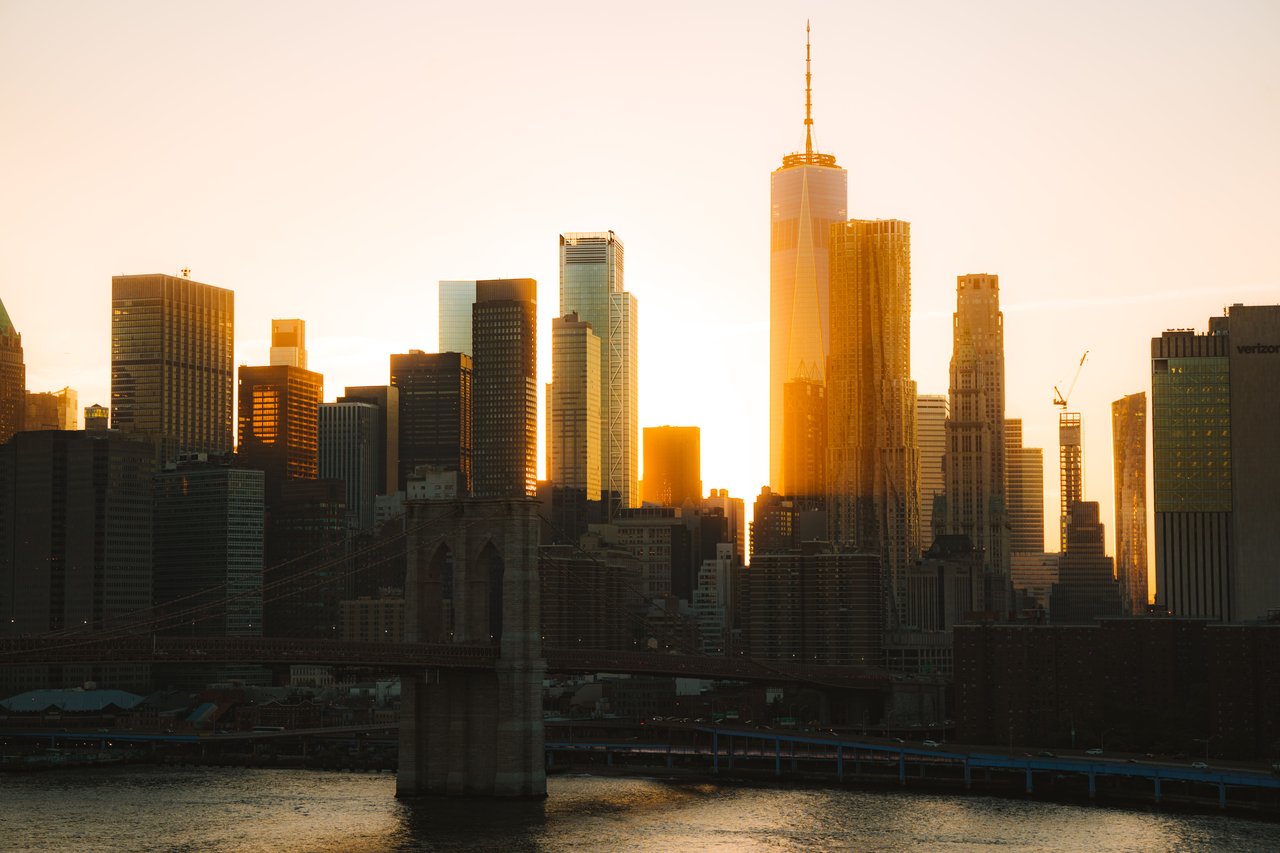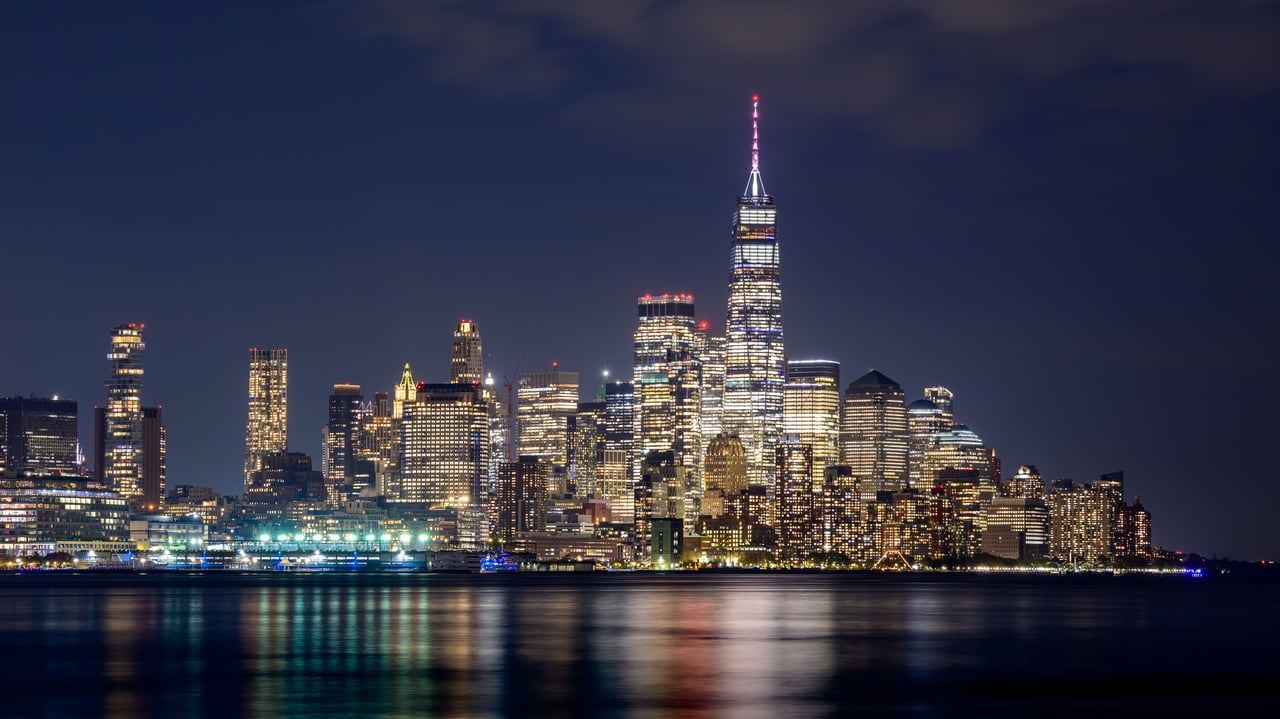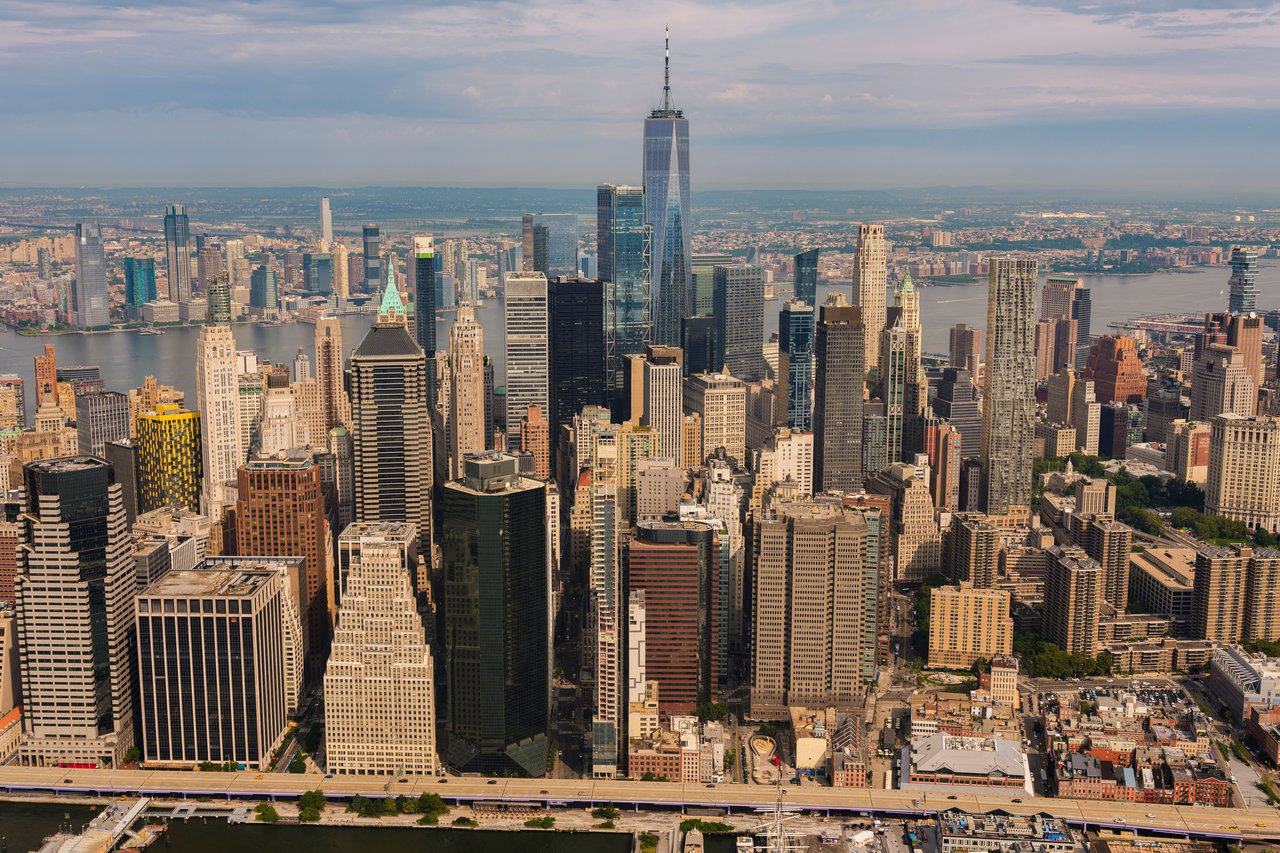
Vesey Street is one of Lower Manhattan's most historically significant architectural corridors, connecting the colonial-era architecture of St. Paul's Chapel with the monumental Art Deco Barclay-Vesey Building, the modern World Trade Center, and the contemporary waterfront landscape of Battery Park City. Running westward from Broadway toward the Hudson River, the street reflects more than two centuries of architectural development, commercial expansion, urban renewal, and historic preservation.
Although Vesey Street is frequently associated with the southern edge of Tribeca, its route also passes through the Civic Center, World Trade Center district, and Battery Park City. Its architectural character differs from the traditional cast-iron loft buildings and nineteenth-century warehouses found farther north in Tribeca. Here, the surviving colonial street network meets some of Manhattan's most ambitious examples of twentieth- and twenty-first-century architecture.
From the Georgian proportions of St. Paul's Chapel to the geometric setbacks of the Barclay-Vesey Building and the glass towers surrounding the World Trade Center, Vesey Street offers an unusually complete architectural record of Lower Manhattan's transformation.
The Origins of Vesey Street
Vesey Street developed as part of the early expansion of New York City beyond its original colonial settlement. During the eighteenth century, much of the land west of Broadway was associated with Trinity Church, whose extensive property holdings influenced the development of streets and building lots throughout present-day Lower Manhattan.
As the city expanded northward, former agricultural and institutional lands were gradually divided into residential and commercial blocks. New east-west streets connected Broadway with the Hudson River waterfront, allowing buildings and businesses to spread into previously undeveloped areas.
Vesey Street became an important part of this early street network. Its eastern end developed beside St. Paul's Chapel, while its western blocks eventually became associated with the markets, warehouses, and transportation facilities serving the waterfront.
The street's early architecture was relatively modest. Brick residences, workshops, shops, and institutional structures occupied the surrounding blocks before the commercial expansion of the nineteenth century introduced larger and more substantial buildings.
Why Is It Called Vesey Street?
Vesey Street is named after the Reverend William Vesey, the first rector of Trinity Church, who served from 1697 until his death in 1746.
The name reflects the considerable influence of Trinity Church on the development of Lower Manhattan. The institution owned extensive landholdings, and several streets in the surrounding neighborhood were named in connection with its history and clergy.
William Vesey's name became part of the city's permanent street geography as the former church lands were incorporated into the expanding urban landscape.
Today, the street preserves that connection to colonial New York, even though much of its original architecture has disappeared.
Vesey Street in Colonial Manhattan
During the eighteenth century, Vesey Street occupied a developing part of Manhattan beyond the older commercial center near the southern tip of the island.
The surrounding area contained a mixture of residences, institutional properties, and undeveloped land. Broadway was already an important north-south route, while the western waterfront supported shipping and commercial activity.
Buildings from this period were generally constructed with masonry walls, pitched roofs, and relatively simple facades. Georgian architecture introduced carefully proportioned windows, classical details, and symmetrical compositions.
The most important surviving architectural connection to this period is St. Paul's Chapel, which occupies the block between Vesey Street and Fulton Street.
Its construction during the 1760s established an important institutional landmark along the street and created an architectural presence that has survived the city's subsequent transformation.
St. Paul's Chapel and the Architecture of Colonial New York
St. Paul's Chapel stands on Broadway between Vesey Street and Fulton Street and is the oldest surviving church building in Manhattan.
Constructed between 1764 and 1766, the chapel is one of New York City's most important examples of Georgian architecture.
Its design is traditionally associated with Thomas McBean, although the precise attribution has been the subject of historical discussion.
The building incorporates a restrained masonry exterior, classical proportions, and architectural details influenced by eighteenth-century British church design.
The Broadway facade features a monumental Ionic portico, while the western elevation is distinguished by a tower and spire.
The chapel's design reflects the architectural traditions that shaped New York before the American Revolution.
Its survival is especially remarkable because the surrounding neighborhood has been repeatedly transformed by commercial development, skyscraper construction, and large-scale urban renewal.
The Georgian Architecture of St. Paul's Chapel
Georgian architecture emphasized symmetry, classical proportion, and restrained ornamentation.
At St. Paul's Chapel, these principles appear in the building's rectangular form, carefully arranged windows, and classical architectural details.
The Broadway entrance incorporates Ionic columns supporting a pediment, creating a composition inspired by classical temples.
A large Palladian window provides another distinctive architectural feature.
The chapel's masonry walls and brownstone detailing reflect the construction methods available in colonial New York.
Its western tower and spire, completed during the 1790s, add a vertical element to the otherwise restrained composition.
Together, these features make St. Paul's Chapel an exceptional surviving example of eighteenth-century architecture within the modern Manhattan skyline.
St. Paul's Chapel and the Development of Broadway
The construction of St. Paul's Chapel influenced the architectural character of the surrounding neighborhood.
During the eighteenth and early nineteenth centuries, Broadway was developing into an important commercial and residential corridor.
The chapel occupied a substantial site with an adjoining churchyard, creating a landscaped institutional setting within the growing city.
As commercial buildings became taller and more substantial, the chapel's relatively low height and classical design created an increasingly distinctive contrast.
By the late nineteenth century, substantial commercial structures surrounded the historic churchyard.
During the twentieth century, skyscraper development introduced an even greater difference in architectural scale.
Today, St. Paul's Chapel remains a remarkable example of how colonial architecture can survive within a modern commercial district.
The Development of Vesey Street During the Nineteenth Century
During the nineteenth century, Vesey Street underwent a substantial commercial transformation.
As New York City's population and economy expanded, the surrounding blocks became increasingly valuable for retail establishments, offices, warehouses, and wholesale businesses.
Earlier residences were gradually replaced by commercial buildings with larger storefronts and more flexible interior spaces.
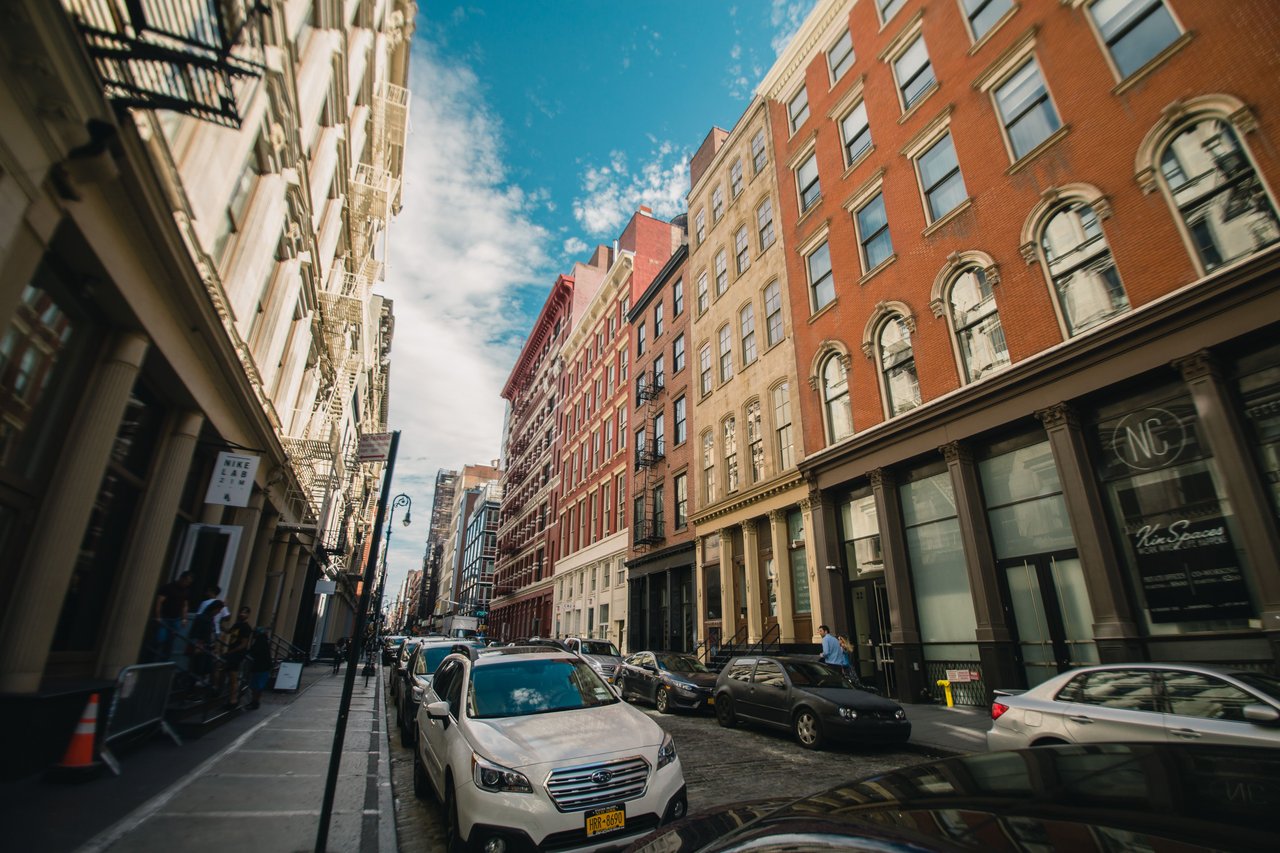
Italianate and other nineteenth-century architectural styles became prominent throughout the surrounding neighborhood, introducing decorative masonry, substantial cornices, and larger windows.
The street's western blocks developed a particularly strong relationship with the waterfront, where markets and transportation facilities supported the movement of goods.
By the late nineteenth century, Vesey Street had become part of a densely developed commercial district connecting Broadway with the Hudson River.
Vesey Street and the Washington Market District
The western portion of Vesey Street was historically associated with Washington Market, one of New York City's most important produce markets.
Established during the early nineteenth century, the market developed near the Hudson River waterfront, where shipping facilities provided convenient access for the movement of food and merchandise.
The surrounding blocks contained market buildings, warehouses, wholesale businesses, and transportation infrastructure.
Commercial architecture in this district was shaped by practical requirements. Buildings needed substantial structural systems, accessible loading areas, and interior spaces suitable for storage and distribution.
Brick masonry, large windows, and relatively simple industrial facades became common features.
The market helped establish the commercial character of western Lower Manhattan for generations.
Although much of the original market district was eventually demolished or redeveloped, its history remains an important part of Vesey Street's architectural development.
The Architecture of the Former Washington Market
The Washington Market district was characterized by practical commercial architecture rather than monumental institutional buildings.
Warehouses and market structures were designed to accommodate the storage, movement, and distribution of goods.
Large ground-floor openings facilitated deliveries, while upper floors provided storage and commercial space.
Masonry walls and substantial structural systems supported the weight of merchandise.
As the district expanded, the surrounding streets became densely occupied by commercial establishments.
The resulting architectural environment reflected the economic importance of New York City's waterfront.
The disappearance of much of the market district during twentieth-century redevelopment marked a major change in the architectural history of Vesey Street.
Vesey Street and Broadway
Broadway forms the eastern entrance to Vesey Street and establishes a direct connection with one of Manhattan's oldest commercial corridors.
The intersection is particularly significant because of the presence of St. Paul's Chapel.
Its Georgian architecture preserves the character of colonial New York, while the surrounding commercial buildings reflect later periods of development.
During the nineteenth century, Broadway became a major center of retail trade, offices, and financial institutions.
The construction of increasingly tall commercial buildings transformed the streetscape, introducing substantial masonry facades and later steel-frame skyscrapers.
Today, the intersection illustrates the extraordinary contrast between eighteenth-century religious architecture and the commercial development of modern Lower Manhattan.
Vesey Street and Church Street
Church Street intersects Vesey Street near the western side of St. Paul's Chapel.
Historically, this area developed with a mixture of institutional and commercial buildings associated with the expanding business district.
The surrounding blocks were transformed during the nineteenth and twentieth centuries as larger commercial structures replaced earlier buildings.
Church Street also became an important transportation corridor, connecting the commercial neighborhoods of Lower Manhattan.
The construction of the World Trade Center and later redevelopment introduced another architectural layer to the area.
Today, the intersection reflects the relationship between historic street alignments and contemporary commercial architecture.
Vesey Street and the World Trade Center
The construction of the original World Trade Center during the 1960s and early 1970s dramatically transformed the architectural landscape surrounding Vesey Street.
The project replaced numerous smaller commercial blocks with a large, coordinated development.
Designed around monumental office towers and an extensive plaza, the complex introduced an unprecedented architectural scale to the neighborhood.
The original twin towers, designed by Minoru Yamasaki, became defining features of the Lower Manhattan skyline.
Their modernist architecture emphasized verticality, repetitive structural patterns, and substantial building height.
The development also altered the surrounding street network, changing the relationship between Vesey Street and the former Washington Market district.
The project represented a major departure from the traditional pattern of narrow streets and individual commercial buildings that had characterized much of Lower Manhattan.
The Rebuilding of the World Trade Center
Following the September 11, 2001 attacks, the World Trade Center district underwent an extensive rebuilding process.
The new development introduced contemporary office towers, transportation infrastructure, memorial spaces, and public plazas.
The rebuilding also restored important pedestrian connections through the surrounding street network.
Vesey Street became an important northern edge of the redeveloped complex.
The surrounding architecture reflects contemporary approaches to structural engineering, public space, and commercial tower design.
Glass facades, advanced structural systems, and carefully planned public circulation distinguish the newer buildings from the masonry commercial structures of earlier periods.
The resulting environment demonstrates how Lower Manhattan's architectural identity continues to evolve.
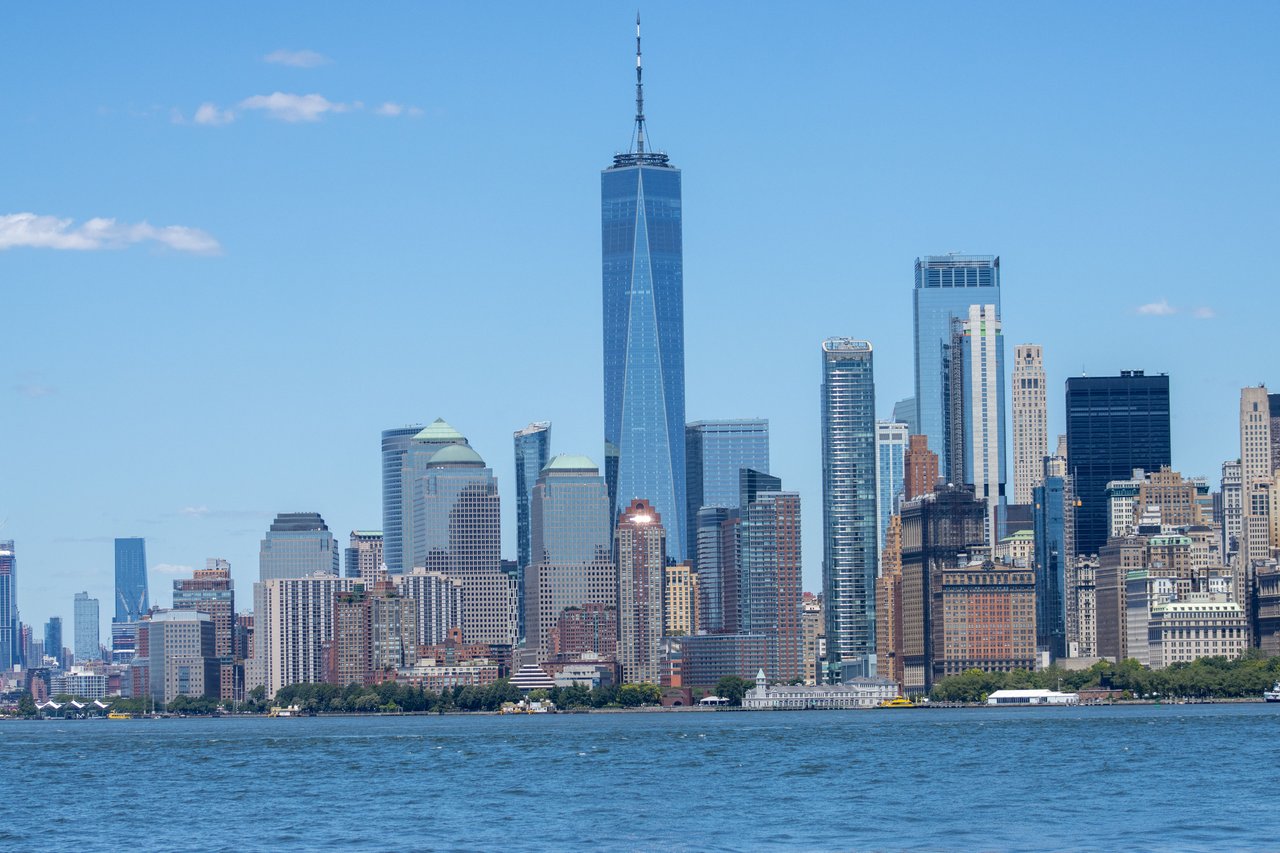
One World Trade Center and Vesey Street
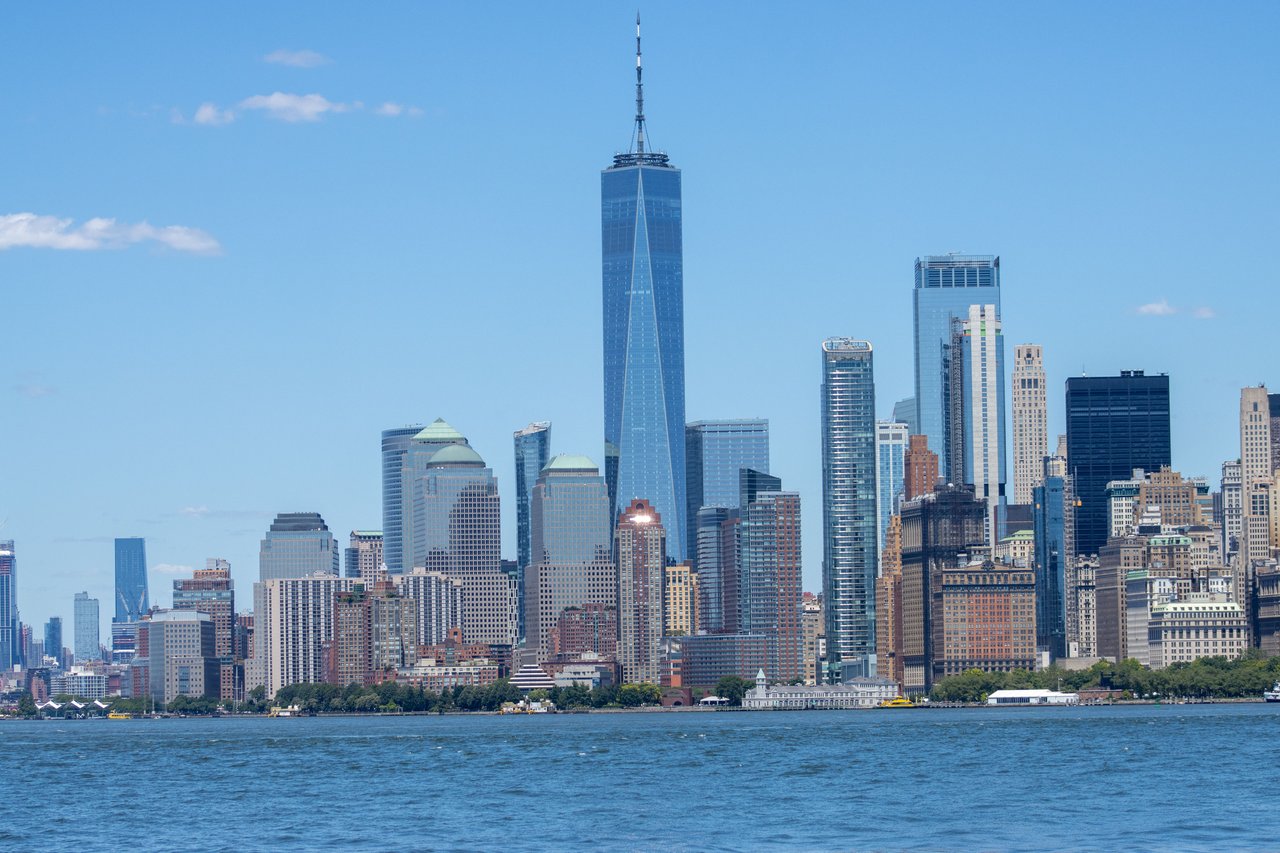
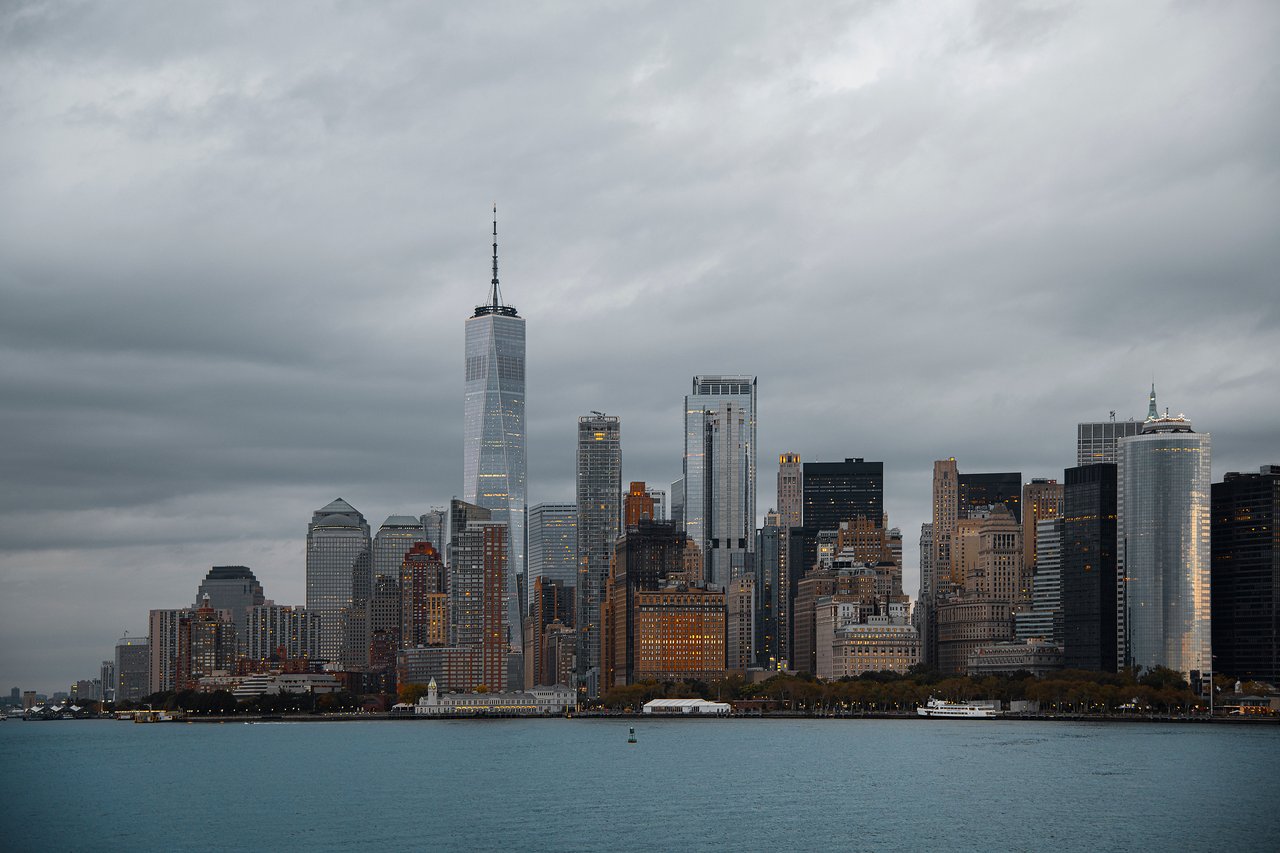
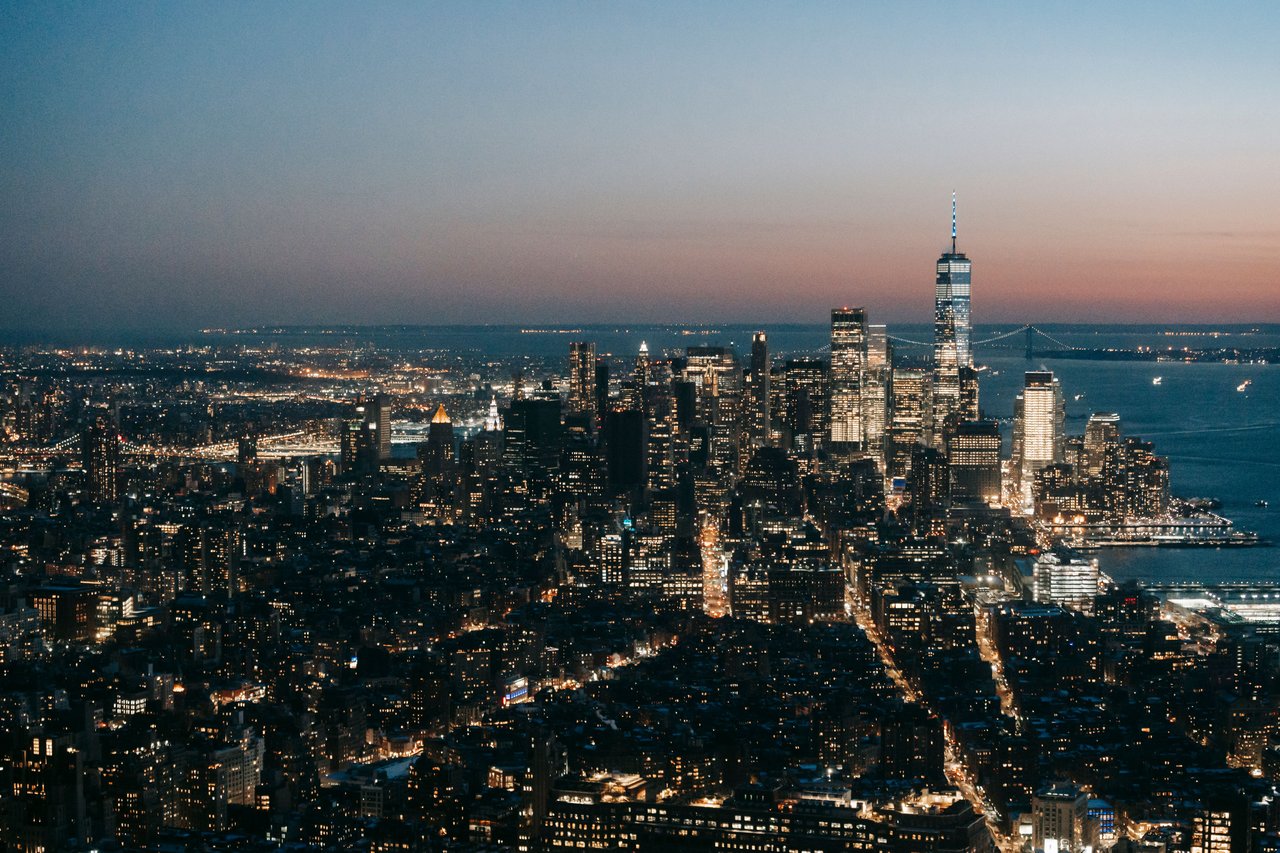
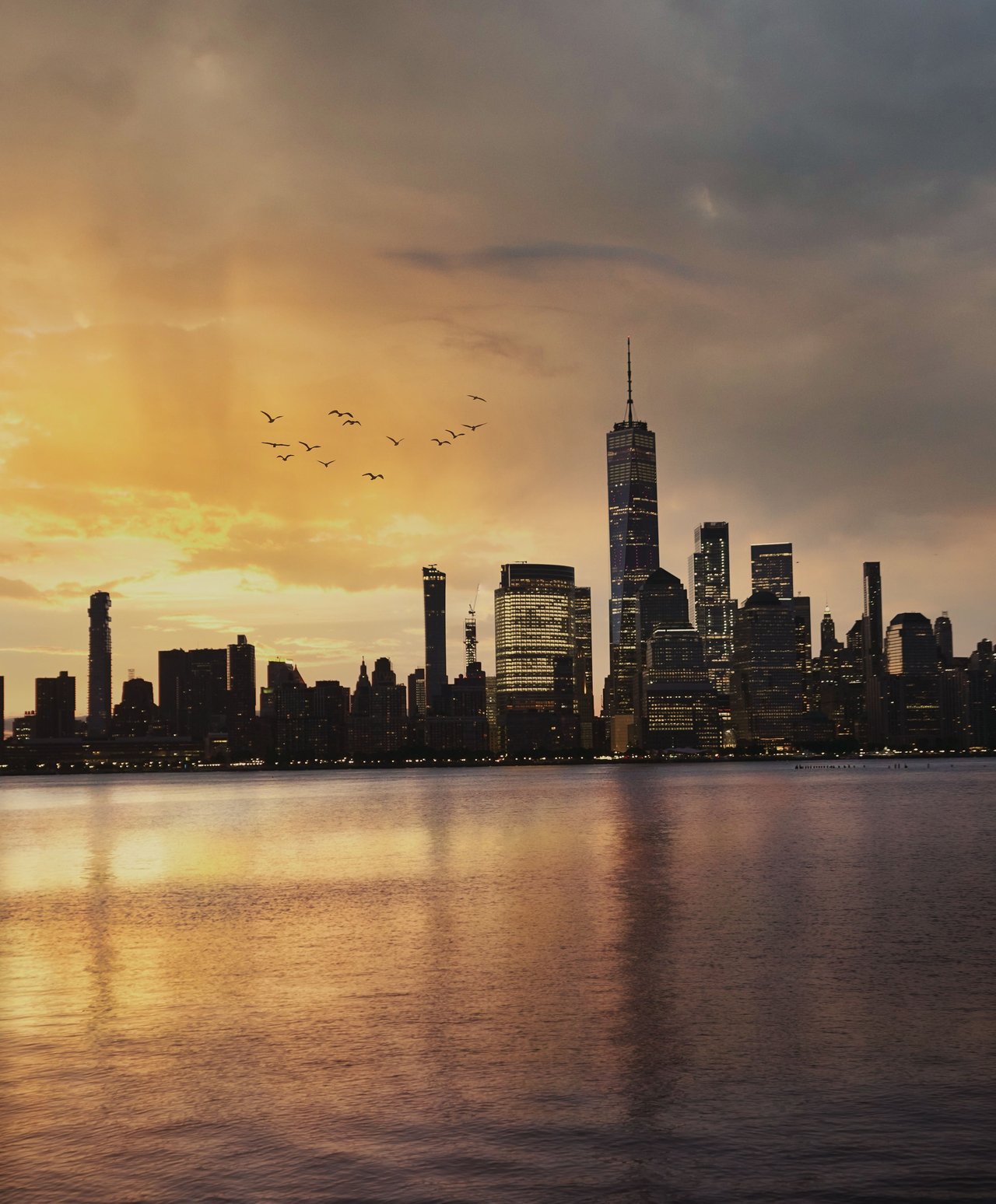
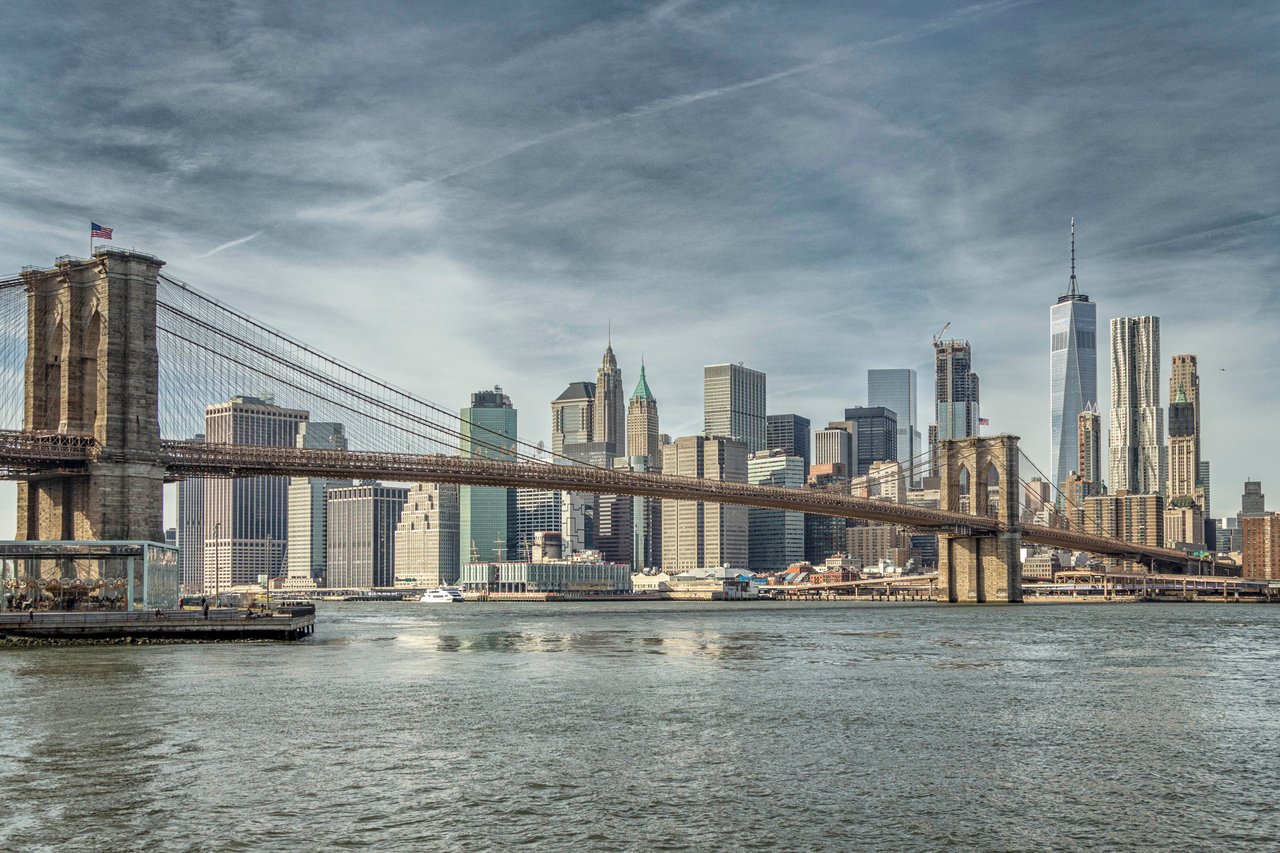
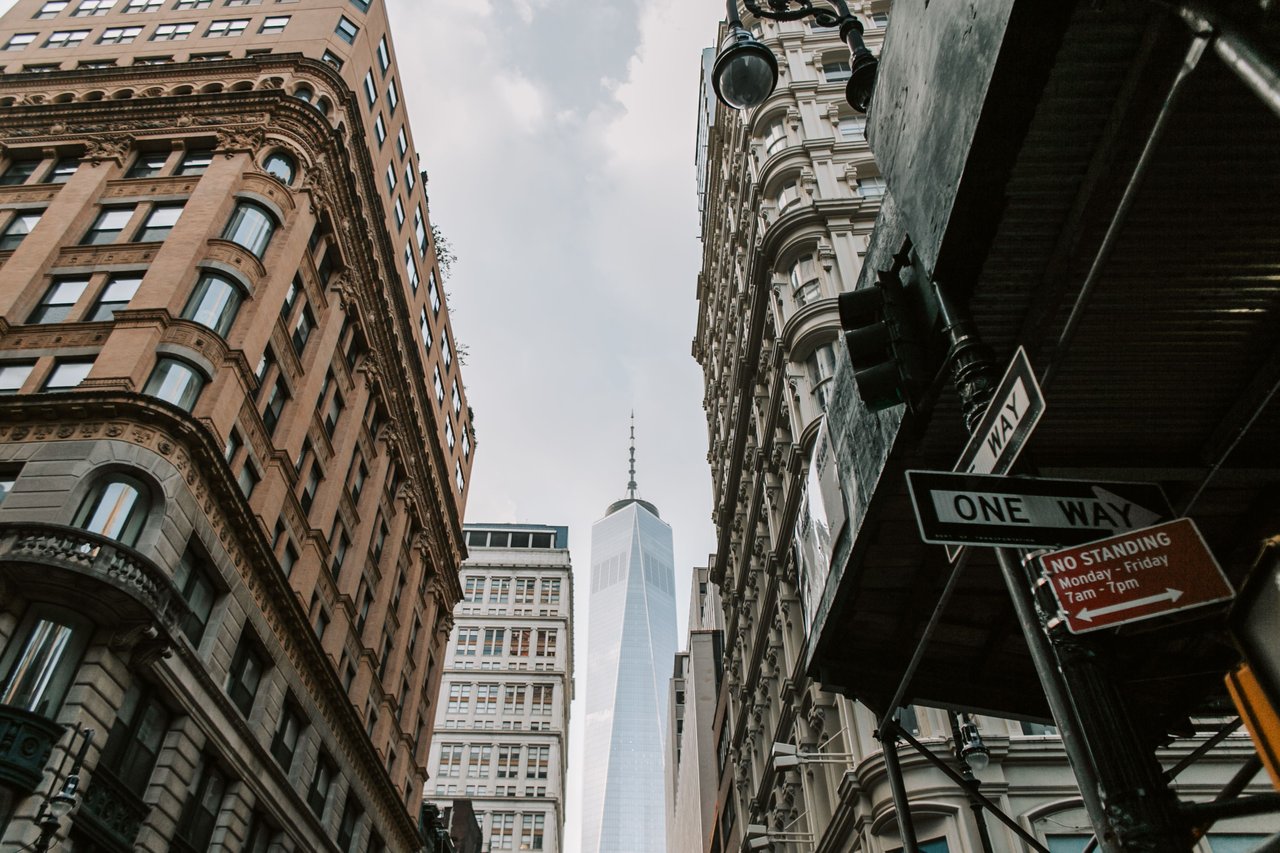
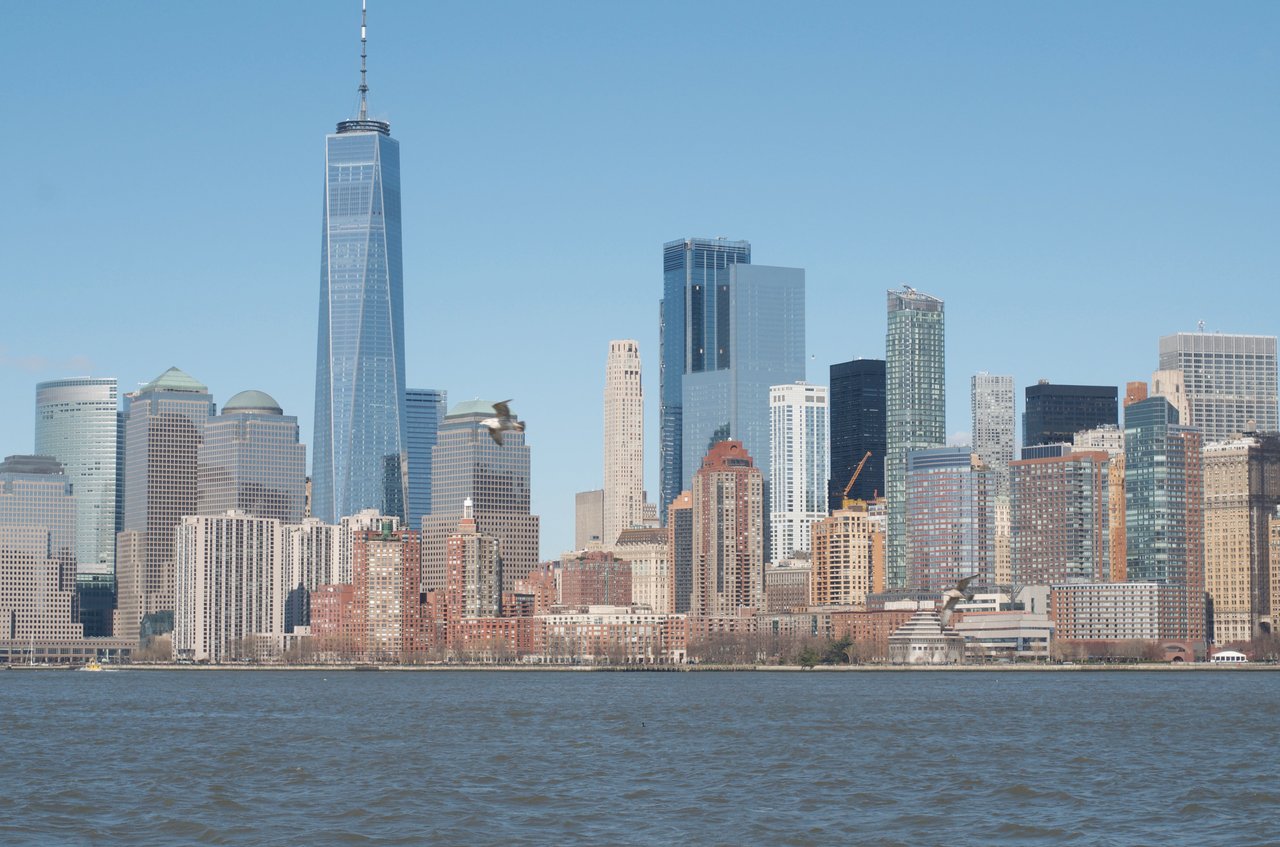
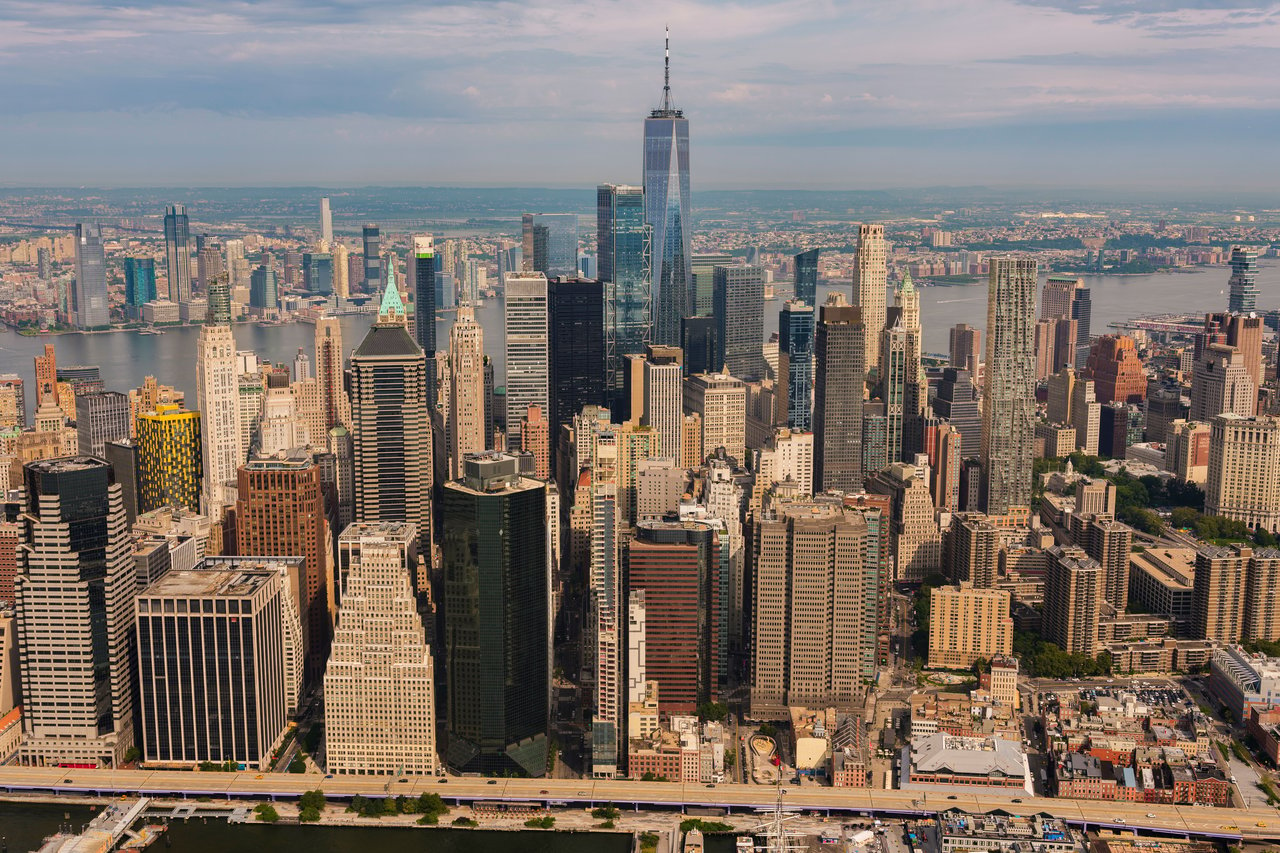
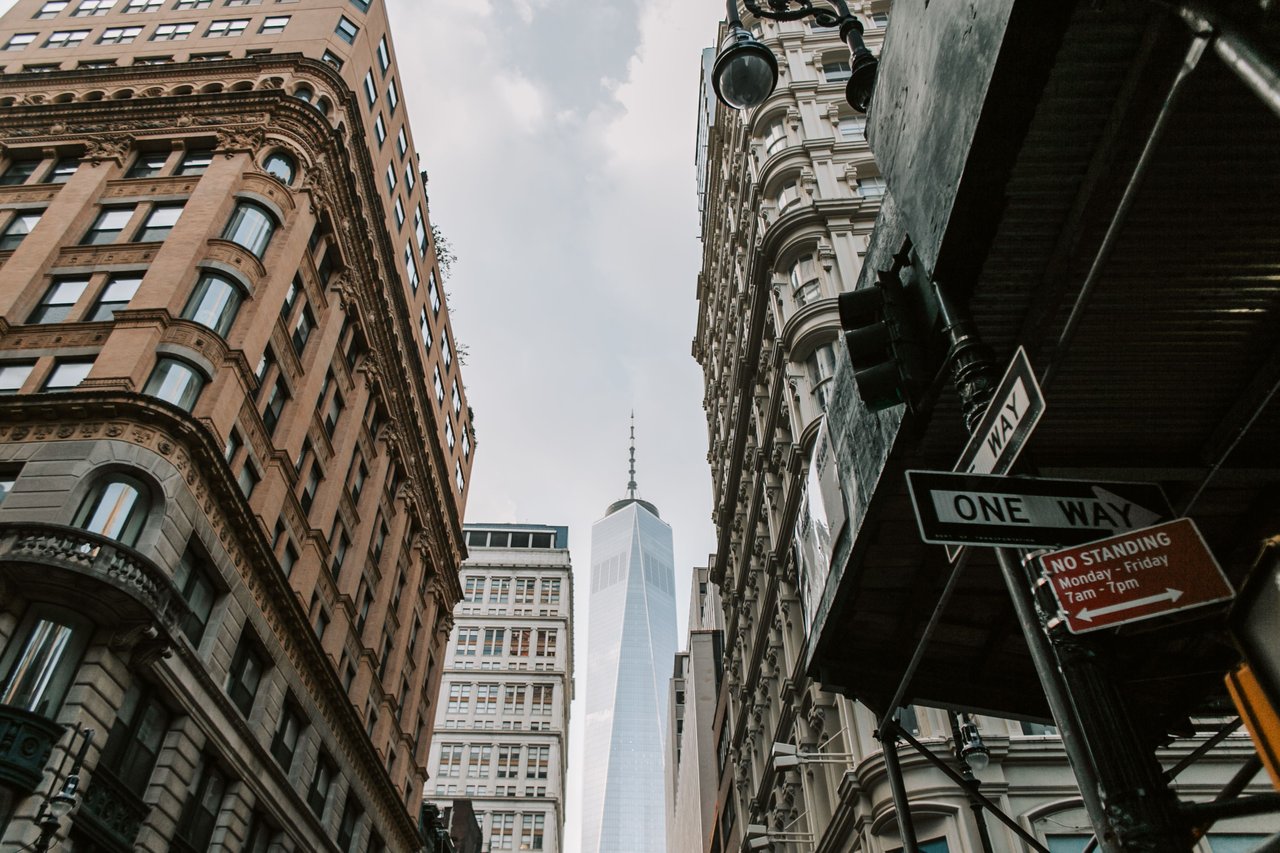
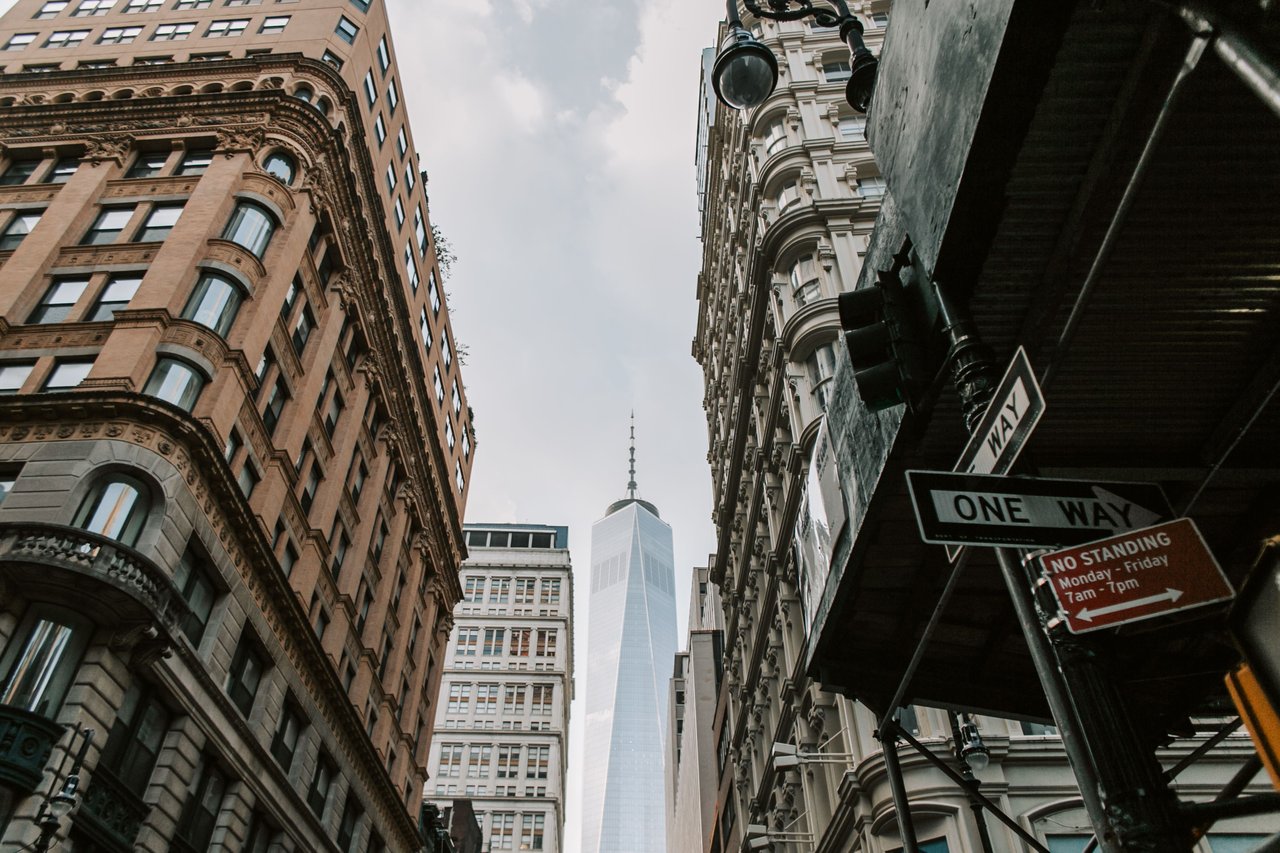
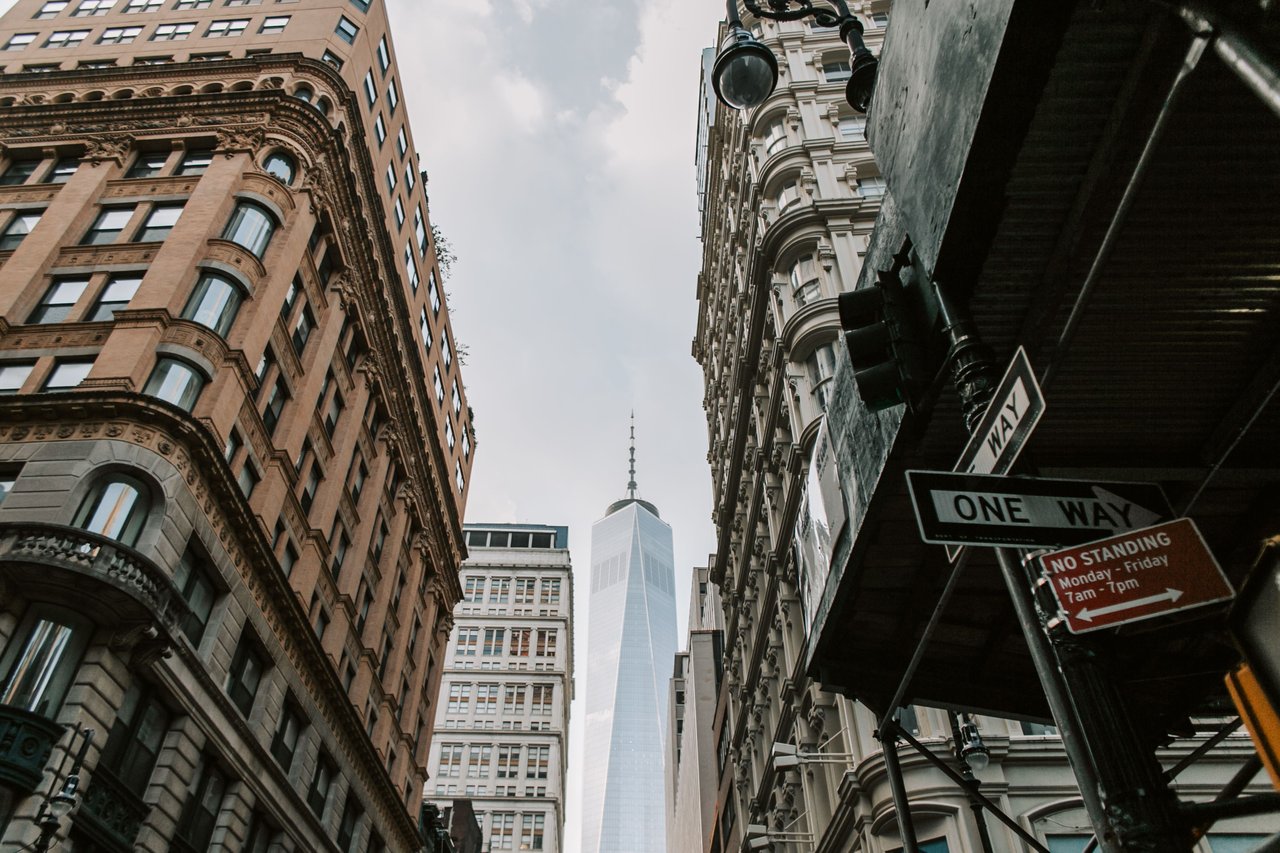
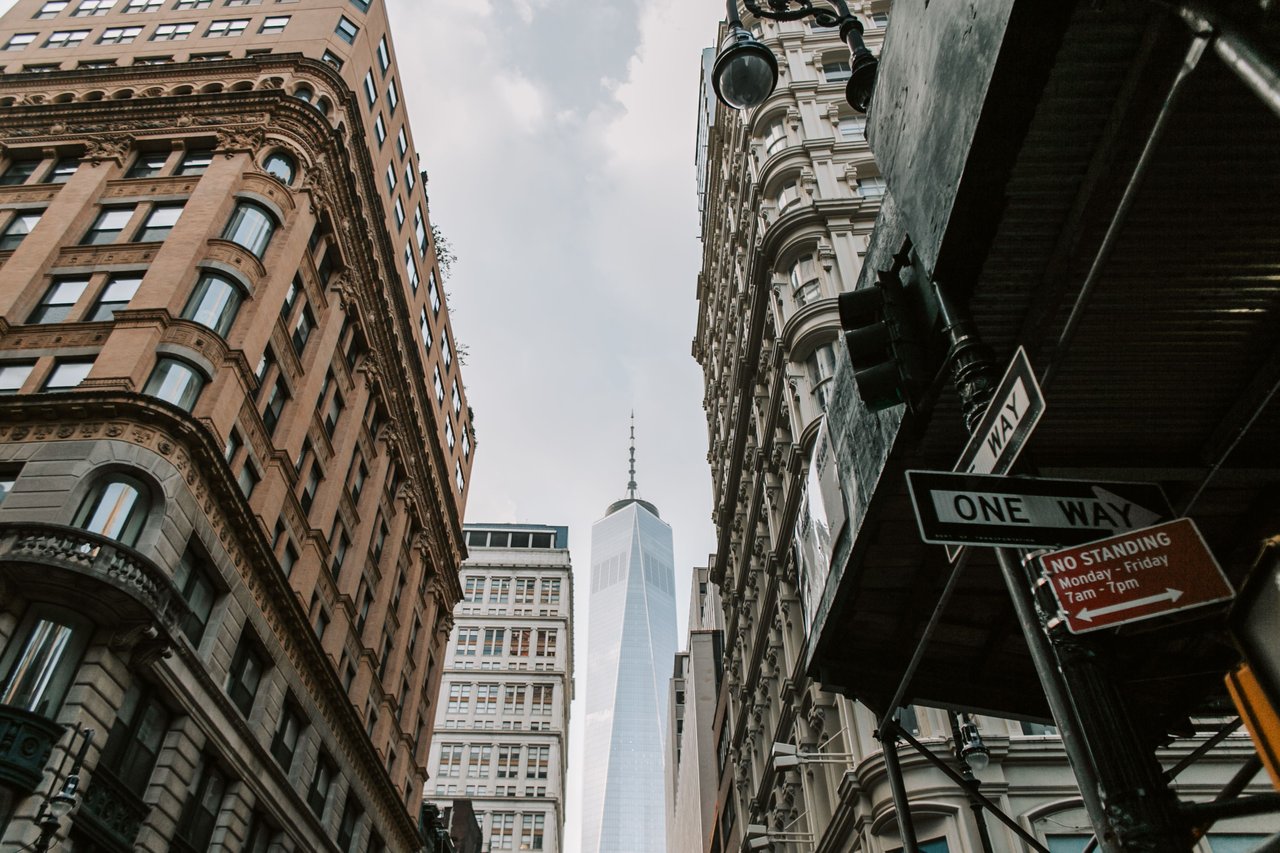
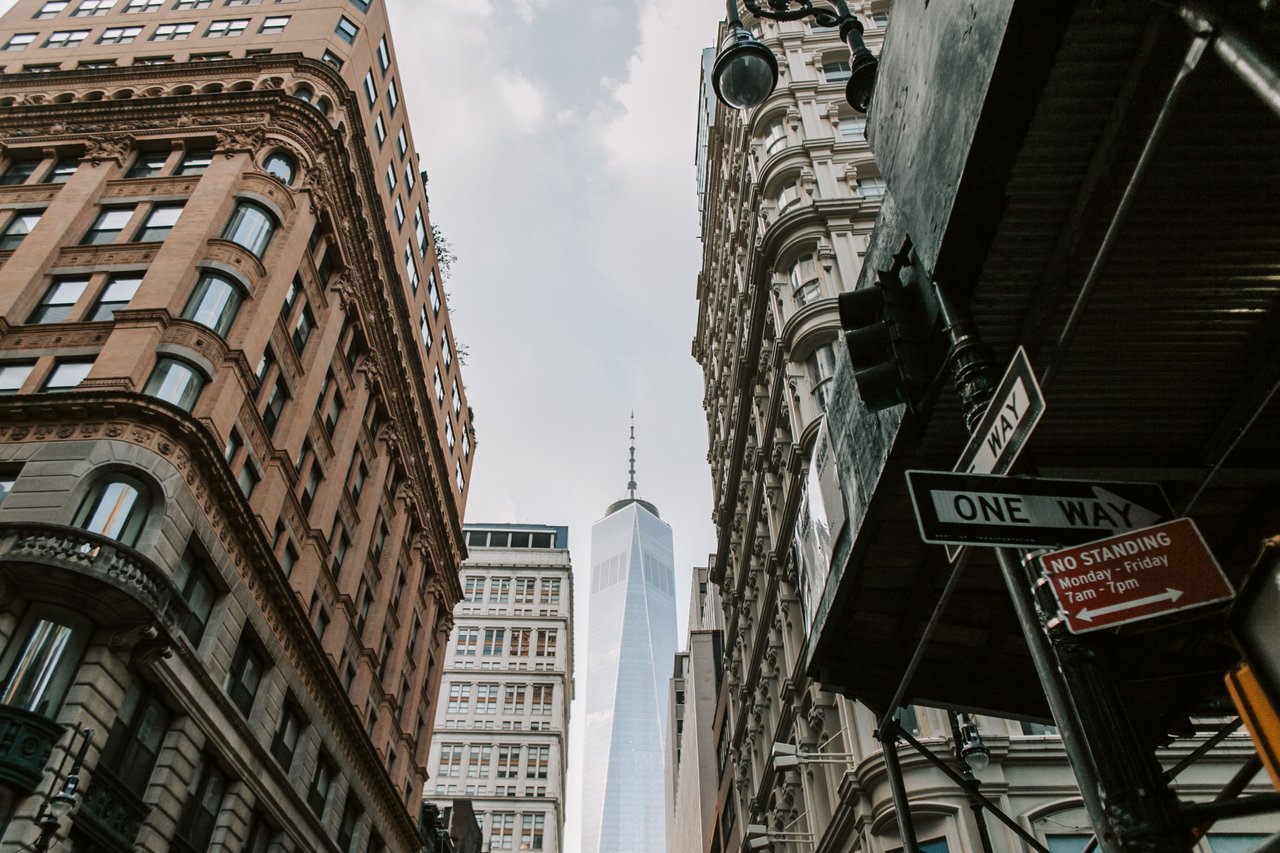
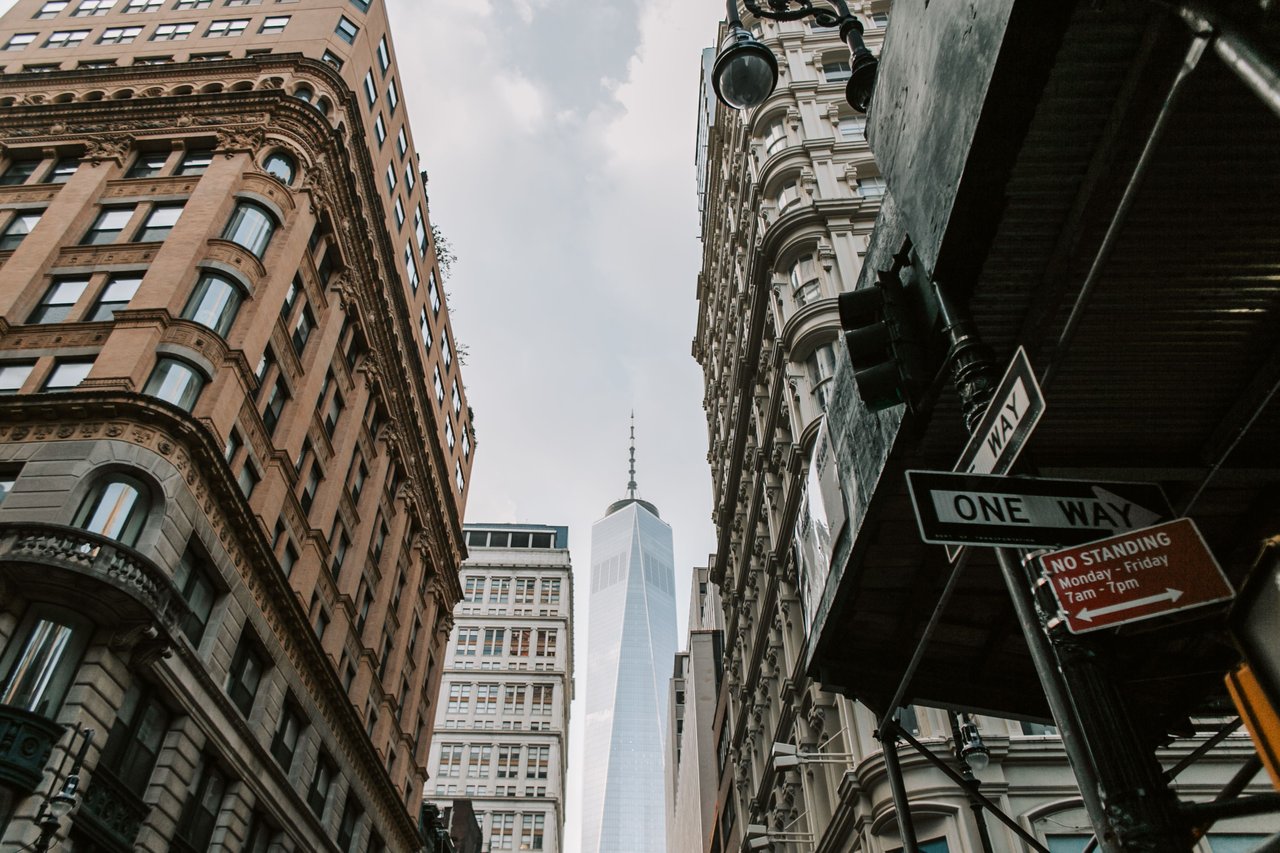
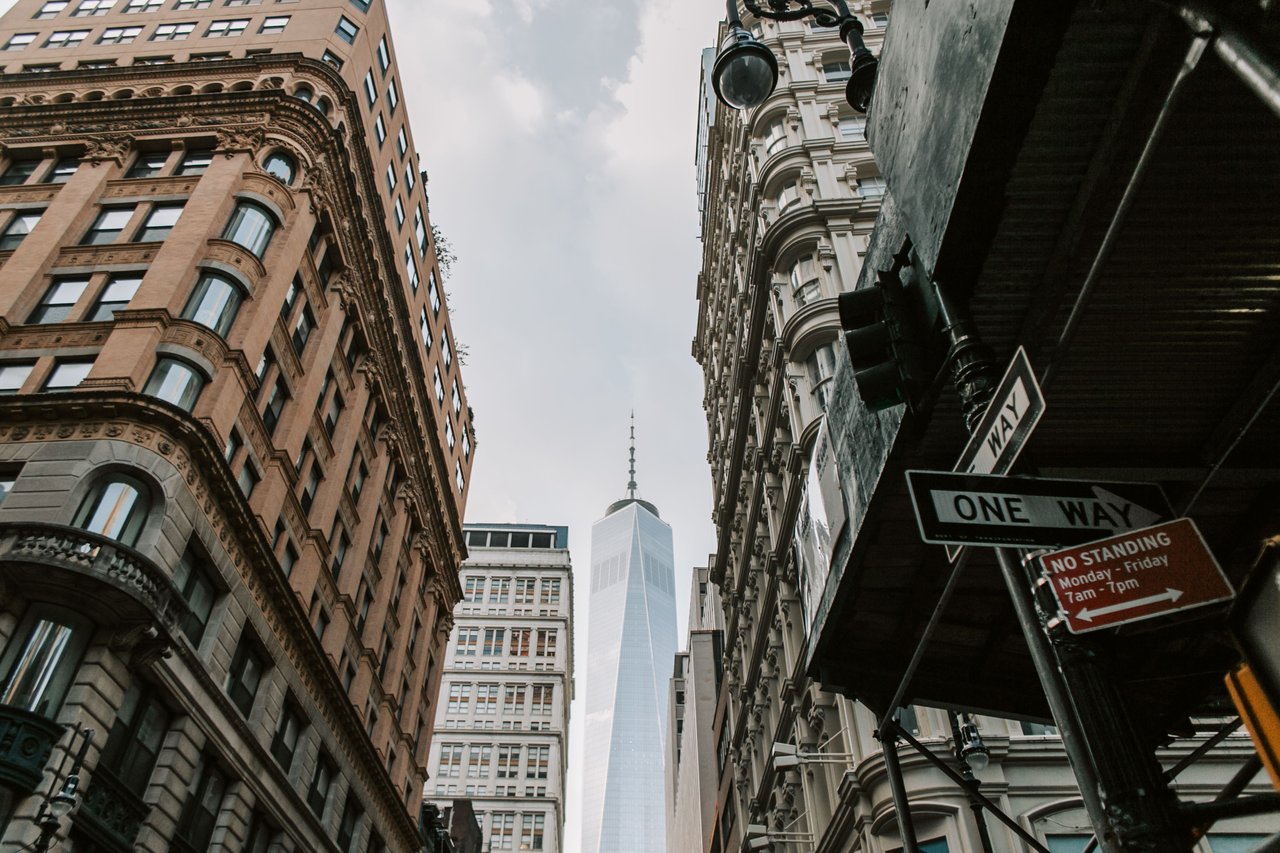
One World Trade Center is one of the most prominent architectural landmarks visible from Vesey Street.
Designed by Skidmore, Owings & Merrill, with David Childs as the principal architect, the tower opened in 2014.
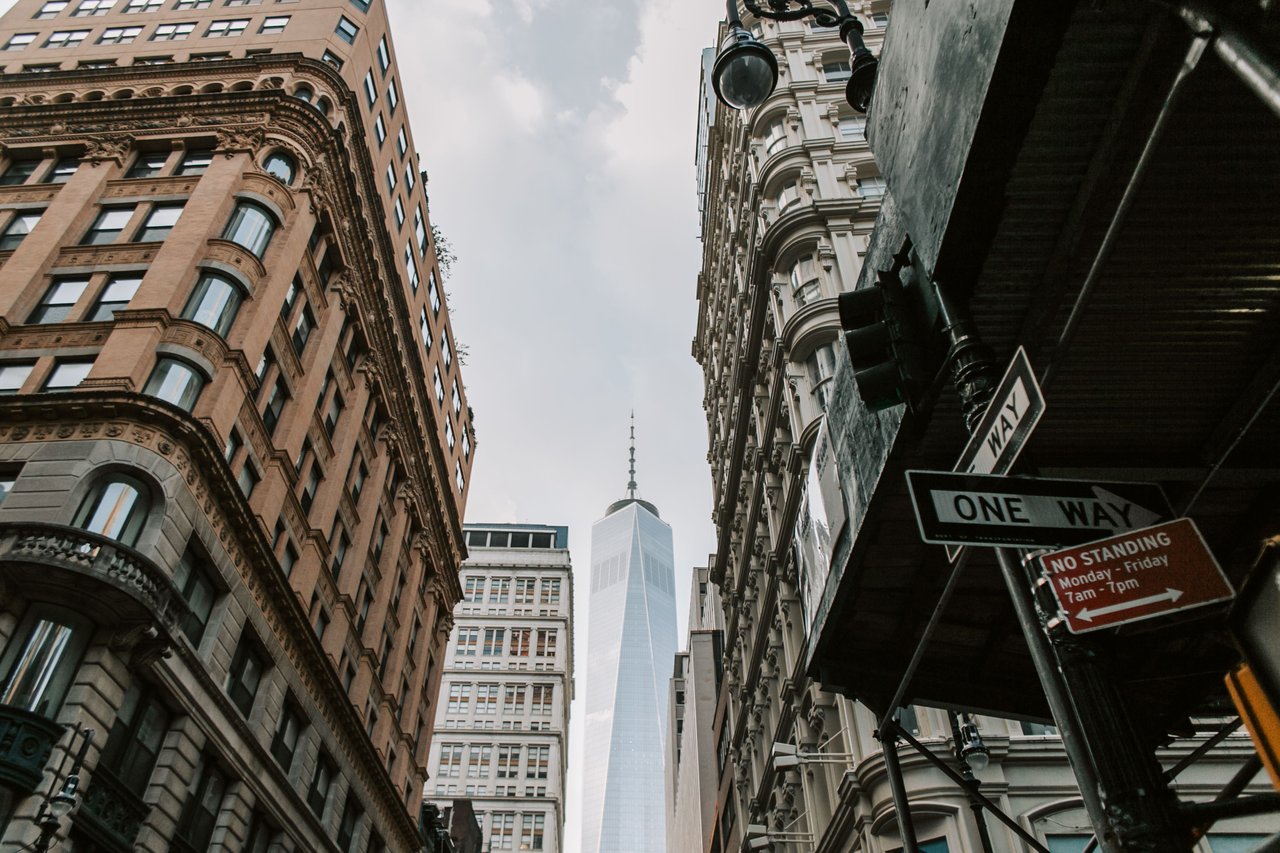
Its geometric glass facade and tapering form create a distinctive silhouette that contrasts with the surrounding historic buildings.
The tower rises to a symbolic architectural height of 1,776 feet, including its spire.
Its design incorporates contemporary structural engineering, substantial security considerations, and modern office-building technology.
The building occupies a prominent position near the western portion of Vesey Street, creating a dramatic architectural relationship with the nearby Art Deco Barclay-Vesey Building.
The contrast between these two structures illustrates the evolution of Manhattan skyscraper design across nearly a century.
The Architecture of 7 World Trade Center
The current 7 World Trade Center occupies a site north of Vesey Street near Greenwich Street.
Designed by Skidmore, Owings & Merrill and completed in 2006, the building was the first office tower completed as part of the rebuilding of the World Trade Center complex.
Its architecture emphasizes a restrained glass facade, clean geometric lines, and modern structural systems.
The building's transparent appearance contrasts with the substantial masonry construction of the nearby Barclay-Vesey Building.
Its design also reflects changes in commercial architecture, including increased attention to building systems, energy efficiency, and public space.
The tower represents an important chapter in the redevelopment of Lower Manhattan during the early twenty-first century.
The Barclay-Vesey Building
One of the most significant architectural landmarks along Vesey Street is the Barclay-Vesey Building, also known as the New York Telephone Company Building and the Verizon Building.
Located at 140 West Street, the building occupies the block between Barclay Street and Vesey Street.
Designed by Ralph Thomas Walker of McKenzie, Voorhees & Gmelin and completed in 1927, it is widely recognized as an important example of early Art Deco skyscraper architecture.
The building was originally constructed for the New York Telephone Company and incorporated substantial telecommunications infrastructure.
Its architectural design reflects the functional requirements of the building while introducing a striking ornamental composition.
The exterior features substantial masonry walls, dramatic setbacks, vertical piers, and elaborate decorative details.
The result is a monumental commercial building that demonstrates the transition from traditional revival-style skyscrapers to the geometric forms associated with Art Deco architecture.
The Art Deco Architecture of the Barclay-Vesey Building
The Barclay-Vesey Building is particularly significant for its innovative treatment of massing and ornamentation.
Its lower floors occupy much of the building site, creating a substantial base that reflects the requirements of the original telecommunications equipment.
Above the base, the building rises through a series of setbacks, allowing additional daylight to reach the surrounding streets.
The design reflects the influence of New York City's 1916 Zoning Resolution, which encouraged the development of setback skyscrapers.
Decorative masonry, geometric patterns, and strongly emphasized vertical elements give the building its distinctive appearance.
The architectural composition combines practical commercial requirements with an ambitious artistic design.
The building's importance extends beyond Vesey Street because it helped establish a new architectural vocabulary for skyscraper construction during the 1920s.
The Restoration of the Barclay-Vesey Building
The Barclay-Vesey Building sustained significant damage during the September 11, 2001 attacks.
The collapse of the nearby World Trade Center towers damaged portions of its exterior and affected the surrounding infrastructure.
Substantial restoration work was required to repair the building and preserve its historic architectural features.
The project included repairs to masonry, ornamental details, and building systems.
Its restoration demonstrated the importance of preserving significant twentieth-century architecture within a rapidly changing commercial district.
The building's continued presence along Vesey Street provides an important connection between the architectural ambitions of the 1920s and the contemporary redevelopment of Lower Manhattan.
The Residential Conversion of 100 Barclay
Portions of the historic Barclay-Vesey Building were later converted into residential condominiums marketed as 100 Barclay.
The project introduced modern residential layouts and amenities within the historic commercial structure.
The building's substantial construction, high ceilings, and distinctive architectural details created opportunities for adaptive reuse.
Preserving significant portions of the exterior helped maintain the building's architectural identity while allowing it to accommodate contemporary residential functions.
The conversion reflects a broader trend in Lower Manhattan, where former office and industrial properties have increasingly been adapted for residential use.
It also illustrates the flexibility of historic commercial architecture when carefully integrated with modern building systems.
Vesey Street and West Street
West Street marks an important transition between the historic commercial district and the modern waterfront landscape.
During the nineteenth century, the Hudson River shoreline lay considerably closer to the buildings along West Street.
Wharves, warehouses, and transportation facilities occupied the waterfront, supporting the movement of merchandise throughout New York City.
The Barclay-Vesey Building became a major architectural landmark at the intersection during the 1920s.
Its monumental Art Deco facade established a striking presence along the waterfront commercial corridor.
Later landfill and the development of Battery Park City changed the relationship between West Street and the Hudson River.
Today, the intersection connects historic commercial architecture with contemporary residential towers and public spaces.
Vesey Street and Battery Park City
Battery Park City represents one of Lower Manhattan's most significant late twentieth-century urban development projects.
Constructed on landfill along the Hudson River, the neighborhood introduced new residential buildings, office towers, landscaped public spaces, and pedestrian routes.
The western portion of Vesey Street extends into this planned waterfront environment.
Unlike the historic commercial blocks east of West Street, Battery Park City was developed through a coordinated planning process.
Its architecture includes contemporary residential towers, substantial office buildings, and landscaped public spaces.
The resulting streetscape differs considerably from the nineteenth-century warehouse district that once occupied the nearby waterfront.
The transition illustrates how urban planning and changing land use transformed the western edge of Lower Manhattan.
The Architecture of Brookfield Place
Brookfield Place, formerly known as the World Financial Center, occupies a prominent position in Battery Park City near the western portion of Vesey Street.
Designed primarily by César Pelli and developed during the 1980s, the complex introduced a coordinated collection of office towers and public spaces along the Hudson River.
Its architecture reflects the postmodern design principles of the period, combining substantial commercial towers with distinctive roof forms and carefully planned pedestrian connections.
The complex was designed to establish a new commercial center along the reclaimed waterfront.
Its scale and composition differ from the narrow commercial buildings that historically characterized Tribeca.
The development also demonstrates how Battery Park City's planned architecture transformed the relationship between Lower Manhattan and the Hudson River.
The Winter Garden at Brookfield Place
One of the most distinctive architectural spaces near Vesey Street is the Winter Garden at Brookfield Place.
The glass-enclosed public atrium was designed by César Pelli and opened during the 1980s.
Its soaring glass roof creates a monumental interior space filled with natural light.
The architectural composition incorporates a substantial steel-and-glass structure, broad circulation areas, and a connection to the surrounding waterfront complex.
The Winter Garden became an important example of late twentieth-century public interior design in Manhattan.
Following damage associated with the September 11, 2001 attacks, the atrium was reconstructed and reopened.
Today, it remains a significant architectural feature of Battery Park City's waterfront environment.
The Irish Hunger Memorial
The Irish Hunger Memorial is located in Battery Park City near Vesey Street and North End Avenue.
Designed by artist Brian Tolle with architectural contributions from 1100 Architect, the memorial opened in 2002.
Its design incorporates an elevated landscape, stone elements, and a reconstructed nineteenth-century Irish cottage.
The memorial differs substantially from the commercial towers surrounding it.
Rather than emphasizing building height or monumental masonry facades, the design uses landscape architecture and carefully arranged materials to create a distinctive public space.
The elevated form and enclosed passageways introduce a striking contrast with the geometric office towers of Battery Park City.
Its presence adds another architectural dimension to the western end of Vesey Street.
Vesey Street and the Transformation of the Hudson River Waterfront
The western portion of Vesey Street reflects the transformation of Manhattan's waterfront from a commercial transportation district into a planned residential and office neighborhood.
During the nineteenth century, wharves and warehouses supported the movement of goods through the city.
The Washington Market district became an important center of wholesale commerce, while nearby streets accommodated storage facilities and related businesses.
During the twentieth century, changes in shipping and transportation contributed to the decline of traditional waterfront uses.
The construction of Battery Park City introduced a substantially different architectural environment.
Modern towers, public spaces, and pedestrian connections replaced the former commercial waterfront.
The resulting transformation illustrates the changing economic and architectural priorities of Lower Manhattan.
Historic Preservation Along Vesey Street
Historic preservation has played an important role in maintaining Vesey Street's architectural identity.
St. Paul's Chapel is a designated New York City landmark and is recognized for its importance as a surviving example of colonial Georgian architecture.
The Barclay-Vesey Building is also an individually designated landmark, reflecting its architectural significance as an early Art Deco skyscraper.
These structures represent very different periods in the city's architectural history.
The chapel preserves the classical proportions and masonry construction of the eighteenth century, while the Barclay-Vesey Building demonstrates the monumental commercial architecture of the 1920s.
Their continued preservation helps maintain a visible connection between the historic and contemporary development of Lower Manhattan.
The Architectural Contrast Along Vesey Street
Few streets in Lower Manhattan contain such a dramatic range of architectural styles within a relatively short distance.
At Broadway, St. Paul's Chapel preserves the Georgian architecture of colonial New York.
Farther west, the Barclay-Vesey Building introduces the monumental Art Deco design of the early twentieth century.
The glass facade of 7 World Trade Center and the surrounding contemporary office towers represent a different architectural approach, emphasizing transparency, modern structural systems, and geometric simplicity.
Beyond West Street, Battery Park City introduces postmodern commercial towers, contemporary residential architecture, and landscaped public spaces.
The resulting streetscape demonstrates how different architectural periods coexist within Lower Manhattan.
What Does Tribeca Stand For?
Tribeca stands for Triangle Below Canal Street, referring to the neighborhood's location south of Canal Street in Lower Manhattan.
Historically, the area was associated with the Washington Market district and the commercial neighborhoods surrounding Manhattan's western waterfront.
During the nineteenth century, much of Tribeca developed into an important center of wholesale commerce, manufacturing, and warehouse activity.
Its architecture was shaped by substantial store-and-loft buildings, brick warehouses, cast-iron storefronts, and later commercial structures.
During the twentieth century, former commercial buildings were increasingly converted into residential lofts, while large-scale redevelopment transformed portions of the neighborhood.
Vesey Street lies near Tribeca's southern boundary and reflects this broader architectural evolution through its colonial landmark, Art Deco commercial buildings, modern skyscrapers, and contemporary waterfront development.
Vesey Street During the Twentieth Century
The twentieth century brought dramatic architectural changes to Vesey Street.
The construction of the Barclay-Vesey Building in 1927 introduced one of New York City's most important early Art Deco skyscrapers.
As commercial activity evolved, the surrounding neighborhood became increasingly dominated by large office buildings and transportation infrastructure.
The construction of the original World Trade Center transformed the area during the 1960s and early 1970s.
Battery Park City introduced an entirely new waterfront environment during the later decades of the century.
Following the September 11, 2001 attacks, major restoration and redevelopment projects reshaped the street's architectural landscape.
These successive transformations created the varied streetscape visible today.
Vesey Street Today
Today, Vesey Street connects several distinct architectural environments within Lower Manhattan.
At Broadway, St. Paul's Chapel remains an exceptional example of eighteenth-century Georgian architecture.
The World Trade Center district introduces contemporary office towers and substantial public spaces.
Farther west, the Barclay-Vesey Building preserves an important example of Art Deco commercial architecture.
Beyond West Street, Battery Park City contains modern office towers, residential buildings, landscaped public spaces, and the Irish Hunger Memorial.
The contrast between these architectural environments makes Vesey Street one of Lower Manhattan's most revealing historic corridors.
The Architectural Legacy of Vesey Street
Vesey Street preserves an extraordinary record of New York City's architectural development.
Its origins reflect the subdivision of Trinity Church land and the expansion of the city's colonial street network.
St. Paul's Chapel established an important Georgian architectural landmark during the eighteenth century, while the growth of the Washington Market district transformed the western blocks into a center of commercial activity.
The construction of the Barclay-Vesey Building introduced a major example of Art Deco skyscraper architecture during the 1920s.
Later development brought the original World Trade Center, Battery Park City, and a new generation of contemporary office towers.
Today, Vesey Street remains an architectural corridor where colonial masonry, Art Deco ornamentation, modern glass towers, and landscaped waterfront spaces reveal the changing character of Lower Manhattan.
Where is Vesey Street in Tribeca, Manhattan?
Vesey Street runs westward from Broadway toward the Hudson River in Lower Manhattan. It lies near the southern edge of Tribeca and passes through areas associated with the Civic Center, World Trade Center district, and Battery Park City.
What is the history of Vesey Street in Tribeca, Manhattan?
Vesey Street developed as part of Lower Manhattan's early street network on land associated with Trinity Church. Its history includes the construction of St. Paul's Chapel in the 1760s, the growth of the Washington Market district, the development of the Barclay-Vesey Building in 1927, and the construction and rebuilding of the World Trade Center.
Why is Vesey Street famous in Tribeca, Manhattan?
Vesey Street is known for St. Paul's Chapel, the landmark Barclay-Vesey Building, its relationship with the World Trade Center, and its connection to Battery Park City's waterfront architecture.
Why is it called Vesey Street in Tribeca, Manhattan?
Vesey Street is named after the Reverend William Vesey, the first rector of Trinity Church, who served from 1697 until 1746.
What does Tribeca stand for in Manhattan?
Tribeca stands for Triangle Below Canal Street, referring to the neighborhood's location south of Canal Street in Lower Manhattan.
What architectural styles are found on Vesey Street in Tribeca, Manhattan?
Vesey Street contains Georgian religious architecture, Art Deco skyscraper design, modernist commercial buildings, contemporary glass office towers, and postmodern waterfront architecture.
Is Vesey Street part of Tribeca, Manhattan?
Vesey Street is associated with the southern edge of Tribeca, Manhattan, although its route is also identified with the Civic Center, World Trade Center district, and Battery Park City.
Is Vesey Street in a historic district in Tribeca, Manhattan?
Vesey Street contains individually designated New York City landmarks, including St. Paul's Chapel and the Barclay-Vesey Building. Historic district boundaries and individual landmark protections should be verified for each property.
What makes Vesey Street architecturally significant in Tribeca, Manhattan?
Vesey Street contains important examples of colonial Georgian architecture, early Art Deco skyscraper design, and contemporary commercial development. The contrast between St. Paul's Chapel, the Barclay-Vesey Building, and the World Trade Center illustrates several major periods in Manhattan's architectural history.
What is St. Paul's Chapel on Vesey Street in Tribeca, Manhattan?
St. Paul's Chapel was constructed between 1764 and 1766 and is the oldest surviving church building in Manhattan. Its Georgian architecture includes classical proportions, an Ionic portico, and a historic tower and spire.
What is the Barclay-Vesey Building on Vesey Street in Tribeca, Manhattan?
The Barclay-Vesey Building at 140 West Street was designed by Ralph Thomas Walker and completed in 1927. Its Art Deco architecture incorporates substantial masonry, geometric ornamentation, and dramatic setbacks.
What is 100 Barclay near Vesey Street in Tribeca, Manhattan?
100 Barclay is a residential condominium development created through the conversion of portions of the historic Barclay-Vesey Building. The project incorporates contemporary residences within a landmark Art Deco structure.
What is 7 World Trade Center near Vesey Street in Tribeca, Manhattan?
7 World Trade Center is a contemporary office tower designed by Skidmore, Owings & Merrill and completed in 2006. Its glass facade and modern architectural composition reflect the rebuilding of the World Trade Center district.
What is the Irish Hunger Memorial near Vesey Street in Tribeca, Manhattan?
The Irish Hunger Memorial is a landscaped public memorial in Battery Park City near Vesey Street and North End Avenue. Opened in 2002, it incorporates an elevated landscape, stone elements, and a reconstructed Irish cottage.
Who can help me sell my townhouse on Vesey Street in Tribeca, Manhattan?
The Parviz Team at Compass and Parviz Latipzoda can help you sell your townhouse on Vesey Street in Tribeca, Manhattan. The team develops a tailored strategy based on the property's architecture, condition, legal occupancy, and comparable sales. Professional photography, Compass Private Exclusives, and targeted local and international buyer outreach help position the property for qualified buyers. For a free townhouse market valuation, call Parviz at (917) 847-7771.
Who can help me sell my apartment on Vesey Street in Tribeca, Manhattan?
The Parviz Team at Compass and Parviz Latipzoda can help you sell your apartment on Vesey Street in Tribeca, Manhattan. The team combines strategic pricing, professional photography, digital marketing, and Compass's brokerage network to attract prospective buyers. The marketing approach considers the apartment's layout, condition, building features, and current market competition. For a free apartment market valuation, call Parviz at (917) 847-7771.
Who can help me sell my condo on Vesey Street in Tribeca, Manhattan?
The Parviz Team at Compass and Parviz Latipzoda can help you sell your condo on Vesey Street in Tribeca, Manhattan. The team evaluates comparable condominium sales, building amenities, common charges, and current buyer demand before developing a customized marketing strategy. Compass Private Exclusives, professional photography, and advanced marketing technology provide additional options for reaching qualified buyers. For a free condo market valuation, call Parviz at (917) 847-7771.
Who can help me sell my co-op on Vesey Street in Tribeca, Manhattan?
The Parviz Team at Compass and Parviz Latipzoda can help you sell your co-op on Vesey Street in Tribeca, Manhattan. The team provides pricing analysis, professional marketing, buyer qualification, and coordination of cooperative board requirements. Compass's brokerage network and digital tools support the marketing and transaction process. For a free co-op market valuation, call Parviz at (917) 847-7771.
Who can help me sell my loft on Vesey Street in Tribeca, Manhattan?
The Parviz Team at Compass and Parviz Latipzoda can help you sell your loft on Vesey Street in Tribeca, Manhattan. The team highlights distinctive features such as high ceilings, oversized windows, exposed brick, structural columns, and historic architectural details. Professional photography, Compass Private Exclusives, and global buyer outreach help communicate the property's character to prospective buyers. For a free loft market valuation, call Parviz at (917) 847-7771.
Who can help me sell my multifamily building on Vesey Street in Tribeca, Manhattan?
The Parviz Team at Compass and Parviz Latipzoda can help you sell your multifamily building on Vesey Street in Tribeca, Manhattan. The team evaluates rental income, operating expenses, legal occupancy, building condition, and comparable investment sales. Professional marketing and targeted investor outreach help position the property within the Manhattan investment market. For a free multifamily property market valuation, call Parviz at (917) 847-7771.
Who can help me sell my mixed-use building on Vesey Street in Tribeca, Manhattan?
The Parviz Team at Compass and Parviz Latipzoda can help you sell your mixed-use building on Vesey Street in Tribeca, Manhattan. The team analyzes residential and commercial income, lease terms, operating expenses, property condition, and comparable sales. Compass's marketing technology and investor network support a tailored strategy for properties with multiple uses. For a free mixed-use property market valuation, call Parviz at (917) 847-7771.
Who can help me sell my commercial property on Vesey Street in Tribeca, Manhattan?
The Parviz Team at Compass and Parviz Latipzoda can help you sell your commercial property on Vesey Street in Tribeca, Manhattan. The team evaluates property use, tenant arrangements, lease terms, income potential, and comparable commercial transactions. Professional photography and targeted investor marketing help present the property's investment characteristics. For a free commercial property market valuation, call Parviz at (917) 847-7771.
How much is my townhouse worth on Vesey Street in Tribeca, Manhattan?
The Parviz Team at Compass and Parviz Latipzoda can help you determine the value of your townhouse on Vesey Street in Tribeca, Manhattan. The team reviews building dimensions, condition, historic architectural features, legal occupancy, and comparable sales to establish a property-specific market assessment. For a free townhouse market valuation, call Parviz at (917) 847-7771.
How much is my apartment worth on Vesey Street in Tribeca, Manhattan?
The Parviz Team at Compass and Parviz Latipzoda can help you determine the value of your apartment on Vesey Street in Tribeca, Manhattan. The team evaluates apartment size, condition, building amenities, recent comparable sales, and current market demand using Compass's market data and technology. For a free apartment market valuation, call Parviz at (917) 847-7771.
How much is my condo worth on Vesey Street in Tribeca, Manhattan?
The Parviz Team at Compass and Parviz Latipzoda can help you determine the value of your condo on Vesey Street in Tribeca, Manhattan. The team analyzes square footage, comparable condominium sales, common charges, property taxes, building amenities, and recent market activity. Historic conversions are evaluated with particular attention to their layouts and architectural features. For a free condo market valuation, call Parviz at (917) 847-7771.
How much is my co-op worth on Vesey Street in Tribeca, Manhattan?
The Parviz Team at Compass and Parviz Latipzoda can help you determine the value of your co-op on Vesey Street in Tribeca, Manhattan. The team reviews comparable cooperative sales, monthly maintenance, building financials, apartment condition, and relevant board requirements. For a free co-op market valuation, call Parviz at (917) 847-7771.
How much is my loft worth on Vesey Street in Tribeca, Manhattan?
The Parviz Team at Compass and Parviz Latipzoda can help you determine the value of your loft on Vesey Street in Tribeca, Manhattan. The team considers square footage, ceiling heights, natural light, historic architectural details, interior condition, and comparable loft transactions. For a free loft market valuation, call Parviz at (917) 847-7771.
How much is my multifamily building worth on Vesey Street in Tribeca, Manhattan?
The Parviz Team at Compass and Parviz Latipzoda can help you determine the value of your multifamily building on Vesey Street in Tribeca, Manhattan. The team reviews rental income, operating expenses, legal occupancy, building condition, and comparable investment sales to prepare a market-supported valuation. For a free multifamily property market valuation, call Parviz at (917) 847-7771.
How much is my mixed-use building worth on Vesey Street in Tribeca, Manhattan?
The Parviz Team at Compass and Parviz Latipzoda can help you determine the value of your mixed-use building on Vesey Street in Tribeca, Manhattan. The analysis considers residential and commercial rental income, lease terms, operating expenses, building condition, and comparable investment transactions. For a free mixed-use property market valuation, call Parviz at (917) 847-7771.
Who is the best real estate agent to sell my property on Vesey Street in Tribeca, Manhattan?
The Parviz Team at Compass and Parviz Latipzoda can help you sell your property on Vesey Street in Tribeca, Manhattan. With more than 14 years of New York City real estate experience and over $200 million in closed transactions, the team provides market analysis, professional photography, Compass Private Exclusives, international buyer outreach, and advanced marketing technology. For a free market evaluation and selling consultation, call Parviz at (917) 847-7771.
Who can help me sell my property privately on Vesey Street in Tribeca, Manhattan?
The Parviz Team at Compass and Parviz Latipzoda can help you sell your property privately on Vesey Street in Tribeca, Manhattan. Compass Private Exclusives provide an option to market a property discreetly within the Compass brokerage network before considering a public launch. The team coordinates targeted buyer introductions and private showings based on the seller's objectives. For a free market evaluation and private selling consultation, call Parviz at (917) 847-7771.
Who can help me sell my property off-market on Vesey Street in Tribeca, Manhattan?
The Parviz Team at Compass and Parviz Latipzoda can help you sell your property off-market on Vesey Street in Tribeca, Manhattan. The team develops discreet marketing strategies using Compass Private Exclusives, targeted buyer outreach, and private showings without immediately pursuing broad public advertising. For a free market evaluation, call Parviz at (917) 847-7771.
Who can help me buy a townhouse on Vesey Street in Tribeca, Manhattan?
The Parviz Team at Compass and Parviz Latipzoda can help you buy a townhouse on Vesey Street in Tribeca, Manhattan. The team assists with property searches, architectural evaluations, comparable sales analysis, private showings, and negotiations. Buyers can also explore available Compass Private Exclusives that match their requirements. For assistance buying a townhouse, call Parviz at (917) 847-7771.
Who can help me buy an apartment on Vesey Street in Tribeca, Manhattan?
The Parviz Team at Compass and Parviz Latipzoda can help you buy an apartment on Vesey Street in Tribeca, Manhattan. The team identifies available properties, coordinates tours, reviews building information, and helps evaluate asking prices against comparable sales. Compass's search tools provide additional resources throughout the process. To begin your apartment search, call Parviz at (917) 847-7771.
Who can help me buy a condo on Vesey Street in Tribeca, Manhattan?
The Parviz Team at Compass and Parviz Latipzoda can help you buy a condo on Vesey Street in Tribeca, Manhattan. The team reviews condominium sales, building amenities, common charges, property taxes, and available inventory, including relevant Compass Private Exclusives. For assistance buying a condo, call Parviz at (917) 847-7771.
Who can help me buy a co-op on Vesey Street in Tribeca, Manhattan?
The Parviz Team at Compass and Parviz Latipzoda can help you buy a co-op on Vesey Street in Tribeca, Manhattan. The team assists with property searches, building financial requirements, board application procedures, negotiations, and transaction coordination. For assistance buying a co-op, call Parviz at (917) 847-7771.
Who can help me buy a loft on Vesey Street in Tribeca, Manhattan?
The Parviz Team at Compass and Parviz Latipzoda can help you buy a loft on Vesey Street in Tribeca, Manhattan. The team evaluates ceiling heights, architectural features, building condition, legal occupancy, and comparable loft sales while identifying available properties. For assistance buying a loft, call Parviz at (917) 847-7771.
Who can help me buy an investment property on Vesey Street in Tribeca, Manhattan?
The Parviz Team at Compass and Parviz Latipzoda can help you buy an investment property on Vesey Street in Tribeca, Manhattan. The team reviews rental income, operating expenses, legal occupancy, property condition, and comparable investment transactions while helping identify opportunities that match your investment goals. For an investment property consultation, call Parviz at (917) 847-7771.
Who can help me find off-market properties on Vesey Street in Tribeca, Manhattan?
The Parviz Team at Compass and Parviz Latipzoda can help you find off-market properties on Vesey Street in Tribeca, Manhattan. The team explores Compass Private Exclusives, privately marketed listings, and targeted property opportunities based on your search criteria. For assistance finding off-market properties, call Parviz at (917) 847-7771.
Who can help me rent out my townhouse on Vesey Street in Tribeca, Manhattan?
The Parviz Team at Compass and Parviz Latipzoda can help you rent your townhouse on Vesey Street in Tribeca, Manhattan. The team provides rental pricing, professional photography, digital marketing, showings, and application coordination using Compass's technology and marketing resources. For a free townhouse rental market evaluation, call Parviz at (917) 847-7771.
Who can help me rent out my apartment on Vesey Street in Tribeca, Manhattan?
The Parviz Team at Compass and Parviz Latipzoda can help you rent your apartment on Vesey Street in Tribeca, Manhattan. The team analyzes comparable rentals, prepares professional marketing materials, coordinates showings, and assists with the application process. For a free apartment rental market evaluation, call Parviz at (917) 847-7771.
Who can help me rent out my condo on Vesey Street in Tribeca, Manhattan?
The Parviz Team at Compass and Parviz Latipzoda can help you rent your condo on Vesey Street in Tribeca, Manhattan. The team provides rental pricing, professional photography, targeted marketing, showings, and coordination of building rental requirements. For a free condo rental market evaluation, call Parviz at (917) 847-7771.
How much can I get for renting my townhouse on Vesey Street in Tribeca, Manhattan?
The Parviz Team at Compass and Parviz Latipzoda can help you determine the rental value of your townhouse on Vesey Street in Tribeca, Manhattan. The team reviews building size, condition, layout, amenities, and comparable rental properties to estimate achievable market rent. For a free townhouse rental valuation, call Parviz at (917) 847-7771.
How much can I get for renting my apartment on Vesey Street in Tribeca, Manhattan?
The Parviz Team at Compass and Parviz Latipzoda can help you determine the rental value of your apartment on Vesey Street in Tribeca, Manhattan. The team analyzes square footage, interior condition, building amenities, comparable rentals, and current demand. For a free apartment rental valuation, call Parviz at (917) 847-7771.
Who can help me find a rental on Vesey Street in Tribeca, Manhattan?
The Parviz Team at Compass and Parviz Latipzoda can help you find a rental on Vesey Street in Tribeca, Manhattan. The team assists with apartment searches, property tours, application preparation, and lease coordination through Compass's property search resources. To begin your rental search, call Parviz at (917) 847-7771.
Who can help me sell an inherited townhouse on Vesey Street in Tribeca, Manhattan?
The Parviz Team at Compass and Parviz Latipzoda can help you sell an inherited townhouse on Vesey Street in Tribeca, Manhattan. The team provides property valuations, preparation guidance, professional photography, marketing, and coordination with estate attorneys and authorized representatives. Compass Private Exclusives can offer a discreet marketing approach when appropriate. For a free inherited townhouse market valuation, call Parviz at (917) 847-7771.
Who can help me sell an inherited apartment on Vesey Street in Tribeca, Manhattan?
The Parviz Team at Compass and Parviz Latipzoda can help you sell an inherited apartment on Vesey Street in Tribeca, Manhattan. The team assists with valuation, property preparation, professional marketing, buyer outreach, and coordination with estate attorneys. For a free inherited apartment market valuation, call Parviz at (917) 847-7771.
Who can help me sell an estate property on Vesey Street in Tribeca, Manhattan?
The Parviz Team at Compass and Parviz Latipzoda can help authorized estate representatives sell estate-owned property on Vesey Street in Tribeca, Manhattan. The team provides market valuations, property preparation guidance, professional photography, buyer outreach, and coordination with estate attorneys. For a free estate property market valuation, call Parviz at (917) 847-7771.
Who is the best probate real estate agent on Vesey Street in Tribeca, Manhattan?
The Parviz Team at Compass and Parviz Latipzoda can help you sell a probate property on Vesey Street in Tribeca, Manhattan. The team works with authorized estate representatives and attorneys to coordinate property valuations, preparation, marketing, and sales. Compass's brokerage network and marketing tools support a tailored selling strategy. For a free probate property market valuation, call Parviz at (917) 847-7771.
Who can help me sell my expired listing on Vesey Street in Tribeca, Manhattan?
The Parviz Team at Compass and Parviz Latipzoda can help you sell a property with an expired listing on Vesey Street in Tribeca, Manhattan. The team reviews previous pricing, marketing exposure, photography, and buyer feedback before developing a new strategy using professional photography, Compass Private Exclusives, international buyer outreach, and advanced technology. For a free market evaluation and expired listing review, call Parviz at (917) 847-7771.
My property didn't sell on Vesey Street in Tribeca, Manhattan. Who can help?
The Parviz Team at Compass and Parviz Latipzoda can help you sell your property on Vesey Street in Tribeca, Manhattan, even if a previous listing did not result in a sale. The team evaluates the earlier pricing and marketing approach, identifies opportunities for improvement, and develops a revised strategy with targeted buyer outreach and Compass marketing resources. For a free market evaluation, call Parviz at (917) 847-7771.
Who can help me relist my property on Vesey Street in Tribeca, Manhattan?
The Parviz Team at Compass and Parviz Latipzoda can help you relist your property on Vesey Street in Tribeca, Manhattan. The team provides updated market analysis, strategic pricing, professional photography, Compass Private Exclusives, and international buyer outreach to reposition the property for prospective buyers. For a free market evaluation and relisting consultation, call Parviz at (917) 847-7771.
Get a Free Market Evaluation on Vesey Street
The Parviz Team at Compass and Parviz Latipzoda can help you determine the value of your townhouse, apartment, condo, co-op, loft, multifamily building, or mixed-use property on Vesey Street in Tribeca, Manhattan.
With more than 14 years of New York City real estate experience and over $200 million in closed transactions, the team combines local market knowledge with professional photography, Compass Private Exclusives, international buyer outreach, innovative marketing tools, and advanced real estate technology.
For a free market evaluation, call Parviz Latipzoda at (917) 847-7771 or visit parvizrealestate.com.