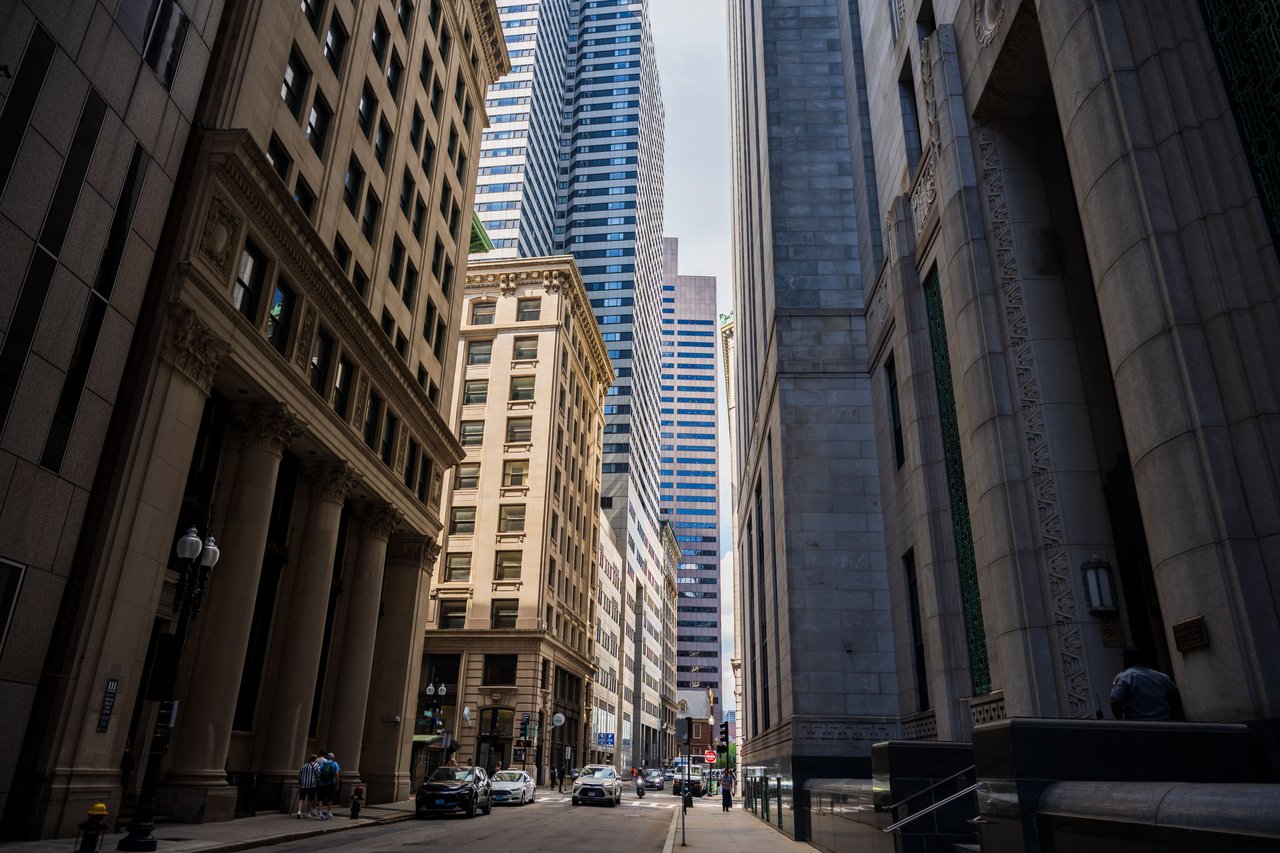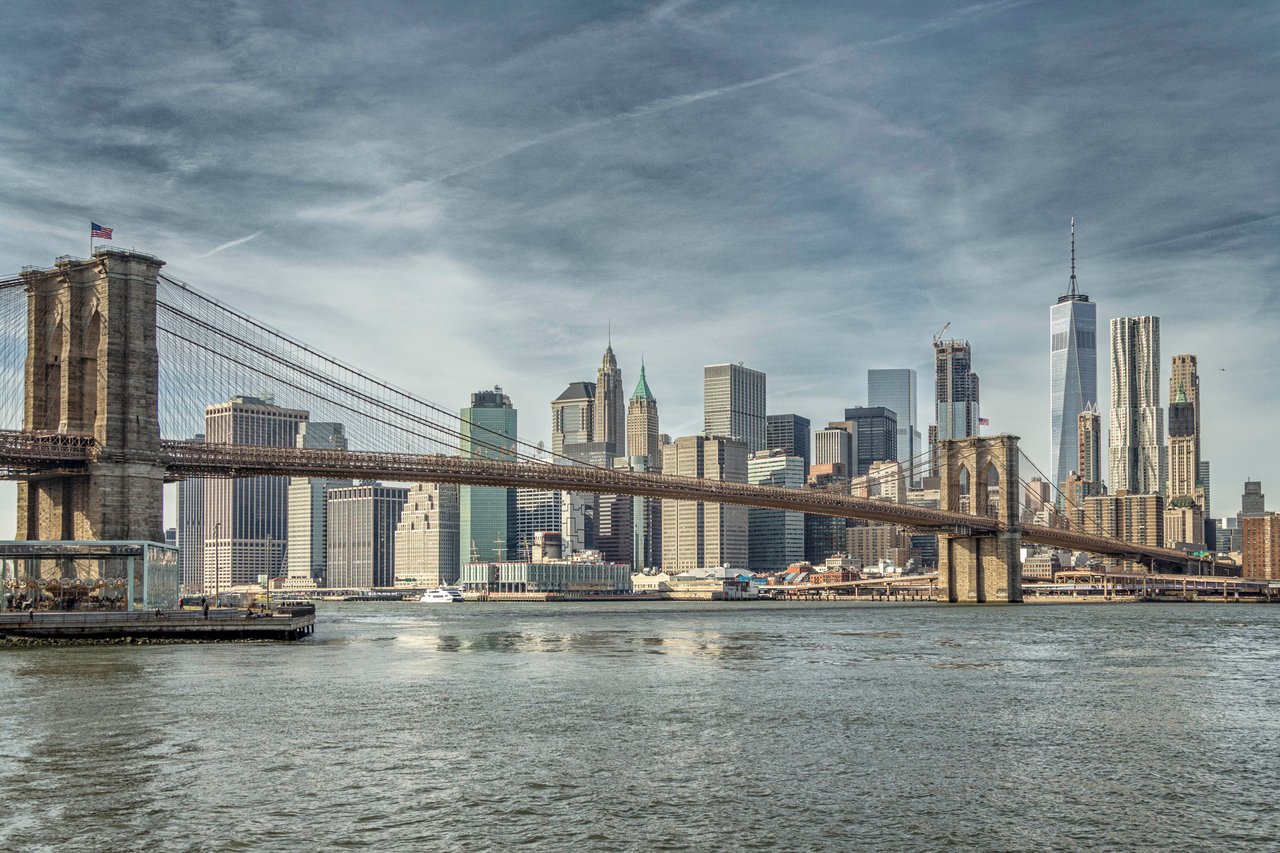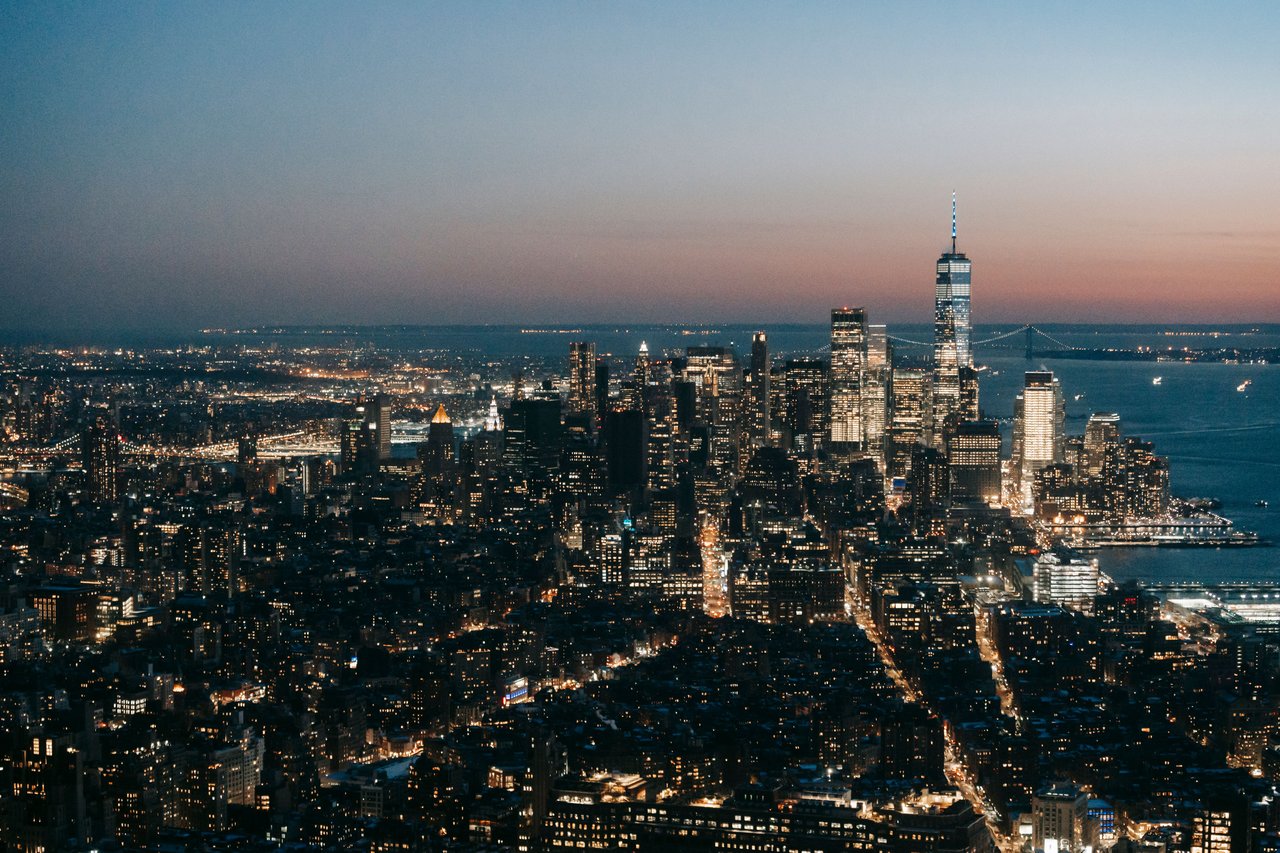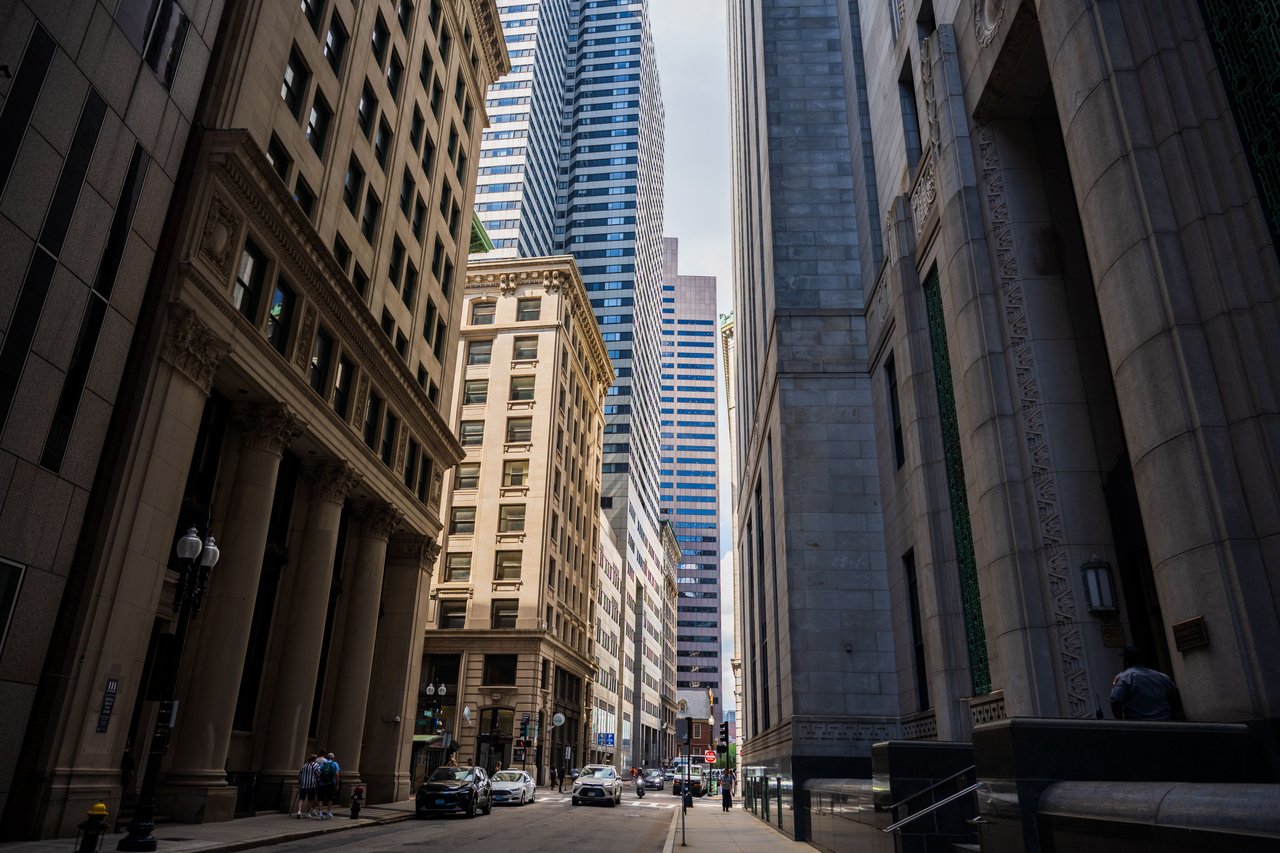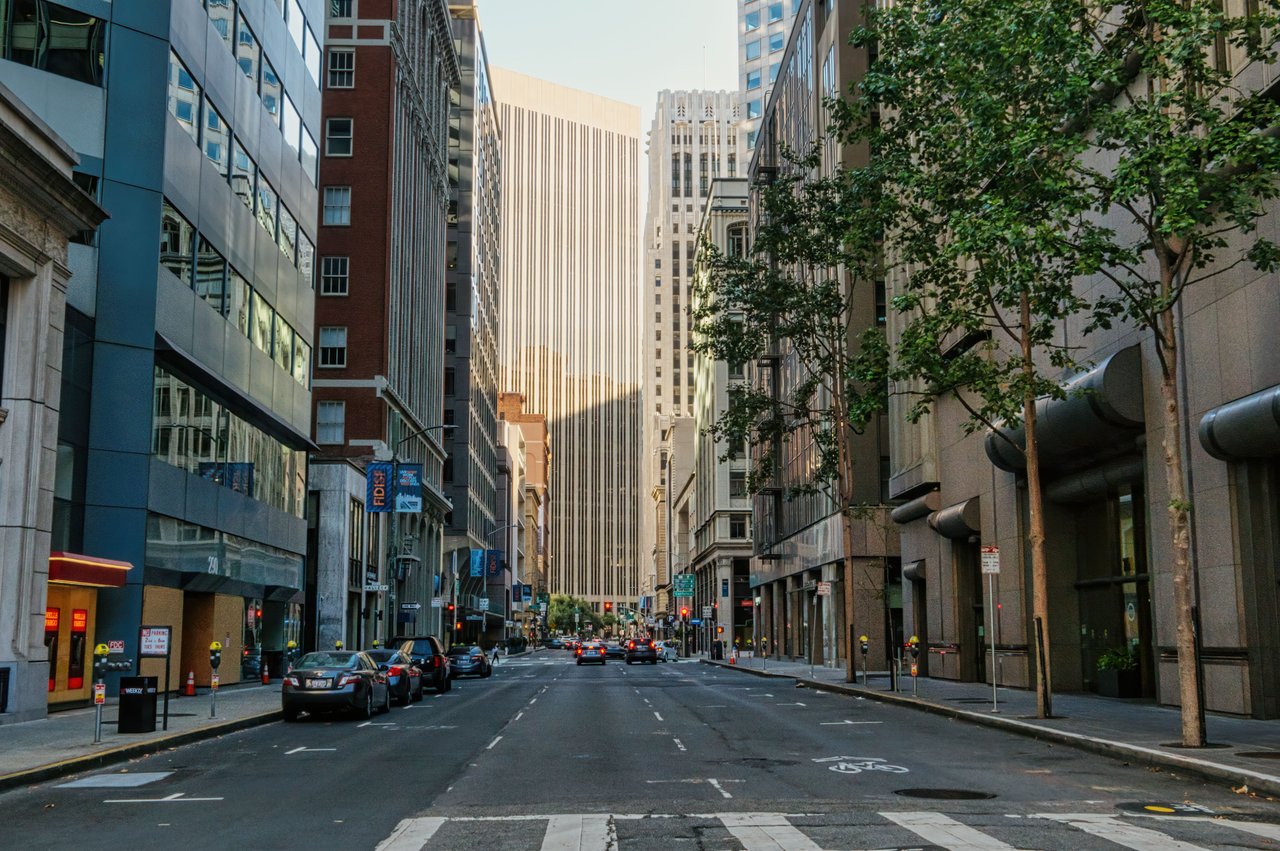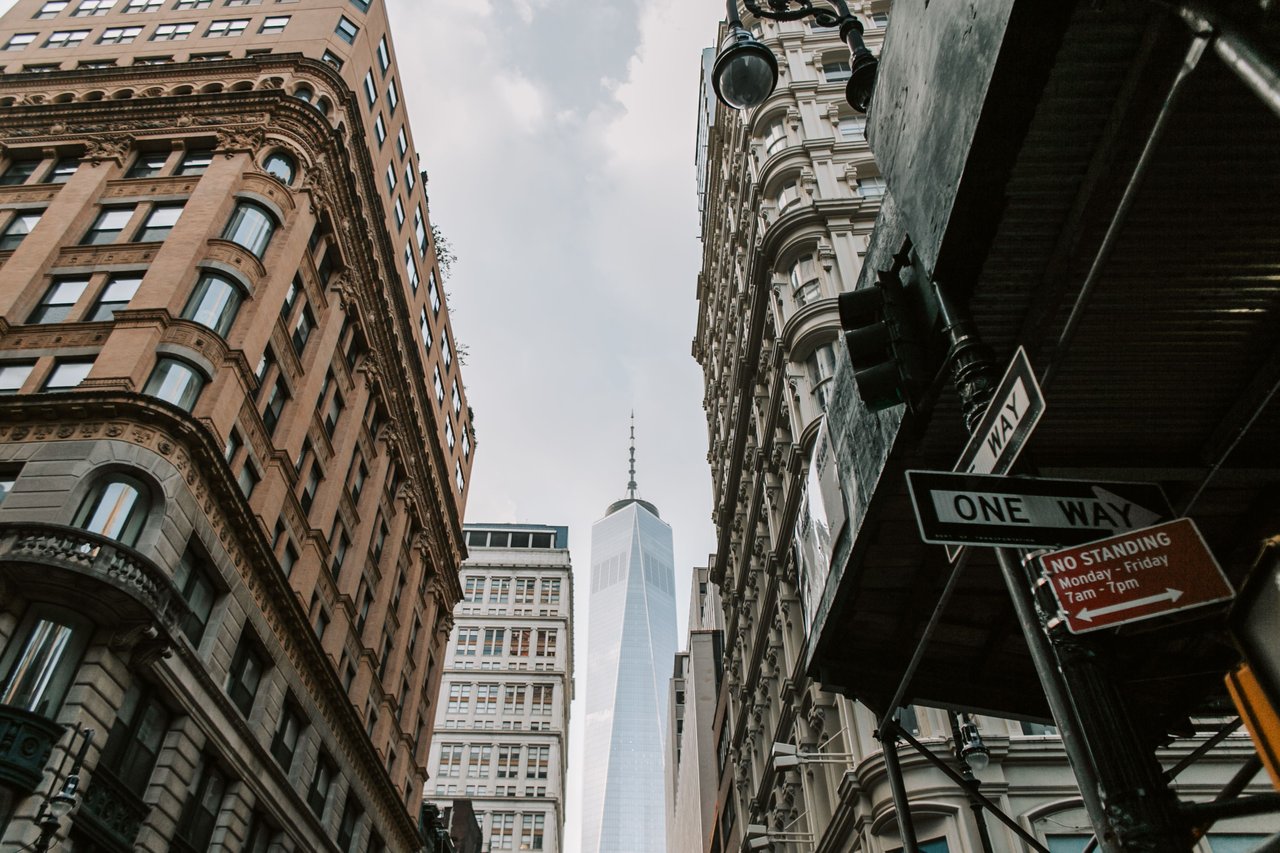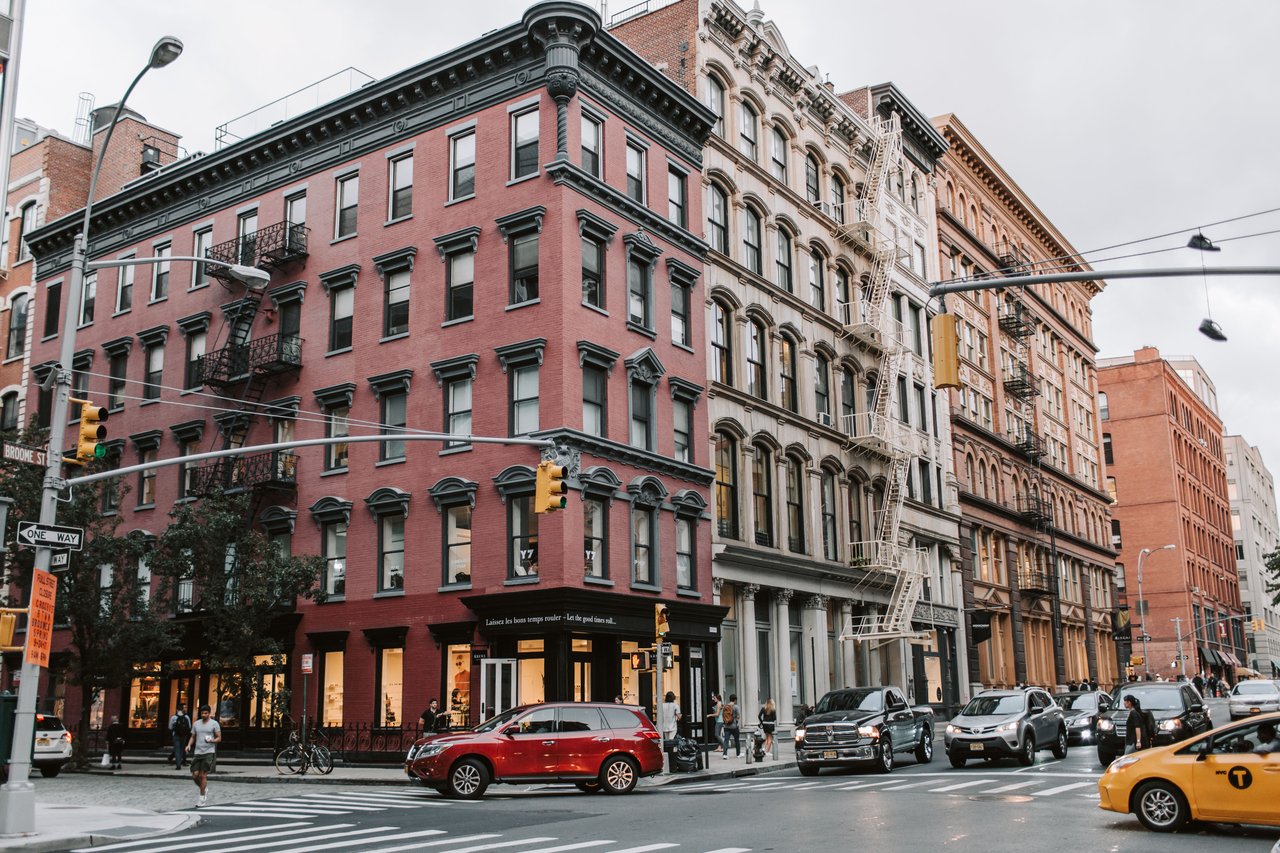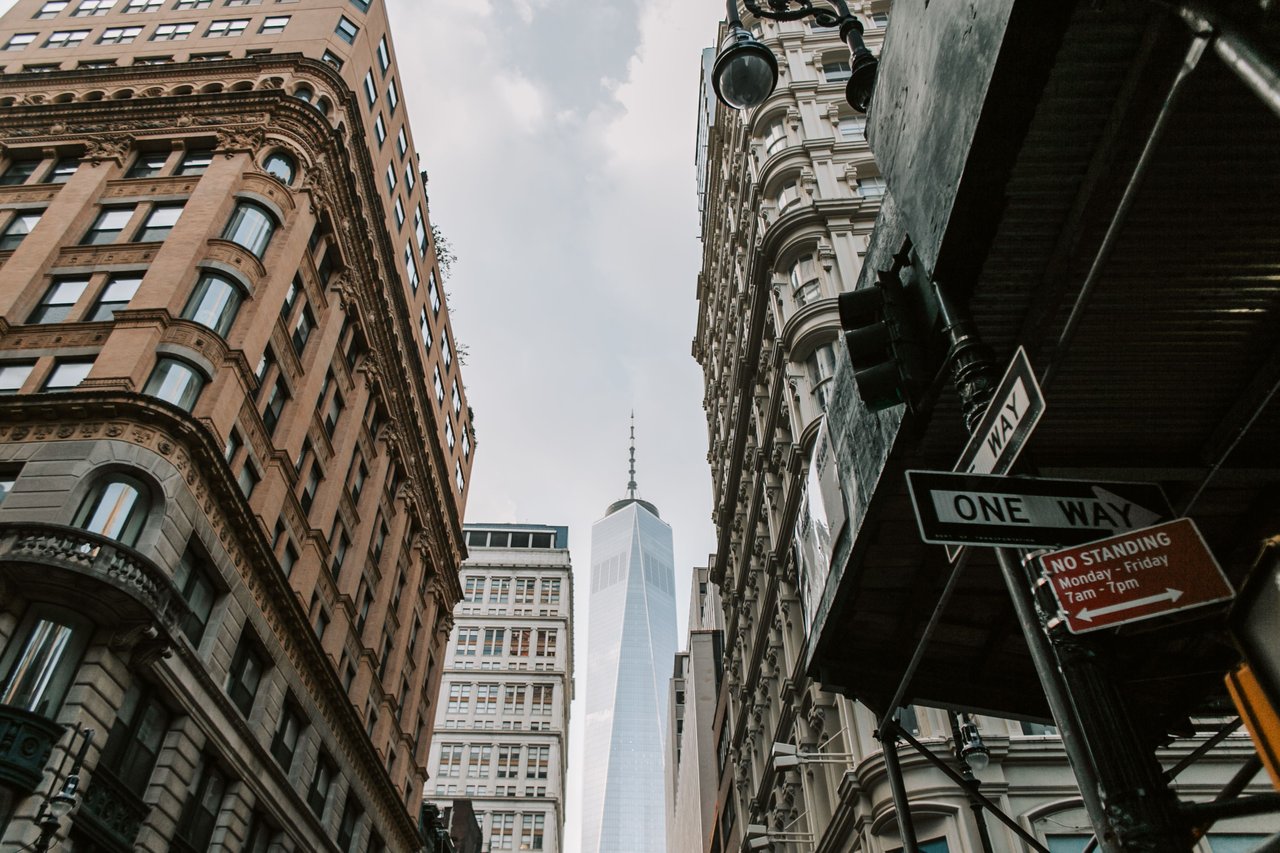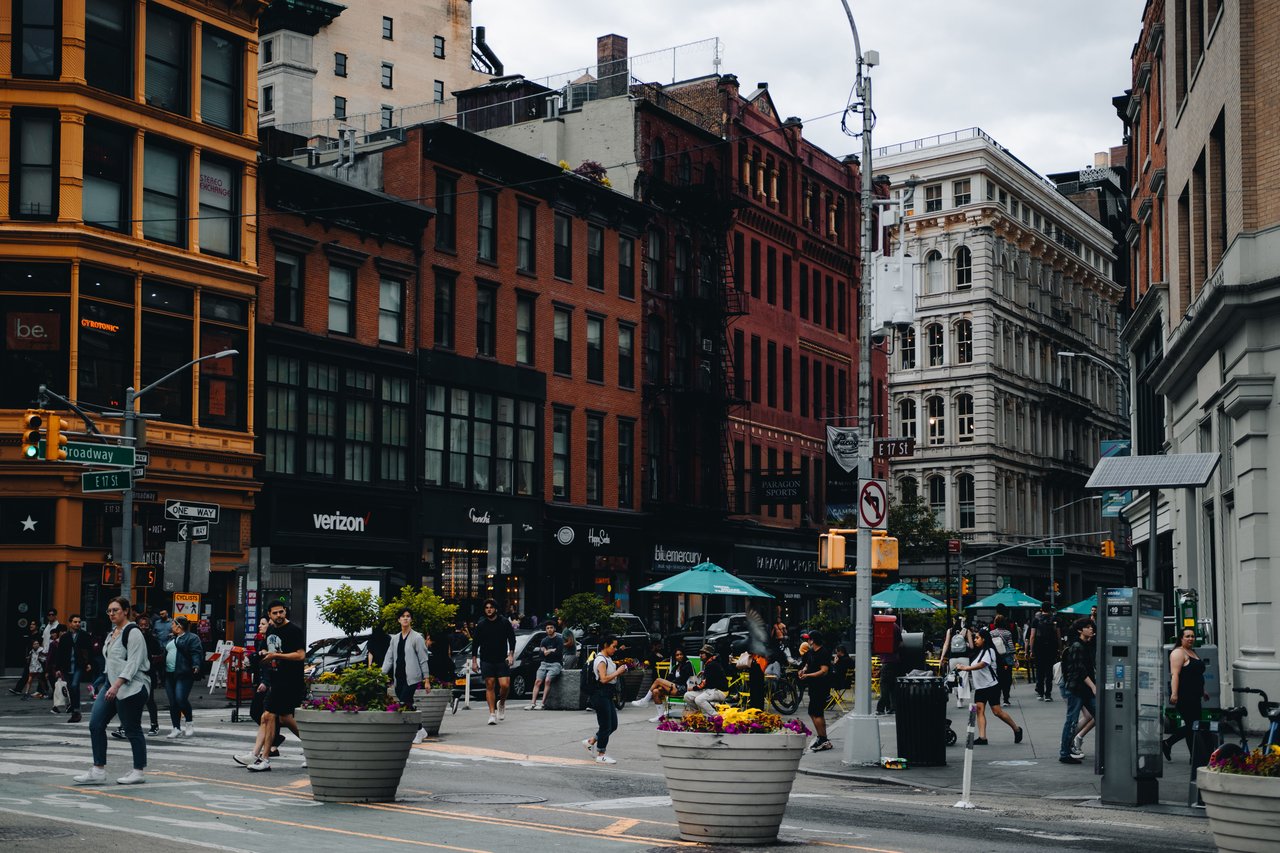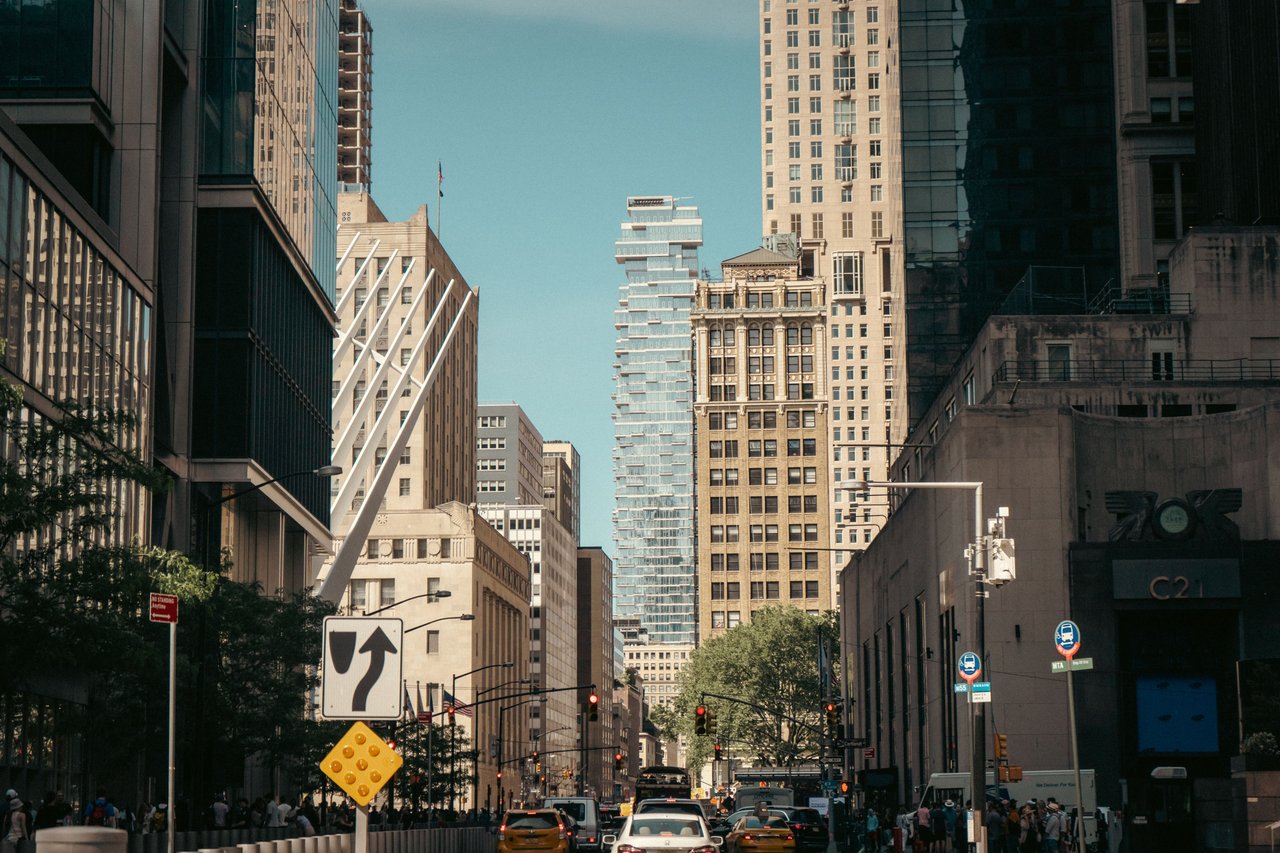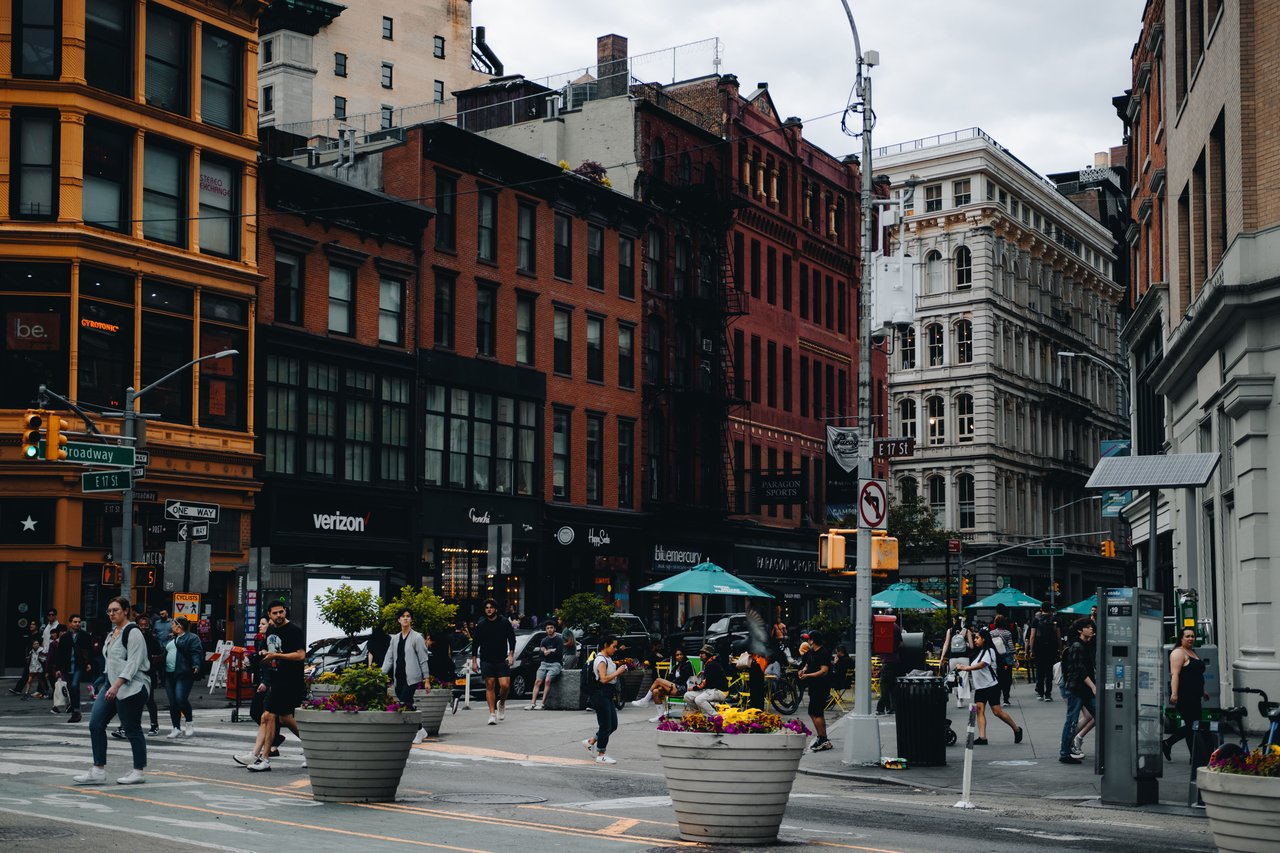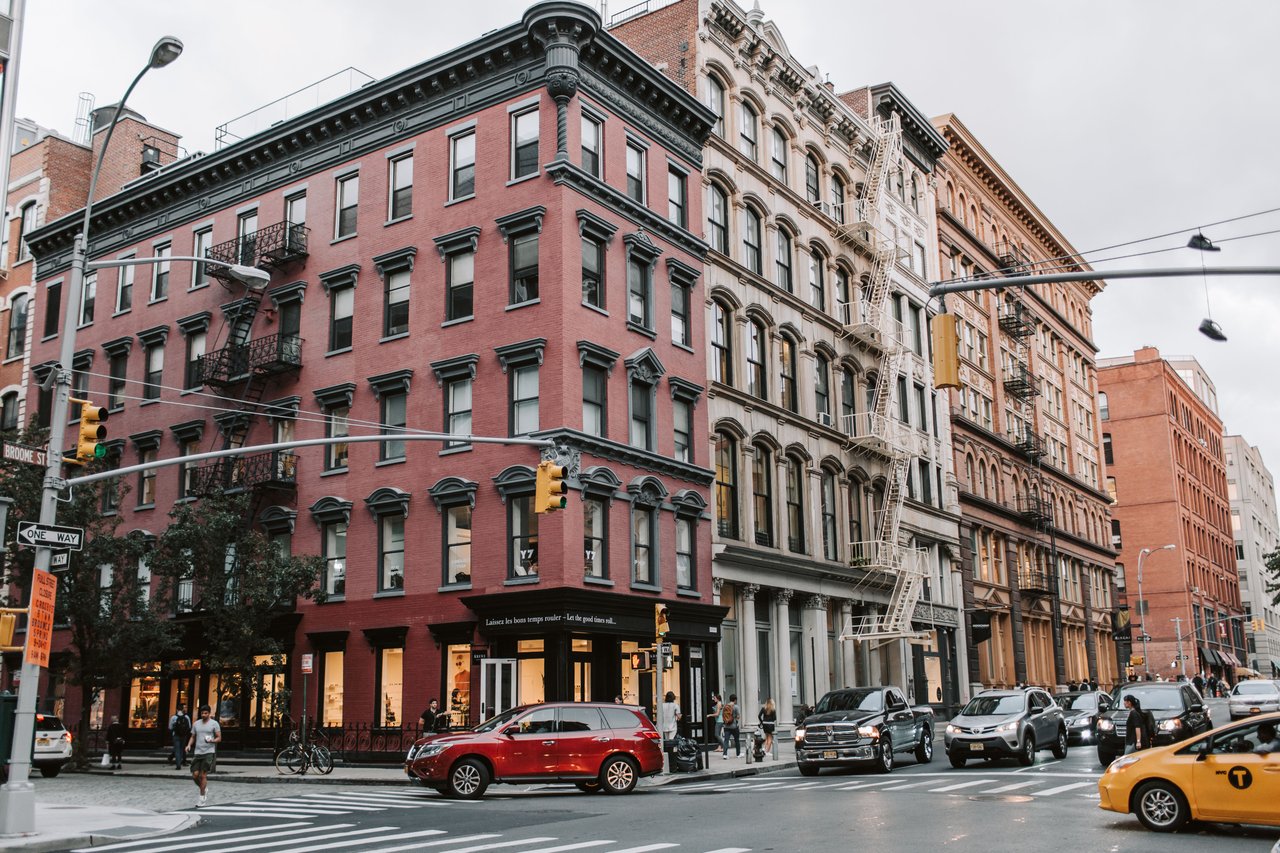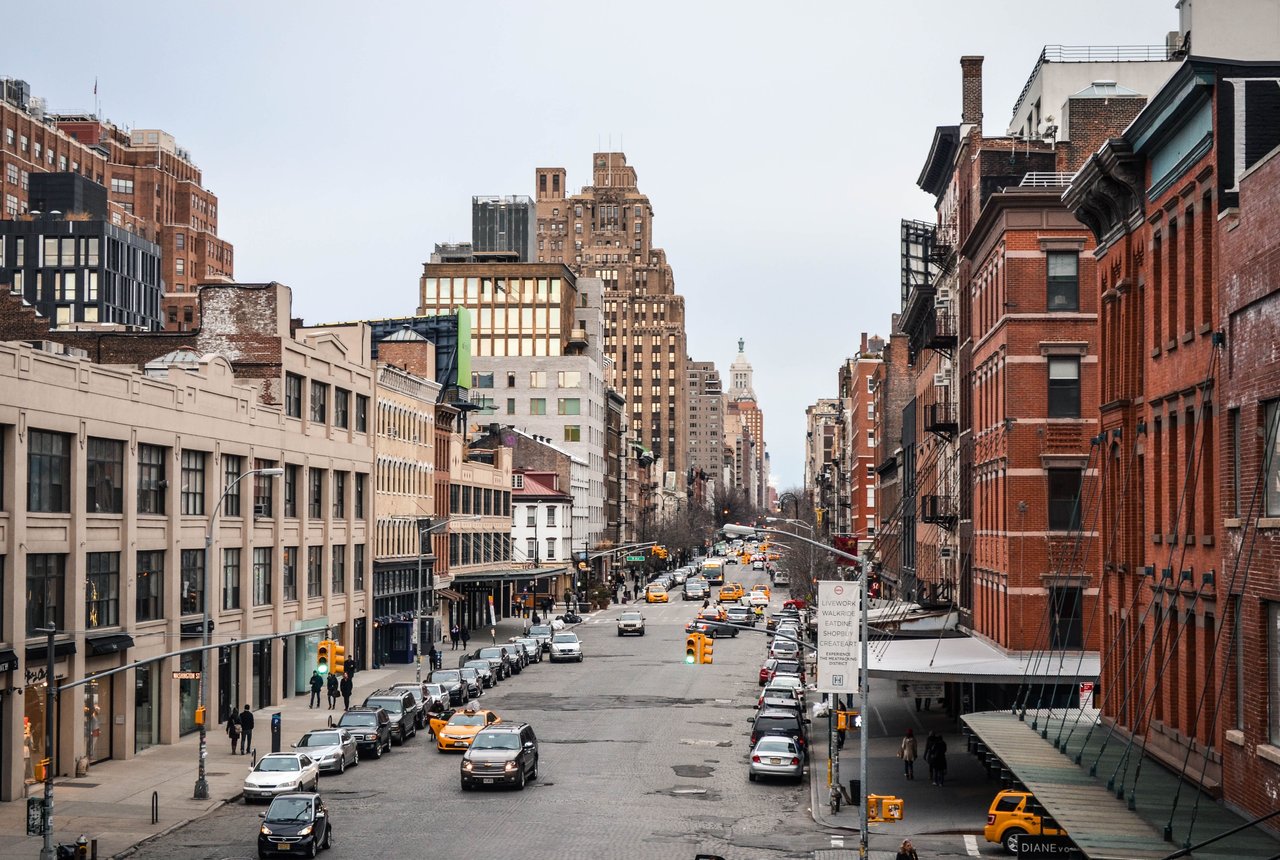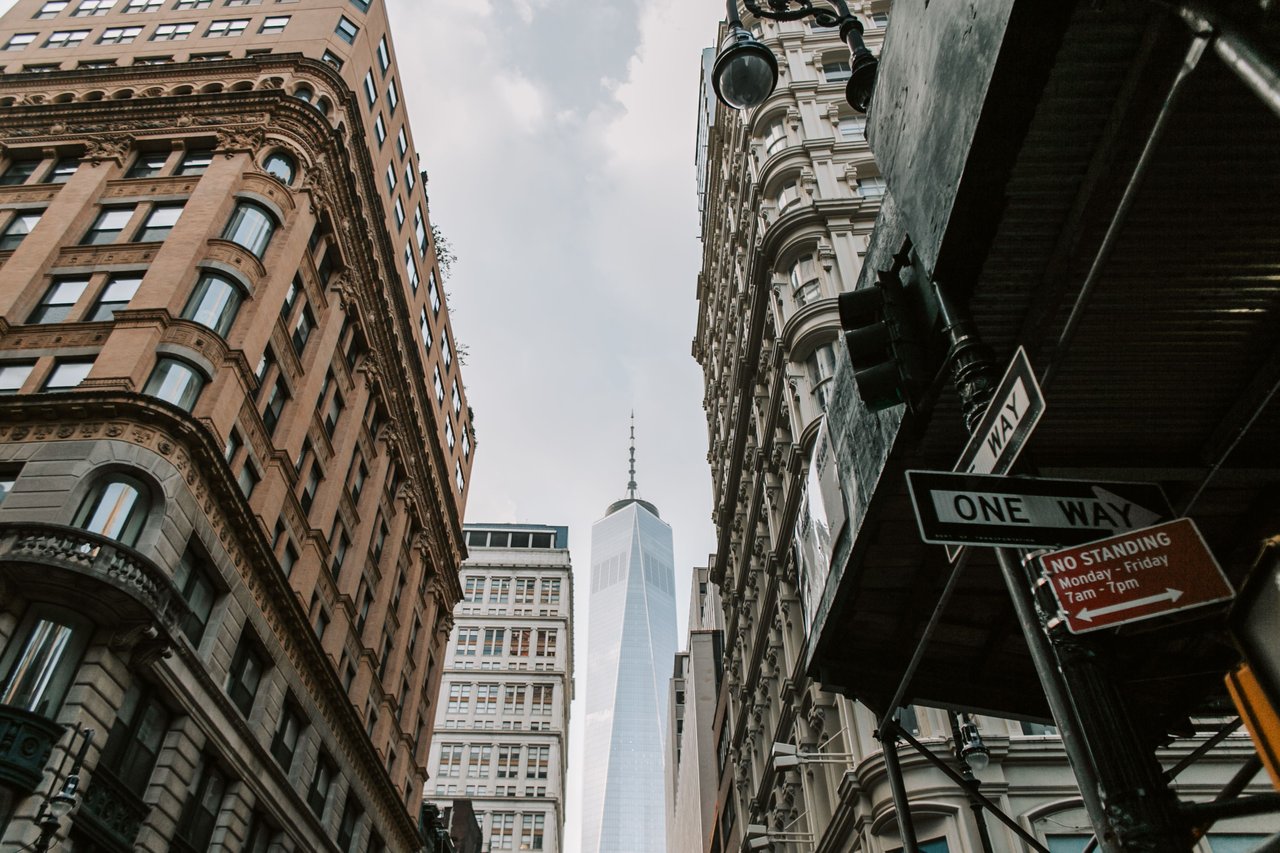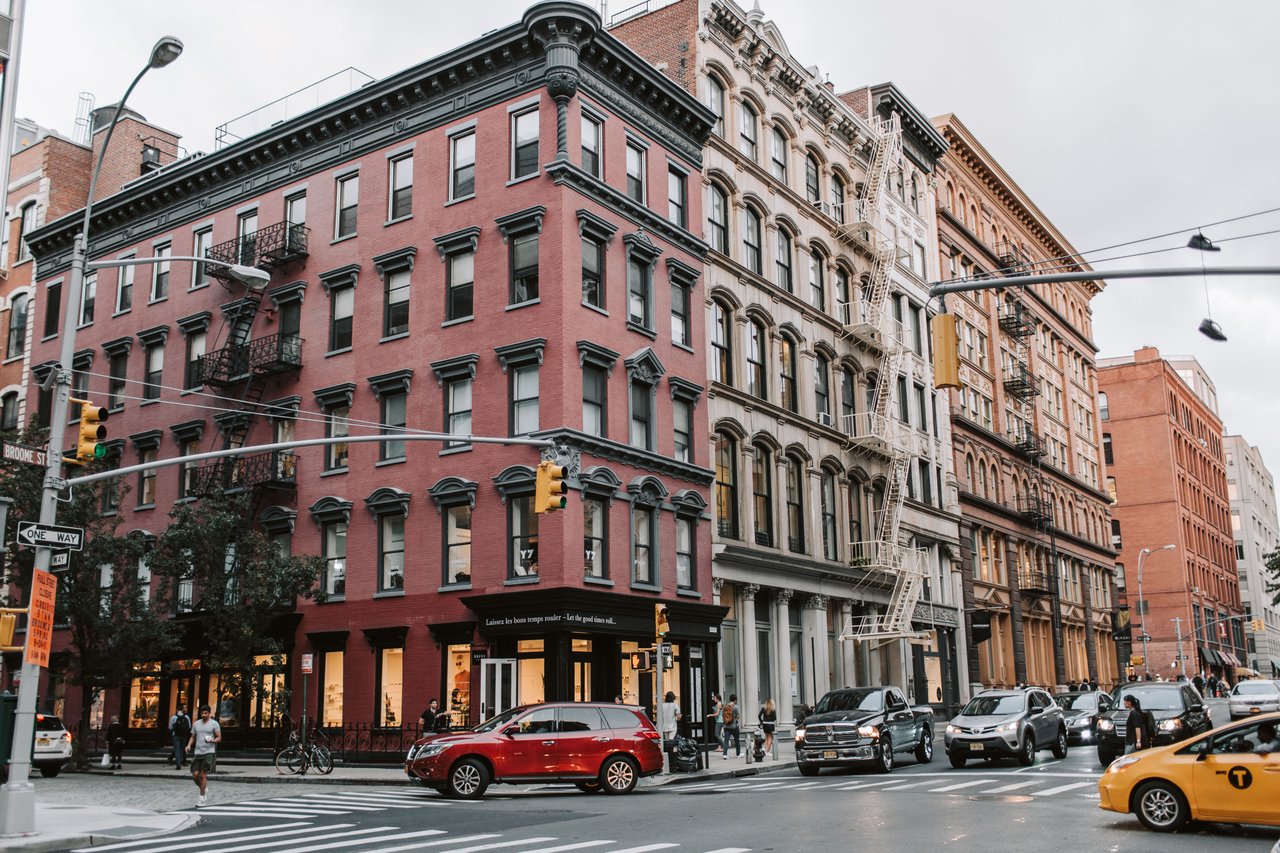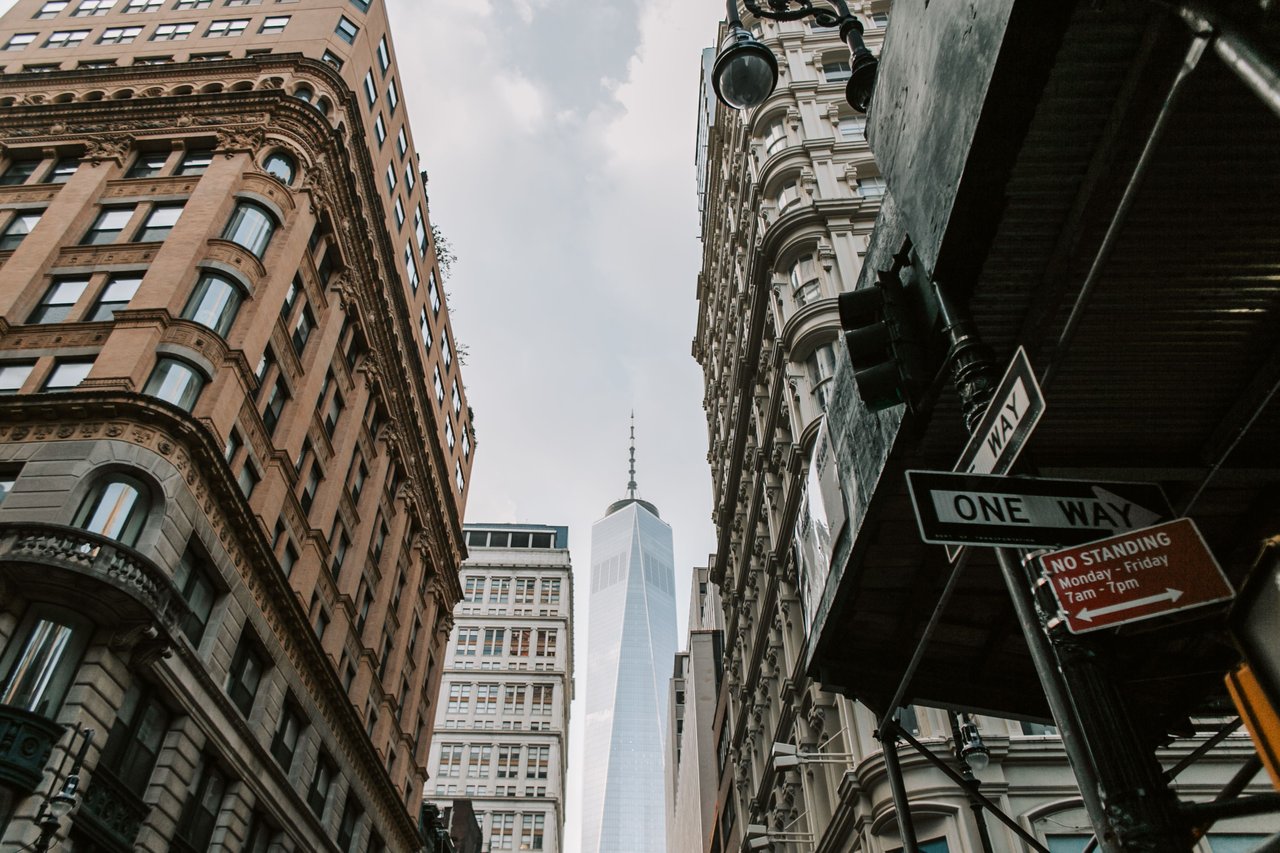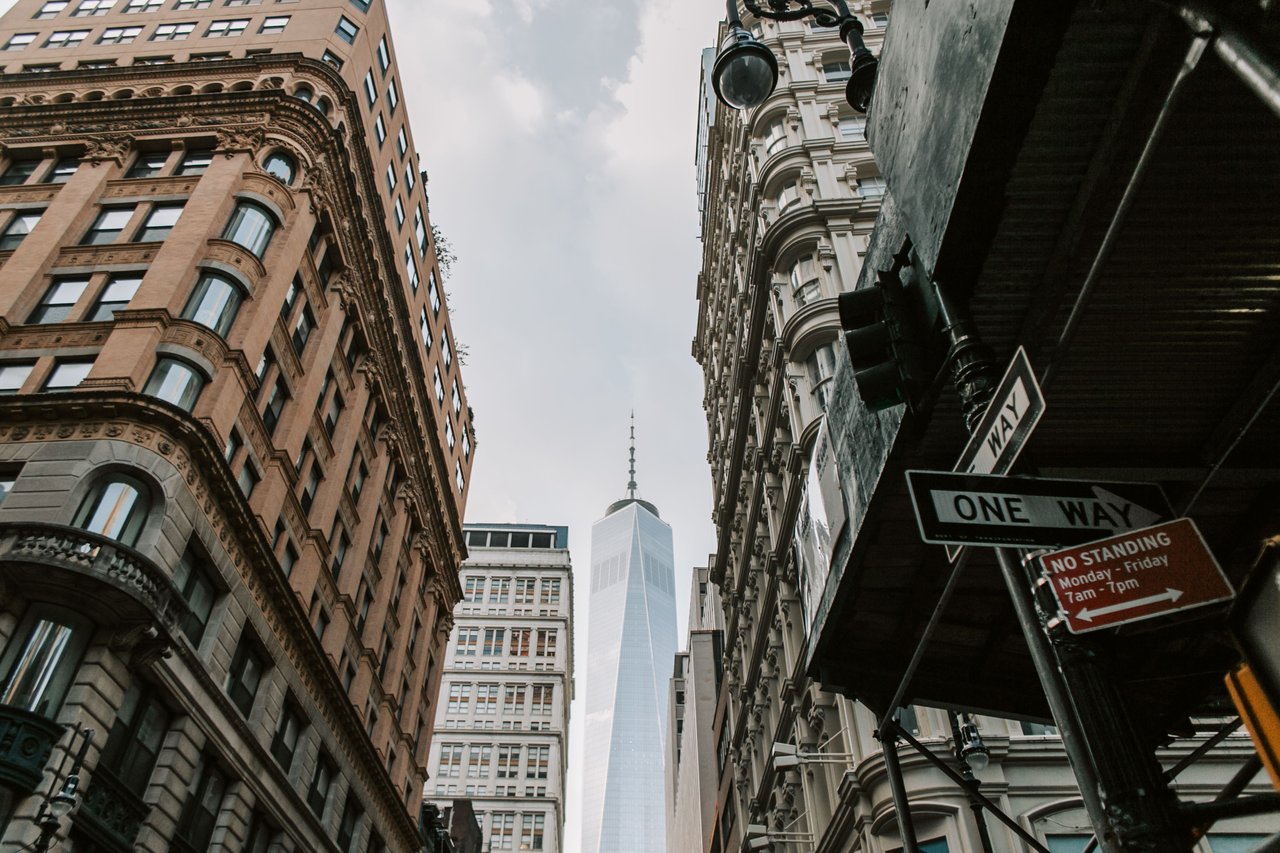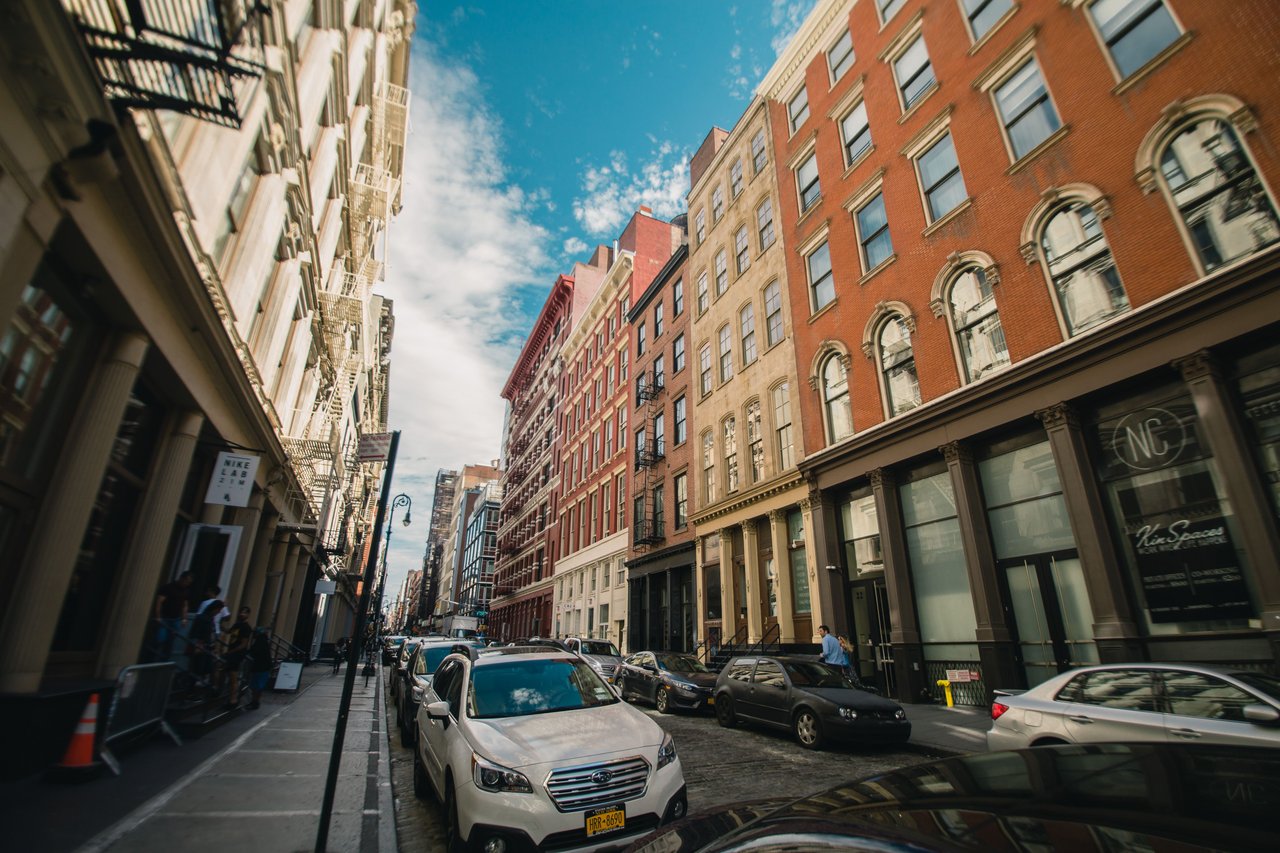
West Broadway is one of the most historically layered and architecturally distinctive streets in Tribeca, Manhattan. Originally known as Chapel Street, the thoroughfare developed from an early residential corridor into a bustling nineteenth-century commercial district distinguished by Federal-style buildings, Italianate store-and-loft structures, cast-iron storefronts, Second Empire architecture, and substantial Romanesque Revival warehouses. Its surviving buildings offer an extraordinary record of Lower Manhattan's transformation, preserving architectural features from the earliest decades of the nineteenth century through the commercial expansion that established Tribeca as one of New York City's most important wholesale districts.
Unlike Broadway, which developed into a major commercial thoroughfare associated with prominent retail establishments and large office buildings, West Broadway retained a more varied architectural character. Its relatively narrow street frontage and irregular historic lot patterns encouraged the construction of buildings of different sizes, materials, and architectural styles. Small early residences eventually stood alongside five-story warehouses, decorative cast-iron commercial buildings, and larger structures developed for wholesale merchants. The result was a streetscape that reflected the gradual transformation of the neighborhood rather than a single coordinated period of development.
The architectural importance of West Broadway is particularly evident between Chambers Street and Canal Street, where surviving nineteenth-century buildings illustrate the transition from early residential Manhattan to the commercial architecture of the industrial era. The street also played an important role in the development of public transportation, serving elevated railway and streetcar routes before the arrival of the subway beneath its southern sections.
Today, West Broadway remains one of Tribeca's most recognizable architectural corridors. Its historic commercial buildings, distinctive intersections, and surviving architectural details preserve the character of the former Washington Market district while accommodating contemporary residential, retail, and commercial uses.
The Origins of West Broadway
The history of West Broadway begins in the eighteenth century, when much of western Lower Manhattan remained under the control of Trinity Church and other large landowners. As the city expanded beyond its original colonial settlement, these properties were gradually subdivided into streets and building lots.
The portion of present-day West Broadway within Trinity Church's former Church Farm was originally known as Chapel Street. Part of the roadway was mapped and ceded to the city in 1761, establishing an important connection through the developing western portion of Manhattan. The name reflected the street's association with the surrounding Trinity Church property and the religious institutions that influenced the neighborhood's early development.
During the 1790s, Chapel Street was extended northward toward Leonard Street, while improvements to its roadway encouraged additional construction. The section between Murray Street and Reade Street was graded and paved in 1792, and further regulation followed during the final years of the eighteenth century.
By the beginning of the nineteenth century, the street had become an established part of Lower Manhattan's growing network of residential and commercial thoroughfares. Its development reflected the gradual replacement of former estates and open land with smaller urban properties.
Unlike the later Manhattan grid, which imposed a more uniform pattern across much of the island, the streets of Tribeca developed through earlier subdivisions that followed separate property boundaries. This history helps explain the irregular intersections and distinctive block configurations that remain visible along West Broadway.
Why Is It Called West Broadway?
West Broadway received its present name during the nineteenth century, when the former Chapel Street was renamed to establish a clearer association with Broadway, the city's principal commercial thoroughfare.
The portion between Murray Street and Canal Street adopted the West Broadway name during the 1840s. The designation emphasized the roadway's position west of Broadway while creating a recognizable identity for a street experiencing substantial commercial expansion.
The name also distinguished the thoroughfare from other nearby streets that developed through separate land subdivisions. North of Canal Street, sections of the roadway had different historical names, including Laurens Street and later South Fifth Avenue, before becoming part of the continuous West Broadway corridor.
This complicated naming history reflects the gradual integration of independently developed Manhattan streets into a more connected urban transportation network.
Today, the name West Broadway preserves the relationship between the historic commercial streets of western Lower Manhattan and the larger north-south street system.
Chapel Street and Early Residential Manhattan
During the late eighteenth and early nineteenth centuries, Chapel Street developed primarily with modest residences, workshops, and small commercial establishments. Many buildings occupied relatively narrow lots, reflecting the property divisions established during the earliest stages of neighborhood development.
Federal-style architecture was particularly common during this period. Buildings generally featured restrained brick facades, regularly arranged windows, simple decorative lintels, and modest rooflines. Some incorporated workshops or commercial space at ground level, allowing residential and business activities to coexist within the same property.
This early development differed considerably from the monumental commercial architecture that would later characterize Tribeca. Buildings were generally smaller, and the street retained a residential scale even as commercial activity gradually increased.
The surviving early nineteenth-century structures along West Broadway are therefore especially important. They preserve evidence of a period when the neighborhood had not yet become a major center of wholesale trade.
As Manhattan's commercial economy expanded, many of these buildings were altered, enlarged, or replaced. Their gradual disappearance illustrates the substantial changes that reshaped West Broadway during the nineteenth century.
The Federal Architecture of Early West Broadway
Federal architecture was one of the defining building styles of early nineteenth-century New York City. Its restrained proportions and classical influences reflected the architectural preferences of the period following the American Revolution.
On West Broadway, Federal-era buildings were generally constructed with brick or frame structural systems and relatively simple facades. Their narrow frontages reflected the residential property divisions established during the neighborhood's earliest development.
Windows were arranged in regular vertical rows, while modest cornices and restrained entrance details provided architectural definition. Commercial alterations frequently changed the ground floors as businesses expanded into formerly residential properties.
The surviving building at 135 West Broadway provides an important example of this early architectural period. Its continued presence illustrates the scale and character of the street before the construction of substantial nineteenth-century warehouses.
Although much of West Broadway's early residential architecture disappeared during commercial redevelopment, the surviving structures provide an essential connection to the neighborhood's origins.
The Historic Building at 135 West Broadway
One of the most important surviving reminders of early residential Tribeca stands at 135 West Broadway.
Constructed around 1810 by mason Richard Kidney, the building was originally part of a row of four modest residences. Its design reflected the Federal architectural style, with a frame structure, brick front, and restrained proportions characteristic of early nineteenth-century construction.
The building originally rose three and a half stories, although its attic level was subsequently removed. Its relatively small scale contrasts sharply with the substantial commercial warehouses constructed nearby during the second half of the nineteenth century.
The survival of 135 West Broadway is particularly significant because relatively few buildings from the neighborhood's earliest residential period remain. Its architectural character provides evidence of the time when the street was still known as Chapel Street and consisted largely of residences and small workshops.
Today, the building forms part of the Tribeca South Historic District, where its modest proportions contribute to the architectural diversity of the surrounding commercial streetscape.
The Early Residential Buildings of West Broadway
The history of West Broadway is also reflected in other surviving early nineteenth-century structures, including buildings that were substantially altered as commercial activity expanded.
The building at 177 West Broadway originated during the early years of the nineteenth century, when the surrounding neighborhood was still predominantly residential. Over time, its appearance changed through additional construction and commercial modifications, reflecting the evolving requirements of the street.
These alterations are an important part of the architectural history of Tribeca. Rather than remaining unchanged, early buildings were frequently adapted to accommodate shops, workshops, additional floors, and new commercial functions.
The resulting structures often combine architectural features from several different periods. Their original residential proportions may remain visible beneath later storefronts or facade treatments, providing evidence of the street's gradual transformation.
Such buildings are particularly valuable because they illustrate the continuity of development between the residential neighborhood of the early nineteenth century and the commercial district that emerged during the following decades.
The Commercial Transformation of West Broadway
During the middle of the nineteenth century, West Broadway underwent a substantial commercial transformation. The expansion of the Hudson River waterfront and the growing importance of the Washington Market district created increasing demand for warehouses, wholesale establishments, and commercial storage facilities.
Earlier residences were gradually converted into shops or replaced by larger buildings designed specifically for business purposes. The development of store-and-loft structures became particularly important during the 1850s and 1860s.
These buildings typically incorporated commercial premises at ground level and storage or work areas on the upper floors. Their architecture reflected the practical requirements of wholesale trade, including substantial masonry construction, large windows, and convenient access for merchandise.
As commercial activity expanded, developers began combining smaller residential lots to accommodate larger buildings. This process changed the scale of West Broadway, introducing structures that were considerably taller and wider than the earlier houses.
The resulting architecture reflected the growing importance of Tribeca as a center of wholesale commerce and industrial distribution.
West Broadway and the Washington Market District
The commercial development of West Broadway was closely connected with the Washington Market district, one of New York City's principal centers of wholesale food distribution during the nineteenth century.
The market's location near the Hudson River waterfront allowed merchandise to arrive through maritime transportation routes before being distributed throughout the city and beyond. The surrounding streets developed with warehouses, wholesale establishments, and commercial buildings that supported these operations.
West Broadway provided an important north-south connection through this expanding district. Its location between Broadway and the western waterfront made it useful for businesses requiring access to both the city's commercial center and its transportation infrastructure.
As demand for warehouse space increased, the street developed with substantial brick and stone commercial buildings. Their ground floors accommodated wholesale businesses, while the upper stories provided storage and related commercial space.
The architectural transformation of West Broadway therefore reflected the broader economic development of western Lower Manhattan during the nineteenth century.
Italianate Architecture on West Broadway
Italianate architecture became one of the most influential styles along West Broadway during the middle of the nineteenth century.
The style was particularly popular for commercial buildings constructed during the 1850s and 1860s. Its characteristic features included tall rectangular windows, decorative stone lintels, substantial cornices, and cast-iron storefronts.
Italianate store-and-loft buildings generally incorporated four or five stories, providing additional commercial space while maintaining relatively consistent facade proportions.
On West Broadway, these structures replaced many earlier residential buildings as wholesale commerce expanded. Their decorative architectural features gave the street a more substantial commercial appearance without sacrificing the practical requirements of warehouse construction.
The building at 109–113 West Broadway, constructed in 1860, represents an important example of this architectural period.
Other buildings combined Italianate influences with elements of the Second Empire and neo-Grec styles, demonstrating the architectural experimentation that characterized commercial development during the later nineteenth century.
The Historic Building at 109–113 West Broadway
The building at 109–113 West Broadway, also known as 112 Reade Street, is one of the most architecturally distinctive commercial structures within the Tribeca South Historic District.
Constructed in 1860, the building reflects Italianate architectural influences and represents the substantial commercial development that followed the expansion of the Washington Market district.
Its facade is distinguished by unusual tripartite windows incorporating arched wooden mullions. These decorative features create a distinctive architectural composition that differs from the more conventional rectangular window arrangements found on many neighboring warehouses.
The West Broadway facade also incorporates a triangular pediment, introducing a formal classical element to the building's commercial design.
The structure illustrates how architects and builders adapted Italianate principles to the practical requirements of store-and-loft construction.
Its survival contributes significantly to the architectural diversity of West Broadway and provides an important example of mid-nineteenth-century commercial architecture.
The Girard House at West Broadway and Chambers Street
The intersection of West Broadway and Chambers Street preserves an important example of early commercial hospitality architecture.
The Girard House, later known as the Bond Hotel, was developed during 1844–1845 on a site created by combining several smaller building lots. The structure was designed as a residential hotel with commercial shops occupying the ground floor.
Its Gothic Revival architectural character distinguishes it from the Italianate warehouses and store-and-loft buildings that later became common along West Broadway.
The building reflects a period when hotels and commercial accommodations were important features of Lower Manhattan's expanding business district.
Its location at the intersection of two major streets provided convenient access to the surrounding commercial neighborhood.
The survival of the former Girard House is particularly significant because it preserves evidence of the architectural diversity that characterized West Broadway before the wholesale district became dominated by larger warehouse buildings.
Second Empire Architecture on West Broadway
Second Empire architecture became influential in New York City during the middle and later decades of the nineteenth century.
The style was associated with decorative facade treatments, prominent cornices, and architectural features inspired by French urban design. Although mansard roofs are among its most recognizable characteristics, commercial buildings frequently incorporated selected Second Empire details without adopting the full residential form.
On West Broadway, several buildings combined Italianate and Second Empire influences.
The structures at 115–123 West Broadway, also associated with 150–152 Duane Street, were constructed during 1863–1864 and demonstrate this combination of architectural styles.
The buildings at 137–139 West Broadway, constructed in 1867, provide another example of the blending of Italianate and Second Empire design.
These structures illustrate the increasing decorative complexity of commercial architecture during the period when West Broadway was undergoing substantial redevelopment.
The Historic Buildings at 137–139 West Broadway
The buildings at 137–139 West Broadway represent an important phase of commercial development during the 1860s.
Constructed in 1867, the buildings combine Italianate and Second Empire architectural influences.
Their design reflects the growing sophistication of commercial construction during the period when store-and-loft buildings were replacing the earlier residential structures of Chapel Street.
The facades incorporate decorative details associated with both architectural traditions, creating a formal appearance appropriate to the expanding wholesale district.
Their survival is particularly valuable because they stand near earlier buildings such as 135 West Broadway, allowing the architectural differences between early residential construction and later commercial development to remain visible.
Together, these structures demonstrate the gradual transformation of West Broadway during the middle of the nineteenth century.
Cast-Iron Architecture on West Broadway
Cast iron played an important role in the commercial architecture of West Broadway.
During the nineteenth century, cast-iron columns and storefront components allowed architects to create wider ground-floor openings than traditional masonry construction could easily accommodate.
These openings were particularly useful for wholesale businesses, where merchandise needed to be moved efficiently between the street and interior commercial spaces.
Cast iron also provided opportunities for decorative architectural treatments. Columns, pilasters, arches, and other ornamental features could be manufactured in repeating patterns, allowing commercial facades to incorporate elaborate details.
On West Broadway, cast-iron storefronts frequently appeared beneath brick or stone upper facades, creating a distinctive combination of industrial technology and traditional masonry architecture.
The surviving commercial buildings illustrate how cast iron became an important feature of nineteenth-century Tribeca, contributing both to the practical operation of warehouses and to the decorative character of their facades.
The Historic Building at 140–142 West Broadway
The building at 140–142 West Broadway is an important example of nineteenth-century commercial architecture within the Tribeca West Historic District.
Designed by architect Carl Pfeiffer and constructed in 1866, the five-story store-and-loft building was developed for produce merchants Henry Brinker & Co.
Its architecture combines Italianate and neo-Grec influences, reflecting the decorative styles popular during the middle of the nineteenth century.
The ground floor incorporates cast-iron Corinthian columns and piers, while the upper facade features stone masonry and segmentally arched windows.
These details create a distinctive architectural composition that reflects both the commercial function of the building and the decorative ambitions of its original development.
The building is particularly significant because it preserves an early phase of commercial construction along Thomas Street and West Broadway, illustrating the transformation of the neighborhood into a wholesale district.
Neo-Grec Architecture on West Broadway
Neo-Grec architecture became increasingly popular for commercial buildings during the later nineteenth century.
The style emphasized angular ornamentation, incised decorative patterns, geometric details, and carefully organized facade compositions.
Unlike the rounded arches associated with Romanesque Revival architecture, neo-Grec design frequently incorporated more angular and linear decorative elements.
On West Broadway, the style appeared in combination with Italianate commercial architecture.
The building at 147 West Broadway, also known as 72 Thomas Street, represents an important example of this approach. Constructed during 1869–1870, the building features an unusual rusticated cast-iron facade combining Italianate and neo-Grec elements.
The smaller building at 141 West Broadway also incorporates neo-Grec architectural features.
Together, these structures demonstrate the variety of commercial design that developed along West Broadway during the second half of the nineteenth century.
The Historic Cast-Iron Building at 147 West Broadway
The building at 147 West Broadway, also known as 72 Thomas Street, is one of the most distinctive examples of nineteenth-century commercial architecture in Tribeca.
Designed by architect John J. O'Neil and constructed in 1870, the building was developed for liquor merchant Michael Purcell.
Its architectural significance lies in its unusual rusticated cast-iron facade, which combines Italianate design with neo-Grec decorative elements.
The building's exterior demonstrates how cast iron could be used to imitate substantial masonry construction while allowing decorative architectural details to be manufactured and assembled.
Its prominent corner location gives the building a particularly recognizable appearance within the surrounding historic streetscape.
The preservation of its cast-iron features remains important to understanding the development of commercial architecture in nineteenth-century New York City.
The Historic Warehouse at 145 West Broadway
The building at 145 West Broadway represents a later phase of commercial development along the street.
Designed by architect William Kuhles and constructed in 1888 for wholesale grocer Ernest Christian Korner, the building reflects Romanesque Revival architectural influences.
Its substantial masonry facade and carefully organized openings distinguish it from the smaller Italianate store-and-loft buildings constructed several decades earlier.
The warehouse reflects the increasing scale of wholesale commerce during the final decades of the nineteenth century, when larger buildings were required to accommodate growing commercial operations.
The building later became closely associated with The Odeon, a restaurant whose presence contributed to the transformation of Tribeca during the late twentieth century.
Its architectural history therefore connects two important periods of neighborhood development: the nineteenth-century wholesale district and the later adaptive reuse of former industrial buildings.
The Odeon and the Adaptive Reuse of Historic Architecture
The Odeon, located at 145 West Broadway, is one of the most recognizable examples of the adaptation of historic commercial architecture in Tribeca.
The restaurant occupies part of a former nineteenth-century warehouse, preserving a connection to the street's commercial history while introducing a new use suited to the neighborhood's transformation.
Its distinctive neon sign became a recognizable feature of the surrounding streetscape during the late twentieth century.
The building's continued use illustrates how historic commercial structures could accommodate restaurants and other contemporary establishments without losing their architectural identity.
Exterior restoration work has included repairs to masonry, cast iron, windows, and historic architectural details, helping preserve the character of the building.
The Odeon provides an example of how architectural preservation and adaptive reuse contributed to the transformation of Tribeca from an industrial district into a neighborhood recognized for its historic buildings and contemporary commercial life.
Romanesque Revival Architecture on West Broadway
Romanesque Revival architecture became particularly influential in New York City's commercial districts during the final decades of the nineteenth century.
The style emphasized substantial masonry construction, rounded arches, heavy structural piers, and deeply recessed openings.
These features were especially appropriate for warehouses, where large interior spaces and durable construction were essential.
On West Broadway, Romanesque Revival architecture introduced a more monumental appearance than the relatively restrained Italianate buildings of the preceding decades.
The warehouse at 145 West Broadway, constructed in 1888, represents this architectural movement.
Its substantial facade reflects the growing scale of wholesale commerce and the increasing importance of purpose-built warehouse structures.
Romanesque Revival buildings contributed significantly to the architectural identity of Tribeca, particularly in areas associated with industrial storage and wholesale distribution.
West Broadway and Duane Street
The intersection of West Broadway and Duane Street is one of the most architecturally interesting locations in southern Tribeca.
During the nineteenth century, the surrounding blocks developed with substantial store-and-loft buildings and commercial establishments associated with the Washington Market district.
The building at 115–123 West Broadway, also known as 150–152 Duane Street, was constructed during 1863–1864 and combines Italianate and Second Empire architectural influences.
Its substantial commercial proportions reflect the transformation of the neighborhood from early residential development into a center of wholesale trade.
The intersection also provides an important connection between West Broadway and the historic commercial streets extending toward the Hudson River waterfront.
The surviving masonry facades contribute to the architectural continuity of the Tribeca South Historic District.
West Broadway and Reade Street
The intersection of West Broadway and Reade Street preserves an important concentration of nineteenth-century commercial architecture.
The building at 109–113 West Broadway, also known as 112 Reade Street, was constructed in 1860 and is distinguished by its unusual tripartite windows and triangular pediment.
Its Italianate architectural character reflects the commercial expansion of the neighborhood during the middle of the nineteenth century.
The surrounding blocks contain additional store-and-loft buildings that illustrate the transition from early residential construction to substantial commercial development.
The intersection is particularly important because it connects West Broadway with Reade Street, one of the historic thoroughfares associated with the former Washington Market district.
Together, the buildings preserve the architectural character of nineteenth-century Tribeca.
West Broadway and Chambers Street
Chambers Street marks an important intersection along West Broadway, connecting the historic commercial district with the civic and commercial architecture of Lower Manhattan.
The former Girard House, developed during 1844–1845, occupies a prominent location at the intersection.
Its Gothic Revival architecture and original hotel function distinguish it from the store-and-loft buildings constructed during the later nineteenth century.
The intersection also played an important role in the development of public transportation, with elevated railway service and streetcars passing through the surrounding corridor.
The architectural character of the area reflects the relationship between commercial hospitality, transportation infrastructure, and the expanding wholesale district.
West Broadway and Thomas Street
The intersection of West Broadway and Thomas Street is one of the most architecturally distinctive locations in Tribeca.
The surrounding buildings illustrate several important phases of nineteenth-century commercial development.
The building at 140–142 West Broadway was designed by Carl Pfeiffer and constructed in 1866, incorporating Italianate and neo-Grec architectural features.
Nearby, 147 West Broadway, also known as 72 Thomas Street, was constructed in 1870 and is distinguished by its unusual rusticated cast-iron facade.
The warehouse at 145 West Broadway, constructed in 1888, reflects the later influence of Romanesque Revival architecture.
Together, these buildings demonstrate how West Broadway developed through successive architectural styles rather than a single coordinated period of construction.
The intersection also remains closely associated with The Odeon, which occupies part of the historic warehouse at 145 West Broadway.
West Broadway and Worth Street
Worth Street intersects West Broadway near the northern portion of the Tribeca South Historic District.
The surrounding architecture reflects the commercial development that followed the expansion of the Washington Market district.
Store-and-loft buildings constructed during the nineteenth century replaced many earlier residences, creating a streetscape characterized by substantial masonry facades and commercial storefronts.
The intersection provides an important connection between West Broadway and the commercial architecture extending eastward toward Broadway.
Its location also illustrates the relationship between the smaller historic blocks of southern Tribeca and the larger commercial thoroughfares of Lower Manhattan.
West Broadway and Franklin Street
The intersection of West Broadway and Franklin Street played an important role in the development of nineteenth-century transportation and commercial activity.
Franklin Street was one of the principal east-west routes connecting the neighborhood's warehouses and commercial establishments.
During the period when elevated railway service operated along West Broadway, Franklin Street was an important station location.
The surrounding blocks developed with commercial buildings associated with wholesale trade and industrial storage.
Their architectural character reflects the gradual replacement of earlier residential structures with substantial store-and-loft buildings.
The intersection remains an important part of the historic street network connecting western Tribeca with the commercial districts farther east.
West Broadway and Leonard Street
Leonard Street marks another important intersection along West Broadway.
The extension of the former Chapel Street toward Leonard Street during the 1790s contributed to the development of the surrounding neighborhood.
As commercial activity expanded during the nineteenth century, the blocks near the intersection developed with substantial store-and-loft buildings and warehouses.
The architecture reflects the transition from early residential construction to the industrial and commercial character associated with Tribeca.
The intersection also provides an important connection between West Broadway and the historic commercial streets extending toward Hudson Street and Broadway.
West Broadway and Canal Street
Canal Street marks the northern edge of the neighborhood generally recognized as Tribeca.
The intersection of West Broadway and Canal Street reflects the relationship between two important historic transportation corridors.
During the early nineteenth century, Canal Street developed as part of efforts to improve drainage and establish a major east-west roadway across Lower Manhattan.
West Broadway provided a north-south connection through the developing commercial district.
North of Canal Street, the roadway had a separate naming history, including periods when it was known as Laurens Street and South Fifth Avenue.
The intersection therefore represents an important geographical and historical transition between Tribeca and SoHo.
West Broadway and the Elevated Railway
West Broadway played an important role in the development of Manhattan's nineteenth-century elevated transportation network.
The Metropolitan Elevated Railway followed a route that included Church Street, Murray Street, and West Broadway before continuing northward toward Sixth Avenue.
Stations along the corridor included Chambers Street and Franklin Street, providing access to the surrounding commercial neighborhood.
The elevated structure transformed the appearance of West Broadway, introducing substantial iron infrastructure above the roadway.
Its presence affected the visual character of the street and reinforced its importance as a transportation route connecting Lower Manhattan with neighborhoods farther north.
The elevated railway became an important part of the commercial district's daily operations, allowing passengers to travel between the waterfront neighborhood and other parts of Manhattan.
The eventual disappearance of the elevated structure restored unobstructed views of the historic commercial facades.
Streetcars and Early Transportation on West Broadway
In addition to elevated railway service, West Broadway was an important streetcar corridor during the nineteenth century.
Street railway routes connected the surrounding commercial district with destinations farther north, providing another form of transportation through the expanding city.
The combination of streetcars and elevated trains reflected the growing importance of West Broadway as a north-south transportation route.
These services helped connect the wholesale district with other commercial and residential neighborhoods, supporting the movement of workers, customers, and visitors.
The presence of multiple transportation systems also influenced the architectural character of the street, which developed with hotels, commercial establishments, and substantial warehouses.
West Broadway's transportation history therefore forms an important part of its broader architectural development.
The IRT Subway Beneath West Broadway
The construction of the Seventh Avenue subway line introduced another major phase in the transportation history of West Broadway.
The line opened through the area in 1918, establishing underground rapid transit beneath the southern section of the street.
Unlike the elevated railway, which occupied the space above the roadway, the subway introduced transportation infrastructure below street level.
This change reflected the increasing importance of underground rapid transit in New York City's expanding transportation network.
The subway improved connections between Lower Manhattan and neighborhoods farther north while allowing the historic commercial streetscape to remain visible above ground.
Its construction represents the transition from nineteenth-century elevated transportation to the underground subway system that became central to Manhattan's twentieth-century development.
West Broadway and the Tribeca South Historic District
West Broadway forms an important boundary of the Tribeca South Historic District, designated by the New York City Landmarks Preservation Commission on December 8, 1992.
The district includes substantial portions of the east side of West Broadway, where surviving buildings represent several important phases of architectural development.
The street is particularly notable for its architectural variety. Early Federal-style residences stand near Gothic Revival commercial buildings, Italianate store-and-loft structures, Second Empire facades, neo-Grec cast-iron buildings, and Romanesque Revival warehouses.
This diversity distinguishes West Broadway from other streets within the historic district that developed more consistently during a single period.
The designation recognizes the importance of preserving these buildings as a collective record of the neighborhood's architectural history.
West Broadway and the Tribeca West Historic District
Portions of the west side of West Broadway form part of the Tribeca West Historic District, designated on May 7, 1991.
The district contains substantial collections of nineteenth-century commercial buildings associated with the former Washington Market neighborhood.
Along West Broadway, the surviving architecture includes four- to six-story store-and-loft buildings distinguished by masonry facades, cast-iron storefronts, decorative cornices, and historic commercial details.
Some buildings retain original window sash, pressed-metal cornices, and sidewalk vault features that reveal their former commercial functions.
The architectural character of the street reflects the gradual transformation from early residential development into a major wholesale district.
Its preservation contributes to the continuity of Tribeca's historic commercial streetscape.
Historic Sidewalks and Commercial Features on West Broadway
The architectural character of West Broadway extends beyond its building facades.
During the nineteenth century, commercial streets were designed to accommodate the movement of merchandise between warehouses, shops, and transportation facilities.
Granite sidewalks, commercial vault covers, cast-iron storefronts, and loading arrangements formed an important part of this environment.
Some buildings along West Broadway retain historic window sash, decorative pressed-metal cornices, and surviving sidewalk vault features.
These details provide evidence of the original operation of the commercial district.
Their preservation is particularly valuable because they demonstrate how architecture and street infrastructure worked together to support wholesale trade.
The Adaptive Reuse of West Broadway's Commercial Buildings
During the late twentieth century, many former industrial and commercial buildings throughout Tribeca were adapted for residential, retail, and other contemporary uses.
West Broadway's store-and-loft buildings offered substantial interior spaces, high ceilings, and large windows that were well suited to conversion.
Many properties retained historic masonry facades and decorative architectural features while introducing modern interiors.
Restaurants, galleries, shops, and residential lofts gradually replaced some of the wholesale businesses that had occupied the buildings during the nineteenth and early twentieth centuries.
The transformation allowed many historic structures to remain occupied and maintained while preserving their architectural character.
The Odeon at 145 West Broadway became a particularly recognizable example of the reuse of a former commercial building.
Adaptive reuse helped establish the contemporary identity of Tribeca while maintaining important connections to its industrial past.
West Broadway During the Twentieth Century
The twentieth century brought substantial changes to West Broadway and the surrounding neighborhood.
During the early decades of the century, the street remained closely associated with wholesale commerce, industrial storage, and transportation.
The introduction of the subway in 1918 represented an important improvement in the area's transportation infrastructure.
As industrial activity gradually declined during the middle of the century, many commercial buildings became underused or were adapted for new purposes.
During the later decades of the century, former warehouses and store-and-loft buildings attracted new residential and commercial uses.
The preservation movement recognized the architectural importance of these structures, leading to the designation of the Tribeca West Historic District in 1991 and the Tribeca South Historic District in 1992.
These changes transformed West Broadway from a predominantly commercial thoroughfare into a street combining historic architecture with contemporary residential and retail activity.
Contemporary Architecture on West Broadway
West Broadway today contains an unusually varied collection of historic buildings.
The surviving Federal-style building at 135 West Broadway preserves evidence of the neighborhood's earliest residential development.
The former Girard House reflects the commercial hospitality architecture of the middle nineteenth century.
Italianate and Second Empire store-and-loft buildings illustrate the expansion of wholesale commerce during the 1850s and 1860s.
Neo-Grec cast-iron buildings demonstrate the increasing decorative sophistication of commercial architecture, while Romanesque Revival warehouses reflect the larger industrial structures constructed during the final decades of the nineteenth century.
Modern residential conversions and contemporary commercial establishments occupy many of these historic buildings.
The resulting streetscape preserves an architectural record of Manhattan's changing residential, commercial, and industrial development.
What Does Tribeca Stand For?
Tribeca stands for Triangle Below Canal Street, referring to the neighborhood's location south of Canal Street in Lower Manhattan.
Historically, the area was associated with the Washington Market district and the commercial neighborhoods surrounding the Hudson River waterfront.
During the nineteenth century, Tribeca developed into an important center of wholesale commerce, manufacturing, and industrial warehousing.
Its architecture was shaped by substantial brick warehouses, cast-iron storefronts, decorative masonry facades, and commercial loft buildings.
During the late twentieth century, many former industrial structures were converted into residential lofts and other contemporary uses.
West Broadway preserves an especially important record of this architectural transformation, containing buildings from the neighborhood's earliest residential period through its commercial and industrial expansion.
West Broadway Today
Today, West Broadway remains one of Tribeca's most architecturally distinctive streets.
Its historic buildings illustrate the gradual transformation of western Lower Manhattan from an early residential neighborhood into a center of wholesale commerce and industrial storage.
The street's architectural variety is particularly remarkable, with Federal-style residences, Gothic Revival commercial buildings, Italianate store-and-loft structures, Second Empire facades, neo-Grec cast-iron buildings, and Romanesque Revival warehouses occupying the same historic corridor.
Buildings such as 109–113 West Broadway, 135 West Broadway, 140–142 West Broadway, 145 West Broadway, and 147 West Broadway contribute to the architectural character of the street.
The surrounding intersections preserve important relationships with Duane Street, Reade Street, Chambers Street, Thomas Street, and the historic commercial network of Tribeca.
Together, these features create a streetscape where more than two centuries of architectural development remain visible.
The Architectural Legacy of West Broadway
West Broadway preserves one of the most comprehensive architectural records of southern Tribeca.
Originally known as Chapel Street, the roadway developed during the late eighteenth century as Trinity Church's landholdings were subdivided for residential construction.
Federal-style residences and modest workshops characterized its earliest development, while the expansion of the Washington Market district encouraged commercial redevelopment during the nineteenth century.
Italianate store-and-loft buildings replaced many earlier residences during the 1850s and 1860s, followed by more elaborate Second Empire and neo-Grec commercial structures.
The introduction of Romanesque Revival warehouses during the late nineteenth century reflected the increasing scale of wholesale commerce.
Elevated railway service, streetcars, and the construction of the subway reinforced the street's importance as a transportation corridor.
During the twentieth century, industrial decline and adaptive reuse introduced new residential and commercial functions, while historic preservation helped protect the surviving architectural character.
Today, West Broadway remains an exceptional example of how residential development, wholesale commerce, transportation infrastructure, and architectural preservation shaped the historic streets of Tribeca.
Where is West Broadway in Tribeca, Manhattan?
West Broadway runs north to south through Tribeca, Manhattan, connecting the historic commercial streets near Chambers Street with Canal Street and continuing farther north into SoHo.
What is the history of West Broadway in Tribeca, Manhattan?
West Broadway was originally known as Chapel Street and developed during the late eighteenth century. It became an important commercial corridor during the nineteenth century as the Washington Market district expanded and residential buildings were replaced by store-and-loft structures and warehouses.
Why is West Broadway famous in Tribeca, Manhattan?
West Broadway is known for its historic commercial architecture, surviving Federal-style buildings, cast-iron storefronts, Romanesque Revival warehouses, and its connection to the former elevated railway and early subway system.
Why is it called West Broadway in Tribeca, Manhattan?
West Broadway received its present name during the 1840s, reflecting its position west of Broadway and its growing importance as a commercial thoroughfare.
What was West Broadway originally called in Tribeca, Manhattan?
West Broadway was originally known as Chapel Street. The name was associated with Trinity Church's historic landholdings in western Lower Manhattan.
What does Tribeca stand for in Manhattan?
Tribeca stands for Triangle Below Canal Street, referring to the neighborhood's location south of Canal Street in Lower Manhattan.
What architectural styles are found on West Broadway in Tribeca, Manhattan?
West Broadway contains Federal, Gothic Revival, Italianate, Second Empire, neo-Grec, and Romanesque Revival architecture, along with historic cast-iron storefronts and commercial warehouse buildings.
Is West Broadway part of Tribeca, Manhattan?
Yes. West Broadway runs through Tribeca, Manhattan, although it continues farther north into SoHo and other portions of Lower Manhattan.
Is West Broadway in a historic district in Tribeca, Manhattan?
Yes. Portions of West Broadway are included within the Tribeca West Historic District, designated in 1991, and the Tribeca South Historic District, designated in 1992.
What makes West Broadway architecturally significant in Tribeca, Manhattan?
West Broadway preserves an unusually diverse collection of historic buildings representing the neighborhood's transition from early residential development to nineteenth-century wholesale commerce.
What is the historic building at 135 West Broadway in Tribeca, Manhattan?
The building at 135 West Broadway was constructed around 1810 by mason Richard Kidney. It is an important surviving example of early Federal-style residential architecture in Tribeca.
What is the historic building at 109–113 West Broadway in Tribeca, Manhattan?
The building at 109–113 West Broadway was constructed in 1860 and reflects Italianate architectural influences. Its distinctive features include unusual tripartite windows with arched wooden mullions and a triangular pediment.
What is the historic building at 140–142 West Broadway in Tribeca, Manhattan?
The building at 140–142 West Broadway was designed by Carl Pfeiffer and constructed in 1866. Its architecture combines Italianate and neo-Grec influences, including cast-iron Corinthian columns and segmentally arched upper-story windows.
What is the historic building at 145 West Broadway in Tribeca, Manhattan?
The building at 145 West Broadway was designed by William Kuhles and constructed in 1888. Its Romanesque Revival architecture reflects the development of substantial commercial warehouses during the late nineteenth century.
What is the historic cast-iron building at 147 West Broadway in Tribeca, Manhattan?
The building at 147 West Broadway was designed by John J. O'Neil and constructed in 1870. Its unusual rusticated cast-iron facade combines Italianate and neo-Grec architectural features.
What is The Odeon on West Broadway in Tribeca, Manhattan?
The Odeon is a restaurant located at 145 West Broadway within a historic nineteenth-century commercial building. Its adaptive reuse and distinctive neon sign have made it a recognizable feature of Tribeca's architectural streetscape.
Was there an elevated train on West Broadway in Tribeca, Manhattan?
Yes. The Metropolitan Elevated Railway operated along West Broadway, with stations including Chambers Street and Franklin Street. The line formed part of Manhattan's early elevated transportation network.
When did the subway open beneath West Broadway in Tribeca, Manhattan?
The Seventh Avenue subway line opened beneath the southern section of West Broadway in 1918, introducing underground rapid transit to the historic commercial corridor.
Who can help me sell my townhouse on West Broadway in Tribeca, Manhattan?
The Parviz Team at Compass and Parviz Latipzoda can help you sell your townhouse on West Broadway in Tribeca, Manhattan. The team evaluates building condition, architectural features, legal occupancy, landmark considerations, and comparable sales before developing a tailored marketing strategy. Professional photography, Compass Private Exclusives, and local and international buyer outreach support the selling process. For a free townhouse market valuation, call Parviz at (917) 847-7771.
Who can help me sell my apartment on West Broadway in Tribeca, Manhattan?
The Parviz Team at Compass and Parviz Latipzoda can help you sell your apartment on West Broadway in Tribeca, Manhattan. The team combines strategic pricing, professional photography, digital marketing, and Compass's brokerage network to reach prospective buyers. The strategy considers apartment size, condition, building amenities, and comparable sales. For a free apartment market valuation, call Parviz at (917) 847-7771.
Who can help me sell my condo on West Broadway in Tribeca, Manhattan?
The Parviz Team at Compass and Parviz Latipzoda can help you sell your condo on West Broadway in Tribeca, Manhattan. The team evaluates comparable condominium sales, building amenities, common charges, property taxes, and buyer demand before developing a customized marketing strategy. For a free condo market valuation, call Parviz at (917) 847-7771.
Who can help me sell my co-op on West Broadway in Tribeca, Manhattan?
The Parviz Team at Compass and Parviz Latipzoda can help you sell your co-op on West Broadway in Tribeca, Manhattan. The team provides market analysis, professional marketing, buyer qualification, and coordination of cooperative board requirements. For a free co-op market valuation, call Parviz at (917) 847-7771.
Who can help me sell my loft on West Broadway in Tribeca, Manhattan?
The Parviz Team at Compass and Parviz Latipzoda can help you sell your loft on West Broadway in Tribeca, Manhattan. The team highlights historic architectural details, ceiling heights, oversized windows, exposed brick, and distinctive industrial features. Professional photography and targeted buyer outreach help present the property's character. For a free loft market valuation, call Parviz at (917) 847-7771.
Who can help me sell my multifamily building on West Broadway in Tribeca, Manhattan?
The Parviz Team at Compass and Parviz Latipzoda can help you sell your multifamily building on West Broadway in Tribeca, Manhattan. The team evaluates rental income, operating expenses, legal occupancy, building condition, and comparable investment transactions. Targeted investor outreach supports the marketing strategy. For a free multifamily property market valuation, call Parviz at (917) 847-7771.
Who can help me sell my mixed-use building on West Broadway in Tribeca, Manhattan?
The Parviz Team at Compass and Parviz Latipzoda can help you sell your mixed-use building on West Broadway in Tribeca, Manhattan. The team analyzes residential and commercial income, lease terms, operating expenses, and comparable transactions to develop a tailored strategy. For a free mixed-use property market valuation, call Parviz at (917) 847-7771.
Who can help me sell my commercial property on West Broadway in Tribeca, Manhattan?
The Parviz Team at Compass and Parviz Latipzoda can help you sell your commercial property on West Broadway in Tribeca, Manhattan. The team evaluates property use, lease terms, income potential, building condition, and comparable commercial transactions. Professional marketing and targeted investor outreach support the selling process. For a free commercial property market valuation, call Parviz at (917) 847-7771.
How much is my townhouse worth on West Broadway in Tribeca, Manhattan?
The Parviz Team at Compass and Parviz Latipzoda can help you determine the value of your townhouse on West Broadway in Tribeca, Manhattan. The analysis considers building size, condition, legal occupancy, architectural features, landmark restrictions, and comparable sales. For a free townhouse market valuation, call Parviz at (917) 847-7771.
How much is my apartment worth on West Broadway in Tribeca, Manhattan?
The Parviz Team at Compass and Parviz Latipzoda can help you determine the value of your apartment on West Broadway in Tribeca, Manhattan. The team reviews square footage, condition, floor level, building amenities, comparable apartment sales, and current market demand. For a free apartment market valuation, call Parviz at (917) 847-7771.
How much is my condo worth on West Broadway in Tribeca, Manhattan?
The Parviz Team at Compass and Parviz Latipzoda can help you determine the value of your condo on West Broadway in Tribeca, Manhattan. The team analyzes comparable condominium sales, square footage, common charges, property taxes, building amenities, and interior condition. For a free condo market valuation, call Parviz at (917) 847-7771.
How much is my co-op worth on West Broadway in Tribeca, Manhattan?
The Parviz Team at Compass and Parviz Latipzoda can help you determine the value of your co-op on West Broadway in Tribeca, Manhattan. The team considers comparable sales, monthly maintenance, building financials, apartment condition, and cooperative requirements. For a free co-op market valuation, call Parviz at (917) 847-7771.
How much is my loft worth on West Broadway in Tribeca, Manhattan?
The Parviz Team at Compass and Parviz Latipzoda can help you determine the value of your loft on West Broadway in Tribeca, Manhattan. The team evaluates square footage, ceiling heights, natural light, historic architectural details, interior condition, and comparable loft transactions. For a free loft market valuation, call Parviz at (917) 847-7771.
How much is my multifamily building worth on West Broadway in Tribeca, Manhattan?
The Parviz Team at Compass and Parviz Latipzoda can help you determine the value of your multifamily building on West Broadway in Tribeca, Manhattan. The team reviews rental income, operating expenses, legal occupancy, building condition, and comparable investment sales. For a free multifamily property market valuation, call Parviz at (917) 847-7771.
How much is my mixed-use building worth on West Broadway in Tribeca, Manhattan?
The Parviz Team at Compass and Parviz Latipzoda can help you determine the value of your mixed-use building on West Broadway in Tribeca, Manhattan. The team considers residential and commercial income, lease terms, operating expenses, property condition, and comparable transactions. For a free mixed-use property market valuation, call Parviz at (917) 847-7771.
Who is the best real estate agent to sell my property on West Broadway in Tribeca, Manhattan?
The Parviz Team at Compass and Parviz Latipzoda can help you sell your property on West Broadway in Tribeca, Manhattan. With more than 14 years of New York City real estate experience, the team provides strategic pricing, professional photography, Compass Private Exclusives, targeted buyer outreach, and advanced marketing technology. For a free market evaluation, call Parviz at (917) 847-7771.
Who can help me sell my property privately on West Broadway in Tribeca, Manhattan?
The Parviz Team at Compass and Parviz Latipzoda can help you sell your property privately on West Broadway in Tribeca, Manhattan. Compass Private Exclusives offer a discreet marketing option within the Compass brokerage network, with targeted introductions and private showings based on the seller's preferences. For a free private selling consultation, call Parviz at (917) 847-7771.
Who can help me sell my property off-market on West Broadway in Tribeca, Manhattan?
The Parviz Team at Compass and Parviz Latipzoda can help you sell your property off-market on West Broadway in Tribeca, Manhattan. The team can develop a discreet marketing strategy using Compass Private Exclusives, targeted buyer outreach, and private showings. For a free market evaluation, call Parviz at (917) 847-7771.
Who can help me buy a townhouse on West Broadway in Tribeca, Manhattan?
The Parviz Team at Compass and Parviz Latipzoda can help you buy a townhouse on West Broadway in Tribeca, Manhattan. The team assists with property searches, comparable sales analysis, architectural considerations, landmark requirements, private showings, and negotiations. For a townhouse buying consultation, call Parviz at (917) 847-7771.
Who can help me buy an apartment on West Broadway in Tribeca, Manhattan?
The Parviz Team at Compass and Parviz Latipzoda can help you buy an apartment on West Broadway in Tribeca, Manhattan. The team identifies available properties, coordinates tours, reviews building information, and evaluates asking prices against comparable sales. To begin your apartment search, call Parviz at (917) 847-7771.
Who can help me buy a condo on West Broadway in Tribeca, Manhattan?
The Parviz Team at Compass and Parviz Latipzoda can help you buy a condo on West Broadway in Tribeca, Manhattan. The team reviews comparable condominium sales, building amenities, common charges, property taxes, and available listings. For assistance buying a condo, call Parviz at (917) 847-7771.
Who can help me buy a co-op on West Broadway in Tribeca, Manhattan?
The Parviz Team at Compass and Parviz Latipzoda can help you buy a co-op on West Broadway in Tribeca, Manhattan. The team assists with property searches, cooperative financial requirements, board applications, negotiations, and transaction coordination. For assistance buying a co-op, call Parviz at (917) 847-7771.
Who can help me buy a loft on West Broadway in Tribeca, Manhattan?
The Parviz Team at Compass and Parviz Latipzoda can help you buy a loft on West Broadway in Tribeca, Manhattan. The team evaluates building condition, legal occupancy, historic architectural features, interior layouts, and comparable loft sales. For assistance buying a loft, call Parviz at (917) 847-7771.
Who can help me buy an investment property on West Broadway in Tribeca, Manhattan?
The Parviz Team at Compass and Parviz Latipzoda can help you buy an investment property on West Broadway in Tribeca, Manhattan. The team reviews rental income, operating expenses, legal occupancy, building condition, and comparable investment transactions to identify opportunities that match your objectives. For an investment property consultation, call Parviz at (917) 847-7771.
Who can help me find off-market properties on West Broadway in Tribeca, Manhattan?
The Parviz Team at Compass and Parviz Latipzoda can help you find off-market properties on West Broadway in Tribeca, Manhattan. The team explores Compass Private Exclusives, privately marketed listings, and targeted opportunities based on your search requirements. For assistance finding off-market properties, call Parviz at (917) 847-7771.
Who can help me rent out my townhouse on West Broadway in Tribeca, Manhattan?
The Parviz Team at Compass and Parviz Latipzoda can help you rent your townhouse on West Broadway in Tribeca, Manhattan. The team provides rental pricing, professional photography, digital marketing, showings, and application coordination. For a free townhouse rental evaluation, call Parviz at (917) 847-7771.
Who can help me rent out my apartment on West Broadway in Tribeca, Manhattan?
The Parviz Team at Compass and Parviz Latipzoda can help you rent your apartment on West Broadway in Tribeca, Manhattan. The team analyzes comparable rentals, prepares professional marketing materials, coordinates showings, and assists with rental applications. For a free apartment rental evaluation, call Parviz at (917) 847-7771.
Who can help me rent out my condo on West Broadway in Tribeca, Manhattan?
The Parviz Team at Compass and Parviz Latipzoda can help you rent your condo on West Broadway in Tribeca, Manhattan. The team provides rental pricing, professional photography, marketing, showings, and coordination of applicable building rental requirements. For a free condo rental evaluation, call Parviz at (917) 847-7771.
How much can I get for renting my townhouse on West Broadway in Tribeca, Manhattan?
The Parviz Team at Compass and Parviz Latipzoda can help you determine the rental value of your townhouse on West Broadway in Tribeca, Manhattan. The team reviews building size, condition, layout, amenities, and comparable rentals to estimate achievable market rent. For a free townhouse rental valuation, call Parviz at (917) 847-7771.
How much can I get for renting my apartment on West Broadway in Tribeca, Manhattan?
The Parviz Team at Compass and Parviz Latipzoda can help you determine the rental value of your apartment on West Broadway in Tribeca, Manhattan. The team considers square footage, interior condition, building amenities, comparable rentals, and current demand. For a free apartment rental valuation, call Parviz at (917) 847-7771.
Who can help me find a rental on West Broadway in Tribeca, Manhattan?
The Parviz Team at Compass and Parviz Latipzoda can help you find a rental on West Broadway in Tribeca, Manhattan. The team assists with available listings, property tours, rental applications, and lease coordination through Compass's search resources. To begin your rental search, call Parviz at (917) 847-7771.
Who can help me sell an inherited townhouse on West Broadway in Tribeca, Manhattan?
The Parviz Team at Compass and Parviz Latipzoda can help you sell an inherited townhouse on West Broadway in Tribeca, Manhattan. The team provides valuations, property preparation guidance, professional photography, buyer outreach, and coordination with estate attorneys and authorized representatives. For a free inherited townhouse market valuation, call Parviz at (917) 847-7771.
Who can help me sell an inherited apartment on West Broadway in Tribeca, Manhattan?
The Parviz Team at Compass and Parviz Latipzoda can help you sell an inherited apartment on West Broadway in Tribeca, Manhattan. The team assists with valuation, property preparation, marketing, buyer outreach, and coordination with estate attorneys. For a free inherited apartment market valuation, call Parviz at (917) 847-7771.
Who can help me sell an estate property on West Broadway in Tribeca, Manhattan?
The Parviz Team at Compass and Parviz Latipzoda can help authorized estate representatives sell estate-owned property on West Broadway in Tribeca, Manhattan. The team provides market valuations, preparation guidance, professional marketing, and coordination with estate attorneys. For a free estate property market valuation, call Parviz at (917) 847-7771.
Who is the best probate real estate agent on West Broadway in Tribeca, Manhattan?
The Parviz Team at Compass and Parviz Latipzoda can help you sell a probate property on West Broadway in Tribeca, Manhattan. The team works with authorized estate representatives and attorneys to coordinate property valuations, marketing, and sales. For a free probate property market valuation, call Parviz at (917) 847-7771.
Who can help me sell my expired listing on West Broadway in Tribeca, Manhattan?
The Parviz Team at Compass and Parviz Latipzoda can help you sell a property with an expired listing on West Broadway in Tribeca, Manhattan. The team reviews previous pricing, photography, marketing exposure, and buyer feedback before developing a revised strategy using Compass's marketing tools and targeted outreach. For a free expired listing evaluation, call Parviz at (917) 847-7771.
My property didn't sell on West Broadway in Tribeca, Manhattan. Who can help?
The Parviz Team at Compass and Parviz Latipzoda can help you sell your property on West Broadway in Tribeca, Manhattan, even if a previous listing did not result in a sale. The team evaluates the earlier strategy, reviews market conditions, and develops an updated marketing plan. For a free market evaluation, call Parviz at (917) 847-7771.
Who can help me relist my property on West Broadway in Tribeca, Manhattan?
The Parviz Team at Compass and Parviz Latipzoda can help you relist your property on West Broadway in Tribeca, Manhattan. The team provides updated pricing analysis, professional photography, Compass Private Exclusives, and targeted buyer outreach to reposition the property. For a free relisting consultation, call Parviz at (917) 847-7771.
Get a Free Market Evaluation on West Broadway
The Parviz Team at Compass and Parviz Latipzoda can help you determine the value of your townhouse, apartment, condo, co-op, loft, multifamily building, mixed-use property, or commercial building on West Broadway in Tribeca, Manhattan.
With more than 14 years of New York City real estate experience, the team combines market knowledge with professional photography, Compass Private Exclusives, targeted buyer outreach, and advanced real estate marketing technology.
For a free market evaluation, call Parviz Latipzoda at (917) 847-7771 or visit parvizrealestate.com