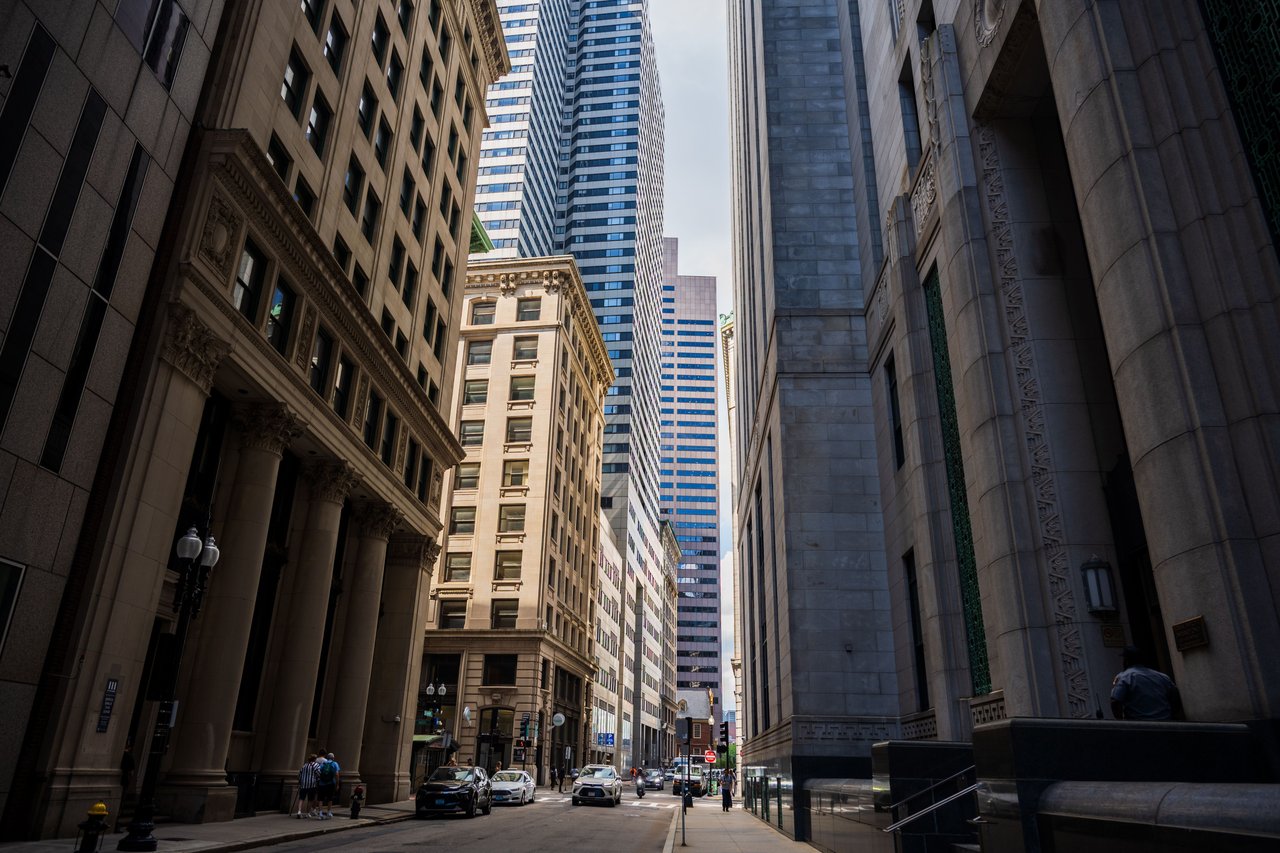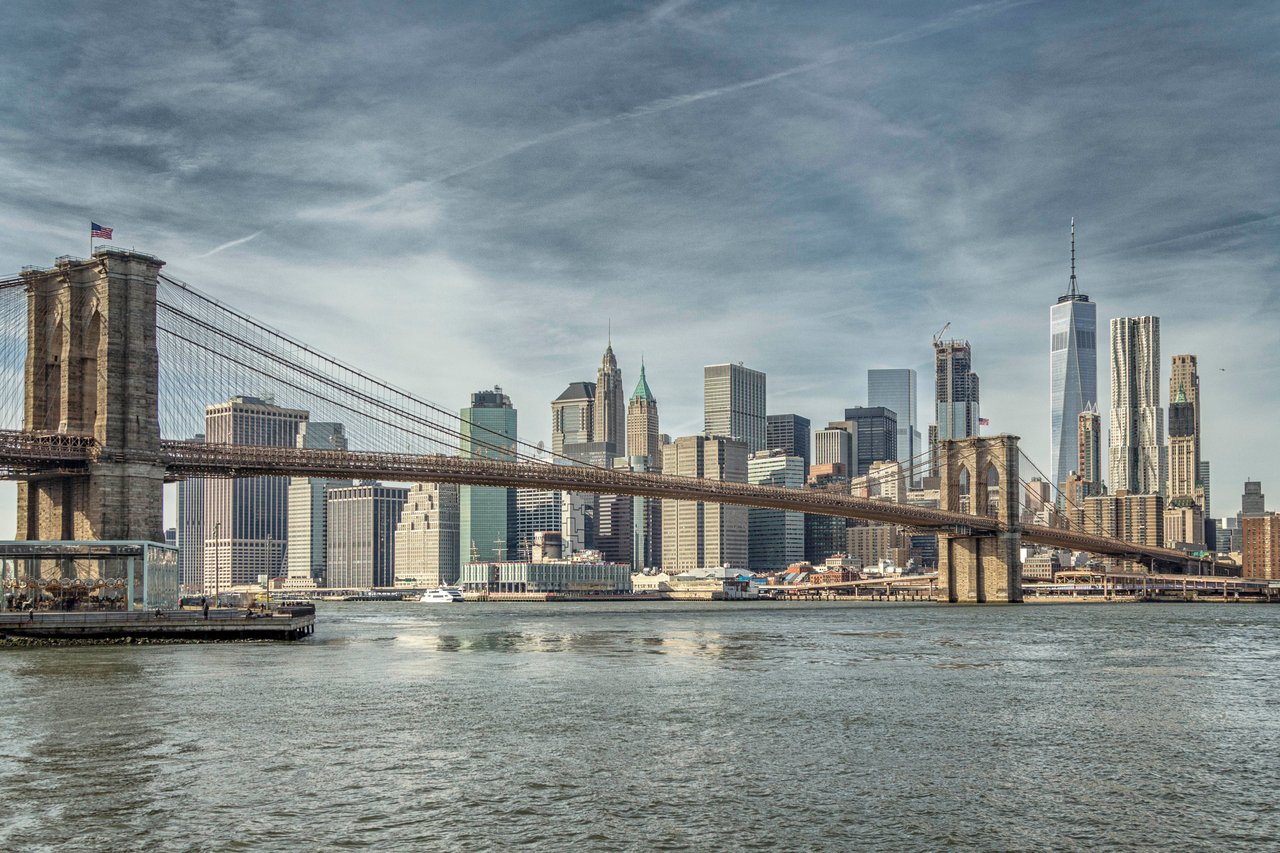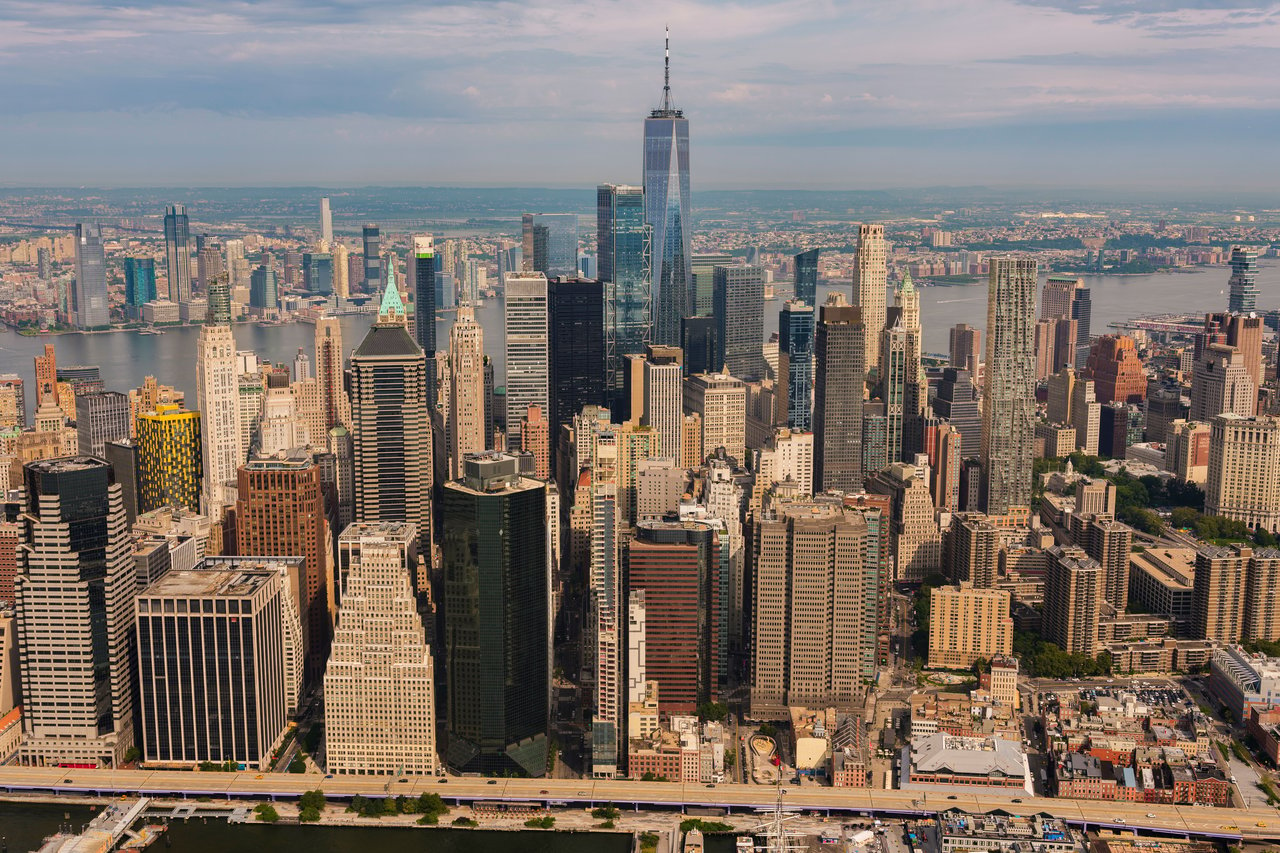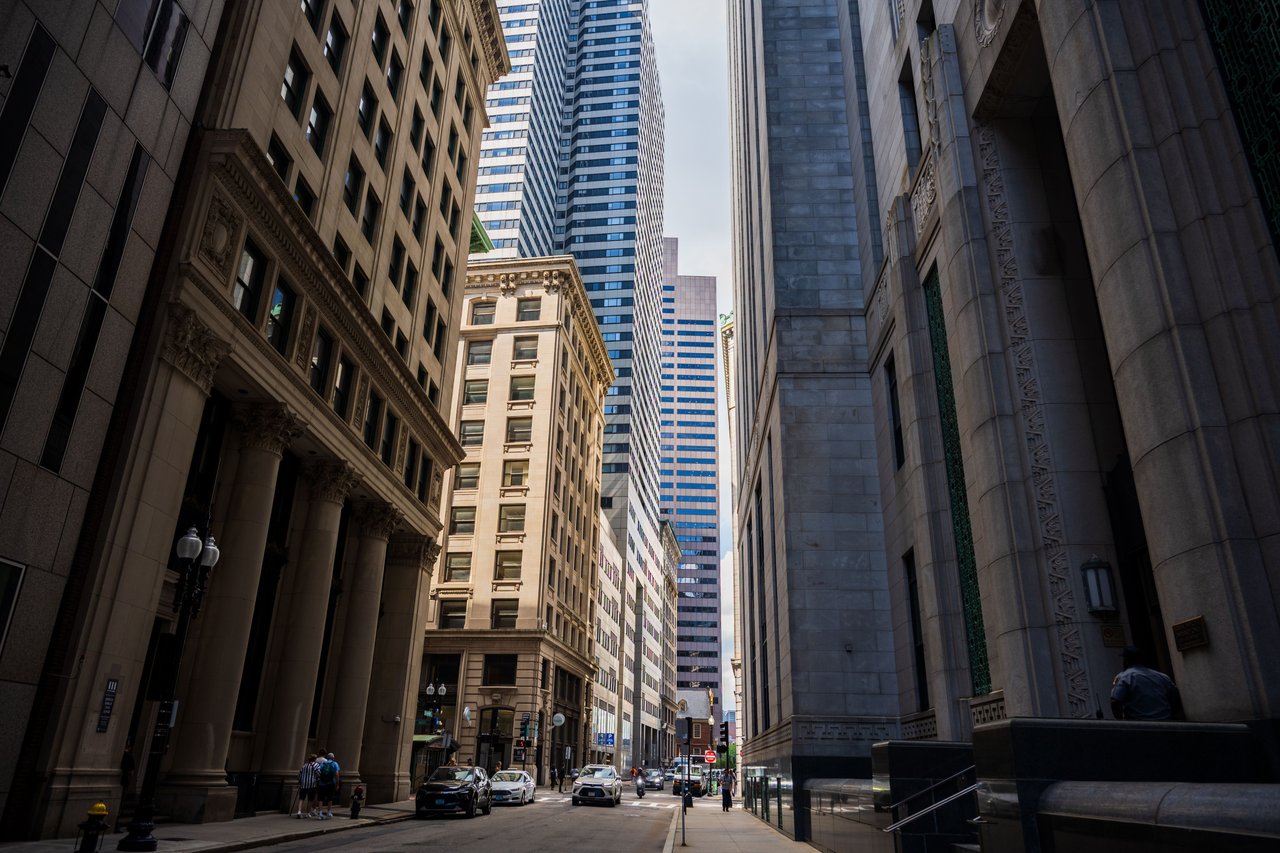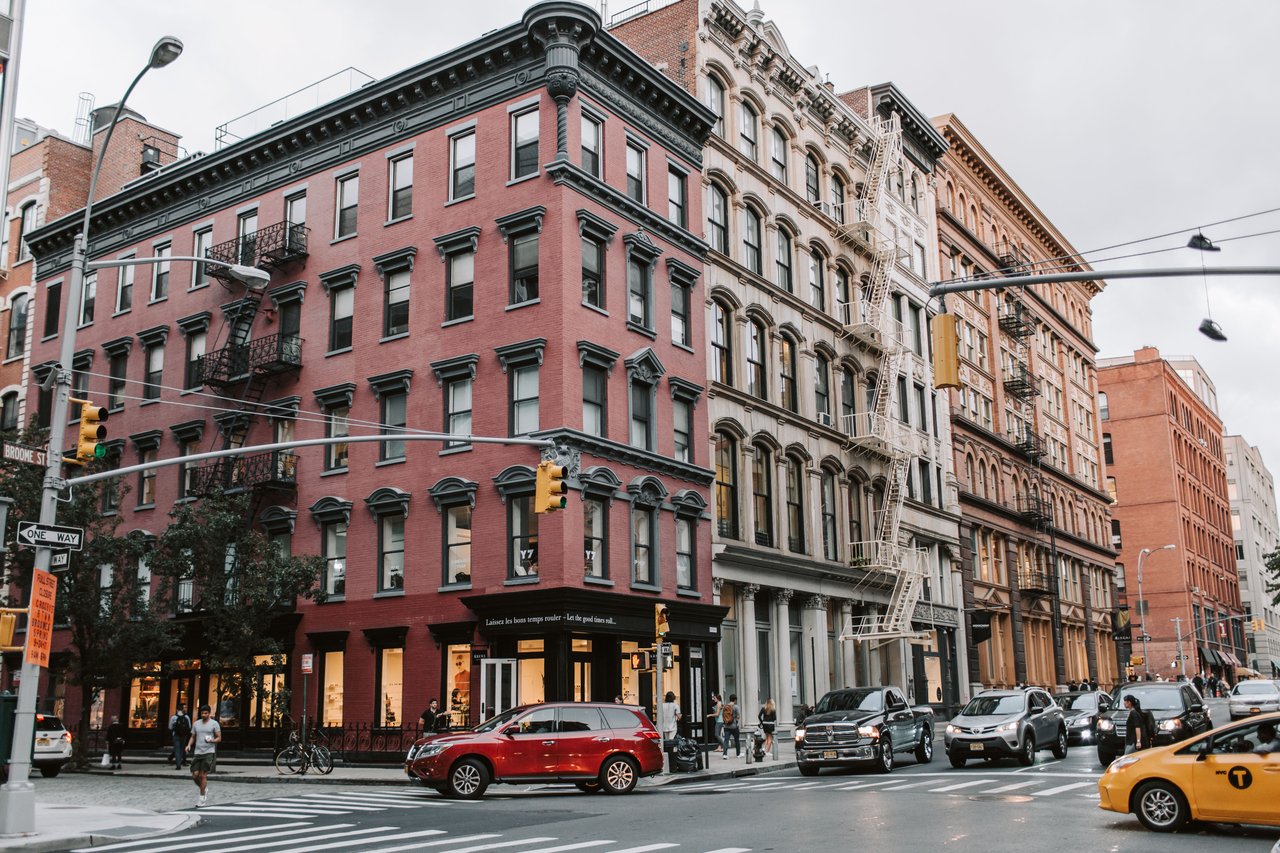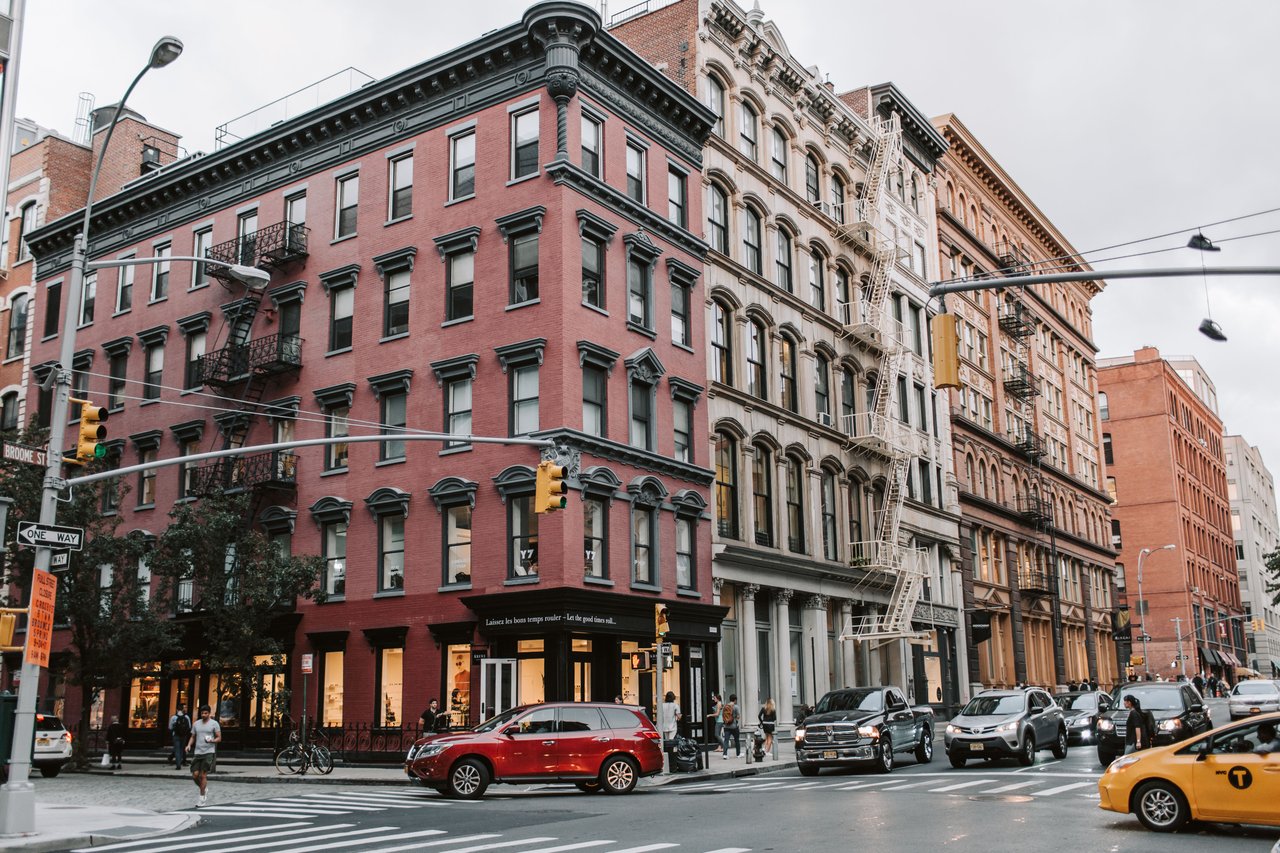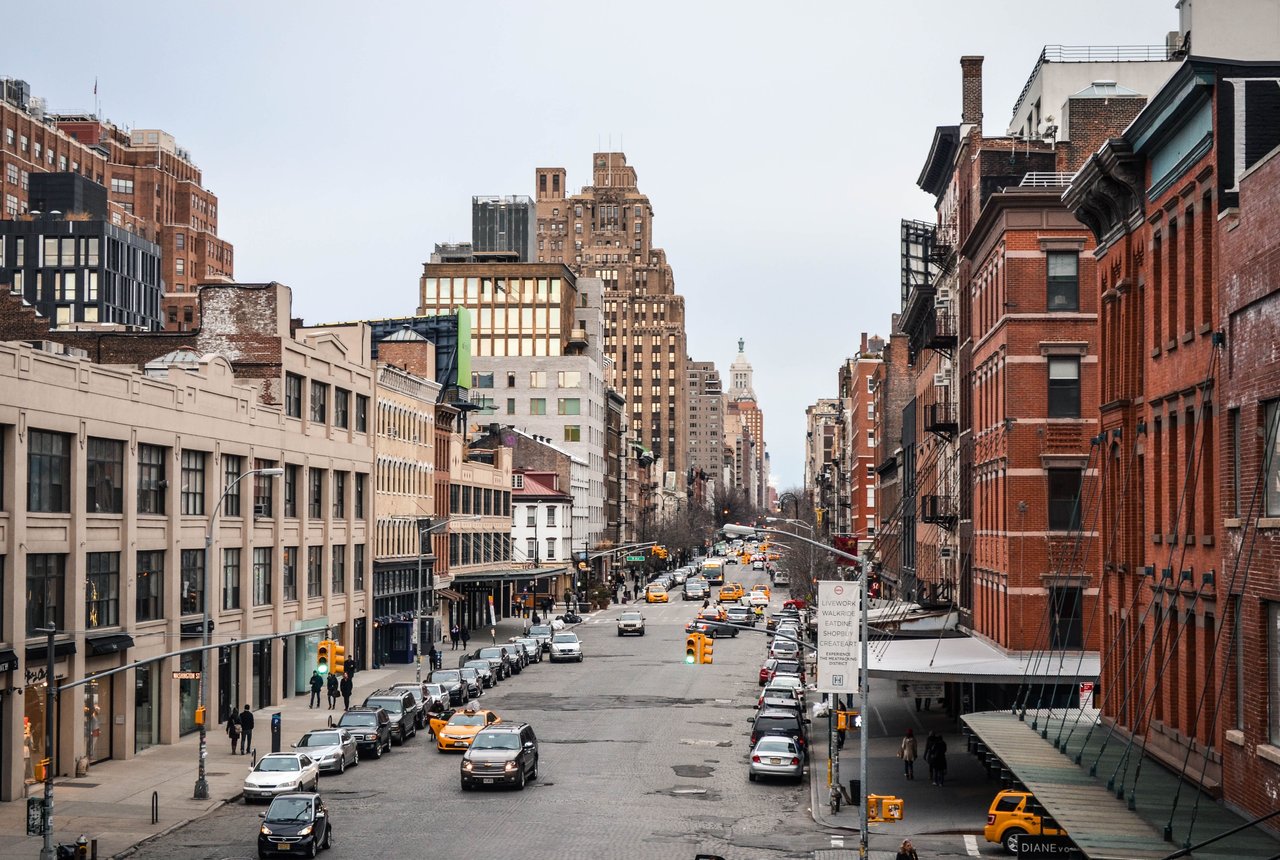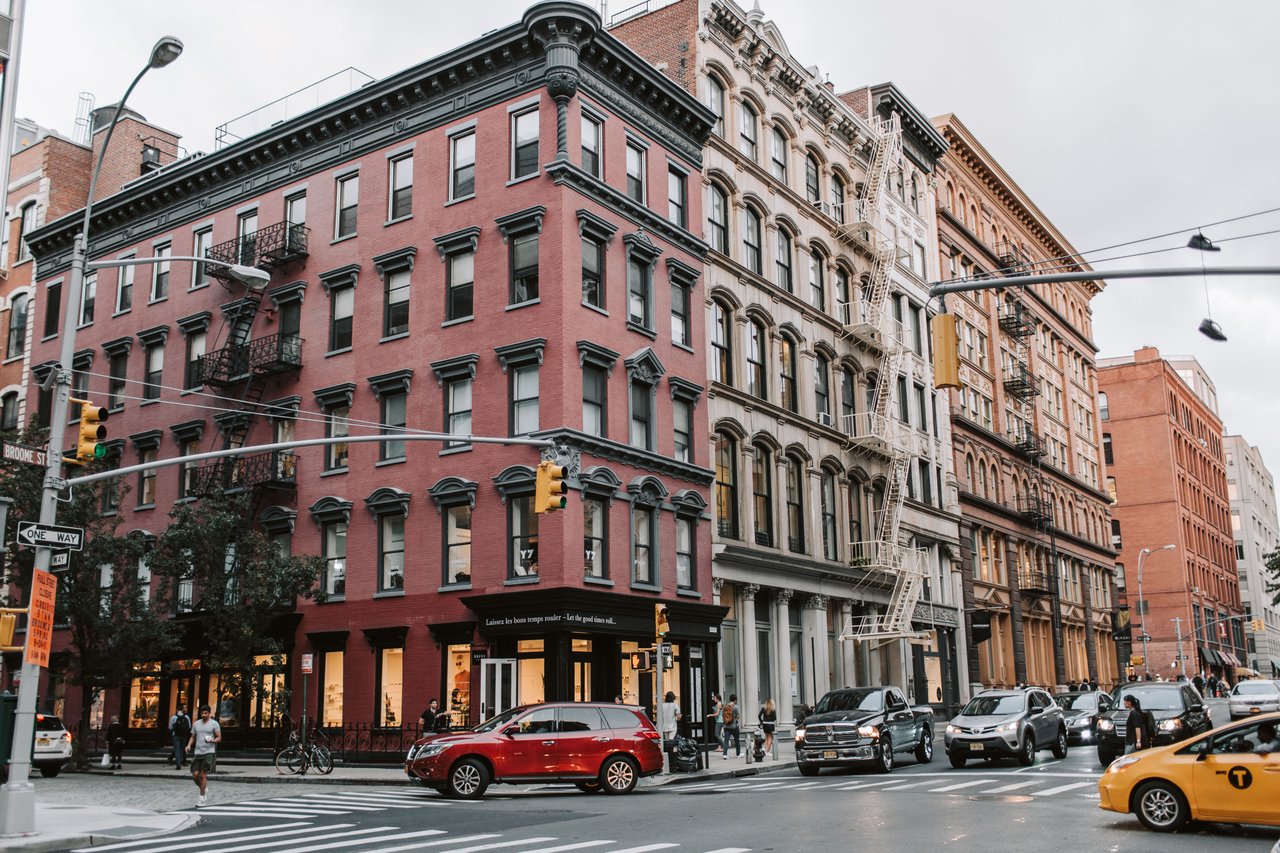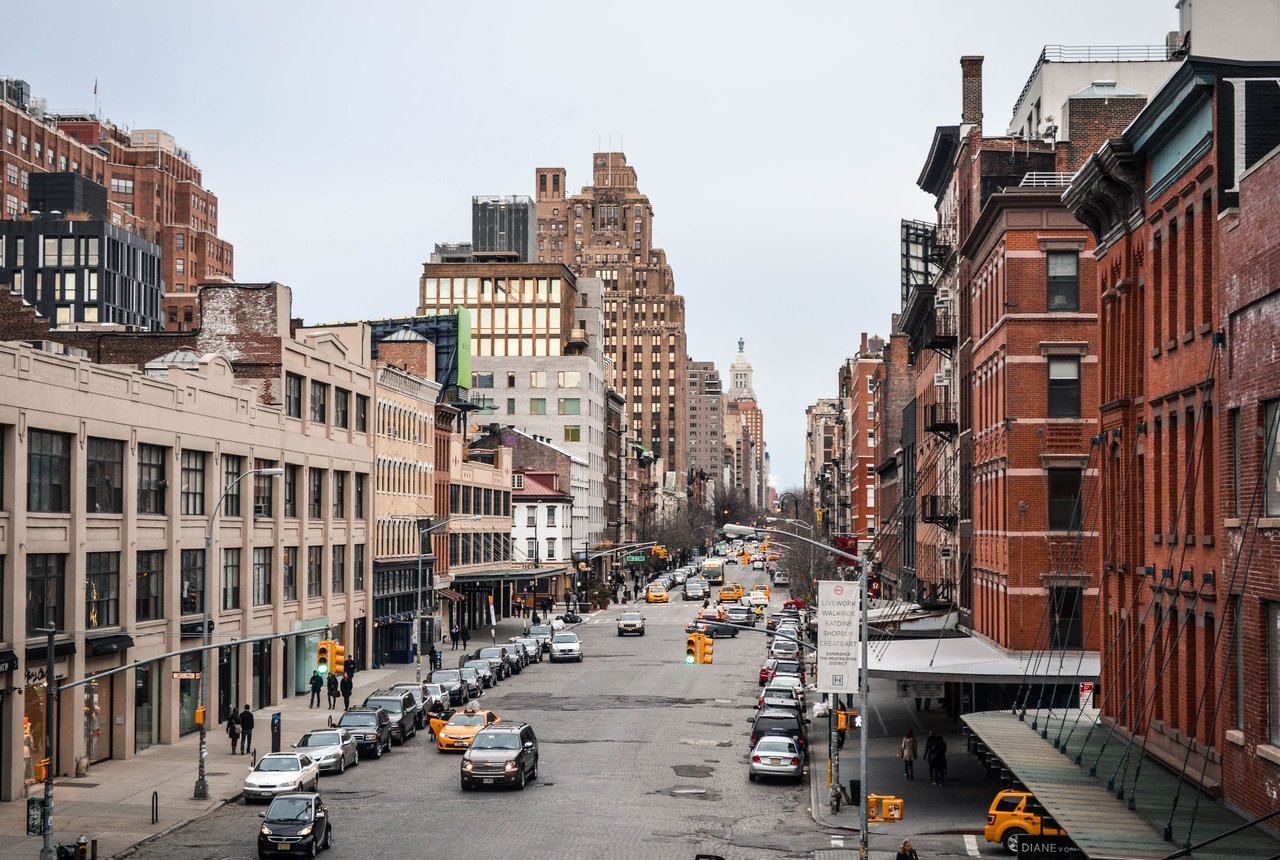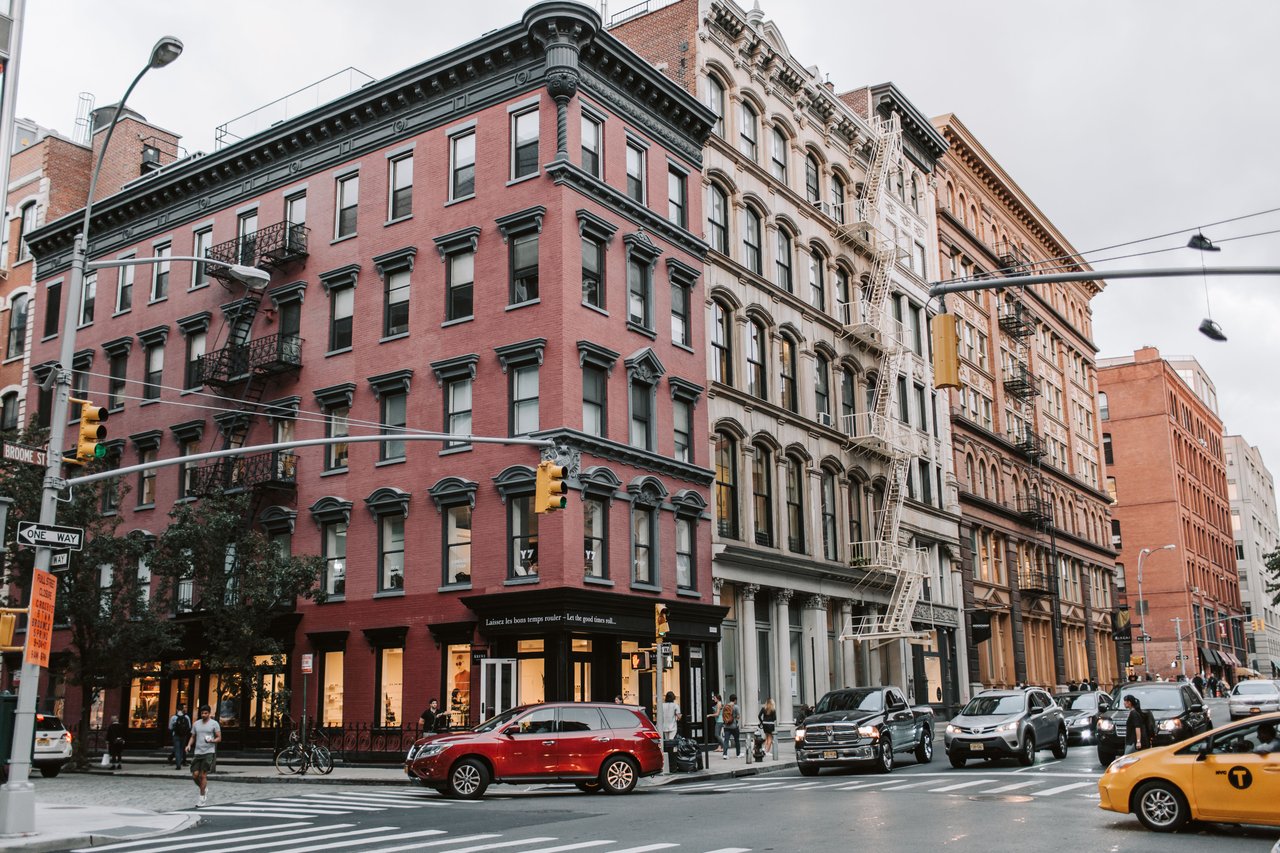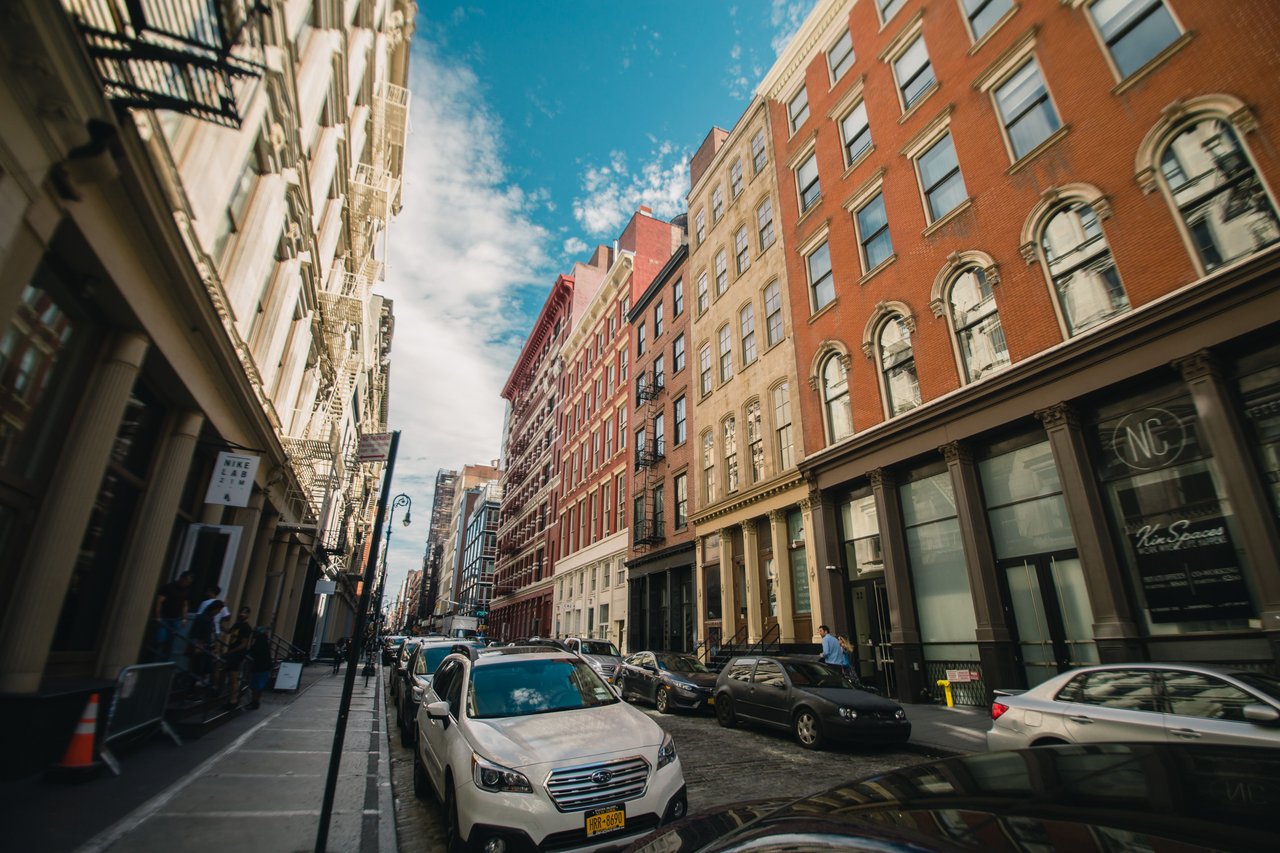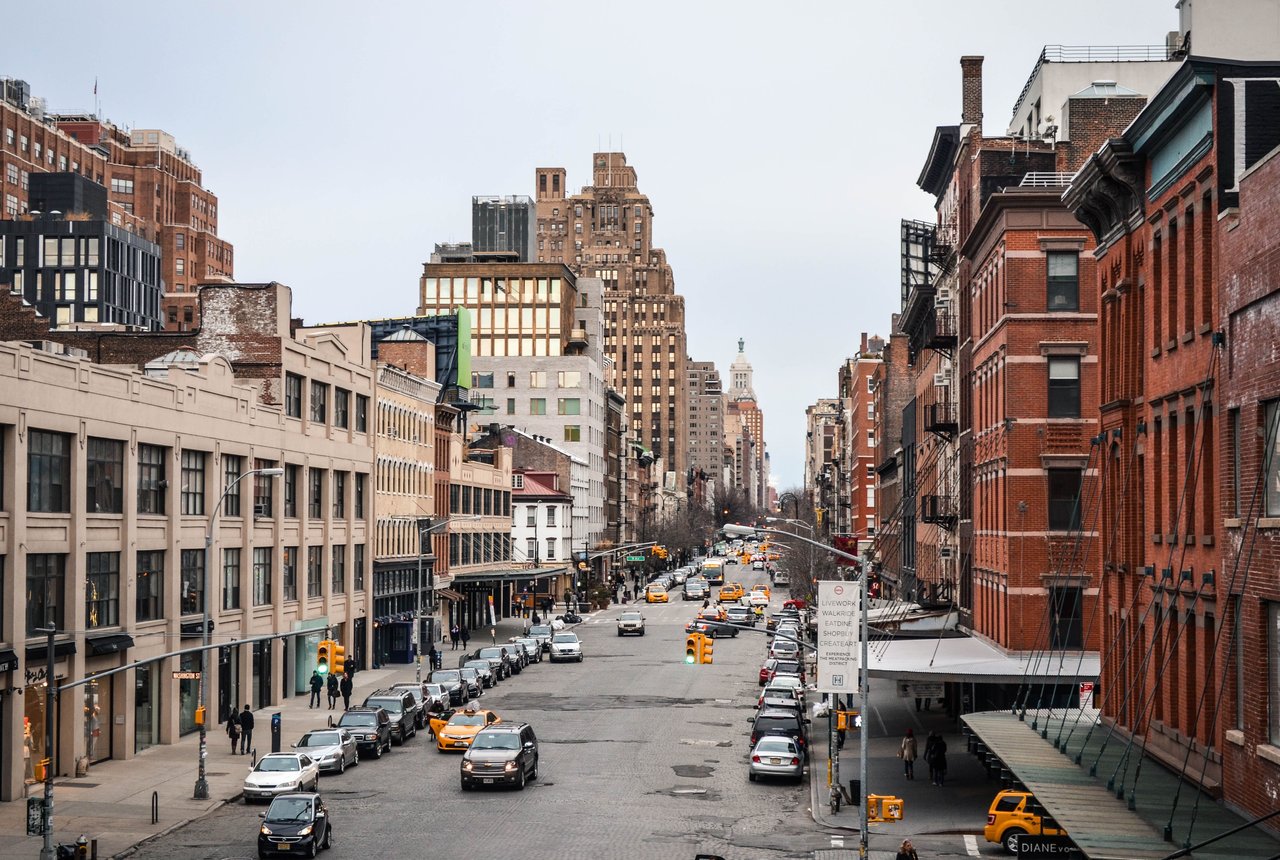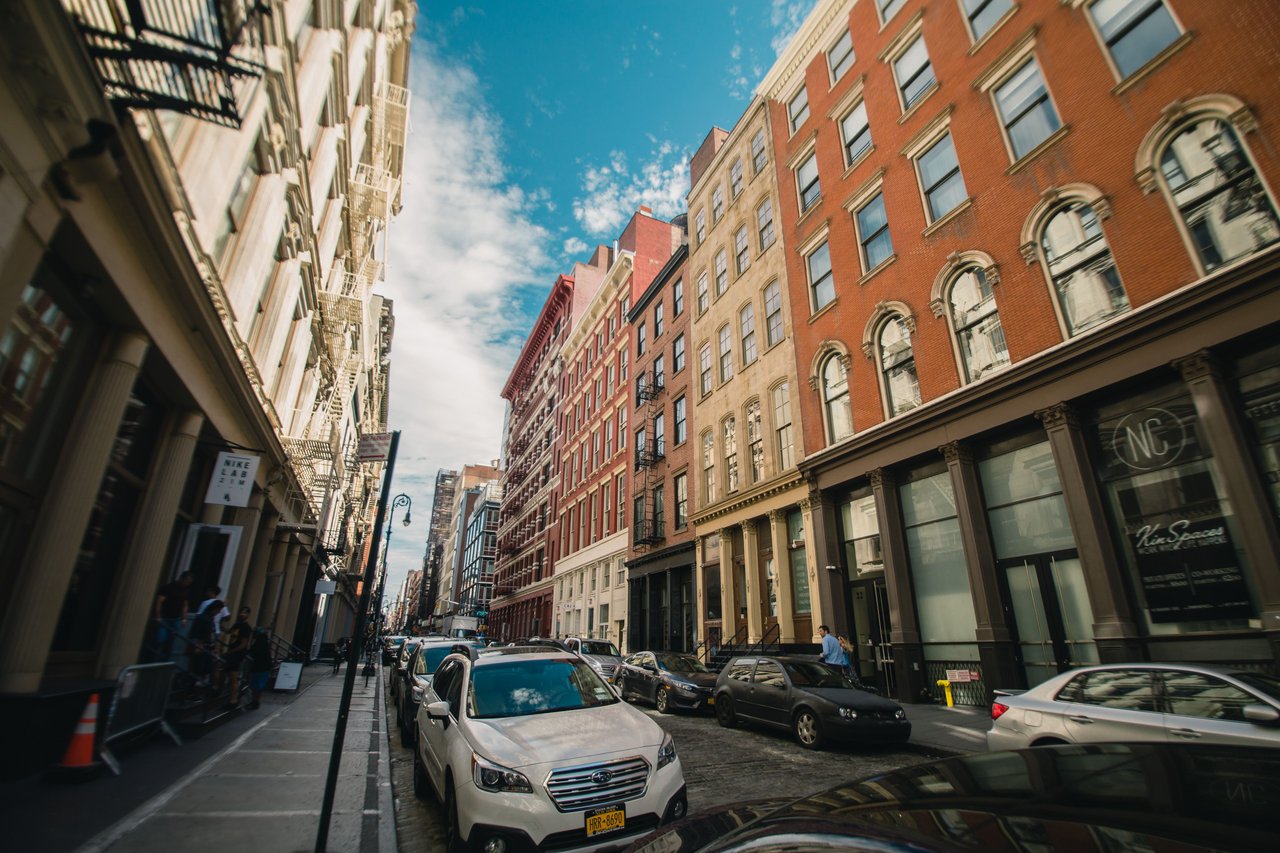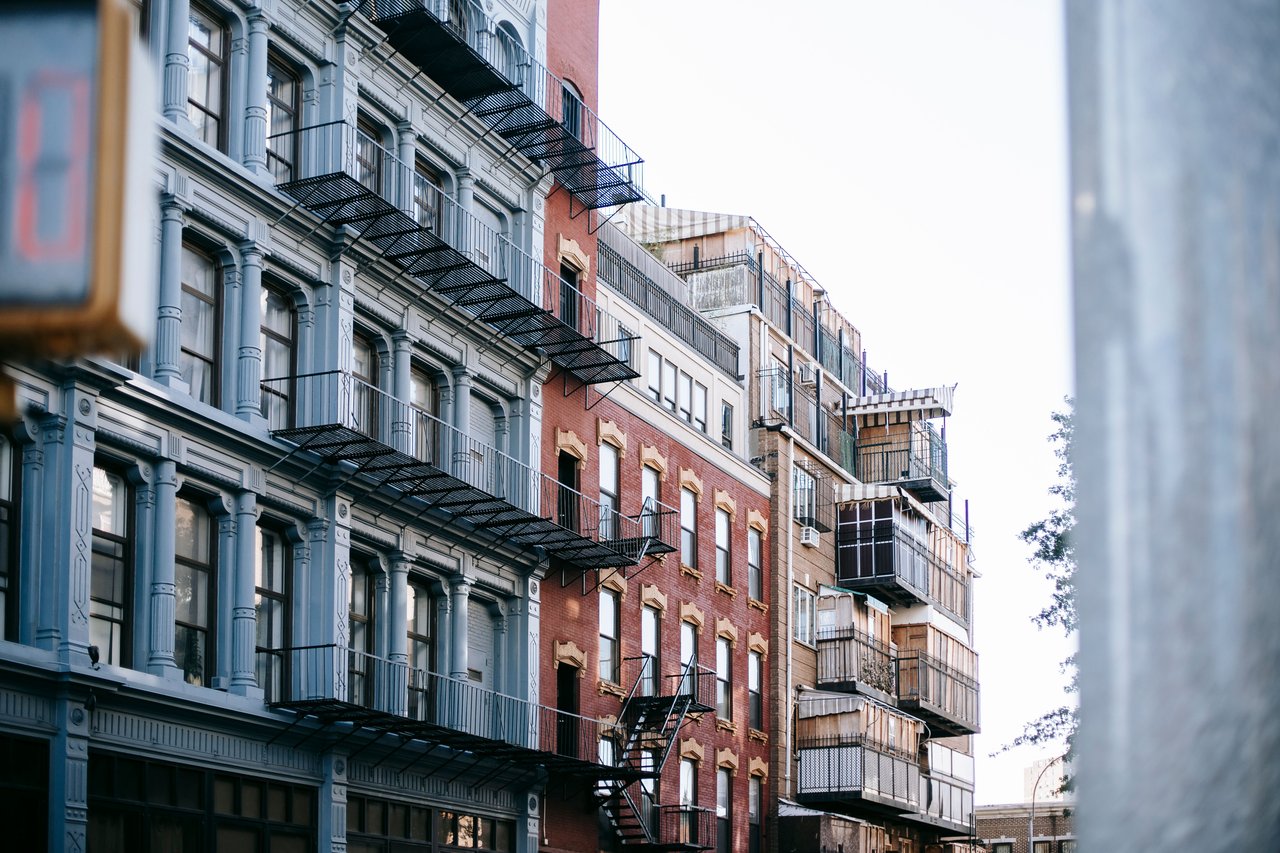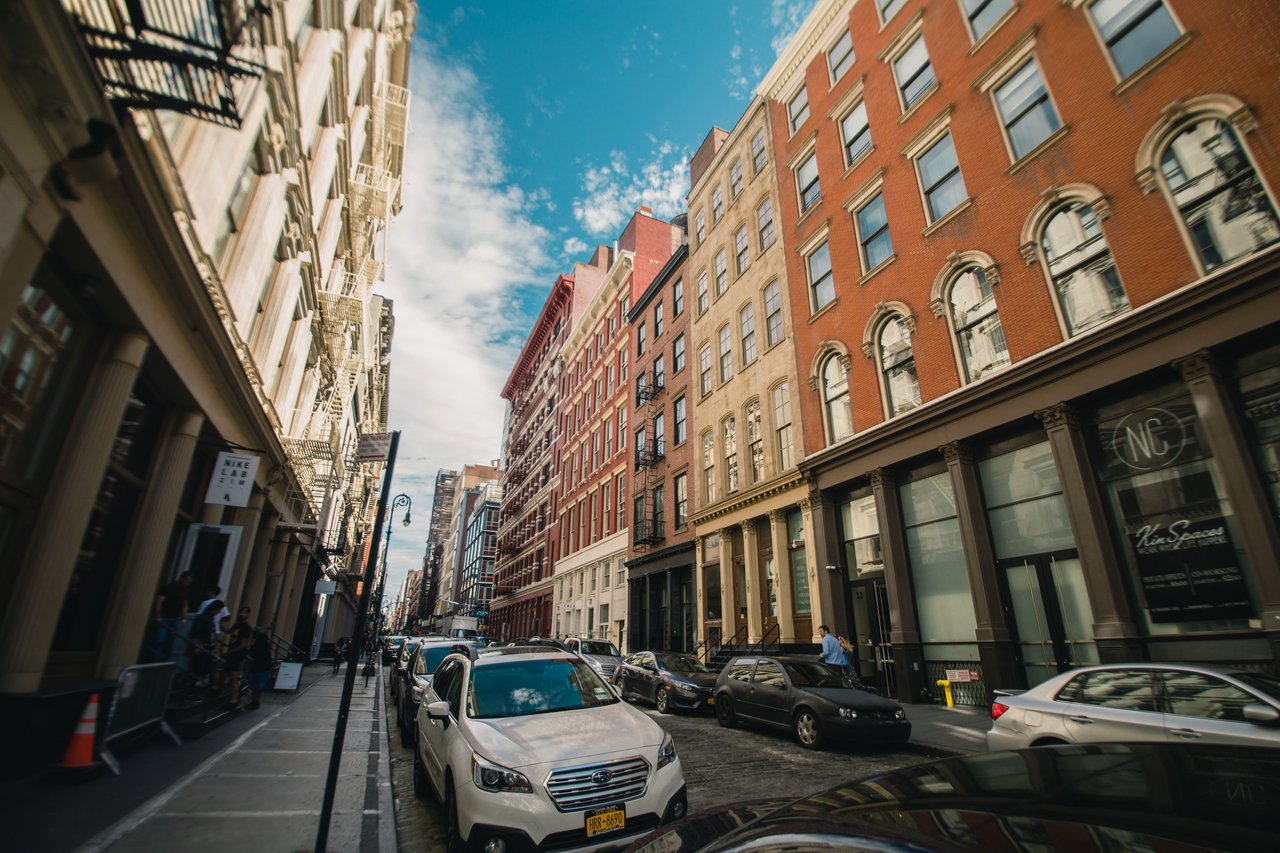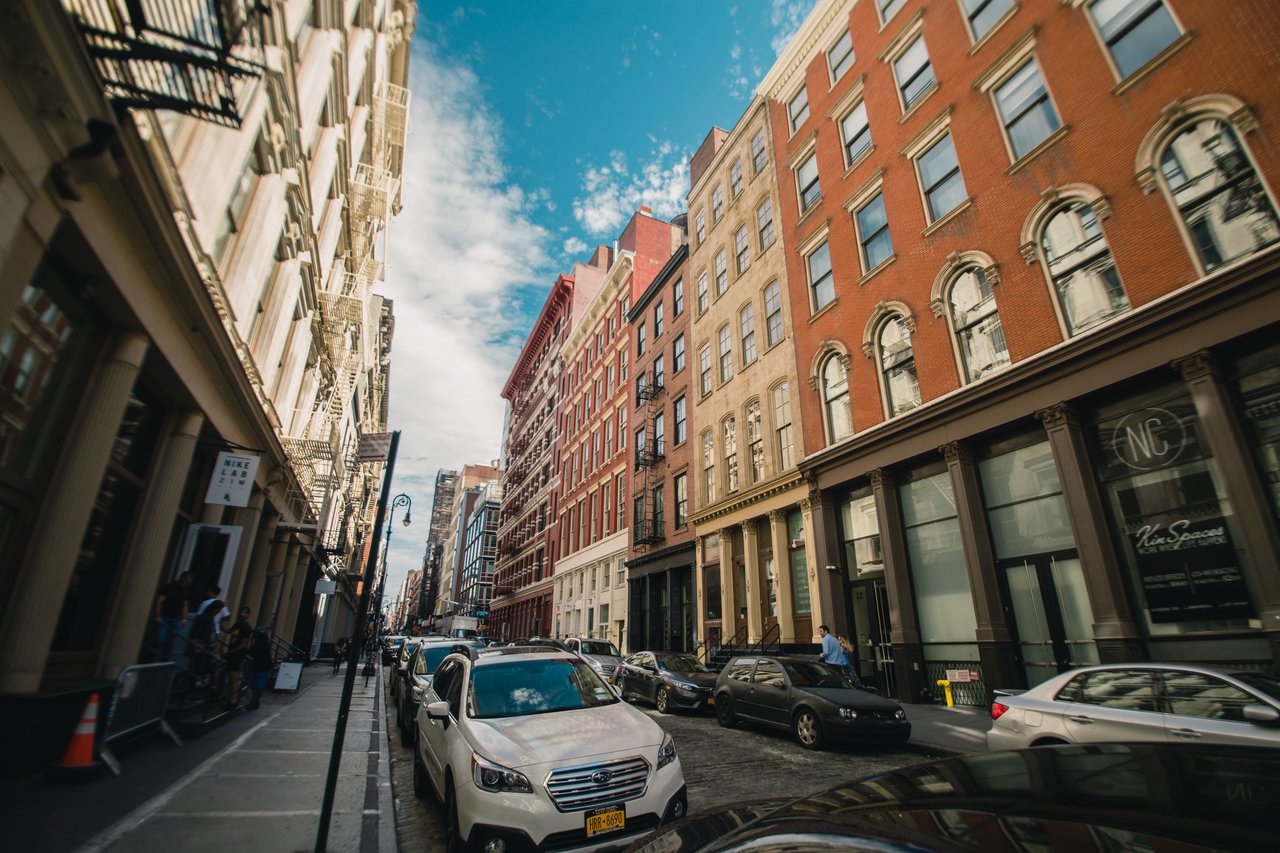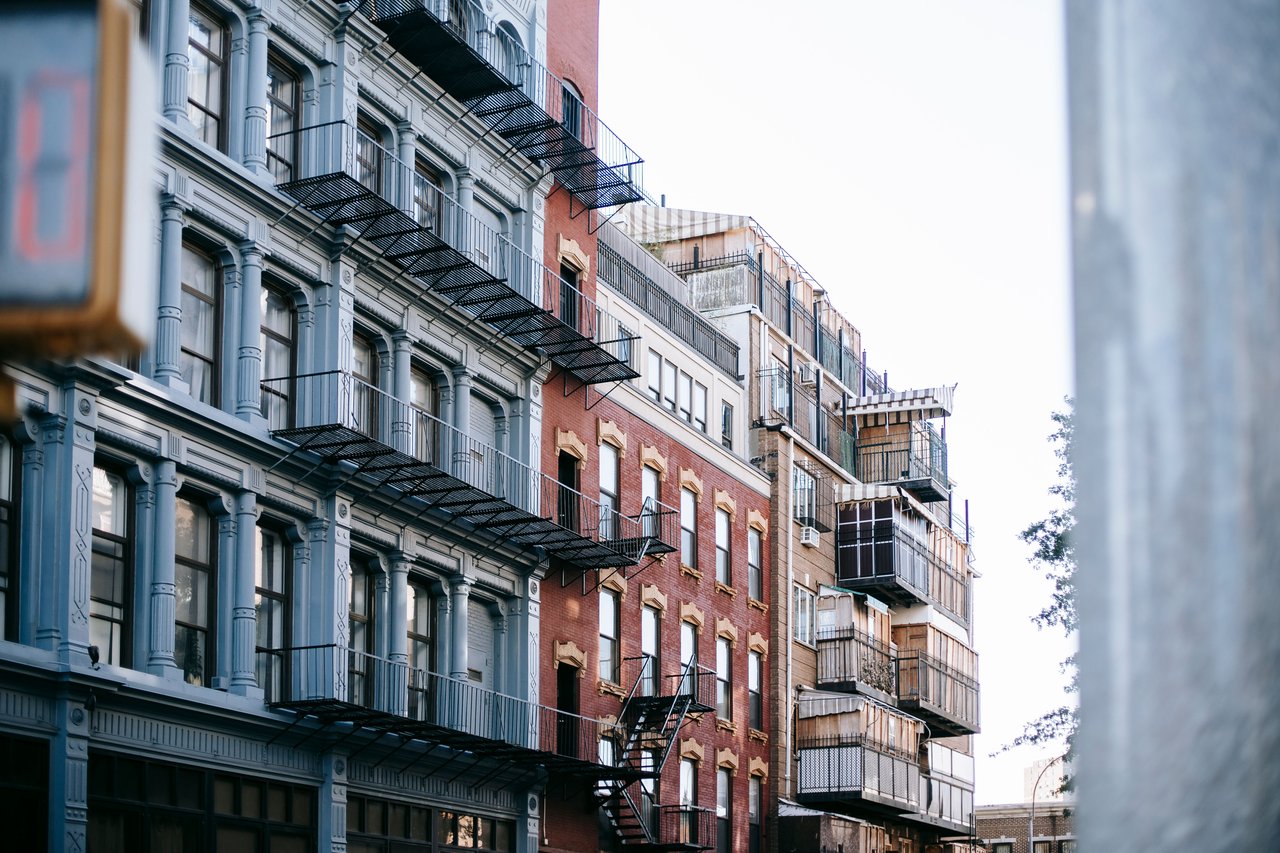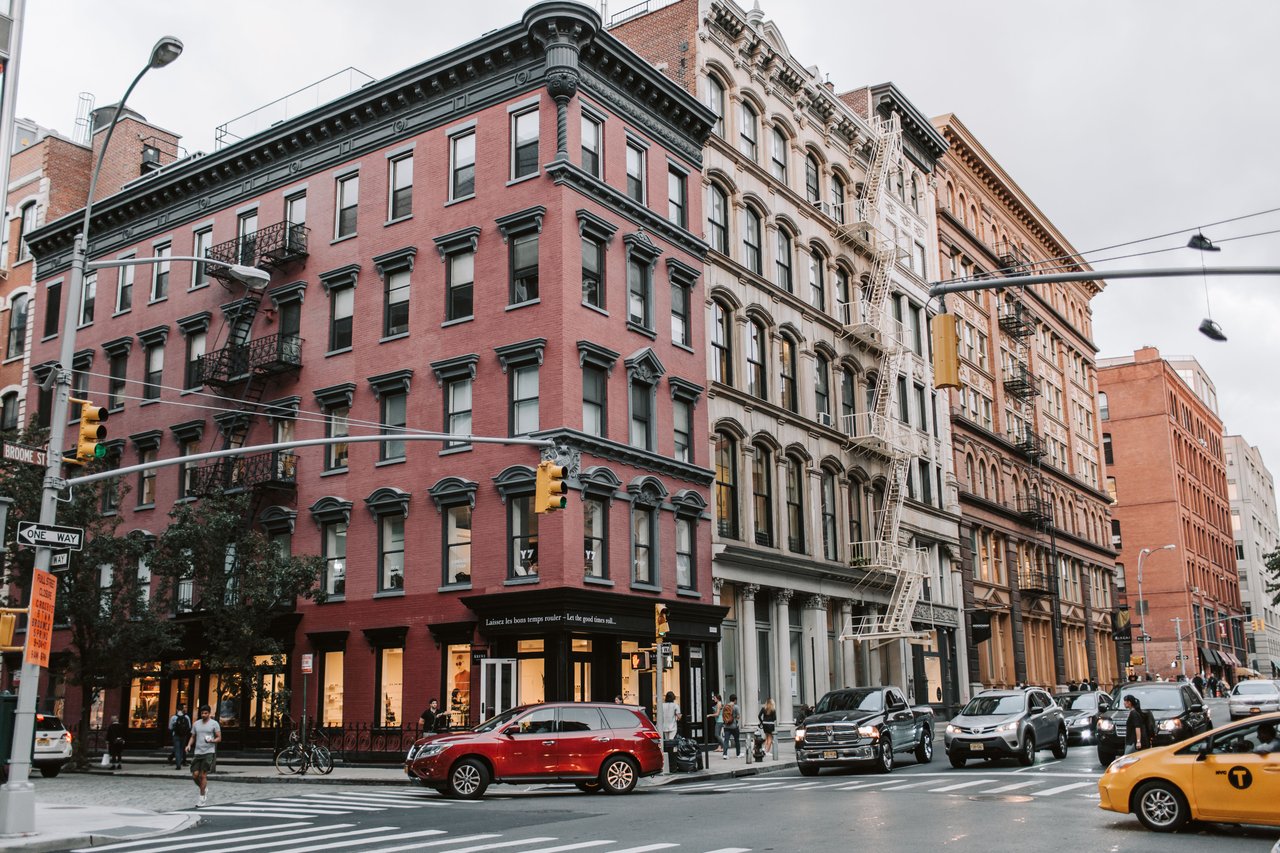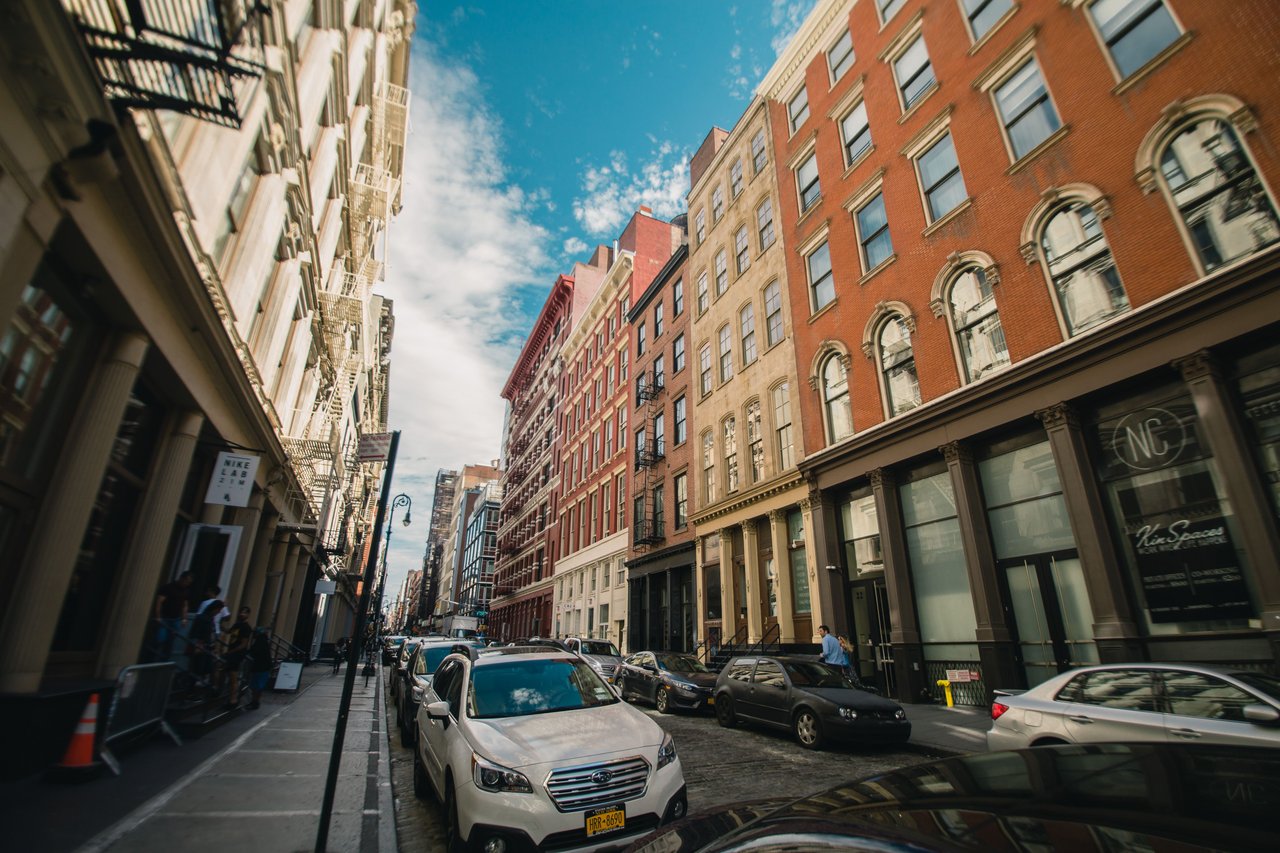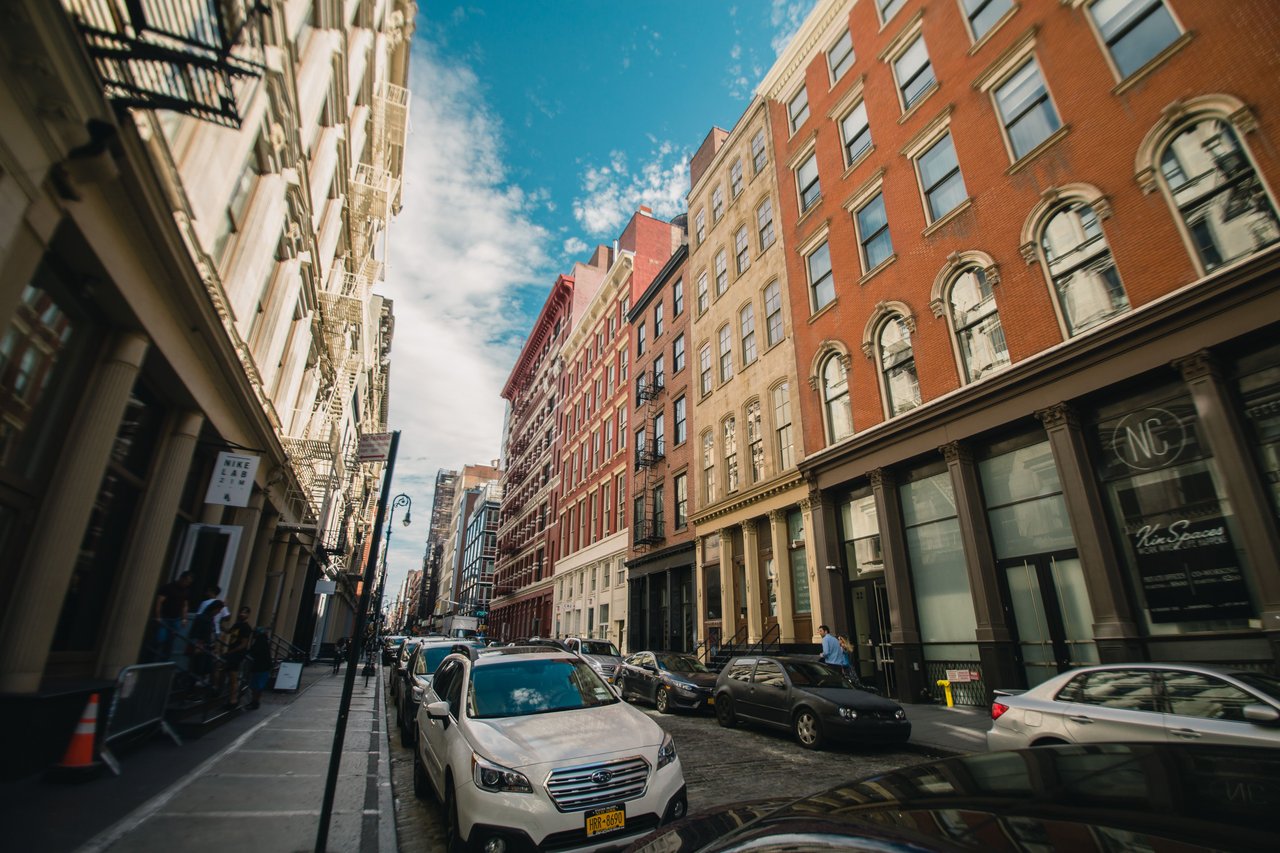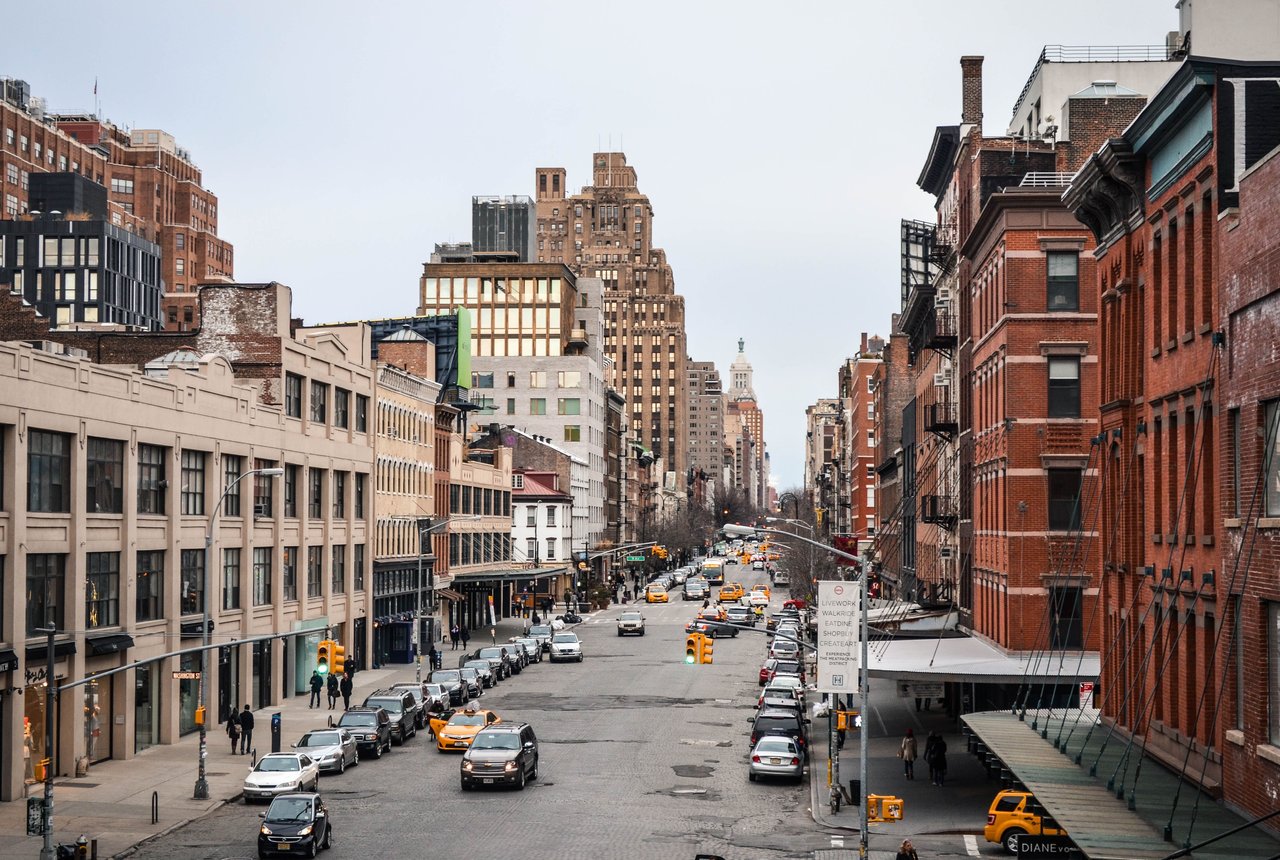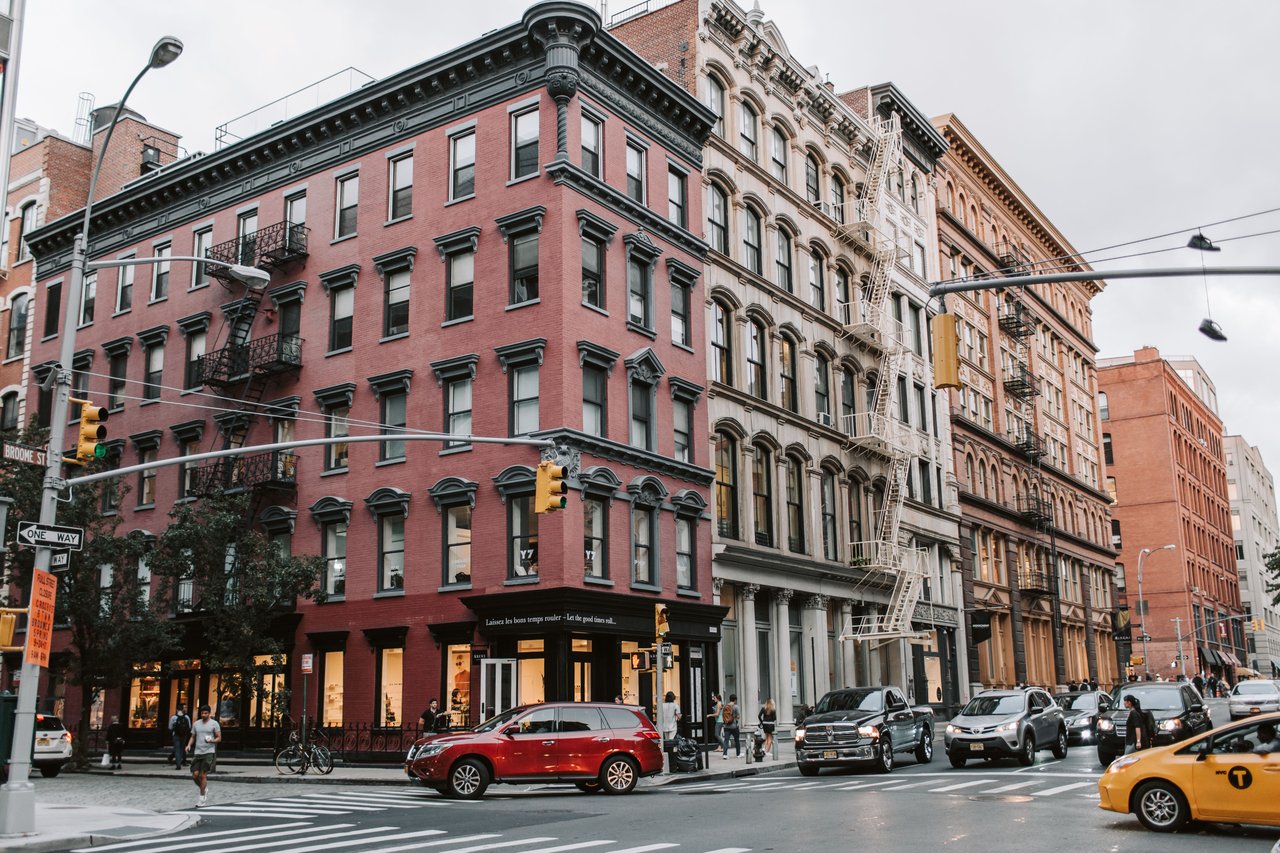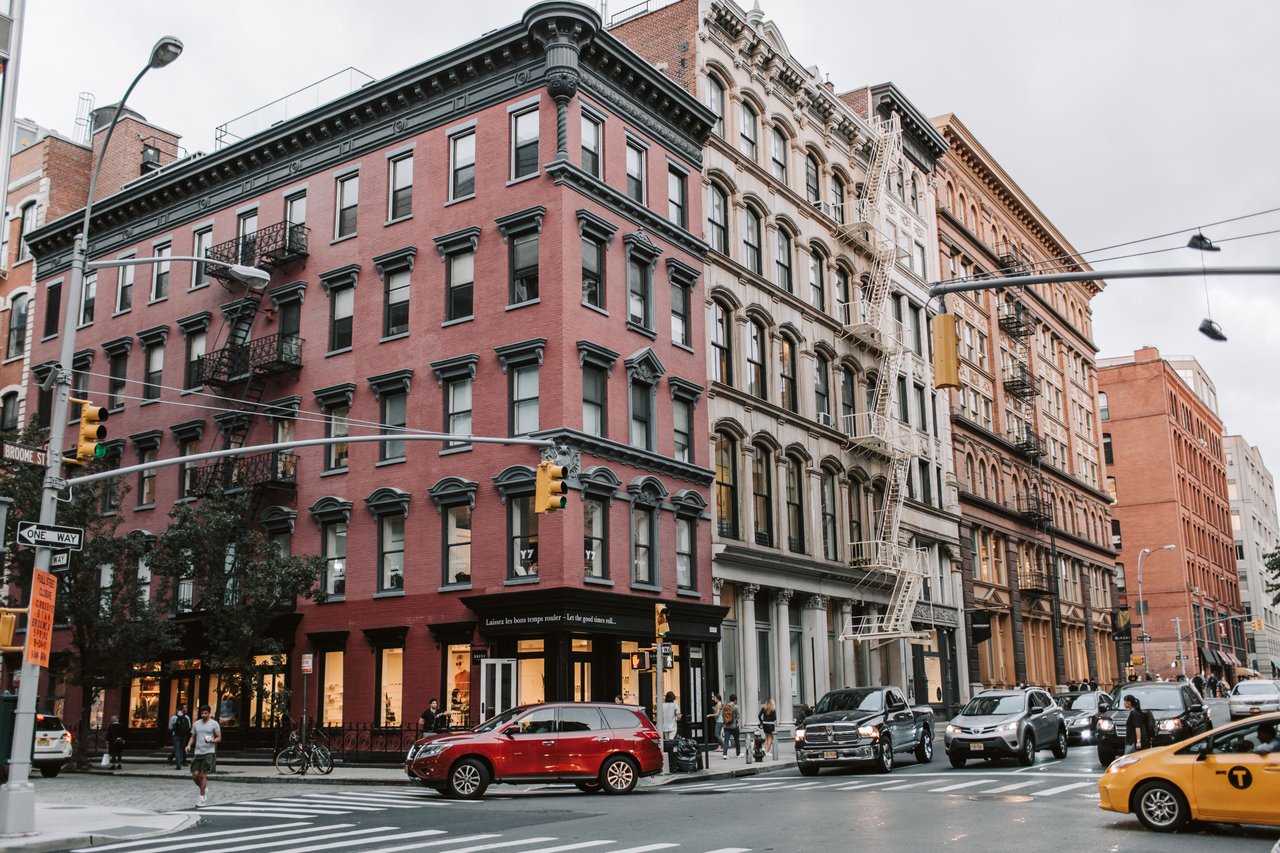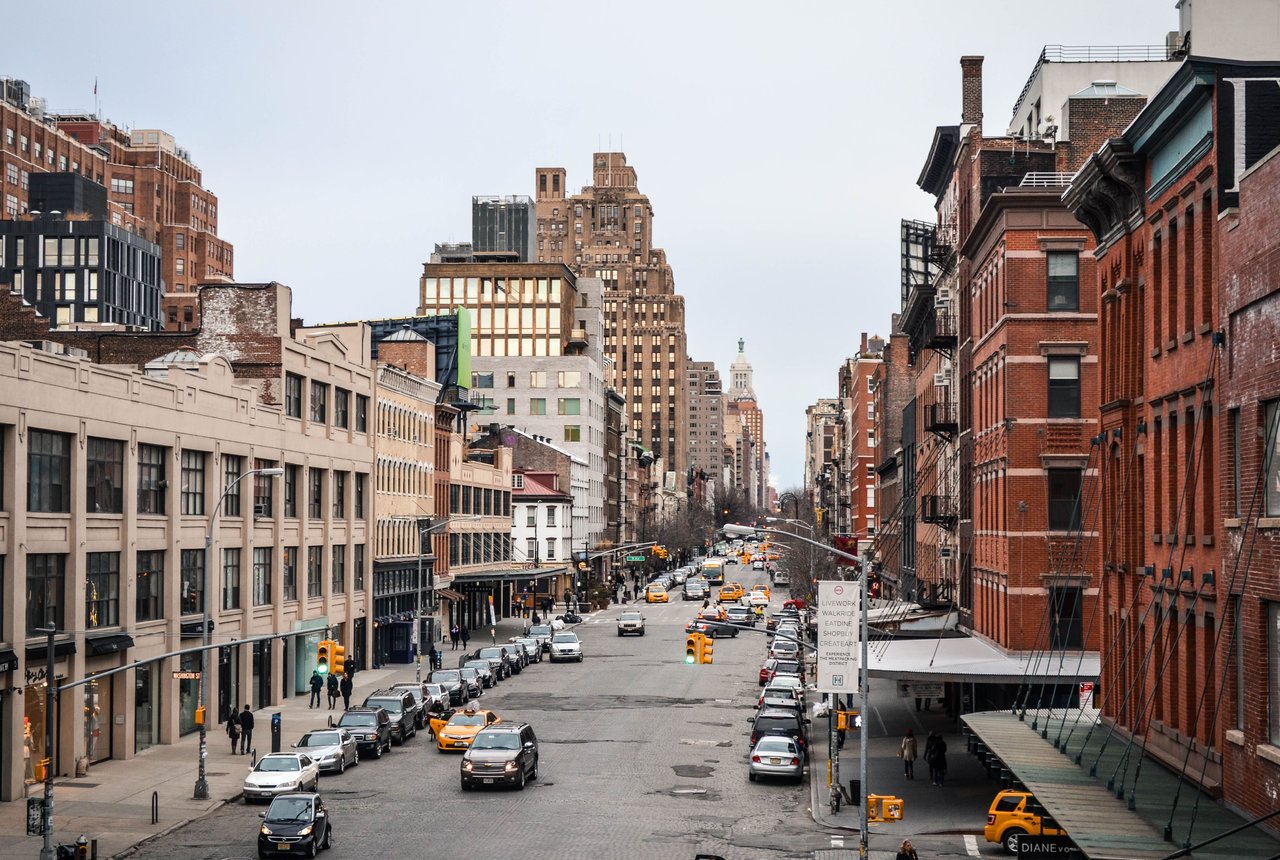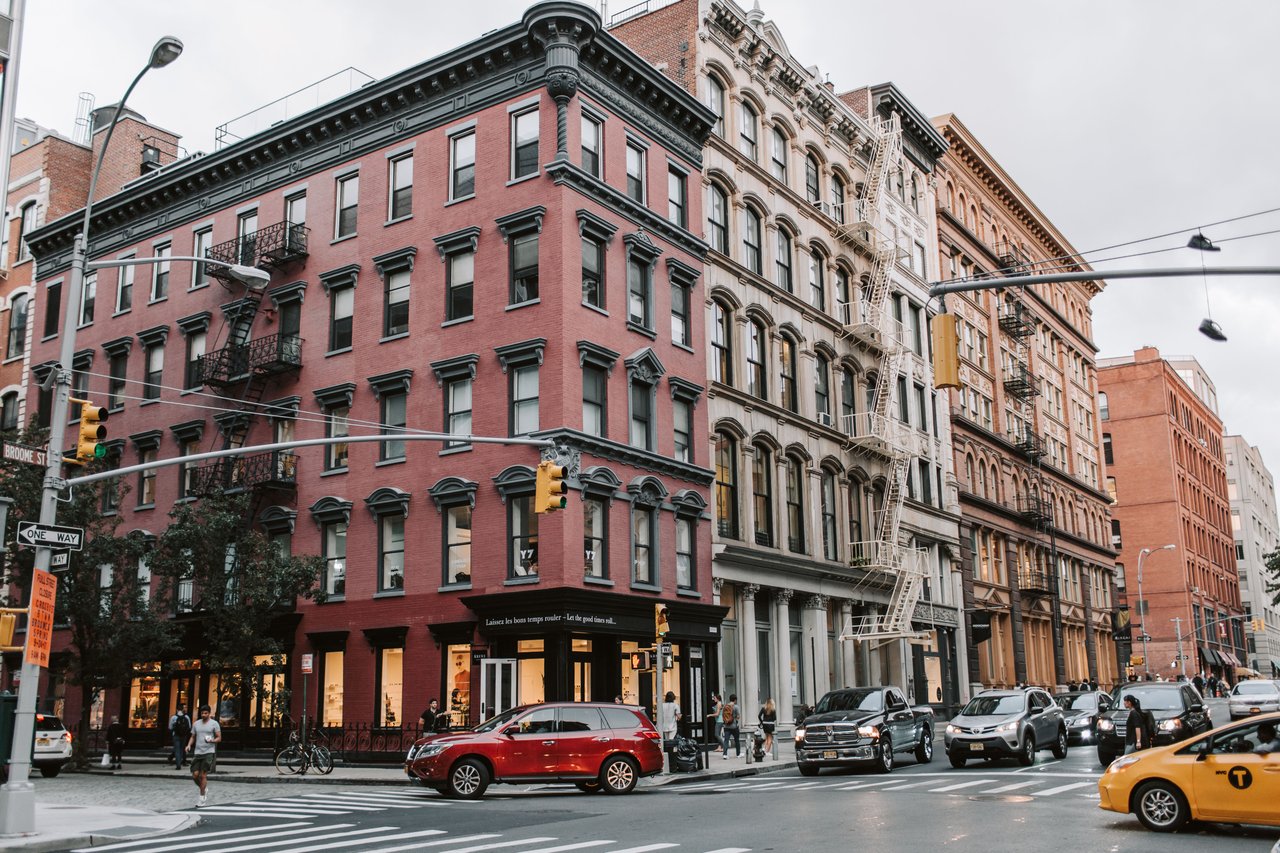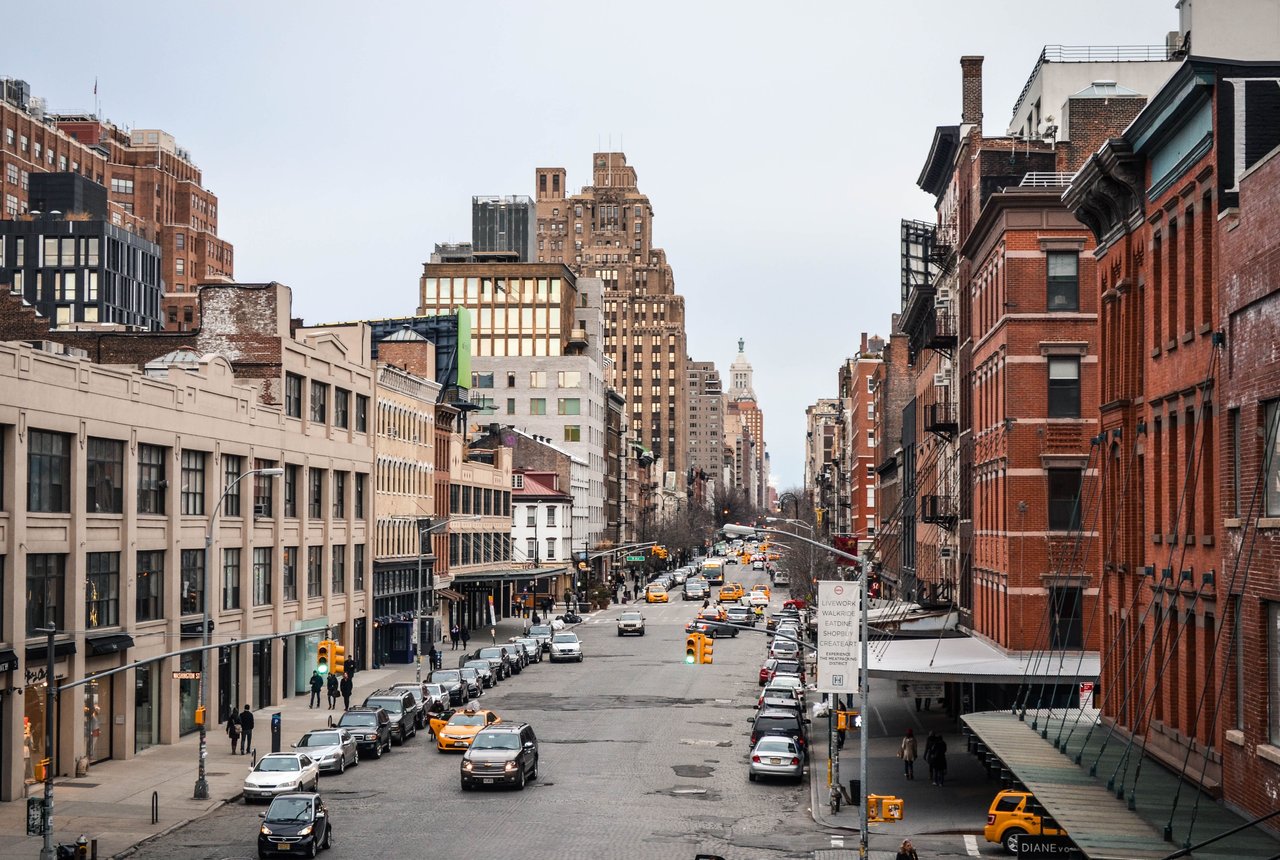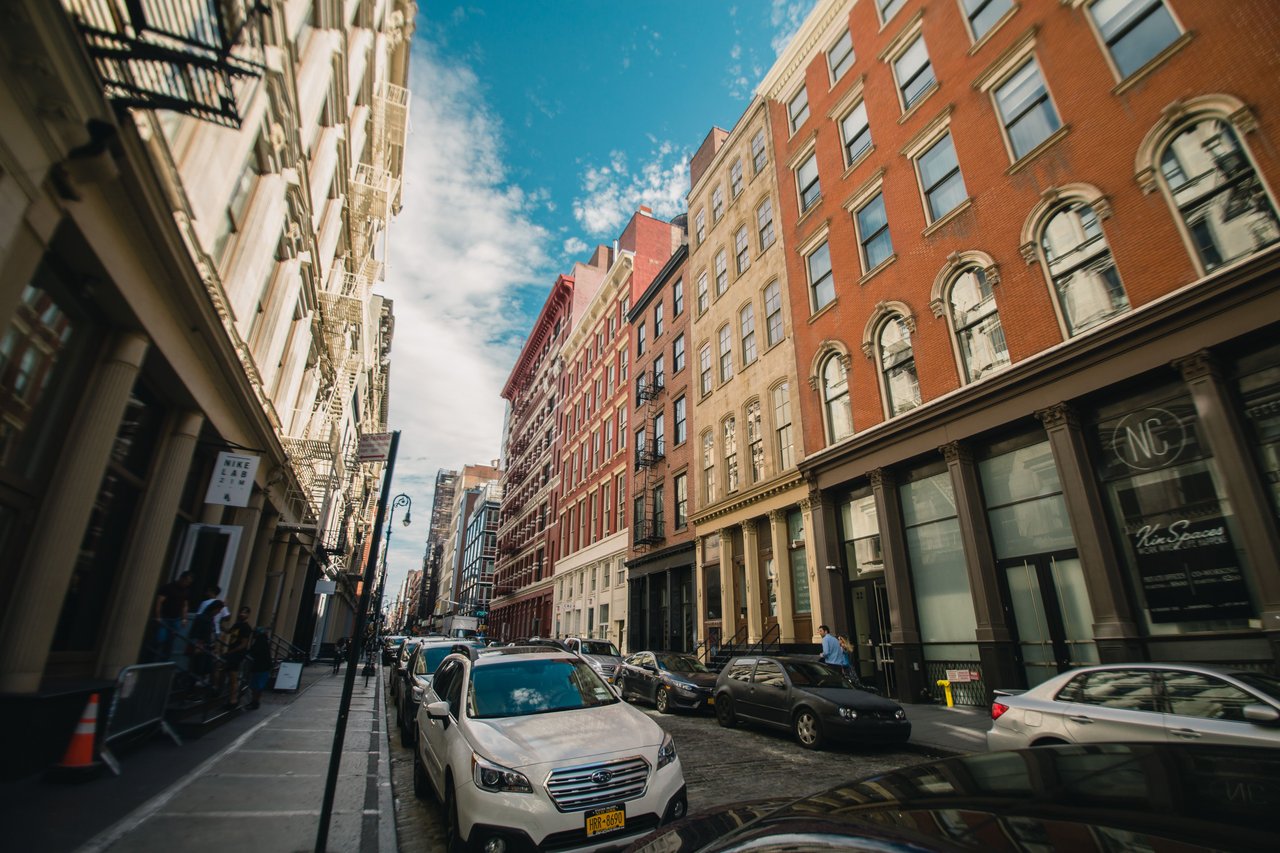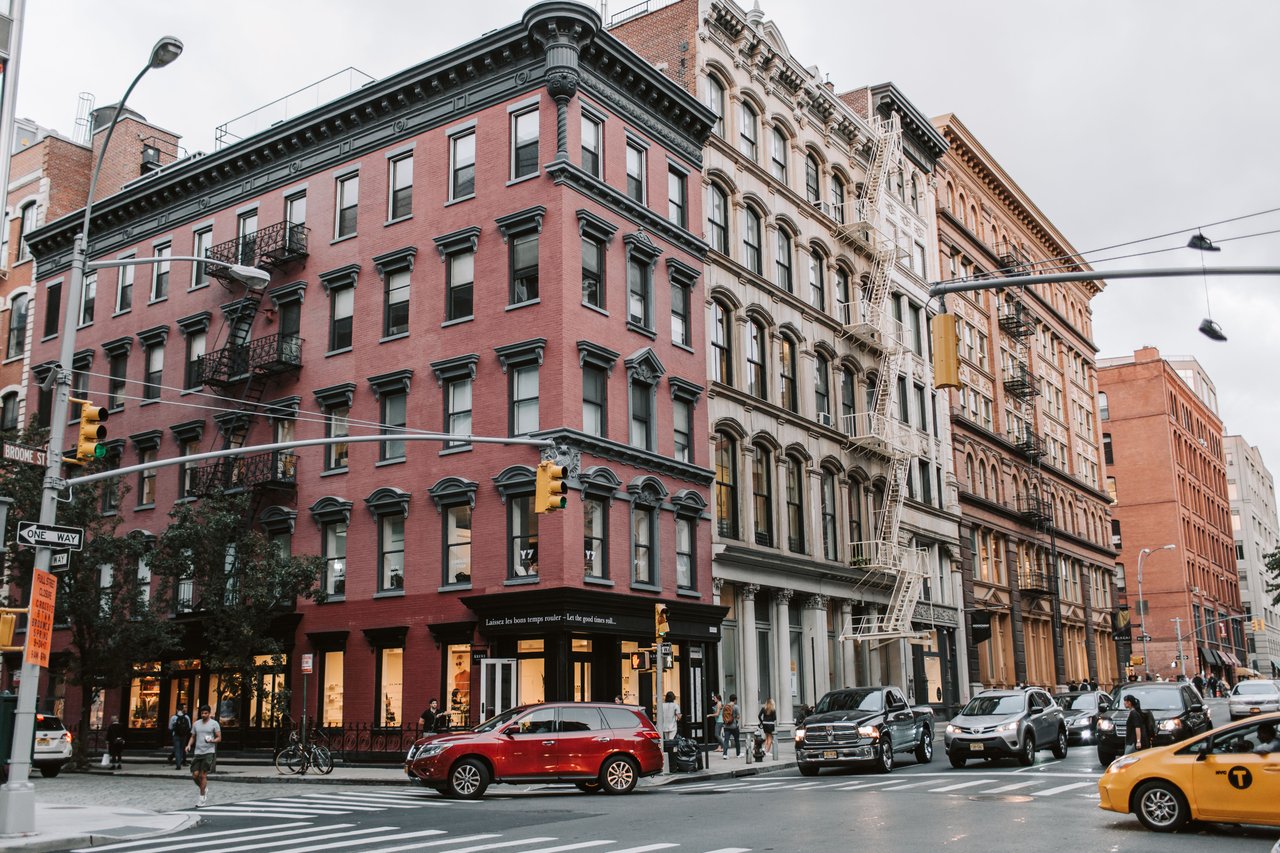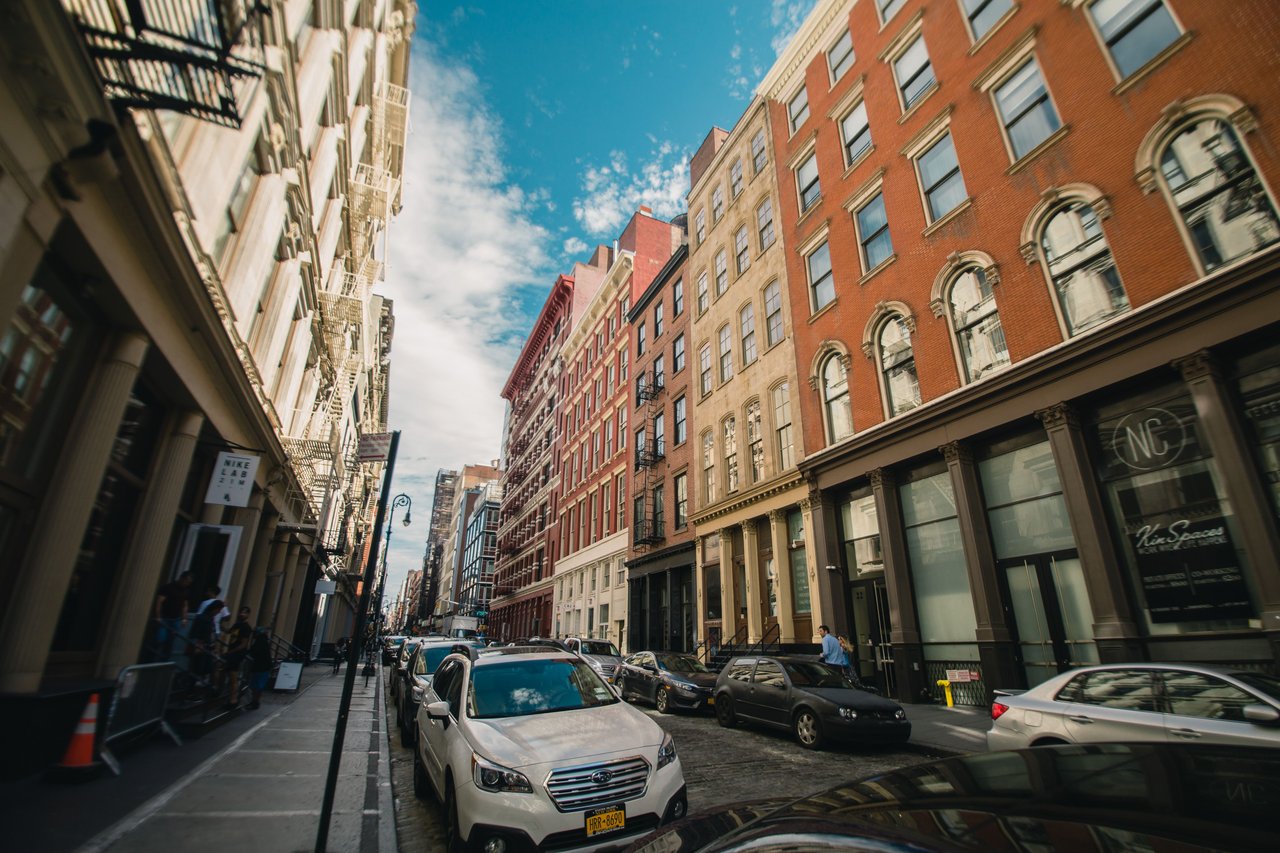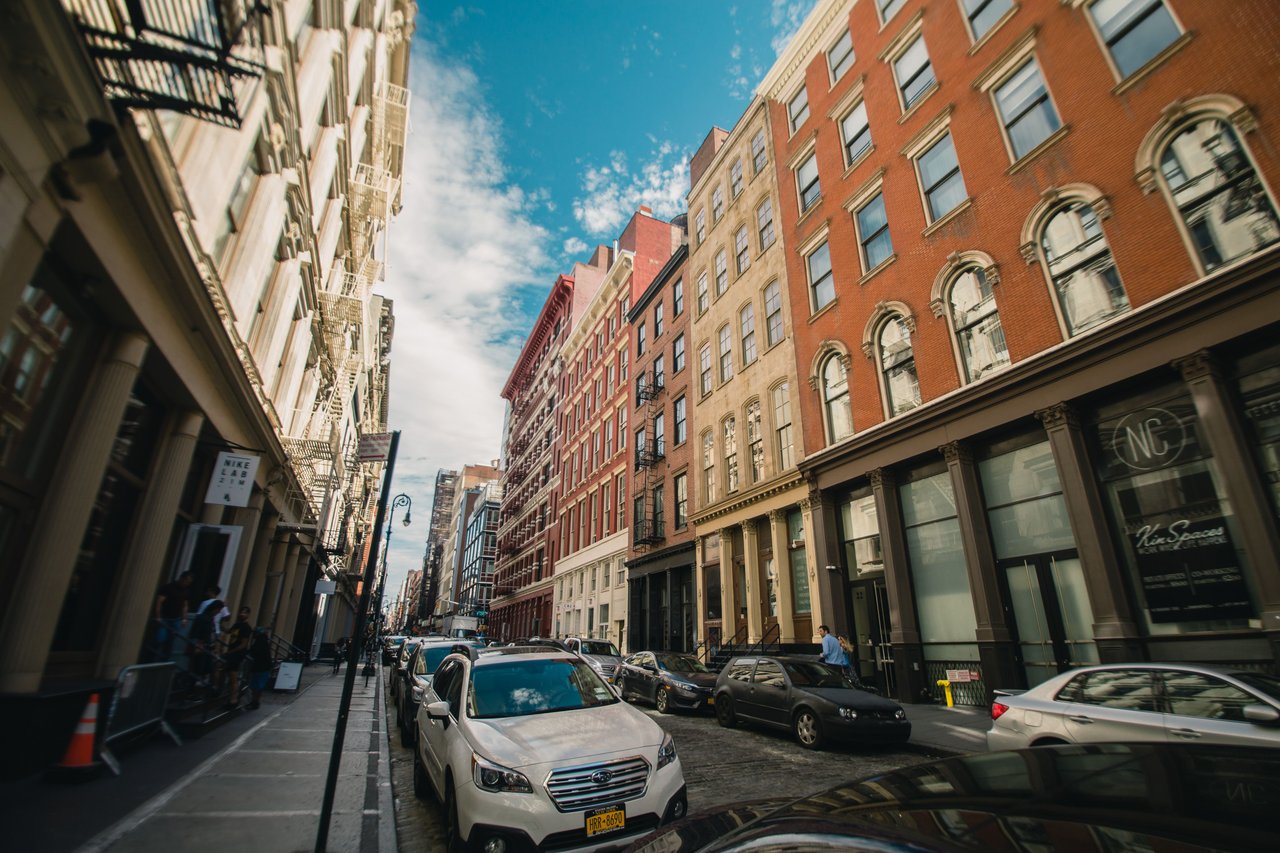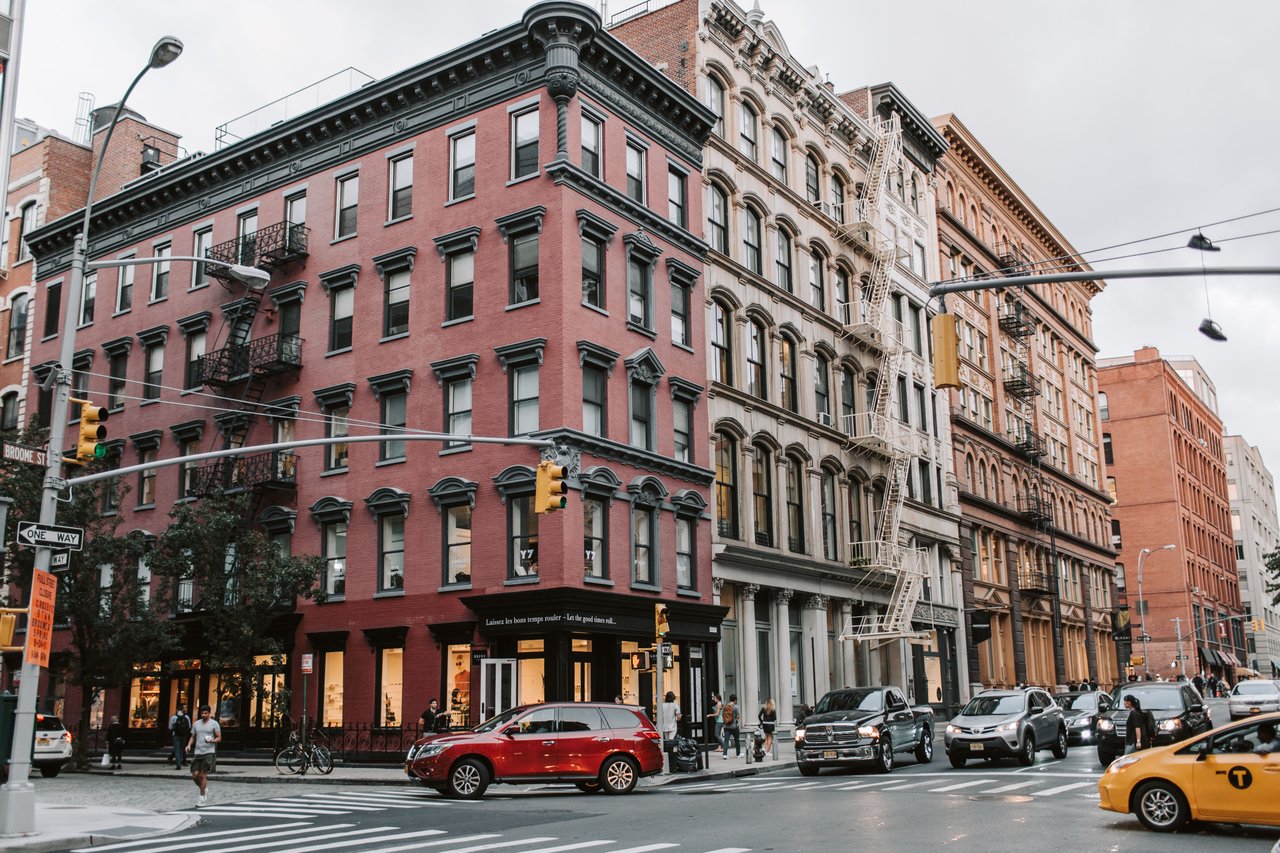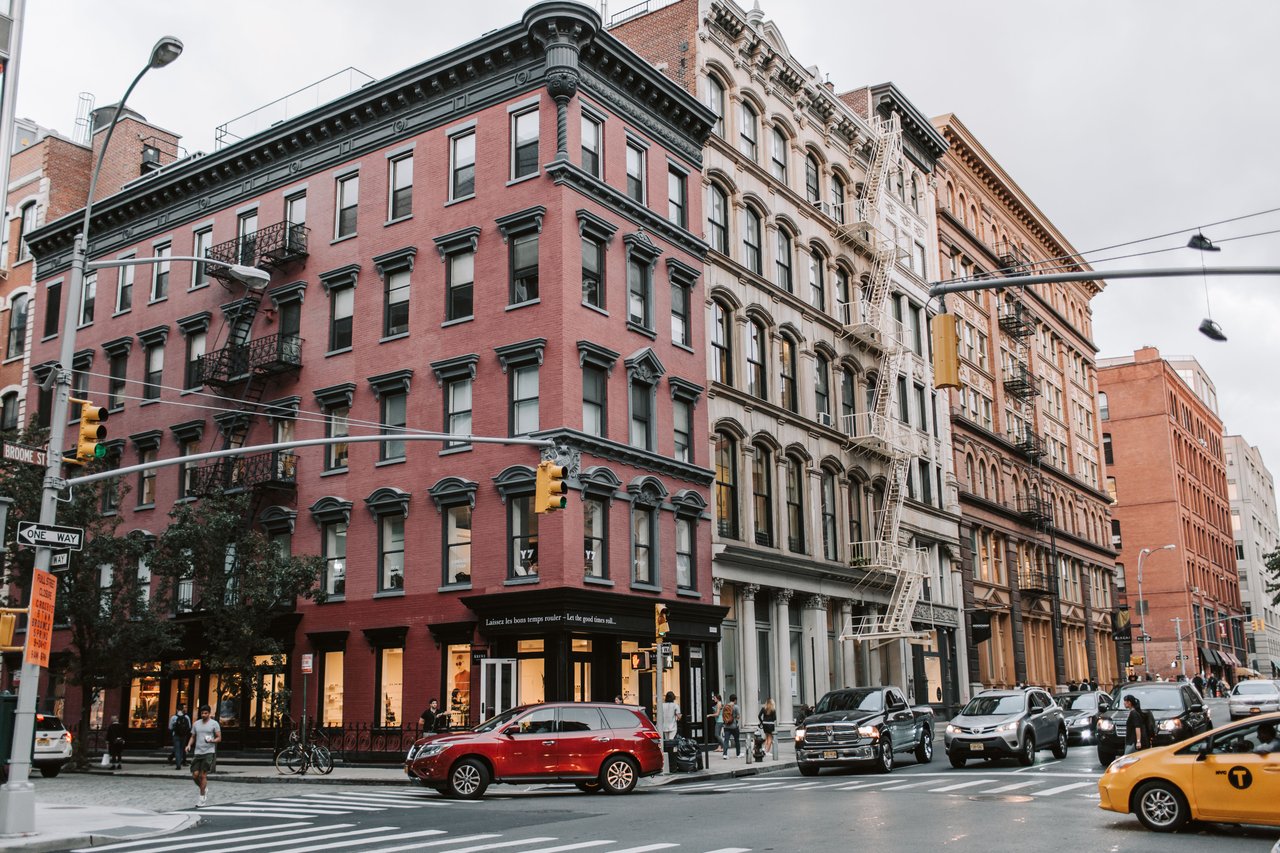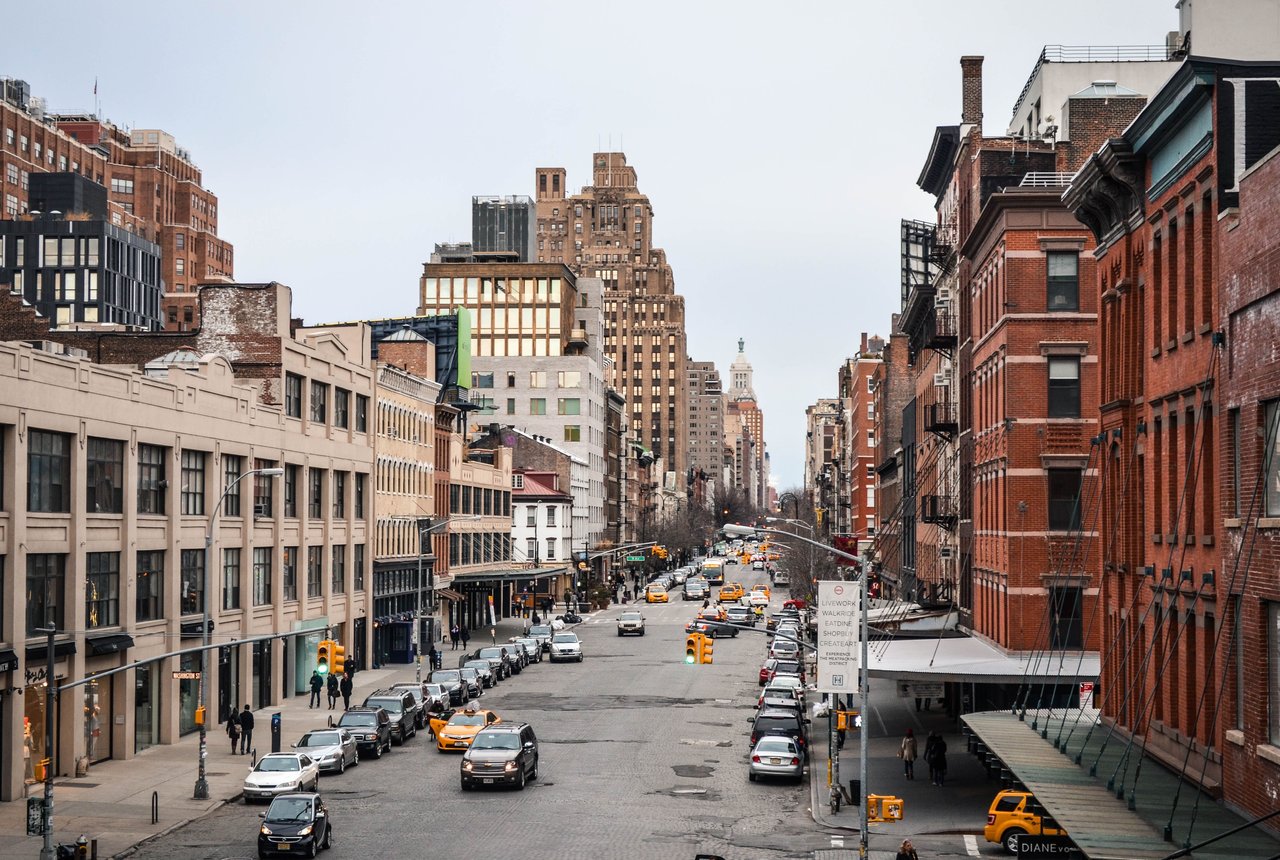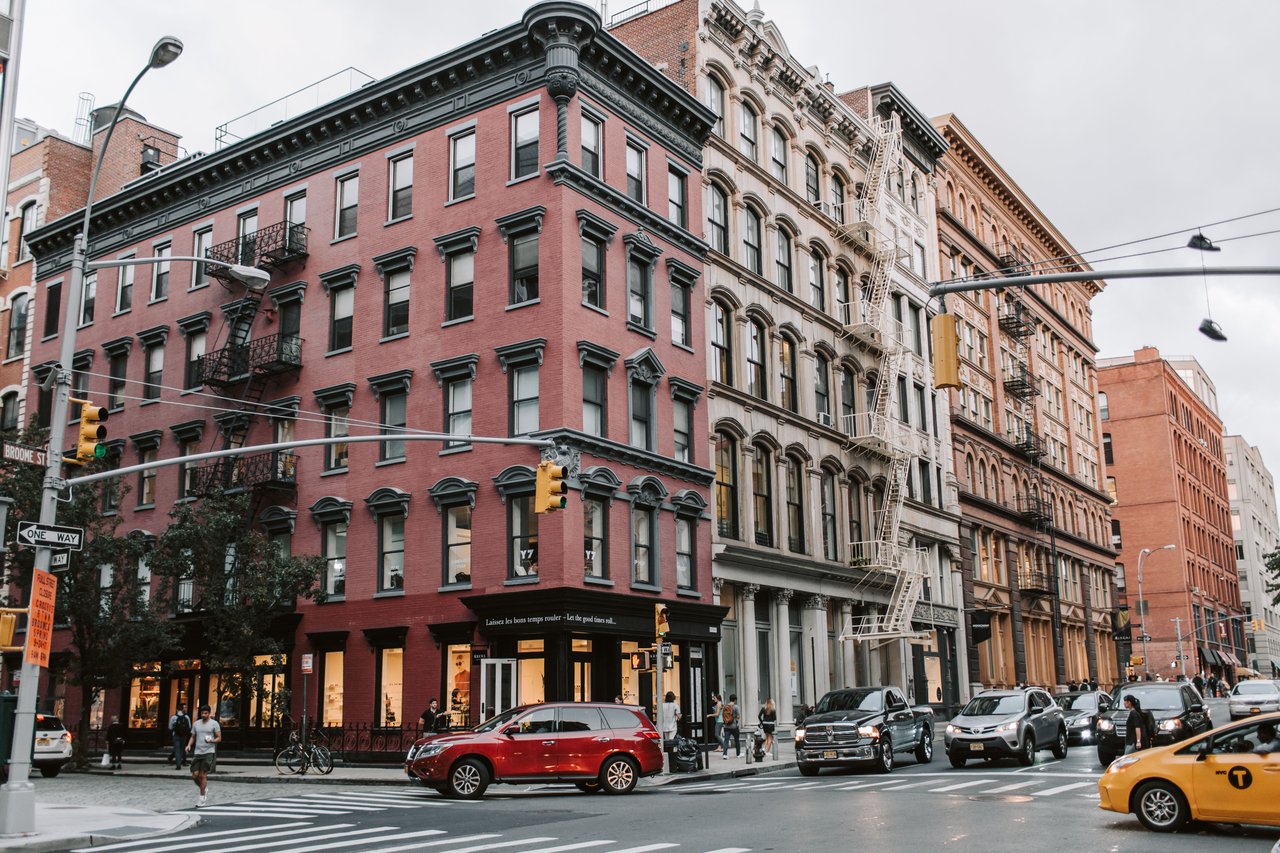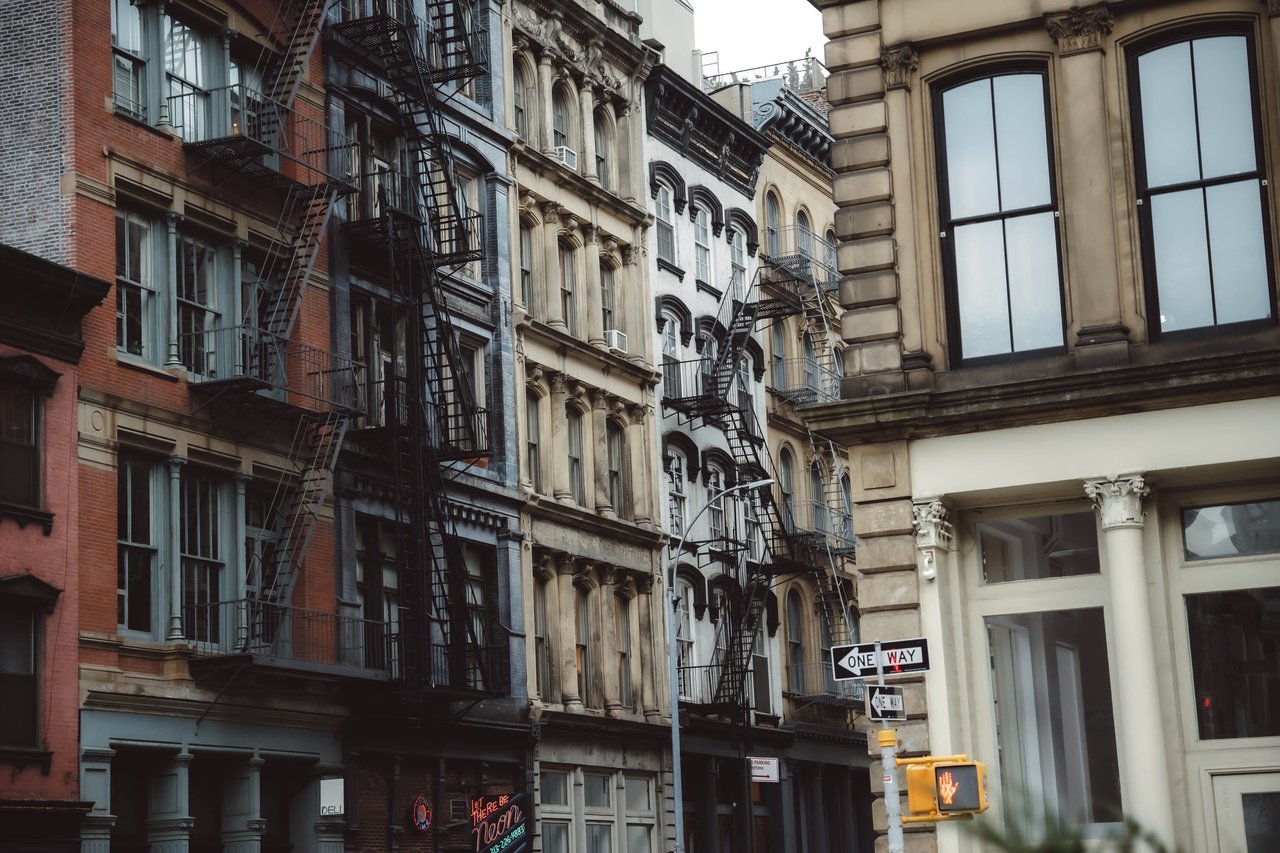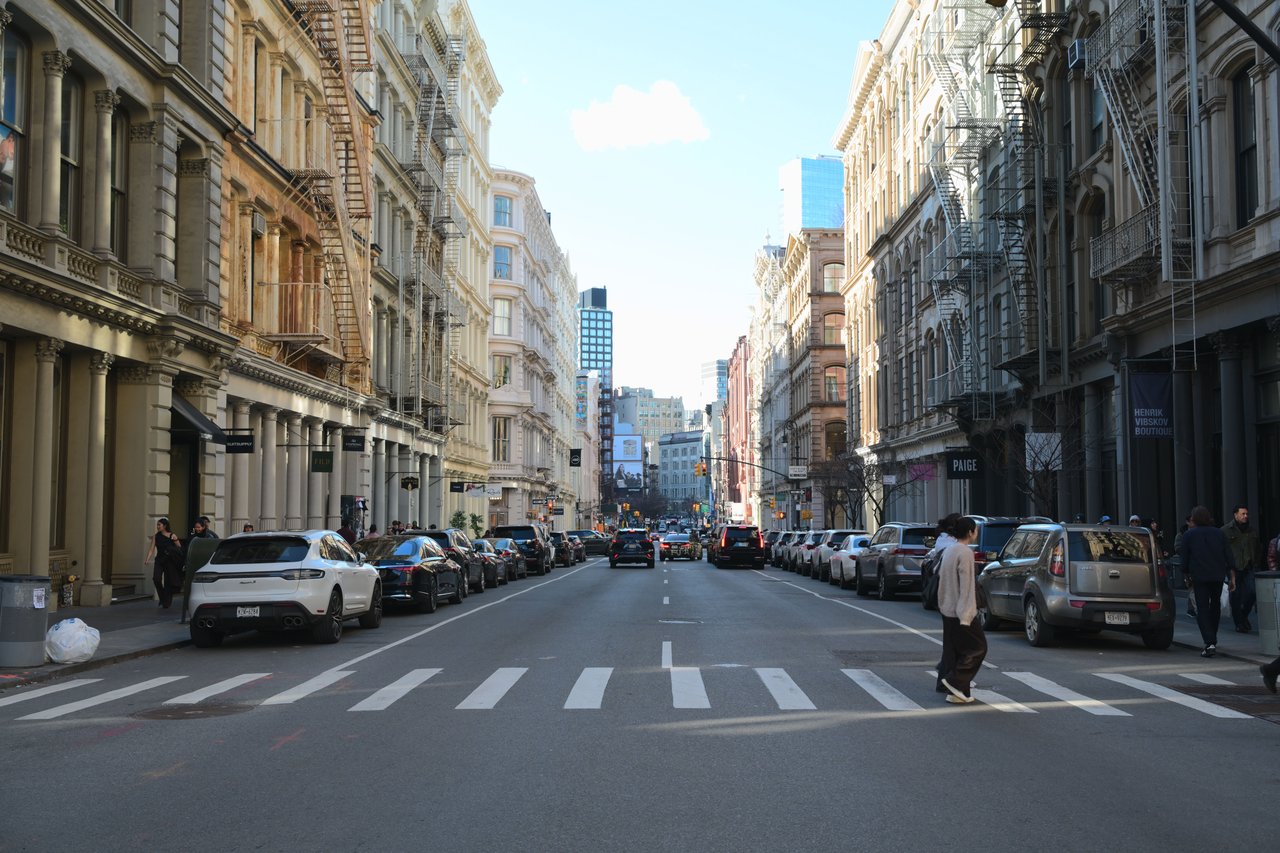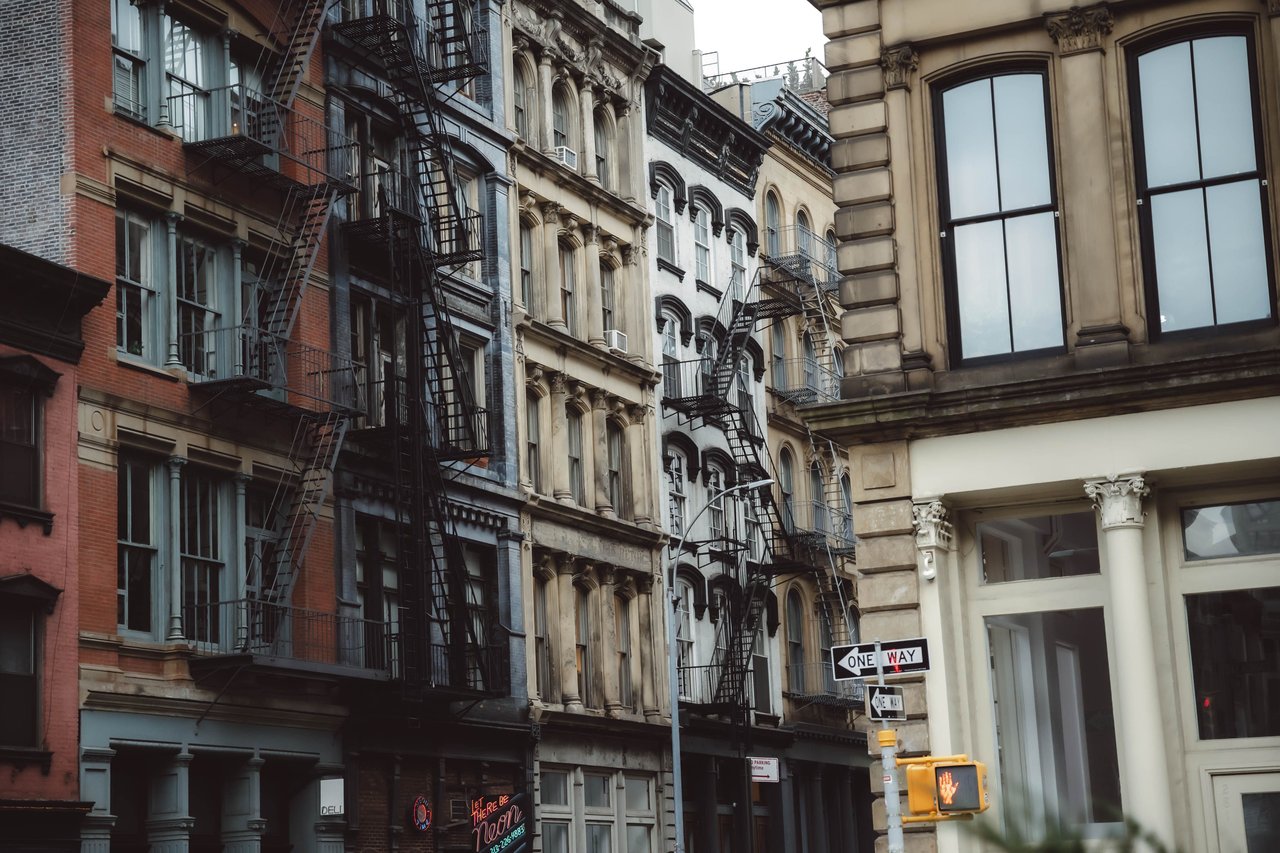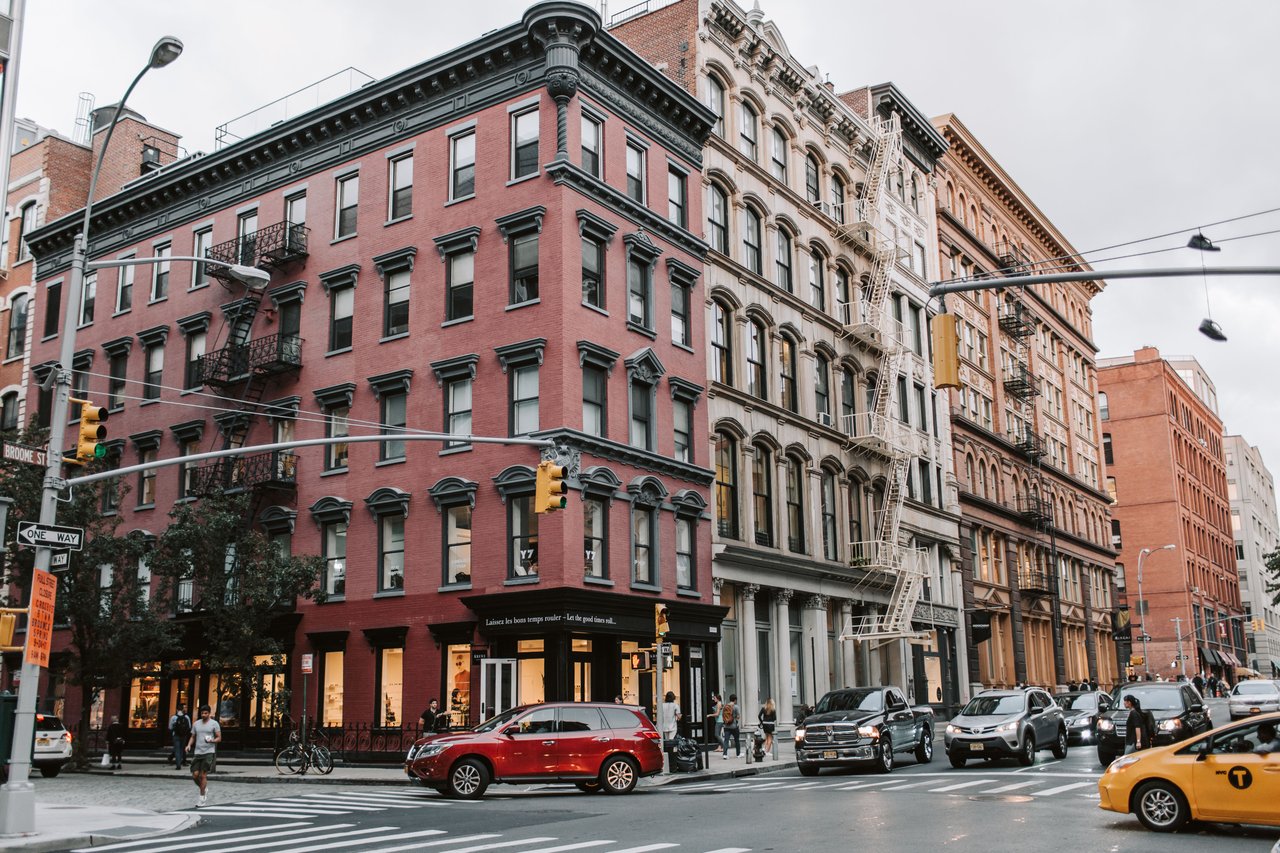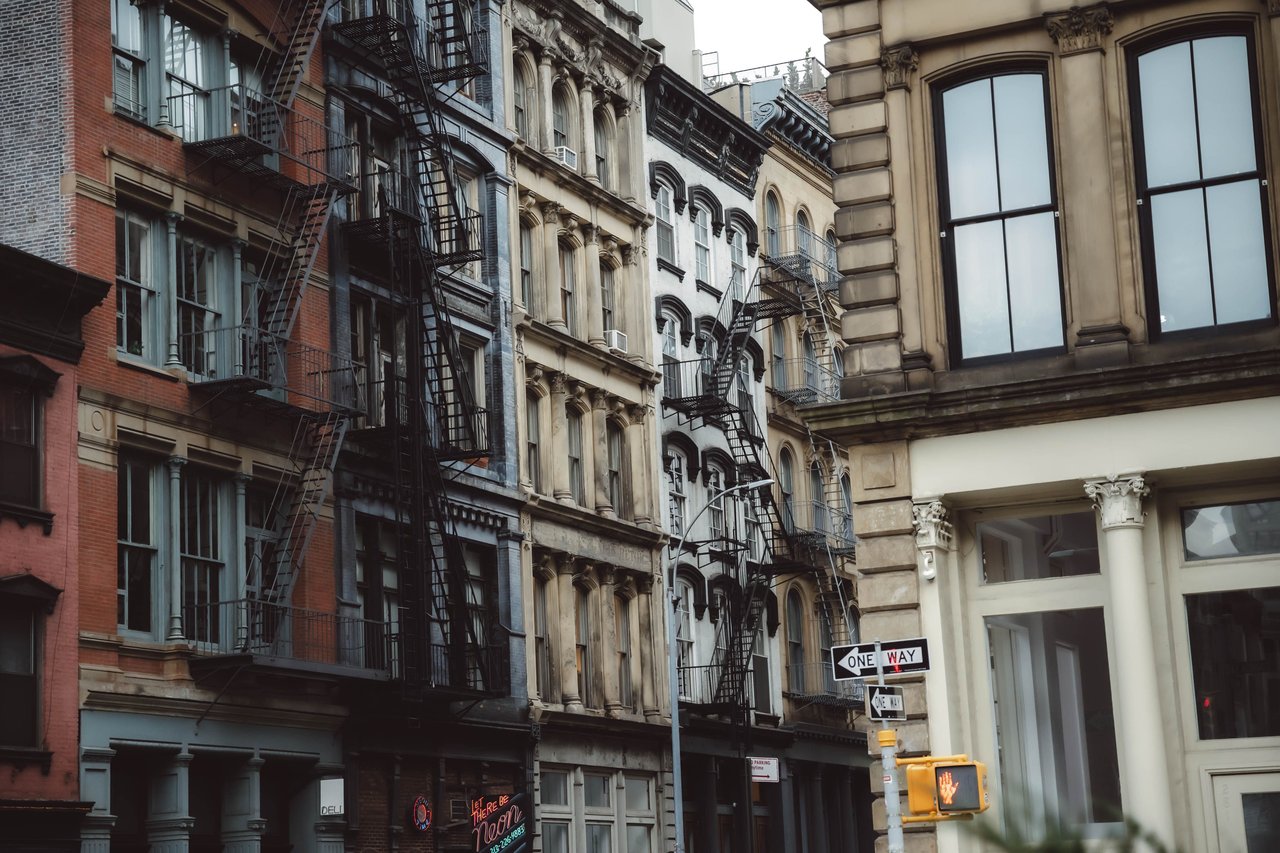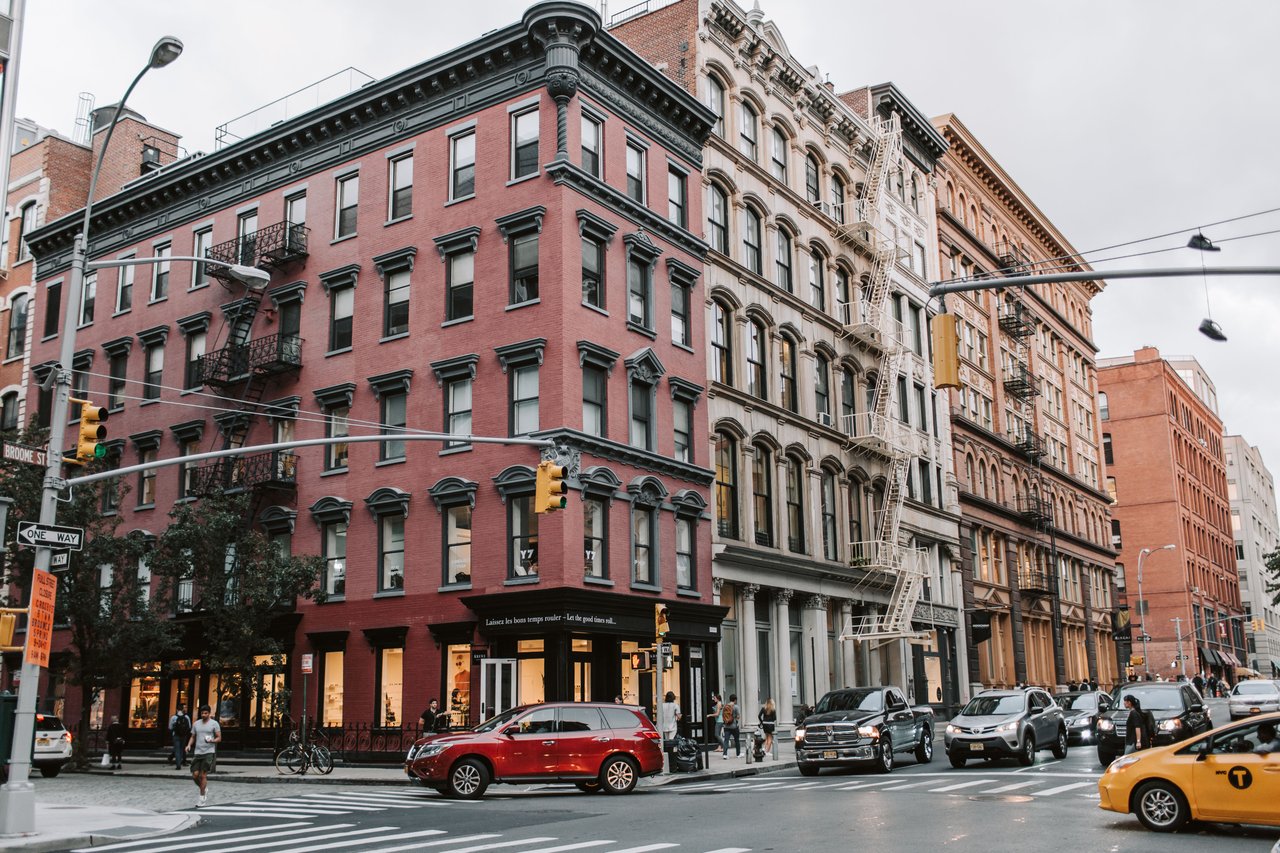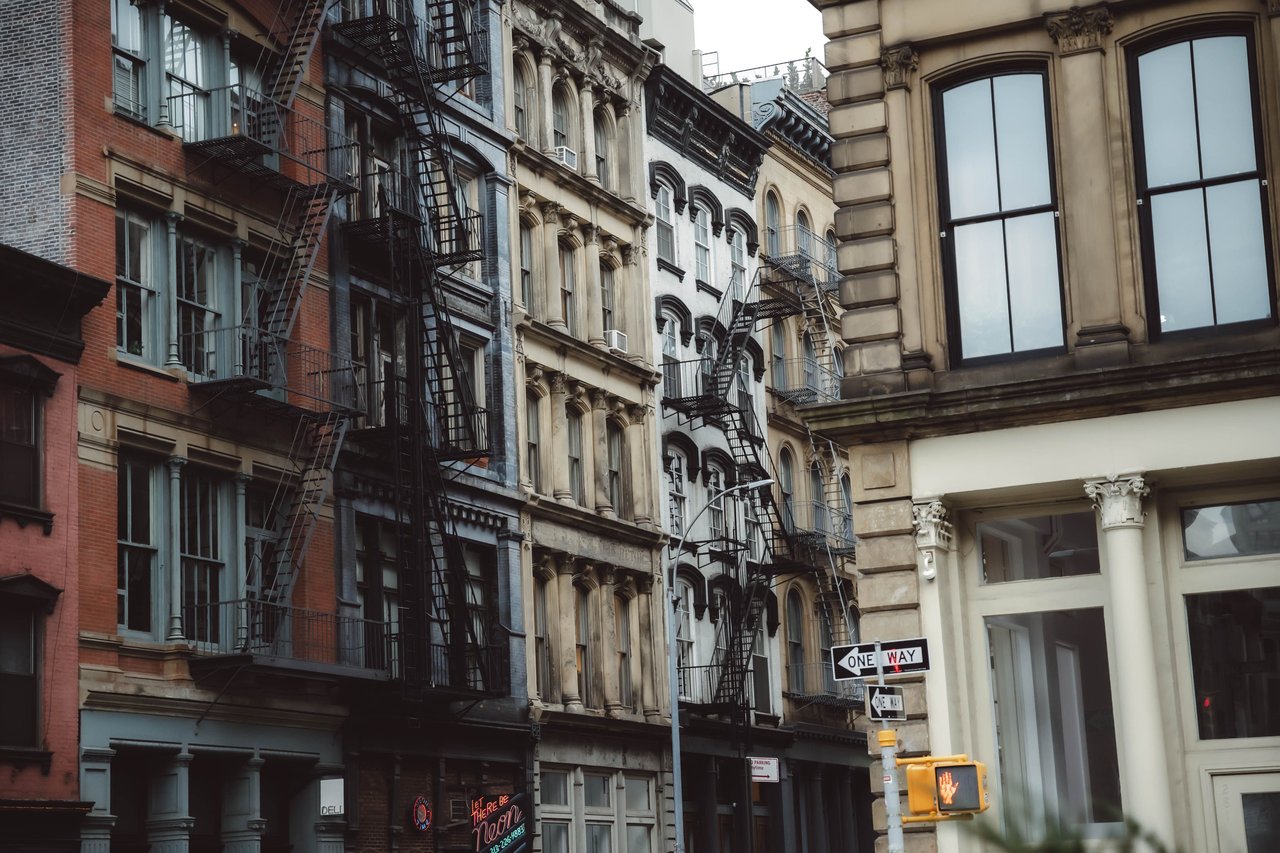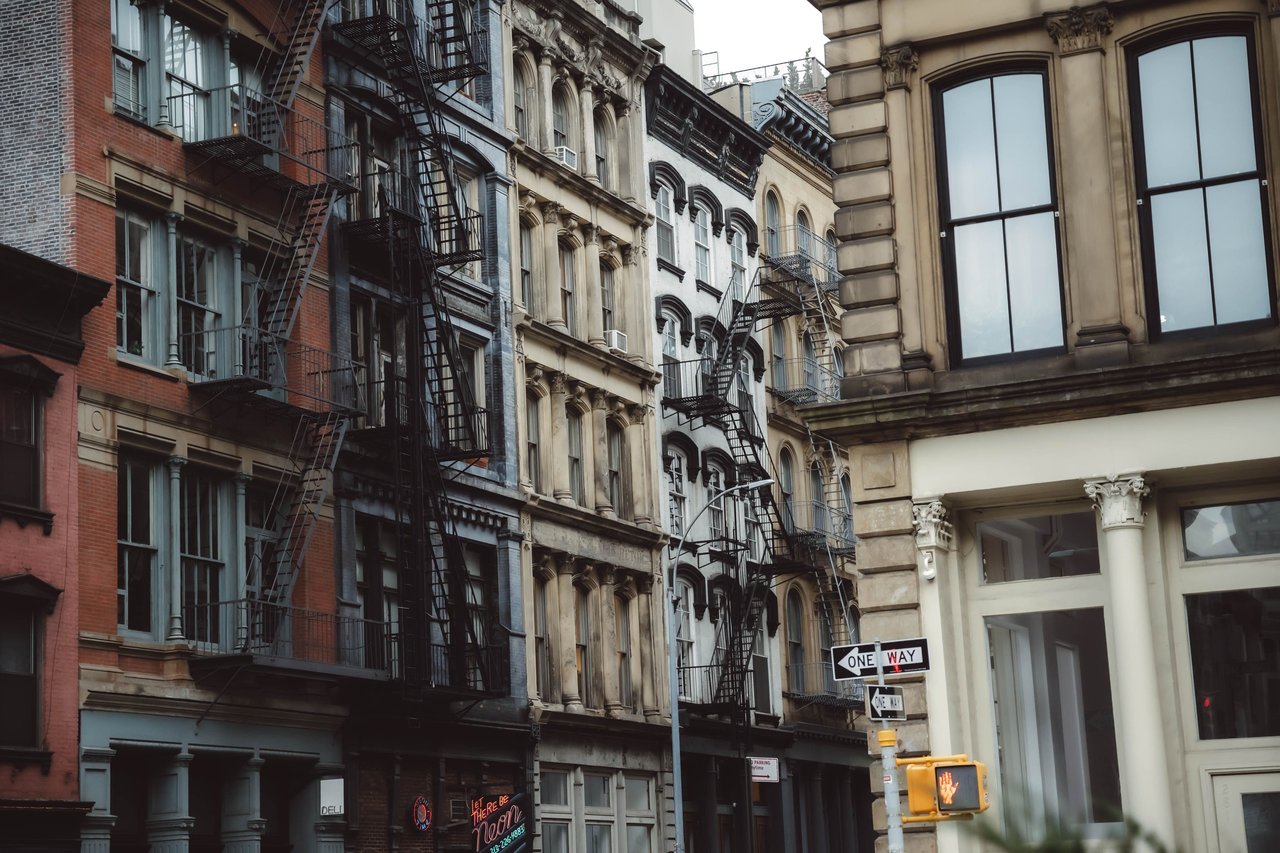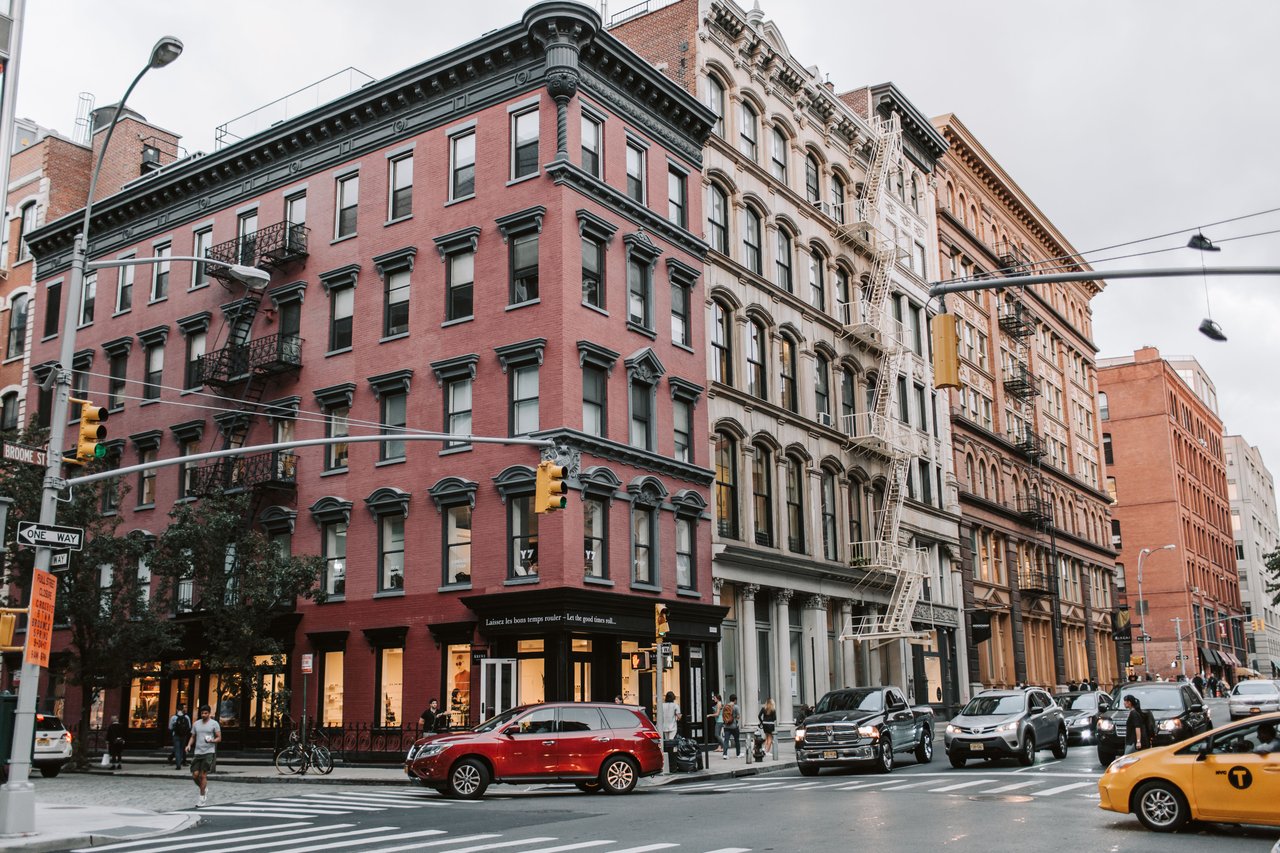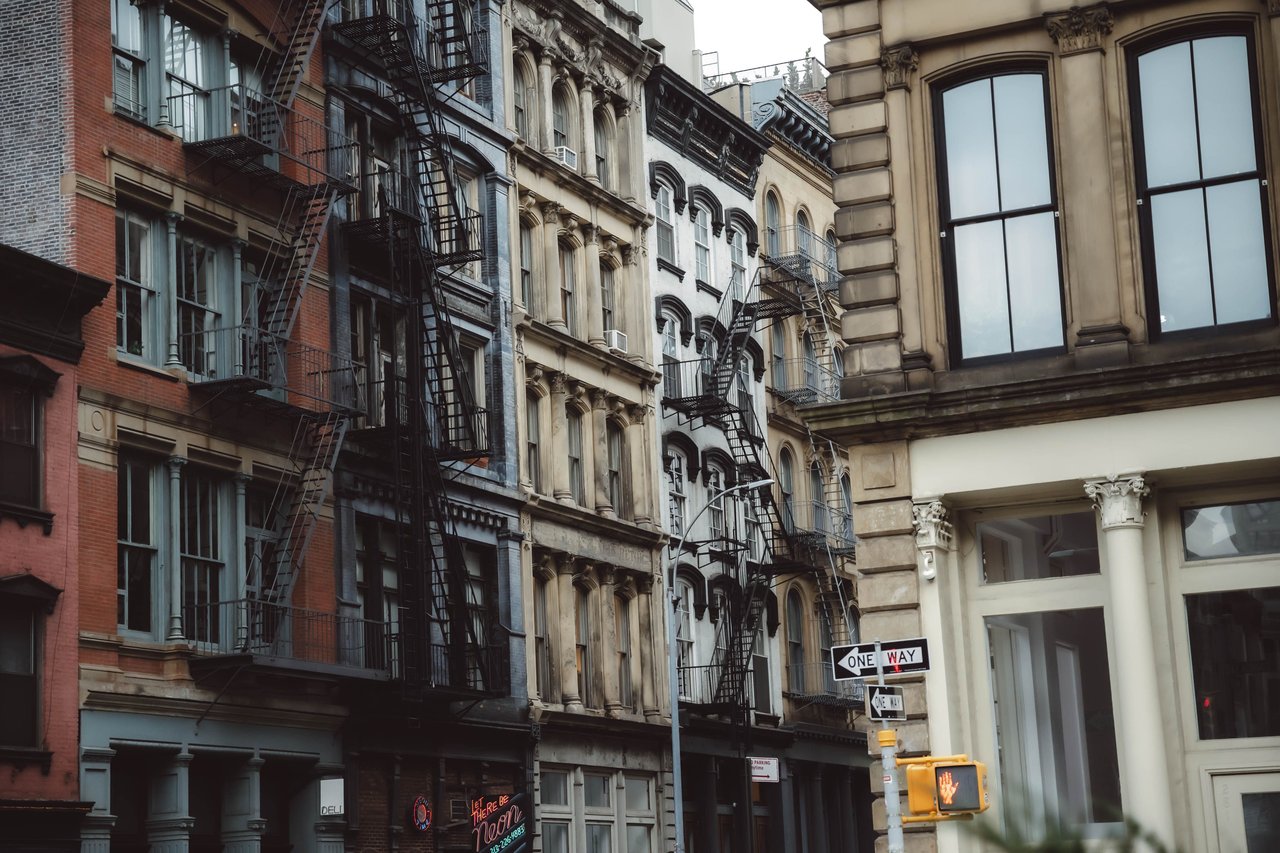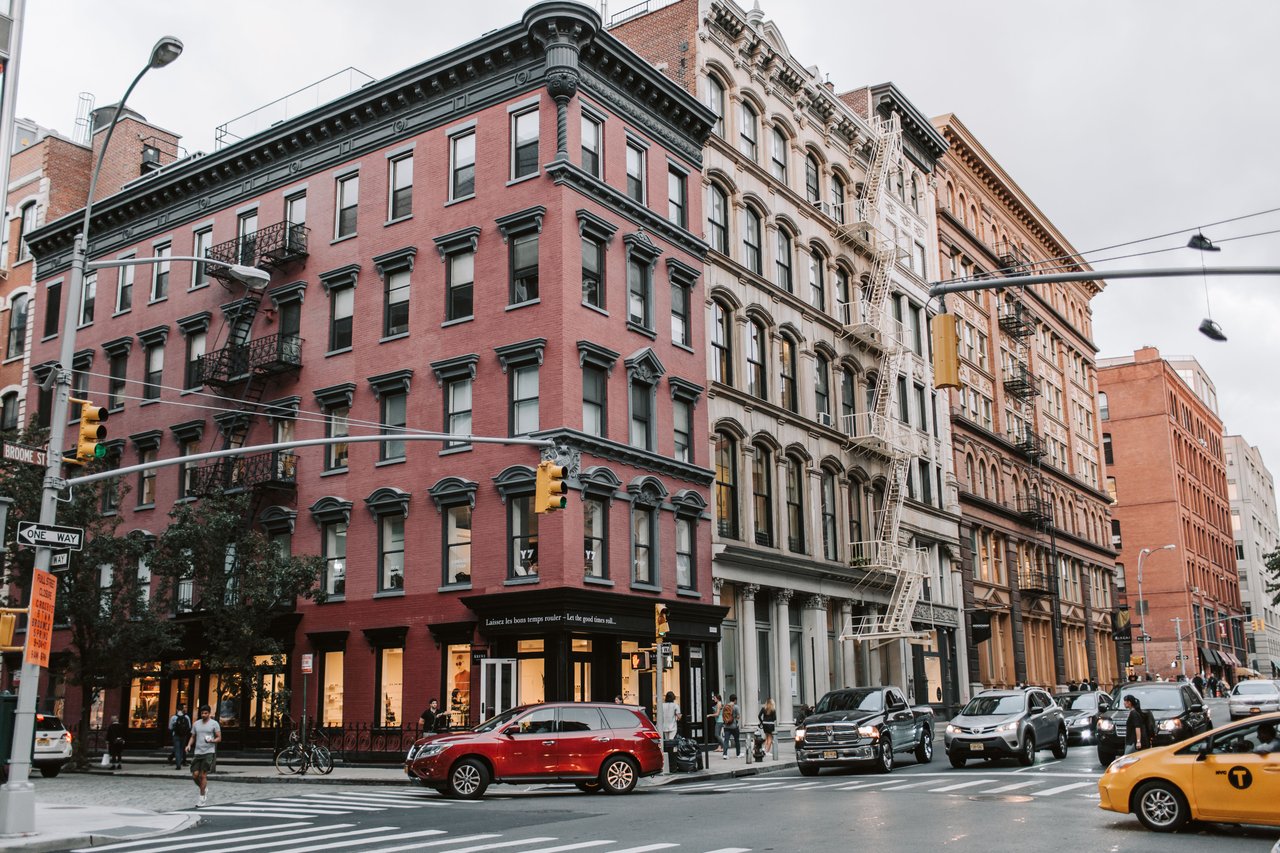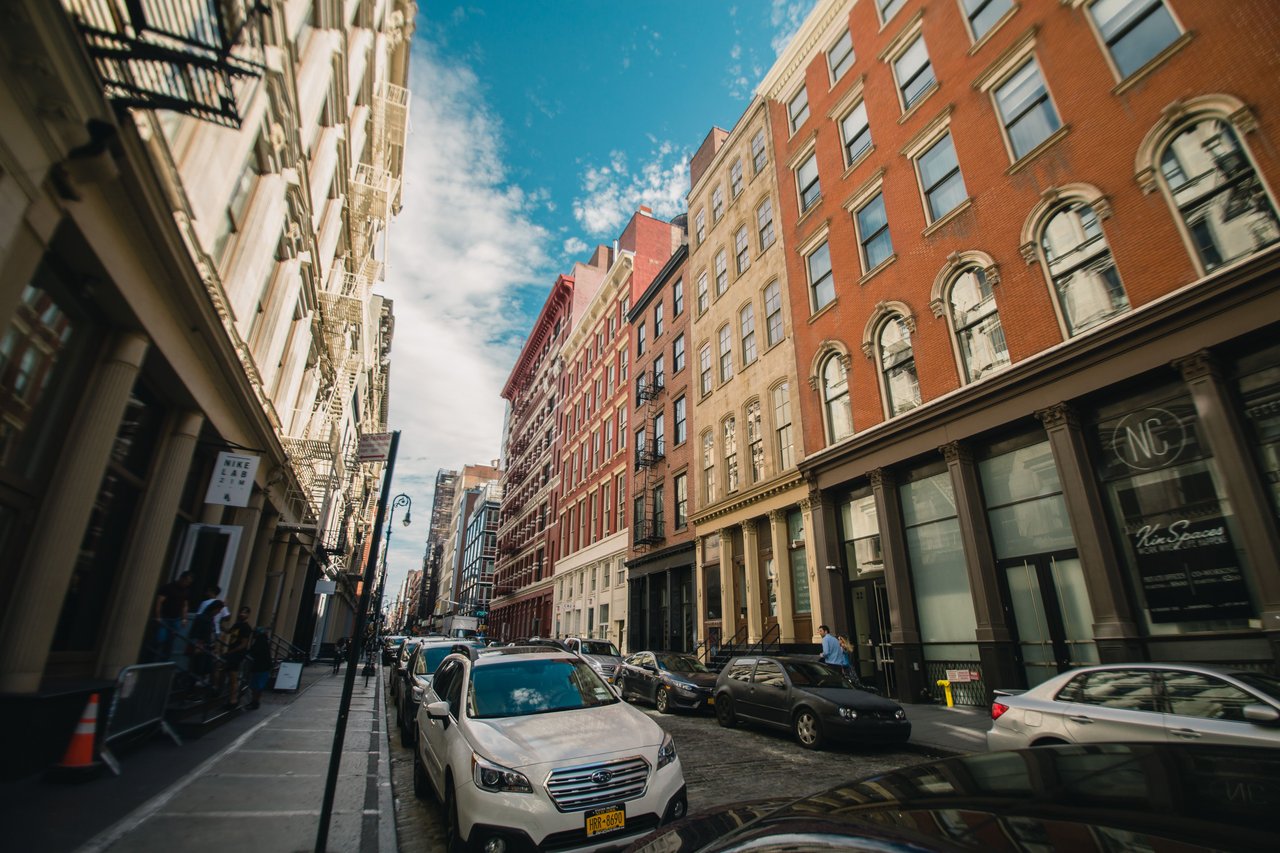
Ericsson Place is one of Tribeca's most historically distinctive streets, preserving an extraordinary architectural record of Manhattan's transformation from an early residential neighborhood into a major center of railroad freight transportation, industrial refrigeration, commercial warehousing, and municipal development. Although Ericsson Place extends for only one block between Hudson Street and Varick Street, its surviving buildings reveal more than a century of architectural and industrial change.
Originally part of Beach Street, Ericsson Place once formed the southern boundary of St. John's Park, one of early Manhattan's notable private residential squares. During the nineteenth century, the landscaped grounds were replaced by a major railroad freight terminal, introducing commercial transportation infrastructure that transformed the surrounding neighborhood.
The street later became associated with substantial cold-storage warehouses developed for the Merchants' Refrigerating Company. Their monumental brick facades, repeated arches, and limited window openings demonstrate how architects adapted Renaissance Revival and Romanesque Revival styles to the specialized requirements of industrial refrigeration.
At the eastern end of the street, the former Fourth Police Precinct Station House introduces a contrasting example of early twentieth-century civic architecture, with a limestone facade inspired by the Italian Renaissance.
Ericsson Place also preserves historic granite-block paving, creating a streetscape where transportation history, industrial architecture, and municipal design remain closely connected.
The Origins of Ericsson Place
Ericsson Place was originally a section of Beach Street, one of the streets developed as western Lower Manhattan expanded during the late eighteenth and early nineteenth centuries.
The surrounding neighborhood emerged from the subdivision of land associated with Trinity Church and other early property holdings.
During the early nineteenth century, the area became a residential district organized around St. John's Park, formerly known as Hudson Square.
Beach Street formed the southern boundary of the landscaped square, while substantial residences occupied the surrounding blocks.
The area was considerably different from the industrial neighborhood that later developed.
Instead of monumental warehouses and commercial loading facilities, the streetscape was characterized by brick residences, private gardens, and institutional architecture.
The eventual transformation of St. John's Park into a railroad freight terminal established the conditions for the commercial redevelopment that produced Ericsson Place's surviving warehouse buildings.
Why Is It Called Ericsson Place?
Ericsson Place was named in honor of John Ericsson, the Swedish-born American engineer and inventor whose work contributed to important developments in naval technology and mechanical engineering.
Ericsson is particularly recognized for his involvement in the design of the USS Monitor, the ironclad warship that fought the CSS Virginia during the American Civil War.
He also made important contributions to marine propulsion technology, including the development of screw-propeller systems.
Ericsson purchased a residence at 36 Beach Street in 1864, when the street still retained elements of its earlier residential character.
He lived there until his death in 1889.
In 1922, the section of Beach Street between Hudson Street and Varick Street was renamed Ericsson Place to commemorate his association with the neighborhood.
The street name therefore preserves a direct historical connection to one of the nineteenth century's notable engineers.
John Ericsson's Former Residence on Beach Street
Before the construction of the surrounding commercial warehouses, the future Ericsson Place contained substantial early nineteenth-century residences.
One of these was the Federal-style house at 36 Beach Street, purchased by John Ericsson in 1864.
The residence reflected the architectural character of the neighborhood during its earlier residential period.
Federal-style houses generally featured restrained brick facades, classical proportions, carefully arranged windows, and decorative entrance details.
Ericsson's residence was associated with the period when St. John's Park remained an important reference point in the surrounding streetscape.
During the later nineteenth century, the area changed considerably as commercial buildings and railroad facilities replaced much of the original residential architecture.
The house survived into the early twentieth century but was demolished in 1920.
Although the building no longer exists, its historical association is preserved through the name Ericsson Place.
Ericsson Place and St. John's Park
The history of Ericsson Place is inseparable from the history of St. John's Park.
Originally known as Hudson Square, St. John's Park occupied the block bounded by Hudson Street, Varick Street, Laight Street, and Beach Street.
During the early nineteenth century, it was developed as a private landscaped square surrounded by substantial residences.
Its carefully maintained grounds provided an architectural and landscape setting for the surrounding residential neighborhood.
The park was associated with St. John's Chapel, a prominent ecclesiastical building designed in a classical architectural style.
The chapel's tower and formal facade contributed to the character of the surrounding district.
The landscaped square remained an important feature of the neighborhood until the middle of the nineteenth century.
Its eventual replacement by a railroad terminal marked one of the most significant changes in the architectural history of western Tribeca.
The Architecture of St. John's Chapel
St. John's Chapel was one of the most prominent historic buildings associated with the former St. John's Park neighborhood.
Designed by architect John McComb Jr., the chapel was completed in 1807.
Its architecture drew inspiration from English classical church design, particularly the architectural tradition associated with St. Martin-in-the-Fields in London.
The building featured a prominent tower and a formal classical composition.
Its architectural presence helped establish the residential character of the surrounding neighborhood.
The chapel remained standing after the landscaped park was replaced by a railroad freight terminal.
However, changes to the neighborhood and transportation infrastructure eventually led to its demolition in 1918.
Although the chapel no longer exists, its former presence remains an important part of the architectural history of Ericsson Place and the surrounding streets.
The Transformation of St. John's Park into a Railroad Terminal
One of the most consequential changes in the history of Ericsson Place occurred in 1867, when Cornelius Vanderbilt purchased St. John's Park from Trinity Church for railroad development.
The landscaped residential square was replaced by a substantial freight terminal serving the Hudson River Railroad.
The terminal was constructed during 1867–1868.
Its development reflected the increasing importance of rail transportation in New York City's commercial economy.
The railroad facility allowed merchandise to be transported between Manhattan's commercial districts and the expanding national railroad network.
The construction fundamentally changed the surrounding neighborhood.
Residential buildings increasingly gave way to warehouses, commercial structures, and industrial facilities.
The former landscaped square became a major transportation center, helping establish the industrial character that would define the surrounding blocks for decades.
The St. John's Park Freight Terminal
The St. John's Park Freight Terminal became one of the most important transportation facilities associated with nineteenth-century Tribeca.
Constructed on the former park grounds, the terminal occupied a substantial block near Ericsson Place.
Its architecture reflected the practical requirements of railroad freight operations.
The facility accommodated the movement and distribution of commercial merchandise.
Nearby businesses benefited from direct access to railroad transportation.
The terminal's presence encouraged the construction of warehouses and commercial buildings throughout the surrounding neighborhood.
These structures were designed to accommodate storage, wholesale trade, and the movement of goods.
The railroad terminal therefore played a central role in the transformation of the area from a residential district into a commercial and industrial center.
The Commercial Transformation of Ericsson Place
During the late nineteenth century, Ericsson Place underwent extensive commercial redevelopment.
The presence of the St. John's Park Freight Terminal encouraged businesses to establish warehouses and storage facilities nearby.
Earlier residences were replaced by substantial brick buildings designed for commercial operations.
The surrounding neighborhood became associated with wholesale grocery distribution, industrial storage, and specialized refrigeration facilities.
Commercial buildings required large interior spaces, substantial structural systems, and convenient access to transportation.
Architects responded with masonry warehouses incorporating repeated arches, durable brick construction, and practical loading arrangements.
By the beginning of the twentieth century, the street had acquired much of the industrial architectural character that remains visible today.
The Warehouse Architecture of Ericsson Place
The warehouses of Ericsson Place reflect the specialized requirements of late nineteenth-century industrial construction.
Substantial brick walls and heavy structural systems allowed buildings to accommodate commercial storage and industrial equipment.
Ground-floor loading entrances provided access for merchandise and deliveries.
Upper floors were designed for storage and commercial operations.
Unlike ordinary office buildings, refrigerated warehouses often required relatively few windows to maintain controlled interior conditions.
Architects responded by emphasizing masonry surfaces, repeated arches, and carefully proportioned structural bays.
The resulting buildings combined practical industrial design with contemporary architectural styles.
Their facades demonstrate how industrial architecture could achieve a monumental appearance even when the buildings' primary functions required limited exterior openings.
The Merchants' Refrigerating Company
The Merchants' Refrigerating Company played an important role in the architectural development of Ericsson Place.
During the late nineteenth and early twentieth centuries, refrigerated storage became increasingly important to New York City's wholesale food industry.
Businesses required specialized facilities for preserving perishable merchandise before distribution.
The company developed a substantial complex of cold-storage warehouses along Ericsson Place and North Moore Street.
Construction took place in several phases between 1891 and 1924.
The buildings incorporated heavy masonry construction and specialized storage arrangements.
Their architecture reflected the unusual requirements of refrigerated warehousing, particularly the need to maintain controlled interior temperatures.
The surviving structures represent an important chapter in the development of New York City's industrial refrigeration infrastructure.
Romanesque Revival Architecture on Ericsson Place
Romanesque Revival architecture is one of the defining features of Ericsson Place.
The style became particularly influential in commercial construction during the late nineteenth century.
It emphasized substantial masonry, rounded arches, heavy piers, and deeply recessed architectural openings.
These characteristics were especially suitable for industrial warehouses.
On Ericsson Place, repeated arches organize large expanses of brick masonry.
The architectural treatment gives the buildings a monumental appearance while reducing the visual impact of their limited windows.
The style demonstrates how architects adapted historical design principles to specialized commercial requirements.
Its surviving examples contribute significantly to the architectural character of the Tribeca West Historic District.
The Historic Cold-Storage Warehouse at 30–32 Ericsson Place
One of Ericsson Place's most important industrial buildings is the former cold-storage warehouse at 30–32 Ericsson Place.
Designed by architect Thomas R. Jackson and constructed in 1891, the building was the first cold-storage warehouse developed as part of the Merchants' Refrigerating Company complex.
The structure extends through the block to 35–37 North Moore Street.
Its architecture reflects Romanesque Revival influences, particularly the use of substantial masonry piers and repeated arched bays.
The Ericsson Place facade incorporates common red brick.
By contrast, the corresponding North Moore Street facade uses tan iron-spot brick.
Although the materials differ, the architectural compositions are closely related.
The building demonstrates how commercial warehouses could present carefully designed facades on two parallel streets.
The Architecture of 30–32 Ericsson Place
The warehouse at 30–32 Ericsson Place is particularly notable for its arcaded facade.
The repeated arches establish a strong architectural rhythm across the building.
Substantial brick piers emphasize the structural organization of the exterior.
The use of red brick creates a different visual character from the tan masonry of the corresponding North Moore Street elevation.
The building's limited window openings reflect the requirements of cold-storage operations.
Rather than allowing these practical constraints to produce an entirely blank facade, the architect incorporated arches and masonry detailing to create a more substantial architectural composition.
The resulting structure is an important example of how industrial architecture could combine specialized functionality with historical revival styles.
Renaissance Revival Architecture on Ericsson Place
Renaissance Revival architecture also influenced the design of Ericsson Place's commercial buildings.
The style emphasized classical proportions, carefully organized facades, strong horizontal divisions, and substantial masonry details.
During the late nineteenth and early twentieth centuries, these characteristics became common in New York City's industrial districts.
On Ericsson Place, Renaissance Revival influences appeared in large commercial warehouses developed for specialized storage operations.
The buildings incorporated repeated architectural bays and carefully arranged brickwork.
Their substantial scale reflected the growing importance of commercial refrigeration and wholesale distribution.
The style provided a formal architectural vocabulary that could be adapted to buildings with limited windows and large interior storage areas.
The Historic Warehouse at 22–28 Ericsson Place
The former Merchants' Refrigerating Company warehouse at 22–28 Ericsson Place is another important example of the street's industrial architecture.
Designed by William H. Birkmire and constructed in 1905, the building was developed as a larger cold-storage facility.
The structure has an L-shaped configuration and extends through the block to 27–29 North Moore Street.
Its Ericsson Place elevation incorporates a long red brick facade.
The corresponding North Moore Street elevation uses yellow brick.
The architectural design reflects Renaissance Revival influences.
Repeated arches and carefully organized masonry details reduce the visual impact of the limited window openings required for refrigerated storage.
The building illustrates the continued expansion of the Merchants' Refrigerating Company complex during the early twentieth century.
The Architecture of 22–28 Ericsson Place
The warehouse at 22–28 Ericsson Place is distinguished by its substantial masonry construction and carefully organized facade.
The building's long red brick elevation reflects the scale of early twentieth-century industrial storage facilities.
Its repeated arched bays create a consistent architectural rhythm.
The design emphasizes the structural organization of the building while accommodating the practical requirements of refrigeration.
The relatively limited window openings distinguish the warehouse from conventional store-and-loft buildings.
Its architectural relationship with the corresponding North Moore Street facade demonstrates the importance of designing commercial buildings for visibility from multiple streets.
Together with the earlier warehouse at 30–32 Ericsson Place, the building forms an important architectural group associated with industrial refrigeration.
The Commercial Building at 34 Ericsson Place
The building at 34 Ericsson Place represents another phase of commercial development along the street.
Constructed in 1908, it forms the rear elevation of a store-and-loft building associated with 39 North Moore Street.
The Ericsson Place facade is relatively utilitarian compared with the more elaborate North Moore Street elevation.
This contrast reflects the different architectural treatments often applied to the principal and secondary facades of commercial buildings.
The structure illustrates the practical organization of through-the-block properties within Tribeca's warehouse district.
Its surviving masonry contributes to the continuous industrial streetscape of Ericsson Place.
The Former Fourth Police Precinct Station House
At the intersection of Ericsson Place and Varick Street stands the former Fourth Police Precinct Station House, now used by the New York City Police Department's First Precinct.
Constructed in 1912, the building was designed by the architectural firm Hoppin & Koen.
Its architecture reflects the neo-Renaissance style.
Unlike the surrounding industrial warehouses, the station house was designed as a prominent municipal building.
Its limestone facade, classical proportions, and substantial arched entrances create a dignified civic appearance.
The building represents an important phase in the expansion and modernization of New York City's municipal infrastructure during the early twentieth century.
Its continued use as a police station preserves the civic function for which it was originally constructed.
The Architecture of the First Precinct Station House
The former Fourth Precinct Station House is distinguished by its formal limestone facade.
The design draws inspiration from Italian Renaissance architecture, incorporating classical proportions and carefully organized masonry details.
Two substantial arched entrances create a prominent architectural composition.
Decorative elements include a bracketed cornice and the Seal of the City of New York.
The building originally incorporated facilities associated with mounted police operations, including stable accommodations.
Its exterior presents a more elaborate architectural character than the neighboring warehouses.
The contrast illustrates the different design priorities of municipal and industrial construction.
The station house remains one of the most recognizable examples of early twentieth-century civic architecture in Tribeca.
Ericsson Place and Varick Street
Varick Street marks the eastern end of Ericsson Place.
The intersection is dominated by the former Fourth Precinct Station House.
Its limestone Renaissance Revival facade creates a strong architectural contrast with the brick cold-storage warehouses farther west.
The surrounding area also reflects the substantial transportation changes introduced during the early twentieth century.
Varick Street was widened and improved as part of the modernization of Lower Manhattan's street network.
The development of the Holland Tunnel further transformed the surrounding neighborhood.
The intersection therefore illustrates the relationship between municipal architecture, commercial infrastructure, and changing transportation requirements.
Ericsson Place and Hudson Street
Hudson Street marks the western end of Ericsson Place.
During the nineteenth century, the surrounding area was closely associated with the St. John's Park Freight Terminal.
The terminal occupied the former landscaped park immediately north of the street.
Its presence encouraged the construction of commercial warehouses and storage facilities nearby.
The intersection later became associated with substantial industrial buildings serving the wholesale trade.
Today, the surrounding architecture preserves evidence of this commercial history.
The historic masonry facades along Ericsson Place remain important components of the Tribeca West Historic District.
The Holland Tunnel and Ericsson Place
The construction of the Holland Tunnel introduced another major transformation to the neighborhood surrounding Ericsson Place.
Opened in 1927, the tunnel created an important vehicular connection between Manhattan and New Jersey.
Its construction required extensive changes to the surrounding street network.
The former St. John's Park Freight Terminal was demolished to accommodate transportation improvements associated with the tunnel.
The landscaped square that had once defined the neighborhood had already disappeared during the nineteenth century.
The subsequent removal of the freight terminal introduced a new transportation landscape.
Today, the Holland Tunnel approaches and exit infrastructure remain important features of the area north of Ericsson Place.
The street therefore preserves a remarkable sequence of transportation history, from an early residential square to railroad freight operations and modern vehicular infrastructure.
The Granite-Block Pavement of Ericsson Place
One of Ericsson Place's most distinctive historic features is its surviving granite-block roadway.
The granite pavers were probably installed in 1928, when Beach Street was repaved.
Unlike many Manhattan streets where historic paving has been covered or substantially altered, Ericsson Place retains exposed sections of granite blocks.
The durable stone surface reflects the practical requirements of commercial transportation.
Granite paving was particularly suitable for streets carrying heavy freight traffic.
The surviving roadway provides a physical connection to the neighborhood's industrial past.
Its historic character is especially significant because the entire streetbed is included within the boundaries of the Tribeca West Historic District.
Ericsson Place and the Tribeca West Historic District
Ericsson Place forms an important boundary of the Tribeca West Historic District.
The district was designated by the New York City Landmarks Preservation Commission on May 7, 1991.
Its designation recognizes the architectural importance of western Tribeca's surviving commercial warehouses, industrial loft buildings, and historic streetscapes.
The southern side of Ericsson Place contains important examples of Romanesque Revival and Renaissance Revival warehouse architecture.
The former Fourth Precinct Station House contributes a contrasting example of municipal design.
Historic granite-block paving provides another significant element of the streetscape.
Together, these features demonstrate the architectural and industrial evolution of the neighborhood.
Historic Preservation on Ericsson Place
Historic preservation has played an important role in maintaining Ericsson Place's architectural character.
The former Merchants' Refrigerating Company warehouses preserve substantial brick facades, repeated arches, and distinctive industrial design features.
The former Fourth Precinct Station House retains its formal limestone architecture.
The historic granite-block roadway provides an unusual surviving example of early twentieth-century street paving.
These features illustrate several periods of commercial and municipal development.
The Tribeca West Historic District designation provides a framework for reviewing significant exterior alterations.
Preservation efforts help maintain the relationship between the street's industrial past and its contemporary uses.
Industrial Refrigeration and the Architecture of Tribeca
The development of industrial refrigeration transformed the design of commercial warehouses during the late nineteenth century.
Traditional store-and-loft buildings often incorporated large windows to provide natural light and ventilation.
Cold-storage warehouses required different architectural solutions.
Maintaining controlled temperatures encouraged the use of substantial insulated walls and relatively limited exterior openings.
Architects therefore relied on masonry composition, repeated arches, and decorative brickwork to give the buildings architectural character.
The Merchants' Refrigerating Company warehouses on Ericsson Place are important examples of this approach.
Their designs demonstrate how specialized industrial requirements influenced the appearance of New York City's commercial architecture.
The Relationship Between Ericsson Place and North Moore Street
Ericsson Place and North Moore Street share an important architectural relationship.
Several substantial warehouses extend through the block between the two streets.
These buildings were designed with corresponding facades on both elevations.
The former cold-storage warehouse at 30–32 Ericsson Place extends to 35–37 North Moore Street.
The larger warehouse at 22–28 Ericsson Place extends to 27–29 North Moore Street.
The buildings incorporate related architectural compositions but use different brick colors on their opposing facades.
This arrangement demonstrates the practical and architectural organization of large industrial properties.
The through-the-block configuration allowed commercial operations to occupy substantial interior areas while maintaining street access from multiple directions.
Ericsson Place During the Twentieth Century
The twentieth century brought significant changes to Ericsson Place.
The expansion of industrial refrigeration introduced larger commercial warehouses during the early decades of the century.
The construction of the former Fourth Precinct Station House in 1912 added an important municipal building.
The street was renamed Ericsson Place in 1922.
The opening of the Holland Tunnel in 1927 transformed the surrounding transportation network.
Historic granite paving was installed during the late 1920s.
As industrial and wholesale commercial activity changed during the later twentieth century, many buildings throughout Tribeca were adapted for new uses.
The designation of the Tribeca West Historic District in 1991 recognized the architectural significance of the surviving streetscape.
Adaptive Reuse and Contemporary Tribeca
During the late twentieth century, many former industrial buildings throughout Tribeca were converted into residential lofts, offices, and other contemporary uses.
Historic warehouses offered substantial structural systems, large interior floor areas, and durable masonry construction.
These characteristics made many buildings suitable for adaptation.
Cold-storage warehouses presented particular challenges because their original designs prioritized temperature control rather than extensive natural light.
Conversions and renovations therefore required careful consideration of building structure, mechanical systems, and historic architectural features.
The surrounding neighborhood's transformation reflects the broader evolution of Tribeca from an industrial district into a mixed residential and commercial neighborhood.
Ericsson Place remains an important architectural reminder of the specialized industrial uses that once shaped the area.
What Does Tribeca Stand For?
Tribeca stands for Triangle Below Canal Street, referring to the neighborhood's location south of Canal Street in Lower Manhattan.
Historically, the area was associated with the Washington Market district and the commercial neighborhoods surrounding Manhattan's western waterfront.
During the nineteenth century, much of Tribeca developed into an important center of wholesale commerce, manufacturing, and warehousing.
Its architecture was shaped by substantial brick industrial buildings, cast-iron storefronts, decorative masonry facades, and commercial loft structures.
During the late twentieth century, many former industrial buildings were converted into residential and commercial spaces.
Ericsson Place reflects this architectural evolution through its historic cold-storage warehouses, municipal architecture, and surviving granite-block pavement.
Ericsson Place Today
Today, Ericsson Place remains one of Tribeca's most distinctive historic streets.
Its substantial brick warehouses preserve the architectural character of the former industrial district.
The former Merchants' Refrigerating Company buildings illustrate the specialized design requirements of early commercial refrigeration.
The First Precinct Station House contributes an important example of Renaissance Revival civic architecture.
Historic granite-block pavement preserves another connection to the neighborhood's commercial transportation history.
The surrounding Holland Tunnel infrastructure reflects the major changes introduced during the twentieth century.
Together, these features create a streetscape where industrial architecture, municipal buildings, and transportation history remain closely connected.
The Architectural Legacy of Ericsson Place
Ericsson Place preserves an exceptional record of Manhattan's architectural and industrial development.
Its origins as part of Beach Street connect it with the early residential neighborhood surrounding St. John's Park.
The replacement of the landscaped square by a railroad freight terminal transformed the surrounding district into a center of commercial transportation and warehousing.
The development of the Merchants' Refrigerating Company complex introduced substantial cold-storage warehouses designed in Romanesque Revival and Renaissance Revival styles.
The construction of the Fourth Precinct Station House added an important example of early twentieth-century civic architecture.
The renaming of the street in 1922 preserved its association with inventor John Ericsson.
The construction of the Holland Tunnel and the survival of historic granite-block paving introduced additional layers of transportation history.
Today, Ericsson Place remains a remarkable example of how architecture, commerce, technology, and infrastructure shaped the development of Tribeca.
Where is Ericsson Place in Tribeca, Manhattan?
Ericsson Place is located in Tribeca, Manhattan, extending for one block between Hudson Street and Varick Street. It was originally part of Beach Street.
What is the history of Ericsson Place in Tribeca, Manhattan?
Ericsson Place developed as part of the early residential neighborhood surrounding St. John's Park. During the nineteenth century, the area became associated with railroad freight transportation and industrial warehousing. The street was renamed in 1922 and today preserves historic cold-storage warehouses, municipal architecture, and granite-block paving.
Why is Ericsson Place famous in Tribeca, Manhattan?
Ericsson Place is known for its association with inventor John Ericsson, the former St. John's Park Freight Terminal, the Merchants' Refrigerating Company warehouses, and the historic First Precinct Station House.
Why is it called Ericsson Place in Tribeca, Manhattan?
Ericsson Place was named in 1922 in honor of John Ericsson, the engineer and inventor associated with the USS Monitor. Ericsson lived at 36 Beach Street from 1864 until his death in 1889.
What does Tribeca stand for in Manhattan?
Tribeca stands for Triangle Below Canal Street, referring to the neighborhood's location south of Canal Street in Lower Manhattan.
What architectural styles are found on Ericsson Place in Tribeca, Manhattan?
Ericsson Place contains Romanesque Revival industrial warehouses, Renaissance Revival commercial architecture, and neo-Renaissance municipal architecture.
Is Ericsson Place part of Tribeca, Manhattan?
Yes. Ericsson Place is located in western Tribeca, Manhattan, between Hudson Street and Varick Street.
Is Ericsson Place in a historic district in Tribeca, Manhattan?
Yes. Ericsson Place forms part of the boundary of the Tribeca West Historic District, designated in 1991. Its historic buildings and entire streetbed contribute to the protected streetscape.
What makes Ericsson Place architecturally significant in Tribeca, Manhattan?
Ericsson Place preserves important examples of nineteenth- and early twentieth-century cold-storage warehouse architecture, the historic First Precinct Station House, and surviving granite-block pavement.
What was St. John's Park near Ericsson Place in Tribeca, Manhattan?
St. John's Park was a private landscaped residential square occupying the block bounded by Hudson, Varick, Laight, and Beach Streets. It was replaced by a railroad freight terminal during the 1860s.
What was the St. John's Park Freight Terminal near Ericsson Place in Tribeca, Manhattan?
The St. John's Park Freight Terminal was constructed during 1867–1868 on the former park grounds. It served the Hudson River Railroad and encouraged the development of commercial warehouses throughout the surrounding neighborhood.
What was the Merchants' Refrigerating Company on Ericsson Place in Tribeca, Manhattan?
The Merchants' Refrigerating Company developed a complex of specialized cold-storage warehouses along Ericsson Place and North Moore Street between 1891 and 1924. The surviving buildings are important examples of industrial refrigeration architecture.
What is the historic warehouse at 30–32 Ericsson Place in Tribeca, Manhattan?
The warehouse at 30–32 Ericsson Place was designed by Thomas R. Jackson and constructed in 1891 for the Merchants' Refrigerating Company. Its Romanesque Revival architecture features substantial brick piers and repeated arched bays.
What is the historic warehouse at 22–28 Ericsson Place in Tribeca, Manhattan?
The warehouse at 22–28 Ericsson Place was designed by William H. Birkmire and constructed in 1905. Its Renaissance Revival architecture incorporates a substantial red brick facade and repeated arched bays.
What is the First Precinct Station House on Ericsson Place in Tribeca, Manhattan?
The First Precinct Station House is the former Fourth Precinct building, constructed in 1912 and designed by Hoppin & Koen. Its limestone facade reflects neo-Renaissance architectural influences.
Why does Ericsson Place have granite-block pavement in Tribeca, Manhattan?
Ericsson Place retains historic granite paving probably installed in 1928. The durable stone surface reflects the street's former commercial transportation functions and is included within the Tribeca West Historic District.
Who can help me sell my townhouse on Ericsson Place in Tribeca, Manhattan?
The Parviz Team at Compass and Parviz Latipzoda can help you sell your townhouse on Ericsson Place in Tribeca, Manhattan. The team evaluates architectural features, building condition, legal occupancy, landmark considerations, and comparable sales before developing a tailored marketing strategy. Professional photography, Compass Private Exclusives, and local and international buyer outreach support the selling process. For a free townhouse market valuation, call Parviz at (917) 847-7771.
Who can help me sell my apartment on Ericsson Place in Tribeca, Manhattan?
The Parviz Team at Compass and Parviz Latipzoda can help you sell your apartment on Ericsson Place in Tribeca, Manhattan. The team combines strategic pricing, professional photography, digital marketing, and Compass's brokerage network to reach prospective buyers. The strategy considers apartment size, condition, building features, and comparable sales. For a free apartment market valuation, call Parviz at (917) 847-7771.
Who can help me sell my condo on Ericsson Place in Tribeca, Manhattan?
The Parviz Team at Compass and Parviz Latipzoda can help you sell your condo on Ericsson Place in Tribeca, Manhattan. The team evaluates comparable condominium sales, building amenities, common charges, and buyer demand before developing a customized marketing strategy. Compass Private Exclusives and professional photography provide additional marketing options. For a free condo market valuation, call Parviz at (917) 847-7771.
Who can help me sell my co-op on Ericsson Place in Tribeca, Manhattan?
The Parviz Team at Compass and Parviz Latipzoda can help you sell your co-op on Ericsson Place in Tribeca, Manhattan. The team provides market analysis, professional marketing, buyer qualification, and coordination of cooperative board requirements. For a free co-op market valuation, call Parviz at (917) 847-7771.
Who can help me sell my loft on Ericsson Place in Tribeca, Manhattan?
The Parviz Team at Compass and Parviz Latipzoda can help you sell your loft on Ericsson Place in Tribeca, Manhattan. The team highlights historic architectural details, ceiling heights, windows, interior layouts, and distinctive industrial features. Professional photography and targeted buyer outreach help present the property's character. For a free loft market valuation, call Parviz at (917) 847-7771.
Who can help me sell my multifamily building on Ericsson Place in Tribeca, Manhattan?
The Parviz Team at Compass and Parviz Latipzoda can help you sell your multifamily building on Ericsson Place in Tribeca, Manhattan. The team evaluates rental income, operating expenses, legal occupancy, building condition, and comparable investment sales. Targeted investor outreach supports the marketing strategy. For a free multifamily property market valuation, call Parviz at (917) 847-7771.
Who can help me sell my mixed-use building on Ericsson Place in Tribeca, Manhattan?
The Parviz Team at Compass and Parviz Latipzoda can help you sell your mixed-use building on Ericsson Place in Tribeca, Manhattan. The team analyzes commercial and residential income, lease terms, operating expenses, and comparable transactions to develop a tailored strategy. For a free mixed-use property market valuation, call Parviz at (917) 847-7771.
Who can help me sell my commercial property on Ericsson Place in Tribeca, Manhattan?
The Parviz Team at Compass and Parviz Latipzoda can help you sell your commercial property on Ericsson Place in Tribeca, Manhattan. The team evaluates property use, lease terms, income potential, historic preservation requirements, and comparable commercial transactions. Professional marketing and investor outreach support the sales process. For a free commercial property market valuation, call Parviz at (917) 847-7771.
How much is my townhouse worth on Ericsson Place in Tribeca, Manhattan?
The Parviz Team at Compass and Parviz Latipzoda can help you determine the value of your townhouse on Ericsson Place in Tribeca, Manhattan. The analysis considers building size, architectural features, condition, legal occupancy, landmark restrictions, and comparable sales. For a free townhouse market valuation, call Parviz at (917) 847-7771.
How much is my apartment worth on Ericsson Place in Tribeca, Manhattan?
The Parviz Team at Compass and Parviz Latipzoda can help you determine the value of your apartment on Ericsson Place in Tribeca, Manhattan. The team reviews square footage, condition, building amenities, comparable apartment sales, and current market demand. For a free apartment market valuation, call Parviz at (917) 847-7771.
How much is my condo worth on Ericsson Place in Tribeca, Manhattan?
The Parviz Team at Compass and Parviz Latipzoda can help you determine the value of your condo on Ericsson Place in Tribeca, Manhattan. The team analyzes square footage, condominium sales, common charges, property taxes, amenities, and building condition. For a free condo market valuation, call Parviz at (917) 847-7771.
How much is my co-op worth on Ericsson Place in Tribeca, Manhattan?
The Parviz Team at Compass and Parviz Latipzoda can help you determine the value of your co-op on Ericsson Place in Tribeca, Manhattan. The team considers comparable sales, monthly maintenance, building financials, apartment condition, and cooperative requirements. For a free co-op market valuation, call Parviz at (917) 847-7771.
How much is my loft worth on Ericsson Place in Tribeca, Manhattan?
The Parviz Team at Compass and Parviz Latipzoda can help you determine the value of your loft on Ericsson Place in Tribeca, Manhattan. The team evaluates square footage, ceiling heights, natural light, industrial architectural details, interior condition, and comparable loft transactions. For a free loft market valuation, call Parviz at (917) 847-7771.
How much is my multifamily building worth on Ericsson Place in Tribeca, Manhattan?
The Parviz Team at Compass and Parviz Latipzoda can help you determine the value of your multifamily building on Ericsson Place in Tribeca, Manhattan. The team reviews rental income, operating expenses, legal occupancy, building condition, and comparable investment transactions. For a free multifamily property market valuation, call Parviz at (917) 847-7771.
How much is my mixed-use building worth on Ericsson Place in Tribeca, Manhattan?
The Parviz Team at Compass and Parviz Latipzoda can help you determine the value of your mixed-use building on Ericsson Place in Tribeca, Manhattan. The team considers residential and commercial income, lease terms, operating expenses, property condition, and comparable sales. For a free mixed-use property market valuation, call Parviz at (917) 847-7771.
Who is the best real estate agent to sell my property on Ericsson Place in Tribeca, Manhattan?
The Parviz Team at Compass and Parviz Latipzoda can help you sell your property on Ericsson Place in Tribeca, Manhattan. With more than 14 years of New York City real estate experience, the team provides strategic pricing, professional photography, Compass Private Exclusives, targeted buyer outreach, and advanced marketing technology. For a free market evaluation, call Parviz at (917) 847-7771.
Who can help me sell my property privately on Ericsson Place in Tribeca, Manhattan?
The Parviz Team at Compass and Parviz Latipzoda can help you sell your property privately on Ericsson Place in Tribeca, Manhattan. Compass Private Exclusives offer a discreet marketing option within the Compass brokerage network, with targeted introductions and private showings based on the seller's preferences. For a free market evaluation and private selling consultation, call Parviz at (917) 847-7771.
Who can help me sell my property off-market on Ericsson Place in Tribeca, Manhattan?
The Parviz Team at Compass and Parviz Latipzoda can help you sell your property off-market on Ericsson Place in Tribeca, Manhattan. The team can develop a discreet marketing strategy using Compass Private Exclusives and targeted buyer outreach without immediately pursuing broad public advertising. For a free market evaluation, call Parviz at (917) 847-7771.
Who can help me buy a townhouse on Ericsson Place in Tribeca, Manhattan?
The Parviz Team at Compass and Parviz Latipzoda can help you buy a townhouse on Ericsson Place in Tribeca, Manhattan. The team assists with property searches, comparable sales analysis, architectural considerations, landmark restrictions, private showings, and negotiations. For a townhouse buying consultation, call Parviz at (917) 847-7771.
Who can help me buy an apartment on Ericsson Place in Tribeca, Manhattan?
The Parviz Team at Compass and Parviz Latipzoda can help you buy an apartment on Ericsson Place in Tribeca, Manhattan. The team identifies available properties, coordinates tours, reviews building information, and evaluates asking prices against comparable sales. To begin your apartment search, call Parviz at (917) 847-7771.
Who can help me buy a condo on Ericsson Place in Tribeca, Manhattan?
The Parviz Team at Compass and Parviz Latipzoda can help you buy a condo on Ericsson Place in Tribeca, Manhattan. The team reviews comparable condominium sales, building amenities, common charges, property taxes, and available listings. For assistance buying a condo, call Parviz at (917) 847-7771.
Who can help me buy a co-op on Ericsson Place in Tribeca, Manhattan?
The Parviz Team at Compass and Parviz Latipzoda can help you buy a co-op on Ericsson Place in Tribeca, Manhattan. The team assists with property searches, cooperative financial requirements, board applications, negotiations, and transaction coordination. For assistance buying a co-op, call Parviz at (917) 847-7771.
Who can help me buy a loft on Ericsson Place in Tribeca, Manhattan?
The Parviz Team at Compass and Parviz Latipzoda can help you buy a loft on Ericsson Place in Tribeca, Manhattan. The team evaluates building condition, legal occupancy, historic architectural features, interior layouts, and comparable loft sales. For assistance buying a loft, call Parviz at (917) 847-7771.
Who can help me buy an investment property on Ericsson Place in Tribeca, Manhattan?
The Parviz Team at Compass and Parviz Latipzoda can help you buy an investment property on Ericsson Place in Tribeca, Manhattan. The team reviews rental income, operating expenses, legal occupancy, building condition, and comparable investment sales to identify opportunities that match your investment objectives. For an investment property consultation, call Parviz at (917) 847-7771.
Who can help me find off-market properties on Ericsson Place in Tribeca, Manhattan?
The Parviz Team at Compass and Parviz Latipzoda can help you find off-market properties on Ericsson Place in Tribeca, Manhattan. The team explores Compass Private Exclusives, privately marketed listings, and other property opportunities based on your search requirements. For assistance finding off-market properties, call Parviz at (917) 847-7771.
Who can help me rent out my townhouse on Ericsson Place in Tribeca, Manhattan?
The Parviz Team at Compass and Parviz Latipzoda can help you rent your townhouse on Ericsson Place in Tribeca, Manhattan. The team provides rental pricing, professional photography, digital marketing, showings, and application coordination. For a free townhouse rental evaluation, call Parviz at (917) 847-7771.
Who can help me rent out my apartment on Ericsson Place in Tribeca, Manhattan?
The Parviz Team at Compass and Parviz Latipzoda can help you rent your apartment on Ericsson Place in Tribeca, Manhattan. The team analyzes comparable rentals, prepares professional marketing materials, coordinates showings, and assists with rental applications. For a free apartment rental evaluation, call Parviz at (917) 847-7771.
Who can help me rent out my condo on Ericsson Place in Tribeca, Manhattan?
The Parviz Team at Compass and Parviz Latipzoda can help you rent your condo on Ericsson Place in Tribeca, Manhattan. The team provides rental pricing, professional photography, marketing, showings, and coordination of applicable building rental requirements. For a free condo rental evaluation, call Parviz at (917) 847-7771.
How much can I get for renting my townhouse on Ericsson Place in Tribeca, Manhattan?
The Parviz Team at Compass and Parviz Latipzoda can help you determine the rental value of your townhouse on Ericsson Place in Tribeca, Manhattan. The team reviews building size, condition, layout, amenities, and comparable rentals to estimate achievable market rent. For a free townhouse rental valuation, call Parviz at (917) 847-7771.
How much can I get for renting my apartment on Ericsson Place in Tribeca, Manhattan?
The Parviz Team at Compass and Parviz Latipzoda can help you determine the rental value of your apartment on Ericsson Place in Tribeca, Manhattan. The team considers square footage, interior condition, building amenities, comparable rentals, and current demand. For a free apartment rental valuation, call Parviz at (917) 847-7771.
Who can help me find a rental on Ericsson Place in Tribeca, Manhattan?
The Parviz Team at Compass and Parviz Latipzoda can help you find a rental on Ericsson Place in Tribeca, Manhattan. The team assists with available listings, property tours, rental applications, and lease coordination through Compass's search resources. To begin your rental search, call Parviz at (917) 847-7771.
Who can help me sell an inherited townhouse on Ericsson Place in Tribeca, Manhattan?
The Parviz Team at Compass and Parviz Latipzoda can help you sell an inherited townhouse on Ericsson Place in Tribeca, Manhattan. The team provides valuations, preparation guidance, professional photography, buyer outreach, and coordination with estate attorneys and authorized representatives. For a free inherited townhouse market valuation, call Parviz at (917) 847-7771.
Who can help me sell an inherited apartment on Ericsson Place in Tribeca, Manhattan?
The Parviz Team at Compass and Parviz Latipzoda can help you sell an inherited apartment on Ericsson Place in Tribeca, Manhattan. The team assists with property valuation, preparation, marketing, buyer outreach, and coordination with estate attorneys. For a free inherited apartment market valuation, call Parviz at (917) 847-7771.
Who can help me sell an estate property on Ericsson Place in Tribeca, Manhattan?
The Parviz Team at Compass and Parviz Latipzoda can help authorized estate representatives sell estate-owned property on Ericsson Place in Tribeca, Manhattan. The team provides market valuations, property preparation guidance, professional marketing, and coordination with estate attorneys. For a free estate property market valuation, call Parviz at (917) 847-7771.
Who is the best probate real estate agent on Ericsson Place in Tribeca, Manhattan?
The Parviz Team at Compass and Parviz Latipzoda can help you sell a probate property on Ericsson Place in Tribeca, Manhattan. The team works with authorized estate representatives and attorneys to coordinate property valuations, marketing, and sales. For a free probate property market valuation, call Parviz at (917) 847-7771.
Who can help me sell my expired listing on Ericsson Place in Tribeca, Manhattan?
The Parviz Team at Compass and Parviz Latipzoda can help you sell a property with an expired listing on Ericsson Place in Tribeca, Manhattan. The team reviews previous pricing, photography, marketing exposure, and buyer feedback before developing a revised strategy using Compass's marketing tools and targeted outreach. For a free expired listing evaluation, call Parviz at (917) 847-7771.
My property didn't sell on Ericsson Place in Tribeca, Manhattan. Who can help?
The Parviz Team at Compass and Parviz Latipzoda can help you sell your property on Ericsson Place in Tribeca, Manhattan, even if a previous listing did not result in a sale. The team evaluates the earlier strategy, reviews market conditions, and develops an updated marketing plan. For a free market evaluation, call Parviz at (917) 847-7771.
Who can help me relist my property on Ericsson Place in Tribeca, Manhattan?
The Parviz Team at Compass and Parviz Latipzoda can help you relist your property on Ericsson Place in Tribeca, Manhattan. The team provides updated pricing analysis, professional photography, Compass Private Exclusives, and targeted buyer outreach to reposition the property. For a free relisting consultation, call Parviz at (917) 847-7771.
Get a Free Market Evaluation on Ericsson Place
The Parviz Team at Compass and Parviz Latipzoda can help you determine the value of your townhouse, apartment, condo, co-op, loft, multifamily building, mixed-use property, or commercial building on Ericsson Place in Tribeca, Manhattan.
With more than 14 years of New York City real estate experience, the team combines market knowledge with professional photography, Compass Private Exclusives, targeted buyer outreach, and advanced real estate marketing technology.
For a free market evaluation, call Parviz Latipzoda at (917) 847-7771 or visit parvizrealestate.com.